Understanding Boiler Rooms: The History and Techniques of High-Pressure Investment Scams

Uncover the secrets behind boiler rooms - high-pressure investment scams with a rich history of defrauding victims through cold calls and aggressive sales…
Introduction to Boiler Rooms
Boiler rooms, a term originating from their historical practice of operating in the basement or boiler room of a building, are schemes involving high-pressure salespeople who use aggressive tactics to persuade investors to purchase securities. Often targeting individuals through cold calls, these operations exploit victims with promises of lucrative investments and instant wealth. However, many of these offers harbor hidden risks, sometimes even being outright fraudulent. In this section, we will discuss the characteristics of boiler rooms, their tactics, and how they have evolved throughout history.
Characteristics of Boiler Rooms
Boiler room schemes are defined by several commonalities, such as high-pressure sales techniques and questionable investment offerings. The salespeople, also known as “boiler roomers,” apply intense persuasion to investors, often making exaggerated claims about the potential returns. They may use catchphrases like “it’s a sure thing” or “once in a lifetime opportunities” to pressure victims into investing quickly without thoroughly considering the risks. Communication methods vary but typically include cold calls and other unsolicited approaches to bypass investors’ critical thinking and research.
How Boiler Rooms Operate
The operation of a boiler room involves several steps, starting with contacting potential investors through cold calls or unsolicited emails, text messages, or social media. The salespersons create a sense of urgency by emphasizing the need for immediate investment decisions and using high-pressure tactics like threats, intimidation, or insider information to gain trust and persuade victims to invest. In many cases, the investments offered are speculative or fraudulent securities with little to no underlying value.
Fraudulent Scams Commonly Associated with Boiler Rooms
Several types of scams have emerged in the world of boiler rooms, including binary options, advance fee, and microcap fraud. These schemes rely on various tactics like exaggerated promises, insider information, and threats to manipulate investors’ emotions and drain their finances. Understanding these common scams is essential for recognizing potential boiler room schemes and avoiding them.
Furthermore, the internet has made it easier for boiler rooms to reach a larger audience through spam emails, social media platforms, and fake websites. Despite advancements in technology, the tactics used by boiler roomers remain largely unchanged. As such, recognizing these schemes becomes increasingly crucial to protect yourself from potential financial losses.
In the following sections, we’ll delve deeper into the world of boiler rooms, exploring their history, techniques, and how to identify and avoid them. Stay tuned as we continue to discuss this intriguing yet dangerous aspect of the investment world.

Characteristics of Boiler Room Schemes
Boiler rooms, a notorious yet fascinating phenomenon in the financial world, refer to high-pressure sales environments where individuals peddle securities through cold calls, often employing deceitful tactics. These schemes have been around for decades and are not confined to physical “boiler rooms” anymore but can manifest online as well. In this section, we will discuss the commonalities among boiler room schemes in terms of sales tactics, communication methods, and investment offerings.
Sales Tactics: Boiler rooms employ aggressive selling techniques that aim to pressure investors into making hasty decisions. Salespeople may utilize threats, create a sense of urgency by promising exclusive opportunities, or make exaggerated claims about potential returns. Often, they use fear tactics like implying an investor will miss out on an opportunity if they don’t act quickly. They can also employ social proof, citing testimonials from supposedly satisfied clients to build credibility and trust.
Communication Methods: Traditionally, boiler rooms used cold calls as their primary means of reaching potential investors. However, today’s technology has expanded the scope of communication methods, including emails, text messages, and social media. Despite the medium, the goal remains the same: to persuade investors with little or no prior knowledge of the investment to part with their money quickly.
Investment Offerings: Boiler room schemes can target a broad range of securities, from stocks to options and other complex financial instruments. However, they typically involve high-risk investments with questionable prospects for substantial returns. These schemes may exploit investors’ greed and desperation, luring them in with false promises or misrepresented information. In some cases, the offered securities might not even exist, making the scheme outright fraudulent.
In conclusion, boiler rooms share common characteristics that include high-pressure sales tactics, diverse communication methods, and questionable investment offerings. As an investor, it’s essential to be vigilant against these schemes and always verify the authenticity of any offered securities before making a decision. By staying informed and being cautious, you can protect yourself from the pitfalls of boiler room scams.
Through original, engaging, and professional writing, we aim to provide valuable insights that cannot be found elsewhere while adhering to SEO optimization guidelines and maintaining a logical flow for easy readability.

How Boiler Rooms Operate
Boiler rooms represent an infamous yet persistent phenomenon in the world of finance and investment. These operations have historically been characterized by high-pressure sales tactics employed by individuals, often through cold calls to unsuspecting victims, in order to sell speculative or fraudulent securities. In this section, we delve deeper into understanding how boiler rooms operate.
The fundamental process of a typical boiler room scheme begins with contacting potential investors through cold calls – unsolicited communications to individuals with whom the salesperson has had no prior relationship. This method is favored because it puts the prospective investor at a disadvantage, as they lack any prior knowledge or context from which to assess the caller’s claims. The SEC strongly advises investors to verify the background of investment salespeople and check their registered status on the Investor.gov website.
Once contact has been established, boiler room salespersons apply various pressurizing techniques to persuade potential victims to invest. They may make assertions about the investment opportunity that cannot be easily verified by the target, demand immediate payment, or employ hostile threats for noncompliance. While not inherently illegal, such methods clearly violate the National Association of Securities Dealers’ rules of fair practice and are also restricted by SEC Rule 10b5, which prohibits dealers from making false statements, omitting material facts, or engaging in other forms of deception.
Boiler rooms have been associated with several types of fraudulent schemes, including binary options, advance fee, and microcap fraud. These illicit practices are not limited to physical locations; they can also be carried out through offices, private homes, or via electronic communication channels such as email, text messages, or social media.
In order to protect yourself from boiler room scams, it is essential to conduct thorough research on the investment opportunity and the individuals involved. Maintain a healthy skepticism towards high-pressure sales pitches and verify that the broker’s claims are consistent with available public information. Additionally, be aware of regulatory requirements and consult with a trusted financial professional for advice on potential investments.
Understanding the methods employed by boiler rooms can help you recognize and avoid falling victim to these deceptive practices. By staying informed and vigilant, you’ll be able to make sound investment decisions that align with your financial goals and long-term strategy.

Fraudulent Scams Commonly Associated with Boiler Rooms
Boiler rooms have been notorious for perpetuating various fraudulent schemes, such as binary options, advance fee, and microcap fraud. Let’s delve deeper into each of these deceitful practices.
1. Binary Options Fraud:
Binary options are a type of financial derivative where you bet on whether an underlying asset will reach a specified price within a predetermined time frame. While this can be a legitimate investment, boiler rooms have been known to manipulate unsuspecting investors with promises of guaranteed returns or falsely claiming insider information. The Federal Trade Commission (FTC) warns that many binary options schemes are actually scams designed to separate investors from their money rather than help them earn profits.
2. Advance Fee Fraud:
Advance-fee fraud involves requesting payment from victims before providing the promised goods or services. In boiler room schemes, advance fee fraud can take various forms, such as paying for training materials, seminars, or a required broker’s license to begin trading. These fees are often nonrefundable and do not grant investors access to legitimate opportunities or education but rather drain their bank accounts.
3. Microcap Fraud:
Microcap stocks represent shares in smaller companies with relatively low market capitalization (under $300 million). While some microcaps can offer substantial growth potential, they are also susceptible to fraudulent practices. Boiler rooms may inflate the value of microcap stocks by spreading false information about a company’s financial performance and prospects. Consequently, investors buy into the hype, driving up stock prices, only to see them plummet once the manipulation is exposed, leaving significant losses behind.
To avoid falling victim to these schemes, it is crucial to thoroughly research potential investment opportunities and be cautious of high-pressure sales tactics. Always verify the legitimacy of the investment and the seller before making any financial commitments. Additionally, be skeptical of any promises that appear too good to be true or involve demands for immediate payment. By staying informed and maintaining a healthy level of skepticism, you can protect yourself from falling prey to these fraudulent schemes.

Spotting Signs of Boiler Room Scams
Boiler rooms represent a dangerous investment pitfall for unsuspecting investors. These high-pressure sales environments operate under false pretenses, manipulating potential victims through aggressive marketing tactics. By understanding the common signs associated with boiler room schemes, you can protect yourself from becoming a victim of these fraudulent practices.
One significant red flag is exaggerated promises. Boiler rooms often lure investors in with unrealistic claims of high returns with minimal risk. Such guarantees should raise suspicion. For example, the promise of an annual return on investment (ROI) exceeding 10% without any risk should be met with skepticism.
Insider information is another common tactic boiler rooms employ to instill confidence in potential victims. However, insider trading is illegal unless proper disclosures and procedures are followed. Be wary of salespeople who claim to possess exclusive knowledge that could significantly impact your investment decisions.
High-pressure selling techniques are a telltale sign of a boiler room scheme. Salespersons might create an urgent need for immediate action, insisting that the opportunity is time-sensitive and will not last long. Such tactics can result in impulsive decisions made under duress.
Unverifiable information is another warning sign. Boiler rooms often rely on misinformation or omissions to convince potential investors. It’s crucial to conduct your own research and fact-check any claims before making an investment decision.
Boiler room operators may also employ the use of fear tactics, instilling a sense of urgency or risk by threatening consequences for inaction. Remember, reputable financial advisors do not engage in such behavior.
The SEC has identified some other methods employed by boiler rooms to defraud investors:
- Cold calling: Unsolicited phone calls from salespeople who pressure you to invest immediately.
- Threats of legal action: Boiler room operators might threaten potential victims with legal consequences if they don’t invest or reveal personal information.
- False testimonials: Fake endorsements and exaggerated reviews are used to build trust and credibility.
- High-risk investments: Boiler rooms may offer high-risk investments without disclosing the risks involved.
- Unregistered brokers: Boiler room salespeople often work for unregistered firms, making it difficult for investors to verify their authenticity.
- Fake companies: The securities being sold might be from non-existent or fraudulent companies.
- Binary options: These types of investments involve predicting the direction of an asset’s price within a specific time frame and can be particularly risky, making them popular targets for boiler room operators.
As you navigate the investment landscape, keep in mind that investing always comes with inherent risks. Be wary of any salesperson who offers “guaranteed” returns or tries to rush your decision-making process. By exercising caution and conducting thorough research before making any investment decisions, you can minimize your risk of falling victim to a boiler room scheme.

Legal Aspects of Boiler Room Schemes
Boiler rooms have long been infamous for their use of high-pressure sales tactics and unethical behavior in selling securities. The legal landscape surrounding these schemes has seen significant developments since their early days, with numerous laws and regulations aiming to protect investors from fraudulent practices. In this section, we will discuss the impact of boiler room operations on securities regulations and explore some relevant laws, such as Rule 10b5 and the Penny Stock Reform Act.
Securities Regulations and Boiler Room Schemes
The Securities Exchange Commission (SEC) is the primary regulatory agency responsible for enforcing securities laws within the United States. The SEC has long held that boiler rooms, which often use high-pressure sales tactics and unethical behavior to sell securities, violate its rules of fair practice. These regulations include requiring brokers to adhere to strict standards when selling securities. They must not misinform or omit material facts, nor can they exaggerate their own track records. Boiler rooms, which often rely on such tactics, pose a significant threat to investor protection.
Rule 10b5 – Insider Trading and Untrue Statements
Enacted in 1940, Rule 10b5 of the Securities Exchange Act prohibits securities dealers from making untrue statements or omitting material facts when selling securities. This rule applies to both registered and over-the-counter (OTC) securities, including those sold through boiler rooms. The SEC uses this rule to prosecute cases where insider information has been misused, or when false statements have been made to induce investor purchases.
Penny Stock Reform Act of 1990
The Penny Stock Reform Act was passed in response to the pervasive issue of penny stock fraud, which often involved boiler room tactics. The act aimed to improve transparency and investor protection by imposing disclosure requirements on brokers selling penny stocks. Under this legislation, brokers were required to provide detailed information about these securities, including market risks, the number of shares outstanding, and the backgrounds of officers and directors. The Penny Stock Reform Act also established the National Association of Securities Dealers Automated Quotations (NASDAQ) SmallCap Market, which became the primary marketplace for trading penny stocks.
Boiler Room Cases and Recent Developments
Over the years, many high-profile boiler room cases have brought significant attention to the need for investor protection from such fraudulent schemes. For example, in 2015, a boiler room operation selling sports betting software was discovered in Queensland, Australia. The operators used false names and fabricated testimonials while paying off local police to provide cover. This case demonstrates that boiler rooms are not limited to the United States and continue to evolve with technology, adapting their tactics to reach potential victims through various channels.
In conclusion, the legal landscape surrounding boiler room schemes has undergone significant changes over the years to protect investors from fraudulent practices. Rule 10b5 and the Penny Stock Reform Act are just a few examples of the regulations that have been put in place to prevent unscrupulous sales tactics, such as those commonly employed by boiler rooms. As technology continues to advance and new schemes emerge, it remains crucial for investors to be aware of these developments and stay informed about the regulatory environment governing securities transactions.
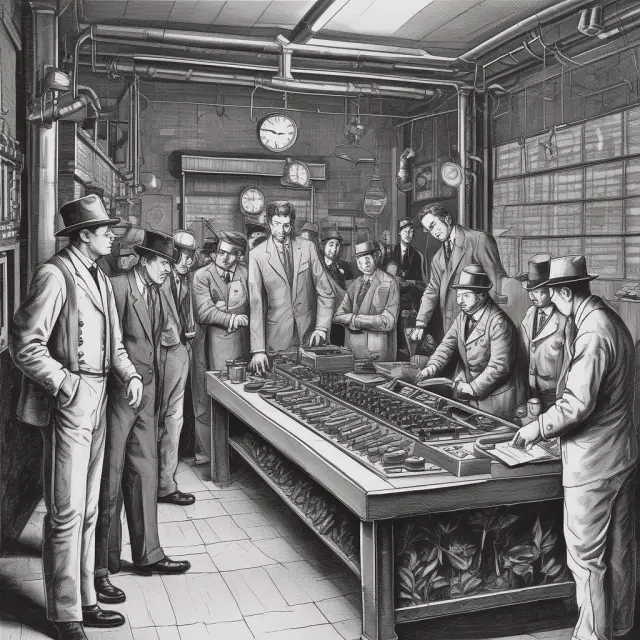
Historical Instances of Boiler Rooms
Boiler rooms have long been infamous for their high-pressure sales tactics aimed at defrauding unsuspecting investors. These operations, which often take place in call centers, have garnered notoriety through their association with unethical and sometimes illegal investment schemes. In this section, we delve into the history of boiler rooms, examining famous cases that have shaped public consciousness and set the stage for modern-day investment scams.
Films like ‘Boiler Room,’ ‘Glengarry Glen Ross,’ and ‘The Wolf of Wall Street’ have immortalized the term “boiler room” as a symbol of unscrupulous sales tactics, but the actual methods used in these schemes have evolved significantly over time. Let us examine some prominent instances of boiler rooms throughout history that continue to shape our understanding of this deceptive practice.
The earliest known reference to a boiler room dates back to the late 19th century when con artists would sell stocks based on inflated information, often obtained through insider trading. These schemes were carried out in cramped basements or “boiler rooms,” where salespeople used aggressive tactics to prey upon vulnerable investors.
One of the most notorious boiler room cases occurred in 1954 when the United States Securities and Exchange Commission (SEC) uncovered a massive fraud involving a brokerage firm named Kuhn, Loeb & Co. The operation, which targeted elderly individuals, raised millions of dollars through high-pressure sales tactics. Salespeople would cold call potential investors and use false promises and insider information to convince them to purchase worthless stocks. This case led to the passing of the Securities Act of 1956, which introduced more stringent regulations on securities offerings to protect consumers from fraudulent schemes.
In the 1990s, a resurgence of boiler rooms emerged in response to the rise of the internet and online trading platforms. One such case involved a penny stock scam targeting investors through unsolicited emails and cold calls. The operation, which raised over $5 million from thousands of victims, was led by a group of individuals who used false identities and misappropriated investor funds for their personal gain. This scheme was the basis for the film ‘Boiler Room,’ starring Ben Affleck, which brought renewed attention to boiler room tactics and highlighted the need for increased regulatory oversight.
More recently, in 2015, a software scam was uncovered in Australia when police discovered a boiler room selling sports betting software. Operators used aggressive cold-calling techniques to convince potential investors of guaranteed returns, collecting millions of dollars before being exposed. This case underscores the persistence of boiler rooms and their ability to adapt to new technologies to carry out their deceptive practices.
Understanding these historical instances of boiler rooms sheds light on the tactics employed by unscrupulous salespeople, the impact on investors, and the regulatory response aimed at protecting consumers from such schemes. As we continue to explore this topic, it is essential to stay informed about the latest trends and strategies used by boiler room operators to ensure that we remain vigilant in safeguarding our hard-earned savings.
To learn more about how to protect yourself from investment scams, be sure to check out the next section where we discuss ways to identify and avoid boiler rooms and other fraudulent schemes.

Modern-day Examples of Boiler Rooms
Although the term ‘boiler room’ is deeply rooted in Wall Street history, it continues to be a relevant concept when discussing unscrupulous investment practices. The boiler room scheme, as we know it today, has evolved from the traditional cold call sales floor into more sophisticated operations that include software scams and other fraudulent schemes.
One of the most common modern-day manifestations of boiler rooms is found in penny stock scams. Penny stocks are low-priced shares of small companies, often traded outside major exchanges, making them ideal targets for unscrupulous brokers and traders. In a typical penny stock scam, operators accumulate these securities at a low price through boiler room tactics before attempting to sell them to unsuspecting investors at inflated prices. The victims are often lured in with false promises of quick profits and guaranteed returns.
Another form of boiler room scheme is software scams. In one infamous Australian case, telemarketers operating a boiler room sold sports betting software to victims, promising extravagant returns. These scammers used a carefully crafted sales script and even paid off local police to provide cover. Although the tactic differed in its subject matter, it adhered to the traditional high-pressure sales techniques that are the hallmark of boiler room schemes.
While the methods have evolved, the underlying principle remains the same: manipulating investors’ emotions and exploiting their greed to sell securities without full disclosure. To combat such practices, regulatory bodies, such as the Securities and Exchange Commission (SEC) and the Financial Industry Regulatory Authority (FINRA), continue to strengthen regulations, requiring brokers to adhere to strict standards and disclose all material information when selling securities.
Understanding these modern-day examples of boiler rooms not only sheds light on how scammers adapt to the changing market landscape but also highlights the importance of remaining vigilant against investment fraud. By staying informed, conducting thorough research, and being aware of regulatory requirements, investors can protect themselves from potential boiler room schemes.

Protecting Yourself from Boiler Room Scams
When it comes to protecting yourself from boiler rooms, knowledge is your best weapon. Understanding the techniques these scammers use can help you avoid falling victim to their manipulative tactics. Here are some tips on how to safeguard your investments:
1. Do Your Due Diligence
The first step in shielding yourself from boiler room schemes is to conduct thorough research before making any investment decisions. Verify the background of the salesperson, including their registration status and any potential red flags. You can check with organizations such as the Financial Industry Regulatory Authority (FINRA), North American Securities Administrators Association (NASAA), or your state securities regulator to ensure that they have a clean record.
2. Exercise Skepticism
Keep a healthy level of skepticism when dealing with unsolicited investment offers, especially those made through cold calls or high-pressure sales tactics. Remember that these individuals are not concerned about your best interests; they are there to make a quick profit at your expense. Be particularly cautious when faced with promises of guaranteed returns or insider information.
3. Stay Informed on Regulatory Requirements
Familiarize yourself with regulatory requirements for securities sales and the rules of fair practice set forth by organizations like NASD and SEC. This knowledge can help you identify potential scams that violate these guidelines. For instance, if a broker insists on immediate payment or threatens you for noncompliance, be wary, as such behavior is not allowed under securities regulations.
4. Avoid Speculative Securities
Stay away from high-risk investments like binary options, penny stocks, and microcap securities that are often associated with boiler room scams. These types of investments carry significant risk due to their volatility and the lack of transparency in their pricing and trading mechanisms. Stick to well-researched investments that have a solid underlying business model and a proven track record.
5. Consult Professional Advisors
If you are unsure about an investment opportunity, consult with professional advisors such as financial planners or registered investment advisors for unbiased advice. They can provide valuable insight into the legitimacy of the investment, its risks and potential rewards, and alternatives that might better suit your investment goals and risk tolerance.
By following these guidelines, you’ll be well-equipped to protect yourself from boiler room scams and make informed investment decisions. Remember, your hard-earned money is an investment in your future—treat it with care and don’t let unscrupulous salespeople take advantage of you.

FAQs on Boiler Rooms
What is a pump and dump scam?
A pump and dump scam refers to an illegal market manipulation technique where individuals artificially inflate the price of a security by spreading false or misleading information, only to sell their own holdings at a profit once the price rises. This practice is commonly associated with penny stocks and cryptocurrencies due to the lack of regulatory oversight and market depth in these sectors.
What is the Penny Stock Reform Act?
The Penny Stock Reform Act, enacted in 1990, aimed to minimize instances of penny stock fraud by mandating disclosure requirements for brokers selling penny stocks and creating an electronic marketplace for quoting these securities. These regulations help prevent misinformation from being spread to unsuspecting investors.
What is dialing and smiling?
Dialing and smiling is a telemarketing tactic used to cold-call potential buyers with the intention of employing high-pressure sales tactics and emotional manipulation to persuade people into buying securities that they would not typically consider. This strategy has become less common due to increased government regulations against deceptive marketing practices, including restrictions on calling cell phones without consent and violating do-not-call lists.
How can investors protect themselves from boiler room schemes?
To safeguard themselves from falling victim to boiler room scams, investors should conduct thorough research on the security, broker, or individual selling it, verify their registration status, and be wary of exaggerated promises, insider information, and high-pressure sales tactics. It’s also essential to remember that if a deal seems too good to be true, it probably is.
What is the difference between a penny stock and a regular stock?
Penny stocks are securities traded for less than $5 per share, typically on over-the-counter markets like the OTC Markets Group’s Pink Sheets or the OTC Bulletin Board. Penny stocks are often issued by small companies with limited financial resources, making them a popular target for boiler room scams due to their inherent volatility and lack of regulation.
What is the role of the National Association of Securities Dealers (NASD) in regulating boiler rooms?
The National Association of Securities Dealers (NASD), now part of FINRA, sets rules for fair practices in the securities industry, which boiler room operators frequently violate. The organization’s rules aim to ensure transparency and honesty in broker-dealer operations, helping protect investors from fraudulent activities like those employed by boiler rooms.
Why are cold calls a common tactic used by boiler rooms?
Cold calls—unsolicited phone calls made to potential buyers for sales purposes—are an effective way for boiler room operators to reach a large audience quickly and apply high-pressure sales tactics without any prior relationship or context, increasing the likelihood of success in manipulating investors’ emotions and decisions.
What are some common investment scams used by boiler rooms?
Boiler rooms frequently employ various types of fraudulent schemes, such as binary options, advance fee, and microcap fraud. These scams prey on unsuspecting investors by exploiting their lack of knowledge or trust, often resulting in significant financial losses.
 Next entry · No. 460Bank-Owned Life Insurance (BOLI): A Tax-Sheltered Investment Vehicle for Funding Employee Benefits in the Banking Sector
See also
-
 No. 2,409
03 Jan 2025
25 min
Understanding Inside Sales: A Comprehensive Guide
Business Strategy
No. 2,409
03 Jan 2025
25 min
Understanding Inside Sales: A Comprehensive Guide
Business Strategy -
 No. 5,929
19 Oct 2025
19 min
Unraveling the Web of Lies: Understanding the Infamous ZZZZ Best Ponzi Scheme
Business Finance
No. 5,929
19 Oct 2025
19 min
Unraveling the Web of Lies: Understanding the Infamous ZZZZ Best Ponzi Scheme
Business Finance -
 No. 5,753
05 Oct 2025
18 min
Understanding Wire Fraud: An In-depth Analysis and Prevention Strategies for Institutional Investors
Business Finance
No. 5,753
05 Oct 2025
18 min
Understanding Wire Fraud: An In-depth Analysis and Prevention Strategies for Institutional Investors
Business Finance -
 No. 5,747
04 Oct 2025
22 min
Window Dressing in Finance: Unveiling Deceptive Practices in Mutual Funds and Accounting
Business Finance
No. 5,747
04 Oct 2025
22 min
Window Dressing in Finance: Unveiling Deceptive Practices in Mutual Funds and Accounting
Business Finance -
 No. 5,730
03 Oct 2025
18 min
Understanding Wildcatting: The SEC’s Industry-Wide Investigative Initiative in Finance and Investment
Business Finance
No. 5,730
03 Oct 2025
18 min
Understanding Wildcatting: The SEC’s Industry-Wide Investigative Initiative in Finance and Investment
Business Finance -
 No. 5,638
25 Sep 2025
19 min
Watered Stock: Understanding the Fraudulent Practice of Issuing Overvalued Shares
Business Finance
No. 5,638
25 Sep 2025
19 min
Watered Stock: Understanding the Fraudulent Practice of Issuing Overvalued Shares
Business Finance