Understanding Capital Structure: Debt vs Equity in Financing Operations and Growth

Understanding Capital Structure: Learn about Debt vs Equity in financing operations, growth and benefits, risks. Discover strategies for optimal business…
Introduction to Capital Structure
Capital structure, the unique combination of debt and equity employed by a business to fund its operations and support growth initiatives, plays a significant role in determining a company’s financial health and future success. In essence, capital structure refers to how a corporation raises funds from both external sources like lenders or investors, as well as internal sources such as retained earnings. Understanding the various aspects of capital structure is essential for investors, analysts, and management teams seeking to make informed decisions about financing strategies.
Components of Capital Structure: Debt and Equity
In analyzing a company’s capital structure, it’s crucial to understand two primary components: debt and equity. Debt is essentially borrowed money that the business takes on to finance its ongoing activities or expansion projects. This can include bonds, lines of credit, or any other form of debt financing. The lenders expect repayment of their principal amount plus interest in exchange for providing the loan.
Equity, on the other hand, represents ownership stakes that investors purchase when they buy shares in a corporation. This capital is raised by issuing stocks, either common or preferred, to individual or institutional investors. Unlike debt holders, equity investors do not receive any fixed interest payments but instead hope for returns in the form of capital appreciation and dividends.
Benefits and Risks of Debt vs Equity
Debt financing offers tax advantages due to interest expenses being tax-deductible for corporations, enabling them to reduce their overall tax liability. Moreover, a business retains complete ownership while using debt financing, retaining control over its operational decisions without relinquishing equity stakes. In low-interest rate environments, debt is relatively easy and cheap to obtain, making it an attractive option for many firms.
Equity financing, on the other hand, offers higher growth potential for companies with aggressive capital structures, as they can expand their operations more rapidly without incurring immediate interest expenses. However, equity financing is usually more costly than debt due to the need to offer a higher return to attract investors and dilute ownership.
Debt and Equity in Corporate Strategies
A company’s choice between debt and equity financing often depends on its specific situation, including growth plans, cash flows, and financial positioning. An optimal capital structure can help balance risk and reward, allowing a corporation to grow while minimizing costs and maximizing value for both shareholders and lenders.
Determining the Ideal Capital Structure
The ideal capital structure varies significantly between industries and individual companies, depending on factors like industry growth rates, regulatory requirements, and market conditions. Companies at different stages of development may also have varying capital structures; startups, for instance, tend to rely more on equity financing, while mature firms usually have a more balanced debt-to-equity ratio.
Calculating WACC and D/E Ratio
To make informed decisions regarding capital structure, financial analysts often employ methods like the weighted average cost of capital (WACC) calculation and the debt-to-equity (D/E) ratio. The former helps determine a company’s overall cost of capital by taking into account various financing sources and their respective costs. In contrast, the D/E ratio offers insight into a corporation’s risk profile, with higher ratios implying greater financial leverage and risk for investors.
Impact of Capital Structure on Growth
A company’s optimal capital structure is crucial to achieving balanced growth that maximizes shareholder value and minimizes financial risk. Finding the right balance between debt and equity financing can lead to a strong, sustainable business model that effectively allocates resources and minimizes costs over the long term.
Capital Structure Analysis by Investors and Analysts
Investors and analysts closely monitor capital structure when assessing potential investments or evaluating companies’ financial health. They use various tools, including WACC and D/E ratios, to assess a company’s debt-to-equity balance and the risks it poses to shareholders. By analyzing a firm’s capital structure, investors can make informed decisions about their investment strategies and expectations for potential returns.
Factors Affecting Capital Structure Decisions
Several factors influence capital structure choices made by companies:
- Interest rates and borrowing costs: Lower interest rates typically encourage companies to take on more debt due to the reduced cost of financing.
- Regulatory environment: Changes in financial regulations can impact a company’s capital structure, as they may affect access to financing or impose new requirements.
In conclusion, understanding the concept of capital structure and its intricacies is essential for investors, analysts, and business leaders alike. By considering factors such as debt vs equity, benefits, risks, industry-specific considerations, and optimal structures, one can make informed decisions to maximize long-term financial success while balancing risk and reward.

Components of Capital Structure: Debt and Equity
Capital structure refers to the unique combination of debt and equity that a business utilizes to finance its operations and expansion. Understanding this essential financial concept can shed light on the way companies source funds, manage risk, and impact shareholders’ value. In this section, we will delve deeper into the role of both debt and equity as integral parts of a company’s capital structure.
Debt: The Borrowed Capital
First, let us examine debt—a crucial financing tool for businesses. Debt arises from borrowing money with the agreement to repay the principal amount and interest over a specified period. It is considered a liability on a company’s balance sheet, as the borrower owes the funds to external parties such as banks or investors.
There are various forms of debt financing, including bank loans, bonds, and lines of credit. Debt has several advantages for companies: lower costs compared to equity financing due to tax deductibility of interest payments; the ability to retain ownership and control of the business; and easier access to funds when market conditions are favorable. However, it’s important to recognize that debt comes with risks, such as increased financial leverage and the possibility of default if a company cannot meet its debt obligations.
Equity: The Ownership Stakes
On the other hand, equity refers to ownership stakes in a business, which are represented by shares or units issued to investors. Equity capital provides funds for companies without requiring repayment of principal and interest like debt does. Instead, equity holders are entitled to future profits and gains as part of their shareholding in the company.
Equity financing can take various forms, including common stock, preferred stock, and retained earnings. Common stock represents ownership rights that do not carry any guaranteed dividends or voting control. Preferred stock shares offer a higher claim on assets and earnings than common stock but typically provide no voting power. Retained earnings are profits earned by the business and kept for future expansion or distribution to equity holders.
In summary, debt and equity serve distinct functions in a company’s capital structure, each with its unique benefits and risks. Understanding these components is essential for investors, analysts, and business leaders as they assess financial performance, evaluate investment opportunities, and make strategic decisions regarding financing structures.

Benefits and Risks of Debt vs Equity
Understanding the differences between debt and equity financing is crucial for companies to make informed decisions regarding their capital structure. Debt and equity both have unique advantages and disadvantages that can significantly impact a company’s financial position, growth opportunities, and overall risk profile. In this section, we will explore the benefits and risks associated with each form of capital.
Debt Financing: Tax Advantages and Retaining Ownership
One significant advantage of debt financing is its tax implications. Interest payments made as a result of borrowing funds can often be tax-deductible, resulting in lower after-tax cost of capital compared to equity. For companies, this means they can save on taxes while raising money to fund their operations and investments. Furthermore, companies remain in full ownership of the business when using debt financing, maintaining control over its future strategic direction and earnings.
Additionally, debt financing becomes increasingly attractive during periods of low-interest rates. Debt is abundant and relatively easy to access at these times, offering a cost-effective means for companies to fuel their expansion plans. However, it’s important to note that the interest payments on debt must be paid regularly, which can result in ongoing cash flow obligations.
Equity Financing: Higher Growth Potential with Aggressive Capital Structure
On the other hand, equity financing provides higher growth potential for companies, as shareholders invest in the business in exchange for a percentage of future profits. With equity, a company does not need to pay back any investment. Instead, investors receive returns based on the increase or decrease in the value of their shares. This aligns the interests of both the company and its investors, ensuring that everyone benefits from the company’s growth.
Moreover, an aggressive capital structure, which is characterized by a high ratio of debt to equity, can result in rapid expansion for companies. In this scenario, a company might choose to issue more shares to raise additional funds or take on more debt to finance operations and investments. While higher risk comes with such a strategy, the potential reward is significant growth that could outpace competitors in the industry.
In summary, both debt and equity financing have their benefits and risks, and companies must consider these factors carefully when deciding their capital structure. Debt financing offers tax advantages and allows a company to retain ownership, while equity financing provides higher growth potential through shareholder investment. A well-balanced combination of the two can result in optimal financial outcomes for any business.

Debt and Equity in Corporate Strategies
Utilizing both debt and equity for optimal business outcomes is an essential aspect of corporate finance strategy. Companies require financing to operate efficiently and grow, and capital structure plays a significant role in determining the best way to access funds. By employing the right balance between debt and equity, businesses can benefit from tax advantages, retaining ownership, and increased financial flexibility.
Debt Financing: Tax Advantages and Maintaining Ownership
Company owners often opt for debt financing due to its tax advantages. Interest payments made as a result of borrowing funds may be tax-deductible in many countries. This is beneficial since interest expense can be deducted from a company’s taxable income, thus lowering its overall tax liability and increasing net profit.
Moreover, debt financing allows companies to maintain ownership by not relinquishing equity to external investors. In some cases, this can help protect sensitive information or intellectual property while keeping control of the business decisions. Furthermore, debt is relatively easy and inexpensive to access during times of low-interest rates.
Equity Financing: Growth Opportunities and Future Earnings
On the other hand, equity financing offers companies opportunities for growth by bringing external investors on board with a stake in future earnings. However, unlike debt financing, equity financing does not come with the tax advantages or interest expense payments. Instead, equity shareholders receive a portion of the company’s profits in the form of dividends and potential capital gains when selling their shares.
Optimal Capital Structure: Balancing Debt and Equity
Companies that utilize an ideal balance between debt and equity achieve optimal financial performance. Aggressive capital structures, which rely more on debt financing, can lead to higher growth rates and potentially greater risk. Conversely, a conservative capital structure focused primarily on equity financing may result in lower growth rates but also lower financial risks.
Moreover, the ideal capital structure is not static and varies based on industry considerations and company development stages. For example, capital-intensive industries often rely more heavily on debt financing due to their high asset requirements. Conversely, labor-intensive or service-oriented firms may prefer equity financing since they have limited assets and need to focus on human resources instead.
Determining the Ideal Capital Structure: Calculating WACC and D/E Ratio
To find the optimal capital structure, companies can use a weighted average cost of capital (WACC) calculation or debt-to-equity (D/E) ratio analysis. The WACC measures the overall cost of capital by considering various types of financing sources and their associated costs. A lower WACC indicates that a company’s capital investments are more cost-effective.
The D/E ratio provides insight into the extent of a company’s debt financing compared to equity financing. An ideal D/E ratio is subjective, as it depends on industry standards and the specific circumstances of each business. Generally, a higher D/E ratio implies that a company has taken on more risk but also has the potential for increased returns.
In conclusion, understanding a company’s capital structure is crucial to assessing its financial health, growth prospects, and investment opportunities. Companies can benefit from both debt and equity financing by carefully considering their specific needs, industry context, and development stage. By utilizing an optimal balance between debt and equity, businesses can minimize costs, maintain control, and maximize growth potential.
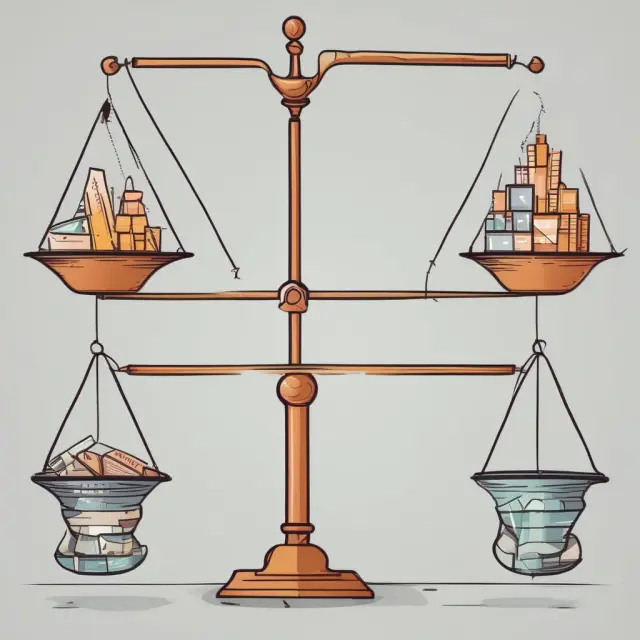
Determining the Ideal Capital Structure
When considering optimal capital structure for a business, industry factors and the specific development stage of a company are essential considerations. The ideal balance between debt and equity financing varies across industries as well as among companies in the same sector.
Industry-Specific Considerations
Industries that require substantial investments in physical assets or infrastructure often opt for higher debt levels due to their capital-intensive nature. Conversely, labor-intensive businesses that rely on human resources might lean towards equity financing since the focus is more on acquiring and maintaining talent. A technology firm, for example, may choose a different capital structure than an automotive manufacturing company.
Company Development Stage
A startup or growth-stage company might have limited cash flows to support debt repayment, making equity financing a preferable choice in the early stages. Later on, as these companies establish themselves and generate positive cash flows, they may explore more debt financing options to minimize their cost of capital. On the other hand, mature companies with consistent earnings and established businesses can comfortably maintain both debt and equity components in their capital structure for growth initiatives and shareholder returns.
Calculating WACC (Weighted Average Cost of Capital)
To find the ideal capital structure, companies aim to minimize their overall cost of capital. Calculating the weighted average cost of capital (WACC) can help management determine the optimal blend of debt and equity that achieves this goal. WACC is calculated by multiplying the cost of each capital component by its proportional weight in the total capital structure.
Monitoring Credit Risk and Growth Opportunities
By examining a firm’s debt-to-equity (D/E) ratio, investors can assess both credit risk and growth potential. A high leverage ratio implies that a company is heavily reliant on debt financing and could be considered more risky for investors. However, a high D/E ratio may also mean the company has ample opportunities to grow with the borrowed funds. Conversely, a low debt-to-equity ratio can indicate a more conservative capital structure with minimal growth potential but less financial risk for shareholders.
In conclusion, understanding the ideal capital structure requires balancing between industry considerations and a company’s development stage. By considering these factors, businesses can effectively utilize both debt and equity financing to minimize their cost of capital and maximize growth opportunities while managing financial risks.

Calculating WACC and D/E Ratio
Understanding a company’s capital structure is crucial to assessing its financial health and future growth prospects. Two essential metrics for evaluating this aspect of a firm are the weighted average cost of capital (WACC) and debt-to-equity (D/E) ratio. These financial ratios provide valuable insights into a company’s ability to minimize its cost of capital and evaluate riskiness in its borrowing practices.
First, let us delve into WACC. This metric represents the minimum rate of return that a company needs to achieve to maintain its current market value and satisfy both equity investors (shareholders) and debt holders (lenders). Essentially, it is the overall cost of capital for a firm’s existing assets and future investments.
To calculate WACC, a manager or analyst must first determine the costs associated with each component:
- Cost of Equity: This can be estimated using the Capital Asset Pricing Model (CAPM), which considers the risk-free rate, beta, and market risk premium.
- Cost of Debt: This is typically determined by the interest rate on borrowed funds or debt securities.
- Proportional Weights: The proportion of each component in a company’s capital structure must be calculated. For instance, equity might account for 60% and debt for 40%.
Once these components have been identified, calculate WACC as follows:
WACC = [(Weight of Equity * Cost of Equity) + (Weight of Debt * Cost of Debt)] / Total Weight
The weighted average cost of capital provides valuable insight into a company’s overall cost of capital and helps managers make informed decisions regarding financing strategies, investment opportunities, and capital structure optimization.
Next, the debt-to-equity ratio (D/E) is a commonly used financial measure to determine the degree to which a company has relied on debt versus equity for its operations and growth. The D/E ratio represents the relationship between a company’s total liabilities (debt) and its total shareholders’ equity.
A higher D/E ratio indicates that a firm has more debt relative to equity, suggesting a riskier financial position due to increased reliance on external borrowing. Conversely, a lower D/E ratio implies a less risky financial structure with a smaller proportion of debt to equity.
When assessing a company’s capital structure through the lens of the WACC and D/E ratio, investors and analysts can gain valuable insights into its financial health and potential for growth. These metrics allow for comparisons against industry peers, historical trends, and future financial expectations. By understanding how debt and equity financing contribute to a company’s financial structure, stakeholders can make informed decisions regarding investment opportunities or capital allocation strategies.

Impact of Capital Structure on Growth
Capital structure significantly influences a company’s ability to expand and grow. Balancing both debt and equity financing is crucial in determining the optimal capital structure that aligns with the firm’s risk tolerance and long-term growth objectives. In essence, managing the right amount of debt versus equity can be the key differentiator for companies poised to succeed or struggle in their respective industries.
Understanding Debt vs Equity Growth Financing
Debt financing is a form of borrowed capital from external sources, such as banks, bondholders, or other financial institutions. The company must repay the debt along with the agreed-upon interest rates. Debt can provide several advantages, including:
- Tax benefits: In many cases, the interest expense associated with debt financing is tax-deductible, reducing the after-tax cost of capital.
- Flexibility to retain ownership: Companies that issue debt maintain ownership stakes and control over their operations.
- Easy access in low-interest rate environments: Debt financing is plentiful during periods of low interest rates when borrowing costs are relatively attractive.
On the other hand, equity financing involves selling an ownership stake to external investors in exchange for capital. This form of financing comes with some advantages and disadvantages as well:
- Retention of profits: Companies issuing equity do not have to share their future profits with external investors.
- Lower initial cost: Equity financing may be less expensive upfront compared to debt financing, especially in cases where interest rates are high.
- Dilution of ownership: Issuing equity means diluting the current owners’ percentage of ownership and control in the company.
A Company’s Capital Structure: Balancing Debt and Equity for Growth
An ideal capital structure should strike a balance between the benefits of debt and equity financing while minimizing risks, maximizing returns, and accommodating growth opportunities. This can be particularly challenging for companies that require significant resources to finance research and development or expand their operations, as they may be more inclined towards aggressive capital structures with higher leverage ratios (debt-to-equity) and a greater concentration on debt financing.
The Importance of Calculating Weighted Average Cost of Capital (WACC) and Debt-to-Equity Ratio (D/E Ratio)
Two commonly used metrics for evaluating a company’s capital structure are the weighted average cost of capital (WACC) and debt-to-equity ratio (D/E Ratio). WACC is crucial in determining the after-tax cost of capital by calculating the weighted average cost of debt and equity, while D/E Ratio offers insights into a company’s leverage level.
- Weighted Average Cost of Capital (WACC): WACC represents the minimum rate of return that a company must generate to satisfy all its investors. Calculating WACC allows companies to determine their ideal capital structure by minimizing the overall cost of capital, making it an essential tool for growth-oriented strategies.
- Debt-to-Equity Ratio (D/E Ratio): The D/E Ratio measures a company’s level of debt versus equity financing and offers insight into its financial leverage or riskiness. A high debt-to-equity ratio indicates a greater reliance on debt financing, which can increase the potential for credit risk, but may also offer more significant growth opportunities if managed responsibly.
Making Sense of Capital Structure Decisions: Impact on Growth and Investor Perception
Analysts and investors consider capital structure as a crucial factor when evaluating a company’s financial health and future growth potential. The debt-to-equity ratio plays an essential role in assessing risk and estimating growth opportunities. A company that maintains a strong balance between debt and equity financing is more likely to attract investor confidence, access capital markets, and maximize long-term growth.
In conclusion, the optimal capital structure for a company is not a one-size-fits-all solution. Successful companies learn to incorporate both debt and equity into their corporate strategies while balancing risk and growth objectives. By carefully considering their industry landscape, business stage, and financial circumstances, companies can craft a capital structure that supports long-term sustainable growth.

Capital Structure Analysis by Investors and Analysts
When assessing the financial health of a corporation, investors and analysts closely examine the company’s capital structure, which is the balance between debt and equity financing. Capital structure plays an essential role in determining risk and growth potential for the business. Understanding how investors and analysts evaluate capital structures can provide valuable insight into your investment strategies.
Assessing Credit Risk with Debt-Heavy Capital Structures
A company that relies heavily on debt to finance its operations presents a higher credit risk for investors. If the interest payments cannot be met, the lenders may demand repayment of the principal, leading to a potential default. However, high debt levels can also indicate opportunities for increased returns if managed effectively. As such, investors closely monitor debt levels and the terms of the debt when evaluating capital structures.
Monitoring Growth Opportunities with Equity-Heavy Structures
Equity financing involves issuing shares to investors in exchange for a partial ownership stake. While equity has its advantages – like potential tax benefits and retaining control – it can also be more expensive than debt. Furthermore, equity does not provide any immediate return on investment unless the stock price increases or dividends are paid out. Consequently, companies with an equity-heavy capital structure may not fully leverage their growth opportunities. Analysts and investors watch for companies that balance debt and equity appropriately to maximize profitability and minimize risk.
Balancing Debt and Equity
Capital structure plays a significant role in the financial success of any business. The optimal capital structure will vary depending on industry conditions, company size, growth potential, and regulatory environment. A well-balanced capital structure allows a company to effectively manage both credit risk and growth opportunities, providing shareholders with attractive returns while minimizing financial instability.
Understanding Capital Structure Metrics
To evaluate the effectiveness of a company’s capital structure, investors and analysts employ several metrics, including the Debt-to-Equity (D/E) ratio and the Weighted Average Cost of Capital (WACC). These key performance indicators help assess risk levels, debt servicing capability, and financial health. A D/E ratio above one indicates a higher reliance on debt financing compared to equity, whereas a ratio below one suggests an equity-heavy capital structure.
The Bottom Line
Capital structure analysis is crucial for investors and analysts in determining the risks and potential returns of a company’s investments. Understanding how to evaluate and balance debt and equity allows you to make informed decisions when investing or managing financial assets, maximizing profits while minimizing risk.

Factors Affecting Capital Structure Decisions
When determining the ideal combination of debt and equity for financing operations and growth, companies must consider various factors that can significantly impact their capital structure decisions. Two critical factors include interest rates and borrowing costs, as well as regulatory environment.
Interest Rates and Borrowing Costs:
The cost of borrowed funds plays a crucial role in shaping a company’s debt-to-equity ratio. Lower interest rates make it easier for businesses to secure financing at favorable terms. Companies may then choose to take on more debt due to the lower cost, increasing their leverage and financial risk. Conversely, when interest rates rise, companies tend to reduce their borrowing and prioritize equity financing or issuance of new shares as a means to minimize the increased costs associated with debt.
Regulatory Environment:
The regulatory environment can have significant implications for capital structure decisions. For example, regulations requiring stricter reporting, higher reserve requirements, or more stringent debt covenants can make it more difficult and expensive for companies to access debt financing. As a result, companies may opt for equity financing or maintain more conservative capital structures to comply with these regulatory requirements. Additionally, changes in tax laws can impact the relative costs of debt and equity, potentially altering capital structure decisions.
Balancing Debt vs Equity:
As previously discussed, companies can raise capital through issuing debt or selling equity. Each method has its advantages and disadvantages that must be considered when determining an optimal capital structure. Companies with stable cash flows may prefer taking on more debt to benefit from tax advantages and retain ownership while minimizing dilution. In contrast, firms looking to expand aggressively or seeking growth opportunities might find it advantageous to issue more equity as they can avoid the burden of interest payments, allowing them to allocate resources towards growth initiatives.
In summary, a company’s capital structure decisions are influenced by factors such as interest rates and borrowing costs, regulatory environment, and its stage of development. Companies must balance the benefits of debt financing (tax advantages, retaining ownership) with the potential risks (interest payments) while considering equity financing for growth opportunities and avoiding dilution. Effective management of a company’s capital structure can lead to lower cost of capital, more favorable financial ratios, and ultimately improved overall performance.

Frequently Asked Questions about Capital Structure
What is a good debt-to-equity ratio?
There isn’t a definitive answer as to what constitutes a “good” debt-to-equity ratio since it depends on the industry and company specifics. Generally, ratios below 1 signify more equity than debt, while ratios above 1 indicate that there is more debt than equity. Aggressively leveraged companies may have D/E ratios over 2 or even 3. It’s essential to evaluate a company’s D/E ratio relative to its industry peers and the specific circumstances surrounding the business.
Why do companies choose to have more equity than debt?
Companies often prefer an equity-heavy capital structure when they wish to minimize their financial obligations, such as interest payments or have concerns about potential bankruptcy. Equity financing does not require regular repayments and is a more flexible source of capital, allowing companies to maintain ownership and control over their operations while minimizing the risks associated with debt servicing.
Can a company change its capital structure?
Yes, companies can change their capital structure by issuing new stock, buying back shares, or taking on additional debt. Companies may adjust their capital structure as market conditions evolve, such as changing interest rates or economic conditions that could impact the cost of debt versus equity. This flexibility allows firms to optimize their capital structure and adapt to different situations.
Understanding Capital Structure: Debt vs Equity in Financing Operations and Growth
—————————————————————————–
Capital structure refers to how a company finances its overall business operations and growth, consisting of equity and debt components. Equity is the ownership stake that represents future earnings for the owners or shareholders, while debt arises from borrowed money that must be repaid with interest. This article discusses the benefits, risks, and practical applications of capital structure in corporate strategies, as well as how to determine an ideal balance between debt and equity.
### Components of Capital Structure: Debt and Equity
Debt is a loan taken by a company from various financial institutions or individuals with a commitment to repay the principal amount along with interest payments over a specified time frame. It’s important to note that there are different types of debt, such as long-term bonds, short-term loans, and even convertible debentures that can be converted into equity.
Equity represents ownership rights in a company where owners don’t need to repay their investment but instead receive future cash flows based on the company’s earnings. Equity can come in various forms like common stock, preferred stock, or retained earnings. Retained earnings refer to profits that companies reinvest in their business rather than distributing them as dividends.
### Benefits and Risks of Debt vs Equity
Companies prefer debt due to its tax advantages; interest payments on borrowed funds are often tax-deductible, reducing the overall cost of capital for businesses. Additionally, debt financing allows a company to retain ownership and control over its operations since equity requires surrendering some level of decision-making power to external investors.
However, an aggressive capital structure, which is heavily reliant on debt, poses increased risk for creditors as well as shareholders. Aggressive debt levels can lead to higher interest expense and increased financial fragility due to the potential for higher volatility in earnings and cash flows. This added risk may be necessary if a company wants to pursue high growth opportunities but needs to balance this with maintaining a strong financial position.
### Debt and Equity in Corporate Strategies
Optimal capital structures incorporate both debt and equity components, enabling companies to minimize their overall cost of capital while mitigating risks. Companies may use different ratios and thresholds to determine the ideal mix between debt and equity based on their industry, financial position, and growth prospects. A company’s balance sheet displays its assets, liabilities, and equity.
### Determining the Ideal Capital Structure
When evaluating a company’s capital structure, it’s crucial to consider the industry in which it operates and the company’s stage of development. For example, industries with heavy infrastructure requirements or high upfront costs might rely more on debt financing, whereas companies in labor-intensive or service sectors may favor equity financing due to their lower capital intensity.
### Calculating WACC and D/E Ratio
Two essential financial metrics for understanding capital structure are the Weighted Average Cost of Capital (WACC) and the Debt-to-Equity ratio (D/E ratio). These metrics enable companies to optimize their cost of capital by comparing the costs of different sources of financing, such as debt and equity. The WACC calculation considers the cost of various components of capital, including equity and debt, to determine the overall cost of capital for a firm.
The D/E ratio provides insight into the degree to which a company relies on debt versus equity to finance its assets and operations. A high D/E ratio can suggest increased financial risk due to higher leverage, while a lower D/E ratio might indicate a more conservative capital structure. Companies that want to minimize their cost of capital will strive for an optimal balance between debt and equity, incorporating various financial metrics like WACC and D/E ratio to guide their decisions.
### Impact of Capital Structure on Growth
Capital structures have significant implications for a company’s growth potential. Aggressive debt-heavy capital structures can lead to higher growth rates but also increased financial risk, while conservative equity-heavy structures may restrict growth opportunities due to the high cost of equity financing. Companies aim to find a balance that maximizes growth potential while minimizing financial risk.
### Capital Structure Analysis by Investors and Analysts
Investors and analysts use various financial metrics like WACC, D/E ratio, and interest coverage ratios to assess a company’s capital structure and evaluate its financial health. Aggressive debt-heavy capital structures can increase the risk of bankruptcy for both creditors and shareholders, while equity-heavy capital structures may limit growth opportunities but provide more stability and security.
To better understand a company’s capital structure, it’s essential to analyze its financial statements and industry context. Factors like regulatory environment, interest rates, and debt maturities can all impact a company’s decision to utilize debt or equity financing. By carefully considering these factors, investors and analysts can make more informed investment decisions based on their understanding of a company’s capital structure.
In conclusion, capital structure is an essential aspect of corporate finance that plays a significant role in funding a company’s operations and growth. Understanding the differences between debt and equity financing, calculating WACC and D/E ratio, and evaluating industry-specific factors are crucial steps to making informed decisions about your company’s capital structure.
 Next entry · No. 621Understanding Capital Gains Taxes: Rates, Exceptions, and Strategies for Institutional Investors
See also
-
 No. 796
10 Jun 2024
19 min
Understanding the Cost of Debt for Institutional Investors: An In-Depth Analysis
Corporate Finance
No. 796
10 Jun 2024
19 min
Understanding the Cost of Debt for Institutional Investors: An In-Depth Analysis
Corporate Finance -
 No. 171
07 Apr 2024
19 min
Understanding the Concept of Annualization: A Key Tool for Institutional Investors and Financial Analysis
Corporate Finance
No. 171
07 Apr 2024
19 min
Understanding the Concept of Annualization: A Key Tool for Institutional Investors and Financial Analysis
Corporate Finance -
 No. 656
15 May 2024
21 min
Understanding the Certainty Equivalent in Finance and Investment
Investments
No. 656
15 May 2024
21 min
Understanding the Certainty Equivalent in Finance and Investment
Investments -
 No. 953
07 Jul 2024
20 min
Understanding Deleveraging: A Guide for Institutional Investors
Corporate Finance
No. 953
07 Jul 2024
20 min
Understanding Deleveraging: A Guide for Institutional Investors
Corporate Finance -
 No. 893
27 Jun 2024
21 min
Understanding Debentures: Features, Types, Risks, and Advantages for Institutional Investors
Corporate Finance
No. 893
27 Jun 2024
21 min
Understanding Debentures: Features, Types, Risks, and Advantages for Institutional Investors
Corporate Finance -
 No. 823
14 Jun 2024
17 min
Understanding Credit-Linked Notes: A Comprehensive Guide for Institutional Investors
Corporate Finance
No. 823
14 Jun 2024
17 min
Understanding Credit-Linked Notes: A Comprehensive Guide for Institutional Investors
Corporate Finance