Understanding Construction Loans: A Comprehensive Guide for Professional and Institutional Investors

Understand the ins and outs of securing a construction loan as an investor. Learn about requirements, benefits, types, and real-life examples.
What Is a Construction Loan?
A construction loan is a unique and short-term financing solution tailored to cover the expenses incurred during the building process of a property. Unlike traditional mortgages, this type of loan enables borrowers—be they builders or homebuyers—to finance the costs of constructing their dream homes or real estate projects before securing long-term funding. Construction loans are known for carrying higher interest rates due to the added risk involved.
Construction loans work by providing funds in installments as each stage of a project progresses, ensuring that the builder or borrower can cover costs effectively without having to pay for the entire project upfront. Typically, these loans have shorter terms—ranging from six months to one year—with the borrower either refinancing the loan into a permanent mortgage or obtaining a new mortgage to pay off the construction loan upon completion of the project.
Interestingly, a borrower might not make any payments towards the principal during the construction phase and only pay interest on the amounts drawn down as progress is made in the project. Some construction loans require that the entire balance be paid off by the end of the term, while others allow for more flexible repayment terms.
Construction loans can serve various purposes such as financing new homes, additions, renovations, and even rehabilitation projects. This type of loan is particularly useful when a borrower wants to custom-build their home with specific features or requirements that might not be readily available through conventional mortgage options.
It’s important to note the differences between traditional mortgages and construction loans. While a traditional mortgage is a long-term financing arrangement for purchasing an already constructed property, a construction loan is designed to cover the costs of building a new property. The primary distinction lies in the fact that a construction loan does not offer collateral—a fully built property—until completion of the project. Consequently, lenders require more stringent requirements and a higher degree of transparency from borrowers when it comes to securing approval for a construction loan.
To be eligible for a construction loan, borrowers typically need to provide extensive details about their building plans, including a comprehensive list of construction costs and a qualified contractor involved in the project. In some cases, down payments as large as 20% or even 25% may be required—with local credit unions or regional banks being the preferred lenders due to their familiarity with the housing market and a higher likelihood of approving loans for borrowers within their community.
In conclusion, construction loans offer valuable benefits for those looking to build a custom home or undertake real estate projects by providing necessary financing during the construction phase, allowing flexibility in repayment terms and interest-only payments during the building process. However, they also come with unique challenges, including higher down payment requirements and stringent lender approval processes that must be carefully considered before pursuing this type of loan.
Stay tuned for our upcoming sections on how a construction loan works, requirements for obtaining one, benefits of taking out a construction loan, types of loans available, choosing the right lender, interest rates and fees, and insuring a construction loan.

How Does a Construction Loan Work?
A construction loan is a short-term financing solution designed to cover the cost of building or renovating a property before securing long-term funding through a traditional mortgage. Constructed specifically for borrowers undertaking custom-builds, these loans enable homeowners and builders alike to bring their vision to life. The process of taking out a construction loan involves several stages: application, approval, drawdown schedules, interest payments, and repayment or refinancing.
Application & Approval
First, the borrower must apply for a construction loan from a lender, typically a local credit union or regional bank that specializes in these loans. The borrower should be prepared to provide extensive documentation, including proof of a viable blueprint and a qualified builder’s involvement. Lenders might require a 20-25% down payment due to the increased risk associated with construction loans. Applicants must also demonstrate solid credit history and financial stability.
Drawdown Schedules & Payments
Once approved, the lender will disburse funds based on predefined drawdown schedules, typically linked to specific milestones in the project. Interest payments may only be required during construction, but some loans might demand full repayment upon completion.
Construction Progress & Inspections
Lenders require inspections at various stages of the construction process to ensure adherence to quality standards and timely completion. In turn, borrowers may have more control over the building process while minimizing potential surprises.
Repayment or Refinancing
After construction is complete, borrowers have a few options for repaying their construction loan:
- Repay the entire loan with an end loan (a new mortgage)
- Obtain a permanent mortgage and use it to pay off the construction loan in full
- Refinance the construction loan into a long-term mortgage, often at a higher interest rate.
Interest Rates & Fees
Construction loans typically have higher interest rates than traditional mortgages due to their inherent risks. The borrower can expect larger upfront costs and monthly payments as a result. Some lenders may also charge fees for loan origination, inspections, or closing costs. Borrowers are encouraged to inquire about these fees during the application process and factor them into their overall budget.
In conclusion, construction loans present an alternative financing option tailored to those embarking on custom-built projects. By understanding the intricacies of this loan type and the requirements for obtaining one, borrowers can navigate the process with confidence and make informed decisions when seeking a lender for their next real estate project.

Requirements for Obtaining a Construction Loan
A construction loan is a unique type of financing that allows borrowers to finance a real estate project before it’s completed, and it plays a crucial role in the process of building or renovating a property. Construction loans are distinct from traditional mortgages; they have different requirements due to their inherent risks. In this section, we’ll discuss what is needed to secure approval for a construction loan, focusing on down payments, credit history, and comprehensive plans.
Down Payments
Compared to conventional mortgage loans, which often require a minimum 20% down payment or even less, construction loans usually call for a higher initial investment. Most lenders ask for 20% to 25% down payment from the borrower. This higher requirement reflects the increased risk associated with construction loans. The larger down payment can provide some security for the lender because they know that the borrower has invested a significant amount of their own money into the project, making them more likely to see it through to completion.
Credit History
Borrowers hoping to secure a construction loan should be aware that they may face challenges if they have less-than-ideal credit histories. Construction loans are considered riskier due to their short term and the fact that the borrower won’t occupy a completed home during the loan period. Thus, lenders will pay close attention to a borrower’s creditworthiness. To increase the chances of approval, it is essential for applicants to maintain an excellent credit score and a positive payment history.
Qualifications for Borrowers
Besides a solid credit history, lenders may have additional qualifications for construction loan applicants. Applicants should be financially stable with a steady income. Prospective borrowers will need to demonstrate their ability to manage the construction project and repay the loan after completion. Providing financial documentation, such as tax returns, bank statements, and proof of employment, can help strengthen an application.
Comprehensive Plans
To ensure that a construction loan is a sound investment, lenders require detailed plans for the project. This documentation may include architectural drawings, engineering reports, and cost estimates. Comprehensive planning not only helps potential borrowers envision their future home but also provides essential information to assess the feasibility of the project from a financial perspective. A well-planned construction project can help minimize unforeseen complications or expenses for both the borrower and the lender.
In conclusion, securing a construction loan requires careful preparation on the part of the borrower. Demonstrating a solid credit history, making a substantial down payment, providing comprehensive plans, and ensuring financial stability are crucial components in the application process. Local credit unions and regional banks that are familiar with their community’s housing market may be more inclined to work with potential borrowers on construction loans, as they can better assess the risks involved in these types of loans.

Benefits of a Construction Loan
A construction loan offers several benefits that make it an attractive option for professional and institutional investors. These advantages include:
1. Custom-Built Homes
One significant advantage of a construction loan is the ability to build a custom home tailored to one’s specific needs and preferences. With a traditional mortgage, borrowers are limited to existing properties on the market. Construction loans enable investors to design their dream homes, ensuring that they have complete control over every aspect of the building process.
2. Control Over Construction Details
Another advantage is the level of control construction loans provide during the build process. Borrowers can work with contractors, architects, and designers to create a home tailored to their tastes and preferences. This customization extends to design choices, materials, energy efficiency features, and other details that would not typically be possible with a traditional mortgage.
3. Potential Savings through Interest-Only Payments During Construction
Interest payments during the construction phase can be structured as interest-only payments rather than payments on both the principal and interest. This setup can lead to substantial savings, especially for large projects. By only paying interest during the building process, investors can conserve capital and allocate resources more effectively towards project costs.
4. Long-Term Savings through Fixed Interest Rates
After construction is complete, borrowers can refinance or obtain a new loan to pay off the construction loan. This process often involves fixed interest rates that remain consistent for the entire loan term. Such long-term savings can be significant when compared to variable interest rates and other cost structures associated with traditional mortgages.
5. Increased Marketability of Custom Homes
Custom homes have a higher market appeal due to their unique design features and personalized touches. This increased value can lead to a more significant return on investment for construction loan borrowers. In the competitive real estate market, custom-built homes offer an edge over standard properties, attracting buyers seeking unique living experiences.
In conclusion, understanding the benefits of a construction loan—custom-built homes, control over construction details, potential savings through interest-only payments during construction, long-term savings through fixed interest rates, and increased marketability due to customization—can help professional and institutional investors make informed decisions when considering financing options for new projects.

Types of Construction Loans
A construction loan is not a one-size-fits-all financial product. There are several types designed to accommodate various scenarios and borrowers, with unique features and requirements. This section will discuss owner-builder construction loans in detail, their prerequisites for approval, and the challenges that potential borrowers may face when applying.
Owner-Builder Construction Loans: When a borrower intends to act as their own general contractor or build the home with their resources, they cannot qualify for standard construction loans. Instead, they must turn to an owner-builder construction loan. These loans enable individuals to finance and manage their residential construction projects without the need for an outside contractor.
To obtain approval for an owner-builder construction loan, potential borrowers must demonstrate their home building knowledge and abilities through a well-researched and detailed plan. They should also present a contingency fund to account for any unexpected surprises during the construction process. These requirements can make it difficult to qualify for these loans compared to traditional construction loans. However, the benefits of being in control of your own project may outweigh the challenges.
Borrowers looking to apply for owner-builder construction loans should consider several factors:
- Understanding local regulations: Familiarize yourself with the building codes and zoning laws specific to your area before beginning your project, as these requirements can significantly impact the loan application process.
- Preparation and planning: A well-prepared plan demonstrating a clear understanding of the construction process, including cost estimates, timelines, and contingencies, will increase your chances of securing approval for an owner-builder construction loan.
- Financial stability: Lenders prefer borrowers with a stable financial background. Having a good credit history, proof of income, and a solid savings plan can strengthen your application.
- Adequate resources: Prove that you have the necessary resources to complete the project, including land acquisition, building materials, labor, tools, and any additional expenses related to the construction process.
- Contingency planning: Present a contingency fund to account for unexpected expenses during the construction process. This will demonstrate your ability to handle potential issues and reduce the risk involved in financing an owner-built home.
- Knowing your lender: Many local credit unions and regional banks are more comfortable working with borrowers in their community, offering greater chances of approval for owner-builder construction loans. Building a relationship with a lender before applying can increase your chances of securing a favorable loan agreement.
In conclusion, understanding the different types of construction loans is crucial when seeking financing for residential projects. While traditional construction loans offer lower risk and easier qualifications, owner-builder construction loans grant more control and flexibility to potential borrowers who want to build their homes from the ground up. To navigate the application process effectively, familiarize yourself with the requirements and preparation steps of your chosen loan type and establish a strong relationship with a reliable lender.

Choosing a Lender for a Construction Loan
A construction loan requires special expertise and familiarity from lenders due to its unique nature compared to traditional mortgages. Therefore, it is crucial for borrowers seeking a construction loan to choose the right lending institution. Local credit unions and regional banks are typically the best options for those looking to take out a construction loan. Here’s why:
First, local credit unions and regional banks have an in-depth understanding of their specific housing market. They can provide valuable insights into current trends, zoning laws, and neighborhood conditions that impact the value and feasibility of construction projects. This expertise is essential for securing a favorable loan agreement and assessing potential risks.
Second, local lenders are more likely to approve loans for their community members, giving borrowers an advantage in the application process. As such, those applying for construction loans should consider building relationships with these institutions before submitting their applications.
When evaluating potential lenders, borrowers should also investigate their requirements and preferences for construction loans. For instance, some lenders might require a higher down payment or stricter credit history than others. It’s essential to ensure that the chosen lender’s criteria align with the applicant’s financial situation.
Borrowers should be prepared with all necessary documentation, including proof of income, credit reports, and a detailed construction plan. Having this information readily available can expedite the loan application process and improve chances for approval. Furthermore, maintaining open communication throughout the process can help build trust between the borrower and the lender.
In conclusion, choosing the right lender is a critical factor when applying for a construction loan. Local credit unions and regional banks offer valuable expertise and familiarity with their community and housing market, making them the preferred choice for professional and institutional investors seeking to secure financing for custom-built homes or real estate projects. By carefully considering their options, borrowers can increase their chances of obtaining a favorable loan agreement while minimizing potential risks.

Interest Rates and Fees for Construction Loans
Understanding interest rates and fees is crucial when deciding whether to pursue a construction loan. Construction loans typically carry higher interest rates compared to traditional mortgages due to the inherent risks involved. It’s essential to be aware of these differences so you can make an informed decision when considering this type of loan.
Interest Rates:
The average interest rate for a construction loan can range from 1%-3% higher than that of a traditional mortgage. This difference in rates arises due to the increased risk associated with financing an unfinished project. The lender assumes a higher degree of uncertainty in construction loans as they cover the expenses before the property is fully developed.
Additionally, interest rates on construction loans can be either fixed or variable. Fixed-rate loans have consistent interest charges throughout the term, whereas variable-rate loans change based on market conditions. Choosing between them depends on your risk tolerance and budgeting needs. A fixed rate may provide greater predictability, while a variable rate might offer potential savings in some cases.
Fees:
Apart from interest payments, construction loans usually come with additional fees. Origination fees, points, appraisal fees, inspection fees, and title search fees are some of the most common costs associated with construction loans. These fees can add up, so it’s important to consider them when evaluating your loan options.
Origination fees, which cover the cost of processing a loan application, typically range from 0.5%-1% of the total loan amount. Points are an upfront charge that lenders may require borrowers to pay for the loan’s interest rate reduction. A point equals 1% of the loan amount. Appraisal fees cover the cost of evaluating a property’s value, while inspection fees ensure that construction is progressing according to the agreed-upon plans and specifications. Title search fees help identify any potential ownership or lien issues before closing on a property.
Understanding interest rates and fees for construction loans can be complex. It’s crucial to consider these costs alongside other factors like repayment terms, down payment requirements, and creditworthiness when deciding if this type of loan is the right choice for you. As an informed borrower, always make sure to ask questions and shop around to find the best deal possible.
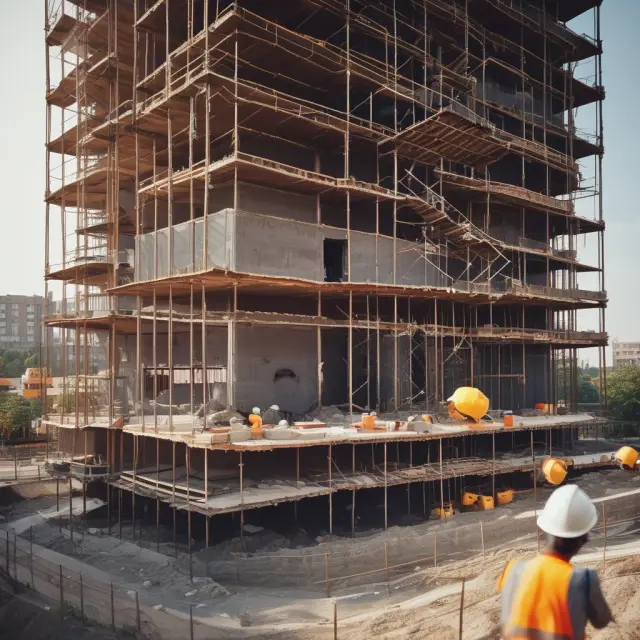
Insuring a Construction Loan
Before diving deeper into the specifics of construction loans, it is essential to discuss insurance requirements and types of coverage to ensure a secure investment. The importance of proper coverage cannot be overstated when dealing with potentially risky projects. Let’s examine what kinds of insurance are necessary for both lenders and borrowers during the construction loan process.
Lender’s Insurance
Protecting their investment is priority number one for lenders, so they typically require several types of insurance coverage from the borrower:
- Builder’s Risk Insurance: This type of policy covers damages to the structure during construction due to theft, vandalism, or natural disasters like windstorms and hail. The borrower should be sure to obtain this coverage as soon as possible, ideally before the project begins.
- General Liability Insurance: General liability insurance protects against third-party claims of bodily injury, property damage, or other non-damage-related issues arising from construction activities. Contractors and subcontractors working on the site are typically responsible for carrying this coverage.
- Workers’ Compensation Insurance: This type of coverage ensures that workers injured during construction are compensated for their medical bills and lost wages. It is required by law in most states for any business with employees.
Borrower’s Insurance
Aside from the lender’s insurance requirements, borrowers should consider obtaining additional coverage to protect themselves during the construction process:
- Title Insurance: This type of policy guards against any issues arising from potential ownership disputes or liens on the land upon which the project is being constructed.
- Mortgage Insurance: If a construction loan has a high loan-to-value ratio, the borrower may be required to purchase mortgage insurance as well. This coverage protects the lender if the borrower fails to repay the loan, allowing them to recover their losses.
- Contingency or Overhead Insurance: An often overlooked type of coverage, contingency or overhead insurance covers unexpected costs incurred during construction. These costs can include things like design changes and labor shortages.
Insuring a construction loan is an essential step for both lenders and borrowers to protect their investment, ensure project completion, and minimize any potential risks. By being aware of these requirements and coverage types, you’ll be better prepared when approaching the construction loan process.

Case Study: An Example of a Construction Loan
A construction loan is an essential financial tool that enables borrowers to finance their custom-built homes or real estate projects before securing long-term financing. For instance, Jane Doe, an ambitious homeowner, decided to build her dream house with a budget of $500,000. To achieve this goal, she approached her local bank for a construction loan.
The process began when Jane and the lender discussed the project details and agreed on a drawdown schedule, which dictated how much money would be released at each stage of the construction. In the initial month, Jane only required $50,000 to cover the initial costs, so she requested that amount from her loan. This approach allowed Jane to pay interest only on the amount she had withdrawn during the construction phase, saving her significant sums.
The lender released the first installment of $50,000 and required Jane to provide proof that the funds were being used appropriately, ensuring compliance with the agreed-upon budget and adherence to local building codes. As the project progressed, she continued to make requests for the remaining funds based on the drawdown schedule.
Throughout the construction period, Jane paid interest only on the amount she had withdrawn. This arrangement not only allowed her to save money but also provided flexibility in managing the cash flow during the project. Once the home was completed after a year, Jane approached her local bank for refinancing. She converted her construction loan into a permanent mortgage, thereby paying off the construction loan and securing long-term financing for her dream house.
This example illustrates how a construction loan can enable borrowers to build their desired properties while saving money during the construction process through interest-only payments on the withdrawn funds. The successful completion of Jane’s project demonstrates that with a well-planned approach, determination, and a reliable lender, a custom-built home is an achievable goal.

FAQ – Frequently Asked Questions About Construction Loans
What exactly is a construction loan?
A construction loan is a type of short-term financing intended to cover the costs of constructing a new property or renovating an existing one. The borrower or builder applies for this loan before starting the project, and it is repaid once the construction phase is complete.
How does a construction loan differ from a traditional mortgage?
A traditional mortgage is used to finance an already built home, while a construction loan covers the costs of building one. Construction loans have higher interest rates and require larger down payments.
What percentage of the project’s cost must be paid upfront for a construction loan?
Most lenders ask for at least a 20% down payment, with some requesting as much as 25%.
Is it difficult to qualify for a construction loan?
Obtaining approval for a construction loan can present challenges due to the risks involved and the need for a comprehensive project plan and qualified builder. A strong credit history may also be necessary.
What role does a “blue book” play in securing a construction loan?
A blue book is a detailed list of construction costs, plans, specifications, and schedules. It’s essential for presenting the project to lenders and gaining their confidence in approving the loan.
Where can I find a construction loan?
Local credit unions and regional banks tend to be most familiar with the housing market in their area and are likely the best places to look for construction loans.
Can I act as my own general contractor and still qualify for a construction loan?
It’s unlikely that a borrower will obtain approval for a construction loan if they plan on acting as their own general contractor, especially if they don’t have extensive building knowledge or resources. In such cases, an owner-builder construction loan may be necessary.
What are the advantages of taking out a construction loan?
The primary benefit is the ability to build a custom home tailored to your preferences and specifications. Additionally, interest payments can be lower during the construction phase as only the funds drawn down are subjected to interest.
How does a drawdown schedule work for a construction loan?
A drawdown schedule outlines the distribution of loan funds over the course of the project in stages. The borrower can take the necessary amount at each stage, and pays interest on that specific amount only until the next disbursement.
What happens once the project is complete?
The borrower may choose to refinance the construction loan into a mortgage or obtain a new loan to pay it off entirely. This step ensures long-term funding for the property.
 Next entry · No. 746Understanding Consumer Discretionary: The Non-Essential Sector for Savvy Investors
See also
-
 No. 680
20 May 2024
23 min
Understanding Cost, Insurance, and Freight (CIF): International Shipping Agreements for Professional and Institutional Investors
Business Strategy
No. 680
20 May 2024
23 min
Understanding Cost, Insurance, and Freight (CIF): International Shipping Agreements for Professional and Institutional Investors
Business Strategy -
 No. 696
23 May 2024
22 min
Understanding COBRA: What It Is and How It Works for Professional and Institutional Investors
Business Strategy
No. 696
23 May 2024
22 min
Understanding COBRA: What It Is and How It Works for Professional and Institutional Investors
Business Strategy -
 No. 648
14 May 2024
21 min
Understanding the Catalog of Federal Domestic Assistance (CFDA): A Comprehensive Guide for Institutional and Professional Investors
Business Strategy
No. 648
14 May 2024
21 min
Understanding the Catalog of Federal Domestic Assistance (CFDA): A Comprehensive Guide for Institutional and Professional Investors
Business Strategy -
 No. 347
10 Apr 2024
17 min
Understanding Bankruptcy: A Comprehensive Guide for Professional and Institutional Investors
Business Strategy
No. 347
10 Apr 2024
17 min
Understanding Bankruptcy: A Comprehensive Guide for Professional and Institutional Investors
Business Strategy -
 No. 5,965
29 Sep 2026
12 min
Cash-Out Refinance vs HELOC: The Blended-Rate Math on $50,000
Mortgage
No. 5,965
29 Sep 2026
12 min
Cash-Out Refinance vs HELOC: The Blended-Rate Math on $50,000
Mortgage -
 No. 5,964
28 Sep 2026
12 min
Mortgage Recast vs Refinance: What to Do With a $50,000 Lump Sum
Mortgage
No. 5,964
28 Sep 2026
12 min
Mortgage Recast vs Refinance: What to Do With a $50,000 Lump Sum
Mortgage