Understanding Cyclical Industries: Navigating the Volatility of Business Cycles

Explore the impact of business cycles on cyclical industries, learn how to navigate economic downturns, and understand strategies for investing in volatile…
What is a Cyclical Industry?
A cyclical industry refers to a business sector whose revenues fluctuate significantly with the economic cycle. These industries experience periods of strong growth during expansionary phases followed by declines in sales when the economy enters recessionary or contractionary phases. A key characteristic of cyclical industries is their sensitivity to consumer spending patterns, which can change dramatically as the economy shifts from expansion to contraction and back again.
Understanding Cyclical Industries: Business Cycle Sensitivity
Business cycles are an inherent aspect of free-market economies that go through predictable periods of growth and contraction. Companies in cyclical industries must learn to navigate these economic fluctuations if they are to remain competitive and profitable over the long term. The most common business cycle phases include expansion, peak, contraction, and trough.
During expansionary phases, productivity rises, employment expands, and consumer confidence is high, leading to increased spending on both discretionary and non-discretionary goods and services. In contrast, during the contraction phase, economic activity slows, unemployment rises, and consumers tighten their belts, reducing expenditures on nonessential items.
Examples of Cyclical Industries: A Focus on Durables and Consumer Discretionary Goods
The manufacturing sector, particularly companies dealing with the production of durable goods like automobiles, housing, and heavy machinery, is often characterized as cyclical. These industries are heavily influenced by economic growth rates and consumer confidence levels. Another industry that tends to be sensitive to business cycles is consumer discretionary goods—products and services for which demand is not essential but rather subject to the whims of consumers’ disposable income and overall financial well-being. The airline industry, for instance, experiences strong revenue growth during economic expansions due to increased travel demand but faces significant sales declines when economic downturns occur.
The Implications of Business Cycles for Cyclical Industries: Preparing for the Unexpected
Understanding business cycles and their impact on cyclical industries is crucial for companies seeking to maintain profitability and growth through various phases of the economy. Adopting strategies that allow companies to adapt and mitigate the effects of economic fluctuations can help them weather downturns, position themselves for success during expansions, and ultimately thrive in a constantly changing business environment.
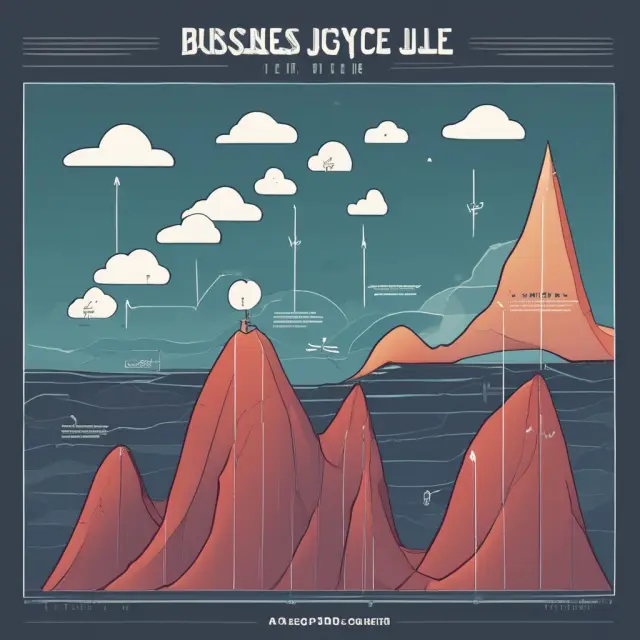
The Business Cycle: Understanding its Phases
A cyclical industry’s revenue patterns closely follow the stages of the business cycle, a recurring sequence of economic growth followed by contraction. The four distinct phases of the business cycle—expansion, peak, contraction, and trough—affect revenues differently for various industries.
During the expansion phase, productivity thrives, employment flourishes, and stock markets tend to climb as a result of increasing consumer disposable income. As consumers feel more secure financially, their willingness to spend on nonessential items increases, driving revenue growth in cyclical industries such as durable goods manufacturing and consumer discretionary services.
The peak marks the end of an expansionary phase when economic activity reaches its maximum potential, leading to a shift towards contraction. The contractionary phase is characterized by declining productivity, rising unemployment, and shrinking stock markets. Discretionary income becomes scarce as consumers cut back on nonessential spending, particularly in industries such as travel, luxury goods, or entertainment, causing revenues to contract.
Recessions often occur during the contraction phase but are not a guaranteed outcome. In the United States, two consecutive quarters of negative gross domestic product (GDP) growth is generally considered an economic recession. As consumer confidence wanes and unemployment rises, businesses in cyclical industries may face financial challenges, including decreased demand for their products or services, shrinking profit margins, and even bankruptcy.
The trough marks the end of the contraction phase when the economy reaches its lowest point before starting to recover. During this phase, companies in cyclical industries may focus on cost reduction strategies such as workforce downsizing and operational streamlining to cope with the economic downturn. As the economy begins to grow again, these industries stand to benefit from an increase in consumer spending and improving market conditions.
Understanding the business cycle and its impact on revenues is crucial for investors, businesses, and policymakers involved in cyclical industries. By anticipating changes in economic conditions and preparing accordingly, they can mitigate risks associated with the inherent volatility of these industries.

Industries Prone to Cyclicality: An Overview
Cyclical industries are a distinct category of businesses that exhibit significant volatility in their revenue patterns due to the business cycle. These industries typically face higher sales during economic expansion and lower sales during contractions or recessions. Consequently, understanding the nature of cyclical industries is crucial for investors, companies, and policymakers alike.
Durable goods and consumer discretionary sectors are often characterized as cyclical industries since they heavily depend on consumers’ spending habits. The business cycle significantly influences consumers’ ability to make nonessential purchases due to shifts in employment rates and income levels.
The four phases of the business cycle – expansion, peak, contraction, and trough – play a significant role in the performance of cyclical industries. During the expansionary phase, productivity increases, and employment rises, leading to increased consumer disposable income and higher demand for goods and services. The peak marks the end of an economic expansion; as the economy transitions into a contractionary phase, discretionary spending tends to decrease, resulting in lower sales for cyclical industries. Consequently, these industries may experience layoffs or cutbacks during the contractionary period. The trough represents the bottom of the business cycle when sales are at their lowest point.
Some industries that exhibit high levels of volatility include:
- Durable Goods: Industries such as automobiles, appliances, and heavy machinery tend to follow the business cycle closely due to their significant price tags and non-essential nature for consumers.
- Consumer Discretionary: This sector encompasses various industries like retail, leisure, media, and restaurants that rely heavily on consumer spending on nonessential goods and services. During economic downturns, these industries are often hit the hardest as consumers tighten their budgets.
- Energy: The energy industry is also cyclical due to its dependence on commodity prices, which can fluctuate dramatically depending on supply and demand dynamics and geopolitical factors.
- Real Estate: Due to the significant investment involved in buying or renting properties, real estate is another sector that follows the business cycle closely.
- Construction: Similar to real estate, construction experiences cyclical patterns due to its heavy dependence on economic conditions and government spending.
- Airlines: The airline industry is a prime example of a highly cyclical industry due to its reliance on consumer disposable income and travel trends. As previously mentioned, the demand for air travel tends to be strong during periods of economic expansion but significantly weakens in downturns.
- Technology: Although technology companies are often viewed as non-cyclical, some segments can exhibit cyclical behavior due to their dependence on capital expenditures and consumer spending trends.
Understanding the cyclical nature of industries is essential for investors, businesses, and policymakers alike to navigate the economic landscape effectively. In the following sections, we’ll discuss strategies for investing in cyclical industries during a downturn and explore best practices for companies dealing with business cycle fluctuations. We will also delve deeper into specific industry examples, such as the airline industry, and examine government policies designed to buffer economic cycles.
In conclusion, recognizing and understanding the inherent volatility of cyclical industries is crucial in various aspects of finance and investment. By gaining a solid grasp of how these industries operate and are influenced by the business cycle, investors can make informed decisions, businesses can adapt to changing market conditions, and policymakers can create strategies that mitigate the impact of economic downturns on consumers and the overall economy.
Why Do Business Cycles Matter for Cyclical Industries?
Understanding business cycles is crucial for investors in cyclical industries because these markets exhibit heightened sensitivity to the economic conditions. Cyclical industries are characterized by revenue patterns that rise during periods of economic prosperity and expansion, only to decline significantly during recessions and contractions. The ability to identify and navigate various stages of the business cycle can be a valuable tool for investors looking to maximize returns or mitigate risks within these industries.
The business cycle is an essential concept in economics and comprises four distinct phases: expansion, peak, contraction, and trough. During the expansionary phase, productivity thrives, employment rates improve, and stock markets typically rise as consumers have more discretionary income to spend on nonessential goods and services. This increased spending can lead to higher revenues for businesses within cyclical industries.
Following the expansionary phase comes the peak. At this point, the economy has reached its zenith, and the contraction phase begins. Consumers’ disposable income declines as unemployment rises and productivity slows. Recessions can occur during this phase, and investors in cyclical industries must be aware that revenue volatility is a distinct possibility.
The final phase of the business cycle is the trough. This represents the economic low point, after which the cycle starts anew with another expansionary period. During the trough, consumers are likely to cut discretionary spending, and companies in cyclical industries may face significant revenue losses. Understanding these patterns can help investors navigate the challenges of investing in cyclical industries by preparing for potential downturns or taking advantage of economic expansions.
For instance, cyclical industries like automobile manufacturing and home construction are particularly sensitive to business cycles due to their reliance on consumer discretionary income. In periods of economic prosperity, these industries may thrive as consumers invest in new vehicles or purchase homes. Conversely, during recessions, consumers cut back on discretionary spending, resulting in decreased demand for cars and housing.
By staying informed about business cycles, investors can make more informed decisions regarding their investments within cyclical industries. For example, during the expansionary phase, they may choose to invest in companies that are poised to benefit from increased consumer spending. Conversely, during the contractionary phase, it might be prudent for investors to allocate resources into defensive sectors like utilities and healthcare, which tend to perform better during economic downturns.
It’s important to note that no business cycle is identical; each has its unique characteristics and challenges. Being aware of these patterns can help investors navigate the volatility within cyclical industries and capitalize on opportunities throughout the economic cycle.
How to Invest in Cyclical Industries During a Downturn
Investing in cyclical industries during economic downturns can be both challenging and rewarding for investors. By understanding the specific strategies employed by industry experts, you can potentially reap significant rewards when others are hesitant to invest.
Firstly, consider purchasing cyclical stocks at discounted prices when they are underperforming. During a downturn, companies in these industries may experience lower sales and earnings due to reduced consumer spending on nonessential goods and services. However, their long-term fundamentals might remain strong, making them attractive value investments for those with a long time horizon and a high risk tolerance.
Secondly, consider investing in industries that are expected to outperform during the recovery phase of the business cycle. For instance, industries that are countercyclical or anticyclical, such as healthcare, consumer staples, and utilities, often perform well when the economy is contracting. Additionally, investors can also look into investing in industries that provide essential services, like defense and education, which tend to be less sensitive to economic cycles.
Thirdly, investors may opt for a dollar-cost averaging (DCA) strategy during cyclical downturns. This approach involves consistently investing a fixed amount of money at regular intervals, regardless of market conditions. Over time, the average cost per share decreases when prices are low, potentially resulting in higher returns when the economy recovers.
Fourthly, investors may consider purchasing industry-specific exchange-traded funds (ETFs) during economic downturns. ETFs that track cyclical industries allow investors to gain broad exposure to multiple stocks within that sector and can provide diversification benefits for a well-balanced investment portfolio.
Lastly, it is important to consider a company’s financial position before investing in cyclical industries during a downturn. Strong balance sheets, positive cash flows, and efficient management are critical factors that can help mitigate the potential risks of investing in these sectors during uncertain economic conditions. By carefully evaluating a company’s fundamentals, investors can increase their chances of identifying cyclical stocks with the potential for strong long-term growth.

Cyclical Industry Examples: Airline Industry
The airline industry is a prime example of a cyclical industry, where economic conditions significantly influence demand for flights. During periods of robust economic growth, consumer confidence tends to be high. As a result, individuals and corporations spend more on business and leisure travel, leading to increased revenue for airlines. Conversely, during economic downturns, consumers tighten their belts and cut back on nonessential expenses like travel. This reduced demand translates into lower ticket sales, decreased load factors (the percentage of seats filled), and ultimately, lower revenues for airlines.
Let us examine this phenomenon in the context of the business cycle’s phases:
1. Expansion: During expansionary periods, the economy is experiencing steady growth, and consumer confidence is high. People are more likely to book flights for business trips or vacations as they have disposable income to spare. Airlines benefit from this increased demand, filling planes with passengers and generating healthy revenue streams.
2. Peak: At the peak of the business cycle, the economy has reached its full potential. Although consumer spending may still be strong, the rate of growth begins to decelerate. During this stage, airlines might experience somewhat diminished demand for flights due to the tapering off of economic expansion. However, airlines can mitigate these losses by raising prices or offering discounts to maintain passenger volumes.
3. Contraction: In this phase, the economy is contracting, leading to lower consumer confidence and reduced spending. As people cut back on nonessential expenses, they are more likely to postpone travel plans. Airlines experience a significant decline in demand for flights during this time, which results in empty seats and substantial revenue losses.
4. Trough: At the trough of the business cycle, the economy has hit its bottom. Unemployment is high, consumer spending is weak, and businesses are shedding jobs to cut costs. Airlines face intense competition for what little demand remains, as consumers are reluctant to spend on travel. To cope with this situation, airlines may resort to drastic measures like deep discounts and route cancellations to attract passengers.
Understanding the cyclical nature of the airline industry is crucial for investors seeking opportunities in this sector. By recognizing which phase of the business cycle we are currently in or about to enter, investors can adjust their strategies accordingly to maximize returns. For instance, they may choose to invest in airlines during expansionary periods when demand for travel is strong and consumer confidence is high. Conversely, during contractionary phases, it might be wise to avoid the sector altogether or consider investing in specific airline stocks that are known for their resilience during downturns.
Overall, the cyclical nature of industries like aviation underscores the importance of keeping abreast of economic trends and business cycle indicators when making investment decisions. By staying informed about these dynamics, investors can make more informed choices and better navigate the inherent volatility in cyclical sectors.

Coping with Cyclicality: Best Practices for Companies
Navigating the business cycle can be challenging for companies operating in cyclical industries. These organizations are significantly affected by economic ups and downs, with revenue growth and losses depending on the phase of the cycle. While it’s impossible to eliminate the impact of business cycles entirely, strategic planning can help minimize their negative effects on financial performance and the bottom line. Here are some best practices for companies coping with cyclicality:
1. Diversify product lines: By offering a diverse range of products or services, businesses can mitigate revenue volatility. When one market is experiencing an economic downturn, another may be thriving. This approach can help ensure that overall revenues remain stable and less susceptible to the business cycle.
2. Manage costs effectively: During periods of economic contraction, companies must focus on managing their expenses carefully. This can include reducing overhead by cutting nonessential spending and implementing operational efficiencies. For example, automating certain processes or investing in energy-efficient equipment can help reduce ongoing operating costs while also contributing to long-term sustainability.
3. Build financial reserves: Another strategy for companies is to build substantial financial reserves during periods of economic prosperity. This can provide a cushion during downturns and enable continued investment in research and development, marketing, and other growth initiatives despite changing economic conditions.
4. Utilize strategic pricing: During cyclical downturns, companies may consider implementing price increases to counteract the revenue loss resulting from reduced demand for their goods or services. This can help maintain profitability while ensuring that customers do not abandon them entirely due to perceived price increases. However, it’s essential to conduct thorough market analysis and consider competitors’ reactions before implementing such a strategy.
5. Maintain strong relationships with suppliers: In cyclical industries, companies often face pressure on both the revenue and cost sides of their business. Building and maintaining strong relationships with suppliers can help mitigate potential supply chain disruptions and ensure access to essential raw materials or components during times of economic stress. Additionally, negotiating favorable contract terms can help protect against unexpected price increases.
6. Embrace technology: Implementing advanced technologies to streamline operations and increase efficiency is a proven strategy for companies in cyclical industries. Automation, robotics, artificial intelligence, and other technological advancements can help reduce labor costs, improve product quality, and enhance overall competitiveness. In turn, these improvements can provide a buffer against the volatility of business cycles.
7. Explore new markets: Companies may consider expanding their reach by exploring new markets during periods of economic growth. This can include entering emerging markets or developing new customer segments. By diversifying geographically and demographically, businesses can reduce their reliance on any single market or customer base and minimize the impact of cyclical downturns.
8. Engage in strategic acquisitions: Companies with the financial resources to do so may consider making strategic acquisitions during periods of economic prosperity. This can help them gain access to new technologies, products, or markets while also enhancing their competitive positioning and expanding their customer base.
In conclusion, coping with cyclicality is a critical challenge for companies in industries that are sensitive to the business cycle. By implementing strategic planning practices like diversification, effective cost management, building financial reserves, strategic pricing, maintaining strong supplier relationships, embracing technology, exploring new markets, and engaging in strategic acquisitions, organizations can minimize the impact of business cycles on their financial performance and better position themselves for long-term success.

The Role of Government in Buffering Economic Cycles
Cyclical industries face significant revenue fluctuations due to the business cycle. However, governments worldwide have implemented various policies aimed at mitigating economic downturns caused by these cycles. Understanding these policies and their implications for cyclical industries is crucial for investors and companies alike.
Governments typically employ two primary measures to buffer economic cycles: fiscal stimulus packages and monetary policy tools. These interventions can help stabilize economies during recessions, providing some relief to cyclical industries.
Fiscal Stimulus Packages
Fiscal stimulus is an injection of government spending into the economy during a downturn. This spending can come in different forms, such as tax rebates for individuals or grants to businesses for capital investments. During the Great Recession of 2008, many countries implemented large fiscal stimulus packages to combat the economic downturn and promote recovery. For instance, the American Recovery and Reinvestment Act, also known as the stimulus bill, allocated nearly $790 billion to various projects designed to boost employment and economic growth in the United States.
Monetary Policy Tools
Monetary policy refers to actions taken by central banks to influence the supply of money within an economy. During a recession, central banks can reduce interest rates to make borrowing cheaper for both businesses and consumers, which can stimulate spending and investment. Lower interest rates also decrease the cost of carrying inventories for companies in cyclical industries, making it easier for them to weather economic downturns.
For example, during the 2008 financial crisis, the Federal Reserve lowered its federal funds rate from 5.25% in September 2008 to near zero by December of that year. The Fed’s aggressive easing of monetary policy helped alleviate some of the negative effects of the recession on industries that were particularly sensitive to economic fluctuations.
In conclusion, governments play a vital role in mitigating the impact of business cycles on economies and cyclical industries. Fiscal stimulus packages and monetary policy tools can help stabilize economies during downturns, providing some relief to cyclical industries and their investors. By understanding these policies and how they affect cyclical industries, investors can make more informed decisions about the best time to invest in companies within this sector.
FAQs on Government Policies and Cyclical Industries
What are fiscal stimulus packages?
Answer: Fiscal stimulus is an injection of government spending into the economy during a recession, designed to promote recovery and stabilize economies.
How do monetary policy tools help buffer cyclical industries?
Answer: Monetary policy tools such as lower interest rates can decrease the cost of borrowing for businesses and consumers, making it easier for companies in cyclical industries to weather economic downturns.
What are some examples of fiscal stimulus packages?
Answer: One example is the American Recovery and Reinvestment Act, which allocated nearly $790 billion to various projects designed to boost employment and economic growth in the United States during the Great Recession.
How do monetary policy tools affect inflation?
Answer: Lower interest rates can lead to increased borrowing, potentially driving up inflation if demand for goods and services outpaces supply. However, central banks must carefully manage their policies to ensure that inflation does not become a problem.

Future Outlook for Cyclical Industries: Adapting to Changing Market Conditions
The future outlook for cyclical industries is a topic of significant interest for investors, economists, and business leaders alike. As the economy evolves, so do the trends affecting various sectors. Understanding these shifts can help stakeholders make informed decisions about their investments and business strategies.
One trend shaping the future of cyclical industries is the shift towards a more service-driven economy. As automation and technology continue to advance, many industries reliant on labor-intensive manufacturing processes are likely to face increased competition and potential disruption. This dynamic has already been observed in industries like automobiles and textiles, where Chinese competitors have emerged as major players.
Another trend impacting cyclical industries is the rise of e-commerce and online shopping. Consumers increasingly prefer the convenience and flexibility that e-commerce offers over traditional brick-and-mortar stores. Industries like retail, especially those specializing in consumer discretionary goods, are being forced to adapt or risk losing market share.
Furthermore, demographic shifts, such as an aging population, can affect the demand for certain cyclical industries. For example, industries that cater to older generations, such as healthcare and senior living facilities, are likely to benefit from these demographic changes. Conversely, industries that rely heavily on younger consumers, like fashion, may face challenges due to a shrinking target audience.
However, it is important to note that the business cycle will continue to play a crucial role in shaping the fortunes of cyclical industries. Understanding this aspect and being able to navigate the phases of the business cycle is essential for investors and businesses alike. For instance, during periods of economic expansion, companies can focus on growth strategies like hiring new employees and expanding operations. On the other hand, during contractions, they may need to focus on cost-cutting measures and restructuring initiatives to weather the downturn.
Additionally, governments can implement policies that help mitigate the impact of business cycles on cyclical industries. For example, fiscal stimulus packages can be employed during recessions to support industries in crisis, such as infrastructure spending or subsidies for small businesses. Monetary policy tools like interest rates and quantitative easing can also play a role in stabilizing economic conditions and providing relief to affected industries.
In conclusion, the future outlook for cyclical industries is influenced by various trends, including technological advancements, demographic shifts, and government policies. Understanding these factors can help investors and businesses make informed decisions about their strategies and investments. It is essential to remember that business cycles will continue to play a significant role in shaping the fortunes of cyclical industries. By staying aware of these trends and anticipating their impact on specific industries, stakeholders can better position themselves for success.
FAQs on Cyclical Industries and Business Cycles
Q: What is a cyclical industry? A: A cyclical industry is a type of business that experiences fluctuations in revenue due to the economic cycle. These industries’ revenues are generally higher during periods of economic growth and lower during economic downturns. Companies within cyclical industries can manage this volatility by adjusting workforce sizes, as well as making strategic investments during good times and cost-cutting measures during bad ones.
Q: What is the business cycle? A: The business cycle consists of four distinct phases – expansion, peak, contraction, and trough. During the expansionary phase, productivity increases, unemployment declines, and stock markets typically rise as consumers are more likely to spend due to increased employment and wealth. Subsequently, this phase ends with a peak, marking the beginning of a contractionary phase. During this period, discretionary income falls, causing a decrease in consumer spending, leading to economic downturns, such as recessions. The final stage is the trough, which signifies the bottom of the business cycle before it begins anew.
Q: What industries are typically cyclical? A: Industries focusing on non-essential goods and services tend to be highly cyclical as they are more susceptible to shifts in consumer spending patterns. These include durable goods, heavy equipment manufacturing, and consumer discretionary industries. One example of a cyclical industry is the airline sector, where revenues depend largely on consumers’ willingness to travel and spend during periods of economic prosperity and expansion.
Q: Why is it important for investors to understand cyclical industries and business cycles? A: Understanding cyclical industries and business cycles can help investors make informed decisions regarding investment opportunities. By knowing the trends in these industries, investors can better anticipate market shifts and adjust their portfolios accordingly to maximize returns during growth periods while minimizing losses during downturns.
Q: How do companies cope with the impact of cyclicality on their financial performance? A: Companies in cyclical industries may employ various strategies to mitigate the impact of business cycles. For example, they can optimize workforce sizes based on economic conditions and implement cost-cutting measures during downturns while making strategic investments during growth phases. Additionally, some companies might focus on diversifying their product offerings or customer base to reduce their overall dependence on cyclical markets.
Q: What role does the government play in buffering economic cycles? A: Governments can implement various policies aimed at stabilizing economic cycles by providing fiscal stimulus packages during recessions and contractions, as well as employing monetary policy tools to manage interest rates and inflation during expansionary and peak phases. These measures can help cushion businesses and households against the negative effects of cyclical downturns while also encouraging growth during economic expansions.
Q: What future trends might impact cyclical industries? A: Several current trends may influence cyclical industries, including increasing automation and digitalization in manufacturing, changing consumer preferences towards sustainable products and services, and the potential for increased government intervention and regulation to address market volatility. Companies that adapt to these trends may have an advantage in a rapidly evolving economic landscape.
 Next entry · No. 864Deferred Acquisition Costs (DAC) in Insurance Industry: Accounting, Requirements & Special Considerations
See also
-
 No. 763
04 Jun 2024
22 min
Contractionary Policy: Understanding the Tools, Effects, and Goals of Central Bank Monetary Measures
Economics
No. 763
04 Jun 2024
22 min
Contractionary Policy: Understanding the Tools, Effects, and Goals of Central Bank Monetary Measures
Economics -
 No. 2,604
20 Jan 2025
24 min
Understanding Jobless Recovery: A New Economic Reality for Institutional Investors
Business Strategy
No. 2,604
20 Jan 2025
24 min
Understanding Jobless Recovery: A New Economic Reality for Institutional Investors
Business Strategy -
 No. 861
21 Jun 2024
19 min
Cyclical Stocks: Understanding the Economic Cycles and Profiting from Them
Business Strategy
No. 861
21 Jun 2024
19 min
Cyclical Stocks: Understanding the Economic Cycles and Profiting from Them
Business Strategy -
 No. 5,090
11 Aug 2025
22 min
Understanding Economic Troughs: A Turning Point for Business Cycles
Business Finance
No. 5,090
11 Aug 2025
22 min
Understanding Economic Troughs: A Turning Point for Business Cycles
Business Finance -
 No. 1,479
21 Sep 2024
21 min
Understanding the Role and Significance of the Federal Discount Rate in Monetary Policy
Finance Policy
No. 1,479
21 Sep 2024
21 min
Understanding the Role and Significance of the Federal Discount Rate in Monetary Policy
Finance Policy -
 No. 1,216
13 Aug 2024
25 min
Understanding Economic Stimulus: Monetary and Fiscal Policy Tools for Jumpstarting Private Sector Growth
Economics
No. 1,216
13 Aug 2024
25 min
Understanding Economic Stimulus: Monetary and Fiscal Policy Tools for Jumpstarting Private Sector Growth
Economics