Understanding Fibonacci Retracement Levels in Finance: Applications, Formula, and Importance for Investors

Understand the significance and calculations of Fibonacci Retracement Levels, their use in finance as support & resistance areas, & various trading strategies.
Background and History of Fibonacci Retracement Levels
Fibonacci retracement levels, derived from the famous sequence first discovered by Leonardo Pisano Bigollo or Fibonacci in the late 13th century, are integral horizontal lines that help investors and traders anticipate potential support and resistance levels. This powerful tool, which can be applied to any financial instrument, is based on the assumption that market movements follow predictable patterns.
The origins of Fibonacci retracement levels stretch back to ancient India, where mathematicians discovered the connection between these numbers in various geometric structures around 450 BCE. The sequence was later popularized by Leonardo Fibonacci, who introduced it to Western Europe after learning about it from Indian merchants during his travels.
The term “Fibonacci retracement levels” came into use when traders applied these ratios to the financial markets. The indicators are calculated based on two significant price points – typically a high and a low. Once those levels have been determined, horizontal lines are drawn at specific percentage levels of that price range, which act as potential support and resistance zones.
The most common Fibonacci retracement levels include 23.6%, 38.2%, 50%, 61.8%, and 78.6%. These ratios are derived from the Fibonacci sequence, in which each number is the sum of the two preceding numbers (e.g., 0, 1, 1, 2, 3, 5, 8, 13, 21, and so on). By dividing one number by another within this sequence, various percentage-based relationships emerge:
- 61.8%: 1 / 1.618 = 0.618 or 61.8%
- 50%: 1 / 2 = 0.5 or 50%
- 38.2%: 1 / 1.618^2 = 0.382 or 38.2%
- 23.6%: 1 / (1 + sqrt(5))² = 0.382 x 0.618 = 0.236 or 23.6%
These levels have become widely used in various charting platforms due to their potential ability to predict the future direction of price movements and identify key inflection points within a trend. However, it is essential to note that these levels do not guarantee success, as market trends can be influenced by numerous factors beyond mathematical patterns. As such, they should be used in conjunction with other technical indicators for optimal results.
By understanding the background and history of Fibonacci retracement levels, traders can unlock valuable insights into market movements and improve their overall investment strategy.

The Significance of Fibonacci Numbers in Finance
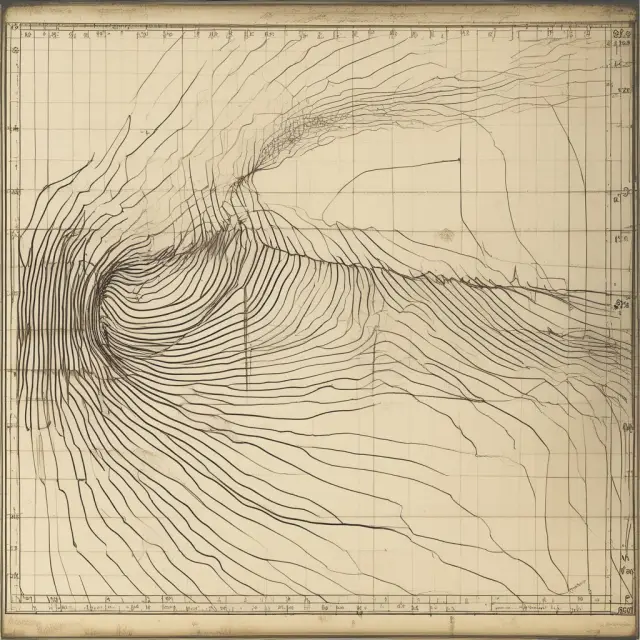
Fibonacci retracement levels draw their relevance from the Fibonacci sequence, a series of numbers that exhibit a unique mathematical property. These numbers were first recorded by an Indian mathematician named Virahanka around 600 A.D., with the method of sequencing developed even earlier. Fibonacci numbers are derived from the simple rule: each number is the sum of the two preceding numbers, starting from 0 and 1. For instance, 0 + 1 = 1, and 1 + 1 = 2, 2 + 1 = 3, 3 + 2 = 5, and so on (Figure 1).
As Fibonacci numbers progressively expand, the ratios formed between any two consecutive numbers converge to a specific ratio known as the Golden Ratio. This ratio is approximately equal to 1.618 or 0.618, depending on whether the smaller number in the ratio is compared to the larger one or vice versa. Leonardo Pisano Fibonacci, an Italian mathematician who popularized these numbers in Europe during the Middle Ages, did not actually discover them. However, he did play a significant role in their dissemination after learning about them from Indian merchants.
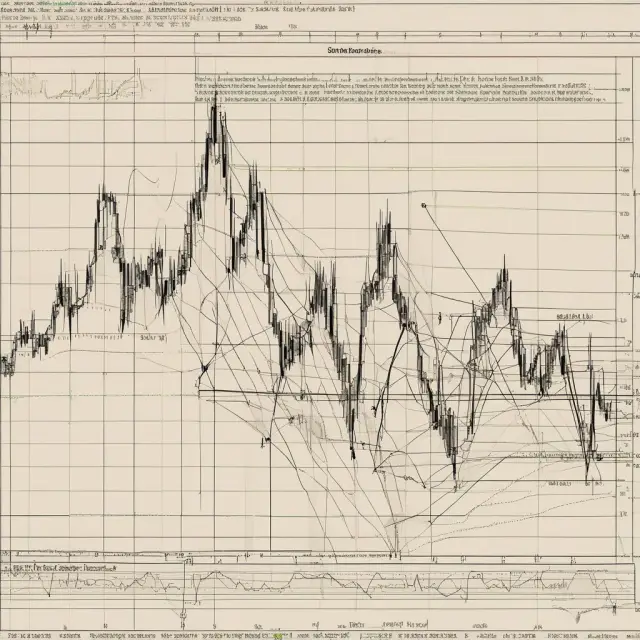
These numbers have found applications in various fields, including finance and investment, due to their prevalence in nature and geometry. In finance, Fibonacci retracement levels represent horizontal lines that act as potential support and resistance levels for price movements. These levels are calculated based on specific percentage levels of a particular price range between two significant points (Figure 2).
Traders and investors use these levels to anticipate possible reversals or continuation of trends in financial instruments, such as stocks, currencies, indices, and commodities. The most commonly used Fibonacci retracement ratios are 23.6%, 38.2%, 50%, 61.8%, and 78.6%. Each ratio represents a specific percentage of the total price range between the high and low points (Figure 3).
The significance of Fibonacci numbers in finance is rooted in their mathematical properties, which provide insights into potential price movements. The Golden Ratio’s presence in various financial markets indicates that prices may retrace to these levels during their upward or downward trends. By understanding the relationship between Fibonacci retracement levels and the underlying financial instrument, traders can make more informed decisions about entering or exiting positions, setting stop-losses, or determining price targets.
In conclusion, Fibonacci retracement levels are essential tools for analyzing price movements in financial markets due to their mathematical connection with the Golden Ratio. Their potential applications include identifying support and resistance levels, anticipating trend reversals or continuations, and making informed trading decisions. Understanding the background and significance of these numbers will help investors and traders navigate the complex world of finance more effectively.
How to Calculate Fibonacci Retracement Levels
Calculating Fibonacci retracement levels involves a few simple steps that allow investors and traders to determine potential support and resistance areas for a financial instrument. These levels are derived from the Fibonacci sequence, which is based on the Golden Ratio (0.618 or 1.618).
To calculate Fibonacci retracement levels, you will need two key price points: a high point and a low point. The process begins by calculating the total price swing between these two points. Next, you apply specific percentage levels to the total swing to identify potential support and resistance levels.
The most commonly used Fibonacci retracement levels are 23.6%, 38.2%, 50%, 61.8%, and 78.6%. To calculate these levels, follow these steps:
- Identify the high point (the swing high) and the low point (the swing low). The high and low points represent extreme prices within a financial instrument’s price action.
- Calculate the total price swing by subtracting the low point from the high point. For example, if the high is $50 and the low is $40, the total price swing is $10.
- Determine the Fibonacci retracement levels by applying the given percentages to the total swing amount:
- 23.6%: Calculate this level as 0.236 × total price swing = $2.447 (rounded). The Fibonacci retracement level is at approximately $47.55 ($50 – $2.447).
- 38.2%: Multiply 0.382 × total price swing to find the level, which results in $3.89 ($50 – $46.11). The Fibonacci retracement level is at approximately $46.11 ($50 – $3.89).
- 50%: Half of the total price swing yields the 50% level. In this case, it’s $5 ($50 ÷ 2). The Fibonacci retracement level is at $45.
- 61.8%: Calculate this level as 0.618 × total price swing = $6.192 (rounded). The Fibonacci retracement level is at approximately $43.804 ($50 – $6.192).
- 78.6%: Multiply 0.786 × total price swing to find the level, which results in $7.86 ($50 – $42.14). The Fibonacci retracement level is at approximately $42.14 ($50 – $7.86).
Once you’ve identified the Fibonacci retracement levels based on your chosen time frame and price points, you can use this information to guide your investment or trading decisions by looking for potential buy or sell opportunities near these levels. Remember that these levels are not foolproof indicators, but they can provide valuable insights into a financial instrument’s price movements.

Using Fibonacci Retracements as Support and Resistance Levels
Fibonacci retracement levels act as significant areas where a stock’s price may reverse or pause during its price movement. These horizontal lines, derived from the Fibonacci sequence, are crucial indicators for traders and investors seeking to understand potential price trends and identify profitable trading opportunities.
The importance of Fibonacci retracements lies in their connection to the Golden Ratio, a mathematical concept found throughout nature and finance. By understanding the significance of these levels, traders can place entry orders, determine stop-loss levels, or set price targets. Let’s dive deeper into using Fibonacci retracement levels as support and resistance points.
Firstly, it’s essential to recognize that a stock’s trend is not always linear, with prices moving continually up or down. Instead, they often experience pullbacks, where the price moves against the primary trend direction before resuming its original course. Fibonacci retracement levels provide insight into these potential reversal points, enabling traders to anticipate price movements more effectively.
For example, when a stock experiences an uptrend, it may eventually reach a peak and start retracing some of its gains. As the price begins to move back towards its previous lows, Fibonacci levels can help identify support or resistance levels for this correction. If the price retraces to one of these levels during an uptrend, it might bounce off, signaling a potential buying opportunity. Conversely, if the price falls below a Fibonacci level during an uptrend, it could be a red flag that the rally has failed and may continue to decline.
The key Fibonacci retracement levels are typically 23.6%, 38.2%, 50%, 61.8%, and 78.6%. These percentages represent various ratios found in the Fibonacci sequence, with 50% being a common midpoint level. Although these levels may not guarantee price reversals or support/resistance points, they can provide valuable insight into potential trends and opportunities.
When looking at a chart, it’s essential to draw Fibonacci retracement levels correctly by identifying the swing high (highest price) and swing low (lowest price). Then, these two points determine the horizontal lines representing the key Fibonacci levels. For instance, if a stock experiences an uptrend from $30 to $50, then falls back down to $40, Fibonacci retracement levels can be drawn connecting these two extremes.
The importance of correctly identifying significant highs and lows cannot be overstated when utilizing Fibonacci retracement levels as a trading tool. Improperly defining the swing points may result in incorrect support or resistance levels, leading to missed opportunities or losses.
While Fibonacci retracements offer valuable insights into potential price movements, they should not be relied upon solely. It’s crucial to combine Fibonacci retracement analysis with other indicators and fundamental analysis for a more complete understanding of market trends and opportunities.
Moreover, it’s important to remember that there is no guarantee that the price will reverse or pause at specific Fibonacci levels. Thus, using these levels as a confirmation signal, such as waiting for a price bounce before entering a trade, can help minimize potential losses.
In summary, Fibonacci retracement levels serve as essential indicators of support and resistance levels in the financial markets, helping traders and investors anticipate potential price movements and identify opportunities. By understanding these levels’ significance and their mathematical underpinnings, one can make informed trading decisions and enhance overall investment strategies.
Fibonacci Retracement vs. Extensions: Understanding the Differences
While Fibonacci retracement levels are commonly used for identifying support and resistance during a pullback or correction, it’s essential to know that there is another related concept called Fibonacci extensions. Both indicators are derived from the Fibonacci sequence but serve different purposes. In this section, we will discuss their differences and explore how they can be utilized effectively in financial markets.
Fibonacci Retracement Levels vs. Extensions: What’s the Difference?
The primary goal of Fibonacci retracement levels is to identify potential areas where a stock may reverse or stall during its price movement after an initial trend. These levels are calculated based on two significant price points, typically the high and the low in a trending market. By calculating the percentage change between these two points, traders can pinpoint possible support and resistance levels using specific Fibonacci ratios, such as 23.6%, 38.2%, 50%, 61.8%, and 78.6%.
On the other hand, Fibonacci extensions are designed to predict potential price targets in an uptrend or downtrend after a correction has taken place. The calculation for these levels involves extending the initial trend beyond the two key price points using the same Fibonacci ratios. Extensions can help traders anticipate possible upside or downside objectives based on the previous trend direction.
Fibonacci Retracement vs. Extensions: Uses and Applications
Traders may use Fibonacci retracements as a standalone indicator or in conjunction with other tools for entry, exit, and stop-loss orders. They can help confirm trends and identify potential reversal points. For instance, if the price action bounces off a key Fibonacci level during an uptrend, it may be a signal to enter a long position. Alternatively, a bounce from a Fibonacci level in a downtrend might indicate selling opportunities.
Fibonacci extensions provide additional insight into potential price targets following a correction or consolidation phase. Traders can utilize these levels as a guideline for setting profit targets and calculating potential stop losses based on the trend’s direction. For example, if a stock rallies significantly during an uptrend and reaches the 161.8% extension level, it might be a good idea to consider taking profits or setting a trailing stop loss.
Another application of Fibonacci extensions is in identifying potential profit targets for swing traders looking to capitalize on significant price swings. For instance, if a stock experiences a strong downtrend and then retraces significantly, traders can look at the 161.8% extension level as a potential selling target when entering a short position.
It’s important to remember that neither Fibonacci retracement levels nor extensions are infallible indicators. They should be used in conjunction with other technical analysis tools and fundamental analysis for a more comprehensive understanding of the market dynamics.
In conclusion, both Fibonacci retracement levels and extensions provide valuable insights into support and resistance levels, potential price targets, and overall trend direction in financial markets. By understanding their differences and applications, traders can effectively incorporate these powerful tools into their investment strategies and make informed decisions based on the underlying market conditions.
Common Fibonacci Retracement Ratios in Finance
Fibonacci retracement levels provide crucial insight for traders and investors by offering potential areas where a stock may reverse or stall during its price movement. The most commonly used ratios include 23.6%, 38.2%, 50%, 61.8%, and 78.6%. These percentages represent the amount of the prior move that the price has retraced.
The origins of Fibonacci numbers can be traced back to ancient India, where they were first formulated between 450 BCE and 200 BCE. However, it wasn’t until Leonardo Pisano Bigollo, an Italian mathematician, brought them to Western Europe in the late 13th century that they gained widespread recognition in finance.
The significance of these ratios lies in their inherent mathematical relationship with the Fibonacci sequence. This sequence is derived from the addition of two preceding numbers: 0, 1, 1, 2, 3, 5, 8, 13, 21, and so forth. The mathematical relationships within this sequence produce several ratios, such as 23.6%, 38.2%, 50%, 61.8%, and 78.6%.
To apply these levels to a stock chart, choose two significant price points (typically a high point and a low point) and plot the retracement lines accordingly. The horizontal lines intersecting at these levels represent potential support or resistance zones for the security’s future direction.
It is essential to recognize that Fibonacci ratios should not be relied upon exclusively, as they do not guarantee price reversals or stalls at specific levels. Instead, traders often combine Fibonacci retracement levels with other technical indicators and analysis methods for a more comprehensive understanding of market trends.
Traders can use these levels to place entry orders, determine stop-loss levels, and set price targets based on their expectations for the stock’s movement. Additionally, other popular trading strategies, such as Gartley patterns and Elliott Wave theory, utilize Fibonacci ratios extensively.
In conclusion, understanding the common Fibonacci retracement ratios is a valuable tool in finance that can help traders and investors identify potential areas of support or resistance within a stock’s price movement. While these levels do not ensure price reversals, they provide valuable insight into market trends and offer opportunities to make informed trading decisions.

Limitations of Using Fibonacci Retracements
While Fibonacci retracement levels provide valuable insights into potential support and resistance areas for traders and investors, they are not foolproof indicators. It’s essential to acknowledge some limitations when relying on Fibonacci retracements as a trading strategy:
1. They don’t guarantee accuracy: Fibonacci retracement levels only indicate where the price might find support or resistance; there is no assurance that it will actually stop at these levels. This is why other confirmation signals, such as price bouncing off a level, are often used in conjunction with Fibonacci retracements.
2. Overreliance: Some traders may become overly reliant on Fibonacci retracement levels and overlook other essential factors influencing the market or specific securities. It’s crucial to use multiple indicators, technical analysis tools, and fundamental data to make more informed trading decisions.
3. Numerous levels: Since there are many Fibonacci retracement levels, it may be challenging for traders to determine which one to focus on at any given time. The high number of potential support and resistance areas can lead to confusion and missed opportunities if not used correctly.
4. Fluctuating markets: In volatile or fast-moving markets, price action may not respect Fibonacci retracement levels as strictly as in quieter market conditions. Therefore, it’s important for traders to be flexible and consider other factors that could influence price movements when using Fibonacci retracements.
5. Market structure: Some chart patterns may not fit neatly within the Fibonacci retracement framework. For example, a five-wave impulse pattern in Elliott Wave theory might have retracement levels at different percentages than the “official” Fibonacci ratios. Traders must understand that market structures and individual securities may not always adhere strictly to these mathematical relationships.
In conclusion, understanding the limitations of Fibonacci retracements is crucial for traders seeking to maximize their potential as a trading tool. By being aware of these limitations and using other indicators, analysis tools, and fundamental data, traders can make more informed decisions in various market conditions.
Frequently Asked Questions about Fibonacci Retracement Levels
Q1: What exactly is a Fibonacci retracement level?
A1: A Fibonacci retracement level is a potential price area where the market may reverse or pullback, calculated using key levels derived from the Fibonacci sequence. These horizontal lines are used by technical analysts to assess trends and anticipate future movements.
Q2: Are Fibonacci retracements always accurate?
A2: No, Fibonacci retracement levels do not guarantee accuracy as they serve only as potential areas of support or resistance. They should be considered in conjunction with other technical analysis tools and market conditions.
Q3: How do I calculate the percentages for Fibonacci retracement levels?
A3: The percentage levels are based on the Fibonacci sequence (0, 1, 1, 2, 3, 5, 8, 13, 21, and so on), with common levels being 23.6%, 38.2%, 50%, 61.8%, and 78.6%. These percentages correspond to the percentage retracement of a market move or trend.
Q4: What is the historical origin of Fibonacci retracement levels?
A4: The concept of using these numbers in financial markets originated in ancient India around 450-200 BCE, long before Leonardo Fibonacci introduced them to Europe. Indian mathematicians such as Acarya Virahanka, Gopala, Hemacandra, and Narayana Pandita are credited with their discovery and usage.
Q5: How do I use Fibonacci retracement levels in trading?
A5: Fibonacci retracement levels can be used to identify potential entry points or stop-loss orders by determining where the price might reverse or consolidate during a trending movement. A bounce off a key Fibonacci level could serve as a bullish signal, while a break below it may indicate a bearish reversal.
Q6: What is the difference between Fibonacci retracement and extension levels?
A6: Fibonacci retracement levels identify potential support and resistance levels during a correction or pullback. On the other hand, Fibonacci extension levels identify targets for price projections in the direction of the trend. Both are used to gauge potential market movements.
Real-World Applications of Fibonacci Retracements in Trading Strategies
Fibonacci retracement levels serve a valuable role as essential components in many popular trading strategies, including the Gartley pattern and Elliott Wave theory. In these methods, market reversals are found to predominantly occur around specific Fibonacci levels. Let’s dive deeper into how these strategies apply Fibonacci retracements for effective financial analysis.
The Gartley Pattern
A Gartley pattern is a bullish or bearish chart configuration, consisting of five price swings that form a symmetrical triangle. This pattern is named after its discoverer, H.M.Gartley, who identified the significance of Fibonacci retracement levels within this formation. The most common Gartley pattern, also referred to as the “classic” or “original” Gartley pattern, consists of five waves labeled with the letters A through E, which follow a distinct price movement sequence (See Figure 1).
Figure 1: Classical Gartley Pattern
In a bullish scenario, wave X is typically a retracement between the third and fourth waves (waves C and D), while wave Y is a rally to new highs that occurs after wave E. The key levels in a bullish Gartley pattern are found at the 38.2%, 50%, and 61.8% Fibonacci retracement levels. These levels indicate potential points where wave X may find support during the pullback or resistance during the rally towards new highs (see Figure 2).
Figure 2: Bullish Gartley Pattern with Fibonacci Retracement Levels
In a bearish scenario, wave X is a retracement between waves A and B while wave Y is a decline that occurs after wave C. The significant levels in a bearish Gartley pattern are the same 38.2%, 50%, and 61.8% Fibonacci retracement levels but in reverse (See Figure 3).
Figure 3: Bearish Gartley Pattern with Fibonacci Retracement Levels
Elliott Wave Theory
Robert Prechter discovered the Elliott Wave Principle, a financial market theory used to analyze stock market trends and predict reversals. The theory states that price movements follow specific wave patterns, which are identified as five waves (waves I through V) in an impulsive trend and three waves (waves A, B, and C) within a corrective pattern.
In the context of Fibonacci retracement levels, they represent potential points where waves B and C may find support or resistance. In an uptrend, wave B retraces between waves I and III, while wave C is the final leg up to new highs. The critical Fibonacci retracement levels for a bullish Elliott Wave count are 38.2%, 50%, and 61.8%. These levels can act as support during pullbacks or resistance during rallies towards new price peaks (see Figure 4).
Figure 4: Bullish Elliott Wave Pattern with Fibonacci Retracement Levels
Conversely, in a downtrend, wave A retraces between waves I and II while wave C is the final leg down. The essential levels for a bearish Elliott Wave count include 38.2%, 50%, and 61.8%. These levels act as resistance during rallies or support during declines (see Figure 5).
Figure 5: Bearish Elliott Wave Pattern with Fibonacci Retracement Levels
By combining Fibonacci retracement levels with these popular trading strategies, traders and investors can gain a more comprehensive understanding of market movements and make informed decisions based on the identified patterns. However, it’s important to remember that no strategy is foolproof, so using multiple indicators and confirming trends through various analysis methods is crucial for successful financial planning.

Advanced Techniques for Utilizing Fibonacci Retracement Levels
Fibonacci retracement levels provide valuable insights into potential support and resistance zones when applied correctly, but they can also be enhanced through advanced techniques to maximize their effectiveness. In this section, we will discuss the use of multiple timeframes and combining Fibonacci retracements with other indicators for more informed analysis.
1. Multiple Timeframes: One effective technique to expand the potential of Fibonacci retracement levels is using multiple timeframes. By applying Fibonacci retracements on various chart intervals, you can identify trends and patterns that might not be apparent on a single chart. For instance, a short-term reversal may indicate a long-term trend continuation when viewed in conjunction with higher timeframe charts.
2. Combining Fibonacci Retracements with Other Indicators: Another approach to enhancing Fibonacci retracements is combining them with other technical indicators. The marriage of these indicators can offer a more comprehensive analysis, helping traders make more informed decisions. Some popular combinations include:
– Moving averages: By overlapping Fibonacci retracement levels with moving averages (MA), you can identify potential entry and exit points for your trades. For example, a price bounce back to a significant Fibonacci level while also forming an intersection with the 20-day MA could be a strong indication of a trend reversal or continuation.
– MACD: The Moving Average Convergence Divergence (MACD) oscillator is another powerful tool that can complement Fibonacci retracements. By comparing the relationship between two moving averages and the Fibonacci levels, you may gain a deeper understanding of the underlying market dynamics and potential price movements.
– Bollinger Bands: When plotting Fibonacci retracements alongside Bollinger Bands, traders can gauge the level of volatility within a security’s price action. The combination allows for more precise entry and exit points as well as risk management strategies based on the price band’s expansion or contraction.
– RSI: Relative Strength Index (RSI) is another popular technical indicator that can be combined with Fibonacci retracements to identify overbought or oversold conditions in a security’s price action. By noting how the RSI behaves when it approaches significant Fibonacci levels, traders can make more informed decisions regarding their trading positions.
By employing multiple timeframes and combining Fibonacci retracement levels with other indicators, traders and investors can unlock further insights into market trends and potential price movements, potentially leading to more profitable outcomes.
 Next entry · No. 1,491Understanding FICA: History, Rates, and Calculations
See also
-
 No. 892
26 Jun 2024
17 min
Decoding the Death Cross: Understanding This Market Indicator’s Significance and Limitations
Markets
No. 892
26 Jun 2024
17 min
Decoding the Death Cross: Understanding This Market Indicator’s Significance and Limitations
Markets -
 No. 1,256
20 Aug 2024
22 min
The Elliott Wave Theory: An In-depth Analysis of Long-term Price Patterns and Investor Psychology
Financial Education
No. 1,256
20 Aug 2024
22 min
The Elliott Wave Theory: An In-depth Analysis of Long-term Price Patterns and Investor Psychology
Financial Education -
 No. 4,754
14 Jul 2025
25 min
Stock Analysis: Understanding Fundamental and Technical Approaches for Institutional Investors
Business Finance
No. 4,754
14 Jul 2025
25 min
Stock Analysis: Understanding Fundamental and Technical Approaches for Institutional Investors
Business Finance -
 No. 2,286
25 Dec 2024
19 min
Understanding and Interpreting the Ichimoku Kinko Hyo Technical Indicator
Market Trends
No. 2,286
25 Dec 2024
19 min
Understanding and Interpreting the Ichimoku Kinko Hyo Technical Indicator
Market Trends -
 No. 2,200
18 Dec 2024
20 min
Understanding Horizontal Lines in Finance and Investment: Technicals, Analysis, and Supply & Demand
Business Finance
No. 2,200
18 Dec 2024
20 min
Understanding Horizontal Lines in Finance and Investment: Technicals, Analysis, and Supply & Demand
Business Finance -
 No. 878
24 Jun 2024
20 min
Day Orders: Limit Orders with One-Day Expiry in Stock Trading
Markets
No. 878
24 Jun 2024
20 min
Day Orders: Limit Orders with One-Day Expiry in Stock Trading
Markets