Understanding Homoskedasticity and Heteroskedasticity in Regression Analysis: Identifying Consistent and Inconsistent Variance

Understanding the significance of homoskedasticity and heteroskedasticity in regression analysis for accurate model results.
Introduction to Homoskedasticity and Heteroskedasticity
Homoskedasticity and heteroskedasticity are crucial concepts in regression analysis. They describe the way data’s variance behaves within a model. Understanding these terms is essential for accurately interpreting results from statistical models. In this section, we will explore homoskedasticity and heteroskedasticity, their differences, and significance in regression analysis.
Homoskedasticity, also spelled “homoscedasticity,” refers to a condition where the variance of errors or residuals in a regression model remains constant throughout. This consistency is important because it simplifies modeling and analysis processes. It implies that the model is well-defined, making it easier to work with and interpret. In contrast, heteroskedasticity (also spelled “heteroscedasticity”) denotes the presence of varying error variance across observations in a regression equation.
Section Title: Defining Homoskedasticity and Heteroskedasticity
Defining Homoskedasticity
Homoskedasticity is an assumption made in linear regression, implying that the variance of residuals (error terms) remains consistent regardless of changes in predictor variables. This assumption allows us to work effectively with data using the least squares method and make reliable predictions based on model results. The importance of homoskedasticity lies in ensuring our statistical models are well-defined, minimizing biased or unreliable estimates.
Defining Heteroskedasticity
Heteroskedasticity occurs when the error variance is not constant throughout a regression model. In such cases, the standard deviation of the predictor variable varies across observations, making it more challenging to work with data and interpret results. Understanding heteroskedasticity helps us identify potential limitations in our models and seek ways to improve them by incorporating additional explanatory variables.
Section Title: Examples of Homoskedastic Data
Examples of homoskedastic data can be found in various fields such as finance, economics, engineering, or education. For instance, suppose researchers are investigating the relationship between house prices and square footage. The assumption is that the variance of house price differences remains relatively constant for different square footage ranges. If this condition holds true, we have a homoskedastic dataset.
Section Title: Determining Homoskedasticity Through Ratio of Largest to Smallest Variance
One way to assess homoskedasticity is by evaluating the ratio between the largest variance and smallest variance in our data. If this ratio is 1.5 or smaller, we can generally assume that homoskedasticity holds for our dataset. However, it’s important to note that even if this condition is met, other factors may still warrant further investigation into potential heteroscedasticity issues.
Section Title: Importance of Homoskedasticity in Regression Analysis
Homoskedasticity plays a crucial role in ensuring accurate results from regression models. It helps us determine which factors require adjustments for more accurate predictions, enhancing the model’s overall performance and validity. When variance is homoskedastic, we can have confidence that our model provides an adequate explanation of the dependent variable, as most of its variability can be explained by the predictor variables in the model.
In conclusion, understanding the concepts of homoskedasticity and heteroskedasticity is essential for applying regression analysis effectively and interpreting results with confidence. By being aware of these terms and their implications, we can build accurate models and make reliable predictions based on solid statistical foundations.

Defining Homoskedasticity in Regression Analysis
Homoskedasticity, also spelled “homoscedasticity,” signifies a constant variance of the residual error term within a regression model. This implies that the variability of errors does not significantly alter as predictor variable values change. A homoskedastic data set simplifies modeling and analysis through regression methods due to its consistent structure, making it an essential assumption in linear regression. In the context of a simple regression model, a constant error term variance ensures that the model is well-defined.
The significance of homoskedasticity stems from its role as one of the primary assumptions of linear regression modeling. Regression models with homoskedastic data enable easier identification of underlying relationships between independent and dependent variables since the least squares method functions effectively under these conditions. However, if there is considerable variance in the errors around the regression line, the model may not be accurately defined.
Heteroskedasticity, as the opposite concept, occurs when the error term variance isn’t constant. To illustrate this better, consider a simple example: imagine trying to explain student test scores using only study time as a predictor variable. A homoscedastic model would suggest that the variance of test scores could be well-explained by time spent studying alone. However, if heteroskedasticity is present in the data, the test score variance may not follow this assumption.
In such cases, additional explanatory factors might need to be included in the regression model to better capture the underlying patterns in the data and provide a more accurate analysis of the relationship between predictor variables and dependent variables. It’s essential to assess homoskedasticity when performing regression analysis since it plays a crucial role in determining the validity of assumptions made about the model, as well as ensuring that the results are reliable and consistent with real-world phenomena.
By checking the variance structure within your data set through visual techniques like residual plots or statistical methods like Breusch-Pagan and White tests, you can effectively evaluate whether homoskedasticity is present in your regression analysis. This assessment helps determine if further model adjustments are needed to ensure accurate interpretations of regression coefficients and their significance levels.
In conclusion, understanding homoskedasticity in regression analysis is vital for ensuring the accuracy, validity, and reliability of results derived from statistical models used to analyze relationships between independent and dependent variables. The consistency in error term variance helps improve model definitions and better capture underlying patterns within data sets.

Examples of Homoskedastic Data
Homoskedasticity refers to a condition in which the error term’s variance in a regression model remains constant regardless of changes in the predictor variable values. This consistency simplifies the modeling process and is desirable for accurate analysis. Let us consider some real-life examples that illustrate homoskedastic data representation.
Imagine you want to understand the relationship between car engine size (predictor) and gas mileage (dependent) for a specific car model over several years. You collect data on both variables from various sources, resulting in a regression dataset. If the variance of error terms is approximately equal for all data points, you have homoskedastic data.
For instance, consider the following example:
– Car A has an engine size of 1.6 liters and a gas mileage of 30 miles/gallon (mpg) with a residual error of 3 mpg.
– Car B has an engine size of 2.5 liters and a gas mileage of 28 mpg with a residual error of 2 mpg.
– Car C has an engine size of 1.9 liters and a gas mileage of 29 mpg with a residual error of 1 mpg.
The data above displays homoskedasticity as the variance (error) of residuals is consistent across the dataset. In other words, the errors have similar magnitudes regardless of the engine size difference, which simplifies further analysis and modeling efforts.
However, there are instances where data may not be homoskedastic. For instance, imagine the same car model has a different set of data points where:
– Car D has an engine size of 1.6 liters and a gas mileage of 32 mpg with a residual error of 5 mpg.
– Car E has an engine size of 2.5 liters and a gas mileage of 24 mpg with a residual error of 4 mpg.
– Car F has an engine size of 1.9 liters and a gas mileage of 27 mpg with a residual error of 2 mpg.
In this case, the variance of residuals is not consistent across the dataset. The difference in errors for cars D and E (5 mpg vs. 4 mpg) is more significant than that between cars C and A (1 mpg vs. 3 mpg). Such heteroskedasticity may indicate a need to adjust the regression model to better capture the underlying relationship between engine size and gas mileage by incorporating additional factors or transforming the data before analysis.
In conclusion, understanding homoskedasticity is crucial for accurately modeling relationships and interpreting regression results. By examining real-life examples, we can appreciate its significance in assessing consistent error term variance and improving the robustness of our analyses.

Determining Homoskedasticity Through Ratio of Largest to Smallest Variance
Homoskedasticity, also referred to as homogeneity of variance or constant variance, is a crucial assumption in regression analysis. It indicates that the variance of the error term remains consistent regardless of changes in the predictor variables’ values. Identifying homoskedasticity through the ratio between the largest and smallest variances can help determine the quality and appropriateness of your regression model.
To assess homoskedasticity, calculate the variance for each independent variable or group of variables and then compare their ratios to see if they fall within an acceptable range. A commonly suggested threshold is a ratio of 1.5 or smaller. If this condition is met, it implies that the data follows a constant variance assumption.
Let us consider an example to illustrate how determining homoskedasticity through the ratio of largest to smallest variances works in practice. Suppose you are analyzing the relationship between employee salaries and years of experience within your organization. You collect data from employees in different departments, such as Sales, Marketing, Engineering, and IT.
First, calculate the variance for each department:
- Sales Department: Variance = 250000
- Marketing Department: Variance = 375000
- Engineering Department: Variance = 100000
- IT Department: Variance = 150000
Now, calculate the ratio of the largest to smallest variance:
Ratio = (Maximum Variance / Minimum Variance)
Ratio = (375000 / 100000)
Ratio = 3.75
Since the ratio (3.75) is larger than the recommended threshold of 1.5, this indicates that homoskedasticity may not be present in this dataset. If your model relies on the assumption of homoskedasticity and your data fails to meet this condition, you should consider alternative methods such as weighted regression or robust regression to account for heteroscedastic errors.
In conclusion, determining homoskedasticity through the ratio between the largest and smallest variances is a valuable technique in assessing the quality of your regression model. This method offers an insightful approach for evaluating the presence of constant variance assumptions in your dataset by comparing the variability within different independent variables or groups. By following these steps, you can make informed decisions about your regression analysis and potentially refine your models to improve their overall accuracy and reliability.

Why Is Homoskedasticity Important in Regression Analysis?
Homoskedasticity plays an essential role in regression analysis as it helps ensure accurate and reliable results. In a homoskedastic regression model, the variance of the error term remains constant regardless of changes in the predictor variable’s values. This property is critical for maintaining the assumptions underlying regression analysis, enabling sound statistical inference and proper estimation of parameters.
First, homoskedasticity helps maintain the Gauss-Markov theorem, a fundamental theorem in linear regression analysis that guarantees the least squares estimator of the model’s coefficients provides optimal precision under normality assumptions. When the residuals exhibit constant variance, the estimates become more efficient and less prone to biases, improving overall model accuracy.
Second, homoskedasticity is crucial for testing hypotheses as it allows for valid t-tests and F-tests in regression analysis, which determine the statistical significance of individual predictor variables and the overall model fit. These tests rely on the assumption that errors are independent and identically distributed (IID), a property satisfied when the variance remains constant.
Third, homoskedasticity enables more meaningful interpretation of the coefficients in regression analysis, allowing analysts to accurately assess the impact of a change in one variable on another while controlling for other factors. Homoskedastic models provide insights into cause-and-effect relationships, making it easier to understand the underlying dynamics of the data and make informed decisions based on model results.
Lastly, homoskedasticity simplifies model selection as it enables a straightforward comparison between alternative regression models based on their goodness of fit. The Akaike Information Criterion (AIC) and Bayesian Information Criterion (BIC), commonly used model selection metrics, rely on the assumption of constant variance to provide accurate comparisons.
However, when homoskedasticity is violated, the consequences can be severe, leading to inaccurate parameter estimates, biased test results, and incorrect causal interpretations. This inconsistency may result from omitted variable bias, measurement error, or nonconstant variance due to heteroscedasticity.
In conclusion, homoskedasticity is vital for accurate regression analysis as it enables valid statistical inference, reliable coefficient interpretation, and unbiased model comparisons. By maintaining the assumptions of the Gauss-Markov theorem and ensuring proper hypothesis testing, homoskedasticity plays a critical role in providing valuable insights into complex data relationships.

Understanding Heteroskedasticity in Regression Analysis
Heteroskedasticity, on the contrary, occurs when the variance of the error term within a regression model is not constant; instead, it varies with changes in the predictor variable or other factors. This inconsistent variance can pose challenges to modeling and interpretation in regression analysis. In contrast to homoskedasticity, heteroskedastic data may require more sophisticated analytical approaches to accurately model the relationship between dependent and independent variables.
Let’s consider an example of heteroskedasticity using the same student test scores dataset as before. Suppose that, among a group of students, there is a distinct difference in the variance of test scores between male and female students—female students have smaller fluctuations in their test performance while male students show a more extensive range of test scores. In this scenario, the error term’s variability differs based on student gender, indicating heteroskedasticity.
The consequences of heteroskedasticity are far-reaching: it can lead to biased and inconsistent regression coefficients, inefficient estimation, and incorrect hypothesis tests. For instance, a researcher might underestimate or overestimate the significance of an explanatory variable, leading to erroneous conclusions.
Assessing heteroskedasticity is crucial for ensuring accurate and valid interpretations from regression models. The most common diagnostic tool used to identify heteroskedasticity is examining the scatterplot of residuals against the predictor variables. If an obvious pattern in the scatterplot emerges, such as increasing or decreasing variance with changes in the predictor variable, this is a strong indication of heteroskedasticity.
Once heteroskedasticity has been identified, researchers can apply various techniques to address the issue and make their regression models more robust. Some popular methods include:
- Transforming data through functions such as logarithmic or square root transformations
- Weighted least squares regression, where each observation is assigned a different weight depending on its variance
- Generalized least squares (GLS) regression, which can handle multiple sources of heteroskedasticity and correlated errors.
In summary, understanding both homoskedasticity and heteroskedasticity is vital when working with regression models. While homoskedasticity simplifies the modeling process by providing consistent variance within data, heteroskedasticity demands more sophisticated techniques to handle inconsistent variances. By being aware of these concepts and their implications, researchers can ensure they produce accurate results, valid interpretations, and reliable conclusions from their regression analyses.

Effects of Heteroskedasticity on Regression Analysis
Heteroskedasticity occurs when the variance of the error term in a regression model is not constant. This inconsistency can lead to flawed results and biased interpretations if left unaddressed. In this section, we’ll discuss the consequences of heteroskedastic data on regression analysis and explore ways to mitigate its impact.
When homoskedasticity is present in a dataset, it implies that the variance of the error term remains constant as the values of predictor variables change. However, when heteroskedasticity emerges, the variance of the error term varies with changes in predictor variable values. This discrepancy can significantly affect the estimation and interpretation of regression coefficients, biasing them towards certain values or producing inconsistent results.
The impact of heteroskedasticity on regression analysis can be observed through several consequences:
1. Biased Coefficient Estimates: In a heteroskedastic model, the regression coefficients will generally underestimate the true relationship between the predictor variable and the dependent variable. This leads to biased estimates of the intercept and slope coefficients in the model.
2. Misleading Standard Errors: The standard errors obtained from a heteroskedastic model can be unreliable due to varying variances. These erroneous standard error estimates could lead to incorrect conclusions about statistical significance.
3. Inconsistent Predictions: When the variance of the error term isn’t constant, regression models may not provide consistent predictions for different levels of predictor variables. This inconsistency can lead to unreliable forecasts and potential misinterpretation of results.
To combat the consequences of heteroskedasticity on regression analysis, researchers employ various techniques:
1. Weighted Least Squares (WLS): WLS adjusts for heteroscedasticity by assigning different weights to each observation in the dataset based on their variance. This approach aims to minimize the sum of squared residuals using these weights.
2. Transformations: Transforming the data can also help make the error term more homogeneous, reducing its impact on coefficient estimates and standard errors. Common transformations include logarithmic, square root, or inverse transformations.
3. Robust Regression: Robust regression techniques (e.g., Huber, M-estimators) are more resilient to outliers and heteroscedasticity by minimizing the sum of absolute deviations instead of the sum of squared errors. This approach provides a more reliable estimation of regression coefficients even when faced with heteroskedastic data.
Case Study: Homoskedastic vs. Heteroskedastic Regression Model Comparison
To illustrate the difference between homoskedastic and heteroskedastic models, consider the following case study:
Suppose we want to analyze the relationship between hours studied (X) and student test performance (Y). We gather data from 30 students, measuring their study hours and corresponding test scores. When we fit a simple linear regression model without considering homoskedasticity, we might find the following results:
Simple Linear Regression Model (Ignoring Homoskedasticity)
Y = β0 + β1X + ε
Suppose that our dataset contains heteroskedastic error terms. In this case, the actual relationship between hours studied and test performance can be illustrated as follows:
Heteroskedastic Data
Y = β0 + β1X + ε
Now let’s consider what might happen to the coefficient estimates if we assume homoskedasticity in our data. By using ordinary least squares (OLS), which assumes constant variance, we could obtain the following regression results:
OLS Regression Model (Assuming Homoskedasticity)
Y = 90 + 2.5X + ε
However, the reality is that our data exhibits heteroskedasticity. If we fail to account for this inconsistency, our model will be biased and produce unreliable estimates. Instead, by employing techniques like weighted least squares (WLS), transformations, or robust regression methods, we can correctly analyze the relationship between hours studied and test performance while accounting for heteroskedasticity:
Robust Regression Model (Accounting for Heteroskedasticity)
Y = 95 + 2.3X
By taking into account the presence of heteroskedasticity, our model produces more accurate estimates of the true relationship between hours studied and test performance. The robust regression model accounts for the varying variance in the error term, providing more reliable results in this instance.

Techniques for Handling Heteroskedastic Data in Regression Analysis
When data fails to meet homoscedasticity assumptions, it can negatively impact the accuracy and reliability of regression analysis results. Heteroskedasticity arises when the variance of errors changes with different levels of independent variables or predictors. In such cases, conventional linear regression may yield biased and inconsistent estimates, leading to incorrect conclusions. This section discusses methods for handling heteroskedastic data and making regression models more robust.
1. Weighted Least Squares Regression: WLS (Weighted Least Squares) is a modification of ordinary least squares regression. It assigns different weights to each observation based on their individual variances. This technique adjusts the regression analysis by giving more importance to observations with smaller errors, effectively reducing bias in estimates and improving model performance.
2. Transformations: A non-linear transformation may be applied to data, such as a log or square root transformation, to normalize the data, stabilize variance, and create homoscedasticity. This method can help make linear regression more accurate by making the assumptions of normality and equal variances valid.
3. Robust Regression: In robust regression, statistical techniques like M-estimators are used to estimate model parameters that are less sensitive to outliers and heavy-tailed errors. This method ensures consistent estimates even when the assumption of homoscedasticity is not met, allowing for better results in non-normal distributions and heteroskedastic data.
4. Nonlinear Regression: When heteroscedasticity is present, a nonlinear regression model might be more suitable than a linear one. Nonlinear models can capture complex relationships between dependent and independent variables and provide a better fit to the data, allowing for more accurate predictions even in the presence of heteroskedasticity.
5. Generalized Least Squares Regression: GLS (Generalized Least Squares) is a more advanced regression technique that accounts for variance structures other than homoscedasticity. It estimates model parameters while allowing for correlation between observations and unequal variances, making it suitable for handling heteroskedastic data.
6. Model Specification: Careful model specification, such as including additional relevant predictors, can help to reduce heteroskedasticity. By explaining more of the variation in the dependent variable, the need for heterogeneous error terms decreases. This leads to a more accurate and reliable regression analysis with consistent estimates.
7. Instrumental Variables Regression: IVR (Instrumental Variables Regression) can help address endogeneity issues that may lead to heteroskedastic errors. By using instrumental variables, which are related to the independent variable but uncorrelated with the error term, regression analysis becomes more robust to omitted variable bias and can provide consistent estimates.
In conclusion, understanding homoskedasticity and heteroskedasticity is crucial for effective regression analysis. When data fails to meet homoscedasticity assumptions, various techniques like Weighted Least Squares Regression, Transformations, Robust Regression, Nonlinear Regression, Generalized Least Squares Regression, Model Specification, and Instrumental Variables Regression can be applied to handle heteroskedastic data and improve model performance. By being aware of these methods, researchers and analysts can ensure accurate, reliable, and consistent results from their regression analyses.

Case Study: Homoskedastic vs. Heteroskedastic Regression Model Comparison
Understanding the differences between homoskedastic and heteroskedastic data is vital when working with regression models. In this section, we’ll dive deeper by comparing two regression models – one homoskedastic and another heteroskedastic, using a case study example to better illustrate their implications.
Firstly, let us revisit the concept of homoskedasticity. Homoskedastic data implies that the variance of the residuals is constant across all observations, meaning error terms have roughly similar variances for each level of independent variable. This consistency in variance makes it easier to analyze and model the data using regression analysis.
Let’s consider an example: suppose we want to investigate whether a college student’s hours spent studying impacts their final exam grade. Here, we assume hours studied is the predictor variable (x), while the final exam grade is our dependent variable (y). In this situation, homoskedasticity would indicate that the variance of error terms does not change as students study more or less.
Now, let’s introduce heteroskedasticity into the equation – in this case, the variance of residuals is not constant and varies with each level of the predictor variable. In our study example, it implies that the relationship between hours spent studying and exam grades is not consistent for all students; some students may improve their grades significantly even with fewer hours invested than others, whereas others might need more hours to achieve similar grade levels.
To determine if our dataset adheres to homoskedasticity or heteroskedasticity conditions, we can assess the ratio of the largest variance to smallest variance. If this ratio is smaller than 1.5, it suggests homoskedasticity; otherwise, we’d deal with heteroskedasticity (Belsley, D., 1980).
However, it’s essential to note that identifying homoskedastic or heteroskedastic data isn’t solely about choosing the ‘right’ ratio. Instead, it is about understanding how the relationship between predictor and dependent variables behaves, which may guide our model selection or data collection processes accordingly.
In conclusion, this case study sheds light on the importance of recognizing homoskedasticity versus heteroskedasticity in regression analysis and their respective implications for data interpretation. By understanding these concepts, you will be better equipped to choose suitable modeling techniques and make more accurate predictions based on your data.
FAQs on Homoskedasticity and Heteroskedasticity in Regression Analysis
What is homoskedasticity?
Homoskedasticity refers to a condition where the variance of errors, or residuals, in a regression model remains constant across different values of independent variables. In simpler terms, it suggests that the spread of error around the regression line is consistent throughout the data. This assumption of homogeneity plays a vital role in the accuracy and robustness of regression models.
What is heteroskedasticity?
The opposite concept to homoskedasticity, heteroskedasticity describes a situation where the variance of errors or residuals varies significantly across different values of independent variables. When heteroskedasticity occurs, the spread of error around the regression line changes, leading to inconsistent and potentially unreliable results in regression analysis.
What are the advantages of homoskedastic data?
Homoskedastic data is essential for regression analysis as it makes modeling and interpreting results easier and more precise. When residual variance is homoskedastic, statistical tests are valid, and coefficients can be estimated accurately. Homoskedasticity helps ensure the reliability of models by allowing for consistent and unbiased interpretations.
How do you check for homoskedasticity?
To determine if data is homoskedastic, you can plot the residuals against the predicted values and examine whether their spread remains constant. Alternatively, statistical tests like the Breusch-Pagan test or White’s test can be used to formally assess homoskedasticity.
Why does homoskedasticity matter in regression analysis?
Homoskedasticity is essential as it ensures that the assumptions of linear regression are met. When the residuals follow a constant variance pattern, statistical tests and inferences about the model’s coefficients are accurate and reliable. The absence of homoskedasticity may lead to inconsistent or biased results.
What causes heteroskedasticity?
Heteroskedasticity can be caused by various factors such as non-linear relationships, omitted variables, incorrect model specification, or measurement errors in the data. When these issues are present, it is essential to address them before proceeding with regression analysis to ensure accurate results.
Can you provide an example of homoskedastic and heteroskedastic residuals?
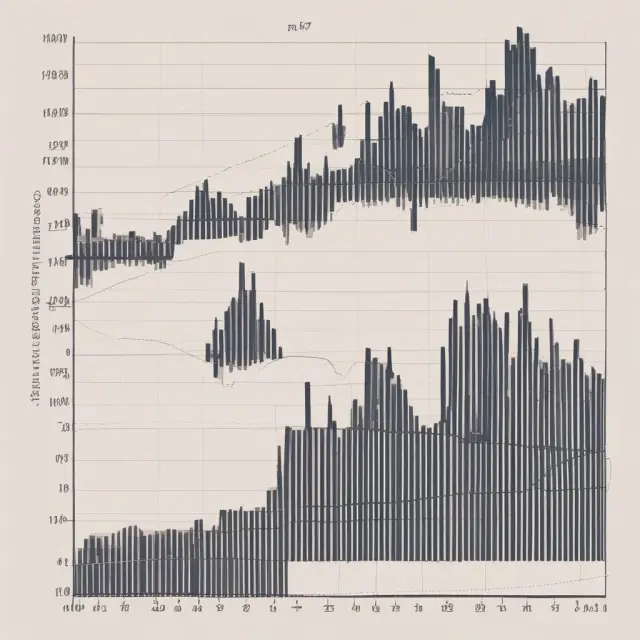
A simple way to visualize homoskedasticity versus heteroskedasticity is by looking at scatterplots of residuals against predicted values. In a homoskedastic model, the spread of residuals around the regression line remains constant regardless of the level of the dependent variable. Conversely, in a heteroskedastic model, the spread of residuals varies significantly depending on the level of the dependent variable.
What are methods for handling heteroskedastic data?
One common approach to handle heteroskedasticity is by employing weighted least squares (WLS) or generalized least squares (GLS) methods, which take into account the varying variance of errors and allow for more accurate parameter estimation. Alternatively, robust standard errors can be used in ordinary least squares regression to minimize the impact of outliers and heteroscedasticity on model results.
Can homoskedasticity be assumed by default?
No, it is essential to examine the data and test for homoskedasticity before assuming it. Homoskedasticity may not always hold true even in simple cases or situations where there are underlying non-linear relationships or omitted variables that affect the error variance. Failing to account for heteroskedasticity can lead to incorrect conclusions and unreliable results in regression analysis.
 Next entry · No. 2,191The Hong Kong Monetary Authority Investment Portfolio: Understanding the Largest Sovereign Wealth Fund in Asia
See also
-
 No. 4,800
17 Jul 2025
21 min
Understanding the Sum of Squares: A Statistical Technique Used in Regression Analysis and Finance
Financial Data Analysis
No. 4,800
17 Jul 2025
21 min
Understanding the Sum of Squares: A Statistical Technique Used in Regression Analysis and Finance
Financial Data Analysis -
 No. 4,339
10 Jun 2025
21 min
Understanding Regression Analysis in Finance: Technique, Applications, and Interpretation
Financial Data Analysis
No. 4,339
10 Jun 2025
21 min
Understanding Regression Analysis in Finance: Technique, Applications, and Interpretation
Financial Data Analysis -
 No. 4,266
05 Jun 2025
17 min
Understanding R-Squared: The Statistical Measure of Correlation in Finance and Investment
Financial Data Analysis
No. 4,266
05 Jun 2025
17 min
Understanding R-Squared: The Statistical Measure of Correlation in Finance and Investment
Financial Data Analysis -
 No. 3,299
17 Mar 2025
19 min
Understanding Multicollinearity in Finance and Investment
Financial Data Analysis
No. 3,299
17 Mar 2025
19 min
Understanding Multicollinearity in Finance and Investment
Financial Data Analysis -
 No. 3,161
06 Mar 2025
18 min
Understanding the Median – A Powerful Tool in Describing Data Sets
Financial Data Analysis
No. 3,161
06 Mar 2025
18 min
Understanding the Median – A Powerful Tool in Describing Data Sets
Financial Data Analysis -
 No. 2,823
07 Feb 2025
21 min
Leptokurtic Distributions: An In-Depth Guide for Institutional Investors
Financial Data Analysis
No. 2,823
07 Feb 2025
21 min
Leptokurtic Distributions: An In-Depth Guide for Institutional Investors
Financial Data Analysis