Understanding Hook Reversals: A Short-Term Candlestick Pattern for Predicting Trend Reversals

Understand hook reversals - short-term candlestick pattern predicting trend reversals. Learn steps to identify & trade with hooks, pros/cons, FAQs.
Introduction to Hook Reversals
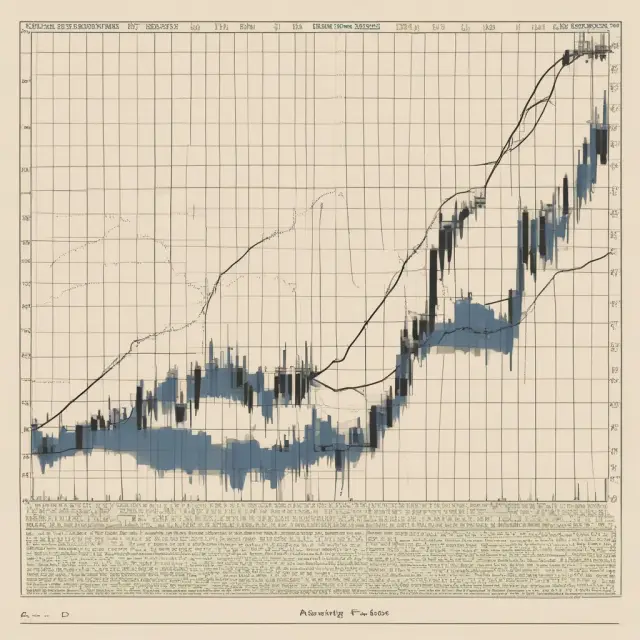
Hook reversals are essential short-term candlestick patterns used by traders to predict a possible trend reversal. A hook reversal pattern emerges when a candlestick displays a higher low and a lower high than the preceding session’s candlestick (Figure 1). In contrast to engulfing patterns, hook reversals allow for a relatively small size difference between the two candlesticks’ bodies.
The significance of hook reversals lies in their ability to indicate an imminent trend change before it materializes fully in the market. The hook reversal pattern is popular among active traders since these occurrences are frequent and relatively easy to spot (Figure 2). However, relying on hook reversals alone may lead to false positives due to their frequency, necessitating confirmation from other technical indicators or chart patterns for accurate trade decisions.
Hook reversals are classified as harami or engulfing patterns since they share similarities with these common candlestick patterns (Figure 3). The primary difference is the size difference between the first and second candle’s bodies, which can be small in hook reversals compared to the larger differences observed in harami and engulfing patterns.
The reliability of a hook reversal pattern depends on various factors, primarily the strength of the trend that precedes it. Traders must consider other chart patterns or technical indicators as confirmation signals before entering a trade based on a hook reversal pattern alone (Figure 4). By combining a hook reversal pattern with multiple confirmations, traders can significantly increase their chances of making profitable trades.
Hook reversals are either bearish or bullish depending on the position within an uptrend or downtrend. For instance, bearish hook reversals form at the top of an uptrend when bears regain control after a bullish phase, causing the price to reverse sharply lower (Figure 5). Similarly, bullish hook reversals manifest at the bottom of a downtrend, indicating that bulls have reclaimed control and are poised for an upward trend shift (Figure 6).
By understanding the significance and mechanics behind hook reversal patterns, traders can effectively incorporate them into their trading strategies to capitalize on potential trend changes. In the following sections, we’ll dive deeper into how to identify and interpret these valuable chart formations.
Stay tuned for the next section: “How Hook Reversals Work” where we explore the significance of the preceding trend in predicting hook reversal strengths.
How Hook Reversals Work
A hook reversal is an intriguing and short-term candlestick pattern with significant implications for predicting trend reversals in financial markets. This unique pattern, which occurs when a candlestick exhibits a higher low but a lower high than the previous session’s candlestick, provides valuable insights into the possible shift in market sentiment and direction.
Understanding how hook reversals function is crucial to capitalizing on their potential accuracy in predicting trend reversals. The mechanics behind this pattern involve the interplay between supply and demand forces within a security’s price action. As market participants adjust their positions based on new information or changing market conditions, the resulting candlestick patterns can reveal crucial insights into these dynamics.
A hook reversal differs from other well-known candlestick patterns like engulfing, as it doesn’t require a significant difference in size between the two candlesticks. Instead, the second candlestick changes its color to indicate a potential trend reversal, while the preceding uptrend or downtrend might influence the strength and reliability of the pattern.
The significance of hook reversals lies in their potential for indicating a change in market sentiment. As active traders look for confirmation that a reversal has occurred, they often rely on other chart patterns, technical indicators, or fundamental data to strengthen their conviction in the reversal’s validity. It is essential to remember that, due to their relatively frequent occurrence, hook reversals can create false positives, which underscores the importance of using multiple confirming signals when making trading decisions.
The power of hook reversals can be observed in both bullish and bearish contexts. In a bullish scenario, a hook reversal emerges during a downtrend as a signal that buyers are regaining control and potentially preparing for an upswing. Conversely, a bearish hook reversal arises when the pattern forms during an uptrend as a warning sign that sellers are taking charge and the market is poised for a downward correction.
To harness the full potential of hook reversals, traders should apply rigorous analysis and set proper stop-loss and take-profit levels based on additional technical indicators or chart patterns. The ability to accurately interpret this pattern in various contexts can provide significant advantages in navigating volatile markets and profiting from trend reversals.
Classification of Hook Reversals
Hook reversals are short-term candlestick patterns that signal a possible reversal in the trend’s direction, and they can be further classified as either bearish or bullish hook reversals based on their appearance.
A bearish hook reversal is formed when there’s an uptrend preceding it. The pattern consists of a long green candle (indicating buying pressure) followed by a short red candlestick with an upper shadow longer than its body, which indicates selling pressure. Bearish hook reversals occur near the highs of an uptrend and often represent the first sign that bears are regaining control of the market.
On the other hand, a bullish hook reversal forms during a downtrend. It consists of a long red candle (indicating selling pressure) followed by a short green candlestick with a lower shadow longer than its body, which indicates buying pressure. Bullish hook reversals occur near the lows of a downtrend and often represent the first sign that bulls are regaining control of the market.
It is essential to note that while hook reversals can provide valuable insight into potential price movements, they should not be relied upon as the sole indicator for making trading decisions. It is always recommended to consult other technical indicators or chart patterns to confirm the validity of the reversal signal and set appropriate take-profit and stop-loss targets accordingly.
Hook reversals have certain similarities with other candlestick patterns, such as harami and engulfing, due to their appearance. Harami and engulfing patterns require a larger size difference between the candles compared to hook reversals. However, while these patterns share some similarities, they differ in terms of reliability and occurrence frequency. Engulfing and harami patterns are generally less frequent than hook reversals but offer more reliable signals. In contrast, hook reversals appear more frequently but with a lower degree of certainty regarding the directional change.
When identifying hook reversals, it is crucial to consider factors like volatility and trend strength, as well as other relevant chart patterns or indicators to confirm the signal’s validity. By combining different tools and techniques, traders can improve their chances of making profitable trades and minimize false positives resulting from relying on a single indicator alone.

Identifying a Hook Reversal
Hook reversals are short-term candlestick formations that provide strong signals for potential trend reversals. This section will detail how to identify a hook reversal and discuss the importance of confirmation signals in maximizing the reliability of this pattern.
Definition and Mechanics
A hook reversal occurs when a candlestick exhibits both a lower high than its preceding session and a higher low. This setup is often indicative of a potential trend reversal, as it suggests that bulls or bears may have gained significant control over the market before the reversal takes place. The hook reversal pattern can be classified as either bearish or bullish depending on the direction of the preceding trend.
Bearish Hook Reversals: When a downtrend is present, a bearish hook reversal signals that bears have lost their grip on the market and bulls are ready to regain control. The hook pattern can be identified when a candlestick opens below the previous session’s low but then closes near or above its high.
Bullish Hook Reversals: On the other hand, a bullish hook reversal signals that an uptrend is about to resume after a brief period of weakness. This setup can be identified when a candlestick opens above the previous session’s high but then closes near or below its low.
Visualizing Hook Reversals
Visual confirmation plays an essential role in evaluating hook reversals effectively. Figure 1 illustrates a bearish hook reversal, while Figure 2 represents a bullish hook reversal. These figures demonstrate the differences between both reversal types and their significance in market trend identification.
Confirmation Signals
Although the hook reversal pattern itself can be a strong indicator of potential trend shifts, it’s crucial to look for confirmation signals to minimize false positives. Traders commonly use other chart patterns or technical indicators like moving averages, Bollinger Bands, and RSI (Relative Strength Index) to confirm the reversal’s significance and establish entry and exit points.
In summary, hook reversals are valuable short-term trend signals that can be identified by a candlestick with a lower high and a higher low compared to its preceding session. To maximize their effectiveness, traders should always consider confirmation signals from other chart patterns or technical indicators before entering the market based on these reversal patterns.

Trading with Hook Reversals
Hook reversals offer traders an opportunity to enter the market at potential trend reversal points, but understanding how to manage risk and set stop-loss orders effectively is crucial for maximizing returns. The hook pattern itself does not provide clear guidance on how far a reversal might go; as such, it is essential for traders to use other indicators or chart patterns in combination with hook reversals when entering trades.
In a bullish hook reversal situation, the open of the second candle is typically found close to the low of the first candle, while the close of the second candle is near its high. A trader might initially assume that bears are in control during the second session, but if bulls regain control and send the price sharply higher, a profitable long position can result. Conversely, in a bearish hook reversal, the open of the second candle is near the high of the first candle, with the close being near its low. The initial perception might be that the bulls are controlling the market at the start of the second session, but if bears regain control and push prices lower, a short position could potentially yield profits.
To minimize risk, traders should set stop-loss orders at levels where they feel comfortable exiting their positions, based on additional chart indicators or trend analysis. It’s important to keep in mind that hook reversals can sometimes result in false positives, which can lead to losses if not managed appropriately.
False positives typically occur when market conditions do not support a trend reversal, such as during strong uptrends or downtrends. In these situations, it’s crucial for traders to exercise caution and avoid entering trades based solely on hook reversals without considering additional confirming signals. For example, if a bullish hook reversal occurs in the middle of a strong downtrend, it may be a false positive, and a short position should be considered instead.
To minimize false positives, traders can use other technical indicators like moving averages or RSI (relative strength index) to confirm the presence of a trend reversal before entering the market based on hook reversals. Additionally, looking for confirmation from other chart patterns, such as double tops and bottoms, can help increase the reliability of hook reversals in predicting a genuine trend reversal.
In conclusion, understanding how to trade with hook reversals involves managing risk effectively and using additional indicators or chart patterns for confirmation. Traders should be cautious about entering trades based solely on hook reversals during strong trends, as false positives can potentially lead to losses. By combining hook reversals with other confirming signals, traders can increase the reliability of their trend reversal predictions and potentially maximize profits in the financial markets.

Advantages and Disadvantages of Hook Reversals
Hook reversals are a popular short-term candlestick pattern used by traders for predicting trend reversals, as they indicate a change in trend direction. The pattern’s ease of identification makes it an attractive choice for many active traders, but like any other technical analysis tool, it comes with its advantages and disadvantages.
Advantages:
- Frequent occurrence: Hook reversals are relatively common, making them easily identifiable for traders seeking to profit from trend changes.
- Ease of identification: The hook reversal pattern can be quickly recognized in a candlestick chart due to its distinctive structure – a higher low and a lower high than the previous session’s candlestick.
- Versatility: Hook reversals can occur during both uptrends and downtrends, allowing traders to profit from both bullish and bearish market conditions.
Disadvantages:
- False positives: Since hook reversals are a fairly common pattern, they generate many false positives, making it essential for traders to use them in conjunction with other confirmation signals.
- Limited reliability: The accuracy of hook reversals is influenced by the strength of the preceding trend and the price action surrounding the potential reversal. A strong trend can often negate a weak hook reversal signal, leading to incorrect trade entries or exits.
- Lack of confirmation: While hook reversals provide initial insight into potential trend reversals, they should not be relied upon as standalone indicators. Traders should look for additional confirmation from other chart patterns, technical indicators, or fundamental analysis before making a trading decision based on this pattern.
Conclusion:
Hook reversals can be a valuable tool in the arsenal of any trader looking to profit from trend changes; however, they must be used wisely and with proper confirmation signals to minimize false positives and increase reliability. By understanding both the advantages and disadvantages of hook reversals, traders can optimize their approach for maximum effectiveness. In the next section, we will discuss real-world examples of successful hook reversals in action and learn how they can serve as valuable learning tools for traders.

Limitations of Hook Reversals
Despite their popularity among traders, hook reversals have certain limitations and are not foolproof indicators of trend reversals. This section will delve deeper into these limitations and discuss how false positives can occur when relying on hook reversals alone to make trading decisions.
Limitations:
- False Positives: As mentioned earlier, hook reversals occur quite frequently, leading to a significant number of false positives. These false signals can mislead traders into making premature entries and exits in the market. Traders must be aware that hook reversals should not be traded in isolation but need confirmation from other chart patterns or technical indicators to minimize false positives.
- Volatility: Market volatility, especially in highly volatile assets like cryptocurrencies and forex pairs, can produce false signals when interpreting hook reversals. For instance, a large range move might cause a short-lived hook reversal that ultimately fails to lead to a sustained trend reversal. In such scenarios, traders need to exercise caution before making any trading decisions based on these patterns.
- Short-Term Focus: Hook reversals are primarily short-term signals and are best used for intraday or swing trades. They may not be effective in predicting long-term trends since they focus on the immediate price action rather than considering broader market conditions, such as fundamental factors that can influence a security’s long-term direction.
- Overreliance: Traders should avoid overrelying on hook reversals for making trading decisions. Although these patterns can provide valuable insights into potential trend reversals, they should be combined with other indicators and chart patterns for confirmation to increase the probability of profitable trades.
- Market Sentiment: Hook reversals do not account for market sentiment or broader economic factors that may influence market movements. Traders must consider these external factors when making trading decisions since they can significantly impact a security’s price action.
Avoiding False Positives
To minimize false positives when using hook reversals, traders should look for confirmation signals from other chart patterns or technical indicators before entering trades based on these patterns. Here are some common confirmations signals that traders can use to enhance the reliability of hook reversals:
- Confirmation with Trendlines: A trendline break or rejection at a significant support or resistance level provides strong confirmation for a potential trend reversal. Incorporating trendlines into your analysis is an effective way to filter out false positives and focus on high-probability trade setups.
- Confirmation with Moving Averages: The interaction of the price with moving averages, such as 50-day or 200-day moving averages, can also provide confirmation for a hook reversal signal. A bullish hook reversal is confirmed when the price closes above the moving average after forming the hook pattern, while a bearish hook reversal occurs when the price closes below the moving average.
- Confirmation with Other Chart Patterns: Other common chart patterns, such as head and shoulders or triangles, can offer additional confirmation for a trend reversal. The presence of these patterns in conjunction with a hook reversal increases the likelihood that a significant trend change is underway.
- Confirmation with Volume: High volume during the formation of a hook reversal pattern is an additional confirmation signal. A surge in trading activity, particularly if it coincides with a price reversal, adds credibility to the hook reversal signal and enhances the probability of a successful trade.
- Confirmation with Oscillators: Technically inclined traders can also use oscillators like RSI, Stochastic, or MACD to validate hook reversals. These indicators help confirm when the price is overbought or oversold, offering valuable insights into potential trend reversals.
In conclusion, hook reversals are a popular short-term candlestick pattern used by traders for identifying potential trend reversals. While they can be effective in certain market conditions, traders must be aware of their limitations and the potential for false positives when relying solely on these patterns to make trading decisions. By combining hook reversals with other chart patterns, technical indicators, or fundamental analysis tools, traders can significantly increase the likelihood of profitable trades and minimize the risk of being misled by false signals.

Common False Positives and How to Avoid Them
Hook reversals are valuable tools for short-term traders looking to capitalize on trend reversals. However, like any other technical indicator or chart pattern, hook reversals aren’t foolproof. They can produce false positives, which is when the pattern appears but fails to result in a significant trend reversal. False positives can lead to losses if traders act too quickly based on the initial signal without proper confirmation from other indicators or confirming chart patterns.
Understanding some common false positives and how to avoid them can help minimize the risk of losing money on unreliable signals:
1. Flukes
A hook reversal is a short-term pattern that occurs relatively frequently, especially in volatile markets. Sometimes, the pattern may appear randomly due to market noise, rather than representing an actual trend reversal. Flukes are unpredictable and often result from insignificant price movements. To avoid false positives caused by flukes, traders should wait for confirmation signals before entering a trade based on the hook reversal pattern.
2. Divergence
Hook reversals rely on the assumption that the trend’s momentum is changing direction. However, when there is divergence between price and other indicators like moving averages or RSI (Relative Strength Index), it might not be a reliable signal. For instance, if an uptrend in the price is accompanied by a downtrend in the RSI, a bearish hook reversal may not lead to a significant trend reversal. In this situation, traders should wait for confirmation from other indicators before entering a trade.
3. Corrections and consolidations
Hook reversals can be confused with corrections or consolidation patterns that occur during a trend. A correction is a short-term price movement in the opposite direction of the primary trend, whereas a consolidation pattern represents a pause in the trend’s progression. To distinguish between these patterns, traders should consider factors like volume and momentum indicators to assess whether the hook reversal represents an actual trend reversal or just a correction or consolidation.
4. Trading range markets
In trading range markets, prices tend to fluctuate within a relatively narrow range without showing consistent trends. In this environment, hook reversals may not provide reliable signals since price movements are less predictable. Traders should be cautious in trading range markets and use multiple indicators or chart patterns to confirm potential trend reversals.
5. Volatility
Volatile markets can produce false positives due to the erratic nature of price movements. In such markets, it’s crucial for traders to use other confirmation signals to assess the reliability of a hook reversal signal. For example, high volume during a bearish hook reversal could increase the likelihood of a significant trend reversal.
To summarize, false positives can occur when interpreting hook reversals as reliable trading signals without proper confirmation from other indicators or chart patterns. By being aware of common false positives and using appropriate risk management techniques, traders can minimize losses and improve their chances of profiting from accurate trend reversal signals.
Case Studies: Successful Hook Reversals in Action
Hook reversals are short-term candlestick patterns that provide valuable insights for predicting trend reversals, and they have been a popular tool among active traders for decades due to their relatively high frequency of occurrence. In this section, we will discuss real-world examples of successful hook reversals in action and the factors contributing to their success.
Bearish Hook Reversal: The Cryptocurrency Market
An excellent example of a bearish hook reversal can be seen in the cryptocurrency market during March 2018, where Bitcoin (BTC) displayed a clear hook reversal at its peak price. A bullish trend dominated the market throughout January and February, with Bitcoin reaching an all-time high of $19,512 on January 7th, 2018. However, a series of bearish candlesticks appeared in mid-February, indicating weakness in the uptrend. On March 6th, a bearish hook reversal occurred, characterized by an open price near the high of the previous bullish candle and a close price near the low of that candle. The bearish hook reversal was further confirmed with the following day’s strong bearish candlestick, which saw Bitcoin lose over 13% of its value in just one day. This significant sell-off continued throughout March, leading to a massive correction in the price of Bitcoin.
Bullish Hook Reversal: The U.S. Stock Market (Dow Jones Industrial Average)
In contrast, bullish hook reversals can also be profitable for traders when occurring during a downtrend. An example of a successful bullish hook reversal can be observed in the Dow Jones Industrial Average (DJIA) in late February 2016. After a steep decline from its peak price on January 19th, the DJIA entered a downtrend, with several bearish candlesticks forming throughout February. However, on February 23rd, a bullish hook reversal took place as the open price was near the low of the previous bearish candle and the close price was near the high of that candle. The following day, the DJIA displayed a strong bullish candlestick with a large real body, confirming the bullish hook reversal. Over the next few days, the index continued to climb higher, regaining much of its lost ground during the downtrend.
In conclusion, understanding hook reversals is essential for traders as they can provide valuable insights into potential trend reversals in various markets. However, it’s important to note that these patterns should be used in conjunction with other technical indicators and chart patterns to avoid false positives. By analyzing real-world examples of successful hook reversals in action, we can better understand their significance and how they can be used effectively as part of a comprehensive trading strategy.

FAQs on Hook Reversals
What Is a Hook Reversal and How Does It Work?
A hook reversal is a short-term candlestick pattern used by traders to predict a trend reversal. The pattern forms when there is a lower high and higher low in consecutive candles. This change in momentum indicates that bears or bulls may be gaining control of the market, depending on whether an uptrend or downtrend preceded it.
How Does a Hook Reversal Differ from Other Candlestick Patterns?
Compared to other candlestick patterns like engulfing, hook reversals have a smaller size difference between the first and second candle’s bodies. Hook reversals are often considered less reliable than other reversal patterns, requiring confirmation signals for increased accuracy.
Can Hook Reversals Be Bullish or Bearish?
Yes, hook reversals can be bullish or bearish depending on the market conditions preceding their appearance. A bullish hook reversal occurs during a downtrend with an open near the low and a close near the high, while a bearish hook reversal occurs during an uptrend with an open near the high and a close near the low.
How Should Traders Use Hook Reversals in Their Trading?
Hook reversals are just one of several tools that traders can use for analyzing market trends. To make informed trading decisions, it’s crucial to combine hook reversals with other confirming signals like chart patterns, trend indicators, or fundamental analysis.
How Can Traders Identify False Hook Reversal Signals?
False positive hook reversals occur when the market doesn’t reverse as expected after a hook reversal signal. To minimize these instances, traders should look for secondary confirmation signals such as other chart patterns, trend lines, or moving averages to support their analysis.
Can Hook Reversals Be Combined with Other Chart Patterns?
Yes! Hook reversals can be used in conjunction with other chart patterns like head and shoulders, triangles, or flags for increased accuracy and reliability. When combining multiple chart patterns, it’s essential to consider their compatibility and the overall market conditions.
 Next entry · No. 2,196The Hope Credit: Understanding the Tax Incentive for Postsecondary Education
See also
-
 No. 3,834
30 Apr 2025
19 min
Understanding Outside Reversals: A Detailed Analysis of Bullish and Bearish Engulfing Patterns
Markets
No. 3,834
30 Apr 2025
19 min
Understanding Outside Reversals: A Detailed Analysis of Bullish and Bearish Engulfing Patterns
Markets -
 No. 1,892
21 Nov 2024
19 min
Understanding Gravestone Doji: A Bearish Reversal Pattern in Technical Analysis
Markets
No. 1,892
21 Nov 2024
19 min
Understanding Gravestone Doji: A Bearish Reversal Pattern in Technical Analysis
Markets -
 No. 2,978
19 Feb 2025
20 min
Understanding and Trading the Long-Legged Doji in Finance and Investment
Financial Education
No. 2,978
19 Feb 2025
20 min
Understanding and Trading the Long-Legged Doji in Finance and Investment
Financial Education -
 No. 1,368
05 Sep 2024
18 min
Understanding the Evening Star Pattern: A Reliable Indicator for Professional Investors
Business Strategy
No. 1,368
05 Sep 2024
18 min
Understanding the Evening Star Pattern: A Reliable Indicator for Professional Investors
Business Strategy -
 No. 5,260
24 Aug 2025
20 min
Understanding the Rare yet Significant Three River Candlestick Pattern: A Bullish Reversal Indicator for Professional Traders
Markets
No. 5,260
24 Aug 2025
20 min
Understanding the Rare yet Significant Three River Candlestick Pattern: A Bullish Reversal Indicator for Professional Traders
Markets -
 No. 4,961
31 Jul 2025
22 min
Understanding the Three Black Crows Candlestick Pattern – A Predictor of Market Reversals
Markets
No. 4,961
31 Jul 2025
22 min
Understanding the Three Black Crows Candlestick Pattern – A Predictor of Market Reversals
Markets