Understanding Income Elasticity of Demand: Measuring Goods’ Sensitivity to Changes in Consumer Income

Learn the essentials of income elasticity of demand in economics, including calculations, interpretations, and real-life examples.
Introduction
Income elasticity of demand is a crucial economic measure used to evaluate how responsive the consumption of goods and services is to changes in consumer income levels. This concept is vital for businesses seeking to understand customer behavior during various stages of an economic cycle. In this article, we will discuss what income elasticity of demand means, its formula, and its significance for different types of goods and industries.
Understanding Income Elasticity of Demand: A Definition
Income elasticity of demand measures the relationship between a consumer’s change in real income and their response by altering their consumption of a specific good or service. When income rises, how does this impact the quantity demanded for that product? Is the response proportional, or is it more pronounced? Income elasticity of demand answers these questions by quantifying the degree to which consumers’ income changes influence their purchasing behavior.
Consider the example of a local car dealership seeking to assess how potential economic downturns might impact sales. Understanding consumer sensitivity to income fluctuations will allow the business to adjust its inventory and pricing strategies accordingly.
Inferior Goods vs. Normal Goods and Luxury Items
Goods are categorized based on their income elasticity of demand into inferior goods, normal goods, and luxury items. Inferior goods have a negative income elasticity of demand, meaning that as consumers’ income increases, they buy fewer units of these goods. For example, margarine is often considered an inferior good because when income rises, consumers may opt for more expensive butter instead.
Normal goods are those whose demand increases with the consumer’s income; their income elasticity of demand ranges from zero to one. A consumer will generally purchase more units as their income rises but at a rate that is not disproportionate to their income increase. Necessity goods, such as food and shelter, typically fall into this category.
Luxury items exhibit positive income elasticity of demand since consumers’ purchasing rates for these goods increase more significantly than the percentage change in their income. As a result, luxury car dealerships may see increased sales during economic expansion periods because consumers have higher disposable income to spend on nonessential, high-end purchases.
Formula for Calculating Income Elasticity of Demand
The formula for calculating income elasticity of demand is:
IED = (% change in quantity demanded) / (% change in consumer’s real income)
This ratio reveals whether the change in the quantity demanded responds more or less than proportionately to the change in consumer income. A value greater than one implies that the good exhibits elastic demand, while a value between zero and one signifies inelastic demand. A negative value represents an inferior good’s response to changing income levels.
Highly Elastic Goods: More Responsiveness
A high income elasticity of demand indicates that consumers are responsive to changes in their income levels. For instance, during economic downturns, luxury goods and discretionary spending may experience significant reductions as consumers reallocate funds to necessities or save for financial security. However, essential items, such as food and shelter, maintain relatively consistent demand even in recessionary periods.
Understanding income elasticity of demand enables businesses to forecast the impact of economic cycles on their sales and adjust pricing strategies accordingly. By focusing on goods with elastic demand, companies may optimize their offerings and position themselves for long-term success.

Income Elasticity of Demand: Definition
Income elasticity of demand is a critical economic concept that measures how responsive the quantity demanded for a particular good or service is to changes in consumer income. Understanding income elasticity of demand helps businesses and investors predict consumer behavior and adjust their strategies accordingly. Let’s explore this concept with an example of a car dealership.
A car dealership notices that as the average real income of its customers drops from $50,000 to $40,000, the demand for cars plummets from 10,000 units sold to 5,000 units sold. The car dealership aims to determine if this change in consumer behavior is due to a change in income or other factors. Calculating the income elasticity of demand for cars will help answer this question.
The formula for calculating income elasticity of demand is:
Income Elasticity of Demand = (Percentage Change in Quantity Demanded) / (Percentage Change in Income)
Using our car dealership example, the income elasticity of demand can be calculated by taking a negative 50% change in demand and dividing it by a 20% change in real income:
Income Elasticity of Demand = (-5,000 – (-10,000)) / (50,000 – 40,000)
Income Elasticity of Demand = 10,000 / 10,000
Income Elasticity of Demand = 1
An income elasticity of demand value of 1 indicates that the car dealership’s customers’ demand for cars is inelastic to changes in their income. This means that even though there was a significant drop in consumer income, the quantity demanded for cars did not change proportionately. The car dealership can conclude that other factors besides income, such as preference or necessity, are driving this demand behavior.
By understanding income elasticity of demand, businesses and investors can make informed decisions about their strategies based on consumer income trends and fluctuations. Stay tuned for our next article in this series, where we will discuss inferior goods, normal goods, and luxury items based on the income elasticity of demand concept.

Inferior vs. Normal Goods and Luxury Items
One important aspect of income elasticity of demand is the classification of goods based on their responsiveness to changes in consumer income. By understanding this distinction, we can gain valuable insights into how consumers’ purchasing behaviors change when their income fluctuates. This section will discuss inferior goods, normal goods, and luxury items in terms of income elasticity of demand.
Inferior Goods: A Negative Response to Increased Income
When consumer income increases, the quantity demanded for an inferior good decreases. The term ‘inferior’ is used because these goods are considered less desirable when income rises, as consumers can afford to replace them with superior alternatives. An example of this would be margarine versus butter: if a household’s income improves, they may switch from purchasing margarine to buying butter instead. As income rises, the percentage change in quantity demanded is less than the percentage change in income; therefore, inferior goods have a negative income elasticity of demand.
Normal Goods: A Positive Response to Increased Income
As consumer income increases, the quantity demanded for normal goods also increases. These goods are essential and necessary for daily life, with an unchanging proportionate relationship between income and consumption. A clear example is food: as consumers’ incomes rise, they will allocate a similar percentage of their earnings towards purchasing food items. Consequently, the income elasticity of demand for normal goods lies between zero and one.
Luxury Goods: A Superior Response to Increased Income
On the other hand, luxury goods exhibit a strong positive relationship with consumer income. When income increases, consumers tend to spend more on luxuries, such as designer clothing or high-end electronics. For luxury goods, the percentage change in quantity demanded is greater than the percentage change in income; hence, their income elasticity of demand is greater than one.
Understanding these categories provides businesses and investors with vital insights into how consumers’ purchasing behaviors react to changes in income levels, enabling them to make informed decisions and optimize strategies accordingly.
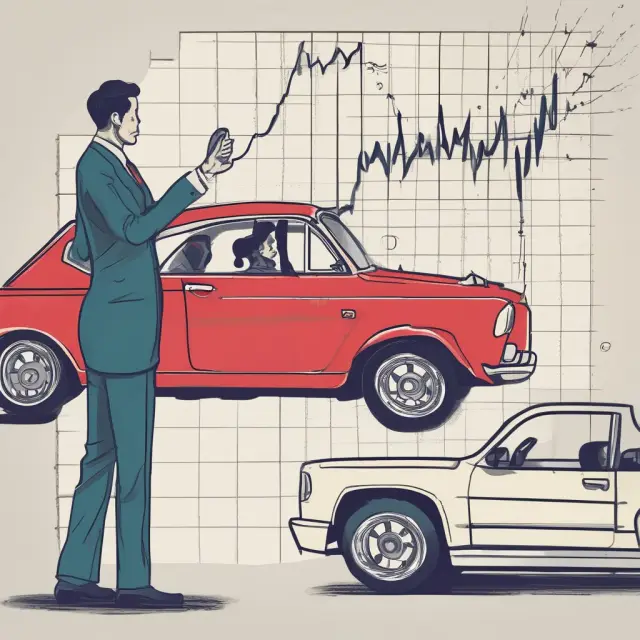
Formula for Calculating Income Elasticity of Demand
Income elasticity of demand is a crucial measure in economics that illustrates how responsive the demand for a product or service is to changes in consumers’ income levels. The formula for calculating income elasticity of demand involves determining the percentage change in the quantity demanded and dividing it by the percentage change in real consumer income (1).
Income Elasticity of Demand = [(Qf – Qi) / Qi] x 100% / [(Pi – Pi) / Pi] x 100%
Where:
– Qi is the initial quantity demanded
– Qf is the final quantity demanded
– Pi is the initial real income
– P is the constant price of the good or service
Let us explore this formula with a car dealership example. Suppose a local dealership tracks data on consumer demand and their income levels for cars. When the average real income of its customers decreases from $50,000 to $40,000, the quantity demanded drops significantly from 10,000 units to 5,000 units sold, with all other factors held constant.
To calculate the income elasticity of demand for cars in this example:
Income Elasticity of Demand = [(5,000 – 10,000) / 10,000] x 100% / [($50,000 – $40,000) / $50,000] x 100%
Income Elasticity of Demand = (-5,000 / 10,000) x 100% / ($10,000 / $50,000) x 100%
Income Elasticity of Demand = -50% / 20%
Income Elasticity of Demand = -2.5
The income elasticity of demand for cars in this example is a substantial negative value of 2.5, which indicates that local customers are quite sensitive to changes in their income when it comes to buying cars. This knowledge can be essential information for the car dealership and other businesses in the automotive industry, as they can use this data to make strategic decisions regarding pricing, inventory, or marketing strategies during economic downturns or recoveries.

High, Low, and Zero Income Elasticity of Demand
Income elasticity of demand (IED) plays a crucial role in understanding how consumers’ purchasing behaviors change as their income fluctuates. IED measures the degree to which the quantity demanded for a good or service responds to changes in consumer income. It can be categorized into three types: high, low, and zero elasticity.
High Elasticity of Demand
A good with high elasticity of demand implies that the percentage increase in quantity demanded significantly exceeds the percentage change in income. For example, consider a family that spends most of their budget on groceries; they might reduce their weekly grocery spending by 20% if their income decreases by 10%. In economic terms, goods with high elasticity of demand exhibit significant responsiveness to changes in consumer income.
Low Elasticity of Demand
Conversely, a good with low elasticity of demand demonstrates that the percentage increase in quantity demanded is less than proportionate to the change in income. For instance, a person might continue purchasing their daily coffee despite experiencing a decline in income or an economic downturn. They may not reduce their coffee consumption significantly because they consider it a necessity rather than a luxury, even during lean financial times.
Zero Elasticity of Demand
Some goods have zero elasticity of demand, meaning the quantity demanded remains constant regardless of changes in consumer income. These goods are considered necessities that people must purchase to maintain their standard of living. Examples include essential items like food, water, and shelter. Even if a person’s income drops dramatically, they will still need these basic necessities to survive.
Understanding the implications of different elasticity levels can help businesses and investors tailor their strategies accordingly. For instance, companies offering goods with high income elasticity might consider expanding their offerings to cater to consumers experiencing income growth, while those dealing with low-elasticity goods may focus on retaining existing customers and offering discounts or promotions to counteract potential declines in demand during economic downturns. By examining income elasticities across various industries and consumer segments, businesses can make informed decisions about pricing strategies, product development, marketing efforts, and overall growth prospects.
Interpreting Income Elasticity of Demand Results
Understanding how to read and interpret income elasticity of demand results is crucial for businesses and investors to make informed decisions regarding their products or investments. The value of income elasticity of demand indicates the percentage change in quantity demanded due to a one percent change in consumer income. Generally, there are five types of income elasticity of demand:
1. Elastic goods: A higher-than-unit income elasticity (greater than 1) implies that consumers’ quantity demanded responds more significantly to changes in their income. For instance, if a good has an income elasticity of demand of 2, it suggests that for every 1% increase in income, the quantity demanded will change by 2%.
2. Unit elastic goods: A unit elastic good maintains a constant relationship between the percentage change in demand and income change. This means the income elasticity is equal to 1. For example, if an individual spends $100 on milk per month at $4/gallon and their income increases by 5%, they will spend approximately $104.90 on milk, representing a 5% increase in demand.
3. Inelastic goods: A lower-than-unit income elasticity (less than 1) signifies that the quantity demanded is less responsive to changes in consumer income. This indicates that consumers spend a smaller percentage of their income on the specific good or service, as they view it as a necessity rather than a luxury item.
4. Zero elastic goods: When income elasticity equals 0, there is no change in demand, regardless of changes in income. Income does not affect the quantity demanded for zero elastic goods, and consumers continue to purchase the same amount even if their income fluctuates.
5. Negative income elasticity: A negative income elasticity indicates that as income rises, the quantity demanded decreases. This occurs with inferior goods, which are often replaced by better alternatives when consumers have more disposable income. For instance, as consumers’ income increases, they might switch from purchasing cheaper margarine to buying butter or other pricier alternatives.
For businesses and investors, understanding income elasticity can help determine the optimal pricing strategy for their products, as well as anticipate consumer demand shifts during economic downturns or upturns. By analyzing historical data and market trends, they can identify the income elasticity of various goods and tailor their marketing strategies to target consumers most susceptible to price changes and income fluctuations. This knowledge enables businesses to thrive in both stable and dynamic economic environments.

Income Elasticity of Demand vs. Price Elasticity of Demand
When evaluating consumer demand for goods or services, economists look at two primary types of elasticities to understand the responsiveness of consumers to changes in prices and income. In this section, we will discuss the differences between income elasticity of demand (IED) and price elasticity of demand (PED).
Income Elasticity of Demand (IED)
As previously mentioned, IED measures how responsive the quantity demanded for a product or service is to changes in consumer income. It is calculated by taking the percentage change in quantity demanded divided by the percentage change in income. In simple terms, it answers the question: “How much will consumers buy more or less of this good when their income rises or falls?”
Price Elasticity of Demand (PED)
Price elasticity of demand, on the other hand, measures the responsiveness of consumers to changes in product prices. This calculation is done by dividing the percentage change in quantity demanded by the percentage change in price. The question this statistic answers is: “How will consumers’ behavior towards a good or service change when its price goes up or down?”
Comparing Income and Price Elasticity of Demand
Both IED and PED offer essential insights into consumer behavior. However, they are distinct concepts that shed light on different aspects of market dynamics. IED tells us how sensitive the demand for a product is to income changes, while PED reveals how responsive it is to price fluctuations.
For instance, consider two hypothetical goods: “Luxury Yachts” and “Basic Groceries.”
1. Luxury Yachts: A luxury good like a yacht typically exhibits high income elasticity of demand (elastic) because its demand is highly sensitive to changes in consumer income. Consumers may cut down on their spending on other goods when they purchase a yacht, but if their income drops significantly, they might not be able to buy one at all. In contrast, the price elasticity of demand for luxury yachts could be relatively low because consumers might view the yacht as an essential status symbol and continue to buy it despite the increase in price.
2. Basic Groceries: Conversely, necessities like groceries tend to have a low income elasticity of demand (inelastic) since people will keep buying them regardless of changes in their income levels. The price elasticity of demand for basic groceries might be higher, as consumers could switch brands or buy in bulk when prices rise or look for alternative sources when they decline.
Understanding the relationship between IED and PED can help businesses and investors make informed decisions about pricing strategies, target markets, and production levels. By analyzing both forms of elasticity, companies can optimize their offerings to maximize profitability in various economic conditions.

How Income Elasticity of Demand Affects Businesses and Investors
Businesses and investors need a comprehensive understanding of how consumer behavior reacts to changes in income to make informed decisions. Income elasticity of demand plays a critical role in this context, providing insights into the relationship between consumers’ income levels and their demand for goods and services. This section will discuss various ways that income elasticity of demand impacts businesses and investors.
Predicting Sales Fluctuations: One significant use of income elasticity of demand is to anticipate sales changes during a business cycle. By analyzing the historical data on income elasticity, businesses can forecast how their sales might be affected by economic fluctuations, including recessions or booms. For instance, industries that produce discretionary goods (luxury cars, boats, jewelry) usually experience increased demand when the economy is strong and decreased demand during a downturn. Conversely, essential goods and services (food, water, healthcare) typically maintain consistent demand levels despite income changes or economic conditions.
Pricing Strategies: Understanding income elasticity of demand can help companies set optimal prices for their products. When dealing with elastic goods, businesses need to consider price adjustments carefully as even small price changes might lead to significant shifts in demand. For example, an increase in the price of a normal good may result in consumers buying less and shifting their spending towards substitutes or inferior goods. Conversely, when facing inelastic goods, companies can raise prices without worrying about substantial loss of customers due to the insensitivity of demand to income changes.
Investment Decisions: For investors, income elasticity data offers valuable insights when evaluating potential investments or industries. By analyzing historical income elasticities for various sectors and products, investors can make informed decisions on which sectors are likely to remain stable despite economic fluctuations and which ones could be riskier due to their sensitivity to income changes. This knowledge helps reduce the overall investment portfolio risk and increases its diversification.
Diversification: Income elasticity data is also essential for portfolio diversification, allowing investors to allocate their resources efficiently across various sectors and goods with different levels of income elasticities. For instance, a well-diversified portfolio would include assets from industries producing both elastic (luxury goods) and inelastic (essential goods) products to minimize risk exposure and maximize returns.
Understanding Consumer Needs: Income elasticity of demand analysis enables companies to better understand their consumers’ needs, preferences, and behaviors. This knowledge can lead to the development of targeted marketing strategies, improved product offerings, and tailored customer experiences. For example, a food retailer might adapt its product range in response to shifts in income elasticity by introducing more affordable options for customers facing economic downturns or adjusting their premium offerings when the economy is strong.
In conclusion, income elasticity of demand plays a pivotal role in businesses’ and investors’ decision-making processes. By providing insights into how consumer behavior responds to changes in income levels, income elasticity data helps companies make informed pricing strategies, predict sales fluctuations, optimize investment decisions, and tailor their offerings to meet evolving customer needs.

Factors Affecting Income Elasticity of Demand
Several external factors can significantly impact the income elasticity of demand for different goods and industries. Understanding these factors is essential for businesses and investors to optimize their strategies accordingly. Here are some key factors that influence income elasticity of demand:
1. The nature of the product or service
Some products or services exhibit a higher degree of income elasticity than others due to their intrinsic nature. For instance, luxury goods usually have a high income elasticity since consumers’ demand for such items tends to be very responsive to changes in their income levels. Conversely, basic necessities like food and water typically demonstrate low or even zero income elasticity because people’s consumption of these essentials does not change significantly with income fluctuations.
2. Consumer preferences
Consumer preferences can influence the income elasticity of demand for specific goods or services. For example, some consumers might prefer to spend a higher proportion of their income on eating out rather than cooking at home, making restaurant meals an inferior good with a negative income elasticity. Alternatively, others may prioritize education, leading to a positive income elasticity for educational services.
3. Availability and accessibility
The availability and accessibility of substitutes can significantly impact the income elasticity of demand for a product or service. For instance, if there are numerous affordable alternatives available for a particular good or service, consumers might be less responsive to changes in their income levels when it comes to buying that product, resulting in a lower income elasticity of demand.
4. Price elasticity of substitutes and complements
The price elasticity of substitutes and complements can also impact the income elasticity of demand for a particular good or service. When the price of a substitute decreases, consumers might switch from the original product, causing a decrease in the demand for that product and lower income elasticity. Conversely, if the price of a complementary good rises, it can lead to a decrease in demand for the primary product, resulting in a lower income elasticity.
5. Market structure
The market structure can influence income elasticity of demand by impacting how competitors respond to changes in consumer income levels. For instance, monopolistic firms might have more control over prices and could potentially charge higher prices when consumers’ income rises, leading to a lower income elasticity of demand. On the other hand, competitive markets with numerous substitutes available can lead to downward price pressures, making goods or services more responsive to changes in consumer income levels.
By considering these factors and their impact on income elasticity of demand, businesses and investors can make data-driven decisions, allowing them to anticipate changing market trends, adapt pricing strategies, and optimize overall performance.

FAQs on Income Elasticity of Demand
Understanding income elasticity of demand (IED) is a crucial concept in economics that reveals how sensitive the consumption of certain goods and services is to changes in consumer income levels. IED plays an essential role for businesses, as it helps predict sales patterns based on income trends and economic cycles. In this section, we will answer some frequently asked questions about income elasticity of demand.
1. What is income elasticity of demand?
Income elasticity of demand (IED) refers to the responsiveness or sensitivity of consumers’ quantity demanded for a specific good or service to changes in their real income level. It represents the percentage change in the quantity demanded divided by the percentage change in consumer income. A higher IED indicates greater sensitivity to income changes, and vice versa.
2. How can you differentiate between inferior goods and normal goods using income elasticity of demand?
Inferior goods are those for which a decrease in consumer income leads to a decrease in the quantity demanded. In contrast, normal goods have a positive IED: as income rises, consumers buy more of them.
3. What is the difference between price elasticity of demand and income elasticity of demand?
Price elasticity of demand (PED) measures how sensitive consumers’ quantity demanded responds to changes in good or service prices, while IED examines the effect of income changes on quantity demanded.
4. How does income elasticity of demand impact businesses and investors?
Businesses and investors use IED data to optimize pricing strategies, allocate resources efficiently, anticipate sales fluctuations during business cycles, and tailor their product offerings according to consumer preferences and income levels.
5. What is a high, low, or zero income elasticity of demand?
High: A high IED means that the quantity demanded responds significantly to changes in income. For example, luxury goods or services may have a high IED since consumers’ demand for them increases more than proportionately when their income rises.
Low: Low IED indicates that quantity demanded changes little despite income fluctuations, such as basic necessities like food and healthcare.
Zero: Zero IED signifies that the quantity demanded remains constant regardless of income level, making the product inelastic.
6. What causes income elasticity of demand to change?
External factors like economic conditions (recessions or booms), inflation rates, changes in consumer preferences, and technological advancements can all influence income elasticity of demand for various goods and industries.
 Next entry · No. 2,340Understanding Income Funds: A Guide for Professional and Institutional Investors
See also
-
 No. 2,338
29 Dec 2024
22 min
Understanding the Income Effect: Changes in Consumer Purchasing Power and its Impact on Goods Demand
Economics
No. 2,338
29 Dec 2024
22 min
Understanding the Income Effect: Changes in Consumer Purchasing Power and its Impact on Goods Demand
Economics -
 No. 1,249
19 Aug 2024
18 min
Understanding Elasticity: An Economic Measure of Consumer Response to Price Changes
Business Strategy
No. 1,249
19 Aug 2024
18 min
Understanding Elasticity: An Economic Measure of Consumer Response to Price Changes
Business Strategy -
 No. 986
12 Jul 2024
22 min
Understanding Demand Shocks: Causes, Effects and Examples
Economics
No. 986
12 Jul 2024
22 min
Understanding Demand Shocks: Causes, Effects and Examples
Economics -
 No. 988
12 Jul 2024
19 min
Demand Theory: Understanding the Inverse Relationship Between Price and Consumer Demand
Business Finance
No. 988
12 Jul 2024
19 min
Demand Theory: Understanding the Inverse Relationship Between Price and Consumer Demand
Business Finance -
 No. 3,560
08 Apr 2025
23 min
Understanding Normal Goods: Definition, Characteristics, and Income Elasticity of Demand
Economics
No. 3,560
08 Apr 2025
23 min
Understanding Normal Goods: Definition, Characteristics, and Income Elasticity of Demand
Economics -
 No. 2,387
02 Jan 2025
23 min
Understanding Inferior Goods: Definition, Examples and Consumer Behavior
Economics
No. 2,387
02 Jan 2025
23 min
Understanding Inferior Goods: Definition, Examples and Consumer Behavior
Economics