Understanding Indentured Servitude: History and Implications
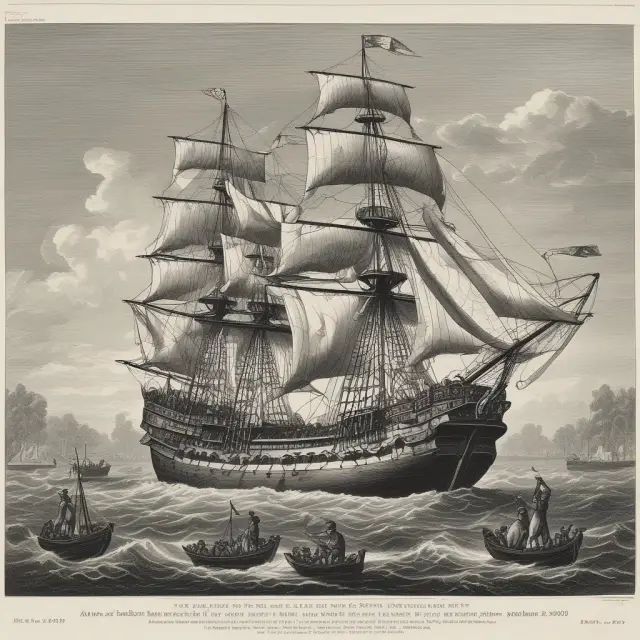
Explore the history and implications of indentured servitude, a vital component of America's past labor system.
Background and Definition of Indentured Servitude
Indentured servitude refers to a historical labor practice where individuals were bound to work under contract for a specific period without wages to repay their debt, typically the cost of transportation to America or other colonies. This system was most prevalent during the 17th and 18th centuries, particularly in the American colonies, although it existed elsewhere around the world.
Europeans often entered indentured servitude as a means to emigrate from their home countries, which could be expensive due to transportation costs. In exchange for the passage, immigrants would agree to work for a set term, usually three to seven years, for a colonial landowner or merchant. The labor arrangement was similar to apprenticeships, with workers learning trades and gaining skills under a master’s supervision.
Although indentured servants had limited rights, they were not considered property in the same way that enslaved people were. They could potentially earn their freedom upon completing their term or by purchasing it from their masters. However, some contracts contained clauses allowing masters to extend the work period if the servant was deemed insubordinate.
The indentured servitude system served as an essential foundation for the growth of early American agriculture and economy, enabling European immigrants to establish themselves in new lands while providing labor for the development of plantations, farms, and infrastructure projects.
In essence, indentured servitude can be seen as a bridge between the feudal labor system of Europe and the modern wage labor system. It enabled people to move from one social and economic context to another, often with the promise of a fresh start in a new world. In the next section, we will explore the experiences of immigrants who came to America as indentured servants and the conditions they faced during this period of their lives.
Understanding Indentured Servitude: Origins and Historical Significance
Indentured servitude was not a new concept when it arrived in the American colonies. The practice had roots dating back to medieval Europe, where it served as an alternative to the more expensive practice of buying a serf or a slave. In England, indentures were used primarily for apprenticeships and bound laborers who owed their masters for food and shelter while learning a trade.
As European colonization expanded across North America in the 17th century, so too did the use of indentured servitude as a means of obtaining cheap labor. In 1608, the London Company (later known as the Virginia Company) established the first English settlement in Jamestown, Virginia. Facing shortages of labor and supplies, the colonists began to import indentured servants from England.
By the 17th century, indentured servitude became increasingly common throughout the American colonies. Approximately 300,000 European workers immigrated to the colonies in this manner, with many serving for terms ranging from three to seven years. Indentured servitude continued into the 18th century and beyond, even as slavery began to emerge as a more economically viable alternative labor source.
The following sections will delve deeper into the experiences of indentured servants in America, including their living conditions, the terms of their contracts, and the controversy surrounding this form of bound labor.
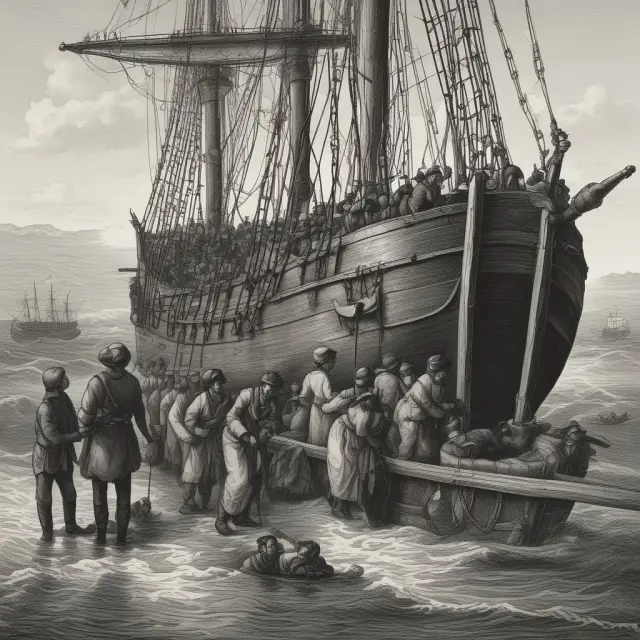
Immigrants as Indentured Servants in the American Colonies
Indentured servitude was a common practice that allowed individuals to pay their passage to America by working off their debt through labor. This system served as a significant means of immigration for European settlers during the 1600s when many sought cheap labor to manage their large estates and farms in the American colonies. Approximately 300,000 individuals immigrated as indentured servants, contributing to population growth and economic development (History of Indentured Servitude).
The practice of indentured servitude began in the early 1600s when wealthy landowners funded the passage for European immigrants by offering them labor contracts. Contract terms stipulated that workers would repay their debts through specific types of labor for a set period, with skilled laborers typically serving for four to five years and unskilled workers for seven or more (Contract Terms).
The indentured servitude system brought people from various parts of Europe as well as the Caribbean islands to work on American farms, plantations, and construction projects. Both genders were affected by this practice, with women often working as domestic servants or household employees (Famous Indentured Servants and Their Stories).
While some indentured servants successfully completed their contracts, others faced numerous challenges that prevented them from fully repaying their debts. For instance, many perished due to work-related injuries or diseases, while others escaped before the end of their service period (Controversy). Indentured servitude was often compared to slavery given that both practices involved laborers working off debts under contractual terms. However, there were notable differences in treatment and rights between indentured servants and slaves (Indentured Servitude vs. Slavery).
Immigrants who entered the American colonies through indentured servitude faced various living conditions, depending on their employers. Some landowners provided basic medical care, while others offered little more than food and shelter. Despite these challenges, many immigrants used their time as indentured servants to learn new skills or save money for a better future (Impact of Indentured Servitude).
The practice of indentured servitude eventually declined in the late 18th century due to various factors such as improved transportation methods, changes in the economy, and legal restrictions on indentures. By the early 19th century, indentured servitude had largely fallen out of use in America (Decline of Indentured Servitude).
Understanding the significance of indentured servitude in American history provides valuable context for contemporary issues related to immigration and labor rights. The legacy of this historical practice continues to influence our understanding of personal freedom, social structures, and the economic implications of labor contracts.

Contracts and Conditions of Indentured Servitude
Indentured servitude was a labor arrangement where individuals entered into contracts with employers, agreeing to work without wages for a predetermined period in exchange for their passage or other benefits like housing, food, and education. This section delves into the terms and conditions of these contracts and the implications they had on indentured servants’ lives.
The contracts between indentured servants and their employers, also known as masters, were crucial to understanding this labor system fully. In essence, a servant would work off the price of their transportation to America by performing labor for a specific period, usually ranging from four to seven years. The master then provided room, board, and sometimes clothes in exchange for the worker’s labor.
Skilled laborers typically served shorter contracts as they had valuable trade skills that were desirable on plantations and farms. In contrast, unskilled workers often signed longer contracts because it took them longer to acquire useful skills and build savings. The indenture system allowed landowners to provide only the essentials for their servants, eliminating the need for wages.
It was not uncommon for contracts to include restrictions on personal freedoms. For instance, some agreements required servants to abstain from marrying until they had completed their service terms or even prohibited them from leaving their employers before their contract expired. Servants who were found guilty of breaking the conditions could be punished with extended service terms or sold to another master.
However, indentured servitude contracts were not one-sided deals. Some masters offered more favorable terms, providing land and tools upon completion of the contract, enabling servants to start their own farms and businesses. This arrangement proved particularly beneficial for some immigrants as it facilitated their economic independence and social mobility once they had finished their service.
Despite these advantages, indentured servitude was a challenging experience for many workers. Conditions varied significantly from one master to another. Some indentured servants were treated humanely, while others faced harsh conditions that often resulted in illness or death before completing their contracts. In the end, understanding the intricacies of the contracts and the working conditions they outlined is crucial to grasping the true essence of this historical labor system.

Controversy Surrounding Indentured Servitude
Despite its prevalence and historical significance, indentured servitude was not without controversy. Critics argued that it violated labor rights and infringed upon personal freedoms. The system allowed individuals to be bought, loaned, or inherited for the duration of their contracts. This raised ethical concerns regarding the treatment and conditions of the servants themselves.
Many indentured servants did not complete their contracts and some were sold into perpetual servitude when they failed to meet contractual obligations. Indentured servitude was a double-edged sword, providing opportunities for immigrants while exploiting their vulnerability. The lack of legal protections left indentured servants at the mercy of their masters, leading to numerous disputes over labor rights and personal freedoms.
While some landowners offered basic provisions, others denied workers adequate food, shelter, and medical care. This forced many indentured servants into dire circumstances and hardship. In contrast, skilled laborers could negotiate better deals and even receive their freedom upon completion of their contracts. However, most unskilled workers had to labor for longer periods to meet their debts, which further fueled controversy surrounding the system’s fairness.
The ethical concerns surrounding indentured servitude were not limited to labor rights; there were also issues with contract terms and conditions. Indentured servants were often bound by strict contracts that did not allow for marriage, choice of profession, or even movement beyond a specified area without permission from their masters. In essence, indentured servitude blurred the lines between freedom and servitude.
Comparing indentured servitude to slavery adds further complexity to understanding its ethical implications. Both indentured servants and slaves were forced laborers who could be bought, loaned, or inherited. However, there were significant differences between the two: indentured servitude was a temporary arrangement with an end date, whereas slavery was a lifelong bondage. Nevertheless, both systems enabled European powers to build their empires and fuel their economies through cheap labor.
As the headright system evolved, landowners began using it to import more workers and expand their land holdings. This further exacerbated the controversy surrounding indentured servitude as the exploitation of these laborers intensified. Many European immigrants found themselves working under harsh conditions with little to no compensation beyond their eventual freedom.
In conclusion, the history of indentured servitude is a complex and controversial chapter in American history. While it provided opportunities for immigrants to reach America and secure a new life, it also perpetuated labor exploitation and questionable ethical practices. Understanding this historical context is essential for appreciating the implications of indentured servitude on modern society, particularly as we grapple with ongoing issues related to labor rights and immigration policies.
Comparison of Indentured Servitude to Slavery
Although both indentured servitude and slavery share some similarities, they have distinct differences. Indentured servitude and slavery are two contrasting forms of labor exploitation that played significant roles in the historical development of America and its economy. While both systems allowed individuals to be bought, sold, loaned, or inherited during their contract terms, there are several important distinctions between indentured servitude and slavery.
First, indentured servants generally entered into their contracts willingly, whereas slaves were taken against their will. Indentured servants made this decision as a way to pay off the cost of travel to America, or in some cases, as a means to serve a prison sentence. In contrast, African slaves were forcibly brought to America and sold into bondage without their consent.
Secondly, indentured servitude typically lasted for a specified term, usually ranging from four to seven years. Once the indenture was fulfilled, the servant would receive freedom, land, or other compensation as “freedom dues.” Slavery, on the other hand, was a lifelong bondage with no clear end date. Slaves had no hope of freedom until the legal abolition of slavery.
Another difference lies in the treatment and rights granted to indentured servants compared to slaves. Indentured servants could apply for court proceedings to defend their rights or seek redress against abuses. They were also entitled to own land, marry, and enter into contracts once their term ended. Slaves, however, had no legal recourse for protection against abusive masters and had limited personal freedoms.
Despite these differences, both indentured servitude and slavery served as critical components in the economic growth of America during their respective time periods. Indentured servitude was a common practice among European settlers seeking laborers to establish agricultural settlements, while slavery fueled the development of the American South’s plantation economy.
Understanding these distinctions is crucial for contextualizing the historical significance of each system and recognizing their lasting impact on American society and its people. The enduring legacy of indentured servitude can still be felt in contemporary debates surrounding labor rights, immigration policies, and social inequality.

The Decline of Indentured Servitude
Indentured servitude, which served as a crucial means for immigrants to reach America during the 17th and 18th centuries, underwent significant changes due to economic, legal, and societal factors. The headright system, evolving labor laws, and new immigration patterns significantly impacted this labor arrangement.
The decline of indentured servitude started in the late 17th century when the headright system began to dominate as a means for landowners to acquire cheap labor. This system provided land to planters who imported workers, creating an incentive to bring in more laborers. As a result, the number of indentured servants in Virginia and Maryland increased significantly, leading to an oversupply of laborers, which subsequently decreased wages and weakened the bargaining power of indentured servants (Sussman, 1990).
Furthermore, changing legal landscapes had a significant impact on indentured servitude. The Passenger Vessels Act of 1803 was introduced in Great Britain to regulate travel conditions aboard ships, making transportation more expensive and creating economic obstacles for potential indentured servants (Mason & Gilje, 2011). In the United States, the abolition of imprisonment for debtors in 1833 made it difficult for masters to prosecute runaway servants effectively. This legal change reduced the effectiveness of the threat of arrest as a means to maintain order among indentured laborers. The gradual implementation of slavery as a more economically viable alternative for labor-intensive agriculture further weakened the indentured servitude system.
Additionally, societal changes influenced the decline of indentured servitude. The American Revolution and its emphasis on individual liberty led to a greater focus on the importance of free labor and personal freedom. This shift in values created a growing sentiment against the system as it conflicted with the emerging cultural norms.
Despite the decline, indentured servitude continued to have a significant impact on American society. It played a crucial role in the population growth and economic development of the early colonies through its contributions to agriculture, infrastructure building, and the establishment of various industries (Mason & Gilje, 2011).
The legacy of indentured servitude extended beyond its historical significance as it influenced contemporary issues related to labor rights and immigration policies. The experience of indentured servants set precedents for future debates over the moral and ethical dimensions of labor exploitation, which remain relevant in modern discussions surrounding immigrants’ rights and worker protections.
In conclusion, the decline of indentured servitude was a complex process influenced by economic, legal, and societal factors. The changing role of labor markets, evolving laws, and shifting social values all contributed to the eventual demise of this significant aspect of American history. Understanding the decline of indentured servitude provides valuable insights into the development of America’s labor systems and the broader historical context of its immigration patterns.
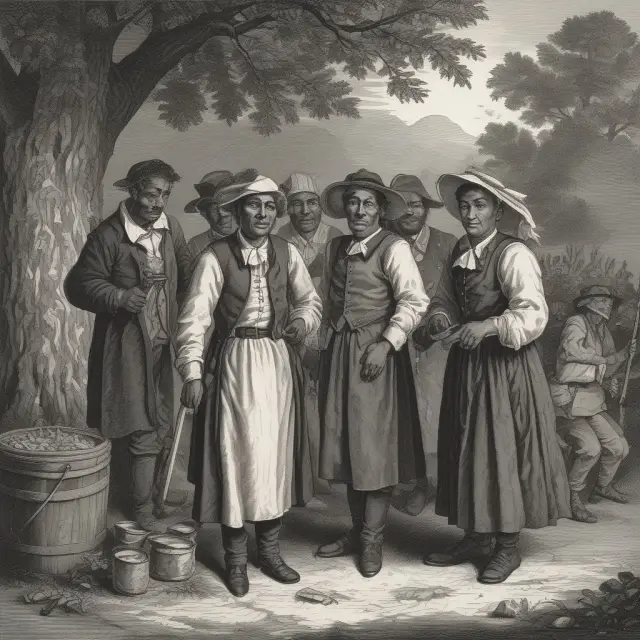
Impact of Indentured Servitude on Society
As previously discussed, indentured servitude played a significant role in the growth and development of American society during the colonial era. This labor system, which involved individuals working off their debts by providing service to landowners or employers, helped shape population dynamics and economic structures that would persist throughout history.
The demographic makeup of indentured servants was diverse, with individuals hailing from various European countries as well as Africa and Asia. Approximately 300,000 Europeans came to the American colonies between 1623 and 1775 as indentured servants, making up about 45% of the total white population during this period (Northrup, 1942). Indenture records show that English immigrants made up the majority, followed by Germans, Scots-Irish, Irish, French, Dutch, Danes, and Swedes.
The influx of indentured servants had far-reaching implications for American society in terms of population growth and economic development. By providing labor to plantations and farms, these individuals helped increase agricultural productivity and expand settlements beyond the original coastal areas. As a result, indentured servitude played a crucial role in establishing the foundations for America’s agrarian economy.
Moreover, the presence of indentured servants influenced the development of social structures and labor practices, particularly as they related to race. For instance, the treatment of indentured servants varied greatly depending on their national origin and the specific conditions of their contracts (Brodwin & Roiphe, 2015). English servants, for example, were often treated more favorably due to their perceived superiority and were more likely to be granted land and freedom at the end of their terms.
However, as indentured servitude began to decline in the late 17th and early 18th centuries, those from non-European backgrounds continued to face harsher conditions. African slaves, who increasingly became a more significant labor force, were subjected to chattel slavery – a system that treated them as property rather than contract workers. The clear distinction between the treatment of indentured servants and slaves set the stage for racial hierarchies and discriminatory practices that would persist in American society long after indenture had ended (Higginbotham, 1972).
Today, the legacy of indentured servitude continues to shape contemporary debates around labor rights and immigration policies. For example, critics argue that modern-day guest worker programs share striking similarities with historical patterns of indentured servitude (Baldwin, 2011). These arguments highlight the importance of understanding the complex history of labor arrangements in America and their ongoing implications for marginalized communities.
In conclusion, the impact of indentured servitude on American society was profound and far-reaching. This labor system not only facilitated population growth and economic development during the colonial period but also left a lasting legacy that influenced social structures and racial hierarchies that persist to this day. By examining the historical context and implications of indentured servitude, we can better understand the complexities of labor arrangements and their role in shaping our society.
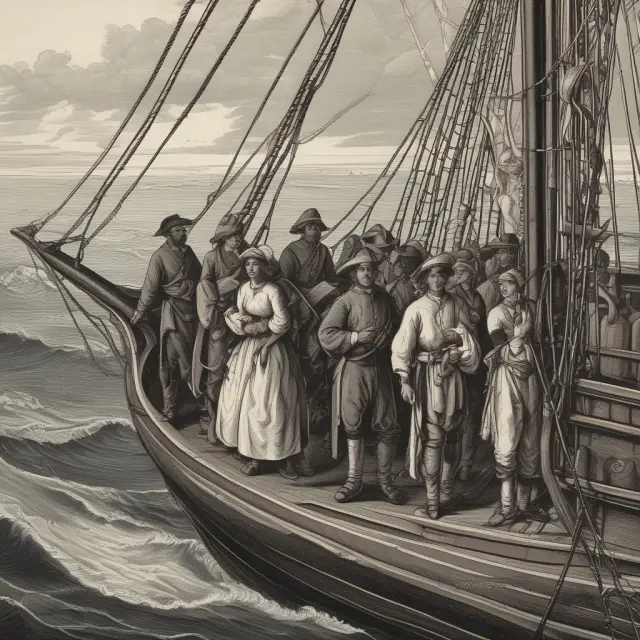
Famous Indentured Servants and Their Stories
Indentured servitude served as a means for many individuals to migrate to the American colonies and start new lives. Although most of these laborers were unknown, several famous figures have emerged from this period. Their stories add depth to our understanding of the indenture system and its implications.
1. John Smith: Best known as the founder of Jamestown, Virginia, in 1607, John Smith was an English adventurer who came to America as an indentured servant. After being injured during a skirmish with Powhatan’s warriors, Smith was granted freedom by Pocahontas, a well-known Native American woman. His experiences and leadership significantly influenced the development of early American colonies.
2. Anne Bonny: Born in Ireland around 1697, Anne Bonny was an infamous pirate who began her life as an indentured servant in Charleston, South Carolina. She married a pirate named James Bonny but later left him to join another pirate crew and became known for her fearlessness and skill. Her legacy continues to inspire women in popular culture.
3. Edward Teach: Known as Blackbeard, the infamous pirate Edward Teach came from England and served aboard a merchant vessel as an indentured servant before turning to piracy around 1716. His distinctive appearance, including his long beard braided with fuses for intimidation, earned him a fearsome reputation on the high seas.
4. Mary Rowlandson: Born in England around 1637, Mary Rowlandson was a Puritan woman taken captive during King Philip’s War (1675–78) and sold into indentured servitude to Native Americans for two years. Her vivid account of her experiences as a captive, published in 1676, is considered one of the earliest English-language memoirs from America.
These stories and many others illustrate that not all indentured servants were destined to live and work under unfavorable conditions. Some were able to turn their situations around, learn valuable skills, or even rise to power and influence. Understanding these experiences adds context and nuance to the history of indentured servitude in America.
In conclusion, indentured servitude was a crucial aspect of American colonial society. While it may have been an unpleasant or even dangerous experience for many laborers, it served as a means for individuals from Europe and beyond to reach America and contribute to its growth and development. Famous stories of those who lived through this time remind us that the indenture system was not just about oppression but also about opportunity, survival, and resilience.

Modern-Day Implications and Interpretations of Indentured Servitude
The legacy of indentured servitude is not just a piece of history but has significant implications on contemporary society, particularly when discussing labor rights, immigration policies, and social justice issues. Although the practice was abolished centuries ago, its impact can be seen in various aspects of our culture.
One modern interpretation is the link between indentured servitude and modern-day debt bondage, where individuals are forced into working conditions against their will as a result of owing substantial debts. According to the International Labour Organization, an estimated 15 million people currently live in some form of bonded labor worldwide, with India being home to the largest number of bonded laborers.
Moreover, indentured servitude has been used metaphorically to describe conditions faced by immigrants and refugees. For instance, the term “modern-day indentured servants” is used when referring to foreign workers who are subjected to restrictive working conditions, lack of labor rights, or no access to social services in their host countries. The concept draws a parallel between historical indenture and modern-day exploitation.
The parallels don’t end there; the use of immigration detention centers in many countries can also be compared to the holding pens used for indentured servants before they were sold or transferred to new employers. Detainees often face inhumane conditions, including overcrowding, lack of access to basic services and legal representation, and a lack of transparency regarding their release dates.
Aside from labor rights and immigration issues, the study of indentured servitude continues to provide valuable insights into social history, human migration, and economic development. Understanding how this system functioned and evolved allows us to examine past policies, their consequences, and the role they play in shaping contemporary societal norms.
For instance, researching indentured servants’ contracts can shed light on early American labor laws and their impact on the working class. Additionally, indenture records are crucial sources of information for genealogists and family historians investigating their ancestors’ past lives and experiences.
In conclusion, while indentured servitude may be a historical practice, its repercussions continue to influence contemporary issues. Studying this system offers valuable insights into the complex web of labor rights, immigration policies, and social justice that intersects with our understanding of human history and progress.

Frequently Asked Questions about Indentured Servitude
Q: What is indentured servitude?
A: Indentured servitude is a labor contract where an individual works without wages to pay off an indenture or loan within a specified timeframe.
Q: How did indentured servitude begin in America?
A: Indentured servitude began in the early 1600s when European immigrants arrived in the American colonies as laborers in exchange for their passage.
Q: Who were indentured servants?
A: Indentured servants could be anyone, from skilled workers to unskilled laborers, who came to America to work off the cost of their transportation.
Q: How long did an indentured servant serve?
A: Contracts ranged from three to seven years depending on the skill level and type of labor required.
Q: Were there differences between indentured servants and slaves?
Yes, while both groups were exploited, slaves were property with no rights or freedoms, whereas indentured servants had some personal freedom and could earn their freedom upon completion of their contract term.
Q: Why did indentured servitude decline in America?
A: The 13th Amendment abolished indentured servitude after the Civil War, as well as changes to labor laws and immigration policies.
Q: How were conditions for indentured servants?
Conditions varied, but many indentured servants worked long hours with minimal food, shelter, and rights, while some were treated more humanely and given access to education or land upon completion of their contract.
Q: Were there any benefits to becoming an indentured servant?
Yes, some immigrants saw it as a means to start a new life in America and earn their freedom, along with the opportunity to learn new skills and potentially acquire land and other resources upon completion of their contracts.
In conclusion, understanding indentured servitude offers valuable insights into the history of American immigration and labor practices. Through examining the origins, conditions, controversies, and implications, readers can grasp the importance and far-reaching effects this system had on shaping our nation.
 Next entry · No. 2,361Understanding the Role and Responsibilities of Independent Contractors in Finance and Investment
See also
-
 No. 4,905
26 Jul 2025
23 min
Taxation Without Representation: A Historical Overview and Modern Implications for Institutional Investors
Taxation
No. 4,905
26 Jul 2025
23 min
Taxation Without Representation: A Historical Overview and Modern Implications for Institutional Investors
Taxation -
 No. 3,595
11 Apr 2025
17 min
Numismatics: The Fascinating Study of Currency, Coins, and Collectibles
Finance History
No. 3,595
11 Apr 2025
17 min
Numismatics: The Fascinating Study of Currency, Coins, and Collectibles
Finance History -
 No. 3,470
31 Mar 2025
21 min
Understanding the Legacy of Nifty Fifty: Insights on Large-Cap Investing from History’s Most Favored Stocks
Finance History
No. 3,470
31 Mar 2025
21 min
Understanding the Legacy of Nifty Fifty: Insights on Large-Cap Investing from History’s Most Favored Stocks
Finance History -
 No. 2,856
09 Feb 2025
17 min
Liberty Bonds: A Historical Look at War Financing and Public Investment
Finance History
No. 2,856
09 Feb 2025
17 min
Liberty Bonds: A Historical Look at War Financing and Public Investment
Finance History -
 No. 2,602
20 Jan 2025
20 min
The Enigmatic World of Jobbers: From Market Makers to Extinct Species in the London Stock Exchange
Finance History
No. 2,602
20 Jan 2025
20 min
The Enigmatic World of Jobbers: From Market Makers to Extinct Species in the London Stock Exchange
Finance History -
 No. 2,141
13 Dec 2024
20 min
Understanding HM Revenue and Customs (HMRC): Functions, History, and Significance
Finance History
No. 2,141
13 Dec 2024
20 min
Understanding HM Revenue and Customs (HMRC): Functions, History, and Significance
Finance History