The Enigmatic World of Jobbers: From Market Makers to Extinct Species in the London Stock Exchange

Explore the history and importance of jobbers in London's Stock Exchange - from their origins to their decline.
Introduction and Background
Jobbers, also known as ‘stockjobbers,’ were an essential yet enigmatic component of the London Stock Exchange prior to October 1986. These individuals acted as market makers (MMs), providing liquidity by holding securities on their own books and matching investors’ orders through their brokers. Although the term jobber is also used in retail contexts, this article focuses on its historical significance within the London Stock Exchange.
Little documentation exists on the specific activities of jobbers due to their lack of record-keeping. The term ‘jobber’ emerged during Britain’s Financial Revolution in the late 1600s when joint-stock companies allowed for the free buying and selling of shares. As the financial sector matured, jobbing firms multiplied, reaching an estimated 600 by 1914. However, their numbers dwindled significantly over time as institutional investors became more dominant and the required capital for jobbing increased dramatically.
The decline of jobbers culminated in October 1986 when financial deregulation in the U.K., known as ‘Big Bang,’ put an end to their role on the London Stock Exchange. The emergence of electronic trading further contributed to the obsolescence of jobbers.
Understanding Jobbers
Jobbers, or market-makers, are best characterized as those who held shares on their own books and matched investors’ buy and sell orders through brokers. Before 1909, there was no formal distinction between these two roles, with custom and tradition serving as the only differentiators. As early as the 19th century, half of the London Stock Exchange members specialized in making a continuous market for one leading type of security.
Origins of Jobbers: Pre-Financial Revolution Era
The origins of jobbing can be traced back to the late 1600s following Britain’s Financial Revolution. This period saw the rise of joint-stock companies and regulated stock exchanges, allowing for the buying and selling of their shares freely. The establishment of jobbers was a natural response to this new market environment.
The Role of Jobbers in Early Stock Trading: Historical Context
Jobbers played a vital role in early stock trading as they provided liquidity by matching buyers and sellers through their brokers, earning income from the bid-ask spread. Their influence extended beyond individual transactions as they contributed to the development of the stock market system itself.
More to come…
Stay tuned for further exploration into the heyday of jobbers in the 19th century, their decline, and the impact they left on the London Stock Exchange.

The Role of Jobbers in Early Stock Trading
Jobbers, also known as market makers, held a significant position in the early days of stock trading on the London Stock Exchange. These individuals acted as the backbone of the market by providing continuous liquidity and facilitating transactions between buyers and sellers. The term ‘jobber’ refers to an individual who bought and sold stocks from their own account. As market makers, they took upon themselves the risk of holding shares in their inventory and provided the necessary pricing structure for securities to trade effectively.
The origins of stockjobbing can be traced back to the Financial Revolution of Britain in the late 17th century when joint-stock companies started emerging, leading to the birth of regulated stock exchanges. The first stock exchange was established in London in 1698, and jobbers soon became an integral part of it, as they filled the vital role of facilitating trading in these new securities.
In the early years of the Stock Exchange, the distinction between a broker and a jobber was not clearly defined. Both types of intermediaries dealt with stocks, but their primary functions differed significantly. While brokers acted on behalf of clients to execute trades, jobbers took responsibility for maintaining an active market by buying and selling shares from their own accounts.
Jobbing firms grew in number during the 19th century as the range of securities broadened, with at least half of London Stock Exchange members specializing in one type of security. By 1914, there were over 600 jobbing firms and numerous smaller operations. However, with the growth of institutional investors and an increasing need for substantial capital to participate as a jobber, their numbers began to dwindle.
Despite this decline, the significance of jobbers in providing market liquidity remained evident until the major shift in the London Stock Exchange’s operations known as ‘Big Bang’ in October 1986. The deregulation of financial markets and introduction of electronic trading gradually led to the obsolescence of traditional jobber firms, marking the end of an era for this once influential group.
As we explore the historical context of stockjobbing further, we will delve deeper into their roles and specializations, the differences between jobbers and brokers, and the impact of ‘Big Bang’ on their extinction.

Origins of Jobbers: Pre-Financial Revolution Era
The term “jobber” refers to a market maker on the London Stock Exchange prior to October 1986. These stockjobbers played a significant role in the financial sector, serving as the primary liquidity providers for the London Stock Exchange before the advent of electronic trading. The origins of jobbers can be traced back to Britain’s Financial Revolution in the late 17th century.
The result of these financial reforms was the emergence of joint-stock companies whose shares could be bought and sold freely, leading to the formation of regulated stock exchanges. In this context, “jobbers” emerged as intermediaries to facilitate trading in these new shares. Despite their historical significance, little is known about the specific activities of jobbers due to limited record keeping.
By the early 19th century, London boasted hundreds of jobbing firms. These entities acted as market makers, holding shares on their own books and creating market liquidity by buying and selling securities. The distinction between these market-makers (jobbers) and brokers who dealt with them on behalf of the public was based primarily on custom and tradition, with a formal embodiment coming in 1909 when jobbers were recognized as having a distinct capacity within the London Stock Exchange rules.
The range of securities types broadened throughout the 19th century, leading to an increase in the number of market-makers specializing in various types of securities. By 1914, over 600 jobbing firms were in existence, along with numerous one-man operations. However, the decline of private investors and the increasing scale of required jobbing capital gradually led to a steep numerical decline, leaving only five major jobbing firms on the floor of the London Stock Exchange by October 1986.
The official demise of stockjobbers coincided with the deregulation of financial markets in the U.K., which occurred in that same month. The emergence of electronic trading and the obsolescence of traditional, open-outcry trading systems further contributed to the disappearance of jobbers from the financial landscape.
Jobbers’ historical role as market makers and liquidity providers left an indelible mark on London’s stock exchange and the broader financial sector. Their legacy continues to be documented through oral histories, archival records, and scholarly research, providing valuable insights into the evolution of modern finance.
The Peak of Stockjobbing: 19th Century
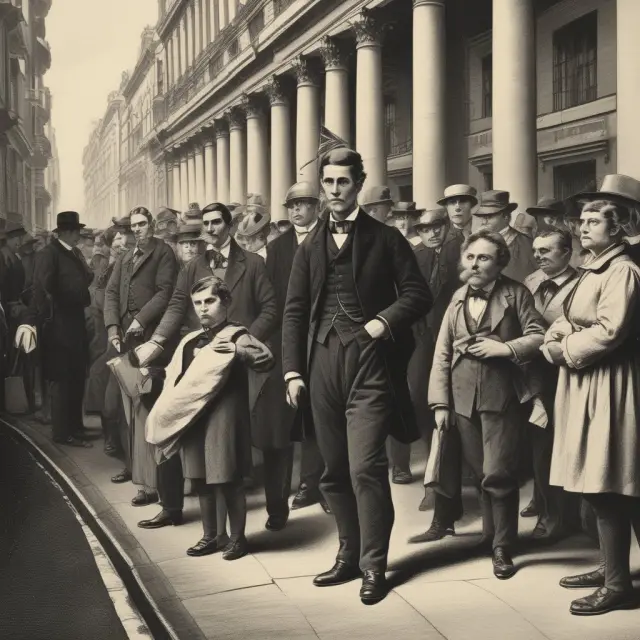
Jobbers reached their zenith during the 19th century, playing a pivotal role in the burgeoning London Stock Exchange. They functioned as market makers, holding shares on their own books and matching buy and sell orders from investors through their brokers. Jobbers’ presence was crucial as the range of securities broadened throughout the century.
Jobbers emerged during this period due to increased demand for continuous markets in various securities types. By 1914, over 600 jobbing firms existed alongside numerous one-man operations. These numbers gradually declined leading up to the Big Bang deregulation in October 1986, when only five major jobbing firms remained on the London Stock Exchange floor.
The distinction between brokers and jobbers was a significant one, albeit based primarily on custom and tradition until formalized in 1909. Brokers acted as intermediaries for clients, facilitating their buy and sell orders for a commission, whereas jobbers specialized in market-making activities for various securities types.
The jobber system underwent significant growth during the 19th century, with at least half of London Stock Exchange members focusing on making a continuous market within one leading type of security. Jobbing firms employed large capital requirements and were essential to the marketability provided by the system. However, their role began to wane as institutional investors replaced private ones and the need for substantial jobbing capital increased.
Despite declining numbers, the importance of stockjobbers in London’s financial sector cannot be understated. Their impact on the development and transformation of the London Stock Exchange is evident in its modern form. However, little documentation exists regarding their activities due to limited record keeping. This lack of records makes understanding the intricacies of the jobber system a challenge for historians and researchers alike.
In conclusion, stockjobbers’ role as market makers during the 19th century was essential to the London Stock Exchange’s growth and evolution. Their activities contributed significantly to the development of a recognizably modern marketplace, with continuous markets in various securities types. Despite limited record keeping, their legacy remains an intriguing piece of financial history.
Jobber Specializations
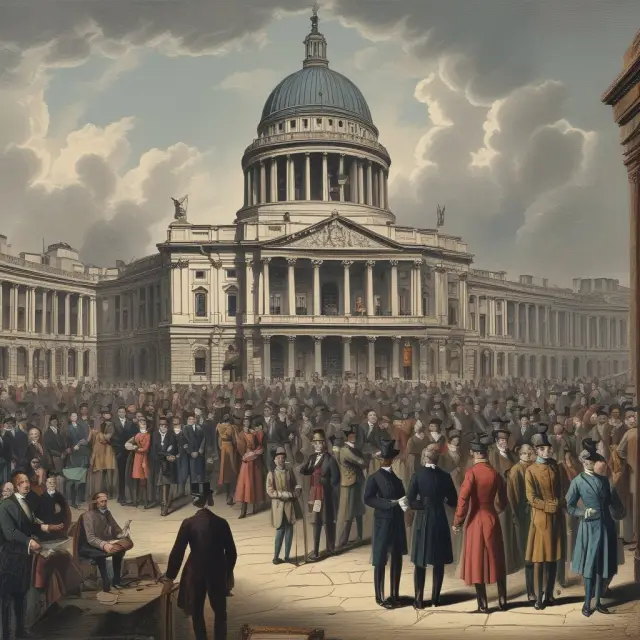
As London’s financial sector grew and evolved during the 19th century, jobbers increasingly specialized in particular types of securities, focusing on making continuous markets for their chosen assets. The distinction between these market-makers, or jobbers, and the brokers who dealt with them on behalf of the public was initially based on custom and tradition, but it would eventually be formalized through London Stock Exchange rules in 1909. By 1914, there existed over 600 jobbing firms, as well as many one-man operations. However, this number began to dwindle as institutional investors started to replace private ones and the required capital for jobbing increased significantly.
By the time of “Big Bang,” there were only five major jobber firms still active on the floor of the London Stock Exchange. Though their numbers had declined, the marketability provided by the system did not necessarily suffer, as these remaining firms managed to maintain a substantial presence and influence within the exchange.
Jobbers’ area of expertise varied widely; some specialized in government securities, while others focused on industrial shares or preferred stocks. Some even narrowed their focus to specific industries, such as coal or textiles. The choice of specialization was often influenced by an individual jobber’s resources and connections, as well as the prevailing market conditions and trends.
This increasing specialization among jobbers contributed to a more efficient and diverse financial sector. It allowed for greater price transparency and a broader range of investment options, ultimately benefitting both buyers and sellers. The development of specialized jobbers laid the groundwork for today’s highly segmented capital markets, with various intermediaries catering to specific investor needs and asset classes.
The role of jobbers in London’s financial sector during this period was not limited to providing market liquidity; they also played a crucial role in gathering and disseminating market information. By actively buying and selling securities, they gained valuable insights into emerging trends and price movements that were often shared among their fellow market participants. This helped create an informational network that facilitated more informed investment decisions for their clients.
Despite their historical significance, the lack of records from this period makes it difficult to fully understand the intricacies of jobbers’ day-to-day activities and motivations. However, oral histories and interviews with former jobbers provide essential insights into this distinctive part of London’s financial history. The Centre for Metropolitan History has compiled an archive of these interviews, offering a unique window into the world of stockjobbing and its lasting impact on the financial sector.
FAQ:
What did jobbers do in the financial sector?
Jobbers were market makers who bought and sold securities for their own accounts to maintain market liquidity and make markets for specific types of securities. They earned their income from the bid-ask spread.
How did stockjobbing originate?
Stockjobbing, or professional trading of stocks on an exchange, emerged following Britain’s Financial Revolution in the late 1690s when joint-stock companies and regulated stock exchanges became widespread. Jobbers facilitated trading in these new securities by buying and selling shares for their own accounts.
When did jobbers disappear?
Stockjobbers officially disappeared from British stock exchanges in October 1986, coinciding with deregulation of financial markets in the U.K. and the introduction of electronic trading systems.
What was the difference between a jobber and a broker?
A stockbroker facilitated orders on behalf of clients and earned a commission, while a stockjobber functioned like a market maker by buying and selling securities for their own account and making markets in specific types of securities. A broker may have bought or sold securities from a jobber for their clients.
How did the role of jobbers contribute to the development of modern financial markets?
Jobbers’ increasing specialization during the 19th century led to greater price transparency, more investment options, and a broader range of intermediaries catering to specific investor needs and asset classes. These developments helped create today’s segmented capital markets and informed investment decisions for their clients.

Distinction Between Jobbers and Brokers
The terms ‘jobber’ and ‘broker’ are often used interchangeably when discussing stock exchange history; however, they represent distinct roles within the London Stock Exchange (LSE) ecosystem prior to its modernization in 1986. Understanding their differences is essential for grasping the significance of this financial system that once defined London’s economic landscape.
In essence, jobbers and brokers were two sides of the same coin when it comes to stock trading during this era. Jobbers acted as market makers, holding shares on their account and quoting buy and sell prices to brokers and their clients. They earned income through the bid-ask spread. On the other hand, brokers served as intermediaries between investors and jobbers. They facilitated orders, ensuring price transparency, and executed trades in accordance with their clients’ instructions.
To put it simply, a broker would buy shares from a jobber for their client at the quoted sell price and sell those same shares back to the jobber at the quoted bid price, making a commission on the transaction. This symbiotic relationship created an active, liquid market where buyers and sellers could efficiently exchange securities.
This separation of roles was evident during the 19th century as the London Stock Exchange (LSE) saw a proliferation of various security types and over 600 jobbing firms emerged. It wasn’t until 1909 that formal rules acknowledged this distinction, with the London Stock Exchange recognizing two capacities: brokers and market makers or jobbers.
It’s important to note that this difference between jobbers and brokers existed long before electronic trading systems and large institutional investors became dominant forces in the stock market. However, as these changes unfolded throughout the 20th century, jobbers faced increasing pressure to adapt to the evolving financial landscape, ultimately leading to their eventual demise by October 1986 during the infamous ‘Big Bang’ reforms.
By acknowledging the historical role of both jobbers and brokers within London’s financial market, we can better understand the unique characteristics and functions that once shaped this iconic exchange.

Decline of the Jobber System: 20th Century
The decline of the jobber system in the London Stock Exchange (LSE) was primarily driven by technological advancements, deregulation, and changes in market dynamics. The once dominant role of jobbers as market makers waned as they faced increasing competition from brokers and new trading systems.
In the early 20th century, jobbers were a vital component of the London Stock Exchange’s functioning. They provided liquidity to markets by holding shares on their books and facilitating trades through their brokers. However, this system started experiencing significant changes as the financial landscape evolved.
One of the most notable shifts occurred during the 1920s when institutional investors began replacing individual investors in the stock market. As a result, jobbing firms needed to have substantial capital reserves to maintain their position as market makers. This put pressure on smaller firms and ultimately led to many of them disappearing or merging with larger ones.
Another major turning point came during the 1950s when the UK government introduced margin trading. Margin trading allowed investors to buy securities with a small down payment, increasing their buying power and demand for shares. This forced jobbers to adapt to new market conditions and adjust their strategies, leading to further consolidation within the industry.
By the 1970s, the London Stock Exchange saw increased competition from other European exchanges that started offering automated trading systems. The Automated Quotations Hargreaves Lansdown System (AQHL) was one of the first electronic platforms to launch in Europe, allowing investors to trade shares without broker intervention. While jobbers continued to play a role in the market, their importance began to diminish as more traders turned to automated systems for faster and more efficient transactions.
The final blow came in October 1986 when the “Big Bang” reforms were implemented. This marked a significant shift in the London Stock Exchange’s operations, leading to deregulation, the replacement of fixed commissions with negotiated ones, and the introduction of electronic trading. With these changes, jobbers lost their primary role as market makers, and their numbers dwindled until they eventually ceased to exist in the LSE.
Although stockjobbers officially disappeared from British stock exchanges in 1986, their impact on the financial sector should not be understated. The jobber system played a crucial role in facilitating trading during a critical period of Britain’s financial history and helped establish the foundations for modern securities markets.

Jobbers’ Impact on London Stock Exchange
The influence of jobbers on the London Stock Exchange (LSE) is an intriguing topic that remains shrouded in mystery due to the limited records left behind by these historical market makers. The term “jobber,” or “stockjobber,” referred to a market maker active on the LSE before October 1986. Jobbers acted as intermediaries, creating market liquidity and facilitating transactions for investors via their brokers.
Historically, jobbing firms emerged during the late 17th century following Britain’s Financial Revolution. The advent of joint-stock companies led to a burgeoning stock market and the need for organized trading platforms. Jobbers filled this need, providing a continuous market in various securities types by buying and selling stocks for their own accounts.
As the financial sector evolved during the 19th century, jobbing firms became increasingly specialized, focusing on specific securities. By 1914, over 600 of these entities existed alongside smaller one-man operations. Although their numbers dwindled throughout the 20th century, jobbers continued to play an essential role in maintaining market liquidity.
The distinction between jobbers and stockbrokers was a clear-cut one based on custom and tradition until the London Stock Exchange formalized roles with rules in 1909. A stockjobber functioned as a market maker, earning profits through the bid-ask spread, while brokers facilitated transactions on behalf of clients, receiving commissions for their services.
Despite the limited records available, it is believed that jobbers significantly impacted the London Stock Exchange’s transformation. Their activities during the Financial Revolution era laid the foundation for modern stock exchanges and market-making processes. Moreover, they played a critical role in expanding trading opportunities and fostering liquidity throughout the 19th and early 20th centuries.
However, jobbers’ influence waned as financial regulations began to shift and markets became increasingly electronic. The deregulation of financial markets in October 1986 marked the official end of the jobber system on the LSE. With the introduction of negotiated commissions and electronic trading systems, jobbers became obsolete, leaving behind a rich historical legacy in London’s financial sector.
Though little is known about the day-to-day workings of these market makers, their role in shaping the stock exchange is indisputable. By providing continuous markets and fostering liquidity for various securities, jobbers played an instrumental part in developing London’s thriving financial industry.
In conclusion, understanding the historical significance of jobbers offers valuable insights into the evolution of the London Stock Exchange and modern market-making processes. Despite their disappearance from the financial scene over three decades ago, their impact continues to be felt by today’s traders and investors.

The Last Days of Jobbers: The Approach of ‘Big Bang’
The demise of the jobber system in the London Stock Exchange is a fascinating yet under-documented chapter in financial history. By the late 20th century, jobbers had been an integral part of the exchange for centuries. However, their role was about to change drastically with the onset of ‘Big Bang’ – a series of market reforms that would transform the London Stock Exchange forever.
The term ‘jobber’ refers to a market maker who held shares on their account and provided market liquidity by buying and selling securities through their brokers on behalf of investors. This system had its origins in the 17th century, evolving from the Financial Revolution’s aftermath and the emergence of joint-stock companies. As shares became increasingly traded, jobbers played a crucial role in maintaining market liquidity, matching buyers and sellers through their brokers.
By the early 20th century, jobbers were an essential part of the London Stock Exchange, with hundreds of firms operating. However, their numbers began to dwindle as institutional investors grew more influential, and jobbing capital requirements increased dramatically. By the late 1980s, there were only a handful of major jobbing firms left on the floor.
The last days of jobbers in the London Stock Exchange can be traced back to October 1986, when the financial ‘Big Bang’ hit. This deregulation marked the end of fixed commissions and the introduction of negotiated commissions, as well as electronic trading. In essence, these changes rendered the traditional role of jobbers obsolete.
The dearth of records regarding the activities of jobbers adds to the intrigue surrounding their disappearance. Few records were kept during their heyday, making it challenging for historians and researchers to piece together an accurate account of their activities. Oral histories and archives from former jobbers, as well as interviews with banks, stockbroking firms, and other financial institutions, are among the few sources available today.
The distinction between a jobber and a broker is crucial in understanding this historical period. Jobbers functioned like market makers, buying and selling securities for their own account to provide liquidity to the market and earn money from the bid-ask spread. Brokers, on the other hand, facilitated orders on behalf of customers, earning a commission. A broker might have bought or sold securities from a jobber for their clients.
The jobber system had been in place for over three centuries before it disappeared. Its evolution throughout the 19th century saw market-makers specializing in various types of securities and providing continuous markets for them. However, as institutional investors grew more significant, and individual trading decreased, jobbing numbers dwindled.
Jobbers’ decline did not necessarily signify a decrease in marketability provided by the system. On the contrary, they still played an essential role in maintaining liquidity during this period of transition. Despite their dwindling numbers, the last jobbers held a unique place in the London Stock Exchange and left an indelible mark on its history.

Legacy and Significance of Jobbers
Jobbers, also known as stockjobbers, played an integral role in the early days of the London Stock Exchange (LSE), acting as market makers to provide liquidity and facilitate trades between investors. Their historical significance is often overlooked, but understanding their impact on the financial sector is crucial for appreciating the evolution of modern stock markets.
Origins of Jobbers
The term ‘jobber’ can be traced back to Britain’s Financial Revolution in the late 1690s. In this period, joint-stock companies and their shares became freely tradable, leading to the formation of regulated stock exchanges and the emergence of jobbers as professional traders, buying and selling stocks for their account. They provided liquidity by matching buy and sell orders from investors through their brokers.
The Impact on London Stock Exchange
By the mid-19th century, hundreds of jobbing firms existed in London, making a continuous market in various securities types. This system evolved into a modern form as the range of securities broadened. Jobbers held shares on their own books and earned income from the bid-ask spread. As institutional investors grew in size and scale, traditional jobbing firms declined dramatically, ultimately vanishing from the LSE in October 1986, marking the end of an era.
Contributions to Financial Markets
Although jobbers left few records of their activities, they played a significant role in establishing London as a leading financial hub. Their market-making expertise provided investors with confidence in the exchange and facilitated the growth of joint-stock companies. Additionally, jobbers’ work laid the groundwork for the development of brokers and dealers.
In conclusion, understanding the historical significance of stockjobbers is essential for grasping the evolution of modern financial markets. Their contributions to early stock trading in London went a long way towards shaping today’s market systems. Despite their absence from contemporary markets, jobbers will forever remain an intriguing and enigmatic part of financial history.

FAQ
What are Jobbers in Financial Markets?
Jobbers, also known as stockjobbers, were market makers that played a pivotal role in the London Stock Exchange prior to the mid-1980s. They held shares on their own books and boosted market liquidity by matching investors’ buy and sell orders through their brokers. The term jobber is also used to denote a wholesaler or middleman in retail goods trading.
When Did Jobbers Emerge?
The origins of stockjobbing can be traced back to the late 17th century following Britain’s Financial Revolution, which resulted in the formation of joint-stock companies and regulated stock exchanges. As these shares became tradable, jobbers emerged as market facilitators.
What Was a Jobber’s Role?
Jobbers acted as market makers, buying and selling securities from their own accounts to provide liquidity in the market. They earned their income by making a bid-ask spread (the difference between the buy price and sell price). Investors would approach jobbers with orders to buy or sell stocks through their brokers, who were not allowed to make markets themselves.
Why Did Jobbers Decline?
The decline of stockjobbers can be attributed to several factors. The emergence of institutional investors and the requirement for larger capital to function as a jobber played a significant role in their reduction. Additionally, deregulation in the U.K. financial markets in October 1986 (commonly referred to as ‘Big Bang’) made jobbers obsolete by allowing electronic trading and eliminating fixed commissions.
What Happened to Jobbers’ Records?
Since jobbers kept few records, there is a limited understanding of their activities and practices. Oral histories from banks, stockbroking firms, and other concerned parties are the primary sources for documenting the historical record of jobbers. The Centre for Metropolitan History has compiled an archive of interviews with former jobbers that serves as a permanent record of this significant part of London’s financial history.
What Was the Difference Between Jobbers and Brokers?
Jobbers functioned like market makers, providing liquidity to the market by holding shares on their own accounts and buying and selling them at a spread. Brokers, however, facilitated orders on behalf of clients for a commission. A broker might purchase or sell securities from a jobber for their client’s benefit.
Understanding the distinction between jobbers and brokers was not formally defined until 1909. By the eve of ‘Big Bang,’ there were only five major jobbing firms on the floor of the London Stock Exchange, though this numerical decline did not necessarily denote a reduction in market liquidity provided by the system.
 Next entry · No. 2,603Understanding Jobless Claims: An Important Indicator for Investors
See also
-
 No. 3,728
22 Apr 2025
22 min
Understanding Open Outcry: A Historical Look into Trading Pits Before Electronic Trading Systems
Finance History
No. 3,728
22 Apr 2025
22 min
Understanding Open Outcry: A Historical Look into Trading Pits Before Electronic Trading Systems
Finance History -
 No. 2,141
13 Dec 2024
20 min
Understanding HM Revenue and Customs (HMRC): Functions, History, and Significance
Finance History
No. 2,141
13 Dec 2024
20 min
Understanding HM Revenue and Customs (HMRC): Functions, History, and Significance
Finance History -
 No. 5,943
13 Sep 2026
17 min
Capital Gains Tax on Stocks: The One Day That Costs $1,800
Taxation
No. 5,943
13 Sep 2026
17 min
Capital Gains Tax on Stocks: The One Day That Costs $1,800
Taxation -
 No. 5,874
15 Oct 2025
18 min
Understanding the Modern Day Yuppie: Characteristics and Evolution
Business Finance
No. 5,874
15 Oct 2025
18 min
Understanding the Modern Day Yuppie: Characteristics and Evolution
Business Finance -
 No. 5,872
15 Oct 2025
20 min
Understanding Year to Date (YTD): Analyzing Business Trends and Investment Performance
Business Finance
No. 5,872
15 Oct 2025
20 min
Understanding Year to Date (YTD): Analyzing Business Trends and Investment Performance
Business Finance -
 No. 5,818
10 Oct 2025
20 min
Understanding Business Write-Offs: Expenses, Taxes, and Accounting
Business Finance
No. 5,818
10 Oct 2025
20 min
Understanding Business Write-Offs: Expenses, Taxes, and Accounting
Business Finance