Understanding Indicators: Technical vs. Economic

Learn about indicators in finance and economics: types, functions, examples such as CPI, moving averages, RSI, and more.
What Are Indicators?
Indicators are essential tools utilized in both finance and economics to measure current economic conditions and predict future trends. In finance, indicators often refer to technical chart patterns derived from a security’s price, volume, or open interest data. Common examples include moving averages (MA), Moving Average Convergence Divergence (MACD), and the Relative Strength Index (RSI). In economics, indicators typically reflect pieces of economic data that provide insight into the overall health and future profitability potential of an economy or specific industries.
Understanding Indicators:
Indicators can be categorized as either technical indicators or economic indicators, each with its unique role and function. Technical indicators serve as predictors of changes in stock trends or price patterns for any traded asset. They are used extensively in technical analysis to identify patterns that signal when to buy or sell. In contrast, economic indicators quantify current economic and industry conditions to provide insight into future profitability potential for public companies.
Technical Indicators:
Technical indicators are mathematical calculations based on a security’s price or volume data, which are used to predict future prices. Common technical analysis indicators include:
– Moving Average Convergence Divergence (MACD) indicator: Based on the assumption that the price of a traded asset tends to revert to a trend line.
– Relative Strength Index (RSI): A momentum indicator that compares the size of recent gains to recent losses to determine an asset’s price momentum, either up or down.
Economic Indicators:
Economic indicators are statistical metrics used to measure the overall growth or contraction of the economy as a whole or sectors within it. They include:
– Consumer Price Index (CPI): A weighted price average of a basket of consumer goods and services, measuring changes in the cost of living.
– Gross Domestic Product (GDP): The total value of all goods and services produced by an economy over a specified period.
– Unemployment figures: Quantifies the percentage of the labor force currently seeking employment but unable to find work.
– Interest rates: The cost of borrowing money, which impacts consumer spending and investment decisions.
– Money supply: The total amount of money available in an economy for transactions.
Using indicators effectively requires a solid understanding of each indicator’s purpose, limitations, and application within the context of finance and economics. While they can provide valuable insight, it is crucial to remember that no single indicator tells the whole story and that multiple sources of information should be considered when making investment decisions.
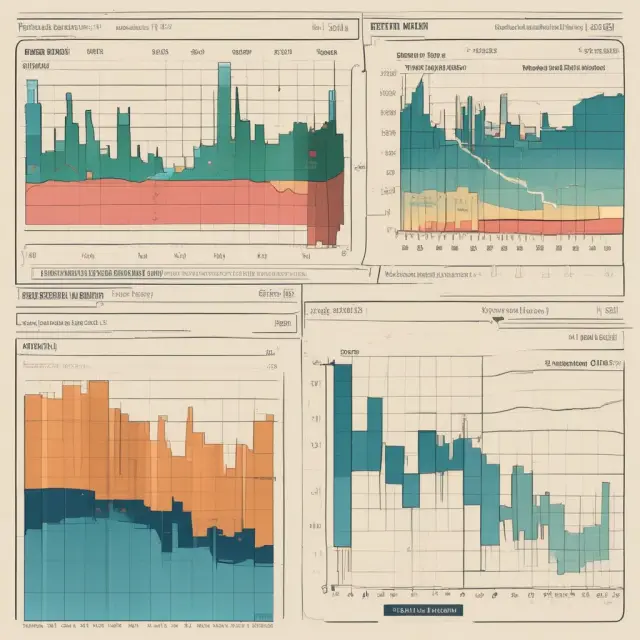
Economic Indicators Overview
Economic indicators are essential statistics that measure the overall health of an economy. They provide valuable insights into current economic conditions, predict future trends, and guide policymakers in implementing effective strategies to manage and improve economic performance. Economic indicators can be classified as leading, lagging, and coincident indicators based on their relationship with the business cycle.
Leading Indicators: Leading indicators are statistical measures that typically change before significant movements in an economy occur. Examples of leading indicators include new orders for manufactured goods, stock prices, and average workweek hours. Investors and economists closely monitor these indicators to anticipate economic changes ahead of time.
Lagging Indicators: Lagging indicators are statistical measures that reflect past economic conditions. They lag behind the current economic situation since they rely on historical data to provide insights. Examples of lagging indicators include unemployment rates and gross domestic product (GDP). Lagging indicators can help policymakers evaluate the effectiveness of their policies and identify areas where further action is needed.
Coincident Indicators: Coincident indicators are statistical measures that move in line with the current economic conditions. They provide real-time information on the state of an economy at a given point in time. Examples of coincident indicators include industrial production, personal income, and housing starts. By monitoring these indicators, investors can assess the current health of the economy and make informed investment decisions.
Some common sources for economic indicators include government agencies, private organizations, and financial institutions. Government agencies like the Bureau of Labor Statistics (BLS), National Bureau of Economic Research (NBER), and Federal Reserve collect and publish a variety of economic data regularly. Private organizations such as the Institute for Supply Management (ISM) also compile and release valuable information on various industries and sectors.
Economic indicators have numerous applications in both academic research and financial markets. In academia, they serve as essential tools to analyze economic trends, forecast future developments, and evaluate policy impacts. For investors, economic indicators can provide valuable insights into market conditions, asset prices, and potential risks or opportunities. By keeping a close eye on relevant economic indicators, investors can make informed decisions, adjust their investment strategies, and stay ahead of the competition. However, it is important to note that no single indicator can provide a complete picture of an economy or its underlying dynamics. Therefore, investors and analysts often rely on multiple indicators in combination to gain a more comprehensive understanding of economic conditions.
One essential aspect of using economic indicators is interpreting their data correctly. Economic indicators are subject to various limitations, including measurement errors, seasonality, and data revisions. For instance, seasonality refers to regular fluctuations in economic data due to recurring events or natural phenomena. Data revisions occur when new information becomes available that changes previous estimates of economic indicators. Therefore, it is crucial to use caution when interpreting economic indicator data and consult multiple sources for validation.
In conclusion, economic indicators are essential statistical measures that provide valuable insights into current economic conditions and future trends. By understanding the types of economic indicators, their limitations, and their applications, investors can make informed decisions and adapt their investment strategies accordingly. Economic indicators play a crucial role in guiding policymakers, academics, and market participants in navigating the complex world of finance and investments.

Consumer Price Index (CPI)
The Consumer Price Index, commonly known as CPI, is an essential economic indicator that measures changes in the cost of living by calculating the average price change for a basket of consumer goods and services over time. The CPI not only gauges inflation or deflation trends but also helps central banks, economists, and investors understand the underlying economic conditions.
Historical Data
Since its inception in 1913, the CPI has been published monthly by the US Bureau of Labor Statistics. Initially, it covered 22 major consumer goods categories, later expanding to include services, housing costs, medical care, and education. In recent decades, the index has evolved into a comprehensive measure of inflation, including over 200 components, representing approximately 80% of total household expenditures in the United States.
Current Trends
As of summer 2021, investors are closely monitoring the CPI due to concerns that rising inflation might negatively affect the current bull run in the stock market. In April 2021, the CPI experienced its biggest 12-month increase since September 2008, with a gain of 0.8%. While some economists argue that the surge is transitory and temporary, others believe it may persist, potentially leading to a correction in stock prices.
Understanding the Implications
The CPI’s impact on financial markets can be significant as it influences interest rates, inflation-adjusted bonds, and commodities. For example, an increase in CPI might lead the Federal Reserve to raise short-term interest rates to maintain price stability, making bonds more attractive relative to stocks. Conversely, a decrease in CPI might signal that the economy is slowing down and could cause bond yields to decline, potentially pushing investors into equities.
In conclusion, understanding consumer price indices (CPIs) and their implications can help you make informed investment decisions and gain valuable insights into economic conditions. As one of the most widely used economic indicators, the CPI provides essential information on inflation trends and consumer spending patterns, offering invaluable perspective for both investors and economists alike.

Moving Average
A moving average is a popular technical indicator that investors use to help identify trends and predict price direction in the financial markets. It is calculated by averaging the closing prices of an asset over a specific period of time, which can range from several days to several years. Moving averages are commonly used with daily, weekly, or monthly data and are typically plotted on charts as trend lines.
There are several types of moving averages, each with its own unique characteristics and applications. The most widely used moving averages are the simple moving average (SMA) and the exponential moving average (EMA). SMA calculates the average by summing up all the data points in the period and then dividing by the number of data points. EMA, on the other hand, gives greater weight to the most recent data points, making it more responsive to recent price movements.
Moving averages are useful for several reasons:
- Identifying Trends: By plotting two or more moving averages on a chart, investors can identify trends in the data. An asset’s price trend is considered bullish if its short-term moving average is above its long-term moving average. Conversely, if the short-term moving average is below the long-term moving average, the trend is considered bearish.
- Filtering Noise: Moving averages can help filter out the noise in price data by smoothing out fluctuations and highlighting underlying trends. By focusing on the moving averages instead of individual price data points, investors can avoid making hasty decisions based on short-term price movements.
- Signaling Buy and Sell Opportunities: Moving averages can also be used to generate buy or sell signals. For example, when an asset’s price crosses above its moving average, it could be a sign to buy. Conversely, when the price crosses below the moving average, it might be time to sell.
- Confirming Trend Reversals: Moving averages can also help confirm trend reversals. For instance, if an asset’s short-term moving average crosses below its long-term moving average, this could be a signal of an impending downturn. Similarly, when the short-term moving average crosses above the long-term moving average, it may indicate that an uptrend is beginning.
- Divergence: Moving averages can also help identify divergences between price and momentum, which may provide early signals of potential trend reversals or continuations. For example, if the price is making higher highs but the moving average is making lower highs, this could be a sign that the uptrend is weakening.
- Dynamic Thresholds: Moving averages can act as dynamic thresholds for risk management purposes. By setting stop-loss orders above or below moving averages, investors can limit their potential losses while still allowing their positions to benefit from trend movements.
In conclusion, moving averages are an essential technical indicator for identifying trends and predicting price direction in the financial markets. By understanding how they work and using them effectively, investors can make informed decisions based on reliable data and reduce the impact of market noise. Whether you’re a beginner or an experienced investor, mastering moving averages is an essential skill that will help you navigate the complex world of finance and investment.
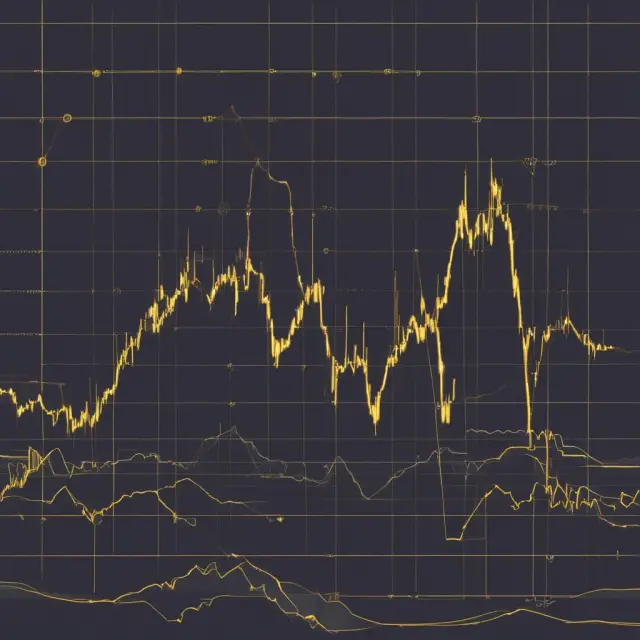
Moving Average Convergence Divergence (MACD)
The moving average convergence divergence (MACD) is a trend-following momentum indicator that uses the difference between two moving averages to create buy and sell signals. Developed in 1979 by J. Welles Wilder Jr., MACD has proven to be a reliable technical analysis tool for many investors and traders, offering insights into potential price trends and reversals.
The primary components of the MACD indicator include the Exponential Moving Average (EMA), the Signal Line, and the Histogram. Let’s examine each component in detail:
1. Exponential Moving Average (EMA): The EMA is a type of moving average that puts more weight on the latest data points, making it more responsive to recent price movements. It comes in two lengths – short-term and long-term. The default settings for MACD calculations are 12 days for the short-term EMA (EMA_Short) and 26 days for the long-term EMA (EMA_Long).
2. Signal Line: The signal line, also known as the MACD line or the trigger line, is a moving average calculated using the EMA_Long. By default, this is typically plotted 9 days after the EMA_Short to create the histogram.
3. Histogram: The histogram represents the difference between the EMA_Short and the EMA_Long, providing visual information on momentum. When the short-term moving average crosses above the long-term one, the histogram appears below the zero line, indicating bullish momentum. Conversely, if the short-term moving average falls below the long-term one, the histogram appears above the zero line, signaling bearish momentum.
The MACD indicator generates buy and sell signals based on these moving averages’ interaction:
1. Bullish Signals: When the EMA_Short crosses above the EMA_Long, it forms a bullish crossover signal, which is a potential buying opportunity. This indicates that the stock is starting to trend upwards and may continue to do so.
2. Bearish Signals: Conversely, when the EMA_Short falls below the EMA_Long, it results in a bearish crossover signal, suggesting that the stock is weakening and may potentially reverse its uptrend.
3. Divergence: The MACD indicator also shows divergences – bullish or bearish – which can serve as early warning signs for potential trend reversals. For instance, if the stock price makes a new high but the histogram fails to make a corresponding new high, this could be a bearish divergence that indicates an upcoming downturn in the stock price.
The MACD indicator is widely used across various financial markets and time frames due to its versatility. While it may not always provide accurate signals, it can serve as a valuable addition to any technical analyst’s toolkit when used appropriately. To maximize its effectiveness, traders must carefully consider the default settings and adjust them according to their investment objectives, risk tolerance, and market conditions.
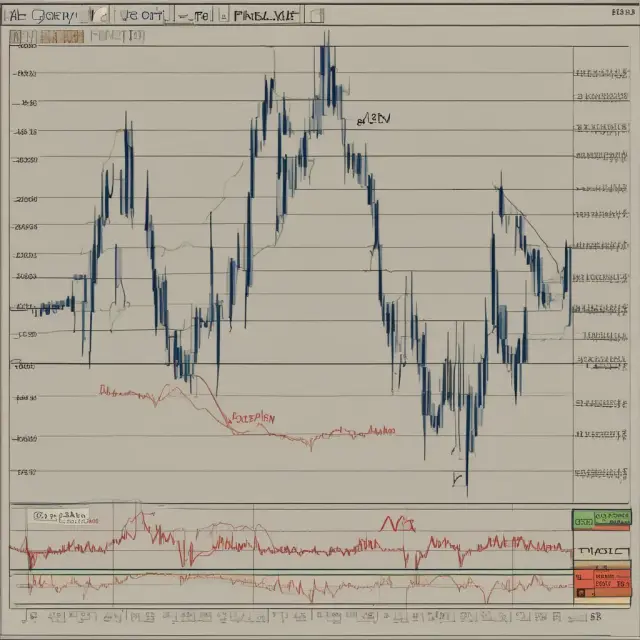
Relative Strength Index (RSI)
The relative strength index (RSI) is one of the most widely used technical momentum indicators in finance. RSI measures a security’s price momentum by comparing its recent gains to its recent losses. It was introduced by J. Welles Wilder Jr. in 1978, and since then has gained widespread popularity among traders and investors.
RSI is an oscillator that ranges between 0 and 100. It measures the magnitude of recent price changes to evaluate overbought or oversold conditions in a financial instrument. An RSI above 70 indicates that a security is potentially overbought, meaning it has risen rapidly and may be due for a pullback. On the other hand, an RSI below 30 suggests that it’s oversold, which could indicate that the security is undervalued and may soon rebound.
To calculate RSI, use these steps:
1. Determine the change in price (Δ) for a specified time period, such as 14 days. For example, if today’s closing price is $50 and yesterday’s closing price was $48, then Δ = $2.
2. Calculate the average gain (AveGain) and the average loss (AveLoss). The average gain is the sum of all positive gains during the specified time period, while the average loss is the sum of all negative losses.
3. Determine the Relative Strength (RS): RS = AveGain / AveLoss. If the ratio is greater than 1, then the security has gained more during the specified time period than it lost.
4. Calculate the RSI: RSI = 100 – [100 / (1 + RS)]. The resulting number will be between 0 and 100.
RSI can help traders identify potential buying or selling opportunities by signaling overbought or oversold conditions. However, it is important to note that RSI doesn’t provide any information about the fundamental value of a security. Therefore, it should be used in conjunction with other indicators and analytical methods to make informed investment decisions.
RSI is not only useful for stock trading but can also be applied to other financial instruments like currencies, commodities, futures, or indices. It’s also important to consider the RSI period settings since shorter periods are more responsive to price changes while longer periods provide more smoothed and less frequent signals. Traders can experiment with different timeframes to find what works best for their trading style.
In summary, the relative strength index (RSI) is an essential technical momentum indicator that helps investors and traders identify overbought or oversold conditions in a security. By analyzing recent price changes, RSI provides valuable insight into potential buying or selling opportunities. However, it’s important to remember that RSI should be used in conjunction with other indicators and analytical methods for comprehensive financial analysis.
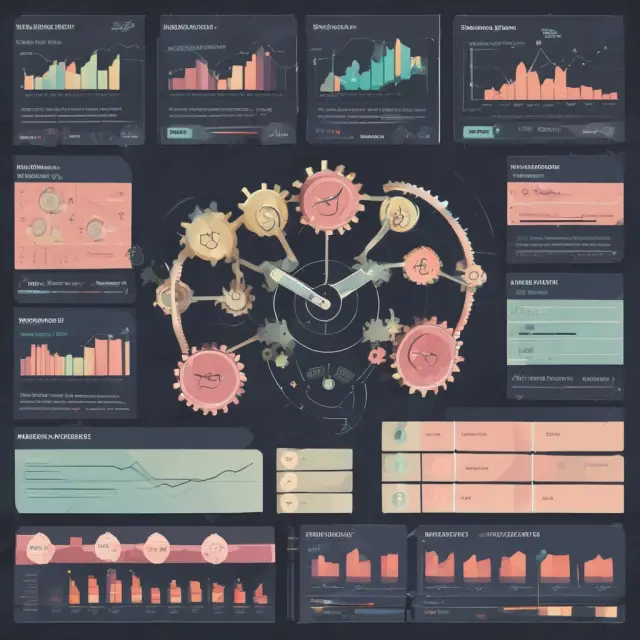
Key Performance Indicators in Business
In the business world, key performance indicators (KPIs) serve as vital tools for assessing and tracking a company’s performance. KPIs are quantifiable measures used to evaluate a company against specific objectives or targets. These metrics offer valuable insights into a company’s financial health, efficiency, and profitability.
Commonly, KPIs are categorized according to the aspect of the business they measure:
1. Financial performance indicators: Revenue growth rate, gross margin, net profit margin, return on investment (ROI), and earnings per share (EPS) are all examples of financial performance indicators. These metrics provide insights into a company’s economic health and its ability to generate revenue and profits.
2. Operational efficiency indicators: These metrics focus on measuring the efficiency of a company’s internal processes, such as production capacity, inventory turnover rate, customer service level, and employee productivity. Examples include average response time to customer inquiries, defect rate, and labor productivity.
3. Customer satisfaction indicators: Customer satisfaction is crucial for business success, so it is essential to monitor metrics like Net Promoter Score (NPS), customer retention rate, and customer feedback scores. These metrics help businesses understand how well they are meeting their customers’ expectations and identify areas for improvement.
4. Marketing performance indicators: Key marketing KPIs include website traffic, conversion rate, social media engagement, and return on investment (ROI). Marketers use these metrics to assess the effectiveness of their campaigns and strategies in driving sales and leads.
5. Human resource indicators: Employee turnover rate, employee satisfaction, absenteeism rate, and training programs’ effectiveness are essential human resource KPIs. These metrics help companies attract, retain, and engage talent while ensuring they are providing the necessary tools for growth and success.
A well-chosen set of KPIs can provide businesses with valuable insights into their performance, enabling them to identify areas for improvement, streamline processes, and make informed decisions that lead to better business outcomes. Remember, it’s crucial to choose KPIs that are relevant to your business objectives and align with your company’s overall strategy.
Here are some examples of key performance indicators used in various industries:
- E-commerce: Sales growth rate, conversion rate, average order value, and customer retention rate.
- Manufacturing: Production efficiency, on-time delivery rate, inventory turnover rate, and labor productivity.
- Healthcare: Patient satisfaction scores, readmission rates, patient retention rate, and employee burnout rate.
- Education: Student enrollment growth rate, graduation rate, student engagement, and instructor feedback.
- Financial services: Net interest margin, net charge-offs to loans, return on equity (ROE), and asset turnover ratio.
By utilizing relevant KPIs, businesses can gain a better understanding of their performance and make data-driven decisions that contribute to long-term success.

Genuine Progress Indicator (GPI)
The Gross Domestic Product (GDP), while an essential indicator of economic progress, has its limitations. The GPI is an alternative economic indicator that offers a more comprehensive view of a country’s real wealth and progress. It was introduced by the U.S. Senators Paul and Schumer in 1995 as an alternative to the traditional measure of economic growth represented by GDP.
GPI seeks to account for changes in the health, education, crime rate, leisure time, and other intangible factors that influence our quality of life. The main idea behind this indicator is to move beyond the narrow focus on material wealth and consider the broader aspects of well-being, including environmental sustainability and social progress.
The GPI is calculated by subtracting the costs associated with crime, pollution, and other negative aspects from the total Gross National Product (GNP). It also adjusts for the value of volunteer work and leisure time to better account for non-market activities’ contribution to overall economic output.
The GPI index has been used in several countries, including the United States, New Zealand, and Bhutan. Bhutan is a notable example where the government’s primary development objective is to pursue ‘gross national happiness.’ Instead of focusing solely on increasing GDP, they focus on improving overall well-being by enhancing health, education, culture, and happiness in their citizens.
Comparing GPI with traditional economic indicators like Gross Domestic Product (GDP) can provide a more accurate understanding of a country’s progress. For example, the United States had an average annual growth rate of 2.3% between 1950 and 2014, according to the World Bank. However, upon closer examination using GPI, it was found that actual economic growth was significantly less: around 1.1% per year when adjusting for negative factors like environmental degradation, crime, and decreased leisure time.
This more nuanced view of economic progress can be particularly valuable in today’s interconnected world, as countries strive to balance material wealth with social and environmental concerns. The GPI allows policymakers, analysts, and individuals to make informed decisions based on a more complete picture of their nation’s overall well-being.
In conclusion, indicators play a crucial role in measuring economic conditions and forecasting trends in various financial markets. Understanding the differences between economic and technical indicators is essential for both fundamental and technical analysts. While traditional economic indicators like GDP provide valuable insights into macroeconomic factors, alternative indicators like Genuine Progress Indicator (GPI) offer a more comprehensive perspective on a country’s real wealth and progress by accounting for non-material factors.

Indicators for Detecting Phishing Attempts
While technical and economic indicators play a crucial role in financial analysis, it’s essential not to overlook another vital type of indicator- phishing indicators. Phishing emails are attempts by cybercriminals to steal sensitive information like login credentials or credit card numbers, often by posing as trustworthy entities like banks or popular companies. Spotting and avoiding these fraudulent messages is crucial for maintaining personal security and protecting valuable assets.
Characteristics of Phishing Emails
Phishing emails usually exhibit certain common traits that distinguish them from legitimate messages. Some red flags include:
- Unsolicited emails: Legitimate businesses typically don’t send unsolicited emails asking you to provide sensitive information, while phishers often do so without prior contact.
- Typos and grammatical errors: Phishing emails may contain numerous typos or grammatical mistakes, which can be indicative of a poorly written message sent in haste or an attempt to mimic a foreign language.
- Urgent actions required: Cybercriminals often use fear tactics to pressure users into taking immediate action, creating a sense of urgency that may encourage hasty decision-making and overlook potential risks.
- Demand for unusual actions: Legitimate businesses don’t typically ask you to disclose sensitive information through email or other unsecured channels. Phishers may ask you to click on a link, enter your login credentials, or download an attachment, which could potentially expose you to malware or identity theft.
- Generic greetings: Legitimate emails often contain personalized information like your name or account details. Phishing emails may address the recipient with generic greetings such as “Valued Customer” instead of using specific names.
Protecting Yourself from Phishing Attempts
To avoid falling victim to phishing attempts, follow these simple steps:
- Be cautious with unsolicited emails: Don’t click on links or download attachments in unsolicited emails, even if they appear to be from companies you trust. Instead, contact the company directly through their official website to verify the email’s legitimacy.
- Inspect email addresses and URLs: Cybercriminals often use emails and URLs that resemble those of reputable companies but contain subtle differences. Double-check email addresses and URLs for typos or slight variations, and ensure they match the official versions.
- Use antivirus software: Protect your devices with up-to-date antivirus software to help prevent malware from infecting your system.
- Enable multi-factor authentication: Multi-factor authentication adds an extra layer of security by requiring additional verification steps, making it more difficult for hackers to gain access to your accounts.
- Stay informed: Keep yourself updated on the latest phishing scams and cybersecurity threats by following reputable sources, such as the Federal Trade Commission (FTC) or your bank’s security advisories.
In conclusion, phishing indicators serve as crucial reminders of the importance of staying vigilant against potential cyber threats. While technical and economic indicators provide valuable insights into financial markets, understanding how to identify and avoid phishing attempts is essential for safeguarding personal information and securing your assets.

Frequently Asked Questions About Indicators
What are indicators in finance and economics, and what is their role?
Indicators serve as valuable tools to measure current financial or economic conditions and predict future trends. They provide insights that enable investors, economists, and policymakers to make informed decisions. In finance, indicators often refer to technical chart patterns derived from security prices or volumes. Common examples include moving averages, moving average convergence divergence (MACD), and relative strength index (RSI). Economic indicators, on the other hand, are statistical metrics used to evaluate overall economic health and forecast future trends in specific industries or sectors. Examples include the Consumer Price Index (CPI), Gross Domestic Product (GDP), and employment data.
What are economic indicators, and what types exist?
Economic indicators are statistics that quantify current economic conditions and provide insights into future profitability potential of public companies. They can be broadly categorized as leading indicators, which predict changes before they occur, coincident indicators, which reflect current economic conditions, and lagging indicators, which report economic activity after it has occurred. Some common types of economic indicators include the CPI, GDP, employment data, industrial production index, retail sales figures, housing starts, and consumer sentiment surveys.
What is the Consumer Price Index (CPI), and what does it measure?
The Consumer Price Index (CPI) is a widely used economic indicator that measures changes in the cost of living by tracking price movements for a basket of goods and services, such as food, transportation, housing, and medical care. The CPI is calculated monthly and can help investors identify periods of inflation or deflation.
What are technical indicators, and how are they used?
Technical indicators are mathematical calculations based on historical security price data to identify patterns and trends in stock prices or other financial assets. They are used extensively by traders to predict changes in market conditions and determine when to buy or sell. Common technical indicators include moving averages, MACD, and RSI.
What is the Moving Average Convergence Divergence (MACD) indicator?
The MACD is a technical analysis tool that uses the relationship between two moving averages of a security’s price to determine its overall trend. It consists of a line representing the difference between the two moving averages, known as the MACD line, and a signal line that represents a 9-day exponential moving average (EMA) of the MACD line. The MACD can help traders identify trend reversals and predict price movements.
What is the Relative Strength Index (RSI)?
The RSI is a technical indicator used to measure a security’s momentum, or the rate at which its price is changing, by comparing the size of recent gains to recent losses. The RSI oscillates between 0 and 100, with values above 70 typically considered overbought and below 30 oversold. Traders use the RSI to identify potential reversals in a security’s price trend or to confirm other indicators’ signals.
What are key performance indicators (KPIs) used for?
Key Performance Indicators (KPIs) are quantifiable measurements that companies and organizations use to evaluate their success against specific targets or objectives. Common KPIs include financial metrics such as profitability ratios, revenue growth rates, and asset turnover ratios. They can also be non-financial metrics like employee satisfaction, customer retention rate, and on-time delivery performance.
What is the Genuine Progress Indicator (GPI)?
The Genuine Progress Indicator (GPI) is an alternative economic indicator that measures a country’s overall progress by taking into account factors such as health, education, and environmental sustainability in addition to traditional economic measures like Gross Domestic Product (GDP). The GPI can provide a more comprehensive picture of a nation’s well-being than the narrow focus of GDP.
What are some common indicators for detecting phishing attempts?
Phishing emails often contain certain characteristics that can help identify them as fraudulent, such as unsolicited emails from unknown senders, typos and grammatical errors, urgent requests for action, and demands to share sensitive information or click on suspicious links. It’s essential to be cautious when receiving emails that exhibit these warning signs and not provide any personal details or passwords to unverified recipients.
 Next entry · No. 2,372Mastering Indifference Curve Analysis: A Comprehensive Guide for Institutional Investors
See also
-
 No. 2,267
23 Dec 2024
21 min
Understanding Hyperdeflation: An Extremely Rapid Decrease in Price Levels
Economics
No. 2,267
23 Dec 2024
21 min
Understanding Hyperdeflation: An Extremely Rapid Decrease in Price Levels
Economics -
 No. 1,442
16 Sep 2024
22 min
Understanding Factor Markets: A Key Element in a Market Economy
Markets
No. 1,442
16 Sep 2024
22 min
Understanding Factor Markets: A Key Element in a Market Economy
Markets -
 No. 982
11 Jul 2024
18 min
Understanding Demand Schedules: A Comprehensive Guide for Institutional Investors
Business Finance
No. 982
11 Jul 2024
18 min
Understanding Demand Schedules: A Comprehensive Guide for Institutional Investors
Business Finance -
 No. 917
01 Jul 2024
21 min
Deciles in Finance and Investment: A Comprehensive Guide to Understanding Decile Ranking and Its Uses
Financial Tools
No. 917
01 Jul 2024
21 min
Deciles in Finance and Investment: A Comprehensive Guide to Understanding Decile Ranking and Its Uses
Financial Tools -
 No. 871
23 Jun 2024
22 min
Understanding Data Smoothing: Techniques, Advantages, and Disadvantages
Financial Tools
No. 871
23 Jun 2024
22 min
Understanding Data Smoothing: Techniques, Advantages, and Disadvantages
Financial Tools -
 No. 752
02 Jun 2024
25 min
Understanding Consumer Surplus: Definition, Calculation and Significance in Economics
Economics
No. 752
02 Jun 2024
25 min
Understanding Consumer Surplus: Definition, Calculation and Significance in Economics
Economics