Understanding Inheritance Taxes: Key Points for Institutional Investors

Understanding the ins and outs of inheritance taxes for institutional investors, including which states impose them, exemptions, rates, and minimization…
What Is an Inheritance Tax?
An inheritance tax is a levy imposed on individuals receiving inherited assets from deceased relatives or estates, as opposed to estate taxes levied on the estate before its distribution. Only six states in the U.S.—Iowa, Kentucky, Maryland, Nebraska, New Jersey, and Pennsylvania—implement an inheritance tax (IT), varying in their exemptions and rates based on familial relationships. In contrast, there is no federal inheritance tax, though federal estate taxes may apply to large estates.
Understanding the distinction between inheritance and estate taxes can be crucial for institutional investors and affluent individuals seeking optimal tax planning strategies. This comprehensive guide explores key points regarding inheritance taxes and their implications for various beneficiaries, states, and taxation scenarios.
Definition and Differences from Estate Taxes
An inheritance tax (IT) is a tax imposed on the recipients of inherited assets or bequests, while an estate tax is levied on the estate before its distribution. IT is typically paid by beneficiaries, whereas the estate pays for estate taxes. The absence of a federal inheritance tax is noteworthy; however, inherited assets can still be subject to state and federal estate taxes under specific conditions.
Calculation and Exemptions
An inheritance tax applies only to the portion of an inheritance exceeding exemption thresholds. Rates typically begin in the single digits, with some states offering varying rates based on familial relationships, ranging from 4% to 18%. To better comprehend how these taxes work, we will dive deeper into six states with inheritance taxes and their unique taxation structures: Iowa, Kentucky, Maryland, Nebraska, New Jersey, and Pennsylvania.
Inheritance Taxes by State
Iowa: Spouses, lineal descendants (children, grandchildren, great-grandchildren), and charities are exempt from inheritance taxes.
Kentucky: Immediate family members and charitable organizations are fully exempt; others pay tax based on a sliding scale.
Maryland: Immediate family (parents, grandparents, spouses, children, grandchildren) and charities are fully exempt.
Nebraska: Spouses and charities are exempt from inheritance taxes, while exemptions for other relatives vary based on relationship and tax rates.
New Jersey: Immediate family (spouse, children, parents, grandparents) and domestic partners are fully exempt; siblings are exempt up to $25,000.
Pennsylvania: Spouses and minor children are fully exempt, with exemptions for adult children, grandparents, and parents varying based on relationship and tax rates.
Minimizing Inheritance Taxes
To minimize inheritance taxes, consider implementing strategies such as setting up trusts, gifting during one’s lifetime, or utilizing life insurance policies to transfer assets before death. These approaches can help optimize wealth transfers while mitigating potential tax liabilities for beneficiaries.
Inheritance Taxes vs. Estate Taxes: Understanding the Differences and Overlaps
While both inheritance and estate taxes involve assessing the value of deceased individuals’ assets, it is essential to distinguish between these two taxation types when formulating effective tax planning strategies. This section will provide insights into the differences between inheritance and estate taxes, their potential overlap, and how they impact beneficiaries and tax liabilities.
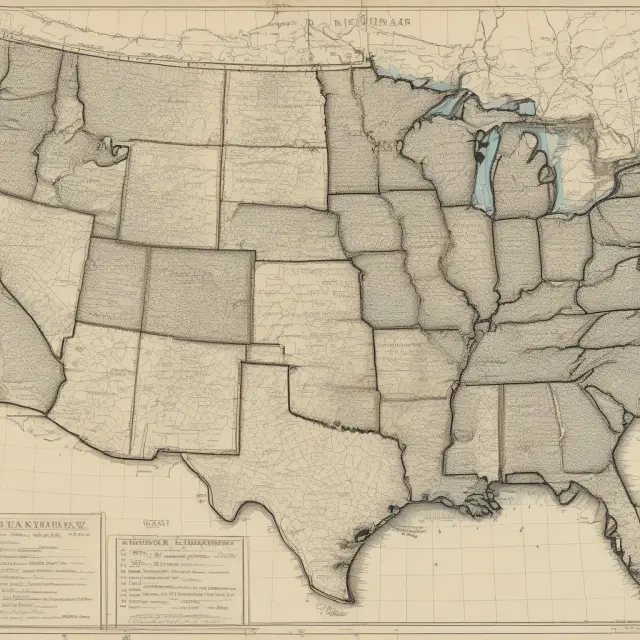
Which States Impose Inheritance Taxes?
An inheritance tax is a levy on assets inherited from a deceased individual, imposed by some states on recipients. This tax contrasts with estate taxes, which are collected on the value of an estate before its distribution and paid by the estate itself. The absence of a federal inheritance tax in the United States means that any inheritance tax burden falls to residents of six states: Iowa, Kentucky, Maryland, Nebraska, New Jersey, and Pennsylvania.
Iowa: Immediate family members, including spouses, parents, grandparents, and their lineal descendants (children, stepchildren, grandchildren, and great-grandchildren), as well as charities, are exempt from inheritance taxes. For others, the tax ranges from 3% to 9% depending on the value of the inheritance received.
Kentucky: Immediate family members and charitable organizations are fully exempted from inheritance taxes. For other beneficiaries, the tax is based on a sliding scale that varies with the size of the inheritance and ranges from 4% to 16%.
Maryland: Immediate family members and charities are completely exempt from inheritance taxes. Beneficiaries who fall outside this category may be subject to a flat tax rate of 10%.
Nebraska: Spouses, grandparents, parents, siblings, children, grandchildren, and their lineal descendants up to the age of 21 are fully exempted from inheritance taxes. For other beneficiaries, exemptions range from $15,000 for unrelated heirs to $100,000 (rising to $175,000 in 2023) for immediate family members. The tax rates for those above these exemptions are 1%, 11%, or 15%, depending on the familial relationship.
New Jersey: Immediate family members and charitable organizations are exempt from inheritance taxes. Siblings and sons/daughters-in-law receive an exemption of up to $25,000. The tax rate ranges from 11% to 16%, depending on the size of the inheritance and familial relationship.
Pennsylvania: Spouses and minor children are entirely exempted from inheritance taxes. Adult children, grandparents, and parents receive exemptions ranging from $3,500 to $42,800 (depending on their degree of consanguinity) or are fully exempt if they are a surviving spouse. The tax rates for others depend on the familial relationship and range from 0% to 15%.
Inheritance taxes can significantly impact estate planning strategies, asset allocation, and overall financial management for individuals in these states. Understanding the differences between inheritance and estate taxes is crucial when making decisions related to tax planning, gifting, and trusts. By staying informed about state-specific exemptions, rates, and rules, investors can effectively mitigate potential inheritance tax liabilities and maximize wealth transfer strategies.

Who Pays Inheritance Tax?
An inheritance tax is levied on recipients of inherited assets in six U.S. states—Iowa, Kentucky, Maryland, Nebraska, New Jersey, and Pennsylvania. Unlike the estate tax, which is imposed on an estate before its distribution, an inheritance tax falls upon the beneficiary as they receive their inheritance.
Who Is Liable for Inheritance Taxes?
Inheritance taxes are paid by the recipient of an inheritance. The responsibility lies with the beneficiary rather than the estate of the deceased, making it essential to understand if and how much tax is due when receiving an inheritance in one of these states.
Determining Whether You Owe Inheritance Taxes
The calculation of inheritance taxes depends on the value of your inheritance, familial relationships, and exemptions specific to each state. The closer you are related to the deceased individual, the less likely you are to be subjected to high tax rates or significant amounts due. For example, surviving spouses and charitable organizations are typically exempt from inheritance taxes in all six states.
The exact threshold for inheritance taxes varies by state:
- Iowa: Spouses, lineal ascendants (parents, grandparents), and descendants (children, stepchildren, grandchildren) are exempt, with charities also exempt up to $500. The tax rate on others ranges from 3% to 9%.
- Kentucky: Immediate family members and charitable organizations are exempt; other recipients are exempt up to $500 or $1,000, depending on the beneficiary’s relationship with the deceased. The tax rate is calculated based on inheritance size and ranges from 4% to 16%.
- Maryland: Immediate family members and charities are exempt; other recipients are exempt up to $1,000, while the tax rate remains constant at 10%.
- Nebraska: Spouses and charitable organizations are fully exempt. Immediate family (parents, grandparents, siblings, children, grandchildren) is exempt up to $40,000 ($100,000 in 2023). Other relatives are exempt up to $15,000 ($40,000 in 2023), and unrelated heirs up to $10,000 ($25,000 in 2023). Prior to 2023, the tax rates above these exemptions were 1%, 13%, and 18%, respectively. Starting in 2023, those rates rise to 1%, 11%, and 15%.
- New Jersey: Immediate family (spouse, children, parents, grandparents) is exempt, along with charitable organizations. Siblings and sons/daughters-in-law are exempt up to $25,000. The tax rate ranges from 11% to 16%.
- Pennsylvania: Spouses and minor children are exempt. Adult children, grandparents, parents are exempt up to $3,500. The tax rate is 4.5%, 12%, or 15%, depending on the relationship.
Estate planning, gifting during one’s lifetime, trusts, and insurance policies can be utilized to minimize inheritance taxes for both the beneficiaries and estates. It’s crucial to consult with a tax advisor or attorney familiar with estate planning and state tax laws to fully understand these strategies and their application to your unique situation.

Exemptions and Rates for Inheritance Taxes
An inheritor’s tax liability, much like the inheritance itself, can vary considerably based on jurisdiction, familial relationship to the decedent, and the value of the bequest. This section delves into the exemptions, rates, and intricacies associated with each state’s inheritance tax.
Six states in the U.S. levy an inheritance tax: Iowa, Kentucky, Maryland, Nebraska, New Jersey, and Pennsylvania. While the federal government doesn’t collect inheritance taxes, each of these states imposes its unique regulations on what is passed down and how much is owed in taxes.
Exemptions: Inheritance tax exemptions can significantly impact the overall financial burden for beneficiaries. Exemption amounts vary by familial relationship to the deceased and state-specific laws. For instance, spouses are typically fully exempted from inheritance taxes in all six states. Similarly, children often enjoy generous exemptions or no tax liability at all.
Rates: Inheritance tax rates also differ among states, with some starting as low as 1% and others reaching up to 18%. For example, Maryland’s inheritance tax applies to bequests above $50,000 but charges a rate of only 10%, while Pennsylvania has rates ranging from 4.5% for spouses and minor children to 15% for others.
Moreover, familial relationships factor into exemptions and rates in various ways. For instance, in Nebraska, immediate family members are exempted up to $40,000 each, with higher exemption limits applying to certain lineal descendants, while unrelated beneficiaries have much lower exemptions. Understanding these nuances is crucial for maximizing the value of the inheritance and minimizing any tax implications for both the decedent’s estate and their heirs.
Inheritance tax laws can also interact with estate taxes in complex ways, particularly when the deceased lived or owned property across multiple states. For example, if an estate is subject to a state estate tax, the beneficiary could face further tax liabilities depending on the inheritance tax rules of the applicable jurisdictions.
To mitigate potential inheritance tax burdens for their heirs, some individuals may consider utilizing trusts or insurance policies as part of their estate planning strategies. These tools can provide greater control over how assets are distributed and when taxes become due. For example, placing assets into a trust before passing can help reduce the overall value subject to inheritance tax, as well as provide additional benefits like asset protection and creditor shielding.
Another strategy is to consider gifting assets during one’s lifetime instead of leaving them in a bequest. By giving money or property to beneficiaries while still alive, individuals can reduce the overall value of their estate subject to estate and inheritance taxes upon death. Additionally, gifting allows for more control over how the funds are used and when they become available to the recipients.
In conclusion, inheritance taxes significantly impact the financial landscape of those inheriting assets from a deceased loved one. Understanding the nuances of exemptions, rates, and familial relationships within each state’s laws is essential for maximizing the value of the inheritance while minimizing any potential tax liabilities. Strategies like utilizing trusts, insurance policies, or gifting during one’s lifetime can help alleviate some of these concerns and ensure that your loved ones receive the maximum benefit from their inherited assets.

Inheritance Tax Calculation
Understanding how inheritance tax is calculated can help beneficiaries plan ahead for their financial responsibilities when receiving inherited assets. Inheritance taxes are imposed on a portion of the inheritance that exceeds certain exemptions, and the rates vary depending on familial relationships. This section will delve deeper into the calculation process.
First and foremost, it’s essential to clarify that inheritance tax is not applicable in all states, as only six U.S. jurisdictions impose such taxes: Iowa, Kentucky, Maryland, Nebraska, New Jersey, and Pennsylvania. However, each state determines its exemptions and rates differently based on the relationship between the decedent and the beneficiary.
The calculation of inheritance tax usually begins by determining whether an exemption applies. For instance, a surviving spouse is generally exempt from inheritance taxes in all six states. The immediate family (parents, children, siblings) is also exempt or has higher exemptions in most cases. Additionally, charities and some other entities may be granted exemptions.
Once the exemption threshold is determined, any amount above that figure will be subject to taxation. Tax rates are typically on a sliding scale, with lower rates for closer familial relationships. For example, in Maryland, immediate family members are entirely exempt, while others may face a 10% tax rate. Inheritance taxes are calculated as a percentage of the inheritance’s value.
It is noteworthy that certain assets may be exempted from inheritance taxes, such as life insurance proceeds payable to a named beneficiary and any portion of an estate that is subject to federal or state estate tax. Inheritance tax rates can range from 3% to 18%.
It is essential for institutional investors to consider the implications of inheritance taxes on their overall wealth management strategies, especially when dealing with assets in states with such taxes. By understanding how these taxes are calculated and the available exemptions, investors can better plan for managing the potential tax burden and structuring their estates to minimize the impact on heirs.
Investors may want to explore different methods of minimizing inheritance taxes. For instance, setting up trusts or gifting assets during one’s lifetime can help reduce the overall value of an estate subject to inheritance taxation. Additionally, carefully planning the distribution of assets among various beneficiaries may allow for lower tax rates based on familial relationships.
As a concluding remark, inheritance taxes should not be overlooked when managing wealth and estates. By staying informed about these taxes’ calculation methods, exemptions, and how they interact with estate and income taxes, institutional investors can develop robust strategies to minimize their impact on heirs and beneficiaries.

How to Minimize Inheritance Taxes
Inheritance taxes can significantly reduce the value of inherited assets, particularly when large estates are involved. However, there are strategies to minimize or even avoid inheritance tax liabilities for institutional investors. Here’s a closer look at some effective methods for managing inheritance tax burdens:
1) Leverage trusts to your advantage
Trusts can be an essential tool in estate planning, enabling you to reduce the taxable value of your estate while maintaining control over how assets are distributed. By transferring assets into a trust before passing away, you can minimize or eliminate inheritance tax liabilities for your heirs.
2) Utilize insurance policies strategically
Insurance policies can be used to replace the value of the assets subjected to inheritance taxes. Designating beneficiaries as the direct recipients of life insurance payouts allows them to receive the funds free from inheritance taxes, ensuring your loved ones receive the full intended amount.
3) Make gifts during your lifetime
Gifting sums to your heirs during your lifetime is another way to minimize inheritance tax liabilities. Federal law currently permits an individual to give up to $15,000 per year ($30,000 for married couples) in gifts without incurring any gift or inheritance tax. By gifting assets early, you can effectively reduce the size of your estate that will be subjected to inheritance taxes upon your passing.
4) Understand exemptions and thresholds
Familiarize yourself with state-specific inheritance tax exemptions and thresholds. This knowledge will help you structure your wealth distribution plan to maximize the value transferred to your heirs, while minimizing any potential inheritance tax liabilities.
In conclusion, understanding inheritance taxes and implementing strategies like trusts, insurance policies, and gifting can significantly reduce the tax burden on your beneficiaries. By carefully planning your estate and asset distribution, you’ll ensure that the full value of your wealth is passed down to future generations while minimizing any potential tax liabilities.

Inheritance vs. Estate Taxes: Differences and Overlaps
Understanding inheritance taxes and estate taxes can be a complex endeavor for institutional investors, as both levies are applied to the value of a deceased person’s property but imposed differently. In this section, we will clarify the fundamental distinctions between these two types of taxes, helping you navigate their implications for your investment strategies.
An inheritance tax is a levy on assets received by beneficiaries from an estate, whereas an estate tax is assessed on the value of an estate itself before its distribution. Inheritance taxes are paid by recipients of an inheritance, while estate taxes are paid by the estate or trust.
The federal government does not collect an inheritance tax, but some states impose their own versions. The difference between the two taxes lies mainly in who bears the responsibility for paying them. Inheritance taxes apply to the inheritors, while estate taxes are levied on the estate or trust that distributes the assets.
Six U.S. states currently collect inheritance taxes: Iowa, Kentucky, Maryland, Nebraska, New Jersey, and Pennsylvania. These taxes vary depending on the value of the estate, the relationship between the deceased person and the beneficiary, and the specific state rules governing taxation.
Inheritance tax rates typically begin at lower percentages for close family members and rise as the value of the inheritance or the familial relationship weakens. For example, in Iowa, immediate family members are exempt from inheritance taxes up to a certain threshold, while others pay between 3% and 9%. Inheritance tax rates can also depend on the size of the estate and its distribution among various beneficiaries.
Estate taxes, on the other hand, are applied to estates with specific value thresholds set by the Internal Revenue Service (IRS). For instance, for the 2023 tax year, an estate valued above $12.92 million would be subject to federal estate taxation.
It’s essential for institutional investors to recognize the implications of both inheritance and estate taxes on their investment strategies, as they can impact asset allocation and estate planning decisions. Additionally, understanding these tax structures may help you advise your clients more effectively regarding their inherited assets and how to minimize potential tax liabilities.
In some cases, a decedent’s estate could be subjected to both inheritance and estate taxes if the state in question imposes both types of levies. In these instances, the estate is taxed before it’s distributed, with the inheritors also being responsible for paying inheritance taxes on their individual portions.
To minimize or avoid inheritance taxes, investors can consider implementing strategies such as creating trusts, purchasing life insurance policies, and making lifetime gifts to beneficiaries. These tactics can help lower the value of an estate that’s subject to estate taxation while also reducing the taxable inheritances received by designated recipients.
In conclusion, it is vital for institutional investors to recognize the differences between inheritance and estate taxes and understand their potential implications for investment strategies and client advice. By keeping up-to-date with state-specific tax laws and planning accordingly, you can help your clients navigate these complexities and manage their inherited assets more effectively.
As the landscape of inheritance and estate taxation evolves, it’s essential to remain informed about the latest developments in this area—not only for your own investment strategies but also to provide valuable guidance and insights to your clients. Stay tuned for further articles on this topic, as we dive deeper into specific state laws and their implications for institutional investors.

FAQs about Inheritance Taxes for Institutional Investors
Inheritance taxes can create uncertainty and complexity when dealing with a deceased’s assets distribution. Below, we answer some frequently asked questions that institutional investors might have regarding inheritance taxes.
What is an inheritance tax?
An inheritance tax is a levy imposed by certain states on the recipients of inherited assets above a specific threshold value. Unlike estate taxes, which are paid from the deceased’s estate, inheritance taxes are charged to the beneficiary.
Which six U.S. states impose inheritance taxes?
As of 2023, six U.S. states impose inheritance taxes: Iowa, Kentucky, Maryland, Nebraska, New Jersey, and Pennsylvania.
Who pays the inheritance tax—beneficiaries or estates?
The beneficiary is responsible for paying the inheritance tax on any portion of the inherited assets that exceeds the applicable exemption amount in their respective state.
Are there federal inheritance taxes?
No, the U.S. government does not impose an inheritance tax. However, large estates may be subject to federal estate taxes.
How is the inheritance tax calculated?
The taxable portion of the inheritance is determined by calculating the difference between the total inheritance amount and the exemption amount set forth in each state’s inheritance tax laws. The applicable tax rate varies depending on familial relationships, with rates typically starting at low percentages and rising to a maximum of 18%.
Can inheritance taxes be avoided or minimized?
Some strategies for reducing or eliminating inheritance taxes include leaving heirs money via trusts, gifting assets during one’s lifetime, purchasing life insurance policies with the beneficiary as the named recipient, or relocating to a state without an inheritance tax.
What is the difference between inheritance and estate taxes?
Inheritance taxes are paid by the recipients of inherited assets above a specific threshold value in certain states, while estate taxes are imposed on the deceased person’s estate before the distribution of assets to beneficiaries.
What are some strategies for managing inheritance tax implications?
Effective inheritance tax planning can include minimizing the size of taxable estates, utilizing exemptions and deductions, gifting assets during one’s lifetime, making charitable contributions, or implementing trust structures to manage and distribute inherited assets.
How do interstate considerations affect inheritance taxes?
When dealing with multiple states, it is essential to understand how each state handles inheritance taxes, as the rules may vary significantly. In some cases, coordination between states might be required to minimize the overall tax burden for beneficiaries.

Impact on Estate Planning and Asset Allocation
Inheritance taxes can significantly influence estate planning strategies, asset allocation decisions, and tax planning for institutional investors. By understanding the rules surrounding inheritance taxes in different jurisdictions, investors can make informed choices to minimize their potential impact. In this section, we’ll discuss how inheritance taxes might affect estate planning and asset allocation strategies.
First, let’s consider a common question among institutional investors: “What is the difference between estate and inheritance taxes?” While both taxes are levied based on the fair market value of a deceased person’s property, they differ in who bears the responsibility for payment. An estate tax is imposed on the estate itself before its distribution to beneficiaries, while an inheritance tax is paid by the individual receiving the inherited assets.
When planning their estates and allocating assets, institutional investors must take into account not only federal but also state inheritance taxes. If you reside or own property in a state with such a tax, minimizing its potential impact becomes essential. One strategy to minimize inheritance tax liability is through the use of trusts. By setting up trusts and transferring assets into them during your lifetime, you can control how those assets are distributed upon your death, ensuring they’ll be subject to favorable tax treatment in low-tax jurisdictions or states with more advantageous exemptions and rates.
Another effective strategy is gifting. By giving money gradually to recipients while you’re alive, instead of making a lump-sum bequest upon your death, you can avoid the inheritance tax altogether. Although there are certain annual and lifetime gifting limits imposed by the IRS, these strategies can still help reduce overall estate tax liability, as well as provide financial support for loved ones during your lifetime.
Lastly, consider purchasing life insurance policies and naming beneficiaries other than the estate or revocable trust. Since inheritance taxes are paid by the recipient of the assets, if a policy is payable to the estate, it may be subject to both federal estate tax and state inheritance tax. By making your loved ones the direct beneficiaries, you can avoid these taxes altogether and provide them with financial security upon your passing.
In conclusion, understanding the intricacies of inheritance taxes and their implications for estate planning and asset allocation is crucial for institutional investors, especially those residing in or owning property in states that impose such taxes. By employing strategies like trusts, gifting, and life insurance policies, investors can minimize their potential liability and ensure their loved ones receive the full benefits of their hard-earned assets.

Interstate Considerations for Inheritance Taxes
Inheritance taxes not only vary among states that impose them but can also present challenges when dealing with assets in multiple states or residences across jurisdictions. Interstate considerations for inheritance taxes are crucial to understand as they may impact the amount of tax owed, who bears the responsibility, and how to effectively plan for such situations.
The presence of an estate or residence in one state does not automatically exempt inherited assets from inheritance tax in another state where the decedent had no property or connections at the time of death. Instead, each state can claim jurisdiction based on specific criteria, such as the location of the decedent’s domicile, the place of residence of the beneficiary, or the situs of the assets involved.
Inheritance tax is typically imposed on the value of an inheritance received by the beneficiary above a certain threshold. If an individual inherits property across state lines, they must determine how each state will apply its respective inheritance tax rules to that inheritance. Generally, states follow one of three methods in handling interstate inheritances:
1. Primary State Method: The deceased’s domicile, or the state where the decedent resided at the time of their death, is responsible for imposing the inheritance tax. If that state has no inheritance tax, then there would be no tax imposed on the inheritance.
2. Cumulative State Method: Each state in which a beneficiary receives an inheritance applies its own inheritance tax to that portion of the inheritance received within their jurisdiction. For example, if a beneficiary inherits $500,000 from a deceased relative and splits it among three states (A, B, and C), each state would apply its inheritance tax on the portion inherited by the beneficiary in that state.
3. Reciprocal Agreements: Some states have reciprocal agreements with other states to avoid double taxation on inherited assets. Under these agreements, if an individual inherits property from a deceased person in one state and is also a resident of another participating state, the state where they reside will not impose their inheritance tax on that portion already subjected to inheritance tax in the other state.
Interstate considerations for inheritance taxes can lead to additional complexities, such as differing exemptions, tax rates, and filing requirements across states. It’s essential to understand how each state handles these scenarios and communicate effectively with relevant probate or tax authorities to minimize potential complications. To further mitigate the impact of inheritance taxes, strategies like setting up trusts in low-tax states, utilizing lifetime gifts, or purchasing life insurance policies can be helpful for high net worth individuals.
 Next entry · No. 2,400Inherited IRAs: A Comprehensive Guide for Institutional Investors
See also
-
 No. 3,209
10 Mar 2025
20 min
Understanding Minority Interests: A Comprehensive Guide for Institutional Investors
Business Finance
No. 3,209
10 Mar 2025
20 min
Understanding Minority Interests: A Comprehensive Guide for Institutional Investors
Business Finance -
 No. 5,053
08 Aug 2025
18 min
Transfer Taxes: Understanding Real Estate, Inheritance, Estate, Gift, and Generation-Skipping Transfer Taxes
Taxation
No. 5,053
08 Aug 2025
18 min
Transfer Taxes: Understanding Real Estate, Inheritance, Estate, Gift, and Generation-Skipping Transfer Taxes
Taxation -
 No. 1,341
01 Sep 2024
20 min
Understanding Estate and Inheritance Taxes: Key Differences, Rates, and Exemptions
Taxation
No. 1,341
01 Sep 2024
20 min
Understanding Estate and Inheritance Taxes: Key Differences, Rates, and Exemptions
Taxation -
 No. 4,494
23 Jun 2025
21 min
Understanding Risk-Free Assets: Definition, Returns, and Reinvestment Risks
Business Finance
No. 4,494
23 Jun 2025
21 min
Understanding Risk-Free Assets: Definition, Returns, and Reinvestment Risks
Business Finance -
 No. 4,480
22 Jun 2025
17 min
Understanding Ring-Fences: Segregating Assets for Protection and Tax Planning
Business Finance
No. 4,480
22 Jun 2025
17 min
Understanding Ring-Fences: Segregating Assets for Protection and Tax Planning
Business Finance -
 No. 4,201
30 May 2025
21 min
Understanding Qualified Personal Residence Trusts (QPRT): A Tax-Efficient Estate Planning Tool for Property Owners
Business Finance
No. 4,201
30 May 2025
21 min
Understanding Qualified Personal Residence Trusts (QPRT): A Tax-Efficient Estate Planning Tool for Property Owners
Business Finance