Understanding Just-in-Time Inventory System: Advantages, Disadvantages, and Examples

A comprehensive guide exploring the Just-in-Time (JIT) Inventory System, from origins to advantages and disadvantages with examples, comparisons, and FAQ.
Overview of the Just-in-Time (JIT) Inventory System
The just-in-time (JIT) inventory system is a renowned management strategy used by manufacturers and businesses to optimize their inventory levels and improve efficiency. By aligning raw material orders with production schedules, companies employing this approach minimize inventory costs while ensuring the right materials are available as needed for production. Originating from Toyota’s manufacturing processes in the 1970s, JIT has since revolutionized supply chain management in various industries.
The primary objective of the just-in-time inventory system is to receive goods only when required, thereby reducing the need to store inventories and decreasing associated costs. This strategy contrasts with traditional just-in-case strategies where businesses maintain excessive inventories to absorb market demand.
At its core, JIT manufacturing relies on accurate forecasting of demand to ensure that the right materials are ordered and available for production precisely when they’re needed. It is also referred to as short-cycle manufacturing or continuous-flow manufacturing due to its focus on quick turnarounds between production runs.
The just-in-time inventory system owes much of its success to Toyota Motor Corporation, which implemented the strategy in the 1970s as a means of improving efficiency and reducing costs by minimizing warehouse needs and raw material spending. The Japanese automaker’s JIT approach relies on stable production, high-quality workmanship, dependable machinery, and reliable suppliers to function effectively.
For instance, Toyota orders parts only when it receives new car orders. This strategy took two decades to perfect but has enabled the company to maintain a competitive edge in the global automotive industry. However, this just-in-time inventory system nearly came to a halt due to a significant disruption in its supply chain.
In February 1997, a fire at Japanese-owned automotive parts supplier Aisin destroyed the capacity to produce P-valves for Toyota’s vehicles. Being the sole supplier of this critical part, the weeks-long shutdown caused Toyota to halt production, leading to substantial revenue loss. This example highlights the potential risks associated with JIT inventory systems and the importance of a reliable supply chain.
The following sections will delve deeper into the workings of the just-in-time inventory system, its advantages and disadvantages, and real-world examples from various industries.
How Does the Just-in-Time (JIT) Inventory System Work?
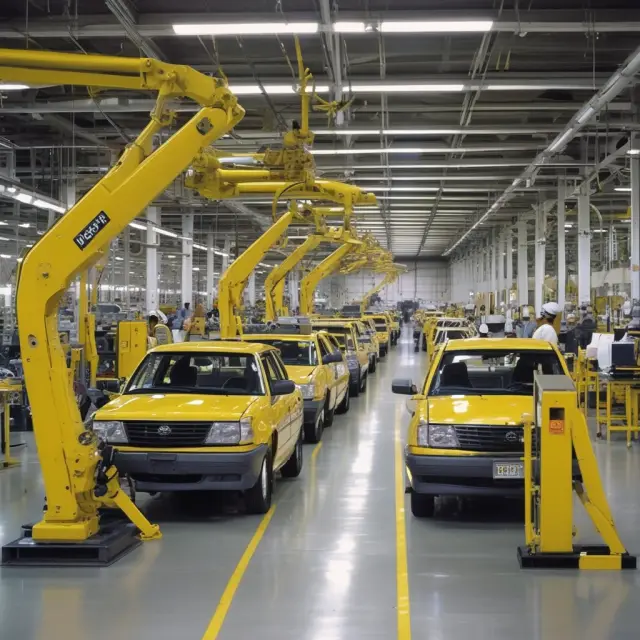
The Just-in-Time (JIT) inventory system is a revolutionary management strategy that minimizes inventory and increases efficiency by enabling companies to receive goods only when they are required for production. This approach contrasts with traditional just-in-case strategies, where organizations hold sufficient inventories to accommodate maximum market demand. In the JIT system, manufacturers order materials and parts as close as possible to the point of use in their production process (Shimizu & Krause, 1988). This strategy aims to reduce costs by eliminating inventory storage and handling expenses, ensuring that resources are only spent on making the required products.
To better understand how this system works, it’s essential to know its origins. The JIT inventory system, also known as the Toyota Production System (TPS), gained popularity through its successful implementation at Toyota Motor Corporation in the 1970s. This automotive manufacturing giant revolutionized the industry by focusing on reducing waste and improving efficiency, which laid the groundwork for a more agile production process (Ohno & Shingo, 2003).
By adopting JIT inventory management, Toyota was able to order parts only when new cars were ordered. This strategy allowed them to build vehicles with minimal inventory on hand, which significantly reduced their carrying costs and increased cash flow (Schonberger, 1986). Moreover, as production runs were short, manufacturers could quickly move from one product to another without being hindered by excess inventory.
To execute the JIT system effectively, companies need a reliable supply chain to ensure that raw materials and components are delivered on time. This requirement means that manufacturers must forecast demand accurately, maintain high-quality workmanship, and have glitch-free machinery (Schonberger, 1986). In turn, suppliers must be able to produce and deliver goods as needed without significant delays.
In the context of JIT inventory management, there is a clear emphasis on reducing waste through efficient production processes and maintaining a lean supply chain. The system’s success relies on a synergy between accurate demand forecasting, reliable suppliers, and high-quality production processes that can deliver goods in a timely manner (Krafcik & Buzacott, 1982).
A real-world example of JIT inventory management is Toyota’s response to the 1997 Aisin fire. This disaster decimated the capacity of a significant supplier for P-valves, leading to a halt in production at Toyota due to an absence of alternative suppliers (Chen & Lee, 2006). Although Toyota had perfected its JIT inventory system over 20 years earlier, this incident highlighted the importance of a reliable and responsive supply chain. The disruption caused by the fire led to a loss of 160 billion yen in revenue for Toyota (Chen & Lee, 2006).
In conclusion, the Just-in-Time inventory system is a management strategy that enables companies to minimize inventory and increase efficiency by receiving goods only when they are required for production. This approach contrasts with traditional just-in-case strategies and requires reliable suppliers, high-quality workmanship, and accurate demand forecasting to maintain a steady production process.
Advantages of Just-in-Time (JIT) Inventory System
The just-in-time (JIT) inventory system offers multiple benefits, making it an attractive option for manufacturers and businesses looking to streamline their supply chain processes while reducing costs. JIT’s origins can be traced back to the Toyota Production System (TPS), which was first implemented by the Japanese car manufacturer Toyota in the 1970s. This innovative approach has since spread beyond automobile manufacturing, with various industries leveraging its advantages to optimize their operations.
One of the most significant benefits of JIT is reduced inventory levels. By ordering raw materials and components just before they are needed for production, companies can minimize holding costs associated with maintaining large stockpiles. This allows manufacturers to focus their resources on actively producing goods, rather than tying up capital in idle inventory.
Moreover, the just-in-time system leads to improved efficiency by minimizing time spent on managing and handling inventory. With fewer inventory levels to manage, businesses can redirect their attention towards more pressing operational matters. In contrast, traditional inventory management methods involving large stockpiles result in increased labor costs due to the need for constant monitoring and reordering of supplies.
Lower costs are another substantial advantage offered by JIT systems. By ordering materials and components as they are required, manufacturers avoid overbuying resources and only purchase what is essential to meet production needs. This leads to reduced inventory holding and carrying costs, which ultimately contribute to a more cost-effective business model.
Despite its numerous advantages, the just-in-time system does come with potential risks. In particular, any disruptions in the supply chain can have detrimental effects on production schedules and lead to significant losses for companies. For instance, if a supplier encounters difficulties delivering raw materials or components on time, it could cause delays and halts in the manufacturing process.
A classic example of these challenges comes from Toyota Motor Corporation’s experiences with its JIT system. In 1997, a fire at Aisin Fire, one of Toyota’s major suppliers, disrupted production for several days due to the company’s sole reliance on Aisin for a specific component called P-valves. This incident highlighted the vulnerability of Toyota’s JIT system and its heavy dependence on the reliable performance of its suppliers.
To counteract potential risks, companies must maintain strong relationships with their suppliers to ensure consistent delivery schedules and high-quality goods. Building trust and communication channels between stakeholders is crucial for businesses employing a just-in-time inventory strategy.
In conclusion, the advantages offered by the just-in-time (JIT) inventory system make it an attractive option for manufacturers and businesses seeking to optimize their supply chain processes while reducing costs. Its roots can be traced back to Toyota’s successful implementation of this approach in the 1970s. Although JIT comes with potential risks, such as supply chain disruptions, the benefits, including reduced inventory levels, improved efficiency, and lower costs, far outweigh these challenges for many businesses.

Disadvantages of Just-in-Time (JIT) Inventory System
The just-in-time (JIT) inventory system, a revolutionary approach to managing inventory that Toyota adopted in the 1970s, has numerous advantages over traditional models. These include reduced production lead times, lower inventory holding costs, and increased flexibility in response to changing customer demands. However, there are also potential drawbacks associated with implementing this strategy.
One significant disadvantage of JIT is the dependence on an uninterrupted supply chain. Since companies receive materials and parts only when they need them for production, any disruptions in the supply chain can cause major problems. For instance, if a raw-material supplier experiences equipment failure or faces delays in shipping goods, it could potentially stall the entire production line. This vulnerability was highlighted during Toyota’s infamous crisis in 1997 when an Aisin fire caused a substantial delay in their P-valve supply.
Another disadvantage is the susceptibility to unanticipated demand surges. While JIT systems aim to produce and deliver products as close to real-time as possible, it’s challenging for manufacturers to adapt quickly when market demands shift unexpectedly. For example, at the onset of the COVID-19 pandemic, there was a massive surge in demand for essential goods like toilet paper, paper surgical masks, and hand sanitizer. The disruptions caused by the pandemic severely impacted input supplies from overseas factories, resulting in substantial delays in delivering these products to consumers.
The key takeaway is that while JIT inventory systems provide numerous benefits, they also come with inherent risks. Companies implementing this strategy must carefully assess their ability to manage unforeseen supply chain disruptions and shifts in market demand. To mitigate these risks, businesses can adopt strategies such as:
- Building stronger relationships with suppliers to improve responsiveness and flexibility.
- Establishing backup supplier arrangements to maintain production continuity during disruptions.
- Implementing a buffer inventory strategy for critical components or products.
- Monitoring market trends and adjusting production accordingly to anticipate changes in demand.
- Continuously analyzing and refining supply chain operations to minimize vulnerabilities.
In conclusion, the just-in-time inventory system offers numerous benefits to companies by reducing lead times, minimizing inventory holding costs, and increasing responsiveness to changing customer demands. However, it also comes with inherent risks related to uninterrupted supply chains and unexpected demand surges. By implementing strategies to mitigate these vulnerabilities, businesses can effectively manage the challenges associated with JIT inventory systems and reap their full potential for improved efficiency and profitability.

Example of Just-in-Time Inventory: Toyota Motor Corporation
Toyota, one of the world’s largest automobile manufacturers, is synonymous with the Just-in-Time (JIT) inventory system. The company adopted this innovative strategy in the 1970s and has since revolutionized manufacturing and logistics processes. Just-in-time inventory systems minimize inventory levels by receiving goods only when required for production, resulting in cost savings and increased efficiency. However, as seen with Toyota’s experience during a crisis at Aisin Fire, this approach can face risks in the form of supply chain disruptions.
Toyota’s success story began when it embraced JIT principles to reduce lead times and improve overall manufacturing processes. The company ordered parts only after receiving new car orders, allowing them to avoid maintaining a large inventory while still meeting production demands. However, this system took two decades for Toyota to perfect.
The Just-in-Time inventory model contrasts with traditional methods that hold sufficient inventories to meet maximum market demand. With JIT, manufacturers focus on receiving goods as close as possible to when they are needed, ensuring minimal inventory levels and storage costs. This strategy relies on the assumption of a stable production process, high-quality workmanship, functional machines, and reliable suppliers.
The implementation of JIT at Toyota led to short production runs and quick transitions between various models, contributing to improved efficiency and reduced waste. However, this inventory system’s vulnerability lies in its dependence on the supply chain, as evidenced by the impact of Aisin Fire. In 1997, a fire at Aisin Seiko Co., Ltd., a major supplier of P-valves for Toyota vehicles, crippled production lines due to their sole dependency on this single source for these critical components. As a result, Toyota’s revenue took a significant hit, costing 160 billion yen (approximately $1.5 billion USD) in lost sales.
Toyota’s experience highlights the advantages and disadvantages of JIT inventory systems. The system minimizes storage costs and allows businesses to adapt quickly to market demands. However, it carries the risk of production delays or halts due to disruptions in the supply chain. As shown by Toyota’s story, even a single event can have significant consequences for companies relying heavily on JIT inventory management.
In conclusion, Toyota Motor Corporation represents an excellent example of successful implementation and potential challenges associated with Just-in-Time inventory systems. By ordering parts as close as possible to production schedules, the company was able to minimize inventory costs, improve efficiency, and stay competitive in the automotive industry. However, their experience also demonstrated that relying on a single supplier for critical components can lead to significant disruptions when unexpected events occur.

Just-in-Time vs. Just-in-Case Inventory Management
The just-in-time (JIT) inventory management system and the just-in-case (JIC) strategy represent two distinct approaches to managing inventory levels in business operations. Both methods have unique advantages and disadvantages, making it essential for businesses to understand these inventory systems’ core differences when deciding which one is more suitable for their specific needs.
Just-in-Time Inventory Management: Overview
Just-in-time inventory management, also known as lean manufacturing or the Toyota Production System (TPS), is a methodology that aims to minimize inventory and increase efficiency by receiving goods only as they are required for production. This approach reduces inventory costs since businesses no longer need to pay for storage or pay for materials that may be unused if an order is canceled.
The roots of JIT can be traced back to Toyota Motor Corporation in the 1970s, where this strategy was first implemented as a means to streamline manufacturing processes and reduce waste. In a typical JIT setting, manufacturers rely on their suppliers to deliver components or raw materials just in time for production; thus, orders are placed only when they are needed, and production runs are short.
Just-in-Case Inventory Management: Overview
Just-in-case inventory management is an alternative strategy where businesses maintain a sufficient stock of goods to cover the maximum anticipated demand. This approach ensures that inventory levels meet customer requirements during periods of high demand and helps shield businesses from supply chain disruptions and pricing fluctuations. However, it requires higher storage costs and larger capital investments due to the increased need for inventory.
Comparing JIT vs. JIC: Advantages and Disadvantages
To further illustrate the differences between these two inventory management methods, let us discuss their advantages and disadvantages.
Advantages of Just-in-Time Inventory Management
- Minimizes inventory levels
- Reduces costs
- Improves efficiency
- Enhances responsiveness to demand fluctuations
- Lowers capital requirements
- Fosters close relationships with suppliers
- Encourages continuous improvement and innovation
- Reduces lead times
Disadvantages of Just-in-Time Inventory Management
- Relies on accurate demand forecasting
- Increased risk of supply chain disruptions
- Dependence on reliable and responsive suppliers
- Potential for increased transportation costs
- Higher risk of production halts due to unforeseen circumstances
- Lack of buffer inventory for unexpected demand or quality issues
Advantages of Just-in-Case Inventory Management
- Protects against supply chain disruptions
- Ensures consistent product availability
- Provides a financial cushion during economic downturns
- Maintains customer satisfaction by meeting demand quickly
- Allows businesses to seize opportunities for growth and expansion
- Reduces the need to closely monitor inventory levels
- Enables better control over pricing and product availability
- Minimizes logistical complexities associated with JIT
Disadvantages of Just-in-Case Inventory Management
- Higher costs due to storage, insurance, and taxes
- Tied-up capital that could be invested elsewhere
- Increased risk of inventory obsolescence or damage
- Longer lead times for new products and services
- Potential for stockouts or excess inventory
- Inefficient use of warehouse space
- Lower responsiveness to changing market conditions
- Higher risk of overproduction or inefficient manufacturing processes
Industries that can benefit from JIT vs. JIC:
Both JIT and JIC have their unique advantages depending on the nature of industries they cater to. Here are some examples of industries that may find one approach more suitable than the other:
- Manufacturing industries with predictable demand patterns (e.g., automotive, aerospace) tend to benefit from just-in-case inventory management strategies as they can maintain stable production levels while ensuring consistent customer satisfaction.
- Industries dealing with high volatility in market demand and rapid product development cycles (e.g., technology, fashion) may find JIT inventory management more effective due to its responsiveness and flexibility.
- Service industries such as healthcare, hospitality, or education tend to prefer just-in-case inventory management strategies to maintain a steady flow of resources for their clients while managing costs effectively.
In conclusion, both Just-in-Time (JIT) and Just-in-Case (JIC) inventory management systems have their unique advantages and disadvantages. Understanding these differences can help businesses make informed decisions about which approach best suits their needs in various industries. JIT is a strategy for receiving goods only as they are required for production, reducing inventory costs, increasing efficiency, and building closer relationships with suppliers. Alternatively, JIC strategies maintain sufficient stock to meet maximum anticipated demand, providing financial cushions, consistent availability, and better control over pricing. By evaluating the strengths and weaknesses of each approach, businesses can optimize their inventory management systems for improved performance and overall success.

Kanban System: A Lean Manufacturing Approach to JIT
The Kanban system is a crucial component of the Just-in-Time (JIT) inventory strategy that helps manage production and inventory efficiently. Developed by Toyota engineer Taiichi Ohno, it is an essential pillar of the Toyota Production System (TPS), which revolutionized manufacturing in the late 1950s.
The primary goal of the Kanban system is to limit work-in-progress inventory while allowing continuous production flow. It does this by using visual signals or cards, called ‘Kanban’, to manage the production process and provide an accurate representation of inventory levels at each stage. In a JIT setup, these cards facilitate communication between departments, ensuring that each team has exactly what it needs to keep production moving without excessive inventory buildup.
The Kanban system is closely related to JIT because both strategies aim to minimize inventory while maintaining efficient manufacturing processes. While JIT focuses on the delivery of raw materials and components as close as possible to when they are required, Kanban ensures that work-in-progress inventory remains at optimal levels across various stages of production. By combining these two approaches, companies can achieve significant improvements in productivity and efficiency while reducing waste and stock holding costs.
Moreover, the Kanban system highlights problem areas by measuring lead and cycle times across the production process. This information is crucial for managers to identify upper limits for work-in-process inventory, ensuring that no unnecessary buffers are held, and capacity utilization remains high. With the implementation of Kanban, organizations can maintain a smooth flow of materials from raw form to finished goods, which is essential in a JIT system.
In conclusion, the Just-in-Time (JIT) inventory system’s success hinges on its ability to minimize inventory and increase efficiency by receiving goods only as they are needed for production. To accomplish this, it requires reliable suppliers, high-quality workmanship, no machine breakdowns, and steady production. By incorporating the Kanban system into JIT manufacturing processes, companies can further improve their production flow, optimize inventory levels, and ultimately, gain a competitive edge in their industry.

Industries Utilizing Just-in-Time Inventory Management
The just-in-time (JIT) inventory system has proven to be a valuable asset for various industries, with retailers, manufacturing companies, and automotive organizations among its most notable adopters. The main advantage of this strategy is the reduction of holding costs while maintaining high levels of efficiency and responsiveness to market demands.
Retail industry: Retailers implement JIT by stocking items only when demand arises or during peak seasons, reducing inventory holding and storage expenses. This approach enables retailers to save on carrying costs and invest in other areas of their business, such as marketing or employee training. Furthermore, this method ensures that products are always available for customers, preventing stockouts and maintaining high levels of customer satisfaction.
Manufacturing: For manufacturers, JIT inventory management focuses on obtaining raw materials and components as they are required to produce goods instead of keeping a large safety stock. This approach fosters an efficient and agile manufacturing process by enabling companies to respond more quickly to market changes or shifts in demand. Moreover, it allows manufacturers to reduce their storage and holding costs while minimizing the risk associated with inventory obsolescence.
Automotive: The automotive industry was a pioneer of JIT production systems, most notably exemplified by Toyota Motor Corporation in the 1970s. By ordering parts only when they are needed to assemble vehicles and maintain a smooth production flow, automakers can reduce inventory holding costs while ensuring an efficient manufacturing process. Furthermore, just-in-time systems enable automotive companies to adapt quickly to changes in demand or model updates, allowing them to remain competitive and meet customer needs effectively.
Other industries: Beyond retail, manufacturing, and the automotive sector, numerous other industries have successfully adopted JIT inventory management practices. For instance, on-demand publishing and tech manufacturing rely heavily on JIT to respond efficiently to market shifts and deliver products to customers with minimal delay.
In conclusion, the just-in-time (JIT) inventory system has proven to be an effective and adaptive approach for a wide range of industries. By minimizing holding costs while maintaining efficiency, this strategy empowers businesses to remain responsive to market demands, maintain customer satisfaction, and ultimately, stay competitive within their respective markets.

Case Study: Aisin Fire’s Impact on Toyota’s JIT Inventory
The success of the just-in-time (JIT) inventory system heavily relies upon reliable and efficient supply chains, as manufacturers rely on suppliers to deliver essential components and raw materials in a timely manner. One example of how a disruption within a supplier’s operations can negatively affect a company using JIT is shown through the 1997 Aisin fire incident and its impact on Toyota Motor Corporation.
Aisin Seiko Co., Ltd. was a significant Japanese automotive parts manufacturer, supplying Toyota with essential P-valves for their vehicles. When an unexpected fire broke out at Aisin’s facilities in February 1997, the production capacity of this sole supplier was decimated, leaving Toyota without the critical components required to build its cars using its JIT inventory system.
Toyota’s implementation and success with JIT began two decades earlier, but it took them almost that long to perfect the process. The disruption caused by the Aisin fire showcased both the vulnerabilities and risks associated with a just-in-time system, as well as its potential consequences for a company’s production capabilities.
As the sole supplier of P-valves for Toyota, Aisin was responsible for delivering this vital component to Toyota’s assembly lines daily. With the fire rendering their facilities useless for weeks, Toyota experienced an immediate halt in production, and subsequently, other suppliers had to shut down temporarily due to a lack of demand for their parts during that period.
The ripple effect of Aisin’s fire led to a substantial loss for Toyota, with an estimated 160 billion yen in revenue lost due to the production delays and halted supply chains. This incident illustrated how just-in-time inventory management can be risky if there are disruptions within the supplier network, as it could potentially halt entire production lines and result in significant financial losses.
This case study serves as a reminder that while JIT provides substantial advantages such as minimizing inventory costs and improving efficiency, it is crucial for companies to have reliable suppliers and ensure that their supply chain can withstand potential disruptions.
Frequently Asked Questions About Just-in-Time Inventory System
What is a Just-in-Time (JIT) inventory system?
A JIT inventory system is a management strategy that reduces inventory levels and increases efficiency by receiving goods only as they are needed for the production process.
Where did the Just-in-Time (JIT) inventory system originate?
The just-in-time (JIT) inventory system was popularized by Toyota Motor Corporation in the 1970s, with its roots tracing back to the Toyota Production System (TPS).
How does a JIT inventory system function?
JIT production systems minimize inventory costs by ordering raw materials and parts only when they are required for production. This allows manufacturers to avoid warehouse storage expenses and unnecessary inventory.
What are some advantages of using a JIT inventory system?
The advantages include short production runs, reduced inventory levels, and cost savings due to minimizing warehouse needs and purchasing just enough raw materials. However, potential disruptions in the supply chain can negatively impact the entire production line.
Is there any disadvantage to using a Just-in-Time (JIT) inventory system?
The primary disadvantages of JIT are the risks associated with supply chain disruptions that can halt the entire production process if raw materials or parts are not delivered on time.
How does Toyota’s experience with Aisin Fire illustrate the impact of a disruption in a JIT system?
In 1997, a fire at Japanese-owned automotive parts supplier Aisin led to the production halt of Toyota Motor Corporation due to the company being solely reliant on this single supplier for P-valves. The ripple effect caused other Toyota parts suppliers to shut down as well, resulting in significant revenue loss.
What is Kanban and how is it used with JIT inventory?
Kanban is a Japanese scheduling system that helps improve manufacturing efficiency by identifying problem areas across the production process. It often works alongside lean manufacturing and JIT inventory systems to avoid work-in-process overcapacity.
Which industries typically use Just-in-Time (JIT) inventory management?
Industries such as retail, restaurants, tech manufacturing, automobile manufacturing, and on-demand publishing have adopted JIT inventory due to its benefits in enhancing cash flow and reducing the capital needed to run their businesses.
Who invented the JIT inventory management system?
The JIT inventory system was popularized by Toyota Motor Corporation in the 1970s when executives recognized that minimizing inventory levels would enable the company to adapt more efficiently to changes in trends or demands for model changes.
 Next entry · No. 2,598Understanding the Jitney Game: Market Manipulation by Colluding Brokers
See also
-
 No. 2,790
04 Feb 2025
20 min
Understanding Lead Time: Streamlining the Supply Chain for Faster Production
Business Strategy
No. 2,790
04 Feb 2025
20 min
Understanding Lead Time: Streamlining the Supply Chain for Faster Production
Business Strategy -
 No. 3,050
25 Feb 2025
20 min
Understanding Make to Order (MTO): Advantages, Disadvantages, and Differences with Make to Stock (MTS)
Business Strategy
No. 3,050
25 Feb 2025
20 min
Understanding Make to Order (MTO): Advantages, Disadvantages, and Differences with Make to Stock (MTS)
Business Strategy -
 No. 2,670
25 Jan 2025
19 min
Maximizing Productivity and Efficiency: A Deep Dive into Kaizen
Business Strategy
No. 2,670
25 Jan 2025
19 min
Maximizing Productivity and Efficiency: A Deep Dive into Kaizen
Business Strategy -
 No. 4,966
31 Jul 2025
17 min
Maximizing Throughput: Strategies for Improving Business Efficiency
Business Strategy
No. 4,966
31 Jul 2025
17 min
Maximizing Throughput: Strategies for Improving Business Efficiency
Business Strategy -
 No. 2,975
18 Feb 2025
19 min
Mastering Logistics: Efficiently Managing the Supply Chain and Maximizing Business Success
Business Strategy
No. 2,975
18 Feb 2025
19 min
Mastering Logistics: Efficiently Managing the Supply Chain and Maximizing Business Success
Business Strategy -
 No. 2,682
26 Jan 2025
18 min
Understanding Keiretsu: The Japanese Business Model That Influenced Global Supply Chains
Business Strategy
No. 2,682
26 Jan 2025
18 min
Understanding Keiretsu: The Japanese Business Model That Influenced Global Supply Chains
Business Strategy