Understanding Learning Curves in Finance and Investment: A Comprehensive Guide

Discover the fundamentals of understanding learning curves and its relevance to finance & investment. This guide covers calculation, types, benefits, &…
Introduction to Learning Curves
Learning curves are a crucial concept in various industries, including finance and investment. These graphs show how time and resources required to acquire skills or knowledge decrease as experience grows. The learning curve theory was first introduced by psychologist Hermann Ebbinghaus over a century ago and has been used ever since to measure production efficiency and inform cost forecasting (Ebbinghaus, 1885).
The concept of a learning curve is particularly essential for businesses seeking to optimize their operations. It provides valuable insights into the relationship between time, experience, and costs. In finance and investment, learning curves help investors understand how investments evolve over time and how returns can be maximized through increased expertise.
Historically, learning curves have been referred to by various names such as the experience curve, cost curve, efficiency curve, or productivity curve. Regardless of the label, these concepts all revolve around understanding how improvements in skills and knowledge translate into more efficient and cost-effective processes. In finance and investment, this relationship is critical for minimizing costs, optimizing portfolios, and maximizing returns.
In a learning curve, the slope of the graph represents the rate at which learning occurs and improves overall performance. A steeper learning curve indicates that significant cost savings can be achieved quickly through the acquisition of new skills or knowledge. Conversely, a flatter learning curve implies that improvements will take longer to materialize.
Understanding the Mathematics Behind Learning Curves
The mathematical underpinnings of learning curves lie in the exponential relationship between experience and time. A learning curve is typically calculated using the formula: Y = aX^b, where ‘a’ represents the initial time required to learn, ‘X’ denotes the number of units produced or iterations taken, and ‘b’ signifies the learning rate. The learning rate can be calculated as log(1 – percentage improvement) / log(2). For instance, an 80% learning curve would have a learning rate of b = log(1 – 0.2) / log(2), which equals approximately 0.322 (or 32.2%).
Calculating the learning curve for a specific scenario involves determining the time required to produce the first unit, then calculating the time required for subsequent units as experience and proficiency grow. The following example demonstrates how an 80% learning rate can be applied to calculate the learning curve for producing a given number of units.
Example: Learning Curve Calculation for Producing 256 Units with an Initial Time of 10 Hours per Unit
Given:
– The initial time required to produce one unit is 10 hours (X = 1, Y = 10).
– The learning rate is 80% or a slope of b = 0.322.
Calculate the cumulative average production time for each subsequent unit as follows:
1. For two units, the cumulative production time is 10 hours per unit * 2 units = 20 hours total. The average production time for two units is 10 hours (Y = aX), which is the same as the initial time required to produce one unit.
2. For four units, the cumulative production time is 20 hours (the previous total) + 10 hours per unit * 2 additional units = 40 hours total. The average production time for four units is calculated as the cumulative production time divided by the number of units (Y = aX), resulting in an average production time of 10 hours per unit. However, given that the learning curve has a slope of b = 0.322, we can infer that the actual time required for the third and fourth units would be less than 10 hours each.
3. For eight units, the cumulative production time is 40 hours (previous total) + 10 hours per unit * 4 additional units = 80 hours total. The average production time for eight units is calculated as the cumulative production time divided by the number of units, yielding an average production time of 10 hours per unit. Again, given a learning curve with a slope of b = 0.322, we can infer that the actual time required for each subsequent unit will be less than 10 hours.
Visualizing Learning Curves in Finance and Investment:
Learning curves can be depicted in various ways to effectively communicate trends in skills acquisition or cost savings over time. One common representation is a graph, which visually shows the relationship between experience and costs. Another way is through charts that display the cumulative production time, average production time, and incremental time for each unit produced.
Learning curves have several applications in finance and investment, including portfolio optimization, cost forecasting, and risk analysis. By understanding how learning occurs over time, investors can make informed decisions regarding their investments, minimizing risks and maximizing returns. Moreover, the slope of the learning curve provides valuable insights into the potential rate of return for a given investment, helping to inform strategic planning and long-term growth strategies.
In conclusion, learning curves are an essential concept in finance and investment, offering valuable insights into the relationship between skills acquisition, time, costs, and returns. By understanding how learning occurs over time and how it impacts investments, investors can optimize their portfolios, minimize risks, and maximize returns. Whether visualized through graphs or charts, learning curves provide a powerful tool for making informed financial decisions and navigating the complexities of the investment landscape.
Investment and finance professionals have long utilized learning curve theory to gain valuable insights into how investments evolve over time and how returns can be maximized with increased expertise. This understanding is crucial for minimizing risks, optimizing portfolios, and making strategic decisions in a constantly changing financial environment. By recognizing the role of learning curves in finance and investment, professionals can remain competitive, adapt to market shifts, and ultimately, help their clients achieve their financial goals more efficiently and effectively.
References:
– Ebbinghaus, Herman (1885). “Über das Gedächtnis”. Leipzig: B.G. Teubner.

How Learning Curves Work
A learning curve, in its most fundamental sense, illustrates how long it takes to acquire new skills or knowledge as we progress through a particular process. In business, this mathematical concept depicts the rate at which learning translates into cost savings for a company. The term is often used interchangeably with the experience curve, cost curve, efficiency curve, or productivity curve (Ebbinghaus, 1885).
The underlying premise of a learning curve is that any employee requires an initial investment in time to learn how to execute a task effectively. As employees become more proficient in their roles, they produce units at increasingly lower costs per unit. A learning curve is generally described using a percentage that represents the rate of improvement. For instance, a 90% learning curve means that for every doubling of cumulative production, there is a 10% efficiency gain in the cumulative average time per unit (Learning Curve Formula).
The mathematical representation of a learning curve often appears as a downward slope at the beginning with a flatter slope towards the end. The cost savings from learning can be depicted on the y-axis and total output on the x-axis (Understanding the Learning Curve). As learning progresses, cost savings per unit decrease initially but eventually level off, making it more challenging to achieve additional improvements (Benefits of Using the Learning Curve).
The slope of a learning curve is calculated using the formula: Y = a * X^b, where:
– Y represents cumulative average time per unit or batch.
– a signifies the initial time taken to produce the initial quantity.
– X denotes the cumulative units of production or the cumulative number of batches.
– b is the slope or learning curve index, calculated as log base 2 of the learning curve percentage.
Understanding the Learning Curve’s Formula and Calculation
Let us consider an example using a 80% learning curve. With this type of learning curve, each time cumulative production doubles, the process becomes 20% more efficient (Learning Curve Formula). For instance, if it initially takes 1,000 hours to produce one task, the next task will take only 800 hours (Learning Curve Calculation Example). The diminishing average continues as production advances along the learning curve.
Visualizing Learning Curves
Learning curves are often presented in graphs, with total cumulative time needed to produce a given number of tasks or units on the y-axis and the cumulative quantity of production on the x-axis (Learning Curve Graphs). This representation shows more time being required as more tasks are generated. However, it fails to convey that the process is becoming increasingly efficient.
Instead, a graph showing approximate average time per task can better illustrate this concept (Learning Curve, Average Time per Task). In this type of graph, the shape resembles an inverted U-shaped curve or an S-curve. The steepness of the learning curve’s slope corresponds to the degree of improvement (Lower Learning Curves), with steeper slopes indicating higher degrees of improvement.
Understanding different types of learning curves can provide valuable insights for businesses looking to optimize production, cost savings, and overall efficiency (Types of Learning Curves). By recognizing how learning curves work and utilizing the available tools, organizations can make informed decisions on production planning, cost forecasting, and logistics scheduling.
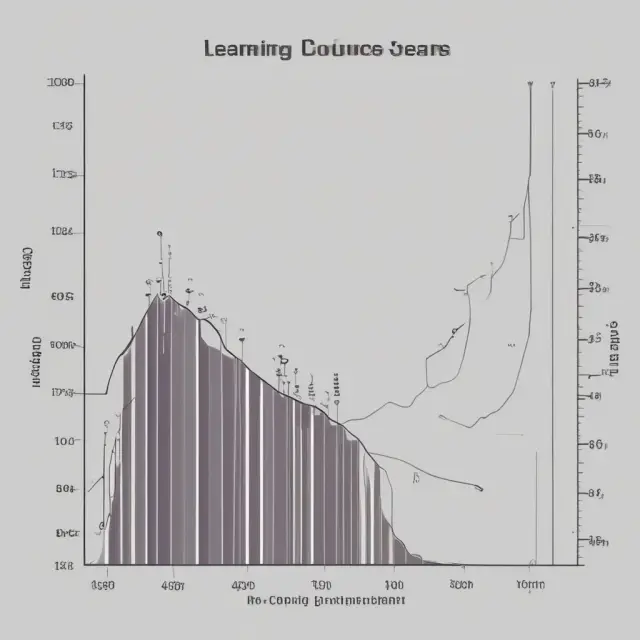
Understanding the Formula for Learning Curves
The concept of learning curves is rooted in the observation that as we repeat a process, we become more proficient and efficient. The mathematical representation of this concept is known as a learning curve. One essential aspect of understanding learning curves is their underlying formula.
The learning curve’s foundation lies in the idea that the average time taken to complete a task decreases as the number of tasks increases due to the learning process. This relationship between the cumulative quantity produced and the average time per unit can be expressed using the following equation: Y = aXb
In this formula, ‘Y’ represents the cumulative average time per unit or batch, ‘a’ is the initial time taken to produce the first unit, ‘X’ denotes the cumulative units of production or batches, and ‘b’ is the learning curve index. The value of b can be calculated as log(learning curve percentage) / log(2).
To illustrate this formula using an 80% learning curve as an example: If it takes 1,000 hours to produce the first unit, for every doubling of cumulative quantity produced, the process becomes 20% more efficient, resulting in a total time reduction of 80%. Using this example, the value of b is calculated as follows: log(0.8) / log(2) = 0.3
Now that we’ve determined the value of ‘b’, we can calculate the cumulative average time per unit for any given quantity produced by substituting a and X into our equation: Y = 1,000 * 2^(log(X)/log(2))
For instance, if you double the number of units produced from 1 to 2, the average time to produce this doubled batch will be 80% of the initial average time. Using the same example: Y = 1,000 * 2^(log(2)/log(2)) = 500 hours
As you continue to double the production quantity, the cumulative average time per unit will keep decreasing according to this formula. The learning curve demonstrates that a steeper slope at the beginning signifies higher initial cost savings and a slower slope towards the end, representing the diminishing returns of further learning. By applying this mathematical model, businesses can forecast costs, optimize production planning, and make data-driven decisions for logistics schedules.
Learning Curve Calculation Example
A learning curve is a visual representation of how long it takes to acquire new skills or knowledge. In finance and investment, the slope of the learning curve represents the rate at which these skills translate into cost savings for an organization. Learning curves are often described using a percentage that identifies the rate of improvement. For example, a 90% learning curve indicates that every time the cumulative quantity is doubled, there is a 10% efficiency gain in the cumulative average production time per unit.
To help illustrate how this concept works, let’s consider an example using an 80% learning curve. This means that each time we double the cumulative output, the process becomes 20% more efficient. Let’s assume it took 1,000 hours to complete the initial task. The formula for a learning curve is Y = aX^b, where:
– Y is the cumulative average time per unit or batch
– a is the time taken to produce the initial quantity
– X is the cumulative units of production or batches
– b is the slope or learning curve index, calculated as the log of the learning curve percentage divided by the log of 2.
Applying this formula with an 80% learning curve (b = log(0.8)/log(2) = 0316), we can calculate how long it will take to produce subsequent tasks or batches:
– To double the production from one to two units, X = 2, Y = a×2^b = 1000×2^0.316 = 1538 hours. The incremental time is 538 hours.
– To quadruple the production from one to four units, X = 4, Y = a×4^b = 1000×4^0.316 = 2179 hours. The incremental time is 641 hours.
– To double the production again from four to eight units, X = 8, Y = a×8^b = 1000×8^0.316 = 3532 hours. The incremental time is 1363 hours.
As we can see, with an 80% learning curve, the cost savings per unit increases as the production volume grows due to the efficiency gains from experience. This information can be useful for businesses looking to optimize their operations and inform production planning, cost forecasting, and logistics schedules. However, it’s essential to consider that the learning curve is a theoretical concept. The actual time required to reach proficiency may vary based on factors such as individual abilities, resources available, and market conditions.
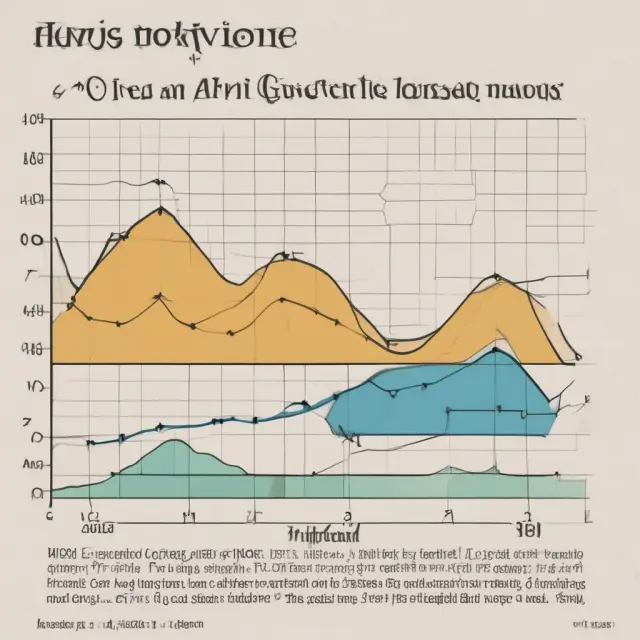
To better understand this concept, let’s analyze how an 80% learning curve looks graphically:
In this graph, we can observe that the cost per unit decreases as production volume increases, eventually flattening out. The initial steep slope indicates the significant cost savings from the early stages of learning, while subsequent gains become smaller. This is because it becomes increasingly difficult to achieve additional efficiency improvements as proficiency levels increase. As a result, businesses need to balance their investments between acquiring new skills and maximizing current proficiencies based on the specific market conditions and competitive landscape.
In conclusion, understanding learning curves is crucial for finance and investment professionals looking to optimize production processes and make data-driven decisions about cost forecasting, production planning, and logistics scheduling. By utilizing this concept and calculating the expected efficiency gains from experience, organizations can minimize costs, enhance profitability, and maintain a competitive edge in their industries.

Visualizing Learning Curves
When it comes to understanding learning curves in finance and investment, it’s crucial not only to grasp their concept but also to be able to interpret them visually. This section will help you learn about various ways to represent a learning curve through graphs and charts, providing insights into the efficiency gains as time passes.
Learning curves are often described using the slope of the line or the percentage of improvement in the cumulative average production time per unit each time output doubles. These visual representations provide valuable information for businesses looking to optimize their cost forecasting, production planning, and logistics schedules by identifying how much time and resources they will save as their teams become more proficient in a specific task or skill.
First, let’s discuss the most common way to represent a learning curve—the cumulative production time versus the number of units produced graph. The graph is often depicted as a downward-sloping curve. Initially, the slope is steep, signifying substantial cost savings per unit as new skills and knowledge are acquired. As the learning progresses, the rate at which cost savings are achieved slows down, and the slope becomes flatter.
Another way to visualize a learning curve is by plotting the average time taken to produce a specific number of units on the y-axis against the cumulative number of units produced on the x-axis. This type of representation clearly illustrates how the average production time decreases as the number of units increases and learning takes place.
It’s important to note that the shape and steepness of a learning curve can vary depending on the specific context, such as the complexity of the skill or task being learned and the individual’s innate abilities or experience level. Understanding how to read these graphs is crucial for investors, business leaders, and financial analysts who need to make informed decisions about resource allocation, project planning, and potential investments in their organizations.
Moreover, learning curves can help investors understand the efficiency of an investment opportunity by providing a clear indication of the expected cost savings as the organization or individual gains proficiency in the targeted skill or business model. For instance, if an investor is considering backing a startup with a complex technology that requires significant upfront investment, a well-defined learning curve can help determine whether the long-term potential benefits will outweigh the initial costs.
In conclusion, learning curves are essential tools for understanding how skills and knowledge evolve over time. By visualizing these curves through graphs and charts, we gain valuable insights into the cost savings and efficiency gains that come with learning and experience. In finance and investment, this information can be invaluable for making informed decisions about resource allocation, project planning, and investment opportunities.

Types of Learning Curves in Finance and Investment
Learning curves are not limited to manufacturing processes but also play a significant role in understanding various aspects of finance and investment. Two primary types of learning curves relevant to finance and investment include experience curves and productivity curves.
1. Experience Curves:
An experience curve refers to the relationship between cumulative production or output and the reduction in costs per unit over time due to experience gained from repetition. The concept suggests that as an organization learns more about a specific task, process, or investment strategy, it becomes increasingly efficient, reducing the cost per unit or increasing returns. In finance and investment, experience curves are often observed when examining portfolio management or asset allocation strategies. For example, as a portfolio manager gains more experience managing a diverse range of assets, their ability to identify underperforming securities and replace them with superior alternatives improves, leading to a reduction in overall costs and an increase in returns.
2. Productivity Curves:
A productivity curve illustrates the relationship between the cumulative number of tasks or units produced and the changes in the amount of inputs required to generate those outputs over time. In finance and investment, productivity curves are useful for understanding how economies of scale impact investment strategies. As an investor increases their investment portfolio, the cost per unit of acquiring new investments may decrease due to lower transaction fees, improved negotiation skills, or access to better information. This reduction in costs allows investors to reap higher returns on their investments and can lead to a higher overall rate of return on their portfolio.
Both experience curves and productivity curves provide valuable insights for financial professionals by helping them understand the cost savings and potential gains that result from learning and experience in various aspects of finance and investment. By analyzing these curves, investors and portfolio managers can optimize their strategies, improve risk management, and ultimately enhance their overall performance.
In the next section, we will discuss the implications of understanding learning curves in finance and investment, as well as real-life examples that demonstrate their importance. Stay tuned!

Benefits of Using Learning Curves in Finance and Investment
Learning curves have significant importance in finance and investment industries as they enable organizations to optimize costs, enhance productivity, and make informed decisions regarding production planning, cost forecasting, and logistics schedules. By examining historical data on the relationship between increased production or output and decreased costs over time, learning curves provide valuable insights into trends and future projections.
The primary benefit of using learning curves in finance and investment is that they help identify economies of scale – cost savings generated from producing more units at a lower per-unit cost due to increased efficiency. As the quantity produced increases, the rate of improvement along the learning curve typically leads to an exponential decrease in costs, especially during the initial stages when the most significant improvements occur. This trend can lead to substantial financial gains for companies that effectively utilize learning curves to inform their business strategies.
Furthermore, learning curves help organizations anticipate future cost trends and adjust production schedules accordingly. By analyzing historical data from a company’s learning curve, managers can forecast the costs of producing additional units, enabling them to plan for expansion or allocate resources effectively. Additionally, understanding the rate at which costs decrease as production increases helps in making informed decisions regarding capacity expansion and identifying opportunities for process improvements that could lead to even more significant cost savings.
Additionally, learning curves aid in risk assessment and mitigation. By analyzing historical data on how costs change with increased production, companies can identify potential risks related to capacity constraints or operational inefficiencies. For instance, if a company observes a plateau in the learning curve, it may be an indication that further cost savings cannot be achieved through increased production alone and may necessitate process improvements or the adoption of new technologies to achieve additional efficiencies.
In conclusion, incorporating learning curves into financial and investment decision-making processes offers numerous benefits, including accurate cost forecasting, optimized resource allocation, and enhanced competitiveness. By understanding how costs change with increased production, companies can make informed decisions that lead to operational efficiency, cost savings, and improved overall performance.

Limitations of Learning Curves
Despite their significance and widespread use in various industries, it’s important to understand the potential limitations and challenges when applying learning curves to finance and investment.
Firstly, learning curves are often based on historical data. While historical data can be valuable for identifying trends and improving decision-making, it may not always accurately represent future scenarios. Market conditions, technology advancements, and other external factors can impact the rate of improvement and change the way a process unfolds. As such, it’s essential to consider these potential changes when using learning curves in finance and investment.
Secondly, learning curves assume that the cost savings gained from learning will be constant throughout the entire production process. In reality, however, the rate at which cost savings are realized can change over time. For instance, some tasks may yield significant improvements early on, while others might require a more extended period to realize meaningful gains. Understanding these variances can help refine the learning curve analysis and provide more accurate estimates for future projects.
Moreover, learning curves do not account for the impact of economies of scale or external factors such as market competition, which may affect the rate at which costs decrease over time. Economies of scale refer to cost advantages that businesses gain when they increase production volume, leading to lower per-unit costs. However, these savings might be limited by market conditions and competition, making it essential to consider these factors when analyzing learning curves.
Finally, the application of learning curves in finance and investment is not without its challenges, particularly when dealing with complex financial models and dynamic market environments. These factors can introduce uncertainty, making it important for investors and financial analysts to exercise caution and maintain a flexible approach when using learning curve analysis as part of their decision-making process.
In conclusion, while understanding the concept of learning curves is crucial for finance and investment professionals, recognizing its limitations and challenges is equally important. By considering external factors, understanding the varying rate at which cost savings are realized, and acknowledging the complexity of financial models and dynamic market environments, investors can effectively leverage learning curve analysis to make more informed decisions and optimize their investment strategies.

Learning Curve Applications Beyond Finance and Investment
The learning curve theory doesn’t just apply to finance and investment industries; it’s a powerful concept utilized across various sectors. In education, teachers and students learn new material and skills that can be applied in classrooms or future careers. In manufacturing, production processes are optimized, and workers become more proficient as they acquire skills, allowing for cost savings and increased efficiency. Software development follows the same pattern, where developers improve their coding abilities to produce better software in less time (Bosch & Feldman, 2013).
In education, learning curves are used to evaluate the effectiveness of teaching methods, assess student progress, and optimize curricula based on how quickly students learn new concepts. Teachers can use these insights to tailor their instruction to individual students’ needs (Chang, et al., 2017). The learning curve also plays a crucial role in determining the appropriate class size for maximizing learning outcomes while minimizing costs (Guskey, 2000).
In manufacturing industries, the learning curve theory is used extensively to optimize production processes, reduce labor costs, and increase overall efficiency. For example, Toyota Motors’ Lean Manufacturing methodology was built upon the principles of learning curves (Womack & Jones, 1996). By investing in continuous training for their workforce, Toyota aimed to improve employee skills and create a more efficient workflow that enabled them to produce cars at lower costs than competitors. This focus on lean processes, reduction of waste, and improvement in quality set Toyota apart from other automobile manufacturers (Liker, 2004).
Software development teams also apply the learning curve theory to measure progress during software development projects. By analyzing how long it takes for developers to complete specific tasks, they can use this information to predict future development milestones and better allocate resources, ultimately helping to improve overall project outcomes (Kan & Liu, 2018).
In summary, the learning curve theory’s applications extend far beyond finance and investment industries. By understanding the concept and applying it effectively in various contexts, organizations across sectors can make informed decisions that lead to cost savings, increased efficiency, and improved learning outcomes.

FAQs About Learning Curves in Finance and Investment
Learning curves play an essential role in finance and investment industries by helping businesses understand production efficiency and informing cost forecasting and logistics schedules. In this FAQ section, we will address some common questions about learning curves and their practical implications for financial professionals.
What is a learning curve?
A: A learning curve is a mathematical concept that represents how long it takes to acquire new skills or knowledge over time. The learning curve theory posits that tasks become more efficient as they are repeated, meaning the time and resources required decrease due to the increase in proficiency.
How can learning curves be used in finance and investment?
A: Learning curves help financial professionals understand production efficiency and inform cost forecasting, logistics schedules, and production planning. They allow companies to measure their progress toward achieving cost savings and provide valuable insights into the rate at which these savings are being realized.
What is the difference between an 80% learning curve and a 90% learning curve?
A: An 80% learning curve indicates that for every doubling of production, costs will only increase by 80%, meaning there is significant cost savings per unit as compared to a 90% learning curve where costs would only decrease by 10%. The steeper the learning curve, the greater the cost savings.
What are the limitations of using learning curves in finance and investment?
A: Learning curves have some limitations as they do not account for changes in technology, market conditions, or labor quality. Additionally, they may not accurately predict the future if external factors influence the production process.
How is a learning curve calculated?
A: A learning curve’s calculation involves determining the target cumulative average time per unit or batch using the formula Y = aXb where Y represents cumulative average time per unit, X represents the cumulative quantity, and b represents the learning curve index. The percentage of improvement between iterations is then used to calculate the slope of the learning curve.
In conclusion, understanding learning curves is crucial for professionals in finance and investment industries as they provide valuable insights into production efficiency and cost savings opportunities. By addressing frequently asked questions about learning curves and their practical implications, financial professionals can better utilize this concept to inform strategic decision-making and optimize business processes.
 Next entry · No. 2,796Lease Extensions: Understanding the Pros, Cons, and Processes
See also
-
 No. 3,947
09 May 2025
19 min
Understanding Percentage Change: Formula and Calculation for Institutional Investors
Financial Data Analysis
No. 3,947
09 May 2025
19 min
Understanding Percentage Change: Formula and Calculation for Institutional Investors
Financial Data Analysis -
 No. 2,488
10 Jan 2025
21 min
Mastering Inventory Turnover: Unleashing the Power of Efficient Inventory Management
Business Strategy
No. 2,488
10 Jan 2025
21 min
Mastering Inventory Turnover: Unleashing the Power of Efficient Inventory Management
Business Strategy -
 No. 3,889
04 May 2025
20 min
Understanding Paid-In Capital: A Comprehensive Guide For Institutional Investors
Business Finance
No. 3,889
04 May 2025
20 min
Understanding Paid-In Capital: A Comprehensive Guide For Institutional Investors
Business Finance -
 No. 3,664
16 Apr 2025
17 min
Understanding Okun’s Law: An Empirical Observation of Gross Domestic Product and Unemployment
Economics
No. 3,664
16 Apr 2025
17 min
Understanding Okun’s Law: An Empirical Observation of Gross Domestic Product and Unemployment
Economics -
 No. 3,654
16 Apr 2025
19 min
Understanding Operating Income Before Depreciation and Amortization (OIBDA): A Key Metric for Analyzing Company Performance
Business Finance
No. 3,654
16 Apr 2025
19 min
Understanding Operating Income Before Depreciation and Amortization (OIBDA): A Key Metric for Analyzing Company Performance
Business Finance -
 No. 3,451
30 Mar 2025
21 min
Understanding Net Profit Margin: Definition, Formula, Calculation, Limitations, and Importance
Business Finance
No. 3,451
30 Mar 2025
21 min
Understanding Net Profit Margin: Definition, Formula, Calculation, Limitations, and Importance
Business Finance