Understanding Lehman Brothers: History, Collapse, and Impact

Lehman Brothers was a large US investment bank whose parent, Lehman Brothers Holdings Inc., filed for Chapter 11 bankruptcy on September 15, 2008, after markets lost confidence in its illiquid mortgage and real estate holdings. With 209 subsidiaries in 21 countries, its failure was one of the largest and most complex bankruptcies in history.
Background of Lehman Brothers
Lehman Brothers, a renowned global financial services firm, was founded in Montgomery, Alabama, in 1844 by Henry Lehman. He opened a dry goods store that quickly evolved into a cotton and commodities trading business with the arrival of his brothers Emmanuel and Mayer. By 1858, they had shifted their operations to New York City, which at the time was the epicenter of cotton and commodity trading. The company grew over the next century and a half, offering services ranging from investment banking and trading to research, brokerage, private equity, and more. Lehman Brothers held approximately $600 billion in diversified global assets as of 2008, making it the fourth-largest investment bank in the United States. However, the firm’s reliance on high leverage (a ratio of about 30:1) in mortgage origination from 1996 to 2006 put it at significant risk when real estate values began to decline between 2007 and 2008.
The firm’s vulnerability became apparent as losses mounted, and they fought off the consequences by issuing stock, selling assets, and reducing costs. Lehman Brothers held a substantial amount of subprime and low-rated mortgage loans on their books that couldn’t be sold or chose not to sell. The ensuing credit crunch made it difficult for the firm to raise cash through debt issuance and resulted in negative sentiment, leading to a sharp decline in share price.
Meanwhile, housing prices plummeted as buyers retreated from the market due to unfavorable conditions, exacerbating Lehman’s financial challenges. The global financial system faced the threat of collapse without additional loans being made and with Lehman Brothers on the brink of failure.
The Federal Reserve Bank of New York and several large U.S. banks attempted to orchestrate an emergency liquidation of Lehman Brothers to stabilize the markets in September 2008. This effort aimed to avoid a costly government bailout, such as the $25 billion loan given to Bear Stearns earlier that year. Discussions involved potential sales to Bank of America and Barclays but were ultimately unsuccessful due to objections from the UK Financial Services Authority and the Bank of England. Lehman Brothers’ bankruptcy on September 15, 2008, brought the subprime mortgage crisis into sharp focus and deepened the Great Recession that followed.
Before its collapse, Lehman Brothers was a major player in the global banking and financial services industries. Its demise is considered one of the defining moments of the crisis and led to significant changes in regulatory environments and corporate governance practices. Although Lehman Brothers did not cause the Great Recession or even the subprime mortgage crisis itself, its failure triggered a massive selloff in the global markets and left a lasting impact on the financial industry.
Understanding Lehman Brothers
Lehman Brothers was an influential global financial firm that provided a range of services such as investment banking, trading, brokerage, research, private equity, and other associated services. The firm had significant exposure to mortgage origination from 1996 to 2006, with a substantial reliance on high leverage at a ratio of about 30:1. This exposure made the firm particularly vulnerable when real estate values began to decline, leaving it in a precarious financial position that ultimately led to its bankruptcy in September 2008.
As one of the largest investment banks in the United States, Lehman Brothers held approximately $600 billion in diversified global assets at the time of its bankruptcy filing. Despite efforts to mitigate losses through stock issuance, asset sales, and cost reduction, the firm’s substantial holdings of subprime and low-rated mortgage loans rendered it unable to pay its creditors or raise capital cheaply through debt issuance. With housing prices falling as buyers retreated from the market due to unfavorable conditions, Lehman Brothers faced a significant threat of collapse that would ultimately be realized on September 15, 2008.
The fallout from Lehman Brothers’ bankruptcy was immediate and far-reaching. The Dow Jones Industrial Average (DJIA) dropped by 500 points the same day, and the repercussions were felt globally as a result of Lehman’s significant impact on the financial sector. Its failure is now considered a key contributor to the Great Recession that followed.
History of Lehman Brothers
Henry Lehman, an immigrant from Germany, founded Lehman Brothers in Montgomery, Alabama, in 1844 by opening a dry goods store. The arrival of his brothers Emmanuel and Mayer soon expanded the operation into cotton trading in New York City. As cotton became increasingly important during the U.S. Civil War, the Lehman brothers decided to focus on provisioning raw cotton at their dry goods store and engaging in cotton trading in New York. The firm eventually abandoned its southern operations entirely, relocating its headquarters to New York where it focused almost entirely on commodities trading and brokerage.
Over the following decades, Lehman Brothers expanded its offerings beyond commodities into a full-service financial firm. By 2008, the company held approximately $600 billion in diversified global assets, making it the fourth-largest investment bank in the United States. However, the firm’s high leverage (30:1) exposure to mortgage origination from 1996 to 2006 left it vulnerable when real estate values began to decline, leading to its bankruptcy on September 15, 2008.
Impact of Lehman Brothers on the Financial Industry
Lehman Brothers’ failure had a profound impact on the financial industry, with repercussions felt immediately and globally. The Dow Jones Industrial Average (DJIA) dropped by 500 points the same day that Lehman filed for bankruptcy. In the aftermath of the crisis, regulators enacted significant regulatory changes to address weaknesses in corporate governance and oversight within financial institutions.
Lehman Brothers’ legacy lives on through its acquisition by Barclays and Nomura Holdings following its bankruptcy filing. The company’s assets, real estate holdings, and operations were sold off in a fire sale liquidation to repay investors. While the firm no longer exists as an independent entity, its impact on the financial industry remains significant as a cautionary tale of risk management and corporate governance.
In Popular Culture
Lehman Brothers has been the subject of numerous works in popular culture since its bankruptcy. The firm’s leadership during this time has been portrayed in several financial-themed movies, including Margin Call, Too Big to Fail, and The Big Short. In addition, the 2019 Showtime series Black Monday features fictional siblings Larry and Lenny Lehman who were inspired by the real Lehman brothers. The 2016 autobiography “Full Circle: A Memoir of Leaning in Too Far and the Journey Back” was written by Erin Montella, former Lehman CFO who resigned during this period.
Perhaps most notably, Stefano Massini’s three-act play The Lehman Trilogy follows the lives of three immigrant brothers from their arrival in America to establish a dry goods business up through the collapse of the company in 2008. The production made its Broadway debut in March 2020 and garnered critical acclaim and multiple Tony Award nominations.
FAQs About Lehman Brothers
Q: When was Lehman Brothers founded?
A: Henry Lehman founded Lehman Brothers in Montgomery, Alabama, in 1844.
Q: Why did Lehman Brothers fail?
A: Lehman Brothers failed due to its significant exposure to subprime mortgage loans and reliance on high leverage (30:1) during the period of 1996 to 2006.
Q: What happened to Lehman Brothers after it filed for bankruptcy?
A: After filing for bankruptcy, Lehman Brothers’ assets, real estate holdings, and operations were sold off in a fire sale liquidation to repay investors. Its North American investment banking and trading operations were acquired by Barclays, while its Asia-Pacific region operations went to Nomura Holdings.
Q: What was Lehman Brothers’ impact on the financial industry?
A: Lehman Brothers played a significant role in the global financial sector before its bankruptcy. Its failure was one of the defining moments of the 2008 subprime mortgage crisis and led to significant regulatory changes aimed at addressing weaknesses in corporate governance and oversight within financial institutions.

Lehman’s Vulnerability to the Subprime Mortgage Crisis
The downfall of Lehman Brothers in 2008 was a pivotal moment in global finance history, with its collapse contributing significantly to the deepening of the financial crisis. The root cause of this catastrophic event was the firm’s vulnerability to the subprime mortgage market.
Lehman’s extensive involvement in mortgage origination from 1996 to 2006 played a significant role in making it vulnerable during the crisis. Its investment strategy relied heavily on leverage, peaking at about 30:1. This made Lehman essentially a real estate hedge fund de-facto.
When housing prices began to decline between 2007 and 2008, Lehman Brothers became increasingly vulnerable to the subprime mortgage market. The firm held considerable tranches of subprime mortgages and low-rated mortgage loans that it could not sell or chose not to. As these loans became illiquid during the credit crunch, Lehman faced a severe cash crisis and was unable to pay its creditors.
The global financial system’s stability was at risk due to Lehman Brothers’ significant exposure to subprime mortgages. The absence of new loans being made and the threat of its failure posed a substantial risk to the economy.
Despite efforts from potential acquirers and the Federal Reserve Bank of New York, Lehman Brothers’ bankruptcy on Sept. 15, 2008, triggered a massive selloff in global markets. The Dow Jones Industrial Average (DJIA) dropped by 500 points on that day, and its failure contributed to the Great Recession that followed.
Historically, Lehman Brothers was a prominent player in the financial services industry. Established in Montgomery, Alabama, by Henry Lehman in 1844, it expanded into New York in 1858 to focus on commodities trading and brokerage. Over the next century and a half, it underwent numerous changes, partnerships, and alliances. While its bankruptcy did not cause the subprime mortgage crisis or even the Great Recession, it served as a catalyst for the deepening of these events.
Understanding Lehman Brothers’ vulnerability to the subprime mortgage crisis offers valuable insights into the factors that contributed to its downfall and the ensuing economic turmoil. It highlights the importance of proper risk management, effective regulation, and adequate corporate governance in navigating volatile financial markets.
Bankruptcy Filing and Its Consequences
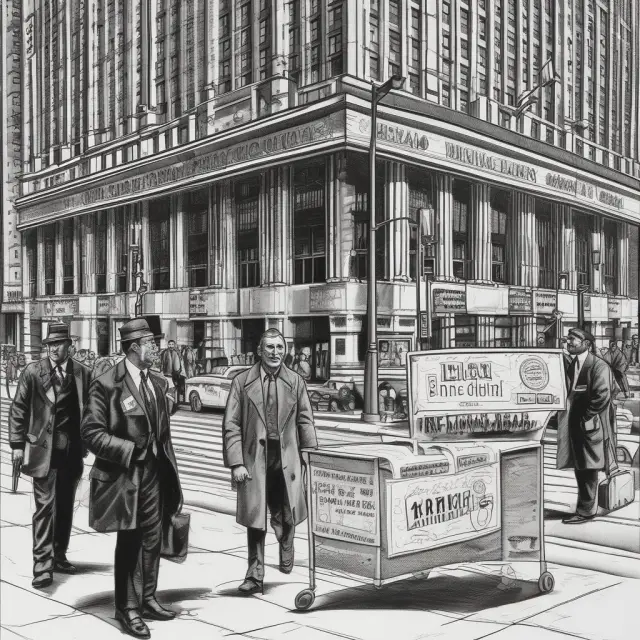
The events of September 15, 2008, forever changed not only Lehman Brothers but also the global financial system when this once-vibrant, influential investment bank filed for bankruptcy. This section delves into the circumstances that led to Lehman’s demise and the profound consequences for both the firm and the economy at large.
The seeds of Lehman Brothers’ downfall were sown in its vulnerability to the subprime mortgage crisis. The firm had been heavily invested in mortgage-backed securities, particularly those linked to subprime mortgages. As housing prices began to decline in 2007 and 2008, it became increasingly difficult for Lehman to sell these assets due to their diminished value.
In an attempt to stave off losses, Lehman Brothers issued stock, sold assets, and reduced costs. However, these efforts proved insufficient as housing prices continued to fall, and the firm’s tranches of subprime and low-rated mortgage loans became illiquid. With a credit crunch looming and no easy access to debt financing, Lehman Brothers could not pay its creditors or meet its financial obligations.
The failure of Lehman Brothers sent shockwaves through the global financial system. The Dow Jones Industrial Average dropped 500 points on the same day that the firm filed for bankruptcy. This event was a significant contributor to the onset and deepening of the Great Recession that followed.
Despite its pivotal role in the crisis, Lehman Brothers was not bailed out by the government. Efforts to find a private buyer failed as regulators claimed they could not offer a loan due to inadequate collateral. Some speculate that regulators wanted to make an example of Lehman Brothers to discourage fiscal irresponsibility and risk-taking on Wall Street. Regardless of the motivations, this decision proved disastrous as contagion from Lehman’s failure rippled throughout the global economy.
The liquidation of Lehman Brothers’ assets, real estate holdings, and operations was a swift and chaotic process. Within a month of its bankruptcy filing, Japanese bank Nomura purchased the firm’s operations in the Asia-Pacific region and its investment banking and equities trading businesses in the Middle East and Europe. Barclays acquired Lehman’s North American investment banking and trading operations, along with its New York headquarters.
In popular culture, Lehman Brothers has been memorialized through various mediums, including movies, television shows, and literature. These portrayals have kept the firm in the public consciousness, serving as a reminder of the consequences of financial missteps.
The bankruptcy of Lehman Brothers forever changed the landscape of the global financial system and serves as a cautionary tale for those involved in finance and investment. It is essential to remember the events that led to its downfall and the impact it had on both the firm and the economy to better understand the evolution of the financial world.
Lehman Before the Crisis: The Good Times
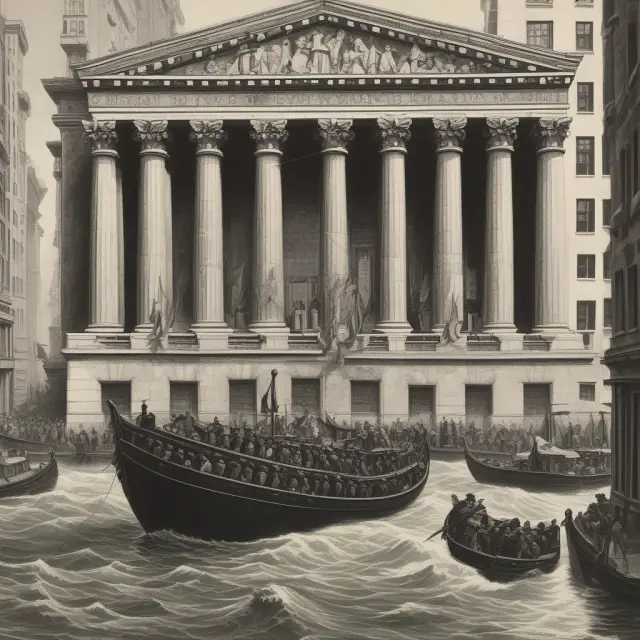
Before Lehman Brothers’ infamous bankruptcy filing in 2008, the investment bank enjoyed a long and successful history as a titan of Wall Street. Founded by Henry Lehman, a German immigrant, in Montgomery, Alabama, in 1844, it began as a small dry goods store. However, when Henry’s brothers Emmanuel and Mayer joined him, the enterprise quickly evolved into Lehman Brothers, focusing on commodities trading in New York City by the late 19th century.
As the U.S. economy shifted from an agrarian society to an industrial one, so too did Lehman Brothers’ operations. The firm grew steadily throughout the 20th century, offering investment banking, trading, brokerage, and private equity services. By 1994, it had merged with American Express Bank to become a global financial powerhouse.
Lehman Brothers’ expansion was not limited to the U.S.; it established a presence in Europe, Asia, and other parts of the world. This global reach allowed the firm to diversify its revenue streams and thrive during periods of economic instability. For example, during the 1997 Asian financial crisis, Lehman Brothers emerged as one of the few Western investment banks to remain profitable by investing heavily in the region.
However, the firm’s growth came at a cost. In the late 1990s and early 2000s, Lehman Brothers significantly increased its exposure to risky assets, particularly mortgage-backed securities (MBS) and collateralized debt obligations (CDOs). This risky bet paid off until the housing market began to decline in 2006.
One of Lehman’s most prominent investments was its acquisition of subprime mortgage specialist Aurora Loans & Securities in 2004 for $1.3 billion. The deal was part of a broader trend among investment banks, including Bear Stearns and Goldman Sachs, to invest in mortgage-backed securities as demand from institutional investors remained strong.
Lehman Brothers’ success during this period was a testament to its innovative approach to finance. Its investment banking division led the industry with IPOs and mergers & acquisitions (M&A) deals, while its trading arm profited handsomely from volatility in global markets. The firm also leveraged its strong relationships with corporate clients to offer bespoke financial solutions tailored to their needs.
Despite these successes, Lehman Brothers faced mounting challenges as the housing market began to cool down. In 2007 and 2008, the firm reported substantial losses due to write-downs on its mortgage-backed securities. However, it continued to maintain a strong balance sheet, with total assets of $639 billion in the first quarter of 2008.
The optimism surrounding Lehman Brothers was not unfounded; the firm had weathered numerous economic downturns before and emerged stronger each time. Unfortunately, its resilience would be put to the ultimate test as it faced the largest financial crisis since the Great Depression.

The Road to Bankruptcy: Missteps and Mistakes
Lehman Brothers, once a globally renowned investment bank with assets totaling over $600 billion, faced its downfall due to missteps and mistakes surrounding the subprime mortgage crisis. The firm’s heavy involvement in mortgage origination from 1996 to 2006, which reached at a peak ratio of about 30:1, positioned it as a de-facto real estate hedge fund. When housing prices began falling between 2007 and 2008, Lehman became exceptionally vulnerable.
During this period, the firm attempted to stave off losses by issuing stock, selling assets, and reducing costs. However, these efforts were ineffective as it held substantial amounts of subprime and low-rated mortgage loans that it either couldn’t sell or chose not to. As these loans became illiquid, Lehman experienced a credit crunch, making it impossible for the firm to pay its creditors. The absence of new loans and the threat of failure led to a global financial crisis.
In September 2008, negotiations among the Federal Reserve Bank of New York, U.S. banks, and potential acquirers regarding an emergency liquidation of Lehman failed. These discussions involved potential sales to Bank of America and Barclays, as well as attempts to secure federal intervention. However, no successful resolution was reached. The failure of Lehman Brothers placed the subprime mortgage crisis in the public eye and deepened the Great Recession that followed.
The events leading up to the bankruptcy filing can be attributed to several missteps and mistakes made by Lehman’s management. These missteps include:
1. Overexposure to Subprime Mortgages: Lehman Brothers’ significant holdings of subprime mortgages made it uniquely vulnerable during the housing bubble burst. This exposure came as a result of their focus on mortgage origination between 1996 and 2006, which saw them investing heavily in this market sector.
2. Inadequate Risk Assessment: Despite the mounting risks associated with subprime mortgages during this period, Lehman failed to properly evaluate the potential consequences of a housing market downturn. This misstep was due to several factors including overconfidence in their ability to manage risk and insufficient foresight into the severity of the impending crisis.
3. Ineffective Crisis Management: When faced with the mounting losses, Lehman attempted various methods to stave off disaster. However, these efforts were ineffective due to several factors such as their limited success in selling assets, the illiquidity of their mortgage portfolio, and the increasing fear among investors concerning the firm’s solvency.
4. Lack of Government Intervention: The failure of potential acquirers to secure government intervention or find a private-sector buyer for Lehman was another significant misstep. This lack of intervention allowed the contagion from Lehman’s failure to spread throughout the global economy, exacerbating the financial crisis.
5. Inability to Adapt: The unwillingness or inability of Lehman Brothers to change course when it became clear that the housing market was collapsing also contributed to their downfall. This inflexibility made it difficult for the firm to adjust and adapt to the rapidly changing conditions, further increasing its vulnerability.
These missteps and mistakes culminated in Lehman Brothers’ bankruptcy filing on September 15, 2008, a defining moment in the subprime mortgage crisis that ultimately led to the Great Recession.

Lehman Brothers’ Impact on the Financial Sector
The bankruptcy filing of Lehman Brothers on September 15, 2008, sent shockwaves through the global financial sector. The aftermath of this event is still felt today, with significant changes and lessons learned from this historic moment.
Following Lehman’s collapse, the U.S. and other governments took measures to prevent a complete economic meltdown. One such action was the Troubled Asset Relief Program (TARP), which provided emergency financial assistance to banks in order to stabilize the industry and restore confidence. This marked the beginning of a period of extensive regulatory changes aimed at addressing the systemic risks that contributed to the crisis, with an emphasis on increasing transparency and accountability within the sector.
One significant change was the Dodd-Frank Wall Street Reform and Consumer Protection Act, which sought to enhance financial regulations and create new agencies focused on market oversight and consumer protection. The act included provisions such as the creation of the Consumer Financial Protection Bureau and the establishment of rules for “too big to fail” institutions, requiring them to maintain adequate capital reserves to prevent future collapses.
The failure of Lehman Brothers also brought about a renewed focus on risk management within financial institutions. With the subprime mortgage market serving as a cautionary tale, firms began to reassess their investment strategies and risk exposures. This resulted in increased use of tools like value at risk (VaR) models, stress testing, and scenario analysis to measure and manage risk more effectively.
Additionally, there was a shift towards greater transparency in financial reporting and disclosures. Regulators and investors demanded more detailed information on institutions’ holdings, exposures, and risk management practices, which led to the emergence of regulatory reporting frameworks like Solvency II in Europe and Basel III globally.
The aftermath of Lehman Brothers’ bankruptcy also brought about significant changes in corporate governance. Institutional investors began pushing for more accountability from their portfolio companies, with a focus on board composition, executive compensation, and shareholder rights. This led to increased investor activism and a greater emphasis on shareholder engagement.
Lastly, Lehman Brothers’ collapse highlighted the importance of crisis management planning within organizations. Companies began to prioritize business continuity plans (BCP) and disaster recovery strategies to ensure that they could withstand future disruptions or crises.
In summary, the bankruptcy filing of Lehman Brothers in 2008 had far-reaching implications for the financial sector, leading to increased regulations, a renewed focus on risk management, greater transparency, and changes to corporate governance practices. These lessons continue to inform the industry today as it adapts to an ever-changing regulatory and economic landscape.

Lessons from Lehman Brothers: Regulation and Corporate Governance
The collapse of Lehman Brothers brought significant changes in regulation and corporate governance. The crisis underscored the importance of robust regulatory frameworks and effective corporate governance to safeguard financial institutions from excessive risk-taking and prevent systemic instability. In response, governments, regulatory bodies, and financial institutions implemented measures to address the shortcomings exposed by Lehman Brothers’ failure.
One of the most notable responses was the introduction of the Dodd-Frank Wall Street Reform and Consumer Protection Act (Dodd-Frank Act) in 2010. The act aimed to strengthen financial regulation, establish new regulatory bodies like the Consumer Financial Protection Bureau (CFPB), and enhance transparency and accountability across the financial sector. The Dodd-Frank Act imposed stricter capital requirements on banks, restricted certain trading practices, and increased oversight of derivatives markets. It also included provisions to protect consumers from unfair or deceptive financial products and services.
The Financial Services Modernization Act of 1999 (Gramm-Leach-Bliley Act) that repealed the Glass-Steagall Act came under scrutiny after Lehman’s collapse. The Glass-Steagall Act, which separated commercial banking from investment banking activities, had been in place since 1933 to prevent conflicts of interest and limit systemic risk. With its repeal, financial institutions like Lehman Brothers were allowed to engage in a broader range of activities, including both commercial and investment banking operations. The failure of Lehman Brothers demonstrated the potential risks of this merging of functions, leading many to question whether the Glass-Steagall Act should have remained in place or been modified instead.
The Basel III regulatory framework was another response to the crisis. It introduced new capital requirements for banks and aimed to improve risk management and increase transparency. The framework’s emphasis on more stringent capital rules, stress testing, and liquidity requirements reflected efforts to address vulnerabilities exposed by Lehman Brothers’ collapse.
The role of corporate governance in preventing financial crises was also reevaluated. Institutional investors and regulatory bodies called for greater board independence, improved disclosure practices, and enhanced shareholder rights. In the wake of Lehman’s bankruptcy, regulators recognized that better corporate governance could help prevent excessive risk-taking and improve transparency, ultimately reducing the likelihood of future crises.
The crisis also led to increased collaboration between regulatory bodies across jurisdictions. The Financial Stability Board (FSB) was established in 2010 with the goal of promoting international financial stability. It monitored risks and vulnerabilities in the global financial system, made recommendations for regulatory actions, and coordinated responses among national authorities.
In conclusion, Lehman Brothers’ collapse had profound implications for financial regulation and corporate governance. The crisis spurred significant reforms aimed at addressing the shortcomings that contributed to its failure. These changes included the introduction of new regulatory frameworks like the Dodd-Frank Act and Basel III, as well as renewed focus on robust corporate governance practices. While Lehman Brothers’ bankruptcy marked a dark chapter in financial history, it also served as a catalyst for reforms that made the financial sector more stable and resilient.
KEY TAKEAWAYS
– The crisis led to significant regulatory changes aimed at enhancing oversight and increasing transparency within the financial sector.
– The Dodd-Frank Act was introduced in response to the crisis, imposing stricter capital requirements and creating new regulatory bodies like the Consumer Financial Protection Bureau (CFPB).
– The role of corporate governance in preventing crises was also reevaluated, leading to increased focus on board independence, improved disclosure practices, and enhanced shareholder rights.
– New international collaboration through the Financial Stability Board (FSB) aimed to monitor risks and vulnerabilities and coordinate responses among national authorities.

Lehman Brothers Today: Assets, Operations, and Cultural Impact
Although Lehman Brothers filed for bankruptcy in 2008, the financial powerhouse’s legacy remains significant. Its assets and operations have been restructured and continue to shape the finance industry today, while its historical significance has left an indelible impact on popular culture.
Following the firm’s collapse, Lehman Brothers’ assets were sold off in a fire sale liquidation to repay investors. The company’s operations in Asia-Pacific, Europe, and the Middle East were purchased by Japanese bank Nomura, while its North American investment banking and trading businesses, along with its New York headquarters, went to Barclays.
Despite these changes, Lehman Brothers continues to be remembered for its pivotal role in the history of finance and investment. Its experience provides a cautionary tale of excessive risk-taking and the consequences of neglecting regulatory oversight.
One of the most notable consequences of Lehman’s bankruptcy was the ripple effect it had on the global financial markets. The Dow Jones Industrial Average (DJIA) fell 500 points on the same day that Lehman filed for bankruptcy, and many other financial institutions suffered significant losses in the aftermath. The crisis precipitated by Lehman Brothers’ failure is often referred to as the Great Recession.
Lehman Brothers also left a lasting impact on popular culture. The firm was portrayed in various movies, television shows, and literature following its collapse. Margin Call, Too Big to Fail, and The Big Short are just a few of the financial-themed productions that mentioned Lehman Brothers. Erin Montella’s 2016 autobiography, Full Circle: A Memoir of Leaning in Too Far and the Journey Back, provided insight into her experiences at the firm before its downfall.
More recently, Stefano Massini’s three-act play, The Lehman Trilogy, chronicled the lives of the immigrant Lehman brothers and their impact on finance from the founding of their business to its collapse in 2008. The play premiered on Broadway in March 2020 and received widespread critical acclaim.
While the Lehman Brothers bankruptcy did not directly cause the Great Recession or even the subprime mortgage crisis, its failure triggered a massive selloff in the global markets. Its repercussions were felt immediately and globally, making it an essential part of financial history.
In conclusion, Lehman Brothers was a prominent player in the finance industry before its bankruptcy filing on Sept. 15, 2008. Its failure during the subprime mortgage crisis highlighted the importance of sound risk management and regulatory oversight. Today, the firm’s legacy lives on through the lessons it imparts about the importance of prudent financial practices and the potential consequences of excessive risk-taking. Additionally, its impact on popular culture serves as a reminder of its significance in history.

In Popular Culture: Movies, Television Shows, and Literature
The fall of Lehman Brothers in 2008 is a pivotal moment in modern financial history. Its impact reverberated through the global markets, ultimately contributing to the onset of the Great Recession. Unsurprisingly, this historic event has captured the imaginations of writers, filmmakers, and other artists. In this section, we will explore the various ways Lehman Brothers has been portrayed in popular culture since its bankruptcy.
One of the earliest representations of Lehman Brothers in pop culture was the 2011 film “Margin Call.” This drama follows a group of high-level employees at an investment firm as they navigate the initial stages of the financial crisis. While not directly about Lehman, the film’s plot is heavily influenced by the events surrounding its bankruptcy. The cast includes Kevin Spacey and Zachary Quinto, who portrayed real-life Lehman Brothers executives in other projects.
In 2011’s “Too Big to Fail,” director Curtis Hanson delved deeper into the Lehman collapse with a dramatized account of the events leading up to its bankruptcy and its impact on the global economy. James Cromwell, Paul Giamatti, William Hurt, and Billy Crudup starred as key figures in the government and finance industries during that time.
Another popular portrayal of Lehman Brothers came in the form of the 2015 Showtime series “Billions.” This drama, which is currently in its fifth season, revolves around a financial hedge fund and the U.S. Attorney’s office in New York City. While not directly related to Lehman Brothers, the show draws inspiration from real events and characters involved in the aftermath of the crisis.
More recently, Netflix released “The Lehman Trilogy,” an adaptation of Stefano Massini’s three-act play of the same name. This miniseries follows the history of Lehman Brothers from its beginnings as a small dry goods company in Montgomery, Alabama, to its meteoric rise and fall during the 2008 financial crisis. The production stars Sam Wendley, Adam Godley, and Ben Miles in a herculean performance that spans over six hours.
Erin Montella, Lehman Brothers’ former CFO who resigned in 2008, chronicled her experiences in the financial industry in her 2016 memoir “Full Circle: A Memoir of Leaning In Too Far and the Journey Back.” The book provides a firsthand look at the events leading up to the bankruptcy and offers valuable insights into the culture and mindset of those working within the finance sector during that time.
Lastly, Italian novelist and playwright Stefano Massini’s “The Lehman Trilogy” is a three-act play that premiered on Broadway in 2020 to great acclaim. The production tells the story of the real-life Lehman brothers – Henry, Emanuel, and Mayer – from their arrival in America to the collapse of the company in 2008. With its intricate storytelling and powerful performances, “The Lehman Trilogy” offers a unique perspective on the history of one of the most iconic financial institutions in history.
These are just a few examples of how Lehman Brothers has been portrayed in popular culture since its bankruptcy. Its impact on the global economy has made it an enduring subject for artists and storytellers, ensuring that its legacy will be remembered for generations to come.

FAQs about Lehman Brothers
1. **What Was Lehman Brothers?** Lehman Brothers was a global financial services firm that provided investment banking, trading, investment management, private banking, research, brokerage, private equity, and associated services until its bankruptcy in 2008.
2. **Why Did Lehman Brothers Fail?** Lehman Brothers’ failure was largely caused by the subprime mortgage crisis. The firm had huge tranches of subprime and low-rated mortgage loans on its books that it either couldn’t or chose not to sell when housing prices began to fall. As a result, the global financial system experienced a credit crunch, which caused Lehman Brothers’ inability to pay its creditors and ultimately led to bankruptcy.
3. **What Happened After Lehman Brothers Filed Bankruptcy?** Following its bankruptcy filing, Lehman Brothers’ assets, real estate holdings, and operations were sold off in a fire sale liquidation to repay investors. The firm’s North American investment banking and trading operations, along with its Asia-Pacific region businesses, were bought by Barclays and Nomura Holdings, respectively.
4. **Did the Government Bail Out Lehman Brothers?** No, Lehman Brothers was not bailed out by the government. Regulators claimed they could not have rescued the firm because it didn’t have adequate collateral to support a bailout loan under the Federal Reserve’s emergency lending powers.
5. **Who Were the Lehman Brothers?** The Lehman brothers were three immigrant siblings from Germany who opened a dry goods store in Montgomery, Alabama, in 1844. They later expanded their operations to New York and focused on cotton trading and brokerage. Over the next century and a half, the company underwent numerous changes and engaged in several alliances and partnerships until its collapse during the 2008 financial crisis.
6. **Why Was Lehman Brothers Allowed to Fail?** Lehman Brothers’ failure was allowed due to its subprime mortgage portfolio being worth far less than people had thought, causing clients to abandon the firm and creditors to refuse lending. Regulators could not find a private-sector buyer for Lehman or provide a bailout loan under the Federal Reserve’s emergency lending powers, creating an example of fiscal irresponsibility and excessive risk-taking on Wall Street that ultimately contributed to the Great Recession.
7. **What Was the Impact of Lehman Brothers’ Bankruptcy?** The collapse of Lehman Brothers was a defining moment in the 2008 financial crisis. Its failure placed the subprime mortgage crisis prominently into the public eye and deepened the Great Recession that followed, leading to significant economic consequences including a fall in the Dow Jones Industrial Average (DJIA) by 500 points on the same day of its bankruptcy filing.
8. **How Has Lehman Brothers Been Portrayed in Popular Culture?** Lehman Brothers has been portrayed in various financial-themed movies and literature, including Margin Call, Too Big to Fail, The Big Short, Black Monday, and Full Circle: A Memoir of Leaning In Too Far. Additionally, the three-act play The Lehman Trilogy by Stefano Massini follows the lives of the fictionalized Lehman brothers from their arrival in America to the collapse of the company.
 Next entry · No. 2,817Understanding the Bloomberg Aggregate Bond Index: A Comprehensive Guide for Institutional Investors
See also
-
 No. 4,763
14 Jul 2025
22 min
Understanding the Stock Market: Functions, Regulation, Significance, and Trading
Business Finance
No. 4,763
14 Jul 2025
22 min
Understanding the Stock Market: Functions, Regulation, Significance, and Trading
Business Finance -
 No. 4,726
12 Jul 2025
21 min
Special Purpose Vehicles (SPVs): Understanding the Role, Uses, and Risks
Business Finance
No. 4,726
12 Jul 2025
21 min
Special Purpose Vehicles (SPVs): Understanding the Role, Uses, and Risks
Business Finance -
 No. 4,696
09 Jul 2025
19 min
Understanding State-Owned Enterprises: A Global Phenomenon in Finance and Investment
Business Finance
No. 4,696
09 Jul 2025
19 min
Understanding State-Owned Enterprises: A Global Phenomenon in Finance and Investment
Business Finance -
 No. 4,629
04 Jul 2025
20 min
Understanding Share Certificates: A Proof of Ownership in the Stock Market
Business Finance
No. 4,629
04 Jul 2025
20 min
Understanding Share Certificates: A Proof of Ownership in the Stock Market
Business Finance -
 No. 4,542
27 Jun 2025
22 min
The Rule of 72: A Simplified Formula for Estimating Investment Doubling Time
Investments
No. 4,542
27 Jun 2025
22 min
The Rule of 72: A Simplified Formula for Estimating Investment Doubling Time
Investments -
 No. 3,812
28 Apr 2025
20 min
Understanding the Over-The-Counter Exchange of India (OTCEI): Features, Requirements, and Transactions
Business Finance
No. 3,812
28 Apr 2025
20 min
Understanding the Over-The-Counter Exchange of India (OTCEI): Features, Requirements, and Transactions
Business Finance