Understanding Line Graphs: A Comprehensive Guide for Institutional Investors
Learn the ins and outs of line graphs for institutional investors. Understand construction, analysis, & benefits.
What Is a Line Graph?
A line graph is a type of visual representation used in finance and investments to depict trends and changes in data over time. It consists of two axes (x-axis and y-axis) with data points plotted along both, which are then connected by straight lines. Line graphs offer valuable insights for institutional investors seeking to analyze financial trends or compare the performance of various securities.
Line graphs are an essential tool in finance because they allow for a clear visualization of trends and patterns over time. They can be used to display data related to stock prices, company revenue, consumer price indices, and more. These charts are particularly useful when dealing with large datasets or complex relationships between variables.
The x-axis represents the independent variable, while the y-axis denotes the dependent variable in a line graph. Each axis should be appropriately labeled and divided into appropriate increments to facilitate easy understanding of the data being presented. Data points are then plotted on the graph at their corresponding positions along both axes, with lines connecting each point to illustrate trends. The slope of these lines indicates whether the values have increased or decreased over time.
In finance, line graphs serve various purposes such as analyzing historical stock price movements, comparing company growth trends, and monitoring economic indicators. They can also help investors identify key trends, spot patterns, and even predict future market conditions. By visually displaying changes in values over time, these charts offer a more accessible way to interpret complex financial data for informed decision-making.
Understanding the components of line graphs is essential for institutional investors looking to gain valuable insights from their financial data. In the following sections, we will explore the key features and uses of line graphs in finance, along with tips on constructing an effective line graph that can help investors make more informed decisions.

Key Takeaways on Understanding Line Graphs
Line graphs are a powerful visualization tool used in finance and investment to represent changes in values over time. These graphs consist of two axes—the horizontal x-axis and the vertical y-axis—connected by a series of data points plotted along the axis. In finance, line graphs provide valuable insights into trends, enabling investors to analyze stock prices, consumer price indices, and other financial metrics. While line graphs offer numerous benefits, they do have limitations such as potential loss of clarity when dealing with an excessive amount of data points or the possibility for manipulation through adjusting the range of data points on the axes.
Line graphs are essential in finance due to their ability to display trends and changes effectively. They can be used to represent various financial data, including stock prices, consumer price indices, and revenue sheets, among others. For investors specializing in technical analysis, line graphs offer valuable insights into asset behavior and can contribute significantly to investment decisions.
However, it is important to remember that line graphs have their limitations. When dealing with a large number of data points, the clarity of the graph may be affected, making it challenging for users to draw meaningful conclusions. Furthermore, manipulation can occur by adjusting the range on the axes, which could alter the apparent degree of change in the data.
To create a line graph, follow these steps:
- Label your axes and assign appropriate scales to them.
- Plot each data point and connect them with a straight line.
- Carefully consider the title, legend, and overall design to maximize clarity and ease of interpretation.
There are three primary types of line graphs: simple, multiple, and compound. A simple line graph represents one dependent variable over time, while multiple line graphs display more than one dependent variable for comparison. Compound line graphs represent multiple variables stacked together, offering insights into the total relationship between data sets.
By understanding the basics of line graphs and their applications in finance, investors can effectively analyze trends, evaluate performance, and make informed decisions based on the insights gained from this powerful visualization tool.
An Overview of Line Graphs: Structure, Axes, and Data Points
A line graph, also referred to as a line plot or line chart, is a visual tool used to represent quantitative data over time using lines that connect individual data points. They are commonly employed in finance for analyzing trends in financial markets, such as stock prices or changes in economic indicators. In this section, we will delve deeper into the structure of line graphs, focusing on their essential components: x-axis, y-axis, and data points.
Structure of a Line Graph
Line graphs consist of two axes (x-axis and y-axis) that form right angles to each other. The x-axis represents the independent variable or time, while the y-axis denotes the dependent variable, typically quantifiable values like stock prices or percentage changes. Each data point is plotted at their respective coordinates on these axes and connected by a line, creating a trend visualization that allows users to understand patterns and trends over a specified period.
X-Axis: Time and Labeling
The x-axis represents time in line graphs and is typically displayed horizontally along the bottom edge of the graph. To effectively label the x-axis, it’s essential to choose an appropriate scale for your data. For example, if you are creating a line graph that depicts stock prices over several years, consider using a yearly scale with months or specific dates as tick marks. Proper labeling ensures your audience can easily follow the trends and patterns within the data.
Y-Axis: Dependent Variable and Labeling
The y-axis represents the dependent variable in line graphs and is usually displayed vertically on the left or right side of the graph. It is essential to choose an appropriate scale for your data on the y-axis, as well. This means selecting an axis range that accurately represents both the minimum and maximum values of the dependent variable while also ensuring that there are no empty spaces between tick marks. Proper labeling of the y-axis allows viewers to understand the magnitude of changes in the dependent variable, making it easier for them to interpret the graph.
Data Points: Connecting the Dots
Data points represent individual observations or measurements on the line graph. Each data point is plotted at its specific coordinates on the x-axis and y-axis. In a line graph, these individual points are connected by a smooth line to help visualize trends and patterns in the data. For example, when creating a line graph of stock prices over a given time period, each data point would represent the closing price for that day, while the line would depict the trend of those daily closing prices over time.
Line Graphs in Finance: Use Cases and Benefits
In finance, line graphs are widely used for analyzing trends and understanding patterns within various financial markets. Some common applications include tracking stock prices, identifying economic indicators’ historical trends, and evaluating inflation rates or interest rates. By presenting data in this format, investors can quickly gain valuable insights into market behavior and make informed decisions based on the visualized information.
In conclusion, line graphs are an essential visual tool for understanding quantitative data over time. Their structure, consisting of two axes (x-axis and y-axis) and connected data points, offers a clear representation of trends and patterns within data. In finance, these graphs enable investors to analyze various aspects of financial markets, making them an indispensable part of any investment analysis strategy.
Line Graphs in Finance: Use Cases and Benefits
Line graphs are a popular visualization tool utilized extensively within the finance industry to represent trends and changes in financial data over time. These graphs, which connect individual data points by straight lines, provide insightful information to investors, analysts, and other stakeholders. In this section, we’ll discuss how line graphs are used in finance and highlight their benefits for various applications.
One common use case of line graphs in finance is analyzing stock prices. By plotting the closing price of a stock on a line graph over an extended period, investors can observe trends and identify potential opportunities or risks. For instance, an uptrend could signify increasing demand for the stock, while a downtrend might indicate the opposite. Furthermore, a line graph can help investors compare the performance of multiple stocks by overlaying their respective lines on a single chart (multiple line graphs).
Another application of line graphs in finance is the analysis of economic indicators, such as inflation rates or consumer price indices. Line graphs illustrate trends and fluctuations in these important indicators, helping investors understand the overall economic landscape and potential impacts on their investments. For example, an increasing trend in consumer prices could signal inflationary pressures that might affect a portfolio’s purchasing power over time.
Line graphs can also be employed for analyzing financial ratios or key performance indicators (KPIs). By plotting the historical data of these financial metrics, investors can evaluate trends and identify potential changes in company performance or industry conditions. For instance, a line graph displaying a company’s revenue growth rate could help investors assess its long-term profitability trend.
Moreover, line graphs are beneficial for tracking portfolio performance over time. By plotting the total return of an investment portfolio against the benchmark index, investors can visualize their portfolio’s relative performance and identify any underperforming or outperforming assets. This information can help investors make informed decisions regarding portfolio rebalancing and asset allocation.
In summary, line graphs are an essential tool in finance, providing valuable insights into trends and changes in financial data over time. Their applications include analyzing stock prices, economic indicators, financial ratios, and portfolio performance. By understanding the benefits of using line graphs in finance, investors can make informed decisions to optimize their investment strategies and stay informed about market conditions.

Limitations of Line Graphs: Common Challenges and Criticisms
Line graphs are a popular visualization tool for displaying data changes over time in various fields, including finance. However, they come with certain limitations that can affect their usefulness or even introduce misinterpretation. In this section, we will discuss two common challenges and criticisms of line graphs: data overload and manipulation.
Data Overload
One of the primary limitations of line graphs is dealing with an excessive number of data points. As more and more data points are added to a single graph, it can become difficult for users to interpret trends or identify patterns among the data. In finance, this issue may arise when analyzing extended time series data or large datasets with numerous securities. To mitigate the challenge of data overload, consider using alternative visualization techniques such as bar charts or area charts, which are better suited for displaying a large number of discrete categories or continuous data, respectively. Another option is to divide the data into smaller groups and present them in separate line graphs to improve readability and interpretation.
Manipulation:
Another limitation of line graphs lies in their susceptibility to manipulation. Since line graphs rely on continuous connections between data points, it can be tempting for creators to adjust the scale (axis range) of each axis to achieve a desired visual effect. This manipulation could lead to misinterpretation or even deception. For example, changing the y-axis scale in a line graph comparing two securities with significantly different price ranges could result in one security appearing to have a more substantial change than the other, when it might not be the case in reality. To prevent such manipulations and ensure accurate interpretation of line graphs, adhere to these best practices:
- Use consistent axis scales across multiple graphs for comparison purposes.
- Clearly label each axis and provide a clear title for the graph to guide users’ understanding of the data presented.
- Always double-check that your data is plotted accurately on the axes and that any trends or patterns you identify are supported by the underlying numbers.
- When sharing line graphs with others, make it clear whether the y-axis represents percentage change or absolute values to avoid confusion and potential misinterpretation.
- If you must share a line graph containing multiple series (i.e., different securities), use distinct colors or markers for each line to ensure clarity in interpretation.
Constructing a Line Graph: Steps and Considerations
To create an effective line graph for finance or investment analysis, follow these steps to understand its structure and how to construct it:
1. Choose Data Type:
The first step in creating a line graph is to select the data type that fits best for your financial or investment scenario. Line graphs are ideal when representing trends over time. This could involve stock prices, interest rates, sales revenues, or other quantifiable variables.
2. Prepare Axes and Data:
Line graphs consist of two axes – horizontal (x-axis) and vertical (y-axis). Label the axes with the corresponding units and scales. Ensure that your data is organized and ready for plotting, as it will be connected by straight lines to form a continuous line.
3. Plot Data Points:
Plot individual data points at their respective coordinates on both axes. Each data point should have an x-value (time or any other independent variable) and a y-value (the value of the dependent variable). For example, if you’re examining stock prices for each trading day, your x-values will represent days, and y-values will be closing prices.
4. Connect Data Points:
Connect data points with straight lines to show trends over time. The continuous line formed by these connections helps visualize changes in the values represented by your data points.
5. Label Your Graph:
Provide a clear title for your graph, indicating the purpose and scope of the analysis. Include labels for axes and any additional details necessary to fully understand the content displayed on the graph.
Tips for Designing an Effective Line Graph
– Choose appropriate colors and line styles to distinguish between different data series or trends, if applicable.
– Use a scale that clearly represents changes in the data while avoiding overcrowding.
– Consider the time interval covered by your data when choosing the x-axis labeling frequency (e.g., days, weeks, months).
– Clearly display gridlines to help readers understand the data’s distribution and patterns more easily.
By following these steps and tips, you can create a line graph that effectively visualizes trends and insights in finance and investment analysis.

Types of Line Graphs: Simple, Multiple, and Compound
Line graphs are an essential tool for visualizing trends in quantitative data. They come in various forms, each with its unique characteristics, uses, and advantages. In this section, we’ll dive deeper into the three primary types of line graphs: simple, multiple, and compound.
1. Simple Line Graphs
A simple line graph represents a single dataset over time. It is often used to track changes in a specific variable or trend. For instance, it can be employed to depict monthly or yearly sales trends for a company or the evolution of stock prices over several years. This type of line graph only includes one y-axis and one series, making it ideal for analyzing data from just one perspective (Figure 1).
“`markdown
Figure 1: A simple line graph with monthly sales data.
“`
2. Multiple Line Graphs
Multiple line graphs are used when comparing two or more datasets over a common time period. Each dataset is plotted on its separate line, allowing easy visualization of the trends between them (Figure 2). These graphs can help identify correlations and differences among the variables being analyzed, making them valuable in various fields such as finance, economics, and research.
“`markdown
Figure 2: A multiple line graph showing the comparison of two stock prices over time.
“`
3. Compound Line Graphs
Compound line graphs, also referred to as stacked or overlapped line graphs, represent multiple datasets in a single chart by stacking their individual series on top of each other. This type of line graph is ideal for analyzing the cumulative effects or relationships between different variables (Figure 3). Compound line graphs are frequently used to illustrate data that can’t be easily visualized using bar charts or pie charts, such as the growth and decline of various factors contributing to a larger whole.
“`markdown
Figure 3: A compound line graph representing the contributions of different factors to a total value.
“`
Each type of line graph offers distinct benefits depending on the data being analyzed and the insights sought by investors or researchers. By understanding these various types, you’ll be better equipped to make informed decisions based on accurate and insightful visualizations.
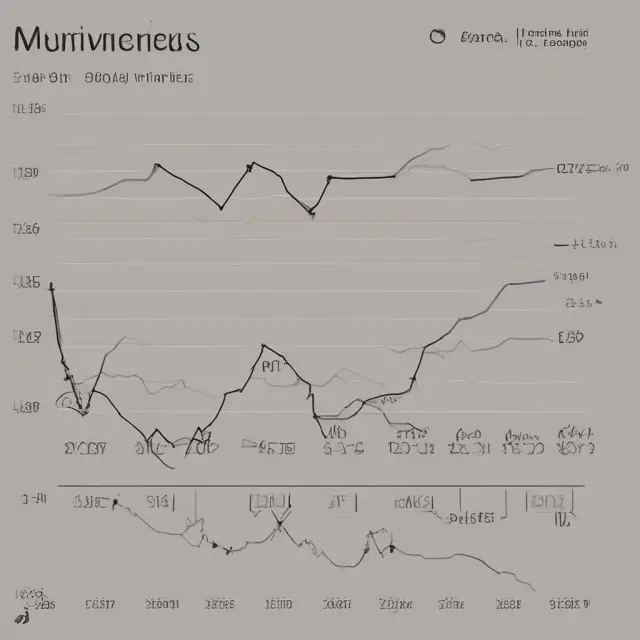
Part 1: Creating a Simple Line Graph
A simple line graph represents one variable against time and displays its changes over a specified period. This section will discuss how to construct a simple line graph using real-world examples, along with interpreting the results and drawing meaningful insights from it.
To begin creating a simple line graph, first, you must prepare the data. For this example, let’s examine the historical closing prices of Apple Inc. stock (AAPL) for the last 5 years. Gather your data points with the corresponding time stamps as follows:
| Time Stamp | Closing Price ($) |
|————|———————-|
| Jan-1, 2018 | 167.94 |
| Feb-1, 2018 | 178.53 |
| Mar-1, 2018 | 168.15 |
| Apr-1, 2018 | 173.65 |
| May-1, 2018 | 164.95 |
| Jun-1, 2018 | 166.77 |
| Jul-1, 2018 | 162.38 |
| Aug-1, 2018 | 155.04 |
| Sep-1, 2018 | 211.89 |
| Oct-1, 2018 | 217.69 |
| Nov-1, 2018 | 183.45 |
| Dec-1, 2018 | 153.01 |
| Jan-1, 2019 | 164.48 |
| Feb-1, 2019 | 176.04 |
| Mar-1, 2019 | 180.35 |
| Apr-1, 2019 | 211.62 |
| May-1, 2019 | 198.78 |
| Jun-1, 2019 | 204.79 |
| Jul-1, 2019 | 194.53 |
| Aug-1, 2019 | 189.36 |
| Sep-1, 2019 | 223.26 |
| Oct-1, 2019 | 232.67 |
| Nov-1, 2019 | 244.16 |
| Dec-1, 2019 | 285.46 |
| Jan-1, 2020 | 303.45 |
| Feb-1, 2020 | 307.24 |
| Mar-1, 2020 | 291.74 |
| Apr-1, 2020 | 288.65 |
| May-1, 2020 | 326.94 |
| Jun-1, 2020 | 319.24 |
| Jul-1, 2020 | 342.78 |
Now that you have the data, it’s time to create the graph itself. Open a spreadsheet program like Microsoft Excel or Google Sheets and input your data points in columns. Label the Time Stamp column as ‘X’ and the Closing Price column as ‘Y’. In Excel, select the range containing the X and Y columns, then go to Insert > Line > 2-D Line Chart.
Your simple line graph is now created! The graph will show a single line connecting each of your data points, visually displaying the changes in Apple Inc.’s closing prices over the given time frame. To analyze the results and draw meaningful insights, focus on trends, patterns, and potential correlations that may exist within your data.
For example, you might notice a clear upward trend throughout most of 2019 or a significant price drop between December 2018 and January 2019. These observations can provide valuable context and inform further investment decisions. Remember, a simple line graph is an effective tool for understanding the historical trend and changes in a single variable over time.
In conclusion, constructing a simple line graph involves preparing your data, creating the graph using a spreadsheet program, and analyzing the results to draw meaningful insights. By following these steps, you’ll be well on your way to visualizing trends and patterns within the financial markets!
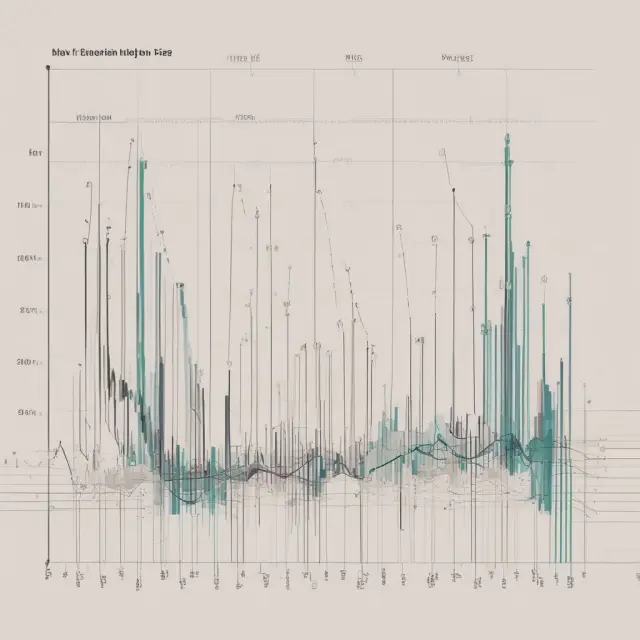
Part 2: Comparing Multiple Line Graphs
Investors often require a comprehensive analysis of financial data, and multiple line graphs are an effective way to compare different datasets over time. Multiple line graphs represent multiple dependent variables plotted against the same independent variable, enabling side-by-side comparisons. This visualization technique offers valuable insights into trends and relationships between various securities or economic indicators. In this section, we will discuss how to create and interpret multiple line graphs.
Creating Multiple Line Graphs
To create a multiple line graph, follow these steps:
- Identify two or more dependent variables for comparison (e.g., stock prices of different companies).
- Select an appropriate independent variable, typically time.
- Collect data points for each dependent variable and label them accordingly.
- Plot the data points on the graph, with each series having a distinct color or symbol.
- Connect the data points using lines to visualize trends over time.
Interpreting Multiple Line Graphs
To effectively interpret multiple line graphs, consider these aspects:
- Observe trend direction and slope: Compare how the lines move up or down to identify similarities and differences in trend direction between the dependent variables.
- Look for divergences: Analyze instances where the lines separate (diverge), which may indicate distinct trends or relationships between the compared data sets.
- Identify inflection points: Look for significant changes in the direction of the lines, such as a sharp increase or decrease, to identify turning points or potential market events that affected both securities differently.
- Evaluate correlations and causations: By comparing trends, you can assess any correlation or potential causation between the dependent variables, offering insights into market dynamics or investment opportunities.
- Analyze patterns: Look for consistent or recurring patterns in the data to help identify underlying factors that may be driving the trend or relationship between the dependent variables.
In conclusion, multiple line graphs offer a powerful tool for investors to visualize and compare trends between various financial securities or economic indicators over time. By understanding how to create and interpret these graphs, you can unlock valuable insights into market dynamics and make informed investment decisions. In the following sections, we will delve deeper into creating simple, multiple, and compound line graphs to further enhance your understanding of this versatile visualization technique.
Part 3: Analyzing Compound Line Graphs
A compound line graph presents multiple sets of data stacked together. Each set of data is represented by a distinct line on the same graph, providing valuable insights into the relationships and comparisons between different variables over time.
To create a compound line graph, follow these steps:
- Label the x-axis (horizontal) and y-axis (vertical) appropriately, based on the data being represented. For instance, when analyzing stock prices of multiple companies within an industry, label the x-axis as ‘Time’ and y-axis as ‘Price’.
- Choose colors to differentiate each line representing a separate dataset. Ensure that the colors used are distinct for easy visual identification.
- Plot the data points for each line on the graph. Connect the data points with lines to create a trendline for each dataset.
- The y-axis represents the price of each stock, while the x-axis depicts the time period under consideration.
- Stack the lines in order of importance or relevance to the analysis being conducted. For example, if analyzing the performance of two companies in the same industry, stack the line representing the company with higher market capitalization above the other.
- Interpret the results by examining the trends and patterns within each individual dataset as well as their relationship to one another. Compound line graphs can reveal insights such as which stock is outperforming its peers over a specific time frame or highlight industry trends.
- Identify any significant events that could have influenced the data points in the graph, such as mergers and acquisitions, regulatory changes, or economic indicators.
- Consider potential limitations of using compound line graphs, including the possibility of data clutter and overlapping lines obscuring critical information. If needed, adjust the scaling of axes to ensure all data is visible while maintaining clarity in the graph’s presentation.
Compound line graphs are a powerful tool for investors seeking to analyze multiple datasets simultaneously and identify underlying trends, comparisons, and relationships within their data. By following these guidelines and best practices, you can construct an effective compound line graph that adds value to your financial analysis and insights.

FAQs: Common Questions about Line Graphs in Finance
Question 1: What is a line graph?
A line graph is a type of visualization tool used to represent quantitative data over a specified time interval. It uses lines to connect individual data points, making it particularly useful for understanding trends and changes in values over time. In finance, line graphs are commonly employed to display historical price action of securities or economic indicators.
Question 2: What makes up a line graph?
A line graph consists of two axes – the x-axis (horizontal) and y-axis (vertical). Data points, each with an (x,y) coordinate, are plotted on these axes and connected by straight lines. The resulting visual representation displays trends in the data and allows for easy comparison across time periods.
Question 3: What is the difference between a line graph and bar chart?
Bar charts display categorical or discrete data as rectangular bars, while line graphs depict continuous data points through lines connecting individual data points over time. Both visualizations serve unique purposes and can be used effectively in various contexts depending on the nature of the data being analyzed.
Question 4: How are line graphs constructed?
Line graphs start by defining two axes – x-axis (time) and y-axis (quantitative value). Data points, typically representing closing stock prices or time series data, are then plotted along these axes. Each point is connected to the next by a straight line, forming a trendline that visualizes changes in values over time.
Question 5: What are the benefits of using line graphs?
Line graphs effectively display trends and changes in values over time, making them a valuable tool for financial analysis. They offer insight into patterns and can be used to identify potential opportunities or risks in various markets or industries. Additionally, line graphs can help to simplify complex data and make it more accessible for both technical and non-technical audiences.
Question 6: What are the limitations of using line graphs?
Line graphs may become cluttered when dealing with an excessive amount of data points. They also lack the ability to compare multiple sets of data simultaneously, necessitating the use of additional visualization techniques or tools if comparisons need to be made between multiple variables. Additionally, they can potentially be manipulated by adjusting the axes’ scales, making it crucial for analysts to carefully consider their choices when constructing line graphs.
Question 7: How are line graphs used in finance?
In finance, line graphs play a pivotal role in visualizing trends and analyzing historical price data for stocks, bonds, currencies, commodities, and various economic indicators. They help investors to identify trends, assess performance, and make informed decisions based on the insights gained from the visualizations presented by these graphs.
Question 8: How do I create a line graph?
To create a line graph, you’ll first need to gather your data and decide on the timeframe for the analysis. Then, choose appropriate scales for both axes and plot each data point along them. Connect adjacent points with a straight line to visualize trends over time. Finally, label the axes, add a title, and include any necessary legends or annotations to make your line graph as clear and interpretable as possible.
 Next entry · No. 2,898Line of Business Limitations: Understanding the Impact on Employer-Provided Fringe Benefits
See also
-
 No. 1,544
01 Oct 2024
24 min
Understanding the Fisher Transform Indicator: A Comprehensive Guide for Institutional Investors
Financial Data Analysis
No. 1,544
01 Oct 2024
24 min
Understanding the Fisher Transform Indicator: A Comprehensive Guide for Institutional Investors
Financial Data Analysis -
 No. 3,734
22 Apr 2025
23 min
Operating Revenue vs Non-Operating Revenue: Understanding the Importance of Operating Revenue for Institutional Investors
Business Finance
No. 3,734
22 Apr 2025
23 min
Operating Revenue vs Non-Operating Revenue: Understanding the Importance of Operating Revenue for Institutional Investors
Business Finance -
 No. 3,098
28 Feb 2025
18 min
Market Value Of Equity: Understanding Market Capitalization and Investor Perspective
Business Finance
No. 3,098
28 Feb 2025
18 min
Market Value Of Equity: Understanding Market Capitalization and Investor Perspective
Business Finance -
 No. 2,997
20 Feb 2025
23 min
Long-Term Growth (LTG) Investment Strategy: Understanding the Long Game for Institutional and Professional Investors
Business Finance
No. 2,997
20 Feb 2025
23 min
Long-Term Growth (LTG) Investment Strategy: Understanding the Long Game for Institutional and Professional Investors
Business Finance -
 No. 2,046
05 Dec 2024
19 min
Understanding the Hazard Rate: A Comprehensive Guide for Institutional Investors
Business Finance
No. 2,046
05 Dec 2024
19 min
Understanding the Hazard Rate: A Comprehensive Guide for Institutional Investors
Business Finance -
 No. 2,001
01 Dec 2024
24 min
Understanding and Utilizing the Halloween Strategy: A Seasonal Investment Approach
Business Finance
No. 2,001
01 Dec 2024
24 min
Understanding and Utilizing the Halloween Strategy: A Seasonal Investment Approach
Business Finance