Understanding Logarithmic Price Scales in Finance: A Powerful Tool for Institutional Investors

Understand logarithmic price scales, a valuable tool for institutional investors in finance. Explore their differences with linear scales, advantages, uses…
Introduction to Logarithmic Price Scales
Logarithmic price scales, also known as log scales, are a charting tool commonly used in finance that displays asset prices based on the percentage change rather than dollar values. This type of scale allows investors to observe substantial shifts in price more easily and effectively, especially when dealing with volatile assets or large price movements. In contrast, linear price scales depict each price point as an absolute value.
Logarithmic Price Scales vs Linear
Logarithmic price scales differ significantly from linear price scales by representing two equivalent price changes with the same vertical distance on the chart. This distinction becomes increasingly significant for long-term perspective analyses where substantial price shifts occur. As asset prices rise, a $1.00 difference represents a smaller percentage change, so logarithmic scales compress the space between higher-priced data points to accommodate these diminishing effects.
Advantages and Disadvantages of Logarithmic Price Scales
One key advantage of using logarithmic price scales lies in their ability to maintain visual consistency when displaying substantial percentage price changes, such as a 100% increase or decrease. However, one disadvantage is that they may obscure smaller, incremental price changes. Furthermore, these charts can be more challenging to read for novice investors due to the condensed nature of the y-axis.
Logarithmic Price Scales vs Percentage Change Charts
Though logarithmic price scales and percentage change charts serve similar purposes, they are not identical. Logarithmic price scales compress data points based on their percentage changes in a linear fashion, making it easier to observe large shifts while preserving the context of the scale. In contrast, percentage change charts focus only on the percentage differences between consecutive data points, which can be more useful for evaluating specific time intervals or identifying trends.
Understanding How to Read Logarithmic Price Scales
When reading a logarithmic price scale chart, it’s crucial to remember that each vertical increment represents a tenfold change in the asset price. For instance, moving from $10.00 to $20.00 on a logarithmic price scale corresponds to a 100% increase or a 2x multiplier. By focusing on the percentages instead of absolute dollar values, logarithmic price scales provide a more accurate representation of the underlying price trends and allow for easier comparison between assets with varying initial prices.
Logarithmic Price Scales Across Different Asset Classes
Logarithmic price scales can be utilized across various asset classes, including stocks, bonds, indices, and currencies. The primary goal remains consistent: to simplify the analysis of long-term trends in volatile markets by focusing on percentage changes rather than absolute dollar values. By gaining a better understanding of logarithmic price scales, institutional investors are empowered to make more informed decisions when assessing asset performance over extended periods.
Institutional Investor Benefits and Challenges of Logarithmic Price Scales
Leveraging logarithmic price scales enables institutional investors to identify significant percentage shifts in the market and analyze long-term trends, which can lead to more strategic investment decisions. However, the condensed nature of these charts might pose challenges for novice or less experienced traders due to their potential complexity. To overcome this hurdle, education and practice are essential to ensure a solid foundation in using logarithmic price scales effectively.
Logarithmic Price Scales in Trading and Technical Analysis
In trading and technical analysis, understanding logarithmic price scales is vital for making informed decisions based on long-term trends. By focusing on percentage changes rather than absolute dollar values, these charts offer a more accurate representation of market fluctuations, allowing investors to assess the impact of significant shifts in asset prices. Additionally, logarithmic price scales can help identify support and resistance levels more effectively by providing a clearer perspective on price movements over extended periods.
FAQs About Logarithmic Price Scales
What is the difference between logarithmic and linear price charts?
Logarithmic price scales compress data points based on their percentage changes, whereas linear price scales represent each point as an absolute value.
Is it common to use logarithmic price scales for all assets or only volatile ones?
Logarithmic price scales are primarily used for analyzing volatile assets or long-term price movements to maintain visual consistency and identify substantial percentage shifts.
How do I read a logarithmic price scale chart?
Each vertical increment on a logarithmic price scale represents a tenfold change in the asset price, making it easier to observe large shifts while preserving the context of the scale.
How Logarithmic Price Scales Differ from Linear
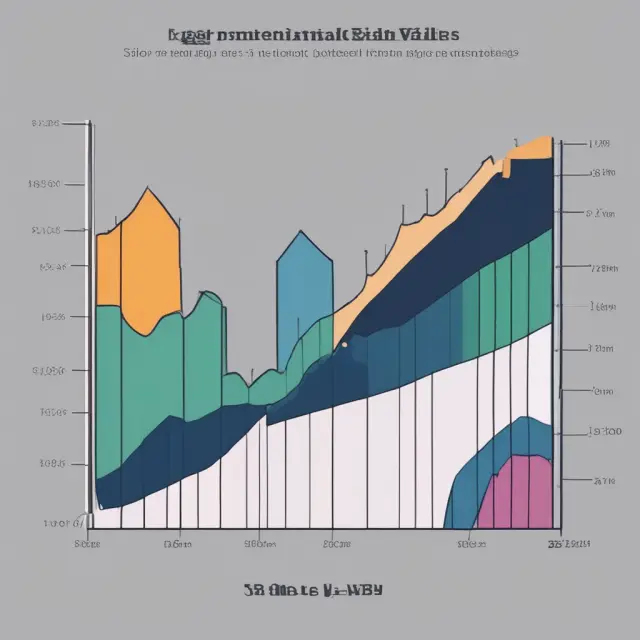
Logarithmic price scales, also known as log scales, are an essential tool for long-term price analysis in finance. They stand out due to their unique way of displaying data compared to the traditional linear price scale. The primary difference between these two types of scales lies in the manner they represent price changes (Bold Keyword: price changes).
In a logarithmic price scale, two equivalent price changes result in the same vertical distance on the chart. As an asset’s price increases, the differences between its price points decrease along the y-axis. This is because logarithmic scales depict percentage points instead of absolute dollar values (Bold Keyword: percentage points vs. dollar values). For instance, a 100% increase in price would have the same vertical spacing on a logarithmic scale regardless of whether that change occurs at $10 or $100.
The logarithmic price scale provides several advantages over its linear counterpart when analyzing asset prices, particularly for institutional investors:
- Enhanced perspective on large price changes: Logarithmic price scales offer a more significant visual representation of substantial percentage increases or decreases compared to linear price scales. This is crucial for understanding the magnitude and impact of these movements on an investment’s value.
- Improved visibility in volatile markets: In highly volatile asset classes, logarithmic price scales provide a clearer view of trends as they adjust prices based on the percentage change instead of absolute dollar values.
- Easier comparison across different time frames and assets: Logarithmic price scales make it simpler to compare price movements between various assets or periods with vastly different price ranges by focusing on percentage changes rather than absolute dollar differences.
In contrast, linear price scales display prices at equal intervals along the y-axis based on their actual dollar values. Linear charts can be helpful for examining less volatile assets since they allow easy visualization of the exact dollar difference between price levels. However, they are generally more suitable for smaller price ranges and may not provide an accurate representation when dealing with substantial percentage changes or highly volatile markets.
For example, let’s consider two hypothetical price scenarios:
- A stock initially priced at $50 that rises by 50% to $75 would show a smaller distance between the price points on a linear scale compared to a logarithmic scale. This might make it difficult for investors to fully comprehend the significance of the price increase and its impact on their portfolio.
- Alternatively, if we have an asset with an initial price of $100 that experiences a 50% decrease in value down to $50, linear scales can create misleading visuals by displaying small vertical distances between the prices, making it hard for investors to gauge the gravity of this decline.
By using logarithmic price scales, we ensure that all price changes are represented proportionally based on their percentage points, allowing us to evaluate the significance of the trends and movements more accurately. In summary, understanding how logarithmic price scales differ from linear is essential for institutional investors seeking to make informed investment decisions in a variety of market conditions.

Advantages and Disadvantages of Logarithmic Price Scales
Logarithmic price scales are an essential tool for understanding long-term price trends, providing valuable insights that are often difficult to discern using linear price scales. The primary advantage of logarithmic charts is their ability to compress large price movements while expanding smaller ones, making it easier to identify significant percentage changes. This feature becomes increasingly crucial as asset prices escalate, enabling investors and traders to maintain a clear perspective on the market’s dynamics.
By compressing large price fluctuations, these scales facilitate quick identification of essential support and resistance levels, important trends, and patterns that may not be immediately apparent in linear charts. However, this compression comes with a trade-off: smaller price changes become less visible. Thus, it’s recommended to use both logarithmic and linear price scales concurrently to capture the full picture of an investment or trading opportunity.
Additionally, logarithmic price scales minimize the impact of outliers, which can be crucial for investors focusing on long-term trends. For instance, in a volatile market with extreme price swings, logarithmic charts can help suppress noise, enabling a clearer understanding of underlying price movements and their implications.
However, it’s important to note that logarithmic price scales might not be suitable for all investment strategies or asset classes. For example, they may not effectively represent the performance of assets with limited volatility, as the percentage change between two prices might be negligible. Furthermore, traders and investors focusing on short-term opportunities may find logarithmic price scales less helpful due to their compressed representation of small price moves.
In summary, understanding the advantages and disadvantages of logarithmic price scales is crucial for institutional investors who want to make informed decisions based on accurate, long-term perspectives. By combining logarithmic and linear charts, investors can effectively visualize both large-scale trends and smaller price movements, ultimately enhancing their overall investment strategy and performance.
Logarithmic Price Scales vs. Percentage Change Charts
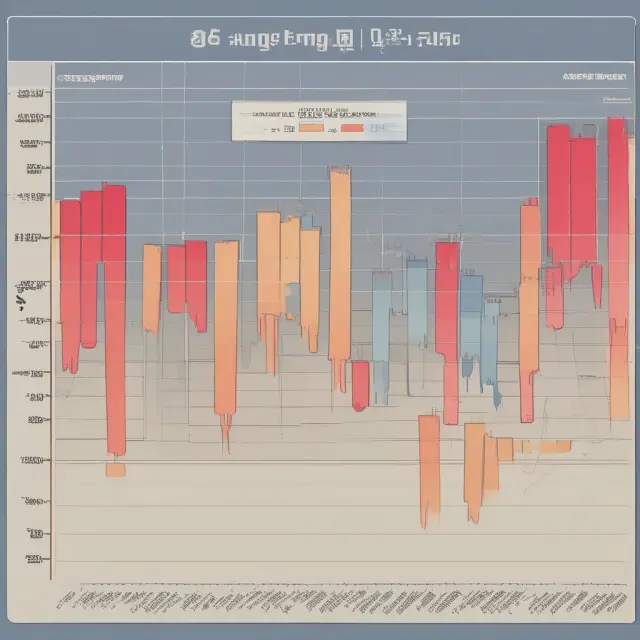
When it comes to analyzing financial instruments, charts play an essential role in visualizing price movements and understanding trends. Two popular types of charts that cater to different analytical approaches are logarithmic price scales and percentage change charts. In this section, we’ll delve into the comparison between these two charting methods and discuss their unique advantages and disadvantages.
Logarithmic Price Scales: A Recap
Logarithmic price scales, also known as log scales, represent price changes as a function of the base 10 logarithm. In simpler terms, this type of chart displays the percentage change in asset prices rather than the dollar increase or decrease. Assets with large price swings benefit significantly from using logarithmic price scales, as they provide a more accurate representation of percentage changes and help maintain consistent scale spacing.
Percentage Change Charts: A Closer Look
In contrast to logarithmic price scales, percentage change charts represent the difference between the current price and its preceding price expressed as a percentage. These charts are widely used by traders and investors to visualize the actual percentage gains or losses made over time. They can be particularly helpful when examining smaller price movements or less volatile assets, as they offer clearer insight into the price trend without distortion that may occur with logarithmic scales due to their compression of large price swings.
Comparing Logarithmic Price Scales and Percentage Change Charts: Key Differences
The primary distinction between these two chart types lies in their approach to representing price changes:
– Logarithmic price scales focus on percentage points, making larger price increases or decreases appear smaller visually but maintaining equal vertical spacing for equivalent percentage changes. This is particularly useful when dealing with assets that experience significant price swings.
– Percentage change charts provide a clear view of the actual percentage gain or loss made over time, focusing on the difference between the current price and its preceding price. They are more suitable for less volatile assets where smaller price movements can have greater significance.
Choosing Between Logarithmic Price Scales and Percentage Change Charts: Which One to Use?
Both logarithmic price scales and percentage change charts offer unique advantages in analyzing financial instruments depending on the investor’s goals and the nature of the asset being evaluated. Institutional investors, for instance, often employ a combination of both types of charts when assessing various investment opportunities:
– Logarithmic price scales provide valuable insights into long-term trends and significant price swings, helping investors understand the impact of large percentage moves on their portfolios. These charts are ideal for tracking the performance of assets in volatile markets or industries like technology, healthcare, or commodities.
– Percentage change charts, on the other hand, offer a more granular perspective on the price trend by focusing on the actual percentage gain or loss made over time. They can be helpful when evaluating short-term trading opportunities or less volatile assets such as bonds or blue-chip stocks where smaller price movements carry more significance.
In conclusion, understanding the differences between logarithmic price scales and percentage change charts is crucial for any investor looking to gain a comprehensive perspective on their investments. Both chart types have unique advantages and limitations and can be employed in various scenarios depending on the market conditions and analytical objectives. As an institutional investor, being able to utilize these powerful tools effectively can significantly improve your decision-making process and ultimately lead to more informed investment strategies.

How to Read Logarithmic Price Scales
Logarithmic price scales, also known as log scales or ratio scales, represent a unique perspective in financial charting. These scales are designed to display the percentage change of an asset’s price over time, making it easier for traders and investors to understand large price movements. In this section, we will explain how to read and interpret logarithmic price scales.
Logarithmic price scales condense the price data based on the percentage change, with the vertical space between two numbers representing an equal percentage increase or decrease. For example, if a stock’s price doubles from $10 to $20, the distance between these two prices will be equal to the distance between $40 and $80, which represent a 100% increase in both cases. This makes it easier to visualize significant price movements without being misled by the absolute dollar changes.
Comparatively, linear price scales represent the exact dollar change of an asset’s price over time. However, these scales can be problematic when dealing with volatile assets since small price changes can appear insignificant when displayed on a large scale. On a linear price chart, the y-axis represents equal increments in dollar amounts rather than percentage points. As a result, the space between two dollars becomes smaller as the asset’s price increases, making it more challenging to identify substantial percentage moves.
To read and interpret logarithmic price scales, follow these steps:
- Identify the base value: The starting point of your chart will serve as the base value, denoted by a horizontal line at the bottom of the y-axis. In this example, we’ll use $10 as the base value.
- Recognize the percentage increase or decrease: Every equal vertical space between numbers on the logarithmic price scale represents an equal percentage change in the asset’s price. For example, if a stock’s price increases by 50%, the distance between two adjacent prices will be equivalent to the distance between any other pair of prices that represent a 50% increase.
- Understand the condensed scale: As the base value increases, the space between each number on the y-axis decreases since percentage changes become smaller for larger absolute price levels. This can make it easier to recognize substantial price movements even when dealing with large numbers.
- Visualize significant trends: Logarithmic price scales offer an excellent tool for visualizing long-term price trends and identifying inflection points. Since they condense the data based on percentage changes, logarithmic charts provide a clearer view of important turning points in an asset’s price history.
In conclusion, understanding how to read and interpret logarithmic price scales is crucial for investors and traders who seek a more comprehensive perspective on their investments. By displaying percentage changes instead of absolute dollar values, logarithmic price scales can help you better understand the underlying dynamics of your financial instruments and make informed decisions based on meaningful trends and patterns.
Exploring the intricacies of finance and investment is a fascinating journey that requires patience, dedication, and a deep understanding of the market. By mastering logarithmic price scales, you’ll be one step closer to making informed financial decisions and staying ahead of the competition.
Disclaimer: This article is for educational purposes only and should not be considered as financial advice. Please consult with a financial professional before making any investment decisions.

Logarithmic Price Scales for Different Asset Classes
Logarithmic price scales offer a unique perspective when analyzing price movements across different asset classes, including stocks, bonds, indices, and currencies. By compressing the price range on the y-axis, logarithmic price scales become especially useful in capturing significant percentage changes while reducing visual clutter from smaller price shifts. Let’s examine how this plays out for each asset class:
1. Stocks: Logarithmic price scales are a popular choice when analyzing long-term stock price trends due to their ability to emphasize large gains or losses over time. They can make it easier to spot trends and identify critical support or resistance levels, as small changes in absolute dollars may not be as significant as the percentage change they represent.
2. Bonds: In the world of fixed-income securities, logarithmic price scales can help investors visualize the yield curve more effectively by focusing on percentage changes instead of dollar amounts. This is particularly important when analyzing long-term trends and interest rate cycles, as a small change in yield may not have a significant impact on absolute bond prices but can drastically alter overall returns.
3. Indices: When dealing with broad market indexes like the S&P 500 or Dow Jones Industrial Average, logarithmic price scales provide a bird’s-eye view of long-term trends and major turning points. By compressing the vertical scale, these charts can help investors understand the historical context of market movements and assess the relative importance of various price changes.
4. Currencies: Logarithmic price scales are essential for understanding exchange rate fluctuations between different currencies. Since currency markets can be highly volatile, a linear chart may become cluttered with small price shifts, making it difficult to identify major trends or movements. In contrast, logarithmic charts effectively display the percentage change in value for each currency pair, helping traders and investors stay on top of market developments.
When using logarithmic price scales for different asset classes, it’s important to note that they can sometimes distort short-term price movements, making them less suitable for day trading or intraday analysis. However, their benefits in terms of visualizing long-term trends and major shifts make them an indispensable tool for institutional investors seeking a more comprehensive understanding of financial markets.

Benefits of Using Logarithmic Price Scales for Institutional Investors
Institutional investors, such as pension funds, mutual funds, and hedge funds, require comprehensive analysis to make informed decisions about their portfolios. Logarithmic price scales offer several advantages that cater specifically to institutional investors:
1. Clear Visualization of Percentage Changes
Logarithmic price scales represent price movements in terms of percentage changes rather than dollar values. This format enables easy and instant comparison between assets, making it an essential tool for monitoring the overall performance of a portfolio.
2. Accurate Representation of Volatility
The logarithmic scale offers an accurate representation of price volatility, allowing investors to quickly identify trends and patterns that could be missed on linear charts. This becomes crucial when managing large portfolios with numerous assets spanning various industries and markets.
3. Better Suitability for High-Growth Assets
Logarithmic price scales are particularly beneficial for high-growth stocks since they provide a clearer perspective of the true magnitude of percentage gains or losses, helping investors to make informed decisions in the context of their portfolio strategy.
4. Comparison Across Multiple Time Frames
Logarithmic price scales enable easy comparison across multiple time frames. Institutional investors frequently need to evaluate different time periods when considering their investment strategies. Logarithmic charts provide an accurate representation of percentage gains or losses for each asset over any chosen period, making it easier to compare and contrast performance.
5. Identifying Trends in Volatile Markets
Logarithmic price scales can be invaluable for institutional investors dealing with volatile markets since they help to isolate trends from random market noise. This is critical when managing large sums of money, as a single misstep could significantly impact the overall portfolio performance.
6. Efficient Use of Resources
Logarithmic price scales offer a more efficient way to analyze and manage large datasets, allowing institutional investors to save time and resources when evaluating numerous assets. This is an essential factor for investment professionals who must process vast amounts of information daily.
In conclusion, logarithmic price scales provide several advantages for institutional investors, including accurate representation of percentage changes, clear visualization of volatility, suitability for high-growth assets, and efficient analysis across multiple time frames. By incorporating these charts into their investment strategies, institutional investors can make more informed decisions and gain a competitive edge in the ever-evolving financial landscape.

Drawbacks of Using Logarithmic Price Scales for Institutional Investors
While logarithmic price scales offer numerous advantages for institutional investors, they also present some drawbacks. It’s essential to be aware of these limitations and challenges in order to make informed investment decisions. One significant disadvantage of using logarithmic price scales is that it may lead to an underestimation of the actual price changes, making it difficult to assess the magnitude of certain moves. This can result in missing crucial opportunities or misinterpreting market trends. For instance, a small percentage change might appear insignificant on the chart, but in reality, it could have substantial implications for a particular investment strategy.
Another challenge faced by institutional investors when using logarithmic price scales is the potential for misinterpretation of the relationship between price movements and time. Due to their non-linear nature, these charts may not accurately represent the actual passage of time. This can complicate trend analysis and impact the effectiveness of certain investment strategies.
Moreover, the use of logarithmic price scales could potentially mask important information related to absolute prices or dollar amounts. For instance, if an institutional investor is looking for specific dollar thresholds as part of their investment strategy, they might find it challenging to accurately determine those levels on a logarithmic chart.
Despite these challenges, many institutional investors continue to use logarithmic price scales due to their ability to effectively illustrate percentage moves and long-term trends. It’s important for investors to be aware of both the advantages and disadvantages of different charting tools and choose the one that best fits their investment strategy and objectives.
To mitigate the challenges associated with logarithmic price scales, institutional investors can consider using additional data visualization techniques or tools, such as dual-axis charts or combining linear and logarithmic charts to gain a more comprehensive understanding of price movements and trends in their portfolios. By doing so, they will be well-equipped to make informed investment decisions based on accurate information and insights.

Logarithmic Price Scales in the Context of Trading and Technical Analysis
Understanding Logarithmic Price Scales in the realm of trading and technical analysis is crucial for making informed decisions when dealing with financial markets. By presenting price changes in terms of percentage points rather than dollar amounts, logarithmic price scales help investors identify trends more effectively. Unlike linear price scales, which focus on fixed dollar increments, logarithmic price scales enable users to evaluate the significance of price movements based on their relative size.
Logarithmic price scales are particularly valuable when dealing with highly volatile securities, such as stocks or currencies that undergo substantial price swings. They provide traders and investors with a more accurate representation of price changes over time, making it easier to recognize trends and identify potential entry or exit points in the market.
For instance, consider an investor examining a stock that has gone from $10 to $50 over several years. A linear price scale would display this progression with equal spacing between each dollar increment. However, due to the massive difference in absolute prices, the progression may not effectively illustrate the significant percentage change experienced by the investor.
A logarithmic price scale, on the other hand, would represent this same progression with an increasing condensed spacing between the numbers as the price increases. This presentation would correctly demonstrate that the stock’s price increase from $10 to $50 constitutes a 400% growth, making it easier for investors to visualize and appreciate the magnitude of the price movement.
Additionally, logarithmic price scales help users avoid potential misconceptions when interpreting charts. In cases where securities experience dramatic drops in price, linear price scales may present small movements between certain points on the chart as insignificant, even though they might represent substantial percentage declines. Logarithmic price scales resolve this issue by ensuring that all percentage changes, regardless of their absolute dollar value, are represented proportionately.
Logarithmic price scales also offer a distinct advantage when dealing with multiple time frames simultaneously. For traders and investors focusing on short-term trends as well as long-term patterns, logarithmic scales enable the visualization of both within the same chart without the need to switch between different scales. This multidimensional perspective is particularly valuable for recognizing correlations and identifying entry or exit points based on a combination of both short-term and long-term considerations.
Moreover, logarithmic price scales can be beneficial in understanding the relationship between various securities and markets. For example, comparing two stocks with vastly different price ranges using linear scales could lead to an unfair comparison. Logarithmic price scales, however, would enable a more accurate assessment of their respective percentage changes, allowing for a fairer evaluation of their performance.
Despite the numerous advantages of logarithmic price scales, it is essential to note that they may not be ideal for all types of financial analysis. For instance, investors focusing on specific dollar thresholds or target prices might find linear scales more suitable. In addition, novice traders and investors may find logarithmic price scales confusing initially due to their unique representation of data. Nonetheless, with proper understanding and practice, using logarithmic price scales can lead to better analysis and improved decision-making in the financial markets.

FAQs about Logarithmic Price Scales
Logarithmic price scales are a unique and effective tool for visualizing price movements in finance, particularly when dealing with large price ranges or highly volatile securities. Below, we answer some common questions and misconceptions regarding logarithmic price scales.
What Is the Difference Between Logarithmic Price Scales and Linear Price Scales?
Logarithmic price scales differ from linear price scales in that they represent price changes as a percentage rather than an absolute dollar value. The main advantage of using a logarithmic price scale is that it maintains equal spacing between price percentages, making it easier to visualize large and small price changes alike. In contrast, linear price scales have equal spacing between absolute dollar values.
Why Are Logarithmic Price Scales Used in Finance?
Logarithmic price scales are used primarily for long-term perspective analysis and highly volatile assets because they effectively compress the data and show significant percentage price movements with clear visual distinctions. They help to minimize the appearance of small, insignificant price fluctuations and provide a more accurate representation of substantial trends and shifts in the market.
How Do I Read Logarithmic Price Scales?
When reading logarithmic price scales, it’s essential to remember that each tick on the scale represents a specific percentage change, rather than a fixed dollar amount. To understand the actual dollar value associated with each tick, you can use the vertical axis, which is labeled with both the corresponding price level and its logarithmic scale value.
Are Logarithmic Price Scales Ideal for All Trading Situations?
Logarithmic price scales are an invaluable tool for institutional investors dealing with highly volatile securities or long-term perspective analysis, but they may not be suitable for all trading situations. For example, when focusing on short-term trades, where precise dollar values matter more than percentage changes, a linear price scale might be the better choice. Additionally, less volatile assets can often be adequately represented with a linear price scale as well.
Can I Use Logarithmic Price Scales for Different Asset Classes?
Yes, logarithmic price scales are applicable to various asset classes like stocks, bonds, indices, and currencies. The main advantage of using a logarithmic price scale is that it can help investors visualize the percentage changes in their chosen securities, providing a clear understanding of trends and price movements regardless of the specific asset class.
By answering these frequently asked questions, we hope to shed light on the versatility and utility of logarithmic price scales and how they can help institutional investors make informed investment decisions.
 Next entry · No. 2,975Mastering Logistics: Efficiently Managing the Supply Chain and Maximizing Business Success
See also
-
 No. 1,544
01 Oct 2024
24 min
Understanding the Fisher Transform Indicator: A Comprehensive Guide for Institutional Investors
Financial Data Analysis
No. 1,544
01 Oct 2024
24 min
Understanding the Fisher Transform Indicator: A Comprehensive Guide for Institutional Investors
Financial Data Analysis -
 No. 5,013
04 Aug 2025
17 min
Understanding T+1 (T+2, T+3): Settlement Dates and Their Impact on Investing
Finance Policy
No. 5,013
04 Aug 2025
17 min
Understanding T+1 (T+2, T+3): Settlement Dates and Their Impact on Investing
Finance Policy -
 No. 4,565
29 Jun 2025
21 min
Scalping: A High-Risk Trading Strategy for Profiting from Minor Price Changes
Finance Policy
No. 4,565
29 Jun 2025
21 min
Scalping: A High-Risk Trading Strategy for Profiting from Minor Price Changes
Finance Policy -
 No. 4,261
04 Jun 2025
22 min
Understanding Quotations: The Role of Asking Prices and Bid Prices in Financial Markets
Finance Policy
No. 4,261
04 Jun 2025
22 min
Understanding Quotations: The Role of Asking Prices and Bid Prices in Financial Markets
Finance Policy -
 No. 4,151
26 May 2025
19 min
Understanding Pullbacks: Identifying and Trading Temporary Market Reversals
Markets
No. 4,151
26 May 2025
19 min
Understanding Pullbacks: Identifying and Trading Temporary Market Reversals
Markets -
 No. 3,719
21 Apr 2025
21 min
Understanding and Leveraging the Opening Range in Trading
Business Finance
No. 3,719
21 Apr 2025
21 min
Understanding and Leveraging the Opening Range in Trading
Business Finance