Understanding Market Risk Premium: Definition, Calculation, Differences with Equity Risk Premium, and Historical Trends

Explore market risk premium: definition, calculation, differences with equity risk premium, historical trends, & modern portfolio theory.
Introduction to Market Risk Premium
The market risk premium (MRP) plays a significant role in the financial world, especially within the realm of modern portfolio theory and investment analysis. Defined as the difference between the expected return on a market portfolio and the risk-free rate, MRP represents the extra compensation investors require for assuming market risks. As the foundation of important models such as capital asset pricing model (CAPM) and discounted cash flow (DCF), understanding market risk premium is essential for building well-informed investment strategies.
Investors aim to maximize their returns while minimizing risk, making an accurate estimation of MRP crucial in determining the required rate of return for various assets. Let us delve deeper into the concept of market risk premium and discuss its relevance to finance and modern portfolio theory.
Understanding Market Risk Premium
The market risk premium can be thought of as the added reward for bearing market risks, which encompasses a wide variety of asset classes such as stocks, bonds, real estate, and other investments. To illustrate this concept more clearly, it’s important to contrast the market risk premium with its narrower counterpart – the equity risk premium (ERP).
While market risk premium is a broader measure that accounts for the entirety of investable assets, ERP focuses only on the excess returns generated by stocks over the risk-free rate. The distinction between these two concepts becomes apparent when we consider their calculations and applications.
Calculating Market Risk Premium
The market risk premium is determined by subtracting the risk-free rate from the expected return of a broad market index, such as the S&P 500 or Dow Jones Industrial Average. This difference offers investors insight into the compensation they expect to receive for accepting overall market volatility and uncertainty. A higher market risk premium implies greater potential returns but also increased risk exposure.
The risk-free rate, a critical component of the market risk premium calculation, is typically represented by a U.S. Treasury bill or another low-risk investment with minimal to no default risk. The yield on this asset serves as a benchmark against which other investments’ returns are compared when determining the MRP.
In conclusion, understanding market risk premium is vital for investors seeking to create well-diversified portfolios that optimize returns while minimizing risks. By grasping the significance of this concept and its role in modern portfolio theory, you can make informed decisions about asset allocation and investment strategies.
Upcoming sections will delve further into the components, calculation methods, historical trends, differences between market risk premium and equity risk premium, and the importance of selecting an appropriate risk-free rate for accurate MRP estimations. Stay tuned for more insightful information on this essential financial topic!

Understanding the Concept of Market Risk Premium
The term “market risk premium” (MRP) is used to denote the difference between the anticipated returns on a market portfolio and the risk-free rate. The MRP is essential in finance as it offers insight into investors’ expectations regarding potential returns and risks. It forms the foundation of the capital asset pricing model (CAPM), a significant component of modern portfolio theory (MPT) and discounted cash flow (DCF) valuation.
The market risk premium can be defined as the additional return required by investors for accepting increased market volatility and uncertainty, compared to the risk-free rate. In simpler terms, it represents the compensation investors demand when taking on risks beyond the risk associated with an investment considered risk-free.
For illustration purposes, let us consider the relationship between returns from a well-diversified asset portfolio and treasury bond yields. The market risk premium is influenced by historical returns, required returns, and expected returns. While the historical market risk premium remains consistent for all investors, the required and expected premiums vary based on individual risk tolerance and investment styles.
Investors expect a higher return to offset any potential losses or risks incurred in their investments. A risk-free rate refers to a theoretical interest rate on an investment with zero risks. In practice, long-term yields from U.S. Treasuries have often served as a proxy for the risk-free rate due to their low default risk and relatively low yields.
Equity market returns can be based on anticipated returns derived from broad benchmark indices like the Standard & Poor’s 500 (S&P 500) or the Dow Jones Industrial Average (DJIA). Real equity returns vary as they depend on the operational performance of underlying businesses and fluctuate with economic maturity and cycles. Historically, equity market returns have been estimated to deliver an annual potential return of around 8%, although this can differ based on specific time frames and market conditions.
To calculate the MRP, one must subtract the risk-free rate from the expected equity market return: Market Risk Premium = Expected Equity Market Return – Risk-Free Rate. This quantitative measure offers insight into investor compensation for assumed risks and helps determine individual asset valuations using models such as CAPM or DCF.
It’s essential to recognize that the MRP is distinct from the equity risk premium (ERP). The ERP only considers the excess returns of stocks over the risk-free rate, while the MRP encompasses all investable assets and is generally larger due to its broader scope.

Components of Market Risk Premium
The market risk premium (MRP) plays a significant role in determining the expected returns on various investment portfolios, as it represents the additional compensation investors demand to account for market-related risks. Comprised of historical, required, and anticipated returns, understanding these components is crucial for assessing investment opportunities and managing risk.
Historical Market Risk Premium: Measuring Past Returns
The historical MRP reflects the difference between the average annual return on an asset portfolio and a benchmark risk-free rate. For instance, considering a period of 30 or more years is common to capture fluctuations in economic conditions, interest rates, and market trends. A widely used measure for the U.S. is based on the performance of the S&P 500 index, which has historically delivered annual returns of approximately 10%, with historical risk premiums ranging from around 3% to 12%.
Required Market Risk Premium: Determining Expected Returns
The required market risk premium is the compensation investors expect for taking on additional risks beyond the risk-free rate. This value can be influenced by an investor’s risk tolerance, investment horizon, and time preference. A more conservative investor may demand a higher risk premium to compensate for their aversion to risk and lower potential returns in the short term. Conversely, an aggressive investor might require a smaller market risk premium as they are willing to accept greater risks for potentially larger returns over a longer investment horizon.
Expected Market Risk Premium: Forecasting Future Returns
Anticipated market risk premiums can be derived from economic and financial forecasts, including predictions of interest rates, inflation rates, and GDP growth. These estimates may change frequently based on the latest data and market conditions. Investors seeking to achieve a target retirement date or income objective can use expected market risk premia to determine an appropriate asset allocation that balances their risk tolerance, investment horizon, and financial goals.
Understanding these components of market risk premiums enables investors to make informed decisions about their portfolio construction, manage risk, and potentially enhance long-term returns.

Calculation of Market Risk Premium
The calculation of the market risk premium (MRP) is based on the difference between the expected returns from a broad-based market portfolio and the risk-free rate. This premium provides investors with a quantitative measurement of the compensation required to assume additional investment risks. The MRP is the foundation for several financial models such as the Capital Asset Pricing Model (CAPM) and Discounted Cash Flows (DCF).
To determine the market risk premium, begin by establishing the expected return on a hypothetical portfolio representing the entire stock market. For instance, you can use benchmark indices such as the S&P 500 or Dow Jones Industrial Average. Historical data indicates that this index’s average annual returns have been around 8-10% since its inception.
Next, calculate the risk-free rate. This is the interest rate on an investment considered free of risk, typically represented by U.S. Treasury bonds or bills. Long-term yields on such securities serve as a reasonable proxy for the risk-free rate due to their low default risk. The historical average yield on 30-day U.S. Treasury bills has been around 5% over time.
To find the market risk premium, subtract the risk-free rate from the expected returns of the market portfolio: Expected Market Return (Market Portfolio) – Risk-Free Rate = Market Risk Premium
Substituting the numbers from our example: 8% (expected return on S&P 500) – 5% (risk-free rate) = 3% (market risk premium)
The market risk premium is a crucial concept in modern finance, offering investors insight into their expected rewards for taking on extra risk. By understanding the relationship between the market risk premium and various investment models, investors can create well-diversified portfolios that cater to their risk tolerance and financial objectives.
Stay tuned as we further explore the nuances of market risk premium in the following sections: differences between market risk premium and equity risk premium, historical trends, and its importance in modern portfolio theory.

Difference Between Market Risk Premium and Equity Risk Premium
The market risk premium (MRP) and equity risk premium (ERP) are two essential concepts in finance, both representing additional returns that investors demand based on the level of risk they’re willing to assume. However, it is crucial to recognize their differences in scope and application. Market risk premium refers to the extra return demanded by market participants for taking risks with a portfolio consisting of various assets like stocks, bonds, real estate, and commodities. In contrast, equity risk premium narrows down its focus on the excess returns of equities over a risk-free investment, such as Treasury bills or bonds.
The primary distinction lies in their scope – market risk premium is a broader measure encompassing the entire universe of investable assets, while equity risk premium exclusively considers stocks and stock markets. As a result, the equity risk premium tends to be larger due to the inherently higher volatility of equities compared to other asset classes.
To illustrate this difference, consider an example where the market risk premium is estimated at 4%, and the equity risk premium is 5%. This indicates that investors are demanding a higher return for taking on the added risk in stocks than the overall market portfolio.
Understanding historical trends of these premiums can provide valuable insights into investment opportunities and risks. According to research by Ibbotson Associates, from 1926 to 2014, the U.S. stock market exhibited a compounded annual return of 10.5%, whereas the risk-free rate was around 5.1%. This results in an equity risk premium of approximately 5.4% (equity return minus the risk-free rate). However, it is essential to remember that historical averages can be misleading and should not serve as the sole determinant for investment decisions.
In summary, market risk premium and equity risk premium are interrelated but distinct concepts in finance. Market risk premium serves as a broader measure of risk compensation across the entire universe of investable assets, while equity risk premium focuses specifically on stocks. Both have their relevance to investors and play crucial roles in modern portfolio theory, capital asset pricing model, and discounted cash flows valuation methods. Understanding these concepts can help investors make informed decisions and effectively manage their risks and returns.
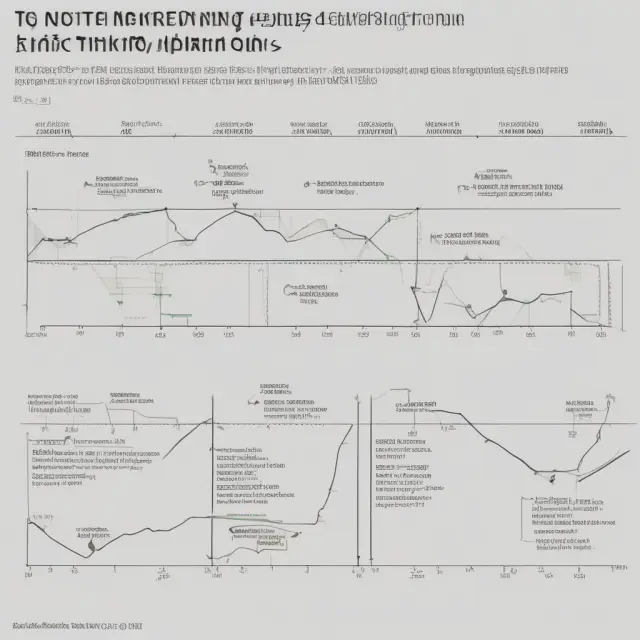
Historical Market Risk Premium: Trends and Fluctuations
The historical market risk premium (MRP) has been an essential aspect of finance since its inception. MRP refers to the difference between the expected return on a broad market portfolio, such as the S&P 500 or the Dow Jones Industrial Average, and a risk-free rate, typically represented by U.S. Treasuries. This section discusses historical trends, estimations, and fluctuations in the MRP.
Historical Market Risk Premium Estimates
The historical market risk premium (MRP) estimates vary significantly based on different sources. For instance, conventional wisdom suggests that long-term U.S. equity returns have averaged around 8% annually since the early 1900s. This estimate is based on data from the Ibbotson SBBI database and is commonly used as a benchmark in finance. In contrast, some research indicates that historical MRP estimates range between 3% and 12%. For example, the Global Financial Data (GFD) database shows an average annual return of approximately 5.8% for U.S. stocks from 1871 to 2019.
Trends in Market Risk Premium Over Time
Historically, the MRP has exhibited considerable volatility over time. The S&P 500 compounded annual growth rate between 1926 and 2014 was 10.5%, while the 30-day Treasury bill compounded at a much lower rate of 5.1%. This indicates an average historical MRP of approximately 5.4% based on these parameters. However, it is important to note that this historical MRP estimate may not be indicative of future expectations due to changing market conditions and investor behaviors.
Factors Influencing Market Risk Premium
Numerous factors have influenced the historical trends and fluctuations in the MRP over time. Some of these factors include changes in interest rates, economic conditions, inflation, geopolitical events, and investor risk tolerance. For example, during periods of high inflation or uncertainty, investors may demand higher returns to compensate for the increased risks associated with stocks. Conversely, when confidence in the economy and financial markets is high, the required market risk premium may decrease.
Conclusion: The historical market risk premium plays a crucial role in understanding the relationship between expected returns on various asset classes and risk-free rates. Although historical MRP estimates vary, they provide valuable insights into long-term investment trends and expectations. Investors can use this information to inform their investment strategies, particularly when considering asset allocation or evaluating potential risks and rewards. Understanding these historical trends and fluctuations can also help investors adjust their portfolio management practices in response to changing market conditions.

Risk-Free Rate Selection for Market Risk Premium Calculation
To calculate market risk premium (MRP), it is essential to determine a reliable risk-free rate to subtract from expected equity market returns. The choice of the risk-free rate significantly influences MRP calculations, as its selection can differ depending on asset classes and individual investor preferences.
Traditionally, long-term yields on U.S. Treasuries are considered the benchmark for a risk-free rate because they have a low default risk and historically have offered relatively low returns due to their assumed reliability. For instance, between 1926 and 2014, the S&P 500 exhibited a compounded annual rate of return of 10.5%, while the 30-day Treasury bill compounded at 5.1%. This indicates a market risk premium of 5.4% based on these parameters. However, in contemporary times, some investors might argue that short-term U.S. Treasuries are not entirely risk-free due to inflation risks and other market factors.
Another potential alternative for the risk-free rate is the inflation-indexed U.S. Treasury Inflation-Protected Securities (TIPS), which offer protection against inflation but have their unique set of challenges, such as tax implications and liquidity issues. TIPS might not be suitable for everyone; however, they could serve as a viable risk-free rate option in specific scenarios.
Investors also need to consider that the choice of the risk-free rate depends on their personal risk tolerance and investment style. For instance, an aggressive investor with a high risk appetite may prefer to use the returns on small-cap stocks or emerging markets as a proxy for the risk-free rate instead of U.S. Treasuries. Conversely, a more conservative investor might select a low-risk asset class, like long-term government bonds or certificates of deposit (CDs).
In summary, when calculating market risk premium, carefully selecting an appropriate risk-free rate is vital to ensure accurate and meaningful results. While historically, U.S. Treasuries have often been used as the standard choice, considering alternative options based on individual circumstances and preferences is essential.

Importance of Market Risk Premium in Modern Portfolio Theory
The market risk premium plays a pivotal role in modern portfolio theory (MPT), particularly when it comes to measuring risk and evaluating investment strategies. It is the foundation upon which various financial models, such as the Capital Asset Pricing Model (CAPM) and Discounted Cash Flow (DCF) valuation methods, are built.
In a nutshell, market risk premium represents the difference between the expected return on a well-diversified portfolio of assets and the risk-free rate of return. It is quantified as the slope of the security market line (SML), which is an essential graphical representation of the CAPM model. By examining the market risk premium, investors can determine the required return on various securities based on their specific levels of risk.
The importance of market risk premium in modern portfolio theory stems from its ability to help investors make informed decisions when constructing a well-diversified and efficient investment portfolio. This is crucial for minimizing overall portfolio risk, maximizing returns, and achieving long-term financial goals.
For instance, CAPM, a widely used financial model in finance, assumes that an investor’s required rate of return on a stock can be calculated by adding the market risk premium to the risk-free rate. This formula helps investors determine the minimum acceptable rate of return for a given level of risk, allowing them to evaluate investments objectively and make more informed decisions.
Similarly, in the context of DCF valuation models, the market risk premium is used as the discount rate when estimating future cash flows from an investment. This discount rate reflects the additional return investors demand for taking on the added risks associated with that specific investment opportunity.
In summary, the market risk premium holds immense importance in modern portfolio theory by serving as a crucial input to various financial models and investment evaluation frameworks. Understanding this concept is essential for investors seeking to construct well-diversified portfolios, minimize risk, and maximize returns over the long term.

Market Risk Premium and Investor Behavior
Understanding how investors perceive and respond to market risk is crucial when evaluating the concept of market risk premium. Market risk, also referred to as systematic risk or non-diversifiable risk, reflects the uncertainty associated with a portfolio’s returns in response to economic factors that impact the overall market. Market risk premium is influenced by several factors including investor behavior, risk tolerance, and investment styles.
Investor Behavior
The relationship between investors’ perception of risk and their investment decisions plays an essential role in determining market risk premium. For instance, a conservative investor who seeks stable returns might accept a lower market risk premium to secure a safer investment. Conversely, an aggressive investor looking for high yields might be willing to assume a larger market risk premium. These preferences ultimately influence the supply and demand dynamics for various securities in the market, resulting in varying market risk premiums.
Risk Tolerance
Risk tolerance refers to an individual’s ability and willingness to withstand losses or volatility in their portfolio. High-risk investors have a higher capacity to accept larger market risk premiums as they anticipate potentially greater returns from their investments. In contrast, low-risk investors prefer lower market risk premiums due to their lower tolerance for potential losses.
Investment Styles
Different investment styles also shape the market risk premium landscape. For example, value investors aim to buy stocks at a discount and hold them for the long term. This approach may call for a higher market risk premium, as these investors are willing to accept short-term volatility in anticipation of longer-term gains. Conversely, growth investors focus on capital appreciation by investing in companies with above-average growth potential. Their tolerance for market risk premiums might be influenced by the perceived volatility and uncertainty associated with their investment style.
In conclusion, investor behavior, risk tolerance, and investment styles are integral components that impact the market risk premium. As investors’ preferences and expectations change, so too does the market risk premium, making it a dynamic concept in finance. The market risk premium is not only essential for understanding portfolio performance but also plays a significant role in modern portfolio theory and risk management strategies.

FAQs about Market Risk Premium
What exactly does the term “market risk premium” mean?
The market risk premium (MRP) is the difference between the expected return on a broad, diversified portfolio of financial assets and the risk-free rate, which represents an investment with no risk. It measures the compensation investors demand for assuming the overall risk of investing in the market.
Why is the market risk premium important?
The market risk premium plays a significant role in modern finance theories like Modern Portfolio Theory (MPT) and Capital Asset Pricing Model (CAPM). By providing an estimate of the expected excess returns investors require for taking on overall market risk, it’s essential for understanding various investment strategies and asset class valuations.
How is the market risk premium calculated?
The MRP can be calculated by subtracting the risk-free rate from the expected return of a broad market portfolio like the S&P 500 index or the Dow Jones Industrial Average (DJIA). This calculation provides insight into the average risk compensation investors demand in various economic conditions.
What is the difference between market risk premium and equity risk premium?
Market risk premium (MRP) represents the additional returns above the risk-free rate that investors require for taking on overall market risk, while Equity Risk Premium (ERP) is a subset of MRP and focuses on stocks’ excess returns over the risk-free rate. ERP is always a component of MRP, but not all of MRP can be attributed to equities alone.
How does historical data impact market risk premium?
Historical data influences market risk premium calculations by providing insights into past trends and fluctuations in risk compensation levels. By examining the relationship between historical returns on broad market indices and risk-free rates, investors can make informed decisions about their investment strategies and expectations for future performance.
What is a typical market risk premium over time?
Historical market risk premium estimates have ranged from as low as 3% to as high as 12%. However, in recent years, it has hovered around 5.5%. It’s important to remember that these figures should not be taken as definitive, as the market risk premium is subject to changes based on economic conditions and investor sentiment.
What rate is used for the risk-free rate when calculating the market risk premium?
Typically, long-term yields on U.S. Treasuries are used as a proxy for the risk-free rate due to their low default risk and relatively low yields. However, it’s essential to remember that the choice of risk-free rate can impact MRP calculations and may vary based on individual investor preferences and investment horizons.
How does market risk premium influence portfolio management?
The market risk premium is a critical factor in portfolio management since it impacts an investor’s overall expectations for returns when considering various asset classes and their corresponding risk levels. By understanding the historical and expected MRP, investors can make informed decisions about asset allocation and diversification strategies.
How does market risk premium relate to Modern Portfolio Theory (MPT)?
Modern Portfolio Theory (MPT) is a framework for constructing optimal investment portfolios based on risk and return. Market Risk Premium plays a crucial role in MPT by providing an estimate of the expected excess returns investors require for taking on overall market risk. This, in turn, helps investors determine their asset allocation strategies while minimizing portfolio volatility.
 Next entry · No. 3,120Market Saturation: Understanding and Overcoming a Challenging Market Condition in Finance and Investment
See also
-
 No. 623
09 May 2024
17 min
Understanding Capital Asset Pricing Model (CAPM): Formula, Uses, Limitations, and FAQ
Financial Tools
No. 623
09 May 2024
17 min
Understanding Capital Asset Pricing Model (CAPM): Formula, Uses, Limitations, and FAQ
Financial Tools -
 No. 4,681
08 Jul 2025
17 min
Understanding the Security Market Line: A Powerful Tool for Institutional Investors
Business Finance
No. 4,681
08 Jul 2025
17 min
Understanding the Security Market Line: A Powerful Tool for Institutional Investors
Business Finance -
 No. 4,490
22 Jun 2025
22 min
Rethinking Portfolio Allocation with Risk Parity: Advanced Investment Strategies for Institutional and Professional Investors
Business Finance
No. 4,490
22 Jun 2025
22 min
Rethinking Portfolio Allocation with Risk Parity: Advanced Investment Strategies for Institutional and Professional Investors
Business Finance -
 No. 3,092
28 Feb 2025
20 min
Understanding a Market Portfolio in Finance and Investment: From Theory to Practice
Business Finance
No. 3,092
28 Feb 2025
20 min
Understanding a Market Portfolio in Finance and Investment: From Theory to Practice
Business Finance -
 No. 1,378
07 Sep 2024
20 min
Understanding Excess Returns: Calculating Alpha, Beta and Sharpe Ratio
Business Finance
No. 1,378
07 Sep 2024
20 min
Understanding Excess Returns: Calculating Alpha, Beta and Sharpe Ratio
Business Finance -
 No. 4,497
23 Jun 2025
19 min
Understanding Risk Premium: Compensation for Investment Risks in Finance and Investments
Investments
No. 4,497
23 Jun 2025
19 min
Understanding Risk Premium: Compensation for Investment Risks in Finance and Investments
Investments