Understanding Mastercard: An In-Depth Look into the Global Payments Processing Giant

Mastercard is a global payments technology company whose network routes card and digital payments between banks, merchants and cardholders. It does not issue cards, extend credit or set cardholder interest rates; banks do that, while Mastercard earns volume- and transaction-based fees, totaling $32.8 billion of net revenue in 2025.
Introduction to Mastercard: The Second Largest Payment Processor
Mastercard is the second-largest payments network globally, trailing only Visa. This New York-based company facilitates transactions between Mastercard account holders and merchants using its proprietary global payments network. The Mastercard brand is accepted at millions of locations worldwide for various types of payment cards: credit, debit, or prepaid.
Mastercard’s Business Model: A Focus on Partnerships and Network Processing
At the core of Mastercard’s business model lies its role as a network processor. The company doesn’t issue cards, extend credit, or determine fees charged to cardholders by issuers or acquirers. Instead, it focuses on partnering with financial institutions to offer Mastercard-branded payment cards under their brand. This arrangement is beneficial for both parties: the issuer gains access to Mastercard’s extensive network, while Mastercard earns revenue from fees charged to issuers based on each card’s gross dollar volume (GDV).
Types of Mastercard Cards: Understanding Credit, Debit, and Prepaid Offerings
Mastercard offers a diverse range of payment cards. These include credit cards that offer rewards points or cash back, debit cards linked to checking accounts, and prepaid cards with limited funds loaded on them. Each card type has its unique advantages and fees associated with its usage.
Understanding the Role of Financial Institutions: Issuers in Mastercard’s Business Model
Mastercard does not issue cards directly but works closely with financial institutions to provide them with the technology, tools, and branding necessary to offer their customers Mastercard-branded payment cards. In return, these issuers pay Mastercard fees based on GDV for using its network. The revenue sharing model ensures a win-win situation for both parties: Mastercard generates income while enabling financial institutions to expand their card offerings to consumers.
Stay tuned for the upcoming sections of this article where we explore Mastercard’s transaction processing and fees, merchant discounts and fees, and the company’s role in the global payments industry!
Mastercard’s Core Business: Payment Network Processing
Mastercard is a leading global payments network processing company, serving as the second-largest competitor to Visa. The Mastercard brand is accepted worldwide at numerous merchants and financial institutions. However, unlike traditional banks, Mastercard itself doesn’t issue cards, extend credit, or set interest rates for cardholders. Instead, it partners with banks and financial institutions (issuers) to facilitate payment transactions on its network using the Mastercard logo. The company generates revenue primarily from these issuers based on their cards’ gross dollar volume.
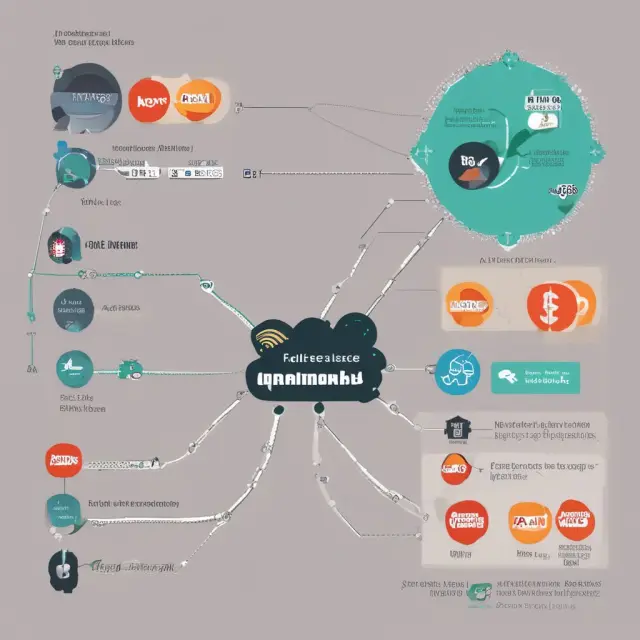
To begin understanding Mastercard’s business model, let’s delve deeper into its core function: payment network processing. As a global payments processing network, Mastercard connects cardholders and merchants through partnerships with financial institutions and facilitates secure and efficient transactions. This relationship involves five main entities: the cardholder, merchant, issuer (financial institution), acquirer (merchant’s bank), and Mastercard as the network processor.
When a consumer makes a purchase using their Mastercard, the transaction begins with authorization by their financial institution (issuer). Once authorized, the payment is processed through Mastercard’s secure network and routed to the merchant’s acquiring bank for settlement. The issuer pays an interchange fee to Mastercard based on the agreed-upon percentage of the transaction amount. This fee structure allows merchants to accept Mastercard cards while managing their risks and expenses efficiently.
Mastercard plays a significant role in driving innovation within the payments industry, investing in technology that enhances security, speed, and convenience for consumers and merchants alike. The company’s commitment to digital transformation is evident through its focus on contactless payments, mobile wallets, and secure data encryption. By enabling seamless transactions across various platforms and devices, Mastercard positions itself as an indispensable partner for financial institutions and merchants worldwide.
With the growth of e-commerce and increasing consumer expectations for contactless and digital payment solutions, Mastercard’s emphasis on technology will be crucial in maintaining its competitive edge and expanding its global reach. As a result, understanding the core business model of Mastercard – payment network processing – offers valuable insights into this global payments processing giant and the evolving landscape of electronic transactions.

Types of Mastercard Cards: Understanding Credit, Debit, and Prepaid
Mastercard is primarily known as a payment network processor and partners with financial institutions worldwide to offer its branded cards. The three main types of Mastercard cards include credit, debit, and prepaid cards. Each type offers distinct benefits to the cardholder and operates under various terms and conditions set by issuing financial institutions.
Credit Cards
Mastercard-branded credit cards are issued by financial institutions in partnership with Mastercard. These cards allow account holders a revolving line of credit extended by the issuer, enabling them to charge purchases beyond their available cash balance and pay back the balance periodically with interest. Credit cardholders receive various rewards and incentives, such as cashback or travel points, based on usage patterns. Interest rates, annual fees, and other terms are determined by the issuing financial institution.
Debit Cards
Mastercard-branded debit cards link to a checking account. These cards enable cardholders to make purchases up to their available balance without incurring interest charges or debt. Debit cards can be used just like credit cards for online and offline transactions. Some issuers offer additional features such as ATM withdrawal access and overdraft protection.
Prepaid Cards
Mastercard-branded prepaid cards are loaded with funds prior to usage. These cards function similarly to debit cards, but without a connection to an underlying checking account. Prepaid cardholders cannot spend more than the available balance on their card. They can add money via various methods like cash or direct deposit and are useful for those who prefer not to use traditional banking services.
When partnering with a financial institution for issuance, Mastercard does not determine fees or terms for these cards but relies on the issuer for such decisions. To attract consumers, financial institutions offer features tailored to their target markets. For instance, credit cardholders may enjoy no annual fees, rewards points, cashback, and 0% introductory rates, while debit and prepaid cardholders might appreciate lower fees or access to exclusive benefits.
In conclusion, the Mastercard network processes payments for various types of cards like credit, debit, and prepaid, generating revenue through fees charged to issuers based on gross dollar volume. By understanding these different card offerings, we can better grasp the intricacies of Mastercard’s business model and its role in the global payments industry.

Partnership with Financial Institutions: The Role of Issuers
Mastercard is a global payments processor that partners with various financial institutions to issue Mastercard-branded payment cards. These financial institutions act as the issuers, and they are responsible for underwriting and issuing the credit, debit, or prepaid cards featuring the Mastercard logo. This arrangement is referred to as an open-loop system since these cards can be used universally wherever the Mastercard brand is accepted.
The collaboration between Mastercard and financial institutions forms a critical aspect of their business model. The following discussion delves deeper into how this partnership functions, allowing us to better comprehend the role of issuers within the Mastercard ecosystem.
1. Issuer Responsibilities:
When a financial institution partners with Mastercard to offer its customers cards bearing the Mastercard logo, it becomes the card issuer. The primary responsibilities of the issuer include:
a. Determining and setting the terms and benefits for cardholders, such as rewards programs, interest rates, annual fees, or cashback offers.
b. Issuing physical and digital cards to customers.
c. Underwriting the application process and approving or declining new applications based on creditworthiness.
2. Mastercard’s Role:
Mastercard acts as a network processor, which means it manages transactions between cardholders and merchants via its global payments network. As a result of this partnership, issuers must pay Mastercard various fees for using the processing services. The primary fee types are:
a. Switching Fees: A fee charged to the issuer whenever a transaction is initiated (i.e., card authorization).
b. Interchange Fees: Negotiated between the issuer and acquiring bank, these fees vary depending on the type of card, merchant agreement terms, and other factors.
3. Issuer-Acquirer Agreements:
The relationship between an issuer and an acquirer is crucial to the success of Mastercard transactions. Acquiring banks are responsible for enabling merchants to accept electronic payments via the Mastercard network. For this service, the acquirer charges a merchant discount fee on each transaction, which includes both the interchange fee (paid to the issuer) and additional fees such as transaction processing costs.
The issuer-acquiring agreement outlines the specifics of these fees, with the issuer paying Mastercard a percentage of the gross dollar volume for every transaction processed through their cards. This payment structure incentivizes issuers to minimize customer defaults on credit cards and encourage responsible usage while maximizing transactions to generate more revenue for Mastercard.
By fostering partnerships between financial institutions, Mastercard can expand its reach globally, enabling the acceptance of its branded cards in numerous countries and catering to diverse customer segments. In turn, issuers benefit from access to Mastercard’s extensive network, enhancing their own offerings to attract and retain customers.
In conclusion, the partnership between Mastercard and financial institutions plays a pivotal role in facilitating payments processing globally. By understanding the role of issuers within this ecosystem, we can better appreciate the significance and intricacies of how the Mastercard business operates.

Mastercard’s Revenue Model: Gross Dollar Volume Fees
As the second-largest payment processor globally, Mastercard generates significant revenue through its core business of network processing. The company primarily earns revenue by charging issuers a fee based on the gross dollar volume (GDV) processed through their Mastercard cards. Let’s delve deeper into this crucial aspect of Mastercard’s operations.
Mastercard partners with financial institutions, which issue Mastercard-branded payment cards exclusively using its network. The company’s primary source of revenue comes from fees it charges issuers based on each card’s GDV. When a consumer uses their Mastercard to make a purchase, the funds are routed from their bank to the merchant’s bank account. The merchant pays the issuer a fee for this transaction, known as the merchant discount. Mastercard then charges the issuer a fee based on the transaction’s GDV. This fee is calculated as a percentage of the total GDV and represents the majority of the revenue generated by Mastercard in its card business.
However, there are additional fees involved in the transaction process. Acquiring banks facilitate the acceptance of electronic payments on behalf of merchants within the Mastercard network. They pay Mastercard interchange fees negotiated with issuers for each transaction processed through their merchants. These interchange fees are determined by various factors such as card type, transaction size, and merchant category codes.
Mastercard may also charge issuers a switching fee at the time of a card authorization, though this is typically a smaller revenue stream for the company compared to GDV fees. This fee is paid when an issuer switches from one payment network (such as Visa) to another (like Mastercard) in offering cards to its customers.
In summary, Mastercard generates most of its revenue through fees charged to issuers based on their cards’ GDV. Acquiring banks pay interchange fees for processing transactions on behalf of merchants within the network. Mastercard also receives smaller fees from issuers when they switch networks or when a card authorization occurs. These fees collectively contribute to Mastercard’s substantial earnings in the payments industry.

Transaction Processing and Fees: A Closer Look
Mastercard’s primary source of revenue comes from gross dollar volume (GDV) fees paid by financial institutions for each card transaction processed on their Mastercard network. This revenue model allows Mastercard to maintain its global payments network, invest in technology, and provide essential services to issuers and merchants alike. However, understanding the specifics of how Mastercard generates these fees and the entities involved can be a complex process.
In most transactions, five main parties are involved: cardholders, merchants, acquiring banks, issuing banks, and Mastercard as the network processor. The transaction process begins when a cardholder presents their Mastercard to make a purchase at a merchant location or online. The merchant then sends the transaction details to their respective acquiring bank for processing. The acquiring bank forwards this information to the issuer, which holds the account associated with the cardholder’s Mastercard.
Mastercard acts as the intermediary between all parties involved and processes the transaction by validating the card information and authorizing or denying the transaction based on the available funds in the cardholder’s account. Once a transaction is authorized, funds are transferred from the issuer to the acquiring bank on behalf of the merchant.
Merchants typically pay a fee for each transaction known as the merchant discount rate. This fee covers various costs related to processing transactions, including interchange fees paid to Mastercard. Interchange fees are essentially revenue sharing agreements between the issuer and acquirer, and they can vary based on card type, merchant category code, and other factors.
The majority of Mastercard’s revenue comes from these interchange fees. However, as a network processor, Mastercard may also charge issuers switching fees for each cardholder authorization request. The exact fee structure between Mastercard, issuers, acquirers, and merchants is often complex and subject to negotiation.
Mastercard’s role as a global payments processing giant requires significant investment in technology and infrastructure. By understanding the transaction processing and fees involved, it becomes clearer how this revenue model supports these investments, ensuring a secure and efficient network for its customers worldwide.

Merchant Discounts and Fees: Understanding Merchant Pricing
When it comes to Mastercard transactions, there are five main entities involved – cardholders, merchants, acquiring banks, issuers, and Mastercard as the network processor. In this section, we will explore the fees paid by merchants for accepting Mastercard payments and how those fees are structured.
Merchants must have their own (acquiring) bank to process electronic transactions on the Mastercard network. When a cardholder uses their Mastercard at a merchant location, the funds from the cardholder’s account at their Mastercard-issuing bank are transferred to the merchant’s account at their acquiring bank. The merchant pays a fee for each transaction, known as the merchant discount, to the issuer.
The merchant discount is typically a percentage of the total sale amount and varies depending on factors such as card type (credit or debit), industry sector, and the merchant’s agreement with the acquiring bank. This fee is often passed down to the consumer in the form of higher prices for goods or services. For instance, a retailer might charge a small additional percentage when a customer pays using a credit card compared to cash or other forms of payment.
Acquiring banks charge issuers interchange fees for processing transactions on the Mastercard network. Interchange fees cover various costs involved in processing the transaction, such as handling and settlement. These fees can also vary based on the type of card (credit versus debit), industry sector, and the merchant’s agreement with their acquiring bank. The majority of Mastercard’s revenue comes from these interchange fees paid by issuers.
Additionally, Mastercard may charge issuers a switching fee for each authorization request made through its network. The amount of this fee can influence the issuer’s interchange fee negotiations with acquirers. Co-branded card agreements between Mastercard and financial institutions might also include additional fees. However, these terms vary on a case-by-case basis.
In conclusion, Mastercard is the second-largest payment processor in the global market. The company’s primary source of revenue comes from gross dollar volume fees paid by issuers. When a cardholder uses their Mastercard to make a purchase at a merchant location, the merchant pays an interchange fee to the issuer, which, in turn, is partially passed on to Mastercard. This fee structure allows merchants to accept Mastercard payments and provides Mastercard with its revenue. The interchange fees paid by issuers include not only the processing costs but also a profit margin for Mastercard. This profitable business model has enabled Mastercard to invest heavily in technology, security, and sustainability initiatives while expanding its reach and market share within the global payments industry.

Mastercard’s Role in the Global Payments Industry
Mastercard, as the second-largest payment network after Visa, plays a crucial role within the global payments industry. The company partners with various financial institutions worldwide to offer Mastercard-branded cards through its proprietary network. In 2020, Mastercard reported an impressive gross dollar volume (GDV) of $6.3 trillion, underscoring the network’s significant influence in the sector.
Mastercard operates by forging partnerships with financial institutions. These partners issue cards bearing the Mastercard logo and are characterized as open-loop, meaning they can be used wherever the Mastercard brand is accepted. In return for their involvement, these financial institutions pay fees to Mastercard based on the GDV of each card’s transactions.
Mastercard is not a bank; instead, it acts as the network processor. It does not issue cards, extend credit, or determine interest rates and other fees charged to account holders by issuers. Its primary revenue generation comes from gross dollar volume fees. There are four significant players within the payments industry: Mastercard, Visa, American Express, and Discover. Each company operates its own network and partners with various financial institutions for card offerings.
Mastercard offers credit, debit, and prepaid cards, primarily through partnerships with financial institutions and co-brand partners. These organizations can be airlines, hotels, or retailers, and they often issue reward cards to their customer bases. Financial institutions are responsible for underwriting, issuance, and features of the Mastercard cards.
When a cardholder uses a Mastercard at a merchant, funds are transferred from the cardholder’s bank to the merchant’s account via the Mastercard network. Merchants must have an acquiring bank capable of accepting electronic payments on the Mastercard network. In this transaction, the merchant pays the issuer a fee (merchant discount), which is usually a percentage of the total GDV.
Mastercard derives most of its revenue from interchange fees paid by issuers and acquirers based on the GDV. The company may also charge issuers for switching fees in specific co-branding card agreements. This structure has enabled Mastercard to maintain a strong presence within the global payments industry.
In conclusion, Mastercard plays an integral role in the payments processing sector as the second-largest network after Visa. Its unique business model relies on partnerships with financial institutions and generating revenue through fees based on GDV. With offerings in credit, debit, and prepaid cards, and a commitment to security and innovation, Mastercard continues to evolve within the global payments industry.
Security and Innovation: Mastercard’s Focus on Technology
Mastercard, as the second-largest payment processing network behind Visa, plays a pivotal role in enabling seamless transactions around the world. With security being paramount in the digital era, Mastercard has been investing significantly in advanced technologies to ensure secure payments and provide innovative services to its cardholders. Let’s explore some aspects of Mastercard’s focus on technology.
Security:
Security is crucial for both merchants and consumers alike when it comes to financial transactions. Mastercard employs various security measures, including SecureCode, 3D Secure, and tokenization, to protect its users from fraudulent activities. One such security feature, SecureCode, requires cardholders to enter a unique verification code sent via SMS or email during online purchases, ensuring that the person making the transaction is indeed the cardholder. The company also supports EMV (Europay, Mastercard, and Visa) technology for chip-enabled cards, which adds an additional layer of security by creating a dynamic transaction code for every purchase.
Masterpass:
To facilitate faster transactions and offer convenience, Mastercard introduced Masterpass, a digital wallet service that allows users to store their card information securely and make payments with just a click or tap. The service is available on various devices, including smartphones, computers, and in-store payment terminals, providing seamless checkout experiences for consumers. By integrating Masterpass into its payment solutions, Mastercard aims to eliminate the need for entering card details repeatedly during online purchases.
Contactless Payments
Contactless payments have gained immense popularity due to their convenience and speed. Mastercard supports contactless transactions through various technologies like NFC (Near Field Communication) and QR codes. Contactless payments enable users to tap or scan their cards or mobile devices to pay for goods and services, making transactions more efficient and secure. Additionally, Mastercard’s contactless technology allows merchants to set a transaction limit, ensuring that cardholders cannot make large purchases without entering their PIN, providing an added layer of security.
Blockchain Technology
Mastercard has also been exploring the potential of blockchain technology in its payment solutions. The company is testing a proof-of-concept (PoC) blockchain platform to process cross-border payments more efficiently and cost-effectively. By partnering with R3, Mastercard aims to use distributed ledger technology to simplify international transactions, which typically involve multiple intermediaries and long processing times. The implementation of blockchain could potentially reduce transaction costs and increase transparency for both consumers and merchants.
In conclusion, Mastercard’s investments in security technologies like SecureCode and EMV, digital wallet services like Masterpass, contactless payments, and explorations into the use of blockchain technology demonstrate its commitment to innovation and providing secure, efficient payment solutions. By constantly evolving its technology offerings, Mastercard aims to stay competitive in the global payments industry.
Mastercard’s Sustainability and Social Responsibility Initiatives
In recent years, Mastercard has emerged as a global leader in sustainability and social responsibility within the payments industry. The company is committed to reducing its carbon footprint and promoting sustainable practices through various initiatives that aim to make a positive impact on society and the environment.
The Mastercard Foundation: A Pillar of Social Responsibility
Mastercard has a long-standing partnership with The Mastercard Foundation, an independent organization founded in 2006 by Mastercard International to promote economic growth, financial inclusion, and education in Africa. Since its establishment, the Foundation has funded various initiatives focused on microfinance, scholarship programs, and youth empowerment across African countries.
The foundation’s partnership with Mastercard enables it to leverage the company’s resources, networks, and expertise in payments technology to promote sustainable economic growth. In addition, The Mastercard Foundation works closely with governments, NGOs, academic institutions, and other stakeholders to ensure its programs are well-aligned with local needs and priorities.
Circular Economy: A Focus on Resource Efficiency and Waste Reduction
Mastercard is dedicated to reducing the environmental impact of its business operations through initiatives aimed at resource efficiency and waste reduction. One such initiative is the implementation of a circular economy approach. The company is committed to minimizing waste throughout its value chain by focusing on the reuse, repair, refurbishment, and recycling of materials and products.
For instance, Mastercard has implemented various programs to promote paperless transactions, which help reduce the need for physical documents and minimize the associated paper waste. Additionally, Mastercard’s digital payment solutions enable users to make transactions without requiring them to physically handle cash or checks, thus reducing the amount of waste generated from traditional payment methods.
Carbon Neutrality: Committed to a Low-Carbon Future
Mastercard has set a goal to become carbon neutral in its business operations by 2040. To achieve this, the company is implementing various measures aimed at reducing its carbon emissions across its value chain. These initiatives include the adoption of renewable energy sources, increased energy efficiency, and partnerships with external organizations focused on carbon reduction.
In 2019, Mastercard announced a partnership with the Carbon Trust to develop and implement a comprehensive carbon reduction strategy. The collaboration focuses on reducing the company’s operational emissions, as well as engaging its business partners and cardholders in efforts aimed at reducing their carbon footprints.
Conclusion: A Company With a Conscience
Mastercard’s commitment to sustainability and social responsibility reflects its understanding of the importance of balancing financial success with positive societal impact. By prioritizing initiatives focused on resource efficiency, waste reduction, and environmental stewardship, Mastercard is positioning itself as a leader within the payments industry in these areas. Through partnerships like The Mastercard Foundation and collaborations with organizations focused on carbon reduction, the company is demonstrating its dedication to making a difference beyond the realm of financial transactions.
Frequently Asked Questions (FAQ)
What is Mastercard, and what does it do?
Mastercard is a financial services corporation that operates as a payments processing network. It partners with member financial institutions worldwide to offer Mastercard-branded payment cards. The company’s primary source of revenue comes from gross dollar volume fees charged to issuers based on each card’s usage.
What types of cards does Mastercard offer?
Mastercard offers various types of cards, including credit, debit, and prepaid cards. The majority of its business comes from credit cards issued through partnerships with financial institutions. These partners determine the terms and benefits offered to cardholders.
How is Mastercard involved in a payment transaction?
Mastercard operates as a network processor for transactions involving its branded payment cards. It charges fees to issuers based on each card’s gross dollar volume. The company does not issue cards, extend credit, or determine interest rates and other fees charged by issuers.
What is the role of financial institutions in Mastercard transactions?
Financial institutions partner with Mastercard to issue its branded payment cards. They are responsible for underwriting, issuance, and management of their cardholders’ accounts.
How does Mastercard generate revenue?
Mastercard generates most of its revenue from fees charged to issuers based on each card’s gross dollar volume. These fees can be a percentage or a fixed amount depending on the agreement between Mastercard and the issuer.
What is the difference between a credit, debit, and prepaid Mastercard?
Credit cards allow cardholders to borrow money from their financial institution up to a pre-approved limit to make purchases and repay the loan in installments. Debit cards draw funds directly from a checking account, while prepaid cards use previously loaded funds for transactions.
What entities are involved in a Mastercard payment transaction?
The five main entities involved in a Mastercard payment transaction are the cardholder, merchant, acquiring bank, issuing bank, and Mastercard as the network processor.
How does interchange pricing work for Mastercard merchants?
Mastercard charges issuers based on gross dollar volume fees, while merchants pay these fees in the form of a merchant discount to their acquiring banks. Issuers may also pay Mastercard a switching fee per transaction. The exact merchant pricing can depend on specific card and merchant agreements.
What is Mastercard’s role in the global payments industry?
Mastercard is one of the four major payment networks, along with Visa, American Express, and Discover. It offers open-loop credit cards through partnerships with financial institutions and generates most of its revenue from gross dollar volume fees charged to issuers and acquirers.
 Next entry · No. 3,140Matching Orders: Understanding How Exchanges Pair Buyers and Sellers for Efficient Trading
See also
-
 No. 3,472
01 Apr 2025
20 min
Understanding Night Depositories: A Secure Option for Businesses Dealing Mainly in Cash and Checks
Business Finance
No. 3,472
01 Apr 2025
20 min
Understanding Night Depositories: A Secure Option for Businesses Dealing Mainly in Cash and Checks
Business Finance -
 No. 3,702
20 Apr 2025
19 min
Open Banking: The Future of Financial Services or a Privacy Nightmare?
Finance Policy
No. 3,702
20 Apr 2025
19 min
Open Banking: The Future of Financial Services or a Privacy Nightmare?
Finance Policy -
 No. 2,565
17 Jan 2025
18 min
Understanding Issuer Identification Numbers (IIN): A Comprehensive Guide for Institutional Investors
Finance Policy
No. 2,565
17 Jan 2025
18 min
Understanding Issuer Identification Numbers (IIN): A Comprehensive Guide for Institutional Investors
Finance Policy -
 No. 3,691
19 Apr 2025
21 min
Online Banking: A Convenient Alternative to Traditional Branch Banking
Business Finance
No. 3,691
19 Apr 2025
21 min
Online Banking: A Convenient Alternative to Traditional Branch Banking
Business Finance -
 No. 3,675
17 Apr 2025
17 min
Understanding On-Us Items: Benefits, Processes, and Comparisons with Other Forms of Transactions
Business Finance
No. 3,675
17 Apr 2025
17 min
Understanding On-Us Items: Benefits, Processes, and Comparisons with Other Forms of Transactions
Business Finance -
 No. 3,641
15 Apr 2025
19 min
The Role, Power, and Functioning of the Office of the Comptroller of the Currency (OCC)
Business Finance
No. 3,641
15 Apr 2025
19 min
The Role, Power, and Functioning of the Office of the Comptroller of the Currency (OCC)
Business Finance