Understanding Price Level: A Key Economic Indicator in Finance and Investment

Learn about price levels, a crucial economic indicator for finance and investment. Understand their importance, definitions, roles, and global implications.
Introduction to Price Level
Price levels are an integral aspect of the economy and investment world, signifying the average cost of goods and services across all economic sectors. In finance, price level refers to the current market price of securities such as bonds, stocks, or commodities. Economically, price level represents the purchasing power of money, which is a vital leading indicator of inflation and deflation. In this article, we will discuss the importance of understanding price levels in both economic and investment contexts.
Price Levels in Economics: An Overview
The concept of price levels is central to economics as it impacts numerous aspects of production, consumption, and inflation. The most widely used measure of the overall price level is the Consumer Price Index (CPI), which tracks the changes in prices of a basket of consumer goods and services over time. Economists use this index to determine inflation rates.
The CPI is calculated using two methods: weighted averages or geometric means. Weighted averages assign a specific weight to each item based on its importance in the overall consumption pattern, while geometric means calculate the price change for all items as a percentage of their initial value. The choice between these methods depends on the economic context and data availability.
Understanding Central Banks’ Role in Price Levels
Central banks play a crucial role in managing price levels to ensure the stability of the economy. They employ various tools, such as interest rates and monetary policy, to maintain price stability and manage inflation or deflation. By adjusting interest rates or manipulating money supply, central banks can influence demand for goods and services, thus affecting overall price levels.
Price Levels in Investment: Support and Resistance Zones
Investors and traders use price levels differently to identify support and resistance zones as entry and exit points. Support is a price level where the security’s downward trend is expected to pause due to an increase in demand, forming a floor for the security price. Conversely, resistance is a level where a sell-off occurs when the price increases, cutting off demand, acting as a ceiling for the price.
In conclusion, understanding price levels and their various aspects – from economic indicators to investment strategies – is essential for investors and economists alike. Price levels provide valuable insights into the broader economic picture and help inform investment decisions. By keeping abreast of trends in prices, one can make informed assessments about the health of an economy and adjust their investment strategy accordingly.
Price Levels: Stable vs. Changing
A stable price level is when prices remain relatively consistent over time. Inflation or deflation occurs when there are persistent changes in the general price level. Understanding the difference between these conditions is crucial as they have significant implications for economic growth, central banks’ policies, and personal financial planning.
Price Levels: Implications for Consumers and Producers
Changes in price levels impact consumers and producers alike, affecting their purchasing power, inflation expectations, and production decisions. In the following sections, we will discuss these implications further.
Price Levels: A Global Perspective
In today’s interconnected world, understanding global price levels is essential for investors and businesses alike. Exchange rates play a significant role in determining how price changes in different economies impact international trade and investment opportunities. In the following sections, we will explore the relationship between price levels and exchange rates in detail.
Price Levels: Historical Analysis
Analyzing historical trends in price levels is an important tool for understanding economic cycles and anticipating future developments. By examining past patterns, investors can make informed decisions about their portfolios and prepare for various market scenarios. In the following sections, we will discuss some key historical examples of changing price levels and their impact on economies.
Price Levels: Frequently Asked Questions
In this final section, we will answer some frequently asked questions about price levels to help deepen your understanding of this important concept. We will cover topics such as the role of central banks in managing price levels, how inflation affects different sectors of the economy, and the relationship between exchange rates and price levels. By the end of this article, you’ll have a solid foundation for understanding the complex world of price levels and their implications for investors, economists, and everyday consumers.
FAQs:
What is the difference between support and resistance in price levels?
Answer: Support and resistance are essential concepts in analyzing price levels. Support refers to a price level where the security’s downward trend is expected to pause due to an increase in demand, forming a floor for the security price. Conversely, resistance is a level where a sell-off occurs when the price increases, cutting off demand, acting as a ceiling for the price.
How do interest rates and monetary policy impact price levels?
Answer: Interest rates and monetary policy are crucial tools that central banks use to manage price levels. By adjusting interest rates or manipulating money supply, central banks can influence demand for goods and services, thus affecting overall price levels. For instance, higher interest rates reduce borrowing costs and decrease the demand for goods and services, leading to lower prices.
What causes changes in price levels?
Answer: Price levels are influenced by various factors such as supply and demand imbalances, changes in production costs, and shifts in economic policies. For example, increased demand for goods or services can lead to higher prices if the supply remains constant. Similarly, a decrease in supply or an increase in production costs can also result in price increases. Inflation is typically caused by persistent demand-pull inflation (too much demand for limited resources) or cost-push inflation (an increase in production costs). Central banks aim to maintain a stable price level to prevent the negative effects of inflation on consumers and businesses.
What are some key historical examples of changing price levels?
Answer: There have been numerous instances of significant changes in price levels throughout history. One well-known example is the hyperinflation that occurred in Germany during the 1920s, which saw prices rise by trillions of percentages within a few years. On the other hand, some countries like Switzerland and Canada experienced long periods of low inflation or even deflation during the post-World War II era. Understanding historical trends can help investors anticipate future market movements and adjust their portfolios accordingly.
What is the relationship between price levels and exchange rates?
Answer: Exchange rates play a significant role in determining how price changes in different economies impact international trade and investment opportunities. Currencies with lower inflation rates or stable prices tend to appreciate against currencies with high inflation rates, making imports cheaper for consumers in countries with strong currencies. Conversely, higher inflation can lead to currency depreciation, increasing the cost of imported goods. Analyzing exchange rate trends and their relationship to price levels can help investors make informed decisions about international investments and asset allocation strategies.
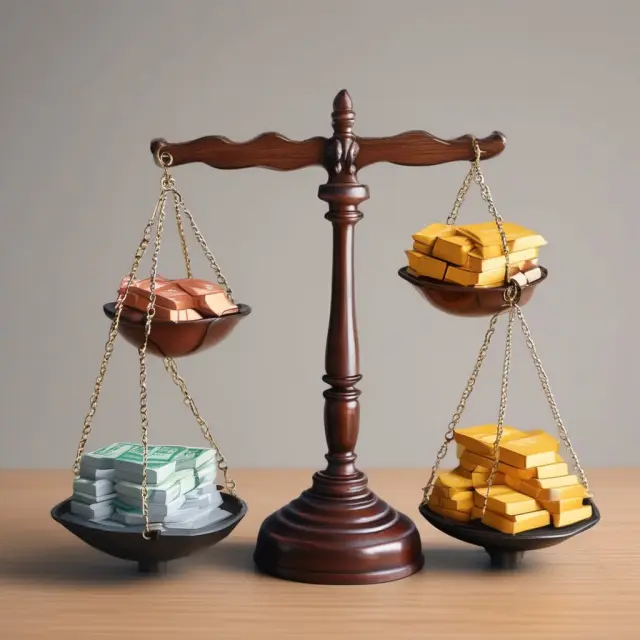
Price Levels in Economics
Price levels are a crucial economic concept that represents the overall cost of a basket of goods and services within an economy at any given time. By understanding the price level, we can analyze inflationary trends and monitor changes in the purchasing power of money. Two primary concepts in economics related to price levels include the Consumer Price Index (CPI) and the Basket of Goods approach.
Consumer Price Index (CPI)
The Consumer Price Index (CPI) is the most widely used measure of price levels in an economy. It tracks changes in the prices of a basket of goods and services commonly consumed by households over time. The CPI aggregates prices to create a single number representing the overall inflation rate within an economy.
Basket of Goods Approach
The Basket of Goods approach is another method used to measure price levels. This technique involves examining a collection or ‘basket’ of goods and services and calculating their aggregate prices at different points in time. By analyzing changes in this basket, economists can determine if inflation or deflation is occurring within the economy.
Weighted Averages vs Geometric Means
When calculating price levels, economists use either weighted averages or geometric means. Weighted averages assign more significance to certain goods and services based on their importance within an economy. For example, if food prices significantly impact a population’s purchasing power, it would be given a greater weighting in the calculation of the price level index. On the other hand, geometric means treat each item equally when calculating average price changes, which can sometimes provide a more accurate representation of overall inflation trends.
Price levels play an essential role in various aspects of our lives and economies, including central banking and government policies, as well as consumer and business decision-making. By closely monitoring and understanding price levels, we can make informed decisions about investments, personal finances, and overall economic health.

Role of Central Banks and Governments on Price Levels
Price levels have significant implications for both consumers and producers within an economy, making it crucial for central banks and governments to monitor them closely. By maintaining price stability, these entities can help ensure a healthy economy. Price stability refers to a condition where the general level of prices for goods and services remains constant over time. Central banks, typically through monetary policy measures such as interest rates and money supply management, play a significant role in managing inflation and stabilizing price levels.
Interest Rates
Central banks use interest rates as a tool to influence economic activity and maintain price stability. Higher interest rates increase borrowing costs, making it more expensive for consumers and businesses to acquire credit. This reduction in demand for goods and services can help slow the rate of inflation. Conversely, lower interest rates decrease borrowing costs, encouraging spending and potentially boosting demand, which can lead to increased prices.
Money Supply
Central banks also manage money supply to control inflationary pressures. By increasing or decreasing the amount of money in circulation, central banks can adjust the velocity of money, affecting the price level. For example, injecting more money into an economy can fuel inflationary pressures, while reducing the money supply can dampen inflation.
Inflation and Deflation
Understanding price levels requires a clear distinction between inflation and deflation. Inflation is a persistent increase in the general price level of goods and services within an economy. It reduces the purchasing power of the currency and negatively affects the economy, as consumers must pay more for the same goods and services. Deflation, on the other hand, is a persistent decrease in the general price level of goods and services within an economy. While it may seem beneficial at first due to lower prices, deflation can lead to economic instability as consumers delay purchases, expecting further price drops. This can result in decreased demand for goods and services, leading to potential job losses and overall economic hardship.
Central banks aim to maintain a stable price level to preserve purchasing power and protect the economy from the detrimental effects of inflation or deflation. By implementing monetary policies such as adjusting interest rates and managing money supply, central banks can help create a stable price environment that supports sustainable economic growth.

Price Levels in Investment World: Support and Resistance Zones
Price levels play a significant role in both economics and investment. In the context of investing, price levels are also referred to as support and resistance zones. Understanding these concepts can help investors identify potential entry and exit points for trades. Support levels act as a floor, while resistance levels act as a ceiling for securities’ prices.
Support levels: A support level is an area where the price of a security is expected to halt a downward trend due to an accumulation of demand. When the price of a security falls, the demand for the shares increases, forming a support line. This can be seen as a potential buying opportunity since the market has shown a tendency to bounce back from this level. Support levels often correspond to previous resistance levels that have been breached but then proved to be temporary.
Resistance levels: Resistance levels are areas where the price of a security encounters selling pressure and tends to reverse its upward trend. These zones form when there is an overabundance of sellers, pushing the price downward. Once a resistance level has been breached, it can potentially transform into a new support level, as buyers enter the market at that price level.
Bouncing back vs. violating price levels: When a security reaches a support or resistance level, it may either bounce back or violate the level and continue in its direction. The response depends on the underlying factors driving the trend, such as investor sentiment, economic conditions, and company fundamentals. A violation of a support or resistance level can be a strong indication that a trend is gaining momentum, while a rebound from these levels may indicate that the market is consolidating before continuing its trend.
To make informed decisions when trading using price levels, investors must understand the factors affecting support and resistance zones. These include:
– Market trends and overall economic conditions
– Company financial statements and earnings reports
– Sentiment analysis based on news events or social media buzz
– Technical indicators such as moving averages and Bollinger Bands
– Analyst ratings and price targets
Identifying support and resistance levels: To identify these zones, investors can use a combination of fundamental and technical analysis. They may look for historical trends, key price points based on news events or company fundamentals, and support from other technical indicators like moving averages and trendlines. Using multiple approaches helps ensure a more accurate assessment of the strength and reliability of potential support and resistance levels.
In conclusion, understanding price levels as support and resistance zones is crucial for investors looking to enter and exit trades effectively. By identifying these areas, investors can make informed decisions about when to buy or sell securities based on market trends and underlying factors. Keep in mind that while support and resistance levels provide valuable guidance, they are not foolproof predictors of price movements. Ultimately, it is essential to consider the broader economic landscape and company fundamentals when making investment decisions.

Price Levels: Stable, Inflationary, Deflationary
A stable price level is an essential condition for economic growth and stability. However, the economy can experience two significant deviations from this state: inflation and deflation. Price levels are a crucial determinant of purchasing power, as they influence consumer behavior and shape expectations in both the real and financial sectors. Inflation and deflation can significantly impact investors and businesses alike, necessitating a deeper exploration of these phenomena.
Inflation refers to an upward trend in general price levels, which causes a decrease in the value of money over time. It is often described as an increase in the overall cost of goods and services or a decrease in purchasing power. Inflation can have both positive and negative consequences on an economy. On the upside, it may lead to increased employment and higher wages as demand for labor rises to meet production requirements. However, excessive inflation can lead to negative real interest rates, which reduce the incentive to save and invest, causing potential economic instability.
The causes of inflation are multifaceted but mainly relate to excess demand or supply imbalances in the economy. Monetary policies implemented by central banks that lead to increased liquidity and lower interest rates can fuel inflation. Expansionary fiscal policies, such as increasing government spending, can also contribute to inflation if not accompanied by an equivalent increase in productivity or output. Inflation can also be a byproduct of supply chain disruptions, commodity price spikes, or geopolitical tensions that influence the cost of goods and services.
On the other hand, deflation is characterized by a downward trend in general price levels, resulting in an increase in the purchasing power of money over time. Deflation can stem from a reduction in demand or oversupply conditions in the economy, which may cause a decrease in wages and employment as businesses respond to falling prices by cutting costs. While deflation has historically been less common than inflation, it poses unique challenges for monetary policymakers and economies alike, such as potential debt burdens, reduced economic activity, and financial instability.
Understanding the underlying causes of price movements is crucial in managing their impact on your investments and overall financial wellbeing. Keeping a close eye on trends in inflation and deflation can help you make informed decisions regarding asset allocation, risk management, and portfolio diversification. By staying informed, investors can potentially mitigate potential risks and capitalize on opportunities as market conditions evolve.

Price Levels in Economics: Implications for Consumers and Producers
Price levels are not only significant indicators of an economy’s health but also have substantial implications on consumers and producers. For consumers, changes in price levels impact their purchasing power and overall demand, which affects production levels for businesses.
In terms of consumer purchasing power, rising prices (inflation) decrease the value of money as a larger amount is required to buy the same basket of goods or services. Conversely, falling prices (deflation) increase the purchasing power of consumers. This change in purchasing power can lead to changes in overall demand, which directly affects businesses and their production levels.
When consumer demand increases due to rising purchasing power, it leads to a higher aggregate demand for goods and services, ultimately driving up production levels, leading to an expansionary effect on the economy. On the other hand, falling prices result in lower consumer demand as consumers have more purchasing power for the same amount of money. As a result, businesses experience decreased sales, causing a contraction in their production levels, resulting in a negative effect on the economy.
Apart from purchasing power and demand implications, price levels impact the Gross Domestic Product (GDP), which is the total value of goods and services produced within an economy over a given period. As mentioned earlier, changes in consumer demand caused by fluctuations in price levels directly affect production levels and, subsequently, the GDP.
A final aspect to consider is the consumer price basket. This term refers to the collection of goods and services used to calculate various inflation indicators such as the Consumer Price Index (CPI). As prices change for different items within this basket, their weights can alter how the overall CPI is calculated, which has implications for policymakers and consumers alike.
In conclusion, price levels play a crucial role in the economy by impacting consumer purchasing power and demand, aggregate production, and Gross Domestic Product (GDP). By understanding these relationships, we can gain insight into how various economic indicators influence each other, allowing us to make more informed decisions when investing or making financial plans.

Price Levels: A Global Perspective
Understanding how price levels are influenced by international trade and exchange rates is crucial for investors and traders seeking to make informed decisions in the global market. Price levels in various countries impact one another due to trade relationships, which can ultimately affect consumer prices and investment opportunities. This section discusses the connection between exchange rates, inflation, and deflation, as well as their implications for consumers and producers.
Exchange Rates and Their Impact on Prices
As international businesses conduct transactions across borders, currency exchange plays a significant role in determining prices. Exchange rates represent the value of one currency against another and can fluctuate daily based on market forces. When an exchange rate changes, it affects import and export prices between countries. In turn, these price shifts impact inflation or deflation in different economies.
For example, consider two neighboring countries: Country A and Country B. If the exchange rate between their currencies favors Country A’s exports, demand for its goods increases while demand for imports from Country B decreases. As a result, prices of exports from Country A may rise due to increased demand, which can lead to inflation if it persists. Conversely, if the exchange rate favors Country B’s exports and discourages imports from Country A, their prices might decrease as they try to remain competitive in the global market. This situation can contribute to deflation if the trend continues.
Implications for Consumers and Producers
Consumers and producers are affected differently by changing price levels due to their unique positions in the supply chain. When prices rise, consumers face increased costs for goods and services, reducing their purchasing power. However, producers may experience higher revenues due to the increased demand for their products or services, potentially driving profits higher. Producers might choose to pass on some of these increased costs to consumers, exacerbating inflationary pressures. Conversely, if prices decrease, consumers benefit from lower costs, while producers face lower revenue and may need to reduce production to maintain profitability, leading to decreased economic activity.
In conclusion, understanding the global dynamics of price levels is vital for investors and traders looking to make informed decisions in today’s interconnected world. Monitoring exchange rates, their impact on inflation or deflation, and how these shifts influence consumer and producer behavior can help individuals capitalize on market opportunities while minimizing risks. By staying informed and adaptable, investors can maintain a competitive edge in the global investment landscape.

Price Levels in the Capital Markets
Understanding how price levels apply to bonds, stocks, and commodities is crucial for investors as they can serve as valuable indicators of market trends and potential entry or exit points. In the capital markets, price levels are commonly referred to as support and resistance zones, which help define key areas where buying or selling activities may occur.
Support refers to a level where a security’s downward trend is expected to pause due to a concentration of demand. When the price of a particular stock, bond, or commodity reaches this level, buyers enter the market, and the price tends to bounce back away from the support level. Conversely, resistance levels represent areas of selling pressure where prices struggle to move above. Once an area or zone of support or resistance is identified, it can provide valuable potential trade entry or exit points.
For instance, if a stock has been trading at a certain price for several days and suddenly drops below this level, traders may see this as an opportunity to buy, expecting the stock’s price to rebound due to underlying demand. Similarly, when a commodity such as gold experiences strong resistance at a particular price, investors might sell the metal in anticipation of the price falling back down once it hits that level.
The relationship between supply and demand ultimately determines support and resistance levels. For stocks, an oversupply of shares can create resistance, while for commodities like oil or gold, a surplus can lead to lower prices and resistance. Conversely, scarcity creates support for these assets.
As in the broader economy, price levels in the capital markets can also provide insight into trends and overall market conditions. For example, a prolonged period of declining stock prices may indicate an ongoing bearish trend, while a sustained uptrend could suggest a bull market. Commodity prices can also serve as leading indicators for the economy, with changes in their price levels often preceding economic shifts.
By understanding how price levels function in various markets and asset classes, investors can make informed decisions regarding entry and exit points, adjusting their portfolios accordingly to optimize returns while minimizing risk.

Price Levels: Historical Analysis
Understanding historical price level trends offers valuable insights into economic conditions, informing investors, economists, and policymakers alike. Price levels reveal the historical evolution of prices, providing context to current price movements and forecasting future trends.
In analyzing historical price levels, it is crucial to consider several factors, including overall inflationary or deflationary trends, significant changes in consumer spending patterns, economic downturns, and major global events. By examining these factors, we can gain a more comprehensive understanding of the price level landscape and anticipate potential future shifts.
Price levels have varied considerably throughout history. For instance, during the late 19th century, prices in the United States remained relatively stable due to the gold standard. However, with the advent of paper money during World War I and its subsequent expansion, price levels began a period of inflation that persisted until the mid-1950s. Since then, prices have generally trended upward, although there have been notable exceptions such as the late 1970s and early 1980s when stagflation, characterized by both high inflation and stagnant economic growth, occurred.
One of the most significant factors affecting historical price levels has been shifts in consumer spending patterns. For example, advances in technology have led to a decrease in the cost of certain goods while increasing the demand for others. This dynamic can be observed in areas like telecommunications, where voice calls are now nearly free due to the widespread availability of smartphones and internet connectivity, whereas data usage continues to grow rapidly.
Another critical aspect of historical price level analysis is understanding the impact of economic downturns on prices. For instance, during the Great Depression in the 1930s, prices plummeted as demand for goods and services dropped precipitously. Similarly, during the 2008 financial crisis, the housing market collapse led to a significant decrease in home prices and, subsequently, broader price declines across various asset classes.
Finally, global events have also played a crucial role in shaping historical price level trends. For example, the oil crises of the 1970s significantly impacted price levels due to rising energy costs. Similarly, geopolitical tensions can lead to increased uncertainty and volatility in price levels, as demonstrated during times of war or political instability.
By examining historical price level trends, investors and economists can gain valuable insights into the underlying economic conditions that influence prices. This information is essential for making informed investment decisions and anticipating future market movements.
Frequently Asked Questions about Price Levels
Price levels play a significant role in the economy, serving as a key indicator that economists monitor closely. In both economic and investment contexts, understanding price levels is essential for making informed decisions. Below are some common questions related to price levels and their significance.
**What Is the Difference Between Support and Resistance?**
Support and resistance zones are significant price levels in financial markets that define entry and exit points for traders. A level of support is a price area where a downtrend is expected to pause due to an increase in demand, preventing further price declines. In contrast, a resistance zone represents a price area where buyers face strong selling pressure, making it difficult to push the price higher.
**How Do Interest Rates and Monetary Policy Impact Price Levels?**
Central banks can influence price levels through interest rates and monetary policy. When inflation is present, central banks may increase interest rates to decrease the money supply, which reduces demand for goods and services and subsequently stabilizes or lowers prices. Conversely, during periods of deflation, central banks may adopt looser monetary policies by reducing interest rates or increasing the money supply to stimulate economic activity and counteract falling prices.
**What Causes Changes in Price Levels?**
Price levels change due to various factors such as demand and supply dynamics, changes in production costs, and government regulations. For instance, rising production costs may result in higher prices, while increased demand for a product or service can lead to price increases. Similarly, changes in supply due to natural disasters or geopolitical events may cause significant price movements.
Understanding price levels is crucial for investors and traders as well as economists seeking to make informed decisions regarding inflation, central bank policy, and investment opportunities. By closely monitoring trends and factors influencing price levels, one can effectively navigate financial markets and capitalize on opportunities while minimizing risks.
 Next entry · No. 4,073Price Stickiness: An Essential Economic Concept for Institutional Investors
See also
-
 No. 4,158
27 May 2025
19 min
Understanding Purchasing Power: Preserving Value Amid Inflation
Finance Policy
No. 4,158
27 May 2025
19 min
Understanding Purchasing Power: Preserving Value Amid Inflation
Finance Policy -
 No. 4,405
16 Jun 2025
23 min
Understanding the Reserve Ratio and Its Impact on Monetary Policy
Finance Policy
No. 4,405
16 Jun 2025
23 min
Understanding the Reserve Ratio and Its Impact on Monetary Policy
Finance Policy -
 No. 3,254
13 Mar 2025
22 min
Understanding Money Supply: Definition, Importance, and Determinants
Finance Policy
No. 3,254
13 Mar 2025
22 min
Understanding Money Supply: Definition, Importance, and Determinants
Finance Policy -
 No. 2,925
14 Feb 2025
19 min
Understanding Liquidity Adjustment Facility (LAF): Monetary Policy Tool for Managing India’s Economy
Finance Policy
No. 2,925
14 Feb 2025
19 min
Understanding Liquidity Adjustment Facility (LAF): Monetary Policy Tool for Managing India’s Economy
Finance Policy -
 No. 5,316
29 Aug 2025
18 min
Understanding Unsterilized Foreign Exchange Interventions: The Passive Approach to Influencing Currencies and Money Supply
Forex & Currency Markets
No. 5,316
29 Aug 2025
18 min
Understanding Unsterilized Foreign Exchange Interventions: The Passive Approach to Influencing Currencies and Money Supply
Forex & Currency Markets -
 No. 4,226
01 Jun 2025
23 min
Understanding Quantitative Easing: The Effects and Implications for Investors
Business Finance
No. 4,226
01 Jun 2025
23 min
Understanding Quantitative Easing: The Effects and Implications for Investors
Business Finance