Understanding Quarter Over Quarter (Q/Q) Growth: Measuring Financial Performance

Explore the concept of quarter over quarter (Q/Q) growth in finance, understand its importance and calculations, and learn how it impacts GDP and investment…
Definition and Importance of Q/Q Growth
Quarter over quarter (Q/Q) growth is a crucial metric in finance, measuring a company’s or investment’s change in performance between consecutive quarters. This measurement provides valuable insights for investors and analysts as it highlights trends in a company’s financial statements. Let’s delve deeper into the concept of Q/Q growth, its significance, and how it differs from other methods like year-over-year (YOY) and month-over-month (M/M).
Investors and analysts assess a company’s financial performance by examining financial statements. The quarterly statements are publicly accessible through the Securities and Exchange Commission (SEC) or on a company’s website, under the name 10-Q statements. These reports offer an opportunity to review a company’s performance across multiple quarters. By evaluating Q/Q growth, investors can determine if the business is experiencing continuous expansion, remaining stable, or facing declines.
The importance of Q/Q analysis lies in understanding the rate of change in financial numbers and metrics from one reporting period to the next. Typically, this comparison involves assessing the current quarter against the previous one. A quarter usually spans three months. By examining the changes between successive quarters, investors can detect trends, identify seasonal patterns or trends, and make informed decisions regarding their investment strategies.
Gross domestic product (GDP) is another area where Q/Q growth plays a significant role. Economic reports like GDP are released quarterly to provide an understanding of the economy’s growth or decline. For instance, the Bureau of Economic Analysis (BEA) releases the GDP report, which shows how the country’s economy has changed from one quarter to the next and can signal potential policy implications for governments, businesses, and individuals. Analyzing changes in quarterly GDP is essential for policymakers to make informed decisions, as a decline in economic growth over two consecutive quarters may indicate an impending recession or depression.
Understanding Q/Q analysis also entails exploring its variations, including month-over-month (M/M) and year-over-year (YOY). While Q/Q growth measures the rate of change between successive quarters, M/M compares performance over consecutive months. However, M/M analysis can be more volatile due to one-time events, making it a less stable measure compared to Q/Q. Conversely, YOY growth assesses changes in performance from one year to the next, incorporating a larger data set and providing a better long-term perspective of underlying trends.
In conclusion, quarter over quarter (Q/Q) growth is an essential metric for investors, offering valuable insights into a company’s financial health by measuring its rate of change between consecutive quarters. The significance of Q/Q analysis extends beyond individual businesses to the broader economy as well, with GDP being one of its most prominent applications. In the next section, we will discuss how to calculate this growth measurement to gain a better understanding of its practical usage.

Calculating Q/Q Growth
Quarter over quarter (Q/Q) growth is an essential metric that measures a company’s or investment’s expansion from one quarter to the next. This rate of change is commonly applied to financial statements, such as those reporting revenue and profits, but can also be utilized for various economic indicators, such as gross domestic product (GDP).
To calculate Q/Q growth, you first need to understand what constitutes a quarter. Generally speaking, a fiscal quarter refers to a three-month period within an organization’s financial reporting cycle. For publicly traded companies in the United States, this cycle aligns with the calendar year, with quarters ending on March 31, June 30, September 30, and December 31, respectively.
Investors and analysts employ quarterly reports to assess a company’s financial health and growth trajectory. These documents are publicly available via the Securities and Exchange Commission (SEC) or a company’s website, under the name of 10-Q statements. By examining Q/Q changes across multiple periods, they can identify trends and make informed investment decisions.
The calculation for quarter over quarter growth is straightforward: subtract the previous quarter’s performance from the current quarter’s and divide the result by the previous quarter’s figure. Mathematically, it is represented as: (Current Quarter – Previous Quarter) / Previous Quarter
For instance, if Company X reported $5 billion in revenues during Q2 and $4.5 billion in Q1, its quarter over quarter growth would be calculated as follows: (5,000,000,000 – 4,500,000,000) / 4,500,000,000 = 11.11%
Similarly, changes in economic indicators such as GDP are assessed using quarter over quarter growth to reveal trends and potential policy implications. The gross domestic product (GDP) report, issued by the Bureau of Economic Analysis (BEA), is a crucial measure of an economy’s size and growth rate. By analyzing quarterly changes in GDP, policymakers can make informed decisions about economic conditions and future adjustments.
In conclusion, Q/Q growth serves as a vital tool for investors, analysts, and policymakers to assess financial performance and identify trends across different timeframes. Its straightforward calculation, coupled with its ability to reveal underlying patterns in data, makes it an indispensable component of both corporate and economic analysis.

Quarterly Economic Reports: Q/Q Growth in GDP
Understanding Quarter over Quarter (Q/Q) growth is crucial for investors and economists alike, as it enables us to evaluate the changes in an investment or a company’s performance from one quarter to another. This section will focus on how Q/Q growth is applied to economic reports, specifically gross domestic product (GDP). Gross Domestic Product (GDP) is a critical measure of a country’s overall economic health and growth. It represents the total value of all goods and services produced by an economy in a given period.
Quarter over quarter growth plays a significant role in evaluating economic trends, as the Bureau of Economic Analysis (BEA) releases the GDP report on a quarterly basis. This information is vital for policymakers and businesses to make informed decisions, as it indicates potential economic outcomes such as recessions or depressions.
To calculate Q/Q growth, we first need to understand that a fiscal quarter is typically three months long or 90 days. The formula for calculating quarter over quarter growth is: (Current quarter – previous quarter) / previous quarter. By analyzing the change in GDP from one quarter to another, policymakers can make necessary adjustments to avoid further economic fallout if they observe a declining GDP – which is defined as a decrease in GDP for two consecutive quarters.
However, it’s essential to note that there are other variations of Q/Q growth, such as month over month (M/M) and year-over-year (YOY). While Q/Q can be volatile due to one-time events or seasonal factors, it provides a more comprehensive picture compared to M/M. YOY growth, on the other hand, offers a better long-term perspective but requires more data.
Now let’s take a look at a real-world example using the earnings of Intel Corporation and IBM Corporation for Q1 and Q2 in 2018:
(Intel) (IBM)
Q1 Earnings $4,500 million $1,700 million
Q2 Earnings $5,000 million $2,400 million
Q/Q Change $500 million $700 million
Intel’s earnings grew by 11% Q/Q, while IBM’s earnings grew by a more substantial 41%. While Intel’s growth can be considered modest, IBM’s impressive quarterly increase underscores the importance of evaluating multiple quarters to determine if these changes represent an ongoing trend or are merely seasonal or temporary adjustments.
When comparing Q/Q data from companies with different fiscal year start dates, it is essential to account for potential distortions due to varying timeframes and seasonal factors. This requires considering several quarters over a more extended period to gain accurate insights into the underlying trends and eliminate any external influences.

Variations of Quarter Over Quarter Growth: Month over Month (M/M) and Year over Year (YOY)
When it comes to measuring financial growth, there are several methods available for investors and analysts to evaluate the performance of a company or investment. Among these measures is quarter over quarter (Q/Q) growth, which has gained significant popularity due to its ability to provide insights into a firm’s short-term performance. However, it is essential to understand that Q/Q growth is not the only measure of financial growth. Two other popular methods are month over month (M/M) and year over year (YOY) growth. In this section, we will explore the differences between these three measures and their applications.
Month Over Month (M/M) Growth: Measuring Change Between Consecutive Months
M/M growth refers to the percentage change in a financial metric from one month to the next. It can be calculated as: ((Current Month – Previous Month) / Previous Month) x 100%. M/M growth is often used to understand short-term trends or to identify any significant changes that might occur between months. Since it only looks at a difference in performance between two consecutive months, it tends to be more volatile than Q/Q and YOY measures as it can be influenced by one-time events or seasonal factors.
Year Over Year (YOY) Growth: Measuring Change Between the Same Periods of Two Different Years
In contrast to M/M growth, YOY growth measures the percentage change in a financial metric between the same period in two different years. It can be calculated as: ((Current Year – Previous Year) / Previous Year) x 100%. YOY growth offers a more comprehensive understanding of performance trends as it evaluates changes over an entire year. By examining YOY growth, investors and analysts can determine if the company or investment has consistently grown over time or experienced any significant fluctuations. It provides a clearer picture of long-term financial health and is often preferred for macroeconomic analysis, such as assessing GDP trends.
Quarter Over Quarter (Q/Q) Growth: Measuring Change Between Consecutive Quarters
As mentioned earlier, Q/Q growth measures the percentage change in a financial metric from one quarter to the next. It is typically calculated as: ((Current Quarter – Previous Quarter) / Previous Quarter) x 100%. Similar to M/M growth, it provides insights into short-term trends and can help identify any significant changes that occur between quarters. While Q/Q growth offers valuable information, it tends to be more volatile than YOY due to the potential impact of seasonal factors. Nevertheless, it is a widely used method for investors and analysts to assess the performance of companies and investments over a shorter time frame.
Choosing the Right Measure: When to Use Each Method
Ultimately, each measure has its strengths and weaknesses, making them suitable for different analysis scenarios. For short-term trends and identifying changes between quarters or months, Q/Q and M/M growth are the best choices. However, for long-term performance evaluation and understanding economic trends, YOY growth should be preferred. It is important to remember that no single measure can provide a complete picture of financial growth, and a combination of these methods will typically offer the most comprehensive view of a company’s or investment’s performance.
In conclusion, understanding the differences between quarter over quarter (Q/Q), month over month (M/M), and year over year (YOY) growth is essential for investors and analysts looking to make informed decisions. Each measure provides unique insights into short-term and long-term financial trends, allowing users to evaluate performance in different contexts. By being aware of these measures and their applications, you will be better prepared to analyze financial statements, assess the performance of your investments, and make more informed investment decisions.

Example: Intel vs IBM Comparison
Quarter over quarter (Q/Q) growth analysis is a crucial tool for investors and analysts seeking insights into a company’s financial performance from one quarter to the next. By examining Q/Q growth rates, they can identify trends, assess business cycles, and make informed investment decisions. This section compares Intel and IBM’s Q/Q growth rates in 2018 to demonstrate this concept.
Intel Corporation and International Business Machines Corporation (IBM) are two prominent technology companies in the industry. They both release quarterly financial statements detailing their earnings, revenue, expenses, and other essential metrics. To assess their growth performance, we focus on Q1 and Q2 earnings for each company in 2018.
(Table: Intel and IBM Quarterly Earnings Comparison – 2018)
| | Intel Corporation | International Business Machines Corporation (IBM) |
|————-|——————–|————————————————–|
| Q1 Earnings | $4,500 million | $1,700 million |
| Q2 Earnings | $5,000 million | $2,400 million |
| Q/Q change | +$500 million (11%) | +$700 million (41%) |
Calculating the quarter over quarter growth rate involves finding the difference between the current and previous quarters’ results and dividing it by the previous quarter’s value. For Intel, this calculation is: ($5,000 – $4,500) / $4,500 = 11%. For IBM, the calculation is: ($2,400 – $1,700) / $1,700 = 41%.
From Q1 to Q2 in 2018, Intel’s earnings grew by 11%, whereas IBM experienced a more substantial increase of 41%. The contrasting growth rates raise questions about the underlying drivers behind these changes. While Intel’s growth was steady and seemingly sustainable, IBM’s marked improvement calls for further investigation to determine if it is an ongoing trend or a one-time occurrence.
Analyzing Q/Q growth rates can help investors evaluate a company’s financial health, identify trends, and make more informed investment decisions. However, comparing companies with different quarter start dates requires careful consideration of potential seasonality impacts. By examining multiple quarters over an extended period, investors can minimize the influence of external factors and better understand a company’s long-term growth trajectory.

Benefits and Challenges of Q/Q Growth Analysis
Understanding the benefits and challenges associated with quarter over quarter (Q/Q) growth analysis is vital for investors, analysts, and financial professionals. By delving deeper into this measurement, we can appreciate its significance and make informed decisions based on accurate data.
Firstly, Q/Q growth analysis enables the comparison of a company’s performance across multiple quarters, providing valuable insights into trends and patterns. This information is essential for investors looking to evaluate a business’s financial health and potential investment opportunities. Furthermore, analysts can gauge a company’s progress in achieving its goals and targets by examining Q/Q growth rates.
Moreover, Q/Q growth analysis is crucial in various economic contexts. For instance, the Bureau of Economic Analysis releases quarterly Gross Domestic Product (GDP) reports, which illustrate changes in the nation’s economy from one quarter to another. These reports are vital for policymakers and investors alike as they provide critical information on overall economic trends and potential future developments.
However, Q/Q growth analysis also presents challenges. Seasonal factors can significantly impact quarterly financial results, leading to distorted comparisons between companies with different fiscal years or quarters. For example, retailers may experience increased sales during the holiday season, which could skew their quarterly numbers. Consequently, analysts and investors need to be aware of these variations when conducting Q/Q growth analysis, using methods like adjusting for seasonality to obtain accurate comparisons.
Additionally, comparing Q/Q growth rates among companies with varying quarters can create inconsistencies in the data, as not all companies follow the same fiscal calendar year. For instance, some businesses may have a fiscal year ending on December 31st, while others might have it ending in March or any other month. This disparity in quarter dates can complicate Q/Q comparisons and require adjustments to ensure valid analysis.
In conclusion, understanding the benefits and challenges of Q/Q growth analysis is crucial for those seeking to make informed investment decisions or evaluate a company’s financial health. By recognizing its advantages—such as identifying trends and providing valuable insights into a company’s performance—as well as its potential drawbacks—like seasonality and inconsistent quarter dates—investors can approach Q/Q growth analysis with a clear understanding of its implications and limitations.
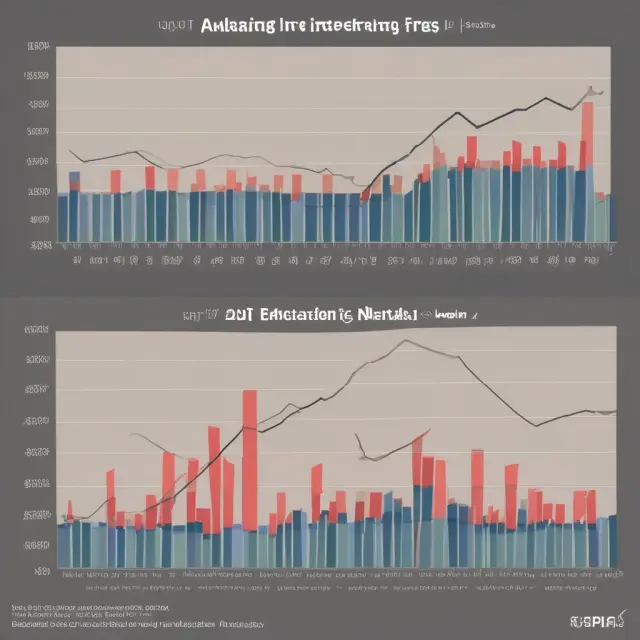
Seasonality in Quarter Over Quarter Growth: Removing the Effects
Quarter over quarter (Q/Q) growth is a widely used measure to evaluate an investment or company’s performance, as it reveals changes in financial indicators like revenue and profits from one quarter to another. However, it is crucial to acknowledge that seasonality can significantly impact Q/Q growth rates, potentially skewing the interpretation of this important metric for investors. In this section, we will discuss methods for identifying and removing seasonal influences from Q/Q data, allowing for more accurate and reliable comparisons.
Seasonal factors refer to recurring patterns that emerge due to external circumstances or natural events, influencing business operations and financial performance on a regular basis. Some industries are more susceptible to seasonality than others; for instance, retail sales often experience a significant increase during the holiday season, while agriculture-related businesses may have varying income levels depending on weather conditions throughout the year. Seasonal adjustment is essential in removing these effects to analyze genuine underlying trends and patterns.
One common approach to eliminating seasonality from Q/Q data is through statistical methods such as X-12-ARIMA, TRAMO-SEATS, or other time series analysis techniques. These methods use historical data, along with specific knowledge about the industry and company, to estimate and remove seasonal patterns. Seasonally adjusted Q/Q growth rates enable investors to evaluate performance more accurately by revealing trends that are not influenced by seasonality.
Another technique for examining seasonality is through the calculation of moving averages. By calculating the average growth rate over a series of quarters, it becomes easier to identify whether trends are consistent or if they fluctuate due to seasonal factors. For example, a company may experience increased sales during specific months due to a product launch, causing quarterly growth rates to be inconsistent. However, by calculating the moving average growth rate, investors can observe any underlying trend that remains constant despite these temporary fluctuations.
It is important for investors to be aware of seasonality and its potential impact on Q/Q data when making investment decisions. By understanding how seasonal factors affect their industry or sector, they can more effectively evaluate a company’s financial performance over time and make informed decisions based on accurate information.
In conclusion, quarter over quarter (Q/Q) growth is an essential metric for investors to assess the performance of a company or investment. However, it’s important to be mindful of seasonality’s potential impact on this measure. By utilizing statistical methods and moving averages, investors can remove seasonal influences, providing a clearer picture of underlying trends and enabling more accurate comparisons between different companies and industries.

Using Q/Q Analysis to Make Investment Decisions
Quarter over quarter (Q/Q) growth analysis plays a crucial role in helping investors make informed decisions regarding their investments and assessing a company’s performance trends. By comparing the financial statements of one quarter against another, investors can gain valuable insights into the health and future prospects of the companies they own or are considering investing in.
Analysts and investors examine several key financial documents to evaluate the financial position of a company, primarily the income statement, balance sheet, and cash flow statement. These reports provide a detailed picture of a business’s revenue, expenses, assets, liabilities, and cash inflows and outflows over a specified period, which is most commonly quarterly.
The most important quarterly document for investors is the 10-Q filing, a SEC requirement that publicly traded companies submit within 45 days of their fiscal quarters’ end. This comprehensive report details a company’s financial performance and position during the reported quarter, enabling investors to assess its overall health and identify trends and changes in various financial metrics.
Comparing Q/Q growth rates can offer significant advantages for investors. For example, comparing a company’s current quarterly performance with that of the previous quarter allows investors to:
- Gain insights into a company’s seasonal patterns: Some industries exhibit distinct seasonality in their financial statements, which can impact the Q/Q comparison. By analyzing these trends, investors can adjust their expectations and make informed decisions accordingly.
- Identify trends and forecast future performance: Analyzing Q/Q growth rates over several quarters or years allows investors to identify trends and make projections about a company’s future growth potential.
- Evaluate management effectiveness: By comparing the Q/Q growth rates of competitors, investors can assess the relative performance of each company and determine which one is outpacing its competition, signaling effective management or strategic decisions.
- Make informed investment decisions: Ultimately, Q/Q growth analysis provides a valuable tool for investors seeking to buy, sell, or hold their investments based on current market conditions and trends.
It’s important to note that comparing Q/Q figures across companies with different quarter start dates can be challenging due to seasonal factors and external environmental conditions. To mitigate the impact of these factors, it’s essential to analyze several consecutive quarters or years to identify underlying trends and make more accurate assessments.
In conclusion, understanding quarter over quarter growth analysis is vital for investors seeking to make informed decisions about their investments. By closely examining a company’s financial statements and Q/Q growth rates, investors can gain valuable insights into its financial health and performance, enabling them to make informed investment choices that maximize returns while minimizing risks.

Quarter Over Quarter Growth in Different Sectors
Investigating the variance of quarter over quarter (Q/Q) growth across various sectors and industries offers essential insights into an economy’s performance and investor behavior. While Q/Q growth is commonly applied to analyze a company’s financial growth, it can also be observed within broader contexts, such as economic sectors or industries.
Sectors with distinct seasonal patterns, like retail and agriculture, display varying quarterly trends that might influence investors and analysts when assessing performance or making investment decisions. This section elucidates the importance of understanding Q/Q growth in different sectors and the challenges encountered when comparing sectoral data.
The Retail Sector: Seasonality and Cyclicality
Retail sales are a crucial economic indicator and often display seasonality, which significantly impacts quarterly growth. Typically, retailers experience increased sales during holiday seasons like Christmas and the back-to-school period. Conversely, slowdowns occur in the first and fourth quarters due to the absence of these sales spikes. In analyzing Q/Q data for retail sales, it is essential to account for seasonality and cyclical trends.
The Agricultural Sector: Unpredictability and Seasonal Swings
Agricultural markets face unique challenges when evaluating quarter over quarter growth due to unpredictable weather patterns. A single quarter’s results could be significantly affected by natural disasters, crop failures, or favorable growing conditions. Comparing Q/Q growth in this sector requires thorough understanding of the underlying factors impacting agricultural production and prices.
The Technology Sector: Innovation and Competition
Quarterly growth rates within the technology sector are characterized by their rapid pace and intense competition. The introduction of new products and updates, as well as changing market conditions, necessitate constant analysis of Q/Q trends to assess industry leaders and emerging competitors. In this sector, understanding quarterly performance is crucial for investors seeking opportunities in a dynamic and evolving landscape.
The Energy Sector: External Factors and Market Volatility
Quarter over quarter growth rates within the energy sector can be influenced by various external factors, such as geopolitical events, weather patterns, or shifts in global demand. The volatility of commodity prices and their impact on industry participants necessitate a careful analysis of Q/Q trends to identify underlying market dynamics.
The Healthcare Sector: Regulation and Long-Term Growth
Quarterly growth rates within the healthcare sector can be subjected to regulatory influences and long-term growth patterns. In this sector, understanding the impact of government policies on prices and patient demand is crucial for investors assessing the financial performance and potential prospects of healthcare companies.
The Financial Services Sector: Regulation and Economic Conditions
Quarterly trends within the financial services sector can be heavily influenced by regulatory changes and broader economic conditions. Analyzing Q/Q growth rates helps investors understand the impact of these factors on a company’s bottom line and assess its long-term potential in an ever-changing landscape.
In conclusion, understanding quarter over quarter growth across various sectors and industries offers valuable insights into the performance of specific companies, economic trends, and investor behavior. By examining Q/Q growth data within a given sector, investors can better understand underlying factors that influence financial performance, assess risks, and make informed investment decisions.

FAQ: Frequently Asked Questions about Quarter Over Quarter Growth
What exactly does Q/Q growth represent?
Quarter over quarter (Q/Q) growth is a measure of the change in performance between one fiscal quarter and the preceding quarter. This metric can be applied to various financial numbers, such as revenue or profits, as well as economic indicators like Gross Domestic Product (GDP).
Why do investors use Q/Q growth analysis?
Investors and analysts utilize Q/Q growth data to evaluate a company’s financial performance throughout the year. This information is typically found in quarterly statements, known as 10-Q reports, which can be accessed through the Securities and Exchange Commission (SEC) or a company’s website. By reviewing Q/Q growth rates, investors and analysts can assess trends and identify potential shifts in a company’s financial health.
What is the importance of Quarterly Economic Reports and GDP?
Quarterly economic reports, particularly those focusing on Gross Domestic Product (GDP), help policymakers make informed decisions about the economy. For instance, a declining GDP over two consecutive quarters indicates a recession, which can impact businesses and individuals alike. Analyzing quarterly changes in GDP allows governments to implement policies aimed at mitigating potential negative outcomes.
What are the differences between Q/Q, M/M, and YOY growth?
Quarter over quarter (Q/Q) measures changes from one quarter to the next, while month over month (M/M) calculates growth over previous months, and year-over-year (YOY) compares figures from the same period a year prior. Q/Q is typically more volatile than YOY but less volatile than M/M. Each method has its applications depending on the desired analysis.
How do you calculate Q/Q growth?
The calculation of Q/Q growth involves taking the difference between the current quarter’s financial figure and the previous quarter’s figure, then dividing the result by the previous quarter’s figure: (Current quarter – Previous quarter) / Previous quarter. This equation allows for determining the percentage change in performance from one quarter to the next.
 Next entry · No. 4,237Fiscal Quarters: Q1, Q2, Q3 and Q4 Explained, With the Months Each Covers
See also
-
 No. 4,765
15 Jul 2025
18 min
Understanding Stock Quotes: A Comprehensive Guide for Institutional Investors
Business Finance
No. 4,765
15 Jul 2025
18 min
Understanding Stock Quotes: A Comprehensive Guide for Institutional Investors
Business Finance -
 No. 4,744
13 Jul 2025
25 min
Understanding Statement of Retained Earnings: A Key Financial Statement for Institutional Investors
Business Finance
No. 4,744
13 Jul 2025
25 min
Understanding Statement of Retained Earnings: A Key Financial Statement for Institutional Investors
Business Finance -
 No. 3,483
01 Apr 2025
22 min
Separating Signal from Noise: Understanding and Mitigating Market Volatility in Finance
Business Finance
No. 3,483
01 Apr 2025
22 min
Separating Signal from Noise: Understanding and Mitigating Market Volatility in Finance
Business Finance -
 No. 3,446
29 Mar 2025
19 min
Understanding Net Volume: A Technical Indicator for Professional and Institutional Investors
Financial Data Analysis
No. 3,446
29 Mar 2025
19 min
Understanding Net Volume: A Technical Indicator for Professional and Institutional Investors
Financial Data Analysis -
 No. 2,372
31 Dec 2024
20 min
Mastering Indifference Curve Analysis: A Comprehensive Guide for Institutional Investors
Business Finance
No. 2,372
31 Dec 2024
20 min
Mastering Indifference Curve Analysis: A Comprehensive Guide for Institutional Investors
Business Finance -
 No. 5,921
18 Oct 2025
20 min
Understanding Zomma: A Third-Order Risk Measure for Derivative Investors
Finance Policy
No. 5,921
18 Oct 2025
20 min
Understanding Zomma: A Third-Order Risk Measure for Derivative Investors
Finance Policy