Understanding Stare Decisis: Legal Precedent, its Importance, and Overruling a Precedent

Understand Stare Decisis: Legal precedent, its importance, overruling a precedent & real-world impact on investment law.
Introduction to Stare Decisis
The legal doctrine known as stare decisis plays a significant role within the U.S. common law system. This principle ensures that courts follow historical cases when making rulings on similar cases. The term “stare decisis” is derived from Latin, meaning “to stand by that which is decided.” Stare decisis binds courts to abide by legal precedents, ensuring consistency within the legal framework and a predictable outcome for future cases.
What is a Precedent?
A precedent refers to a past ruling or judgment on a case that serves as a guiding principle for future court decisions with similar circumstances. When faced with a case resembling an earlier one, courts follow the existing precedents by applying the reasoning and legal principles outlined in the earlier cases.
Understanding Stare Decisis: The Obligation to Follow Legal Precedents
Stare decisis is crucial as it promotes certainty, consistency, and fairness within the legal system. By adhering to precedents, courts can ensure that similar cases are handled in a uniform manner. This continuity offers clarity for practitioners, litigants, and society at large.
A Unique Case Setting New Precedent: The Creation of a Legal Precedent
In the absence of substantial reference material or established precedents, unique cases with novel issues can become new legal precedents when a court hands down a ruling on them. These rulings serve as guiding principles for future cases, providing legal frameworks and shaping the common law system.
The Role of Higher Courts in Stare Decisis: The Supreme Court as a Final Arbiter
In the United States legal framework, the highest court, the U.S. Supreme Court, holds significant influence over the legal precedents. All lower courts within a jurisdiction are required to follow and abide by the rulings of this esteemed institution. By establishing binding legal precedents for the entire system, the Supreme Court plays a crucial role in maintaining consistency and stability across all courts.
Overruling a Precedent: The Supreme Court’s Power to Alter Legal Principles
Although rare, the U.S. Supreme Court holds the power to overrule its own precedents when necessary. This ability ensures that the legal framework remains adaptive and responsive to changing circumstances and societal shifts.
Real-World Examples of Stare Decisis: Insider Trading and Its Impact on Investment Law
Insider trading is an essential aspect of investment law, where individuals misuse nonpublic information for financial gain. The legal doctrine of stare decisis plays a significant role in shaping the legal outcomes for insider trading cases. For instance, the groundbreaking case of Dirks v. SEC set a precedent on the definition and application of insider trading, guiding future court rulings and offering consistency within the investment law landscape.
The Importance of Legal Precedent: Stare Decisis and its Role in Modern Law
Stare decisis is an integral component of modern law, ensuring that the legal system remains stable, predictable, and adaptive to changing circumstances. By following established precedents, courts can promote consistency, offer clarity to legal professionals and the public, and provide a foundation for future cases.
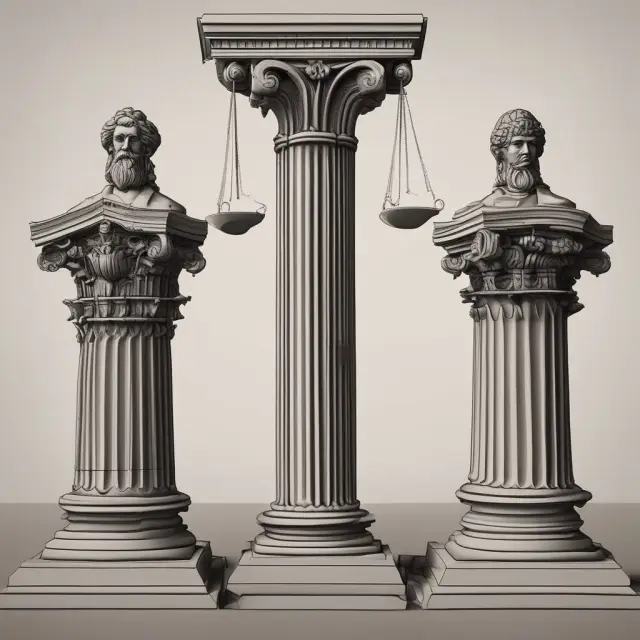
What is a Precedent?
Under the legal doctrine called stare decisis, courts are required to follow past rulings when making decisions on similar cases. This principle, which translates from Latin as “to stand by that which is decided,” holds significant importance in the U.S. common law system. A precedent refers to a prior ruling or judgment made in a case with circumstances similar to those of a current case.
Stare decisis ensures consistency and predictability in legal decision-making. By adhering to past rulings, courts maintain a cohesive approach when addressing cases with comparable facts or issues. The importance of this doctrine is reflected in the fact that U.S. states follow the rulings of their own state’s highest court and those of the Supreme Court.
A unique case presenting no prior material may set new precedent when the judge hands down a ruling on it. In such instances, the new ruling serves to replace any overruled precedents on similar cases. For instance, a Kansas appellate court, bound by its own state’s highest court and the Supreme Court, would be required to follow the U.S. Supreme Court’s precedent when faced with a unique case.
Although rare, the U.S. Supreme Court may overrule its own precedents. In instances where this occurs, the new ruling becomes binding precedent for lower courts within the system. For example, if the Supreme Court overturned a long-standing Kansas precedent in a case heard before it, Kansas courts would be obligated to adapt to the new rule as precedent.
While the concept of stare decisis applies to most court decisions, there are exceptions when the Supreme Court may decide to reverse its own rulings. Between 1789 and 2020, the U.S. Supreme Court overturned only about one-half of one percent (approximately 145 times) of its past judgments. Notable examples include the landmark 1954 Brown v. Board of Education case, which reversed the separate-but-equal doctrine ruling of Plessy v. Ferguson, and the recent Dobbs v. Jackson Women’s Health Organization decision that overruled Roe v. Wade on abortion rights.
Stare decisis influences various aspects of the legal system. In finance, insider trading is a critical area where precedent plays an essential role in guiding courts when determining cases involving misuse of confidential information for financial gain. The 1983 Dirks v. SEC case established the precedent that insiders are liable if they directly or indirectly profit from disclosing company secrets, and this principle is consistently followed by courts dealing with insider trading cases.
Understanding stare decisis and its role in creating legal precedents allows us to appreciate the importance of the doctrine in maintaining consistency and predictability within the U.S. common law system.

How Stare Decisis Works
The legal doctrine of stare decidisis a cornerstone principle within the U.S. common law system, obligating courts to follow historical cases when rendering judgments on similar cases in the future. The importance of this doctrine lies in its ability to maintain consistency and predictability in case decisions while ensuring that the legal precedent set by higher courts is respected by lower ones.
Understanding Precedents
At the core of stare decisis lies the concept of a precedent, which refers to past rulings or judgments on cases with similar circumstances. The principle dictates that when dealing with a new case, the court should look to these precedents for guidance and reference points in making a ruling. This approach ensures continuity in the legal system and helps prevent conflicting decisions on similar matters.
Binding Precedents
In most instances, lower courts must abide by the rulings of higher courts within their respective jurisdictions. For example, Kansas state appellate courts are obligated to follow both their own precedent and that of the Kansas Supreme Court, as well as the precedents established by the U.S. Supreme Court. The primary reason for this hierarchy lies in the fact that decisions made by higher courts carry more weight and influence within the legal system.
Creating New Precedents
In situations where there is little or no existing case law on a specific issue, a court may create new precedent by issuing a ruling on a unique case. This precedent then sets the standard for how future cases with similar circumstances should be handled. However, it is important to note that lower courts are not obligated to follow precedents set by other state courts outside their jurisdiction unless those courts’ rulings hold significant authority within the legal community.
The Role of the Supreme Court
As the highest court in the U.S., the Supreme Court holds immense power when it comes to setting and altering precedent. When a case is brought before this court, its ruling may replace any existing precedent on similar matters. This occurs most frequently when the Supreme Court overrules a previous decision made by a lower court or one of its own rulings. The significance of this power lies in the court’s ability to shape the direction and evolution of the law within the U.S.
Examples of Stare Decisis at Work
The legal doctrine of stare decisis has played a crucial role in various areas of the law, including securities fraud, such as insider trading. For instance, when dealing with cases involving insider trading, courts look to precedents set by landmark rulings like Dirks v. SEC (1983). In these situations, the principle ensures that decisions are consistent and predictable, ultimately providing a stable foundation for future cases within the same legal realm.
In conclusion, stare decisis is an essential aspect of the U.S. common law system. By obligating courts to follow precedents set by previous cases and higher courts, this doctrine helps maintain consistency and predictability in case decisions while ensuring that the legal landscape remains stable. Understanding the intricacies of stare decidisis crucial for those involved in the legal profession as well as individuals seeking knowledge on the workings of the judicial system.

Unique Cases Creating New Precedent
Stare decisis holds significant importance within the U.S. legal system, as it requires courts to adhere to historical cases and precedents when rendering judgments on similar cases. However, what happens when a case presents unique circumstances that lack existing reference material? In such instances, judges may establish new precedent.
A judge presiding over a case with little-to-no prior precedents may create a new legal precedent by making a ruling on the unique situation at hand. This precedent then becomes obligatory for future cases with similar facts or scenarios within the same jurisdiction.
For example, consider a state supreme court that has yet to establish a precedent on an issue concerning data privacy and protection in the digital age. Upon hearing a case involving this issue, the court may determine a ruling based on its interpretation of existing laws, constitutional provisions, or other relevant legal principles. The decision made by the court will then become the new legal precedent on that subject within the state’s jurisdiction.
While it is essential to understand that stare decisis requires lower courts to follow the rulings of higher courts within their respective jurisdictions, a unique case may necessitate consulting decisions from other jurisdictions that have established similar precedents. This consultation can provide guidance for setting a new legal precedent when little-to-no existing material exists.
When creating a new precedent, it is crucial to ensure the decision is consistent with the fundamental principles of law and the constitution. Moreover, the precedent should promote fairness, justice, and equality among the people. By establishing a well-reasoned and well-founded legal precedent, judges contribute to the development of the law in their jurisdiction, providing guidance for future cases.
In conclusion, while stare decisis is essential to maintaining a consistent and predictable legal system, it may require new legal precedents when faced with unique circumstances that lack existing reference material. The ability to create and follow new precedents enables the legal system to adapt to changing societal needs and circumstances while staying true to its fundamental principles.
FAQs:
What is a precedent in law?
A precedent is a previous court ruling or decision used as an authority for later cases involving similar facts or issues.
How does stare decisis affect the legal system?
Stare decisis influences the legal system by obligating courts to follow past rulings and decisions, ensuring consistency and predictability in case law.
What is an example of a judge creating new precedent?
A state supreme court may create a new legal precedent when hearing a unique case on an issue that lacks prior reference material within its jurisdiction. The decision made by the court becomes the new precedent for similar cases in the future.
Is it always necessary to follow stare decisis?
Yes, stare decisis is a fundamental principle of common law systems and serves to maintain consistency, predictability, and fairness within the legal system. However, there are exceptions where a precedent may be overturned or reevaluated.

Higher Courts and Stare Decisis
In a common law legal system, stare decisis plays an essential role by creating a hierarchy among courts. At the top of this hierarchical structure is the highest court within each jurisdiction. This court has the power to establish binding legal precedents for lower courts in that jurisdiction. The U.S. Supreme Court, being the highest court in the country, sets the standards for all states in the nation.
When a unique case with limited or no existing legal precedent is encountered, the court may set a new precedent based on its ruling. A case establishing a new precedent will replace any conflicting or overruled precedents. For example, if a lower court makes a ruling on a case in a specific jurisdiction that goes against the rulings of higher courts within the same jurisdiction, the lower court’s decision may be appealed to a higher court. The higher court is then expected to follow stare decisis and uphold its previous rulings as precedent for the lower courts.
However, in rare instances, the U.S. Supreme Court may choose to overrule one of its own precedents. When this happens, the new ruling becomes binding precedent or obligatory stare decisis for all lower courts in the country. The most famous reversal of a precedent by the Supreme Court occurred with the landmark 1954 Brown v. Board of Education decision that overturned the separate-but-equal doctrine established by the Plessy v. Ferguson ruling in 1896. Another recent and controversial example is the June 2022 reversal of Roe v. Wade, the 1973 precedent legalizing abortion.
When it comes to insider trading in the securities industry, stare decisis plays a significant role. The landmark case of Dirks v. SEC, decided in 1983, established that insiders are guilty if they directly or indirectly receive material benefits from disclosing confidential information. In the 2016 case Salman v. United States, the Supreme Court applied stare decisis to uphold the conviction of Bassam Salman based on Dirks v. SEC, making it clear that confidential information given as a gift breaches fiduciary duty.
Understanding the role of higher courts and their ability to establish binding legal precedents is essential for navigating the complexities of the legal system. Courts are expected to follow stare decisis to ensure consistency and stability in rulings across similar cases.

Overruling a Precedent: The Role of the Supreme Court
Stare decisis, a Latin term meaning “to stand by that which is decided,” requires lower courts to follow the decisions made by higher courts in similar jurisdictions when ruling on cases with similar circumstances. However, there are instances where the U.S. Supreme Court overrules its own precedents.
A precedent can be set by a court with little or no prior reference material—the new ruling on a case becomes the binding legal precedent for future cases. The principle of stare decisis obligates all courts to follow these established rulings, except when higher courts overrule them.
The U.S. Supreme Court holds immense power as the highest court in the country and can influence legal decisions through its precedents. When it chooses to reverse a previous ruling, the new decision takes priority, replacing the former precedent.
Historically, the Supreme Court has overturned its own precedents infrequently, as noted by University of Minnesota law professor David Schultz. He reports that between 1789 and 2020, the court reversed only 145 out of approximately 25,544 opinions and judgments following oral arguments.
Two notable cases where the Supreme Court reversed its precedents are Brown v. Board of Education in 1954 and Dobbs v. Jackson Women’s Health Organization on June 24, 2022. The former overturned Plessy v. Ferguson’s “separate but equal” doctrine that supported segregation. Meanwhile, the latter reversed the landmark Roe v. Wade decision, which legalized abortion.
In some cases where lower courts have ruled inconsistently with Supreme Court precedent, the Supreme Court has upheld its original decisions, as demonstrated by Salman v. United States (2016). In this insider trading case, the Supreme Court emphasized that confidential information was considered a gift in the Dirks v. SEC ruling and held that Bassam Salman breached his fiduciary duty when he received such a gift.
While rare, the U.S. Supreme Court’s power to overrule its own precedents underscores the importance of staying informed about legal changes to navigate complex cases effectively.

Real-World Examples Applying Stare Decisis
Stare decisis, or the legal doctrine that obligates courts to follow historical cases when making a ruling on similar cases, has been an integral part of the U.S. common law system for centuries. A precedent is essentially a past court decision serving as a guiding reference when dealing with a case with similar circumstances. In this section, we will examine real-world examples where stare decisis played a crucial role in insider trading cases and its significance within investment law.
Insider Trading: The Power of Precedent
A clear illustration of the importance of stare decisis can be seen when analyzing insider trading cases. Insider trading involves the misuse of confidential information for financial gain, either by the insider or an outsider acting on that information. In these scenarios, precedents established through previous rulings become essential guidelines for courts to follow and apply in similar cases.
Case in Point: Dirks v. SEC (1983)
The 1983 case of Dirks v. Securities and Exchange Commission set the foundation for how insider trading is approached when dealing with breach of fiduciary duties and confidential information. According to this precedent, an insider can be held liable if they directly or indirectly receive material benefits from disclosing confidential information that leads to securities transactions resulting in financial gain for themselves or others. This principle became the cornerstone of stare decisis applied in insider trading cases.
A Gift with a Cost: Salman v. United States (2016)
Fast forward to 2016, and we find the case of Salman v. United States, where Bassam Salman was found guilty of insider trading based on the Dirks precedent. Salman’s brother-in-law, Maher Kara, leaked confidential information as a gift to Salman, who then traded on that information and made approximately $1.5 million in profits. Despite Salman’s counsel arguing that he should only be convicted if he received something in return for the tip or compensation, the Supreme Court upheld Salman’s conviction based on stare decisis, recognizing the breach of fiduciary duty as a gift in violation of Dirks precedent.
A Split Decision: Second Circuit and Ninth Circuit (2013-2015)
In another insider trading case, Todd Newman and Anthony Chiasson were convicted for misappropriating confidential information but were later acquitted based on the argument that they did not receive any personal benefit from sharing the tip. The Second Circuit Court of Appeals overturned their convictions in 2014, stating that an insider can only be held liable if they directly received something of value or received a personal benefit. Salman, who had faced a similar conviction earlier and lost his appeal, appealed to the U.S. Supreme Court arguing inconsistency between the Second Circuit’s precedent and Dirks, stating that the Second Circuit failed to follow stare decisis. The Supreme Court agreed, upholding the conviction and emphasizing the principle of stare decisis in insider trading cases.
Conclusion
The real-world examples provided demonstrate how stare decisis has influenced insider trading cases by setting precedents for future court decisions. Stare decisis plays an essential role in investment law, ensuring that courts remain consistent when interpreting and applying legal principles. By adhering to past rulings, the legal system maintains stability, predictability, and clarity for both litigants and the public alike.

The Importance of Legal Precedent in Investment Law
Stare decisis, a Latin term meaning “to stand by that which is decided,” is a critical legal principle in the U.S. common law system. This doctrine requires courts to follow historical cases and their rulings when dealing with similar cases. In investment law, understanding the importance of stare decisis is crucial due to its impact on both the securities industry and investors.
What Constitutes a Precedent?
Investment law relies on precedents set by past rulings in legal cases involving various aspects of the securities market, including insider trading, breach of fiduciary duty, and misrepresentation. These decisions shape the interpretation and application of laws that govern investment activities.
The Role of Stare Decisis in Insider Trading
Insider trading is a prevalent issue in the securities industry. This practice involves the use of confidential information for financial gain—either by insiders exploiting their position to trade securities or sharing such information with outside parties. Precedents provide guidance on how courts should approach cases involving insider trading allegations. For instance, the landmark case of Dirks v. SEC established that insiders violate their fiduciary duty when they disclose confidential information as a gift or benefit to someone who then acts on it. This ruling is still considered precedent in cases involving insider trading.
The Impact of Stare Decisis on Fiduciary Duty
Fiduciaries, such as investment advisors and brokers, owe their clients a duty of loyalty and utmost good faith, including disclosing all material facts that could influence an investment decision. Precedents play a crucial role in determining how courts interpret and apply the fiduciary duty standard to various circumstances. For example, in the 2016 case Salman v. United States, the Supreme Court upheld the insider trading conviction of Bassam Salman by relying on stare decisis, as his brother-in-law Maher Kara had indirectly provided him with confidential information.
Precedents in Action: Overruling or Updating Precedents
In rare cases, the Supreme Court may overrule a precedent when it deems it necessary to align legal principles with changing circumstances or societal values. The most recent and controversial example of this was the reversal of Roe v. Wade, the 1973 ruling legalizing abortion. In contrast, some precedents in investment law remain unchanged due to their continued relevance and impact on the securities industry.
In conclusion, understanding stare decisis is essential for those working in or investing within the securities industry as it influences how courts interpret and apply laws that govern investment activities. Precedents help shape the legal landscape of investment law by providing a framework for the interpretation and application of various statutes and regulations.

Conclusion: The Role of Stare Decisis in the American Legal System
The legal doctrine of stare decisis plays a crucial role in the U.S. legal system, shaping court decisions on cases with similar circumstances. This concept emphasizes the importance of precedents and past rulings when making judgments, allowing the law to remain consistent and predictable for individuals involved. Stare decisis not only maintains the integrity of our nation’s unified common law structure but also ensures that courts follow the principles established by previous cases.
A precedent is a past ruling or judgment on a case, setting guidelines for future decisions on similar scenarios. The doctrine obligates lower courts to follow these precedents when applicable, including those set at their own level and those from higher courts within their jurisdiction. Stare decisis also binds the highest court in the country, the U.S. Supreme Court, which sets binding legal precedents for all states.
In some instances, a unique case without much past reference material may create a new precedent when a judge makes a ruling. In these cases, the new decision will replace any existing precedents that have been overruled. Stare decisis ensures that the courts are obligated to uphold their previous rulings or those made by higher courts within the same court system.
However, even the highest court can overrule its own precedents when there is a compelling reason. This process allows the law to evolve and adapt to changing societal values and circumstances while maintaining the principle of predictability in legal proceedings. For example, the Supreme Court’s 1954 Brown v. Board of Education decision reversed the separate-but-equal doctrine ruling of Plessy v. Ferguson in 1896, which supported segregation. More recently, the controversial overturning of Roe v. Wade in 2022 is an example of the Supreme Court reversing one of its own precedents.
Understanding and appreciating the importance of stare decisis is crucial when examining the legal landscape surrounding insider trading in securities industries. Cases such as Dirks v. SEC, Salman v. United States, and Newman v. United States have set significant precedents for addressing insider trading. These rulings provide insight into how courts interpret and apply stare decisis principles within the complex financial industry.
By recognizing the power and significance of legal precedent through stare decisis, the American legal system maintains its commitment to fairness, consistency, and predictability in judicial proceedings.
FAQs
**What does stare decisis mean?**
Stare decisis is a Latin term that translates to ‘to stand by things decided.’ It’s a legal doctrine requiring courts to adhere to past decisions made in similar cases, ensuring consistency and predictability in the application of the law.
**Why is stare decisis important in the U.S. common law system?**
Stare decisis plays a crucial role in our country’s legal framework by providing continuity through the use of established precedents and enabling predictable outcomes for cases with similar facts.
**How does stare decisis work when dealing with new cases?**
When confronted with a new case, courts look to the precedents set by past decisions within their jurisdiction and the higher courts in their legal hierarchy. These precedents serve as guidelines, ensuring consistent application of the law while allowing flexibility for unique situations.
**Can a lower court overrule a precedent established by another lower court?**
No, lower courts are obligated to follow the precedents set by both their own courts and higher courts in their legal hierarchy, including state supreme courts and the U.S. Supreme Court. This ensures uniformity and stability in legal decisions across jurisdictions.
**When can a precedent be overruled?**
The highest court in the legal hierarchy, such as the U.S. Supreme Court, has the authority to overrule its own precedents when there is a compelling reason to do so, such as changed circumstances or new evidence, or if it determines that the precedent was incorrectly decided.
**What are some examples of the U.S. Supreme Court reversing its own decisions?**
There have been rare instances where the Supreme Court has overturned its previous rulings. One famous example is Brown v. Board of Education, which abolished the separate-but-equal doctrine, and the most recent controversial one was Dobbs v. Jackson Women’s Health Organization, which reversed Roe v. Wade.
**What impact does stare decisis have on insider trading cases?**
Stare decisis plays a significant role in insider trading cases by establishing precedents on the misuse of confidential information for financial gain and determining what constitutes a personal benefit received by an insider. The doctrine also ensures that similar cases are handled consistently, promoting fairness and predictability in legal outcomes.
 Next entry · No. 4,743Understanding Startups: A Comprehensive Guide for Institutional Investors
See also
-
 No. 3,084
27 Feb 2025
24 min
Understanding Marital Property: Differences Between Common Law Property and Community Property States for Institutional Investors
Business Finance
No. 3,084
27 Feb 2025
24 min
Understanding Marital Property: Differences Between Common Law Property and Community Property States for Institutional Investors
Business Finance -
 No. 5,599
22 Sep 2025
18 min
The War Damage Corporation: Protecting Americans Against War-Related Property Damage during World War II
Insurance
No. 5,599
22 Sep 2025
18 min
The War Damage Corporation: Protecting Americans Against War-Related Property Damage during World War II
Insurance -
 No. 4,240
02 Jun 2025
23 min
Understanding Quasi Contracts: What They Are and How They Work
Legal & Contracts
No. 4,240
02 Jun 2025
23 min
Understanding Quasi Contracts: What They Are and How They Work
Legal & Contracts -
 No. 1,915
24 Nov 2024
27 min
Understanding Greenspan Put: The Unintended Consequence of Fed Policies
Finance Policy
No. 1,915
24 Nov 2024
27 min
Understanding Greenspan Put: The Unintended Consequence of Fed Policies
Finance Policy -
 No. 4,750
14 Jul 2025
21 min
Understanding Stipends: Definition, Types, Rules, Tax Implications, and Real-world Examples
Business Finance
No. 4,750
14 Jul 2025
21 min
Understanding Stipends: Definition, Types, Rules, Tax Implications, and Real-world Examples
Business Finance -
 No. 4,748
13 Jul 2025
28 min
Step Up in Basis: Understanding this Tax Provision and its Implications for Inherited Assets
Business Finance
No. 4,748
13 Jul 2025
28 min
Step Up in Basis: Understanding this Tax Provision and its Implications for Inherited Assets
Business Finance