Understanding Tape Reading: Analyzing Stock Prices and Volume Through Time

Understand stock prices & volume through time with an exploration of tape reading's history, pioneers, symbols, decline, modern techniques, & case studies.
History of Tape Reading
Tape reading is an invaluable technique used by financial analysts and traders to decipher the market trends and price movements of stocks. Originating from the late 1860s, tape reading was one of the earliest methods for analyzing stock prices and volumes before the advent of computers. In its essence, tape reading involved interpreting the information displayed on ticker tapes sent over telegraph lines to understand stock market trends.
The history of tape reading dates back to 1867 when Edward A. Calahan invented the first ticker machine for the Gold and Stock Telegraph Company. This innovation was refined by Thomas Edison in 1871, who created the first practical stock ticker that revolutionized the market’s efficiency by providing real-time stock price updates. These tickers quickly became an indispensable tool for traders as they were installed across major brokerages, allowing them to access crucial information instantaneously (Brodie, 2013).
Many notable figures in the finance world gained prominence through their mastery of tape reading techniques, including Jesse Livermore. Known as the “great bear of Wall Street,” Livermore was a successful stock market speculator who used tape reading to pioneer momentum trading strategies (Breese, 1940).
As more traders began to employ these methods, various books on tape reading were published. Notable works include “Tape Reading and Market Tactics” by Richard Wyckoff and “Reminiscences of a Stock Operator,” a collection of interviews with Jesse Livermore (Livermore, 1940). These publications contributed significantly to the widespread adoption of tape reading techniques.
Terms related to this era, such as ticker symbol, stock ticker, and phrases like “don’t fight the tape,” are still used in modern financial language, providing a tangible connection between the past and present.
The rise of personal computers marked the decline of traditional tape reading techniques in the 1960s and 1970s, but the importance of understanding price movements and market trends remains an essential aspect of trading. Modern traders employ similar strategies with advanced technologies like Level II quotes and order books to gain insights into potential support and resistance levels (Hart, 2005).
In this section, we delve deeper into the history of tape reading, discussing its inventors, pioneers, significance, and how it influenced modern trading techniques.
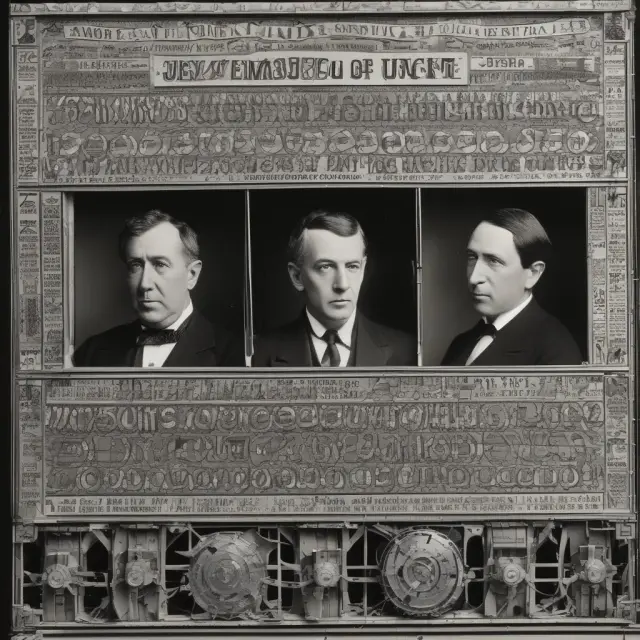
Inventors and Pioneers of Tape Reading
Tape reading is an integral part of stock market history, providing day traders with a powerful tool to analyze the price and volume trends of stocks long before computers and electronic communication networks took over. This technique emerged in the late 1800s when stock prices were transmitted on ticker tape via telegraph lines. Among those who made significant contributions to the development and popularization of tape reading are Edward A. Calahan, Thomas Edison, and Jesse Livermore.
Edward A. Calahan (1827-1905) was one of the earliest inventors of ticker tapes for the Gold and Stock Telegraph Company in 1867. These machines helped usher in a more efficient market by providing real-time stock price information. Ticker tape machines quickly gained popularity among brokerages, leading to widespread dissemination of up-to-the-minute stock prices and volume data.
Thomas Edison (1847-1931) significantly influenced the world of finance when he improved upon Calahan’s invention in 1871 by creating the first practical stock ticker, which revolutionized the way traders obtained crucial market information. His improvements to the technology eventually led to a boom in brokerages and made the market more accessible to the public.
The rise of tape reading brought about numerous successful traders who gained recognition through their expertise in interpreting trends in real-time. Jesse Livermore (1877-1940), also known as “The Great Bear,” is one such figure. He is considered a pioneer of momentum trading and was renowned for his ability to read the stock market tape. Livermore’s story became a legend in Wall Street, inspiring several books, most notably “Tape Reading and Market Tactics” by Richard Wyckoff and “Reminiscences of a Stock Operator,” where Livermore’s trading techniques were documented extensively.
These pioneers laid the groundwork for modern finance, leaving an indelible impact on stock market terminology. Terms like ticker symbol, stock ticker, and phrases such as “don’t fight the tape” continue to be widely used today. Although tape reading was eventually replaced by more advanced technologies, it serves as a crucial piece of history that has shaped the modern financial landscape.
In the following sections, we will further explore how tape reading techniques have evolved and are still employed by traders in the digital age using modern technology like Level II quotes and electronic communication networks (ECNs).
Ticker Symbols and Stock Tickers
In the era before electronic communication networks (ECNs), stock tickers, and ticker symbols were essential tools used by traders to follow real-time price information for various stocks. The history of these devices dates back to 1867 when Edward A. Calahan invented the first ticker machine for the Gold and Stock Telegraph Company. This invention led to a significant improvement in market efficiency as stock prices and volumes were disseminated instantaneously.
The term “ticker” came from the sound produced by the ticking gears inside these machines, which relayed price updates on long strips of paper known as ticker tape. These tapes contained the stock symbol, current price, and volume. This information was crucial for traders to make informed decisions based on market trends or emerging news events.
Around the same time, Thomas Edison developed a practical stock ticker in 1871 that gained widespread adoption among brokerages. The tickers became an integral part of trading floors, allowing traders to quickly respond to changing market conditions and execute trades more efficiently.
Many famous traders made their mark by mastering the art of tape reading, such as Jesse Livermore, who popularized momentum trading strategies. Several books were also published on the subject, including “Tape Reading and Market Tactics” by Richard Wyckoff and “Reminiscences of a Stock Operator,” which detailed the experiences and insights of legendary trader Edwin Lefevre.
As the use of tickers became more widespread, various terms originated from this period, including “ticker symbol,” referring to a unique identifier assigned to each stock or security, and “stock ticker,” denoting the device used for real-time price dissemination.
While tape reading techniques have evolved with the advent of technology, many of these principles remain relevant in modern trading practices. Modern traders now rely on electronic order books to analyze support and resistance levels, interpret market depth, and identify potential trade opportunities. These insights are crucial for creating sophisticated trading algorithms that can help them make informed decisions based on real-time data.
In summary, ticker symbols and stock tickers were essential tools used by traders during the era of manual price dissemination. Despite the rise of personal computers and ECNs, these terms remain relevant as modern traders continue to apply similar principles when analyzing market trends and executing trades using advanced technology like Level II quotes.
The use of ticker symbols and stock tickers marked a turning point in financial markets by providing real-time information and enabling traders to respond quickly to emerging opportunities and changing market conditions. Although these physical devices are no longer used, their influence remains evident as many aspects of tape reading continue to inform modern trading techniques and strategies.
FAQs:
What is a ticker symbol?
A) A ticker symbol is a unique identifier assigned to each stock or security, which helps traders quickly locate relevant market information and make informed decisions based on real-time data.
Who invented the first ticker machine?
A) Edward A. Calahan invented the first ticker machine for the Gold and Stock Telegraph Company in 1867.
What was Thomas Edison’s contribution to stock tickers?
A) Thomas Edison developed a practical stock ticker in 1871 that gained widespread adoption among brokerages due to its efficiency.
Why is tape reading important for modern traders?
A) Tape reading continues to be essential for modern traders as they rely on electronic order books, support and resistance levels, and other techniques to analyze market trends and execute trades effectively.
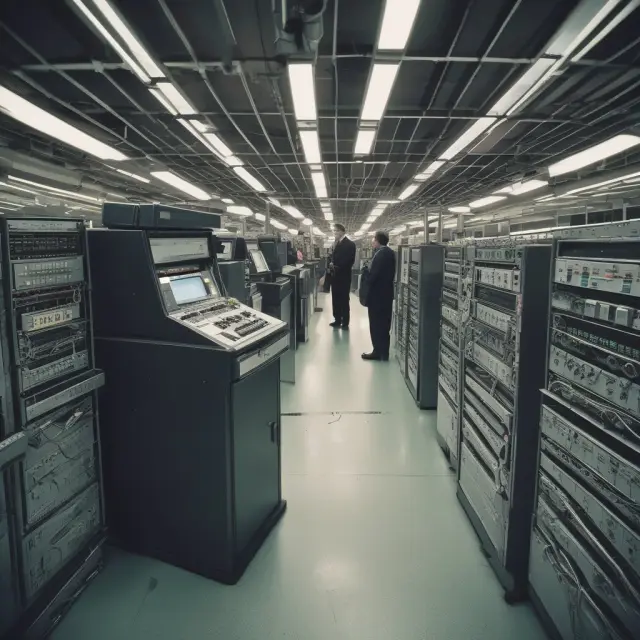
The Decline of Tape Reading
Tape reading was once an essential part of stock market analysis and day trading, but its use declined significantly with the advent of computers and electronic communication networks (ECNs) in the 1960s and 1970s. This traditional technique for analyzing a stock’s price and volume involved studying ticker tape that displayed a security’s ticker symbol, price, and volume as it was transmitted over telegraph lines. The history of tape reading can be traced back to the late 1860s, with its invention by Edward A. Calahan for the Gold and Stock Telegraph Company and Thomas Edison developing the first practical stock ticker in 1871. Tape reading became an essential tool for traders during this time, helping them make informed decisions based on real-time market data. Several famous traders, like Jesse Livermore, made a name for themselves using tape reading strategies.
However, tape reading’s influence began to wane with the emergence of electronic communication networks and personal computers in the latter half of the 20th century. By the late 1960s, most major brokerages had adopted these new technologies, making tape reading obsolete. Yet, despite its decline, many terms originating from this era remain in today’s trading vernacular. For instance, ticker symbols and stock tickers are still widely used terms in finance.
Nevertheless, modern traders have adapted similar strategies to analyze electronic order books using Level II quotes, which provide a higher level of detail by including non-executed trades. This data helps traders understand where the stock price may be headed, as they can observe large limit orders at various price levels across multiple exchanges. Large limit sell orders could indicate resistance levels, while significant limit buy orders beneath the current price might suggest strong support, allowing traders to make informed decisions based on this information.
Nowadays, advanced traders and programmatic traders employ these insights when developing sophisticated trading algorithms using order book data. Interactive Brokers is a popular brokerage platform that offers access to such real-time order book data through the “reqMktDepth” function. This wealth of information can prove incredibly valuable for modern traders looking to build effective trading strategies.
Despite the significant changes in the market landscape, tape reading continues to have an impact on financial markets and remains a foundational piece of the history of trading and finance. Understanding its origins, pioneers, and evolution provides essential context for today’s traders and investors, enabling them to better comprehend the tools and concepts that continue to shape their profession.
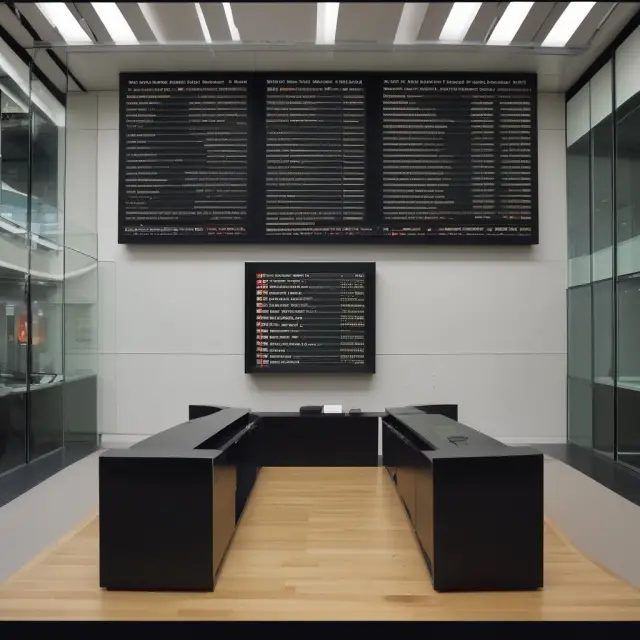
Modern Tape Reading Techniques
The decline of traditional tape reading as a primary tool for stock market analysis came with the introduction of advanced technology, such as electronic communication networks (ECNs) and computers. While the term ‘tape reading’ is no longer synonymous with stock market analysis, the fundamental concept has remained relevant, evolving to cater to modern financial markets.
Modern tape reading techniques revolve around analyzing order books for clues about a security’s price direction and potential support or resistance levels. This approach provides more comprehensive data compared to its historical counterpart since it includes non-executed trades displayed as Level II quotes. Understanding how modern tape reading operates is crucial to uncovering hidden opportunities within the stock market.
Order books are a critical component of modern trading platforms that showcase all bids and asks for a given security, revealing important information about potential price movements and trader sentiment. By closely examining order book data, traders can assess the balance between demand and supply levels. For instance, if there exist numerous large limit sell orders at a particular price level across multiple exchanges, this might indicate that the stock is likely to face significant resistance in that price range. Conversely, an abundance of large limit buy orders below the current price could suggest strong support at a specific price point and provide confidence for buying decisions, knowing there’s a solid foundation beneath the price floor.
Trading platforms like Interactive Brokers offer various functions to help traders access order book data in detail, such as ‘reqMktDepth.’ This advanced feature enables real-time streaming of level II quotes, allowing traders to observe market depth and adjust their strategies accordingly. By employing these modern tape reading techniques, traders can gain a distinct advantage over the competition by gaining insights into the stock’s underlying supply and demand dynamics.
While traditional tape reading methods have largely been replaced by advanced order book analysis, some fundamental concepts remain relevant. For example, ticker symbols, which are unique identification codes for securities, continue to be essential in modern trading systems. Additionally, phrases like “don’t fight the tape” are still applicable today, meaning traders should not oppose the prevailing trend if they aim to succeed in the markets. Overall, understanding these modern techniques allows investors to harness the power of advanced tools and adapt to the ever-evolving financial landscape.
Understanding Order Books for Modern Tape Reading
Tape reading was once an essential skill for day traders seeking to analyze stock prices and volumes on ticker tape. The practice, which originated in the late 19th century, involved studying the movement of stock prices and volume data transmitted via telegraph lines. However, with the advent of electronic communication networks (ECNs) and personal computers in the 1960s, tape reading faded into obscurity, replaced by more advanced technology. Despite its demise, several terms originating from this era remain widespread within trading communities. Among them are ticker symbols, stock tickers, and phrases like “don’t fight the tape” (meaning don’t trade against the trend).
Modern tape reading, while different from its historical counterpart, shares the same objective: to understand market dynamics using data. In today’s electronic markets, traders rely on order books to make informed decisions about where a stock price may be headed. Order books—also called depth charts or level II quotes—display non-executed trades alongside executed trades. By studying this information, traders can identify patterns and trends that might not be apparent from looking solely at price movements or volume data.
Consider, for example, the presence of large limit sell orders at a specific price level across multiple exchanges. This could suggest significant resistance at these levels, indicating potential profit-taking opportunities for short sellers. On the other hand, large limit buy orders below the current price may indicate strong support at a given level, giving traders confidence in buying positions, knowing there’s a price floor.
Brokers often provide access to order books through Level II quotes. Advanced traders can even use this information to build sophisticated trading algorithms that take advantage of market trends and liquidity conditions. Interactive Brokers, for instance, offers the reqMktDepth function, which streams real-time order book data to help traders make more informed decisions.
In essence, modern tape reading represents a natural evolution from its historical counterpart. While the terminology may have changed, the core concepts remain the same: understanding market dynamics and making informed trading decisions based on data. The tools available today provide traders with unprecedented access to real-time information, offering new opportunities for success in the ever-changing world of finance and investing.

Analyzing Support and Resistance Levels
One crucial aspect of tape reading involves understanding support and resistance levels, which help identify trends and inform potential trades. Tape reading pioneers like Jesse Livermore used this knowledge to make informed decisions based on supply and demand dynamics in the market. Support and resistance levels continue to play a significant role in modern trading techniques using advanced technologies like order books, limit orders, and Level II quotes.
Support Levels: A support level represents the price point at which a stock is likely to find buyers because it has previously acted as a floor during a downtrend. Large accumulation of buy orders below a current price indicates strong support, making it an attractive entry point for potential buyers. For example, if a stock has consistently traded between $50 and $60 for several months but recently dropped to $48, a trader might consider the $48 level as a potential support level, given its historical significance.
Resistance Levels: Conversely, resistance levels represent the price point at which a stock may find sellers due to previous resistance or overhead supply. A resistance level can be identified when there are multiple large sell orders above the current price or when a stock consistently fails to break above a specific price level. For instance, if a stock has struggled to rise above $62 for several attempts but keeps dropping back down, traders might consider the $62 level as a resistance level.
Modern Order Books and Support/Resistance Analysis: Modern order books offer a more detailed view into market dynamics compared to traditional tape reading methods. They allow traders to analyze support and resistance levels in real-time by observing non-executed trades and limit orders. By examining the size, depth, and liquidity of buy and sell orders at various price levels, traders can make informed decisions about entering or exiting positions based on the underlying supply and demand dynamics. For example, a large buildup of buy orders below the current price could indicate strong support, while an extensive queue of sell orders above the current price may suggest significant resistance.
Traders can use this information to develop strategies based on potential trend reversals or continuations. By monitoring support and resistance levels in conjunction with other indicators like moving averages, momentum oscillators, and volume patterns, traders can make more informed trading decisions that potentially increase their chances of profitability.
In conclusion, tape reading may have lost its place in the modern financial world due to technological advancements, but the fundamental concepts behind it remain relevant. Understanding support and resistance levels, as well as analyzing order books for potential trends, can prove valuable tools for traders seeking an edge in the ever-evolving world of finance and investment.

Using Order Book Data to Develop Trading Algorithms
Tape reading was once a crucial technique used by day traders to analyze stock prices and volume trends. However, as technology evolved, the traditional method of interpreting ticker tapes was replaced with more advanced tools like electronic communication networks (ECNs) and order books. Today, modern traders still employ similar techniques when analyzing market data using these innovative technologies. One such technique is utilizing order book data to develop sophisticated trading algorithms.
Order books provide valuable information about the stock market by displaying non-executed trades, which offers a deeper look into the market than historical ticker tapes. A trader might examine an individual security’s order book to determine potential price movements based on large limit orders at specific levels across various exchanges.
For instance, if there are extensive limit sell orders at a particular price level on multiple exchanges, this could indicate significant resistance to the stock reaching those prices and may encourage traders to avoid buying at that level. Conversely, if there are substantial limit buy orders beneath the current price, it might suggest strong support for the security at that specific price point, making it an attractive entry point.
Many brokers offer access to these order books in the form of Level II quotes, which can be particularly beneficial when implementing advanced trading strategies or building sophisticated algorithms. Programmatic traders often use this data to develop tailored models and identify trends that may not be evident using traditional charting methods alone. Interactive Brokers, for example, provides a feature called “reqMktDepth” that allows traders to stream order book information for thorough analysis, enabling them to make informed decisions based on real-time market insights.
The significance of understanding order book data is apparent when recognizing its role in modern trading techniques and algorithms. Traders can extract valuable information from these dynamic databases by interpreting the size and depth of orders placed at various price levels. By doing so, they can confidently make informed decisions regarding entry and exit points while effectively navigating the ever-changing market landscape.
In conclusion, although tape reading as a physical process has been replaced by digital technologies, its core principles remain relevant in today’s financial markets. Understanding order book data and how to use it to develop trading algorithms is an essential skill for any serious trader looking to maximize their potential in the market.

Case Studies in Modern Tape Reading
While tape reading was primarily associated with the old ticker machines, similar strategies have continued to evolve and remain relevant today through the use of electronic order books and more advanced technology. In this section, we will explore several real-world examples of successful trades made using modern tape reading techniques, highlighting how these concepts can provide valuable insights for traders.
Consider the infamous May 6, 2010 “Flash Crash,” where the Dow Jones Industrial Average (DJIA) experienced a rapid and significant decline within minutes, ultimately dropping by almost 9%. This event served as an excellent reminder of the importance of understanding order book dynamics and analyzing price movements during volatile market conditions.
One trader, identified only as “Vince,” was quick to capitalize on this situation. He noticed that the Dow Jones Industrial Average’s (DJIA) order book revealed a massive sell wall at the 10,500 level. Vince believed this could potentially act as a significant support level and used it as an opportunity to begin buying heavily when the DJIA touched this price point. As more traders followed suit, the selling pressure began to abate, and the market soon recovered, resulting in substantial profits for “Vince” and other traders who employed similar strategies.
Another example is the case of Amazon (AMZN) in early 2016. During this time, AMZN experienced a significant price increase in a short period due to an acquisition announcement, causing many traders to buy on the news without fully understanding the underlying fundamentals and potential risks involved. This led to an overbought situation where many limit orders were set at inflated prices.
A more cautious trader, “Tom,” observed this trend and noticed that large sell orders had started accumulating in the order book. He used this information to begin selling AMZN at a profit once the stock began retracing towards its mean price. By staying attuned to the market dynamics provided by the order book, Tom was able to avoid potential losses and even profit from the market volatility.
These examples highlight the significance of utilizing modern tape reading techniques in understanding the intricacies of electronic trading environments and how they can help traders make informed decisions during volatile market conditions. By examining order book data and recognizing patterns, traders can identify key price levels, support and resistance points, and potential opportunities to buy or sell based on supply and demand dynamics.
As technology continues to advance, new tools and strategies are emerging in the realm of modern tape reading. Traders must stay informed about these developments and remain adaptable in their approach to remain competitive in today’s fast-paced financial markets.

FAQs About Tape Reading and Modern Trading Techniques
What Is the Difference Between Old and Modern Tape Reading?
Old tape reading involved analyzing stock prices, volume, and order information transmitted through ticker tapes. Modern tape reading, on the other hand, uses advanced technology like Level II quotes and electronic communication networks (ECNs) to provide a more detailed analysis of market activity. While old tape reading focused on historical price data, modern tape reading offers real-time insights into current market conditions and order flow.
Who Were Some Notable Figures in the History of Tape Reading?
Some famous figures who made a name for themselves through tape reading include Edward A. Calahan, Thomas Edison, and Jesse Livermore. Calahan invented ticker tapes in 1867, while Edison developed the first practical stock ticker in 1871. Livermore was an American stock trader who became famous for his use of tape reading techniques during the Roaring Twenties. He is also known as the “Boy Plunger” due to his youthful appearance and aggressive trading style.
What Is a Ticker Symbol?
A ticker symbol is a unique alphanumeric code used to identify publicly traded securities, such as stocks or exchange-traded funds (ETFs). Ticker symbols are widely used in financial markets for various purposes, including tracking stock prices and executing trades. The origin of ticker symbols can be traced back to the early days of tape reading when stock tickers displayed stock prices using shortened company names.
How Do Modern Traders Use Tape Reading Techniques?
Modern traders use similar techniques as old-time tape readers but with more advanced technology like Level II quotes and electronic communication networks (ECNs). Instead of focusing on historical price data, modern tape readers analyze real-time market conditions, order flow, and liquidity to make informed trading decisions. This information is crucial in today’s fast-paced markets, where prices can change rapidly and opportunities can arise and disappear within seconds.
How Can Traders Use Order Books for Modern Tape Reading?
Order books display all the buy and sell orders for a given security at various price levels. By analyzing these order books, traders can gain valuable insights into market sentiment, liquidity, and potential price movements. For example, large limit orders at specific price levels could indicate strong support or resistance, allowing traders to adjust their positions accordingly. Order book data is often accessible through Level II quotes, which provide a more detailed look at the current state of the market compared to standard Level I quotes. Advanced traders may even use this information when building trading algorithms to identify trends, price movements, and profit opportunities.
What Is the Importance of Understanding Support and Resistance Levels?
Support and resistance levels are crucial concepts for modern tape reading and technical analysis. A support level is a price point where buyers are likely to enter the market and prevent further price declines, while a resistance level is a price point where sellers may resist further price increases. By understanding these levels, traders can anticipate potential price movements and adjust their positions accordingly. For example, if there’s strong support at $50 for a stock and it reaches that level during a downtrend, buyers might enter the market to push the price back up. Similarly, resistance levels could cause prices to reverse direction, leading to profit opportunities for sellers.
What Tools Do Modern Traders Use for Tape Reading?
Modern tape readers use various tools like Level II quotes, order books, and charting software to analyze market conditions in real-time. These tools offer a wealth of information that can help traders identify trends, price movements, and liquidity. Additionally, advanced traders may employ machine learning algorithms or artificial intelligence to process large datasets and generate insights that could be missed by human analysts. Ultimately, the goal is to gain a better understanding of market dynamics and make informed decisions based on real-time data.
 Next entry · No. 4,854Understanding the Taper Tantrum: The 2013 Market Panic and Its Aftermath
See also
-
 No. 4,754
14 Jul 2025
25 min
Stock Analysis: Understanding Fundamental and Technical Approaches for Institutional Investors
Business Finance
No. 4,754
14 Jul 2025
25 min
Stock Analysis: Understanding Fundamental and Technical Approaches for Institutional Investors
Business Finance -
 No. 5,923
19 Oct 2025
22 min
Understanding Zones of Support in Finance and Investment: Identifying Profitable Reversal Points
Investments
No. 5,923
19 Oct 2025
22 min
Understanding Zones of Support in Finance and Investment: Identifying Profitable Reversal Points
Investments -
 No. 5,922
18 Oct 2025
18 min
Understanding the Zone of Resistance: Technical Analysis for Institutional Investors
Financial Data Analysis
No. 5,922
18 Oct 2025
18 min
Understanding the Zone of Resistance: Technical Analysis for Institutional Investors
Financial Data Analysis -
 No. 3,988
13 May 2025
17 min
Understanding Pivot Points: Calculation, Meaning, Uses and Limitations
Financial Tools
No. 3,988
13 May 2025
17 min
Understanding Pivot Points: Calculation, Meaning, Uses and Limitations
Financial Tools -
 No. 2,895
12 Feb 2025
24 min
Understanding Limit Order Books: How They Function and Their Importance in Finance
Finance Policy
No. 2,895
12 Feb 2025
24 min
Understanding Limit Order Books: How They Function and Their Importance in Finance
Finance Policy -
 No. 5,880
15 Oct 2025
23 min
Understanding Zacks Lifecycle Indices: A Comprehensive Guide for Professional and Institutional Investors
Business Finance
No. 5,880
15 Oct 2025
23 min
Understanding Zacks Lifecycle Indices: A Comprehensive Guide for Professional and Institutional Investors
Business Finance