Understanding the Accumulation/Distribution Indicator (A/D) for Institutional Investors

Learn about the Accumulation/Distribution Indicator (A/D), a valuable tool for institutional investors to assess buying and selling trends in the stock market.
Introduction to Accumulation/Distribution Indicator (A/D)
Investing in financial markets requires a solid understanding of various technical indicators to make informed decisions based on market data. Among these essential indicators, the Accumulation/Distribution Indicator (A/D) has earned significant recognition for its role in assessing buying and selling pressure within an asset or security. In this section, we delve into what exactly is the A/D indicator, how it functions, and why it holds importance for institutional investors looking to navigate the ever-changing financial markets.
The Accumulation/Distribution Indicator (A/D) is a cumulative on-balance volume indicator that uses both price and volume to determine buying and selling trends by evaluating where the price closed within a period’s range. This valuable metric gauges supply and demand factors, ultimately providing insight into a security’s trend direction and potential reversals.
The A/D Indicator is calculated using the Money Flow Multiplier (MFM) and Money Flow Volume (MFV). The MFM is derived from the high, low, and close prices of an asset during a specific period. Meanwhile, MFV is obtained by multiplying the MFM by the total trading volume for that same time frame.
As each period comes to a close, the new MFV value is added to or subtracted from the previous A/D value. In its simplest form, the first calculation involves using the MFV as the initial A/D value.
What sets the Accumulation/Distribution Indicator apart from other technical indicators lies in its ability to identify divergences between price and volume flows. When a stock’s price is trending upwards while the A/D line experiences a downtrend, it suggests that accumulation pressure is present and may result in an eventual reversal to the upside. Conversely, when a security’s price trend is downward while the A/D line remains steady or uptrending, this indicates distributive pressure and could forecast a possible continuation of the downtrend.
In the following sections, we will discuss the significance of the A/D formula, its interpretation, and how it differs from On-Balance Volume (OBV). We’ll also explore real-life examples where institutional investors successfully utilized this indicator to make strategic investment decisions. By gaining a comprehensive understanding of the Accumulation/Distribution Indicator and its applications, you will be well-equipped to apply this knowledge in your own investment strategy and maintain an edge in today’s competitive financial markets.

Understanding the A/D Formula
The Accumulation/Distribution (A/D) indicator is an essential technical tool used by institutional investors and traders to gauge buying and selling pressure in a stock or security. This indicator measures the relationship between price and volume, providing valuable insights into the dynamics of supply and demand within a given time frame. In this section, we delve deeper into understanding the intricacies of calculating and interpreting the A/D formula.
The Accumulation/Distribution (A/D) indicator is derived from On-Balance Volume (OBV), which measures the net flow of volume during an uptrend or a downtrend by adding volume on up days and subtracting it on down days. The A/D indicator takes this concept a step further, offering a cumulative representation of the net buying and selling pressure within a security by considering where the price closed in relation to the period’s range.
The formula for calculating the Accumulation/Distribution (A/D) indicator involves determining the Money Flow Multiplier (MFM), Money Flow Volume (MFV), and accumulated A/D value (Accumulated Money Flow). Let us discuss each component in detail:
1. Money Flow Multiplier (MFM): MFM is calculated by subtracting the low price from the close price for a given period, then multiplying it by the volume for that same period. The result represents the total buying and selling power during the specified time frame based on the current closing price:
MFM = (High – Close) × Volume
2. Money Flow Volume (MFV): MFV is calculated as the product of MFM and the period’s volume, which gives us the net accumulation or distribution for that specific time interval.
MFV = MFM × Period Volume
3. Accumulated A/D Value: The accumulated A/D value represents the total cumulative buying (accumulation) or selling (distribution) power up to a given point in time. To calculate this, we add the current period’s Money Flow Volume to the previous Accumulated A/D value.
Accumulated A/D = Previous Accumulated A/D + Current Period MFV
For the initial calculation, the first period’s Money Flow Volume is set as the starting value for the Accumulated A/D line.
Calculating the A/D indicator involves following this process for each subsequent period. It is essential to note that when calculating the Accumulation/Distribution (A/D) indicator, we don’t need to know the closing price for the previous period; only the high and low values are necessary.
Stay tuned as we further explore how to interpret the A/D line in the next section. By understanding both its formula and interpretation, you will be well on your way to mastering this powerful technical indicator.

Interpreting the Accumulation/Distribution Indicator
The accumulation/distribution (A/D) indicator provides valuable insights into supply and demand dynamics in financial markets by assessing the relationship between volume and price movements. This cumulative indicator measures buying and selling pressure to determine if a stock is being accumulated or distributed. By analyzing these trends, institutional investors can make informed decisions regarding their investment strategies.
The A/D line’s interpretation relies on understanding its behavior in relation to price changes. When the price trend and the A/D line move in the same direction, it suggests that the buying or selling pressure is supporting the current trend. Conversely, a divergence between the price trend and the A/D line can indicate potential reversals.
To calculate the A/D indicator, we first determine the money flow multiplier (MFM), which is calculated as: MFM = (High – Low) × (Close – Lower of Open or Prior Close). The resulting value is then multiplied by the period’s volume to obtain the money flow volume (MFV). To calculate the A/D line, we accumulate these values over time: A/D = Previous A/D + MFV.
The A/D indicator’s interpretation can be summarized as follows:
- When a stock price is rising and the A/D line is also increasing, it signifies strong buying pressure supporting the uptrend.
- Conversely, when a stock price is declining while the A/D line is not following suit, this could indicate that selling pressure may be weakening and a potential reversal may occur.
- When both price and A/D are trending downward, it suggests significant distribution (selling) and continued price weakness.
The steepness of the A/D line also offers insights into the strength of trends. Steeply rising A/D lines indicate strong uptrends, while a sharp decline in the A/D line points to intense selling pressure or distribution. The A/D indicator’s analysis can complement other technical indicators and fundamental research for more comprehensive investment strategies.
It is important to note that the A/D indicator has limitations and may produce anomalies. For instance, a large price gap down with high volume might result in an unexpected increase in the A/D line despite significant price losses. Traders must be aware of these potential issues and remain cautious when interpreting this indicator.
In the next section, we will explore the relationship between the accumulation/distribution indicator and on-balance volume (OBV). These indicators both consider price and volume but differ in their calculations and interpretations.

A/D vs. On-Balance Volume (OBV)
The Accumulation/Distribution (A/D) indicator and On-Balance Volume (OBV) are two technical analysis tools that use price and volume data, but they differ significantly in their calculation methods and implications for institutional investors. While both indicators provide valuable insights into supply and demand dynamics, it’s essential to understand their unique characteristics and applications.
The A/D indicator assesses buying and selling activity by evaluating the relationship between the closing price and volume within a specific time frame. The formula calculates an average daily money flow multiplier (MFM), which represents the strength of the buying or selling pressure during that period based on the closing price’s position relative to the day’s high, low, and volume.
In contrast, On-Balance Volume (OBV) is calculated by determining whether the current closing price is higher or lower than the previous close and then adding or subtracting the daily volume accordingly. The logic behind OBV is that an increase in price without a corresponding increase in volume suggests selling pressure, while a decrease in price with increasing volume indicates accumulation.
The primary difference between these two indicators lies in their calculation methods. While the A/D indicator uses price and volume within a given period, OBV relies on price changes from one period to another. Consequently, they can provide varying insights, allowing investors to better assess trends, potential reversals, or divergences.
Institutional investors may find both indicators useful for various purposes. For instance, the A/D indicator can help confirm uptrends and downtrends by analyzing the relationship between price and volume movements. In contrast, OBV is particularly effective in identifying potential price reversals when it starts diverging from the primary trend. By combining these two indicators, investors can gain a more comprehensive understanding of market conditions and make informed investment decisions accordingly.
However, it’s important to note that neither indicator should be used alone. They are merely supplementary tools that provide valuable insights into underlying supply and demand dynamics. Institutional investors are advised to consider other factors, such as fundamental analysis, price action patterns, and economic indicators, before making investment decisions based on these technical indicators.
Understanding the nuances between the A/D indicator and On-Balance Volume (OBV) can help institutional investors make more informed decisions, gain a better edge in the market, and ultimately, achieve their financial goals.
Limitations of Using Accumulation/Distribution Indicator
The accumulation/distribution indicator (A/D) is an invaluable tool for investors and traders seeking to understand supply and demand dynamics within their portfolios. However, it’s essential to remember that no indicator is perfect, and the A/D has its limitations. In this section, we will discuss some common limitations and potential anomalies when working with accumulation/distribution indicators.
First and foremost, it’s crucial to note that the A/D indicator does not consider price changes from one period to the next. Instead, it focuses solely on where the price closes within the current period’s range. While this is an effective way to assess the strength or weakness of a trend, there are certain anomalies that can arise.
A notable example is when a stock experiences a significant gap down, with an enormous volume flow. Assume that the stock gaps down 20%, resulting in heightened selling pressure. However, as the price oscillates throughout the day and finishes near the high of its daily range, it might register a large increase in accumulation/distribution due to the substantial volume. Despite losing a considerable amount of value, the indicator will rise dramatically, likely misleading traders who may have relied solely on the A/D to assess the stock’s trend.
Another limitation worth mentioning is the potential for divergences between the price and the accumulation/distribution line. Divergences can last an extended period and may not always indicate a reversal. When the indicator and the price start displaying divergent trends, it doesn’t necessarily mean that a reversal is imminent. It could take a considerable amount of time for the price to reverse or even refuse to reverse at all. Therefore, traders should employ other forms of analysis, such as price action analysis, chart patterns, or fundamental analysis, alongside the A/D indicator to obtain a more comprehensive understanding of market trends.
In summary, while accumulation/distribution indicators are an excellent addition to any investor’s toolkit, it’s essential to be aware of their limitations and potential anomalies. By combining this powerful indicator with various other forms of analysis, you will position yourself for more informed investment decisions and a better understanding of the underlying market dynamics.
As we continue our exploration of the accumulation/distribution indicator, in the next section, we’ll discuss its comparison to on-balance volume (OBV) and how both indicators can provide unique insights when used together.

Utilizing A/D Indicator for Institutional Investors
The accumulation/distribution (A/D) indicator offers valuable insights into the underlying supply and demand dynamics that influence security prices. By monitoring trends, divergences, and potential anomalies, institutional investors can gain a competitive edge when making informed investment decisions.
First and foremost, the A/D line’s ability to confirm price trends is an essential feature for institutional investors. If a stock experiences a downtrend but the A/D line displays an uptrend, this discrepancy suggests that there may be underlying buying pressure that could potentially reverse the downward trend. Conversely, if a security exhibits an uptrend while the A/D line demonstrates a downtrend, this indicates potential selling pressure and a possible reversal to the downside.
Another crucial application of the A/D indicator is in the identification of divergences between price movements and volume trends. When the price and A/D line display opposing trends, it may signal a significant shift in market sentiment or underlying supply and demand factors, providing important insights for institutional investors.
A steeply rising A/D line can also indicate strong accumulation, which is an attractive sign for potential investments as it suggests that a large number of buyers are entering the market. Similarly, a falling A/D line may signal widespread distribution, indicating that sellers are actively offloading their holdings and potentially pointing to downward price pressure.
To further capitalize on the A/D indicator’s benefits, institutional investors can combine it with other indicators or forms of analysis such as moving averages, trend lines, chart patterns, and fundamental data. This multifaceted approach provides a more comprehensive understanding of market conditions and asset dynamics, allowing for better-informed investment decisions.
It is important to note that the A/D indicator has its limitations, particularly in cases where there are significant price gaps or anomalous volume shifts, which can potentially distort the accuracy of the indicator’s readings. Institutional investors must be vigilant and consider these factors when interpreting the A/D line to minimize any potential misinterpretations or false signals.
In conclusion, the accumulation/distribution (A/D) indicator plays a crucial role in helping institutional investors make informed investment decisions by providing insights into underlying supply and demand dynamics that influence security prices. By analyzing trends, divergences, and potential anomalies, institutional investors can capitalize on the A/D indicator’s strengths and minimize its limitations to gain a competitive edge in the financial markets.

Case Studies: Success Stories of Using Accumulation/Distribution Indicator
The accumulation/distribution indicator (A/D) has proven to be an essential tool for institutional investors seeking insights into buying and selling pressure within a security’s price trend. Here, we share two compelling case studies that demonstrate the power of this technical analysis indicator in generating profitable investment opportunities.
Case Study 1: Apple Inc.
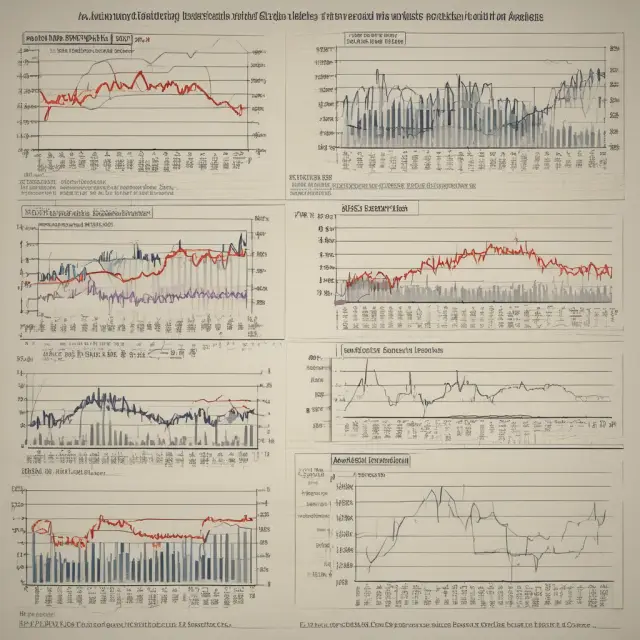
In late 2018, Apple (AAPL) experienced a significant stock decline, falling from its all-time high of $233.47 on October 3rd to a low of $142.19 on December 24th. During this period, the A/D indicator provided crucial insights into the underlying supply and demand dynamics. As illustrated in Figure 1, the AAPL price trended lower, while the A/D line held steady, indicating that accumulation was occurring despite the declining prices.
With the price trending downward but the A/D line holding firm, institutional investors could infer that buyers were stepping in at lower prices, making this an opportune time for entering long positions. As seen in Figure 2, the turning point came when the A/D line started to rise significantly above the price, signaling a strong accumulation phase and foreshadowing the impressive price recovery in early 2019.
Institutional investors who had implemented their strategies based on the A/D indicator would have enjoyed substantial gains as the stock price reached a new all-time high of $327.64 by August 2020.
Case Study 2: Tesla, Inc. (TSLA)
Another notable instance where the accumulation/distribution indicator proved instrumental was during Tesla’s remarkable rally from late 2019 to early 2020. As demonstrated in Figure 3, TSLA experienced a steady uptrend in price throughout the period, but what stood out most was the consistent increase of the A/D line.
The rising A/D line indicated that institutional investors were actively accumulating the stock at increasingly higher prices. This buying pressure was a strong indicator of a sustainable uptrend, enabling institutional investors to capitalize on the trend by entering long positions and benefiting from the substantial price increase. By early 2021, TSLA had reached an all-time high of $900.40.
In conclusion, the accumulation/distribution indicator (A/D) has been a valuable resource for institutional investors seeking to gain insights into buying and selling pressure within a security’s price trend. The case studies presented above demonstrate how the A/D indicator played a crucial role in generating profitable investment opportunities in Apple Inc. and Tesla, Inc. By recognizing trends and divergences, institutional investors can capitalize on market movements with confidence and precision.

Conclusion: The Role of A/D in Modern Portfolio Management
The Accumulation Distribution (A/D) indicator is an essential technical tool for institutional investors seeking to understand the underlying supply and demand dynamics of their investment portfolios. By analyzing price and volume trends, this powerful indicator provides a unique perspective on market movements that goes beyond simple price analysis. In today’s complex financial markets, the A/D indicator can play a crucial role in helping institutional investors make informed decisions to maximize returns while minimizing risk.
The importance of the accumulation/distribution (A/D) indicator stems from its ability to identify trends and potential trend reversals through the analysis of the relationship between price and volume flow. Unlike other technical indicators that focus solely on price action, such as moving averages or momentum oscillators, the A/D indicator offers a more comprehensive perspective by incorporating both price and volume data in its calculation.
One of the most significant advantages of using the A/D indicator for institutional portfolio management is its ability to confirm trend strength and identify potential reversals. By monitoring the relationship between price and volume, investors can gain insight into the underlying supply and demand dynamics that drive market movements. For instance, if a security’s price is in an uptrend but the A/D line shows a downward trend, it may indicate that buying pressure is weakening or selling pressure is increasing. Conversely, an uptrend accompanied by a rising A/D line suggests strong buying demand and a more sustainable trend.
Moreover, the accumulation/distribution indicator can also serve as an essential tool for institutional investors in evaluating potential entry or exit points within their investment portfolios. By studying divergences between price and volume trends, traders can identify opportunities for entering or exiting positions based on emerging market dynamics. For instance, a sharp divergence between the A/D line and price trend could indicate an imminent reversal, presenting an opportunity to take profits or enter opposite positions.
Another advantage of using the accumulation/distribution indicator in institutional portfolio management is its versatility across various securities and market conditions. The indicator’s ability to analyze both stocks and other asset classes, such as currencies, commodities, and indices, makes it an essential tool for diversified investment portfolios. Furthermore, the A/D indicator can be applied effectively in various market scenarios, including trending, ranging, or volatile markets, making it a versatile addition to any institutional investor’s analytical toolkit.
In conclusion, the accumulation distribution (A/D) indicator offers numerous benefits for institutional portfolio management, providing valuable insights into market trends and helping investors make informed decisions on entry, exit, and position sizing. As markets continue to grow more complex, the A/D indicator’s unique combination of price and volume analysis makes it an indispensable tool in navigating the intricacies of modern financial markets.
Understanding the accumulation distribution (A/D) indicator is crucial for any institutional investor seeking a competitive edge in today’s fast-paced investment landscape. By integrating this powerful technical tool into their analysis, investors can gain a more comprehensive perspective on market trends, confirm potential reversals, and make informed decisions to optimize portfolio performance.
In the following sections of our article, we will delve deeper into the mechanics of calculating and interpreting the accumulation distribution indicator, comparing it with other volume-based indicators like On-Balance Volume (OBV), and discussing its limitations in various market scenarios. Stay tuned as we explore how this essential technical tool can help you maximize your investment returns and minimize risk in modern portfolio management.

FAQs on Accumulation/Distribution Indicator
The Accumulation/Distribution (A/D) indicator, also known as the Narvaez A/D indicator or the Chaikin Money Flow (CMF) indicator, is a technical analysis tool that helps institutional investors and traders gauge buying and selling pressure in financial markets by analyzing price movements and volume data. In this FAQ section, we address common queries surrounding the Accumulation/Distribution Indicator, including how it’s calculated, interpreted, and applied to investment strategies.
What is the Accumulation/Distribution Indicator?
The A/D indicator measures the buying and selling pressure within a financial instrument by observing price changes and volume patterns. It evaluates whether there is more accumulation (buying) or distribution (selling) based on the closing price’s relationship to the period’s high and low prices and the corresponding trading volumes.
What does a rising A/D line indicate?
A rising A/D line generally suggests that buying pressure is stronger than selling pressure, signaling a potential uptrend or bullish signal. Conversely, a declining A/D line can point to selling pressure dominating the market, potentially indicating a downtrend or bearish signal.
How does the Accumulation/Distribution Indicator differ from On-Balance Volume (OBV)?
Both indicators measure price and volume, but they calculate these values differently. While OBV looks at whether the closing price is higher or lower than the previous close and adjusts volume based on that change, A/D uses a money flow multiplier to determine buying/selling pressure based on where the price closed within the period’s range.
How is the Accumulation/Distribution Indicator calculated?
To calculate the A/D indicator, you need to first find the money flow multiplier (MFM) using the close, high, and low values of a given period:
MFM = High – Low × (Close – Low) / (High – Close)
Next, multiply the MFM by the current volume, add it to the previous A/D value, and repeat this process for each new period.
What are some advantages of using the Accumulation/Distribution Indicator?
The A/D indicator helps traders and investors identify trends, understand buying and selling pressure, and potentially spot divergences between price movements and volume data. Additionally, it can be used to confirm other indicators or chart patterns and provide context for making informed investment decisions.
What are some limitations of the Accumulation/Distribution Indicator?
The A/D indicator has some weaknesses. For instance, it may not account for gaps in pricing data and might generate false signals due to anomalous price movements or volume fluctuations. Additionally, it does not provide clear buy or sell signals, instead focusing on providing context for overall market trends and direction.
Can the Accumulation/Distribution Indicator be used with other indicators?
Yes, A/D can be effectively used in conjunction with other indicators like Moving Averages, Relative Strength Index (RSI), and Bollinger Bands to provide a more comprehensive analysis of market trends. By combining different indicators, traders can gain a more nuanced perspective on the financial instrument’s price movements and underlying volume patterns.
In conclusion, the Accumulation/Distribution Indicator is an essential technical tool for institutional investors and traders who want to understand the dynamics of buying and selling pressure within their portfolios. By examining price movements and trading volumes, it offers valuable insights into potential trends and can be used to confirm other indicators or chart patterns. As with any technical indicator, though, it’s important to consider its limitations and use it in conjunction with multiple analysis methods for a more informed investment approach.

Additional Resources for Accumulation/Distribution Indicator Research
The accumulation/distribution indicator (A/D) is a valuable tool used in technical analysis to assess buying and selling pressures in financial markets. In this section, we delve deeper into the A/D indicator, exploring resources that offer further insights and techniques for utilizing it effectively.
1. Books:
– “Japanese Candlestick Charting Techniques” by Steve Nison: This classic text covers a wide range of technical indicators, including accumulation/distribution. It provides invaluable knowledge on interpreting charts and using the A/D indicator for trend analysis.
– “Technical Analysis Using Multiple Timeframes: A Trader’s Guide” by Joe DiNapoli: This book emphasizes the importance of using multiple timeframes in charting techniques like accumulation/distribution. It provides numerous examples on how to apply the A/D indicator effectively in different market conditions.
2. Online Resources:
– Investopedia: This financial education platform offers an extensive section dedicated to understanding and utilizing various indicators, including the accumulation/distribution indicator. Their articles provide detailed explanations with charts and examples that can help clarify the concepts.
– TradingView: This social networking site for traders and investors is an excellent resource for exploring different charting techniques and tools, including the A/D indicator. Users can analyze historical data and create custom indicators to gain a deeper understanding of market movements.
3. Websites:
– CBOE Market Indices (Cboe.com): This site provides real-time data on various market indices and includes numerous technical analysis tools, such as the accumulation/distribution indicator. It’s an excellent resource for tracking market trends and identifying potential opportunities using this powerful indicator.
4. Software:
– MetaStock: This advanced charting and trading software offers a range of indicators, including the accumulation/distribution indicator. Its user-friendly interface and comprehensive features make it a popular choice among professional traders and investors.
– TradeStation: Another top contender in technical analysis software is TradeStation, which offers extensive charting tools, including the A/D indicator. It’s widely used by professional traders and offers powerful customization options to suit various trading styles.
5. Courses:
– Trading Academy: This online educational platform provides a range of courses on technical analysis and charting techniques, including the accumulation/distribution indicator. They offer in-depth video tutorials, real-world examples, and interactive quizzes to help traders build their skills and knowledge effectively.
By integrating these resources into your investment research strategy, you’ll enhance your understanding of the accumulation/distribution indicator and its applications, ultimately helping you make better-informed decisions and maximize returns in various financial markets.
 Next entry · No. 49Understanding the Accumulation Phase in Finance and Investment: Building Wealth for Retirement
See also
-
 No. 210
07 Apr 2024
20 min
Understanding the Arms Index (TRIN): An Essential Technical Analysis Tool for Institutional Investors
Financial Tools
No. 210
07 Apr 2024
20 min
Understanding the Arms Index (TRIN): An Essential Technical Analysis Tool for Institutional Investors
Financial Tools -
 No. 300
09 Apr 2024
23 min
Understanding Baby Bonds: A Comprehensive Guide for Institutional Investors
Investments
No. 300
09 Apr 2024
23 min
Understanding Baby Bonds: A Comprehensive Guide for Institutional Investors
Investments -
 No. 221
07 Apr 2024
20 min
Understanding Ascending Triangles: A Technical Analysis Chart Pattern for Institutional Investors
Markets
No. 221
07 Apr 2024
20 min
Understanding Ascending Triangles: A Technical Analysis Chart Pattern for Institutional Investors
Markets -
 No. 353
11 Apr 2024
19 min
Understanding Bar Charts: Techniques, Interpretations, and Comparisons
Financial Tools
No. 353
11 Apr 2024
19 min
Understanding Bar Charts: Techniques, Interpretations, and Comparisons
Financial Tools -
 No. 213
07 Apr 2024
20 min
Understanding the Aroon Oscillator: A Robust Trend-Following Indicator
Financial Tools
No. 213
07 Apr 2024
20 min
Understanding the Aroon Oscillator: A Robust Trend-Following Indicator
Financial Tools -
 No. 212
07 Apr 2024
20 min
Understanding the Aroon Indicator: Identifying Trend Changes in Finance and Investment
Financial Tools
No. 212
07 Apr 2024
20 min
Understanding the Aroon Indicator: Identifying Trend Changes in Finance and Investment
Financial Tools