Understanding the Asian Infrastructure Investment Bank (AIIB): An Overview and Its Impact on Global Finance

Learn about the Asian Infrastructure Investment Bank (AIIB): its origin, structure, priorities, and impact on global finance and infrastructure development.
Introduction to the Asian Infrastructure Investment Bank (AIIB)
The Asian Infrastructure Investment Bank (AIIB), a multilateral development bank founded in 2015, plays a crucial role in financing infrastructure projects within Asia and beyond its borders. With more than 105 member countries as of July 2022, this international financial institution aims to contribute significantly to the region’s social and economic development.
Originated from an idea proposed by China’s President Xi Jinping at the APEC summit in Bali in 2013, the AIIB was established with a mission to promote infrastructure development and regional collaboration. The bank’s emergence has been perceived as a potential challenge to traditional international financial institutions, such as the IMF, World Bank, and Asian Development Bank. However, its unique governance structure – China holds roughly half of the voting shares – has raised concerns regarding its political motivations and independence from national interests.
The bank’s headquarters are based in Beijing. It is led by a Board of Governors comprised of one Governor and one Alternate Governor appointed by each member country. The board oversees strategic direction, annual plans, budgets, and policy establishment. Additionally, the bank employs a President, five Vice Presidents, a General Counsel, a Chief Risk Officer, and other senior management personnel to manage its operations. Jin Liqun currently serves as the AIIB’s President.
The AIIB’s priorities center on sustainable infrastructure projects that aim to meet environmental and development goals. It also focuses on financing initiatives linking countries in Asia and investing in cross-border infrastructure projects such as roads, railways, ports, energy pipelines, and telecoms across Central Asia, South East and South Asia, and the Middle East. Furthermore, the bank encourages partnerships with other multilateral development banks, governments, and private financiers to stimulate private capital investment in these projects.
An illustrative example of an AIIB project is the rural road connectivity initiative in Madhya Pradesh, India. This project will benefit approximately 1.5 million residents by improving their livelihoods, education, and mobility in over 5,640 villages. The US$140-million project was jointly financed by the AIIB and the World Bank in April 2018.
In the following sections, we will delve deeper into the history, structure, priorities, impact on global finance, and regional projects of the Asian Infrastructure Investment Bank, providing a comprehensive understanding of this influential international financial institution.

The History of the Asian Infrastructure Investment Bank
The Asian Infrastructure Investment Bank (AIIB) is a relatively new addition to the international development banking landscape, having commenced operations in January 2016. As an international financial institution headquartered in Beijing, its primary mandate centers around investing in infrastructure projects across Asia. The conception of the AIIB can be traced back to November 2013 when China’s leader Xi Jinping first proposed the idea during a meeting at an APEC summit in Bali.
One of the driving forces behind the creation of the Asian Infrastructure Investment Bank was the notion that international lending bodies, such as the IMF and the World Bank, were perceived to lean too heavily towards reflecting Western foreign policy interests. This perception led some countries to seek a more balanced multilateral development bank where China would exert significant influence, leading to the formation of the AIIB.
China’s proposal for an Asian infrastructure bank was met with skepticism and criticism from the United States, who raised concerns regarding the potential governing standards and social and environmental safeguards of the new organization. Despite these objections, the bank’s appeal proved to be strong. By January 2016, more than half of NATO countries had signed on as founding members, with nearly every large Asian country joining save for Japan. The AIIB’s rapid growth is often viewed as an indicator of China’s expanding global influence at the expense of the United States.
The AIIB’s board and management structure comprises a Board of Governors, a non-resident Board of Directors, and a President, among other key positions. The Board of Governors includes one Governor and one Alternate Governor appointed by each member country, while the Board of Directors is responsible for the direction and management of the Bank. Jin Liqun currently serves as the bank’s President.
The AIIB’s priorities revolve around infrastructure projects that promote sustainable development and support countries striving to meet environmental and socio-economic goals. The bank focuses on funding projects within Asia, with a particular emphasis on road, rail, ports, energy pipelines, telecoms, and other infrastructure initiatives spanning Central Asia, South East Asia, the Middle East, and maritime routes in South Asia. Additionally, the AIIB places significant importance on mobilizing private capital through partnerships with multilateral development banks, governments, and private financiers.
One example of the AIIB’s impact is a rural road connectivity initiative in Madhya Pradesh, India, which aims to benefit approximately 1.5 million residents by improving their livelihoods, education, and mobility. The project, jointly financed by the AIIB and the World Bank, received official approval in April 2018 and represents a significant step towards addressing the infrastructure needs of the region.

AIIB’s Structure: Governance and Leadership
The Asian Infrastructure Investment Bank (AIIB) is a multilateral development bank that began operations in January 2016 with the mission to finance infrastructure projects in Asia. As of July 30, 2022, it has 105 approved members worldwide. The bank’s headquarters are located in Beijing.
Governance and Leadership
The AIIB’s governance structure is composed of two principal bodies: the Board of Governors and the Board of Directors. Each member country appoints one Governor and one Alternate Governor to represent them on the Board of Governors. The Board of Governors is responsible for setting strategic direction, approving policies, and determining the bank’s budget and operational plans.
The non-resident Board of Directors oversees the day-to-day management of the AIIB. This board is composed of a President and five Vice Presidents, who lead various policy and strategy, investment operations, finance, administration, and the corporate secretariat functions. The General Counsel and Chief Risk Officer also support the President.
Jin Liqun currently presides as the President of the AIIB. He was elected for a five-year term that began in January 2016 and is eligible for re-election once.
Chinese officials hold half of the bank’s voting shares, leading some to perceive the AIIB as serving the interests of the Chinese government. The U.S.’s concerns about the bank’s governing standards and social and environmental safeguards have been a topic of debate among observers, with many interpreting China’s control as an indicator of its increasing international influence. Despite this, approximately half of NATO members and nearly every large Asian country have joined the AIIB, except for Japan.
In summary, the AIIB’s governance structure is composed of the Board of Governors and the Board of Directors, with a President leading the day-to-day operations. The bank’s leadership includes Jin Liqun as the current President, who was appointed in 2016 for a five-year term. Despite controversy regarding its perceived alignment with China’s interests, the AIIB continues to gain members and make strides in financing sustainable infrastructure projects across Asia and beyond.

Priorities of the Asian Infrastructure Investment Bank
The Asian Infrastructure Investment Bank (AIIB) is dedicated to improving social and economic outcomes in Asia through infrastructure financing. Since its inception in 2016, the bank has focused on a select set of priorities that address sustainable development and regional connectivity.
The bank’s commitment to sustainable infrastructure is at the core of its mission. It finances projects aimed at reducing carbon emissions and addressing climate change challenges, as well as those focusing on renewable energy, green transportation, and water supply systems. The AIIB’s efforts align with international development goals such as the United Nations Sustainable Development Goals (UN SDGs), which aim to end poverty, protect the planet, and ensure that all people have access to essential infrastructure.
Another priority of the Asian Infrastructure Investment Bank is to support countries in their pursuit of sustainable development goals. This involves funding projects that improve transportation networks, energy distribution systems, and digital connectivity across Asia. By connecting regions and facilitating trade through cross-border infrastructure projects, the bank contributes to creating a more integrated, prosperous continent.
The AIIB also places emphasis on mobilizing private capital. It encourages partnerships between governments, multilateral development banks, and private financiers to co-finance projects, thereby increasing the total amount of investment available for infrastructure development in Asia. The bank’s approach to public-private partnerships (PPPs) is based on fair, transparent, and competitive bidding processes that allow both parties to benefit from shared risk and reward.
A notable example of an AIIB project that embodies these priorities is the rural road connectivity initiative in Madhya Pradesh, India. This project, which received joint financing from the AIIB and the World Bank, aims to benefit approximately 1.5 million residents by improving their livelihoods, access to education, and mobility. The infrastructure development will also help stimulate economic growth in the region.
In conclusion, the Asian Infrastructure Investment Bank’s priorities revolve around sustainable infrastructure, supporting countries in their development goals, and mobilizing private capital. By focusing on these objectives, the bank contributes significantly to improving the lives of millions in Asia and fostering regional integration.

AIIB vs. Other International Development Banks
The Asian Infrastructure Investment Bank (AIIB) stands out among international development banks due to its unique structure, governance, and focus on Asia’s infrastructure development. While it shares similarities with other multilateral development institutions like the World Bank and IMF, several key differences set the AIIB apart.
One of the most striking differences between the Asian Infrastructure Investment Bank (AIIB) and organizations such as the World Bank and International Monetary Fund (IMF) is China’s control over the bank. The AIIB’s founding was motivated by China’s desire to have more influence in the global economic arena, particularly within its own region. China holds 26.5% of voting shares, which grants it a significant level of power in decision-making processes.
The World Bank and IMF are well-established institutions that have been instrumental in shaping international financial policies since their inception. The World Bank, for instance, has focused on providing long-term loans to middle- and low-income countries for the purpose of reducing poverty, improving education, and promoting sustainable economic growth. On the other hand, the IMF’s primary role is to promote global monetary cooperation, international trade, high employment, and sustainable economic growth by providing short-term financial assistance to member countries.
Despite China’s influence in the Asian Infrastructure Investment Bank, the bank has maintained a commitment to transparency and collaboration with other development institutions. It has established partnerships with organizations like the World Bank, the European Bank for Reconstruction and Development (EBRD), and the Asian Development Bank (ADB) to co-finance projects that promote sustainable infrastructure development in Asia. These collaborations demonstrate how the AIIB complements existing international financial mechanisms while maintaining its independence.
Comparing the structures of these institutions, it’s evident that the Asian Infrastructure Investment Bank is more streamlined compared to the World Bank and IMF. The AIIB has a smaller organizational structure with a Board of Governors, a Board of Directors, and a President, while the other two organizations have numerous departments and agencies under their umbrella.
Another significant difference between the Asian Infrastructure Investment Bank (AIIB) and other multilateral development banks is its approach to infrastructure investments. The AIIB emphasizes financing projects that promote sustainable infrastructure, prioritizing investments in sectors like energy, transportation, water management, environmental protection, and information and communication technology. These priorities are aligned with the United Nations’ Sustainable Development Goals (SDGs) and reflect China’s commitment to improving the lives of people in its own region and beyond.
In summary, the Asian Infrastructure Investment Bank (AIIB) has established itself as a unique player in international development finance. While it shares similarities with institutions like the World Bank and IMF, its distinct focus on Asia’s infrastructure development, China’s significant influence, and commitment to transparency and collaboration set it apart from other multilateral development banks. By investing in sustainable infrastructure projects, the AIIB is playing a crucial role in promoting economic growth and reducing poverty in the Asian region and beyond.

The Impact of AIIB on Global Finance: Sovereign Wealth Funds
The Asian Infrastructure Investment Bank (AIIB), as a new multilateral development bank, has been creating ripples in the global financial landscape since its inception. One significant area where its impact is being felt is among sovereign wealth funds (SWFs), particularly those based in Asia. This section will discuss how the AIIB’s presence influences sovereign wealth funds and their role in financing infrastructure projects.
First, it’s important to understand that SWFs play a critical role in the global economy as they are often large investors with significant financial resources. These funds operate independently of their governments but are subject to their regulatory oversight. According to the Sovereign Wealth Fund Institute (SWFI), the total assets under management (AUM) of sovereign wealth funds reached $7 trillion in 2021, with 34 funds managing over $100 billion in assets each.
The AIIB’s emergence as a new player in global infrastructure financing has led many SWFs to consider partnering with the bank on projects or investing alongside it. This collaboration can offer several benefits for both parties. For instance, working with the AIIB provides SWFs access to its expertise and extensive knowledge of infrastructure development in Asia. In turn, the AIIB benefits from SWFs’ financial resources and investment experience, enabling larger and more complex projects to be undertaken.
A case in point is the recent partnership between the Abu Dhabi Investment Authority (ADIA), one of the largest sovereign wealth funds with approximately $760 billion in assets under management, and the AIIB on a railway project in Bangladesh. The $3.9 billion project aims to modernize and expand the existing railway network by adding new lines and upgrading infrastructure for increased efficiency and capacity. This collaboration is expected to attract private sector investment, contribute to economic growth, and improve connectivity between India and Southeast Asia.
The AIIB’s role extends beyond infrastructure projects as it also seeks to mobilize private capital and encourage public-private partnerships (PPPs). This strategy aligns with the interests of many SWFs, which are increasingly seeking to diversify their investment portfolios by investing in infrastructure assets. The collaboration between the AIIB and SWFs on PPP projects can lead to a win-win situation as the risk is shared among multiple stakeholders and the economic benefits are spread across the region.
Moreover, the AIIB’s emphasis on environmental, social, and governance (ESG) factors in its projects resonates with many SWFs, which have also been focusing on integrating ESG considerations into their investment decisions. This alignment can facilitate a stronger partnership between SWFs and the AIIB as they work together to finance sustainable infrastructure projects that benefit both their financial returns and long-term societal impact.
In conclusion, the emergence of the Asian Infrastructure Investment Bank has led to an interesting dynamic in the relationship between multilateral development banks and sovereign wealth funds. The collaboration between these two entities can result in larger, more complex infrastructure projects that attract private sector investment, create economic growth, and promote sustainable development in Asia. By partnering with each other on projects and sharing expertise, both the AIIB and SWFs stand to gain from this mutually beneficial relationship.

The Role of Multilateral Development Banks and Public-Private Partnerships (PPPs)
Understanding How Multilateral Development Banks, the Asian Infrastructure Investment Bank (AIIB), and Public-Private Partnerships Collaborate
Since its establishment in 2016, the Asian Infrastructure Investment Bank (AIIB) has been an active player in the realm of financing infrastructure projects in Asia. Its approach to development initiatives is not isolated but rather collaborative, involving partnerships with multilateral development banks and public-private partnerships (PPPs). This section explores how these collaborations function within the context of the AIIB’s mission and goals.
Multilateral Development Banks and the Asian Infrastructure Investment Bank: Synergy in Action
The Asian Infrastructure Investment Bank (AIIB) and multilateral development banks such as the World Bank, the Asian Development Bank (ADB), and the European Bank for Reconstruction and Development (EBRD) share common objectives. These organizations aim to improve social and economic outcomes by investing in infrastructure projects that connect countries and fuel sustainable growth. AIIB’s collaborations with multilateral development banks stem from its commitment to promoting regional cooperation and leveraging collective expertise to address shared challenges.
The partnership between the Asian Infrastructure Investment Bank (AIIB) and multilateral development banks has been demonstrated in various projects, such as India’s rural road connectivity initiative. This project, which benefits approximately 1.5 million rural residents, was jointly financed by the AIIB and the World Bank with a combined investment of US$140 million. The collaboration between these two institutions not only amplifies their collective impact on the ground but also enables knowledge exchange and learning from one another’s best practices.
Public-Private Partnerships (PPPs) and the Asian Infrastructure Investment Bank: A Winning Combination
Public-private partnerships (PPPs) have emerged as a crucial mechanism for bridging the gap between public sector funding and private capital in infrastructure projects. By fostering collaborations with PPPs, the Asian Infrastructure Investment Bank seeks to stimulate private capital investment in its priority areas of sustainable infrastructure and regional connectivity.
One significant advantage of this approach lies in its ability to bring together the strengths of both sectors: the risk appetite and efficiency of the private sector and the development goals of the public sector. By encouraging these partnerships, the AIIB can mobilize more capital for large-scale infrastructure projects while ensuring that the resulting investments align with the organization’s mission and commitment to social and environmental sustainability.
For instance, in the context of renewable energy projects, public-private partnerships enable the Asian Infrastructure Investment Bank to facilitate private sector investments alongside its own funding. This approach not only diversifies risk but also attracts long-term investors interested in sustainable energy projects. By fostering such collaborations, the AIIB can contribute significantly to addressing infrastructure gaps while promoting sustainable development and regional cooperation.

Environmental, Social, and Governance (ESG) Considerations
As the Asian Infrastructure Investment Bank (AIIB) continues to expand its influence in global finance and development, it is crucial to examine how this multilateral development bank integrates environmental, social, and governance (ESG) considerations into its projects and initiatives. ESG factors have gained significant importance in recent years due to their potential impact on long-term financial performance and social outcomes. The AIIB’s focus on sustainable infrastructure aligns with the growing trend towards responsible investing, making it an interesting case study for understanding how a development bank addresses these concerns.
The Asian Infrastructure Investment Bank (AIIB) has committed to considering ESG factors in its investment decision-making process. As stipulated in the AIIB’s Articles of Agreement, the bank is obliged to promote sustainable economic and social development through its activities. Specifically, Article 2(c)(iii) states that one of the Bank’s primary objectives is “to promote economic, financial, and sustainable infrastructure development.” In this context, sustainability refers not only to environmental aspects but also to social and governance considerations.
ESG factors encompass a wide range of issues, including:
– Environmental considerations (such as climate risk, pollution prevention, and biodiversity conservation)
– Social considerations (such as labor standards, human rights, and community engagement)
– Governance considerations (transparency, anti-corruption measures, and accountability)
The AIIB’s approach to ESG factors is twofold: it includes both internal policies and external collaborations. Internally, the bank has established guidelines for addressing ESG risks and opportunities in its projects through its Environmental and Social Framework (ESF). The framework sets out procedures for assessing, managing, and reporting on potential environmental and social risks associated with AIIB-financed projects.
The AIIB’s external collaborations include partnerships with multilateral development institutions, private financiers, and governments to promote responsible business practices. One such collaboration is the bank’s partnership with the World Bank in India to jointly finance the rural road connectivity initiative discussed earlier. The project demonstrates how multiple financing institutions can work together to improve infrastructure while adhering to ESG principles.
In conclusion, the Asian Infrastructure Investment Bank (AIIB) plays a significant role in addressing the financial and development needs of Asia and beyond by focusing on sustainable infrastructure projects. Its commitment to considering environmental, social, and governance (ESG) factors is crucial for promoting long-term financial performance and ensuring positive social outcomes. By implementing internal policies such as its Environmental and Social Framework (ESF), and external collaborations with multilateral development institutions and private financiers, the AIIB demonstrates a responsible approach to investment that sets an example for other development banks and financing institutions.
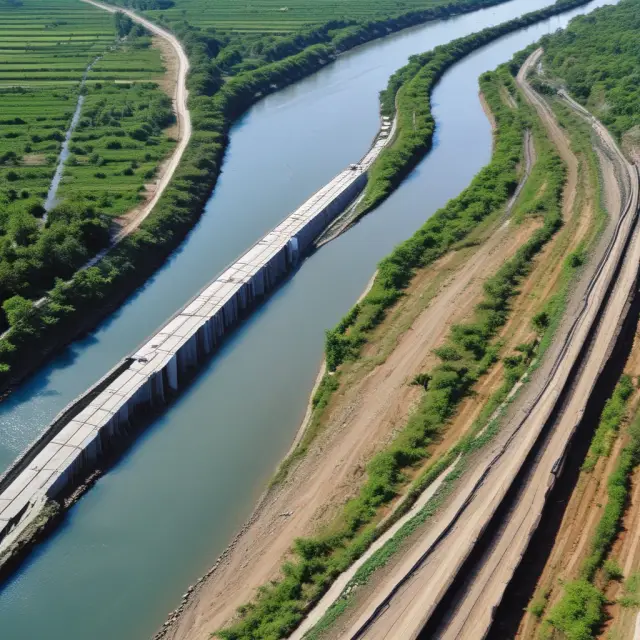
Regional Project Examples: Roads, Railways, and More
The Asian Infrastructure Investment Bank (AIIB) has already funded numerous successful infrastructure projects since its establishment in 2016, making a significant impact on various regions within Asia. This section will discuss some of the most noteworthy projects that demonstrate AIIB’s commitment to sustainable infrastructure development.
One key area where the AIIB has made headway is road connectivity. For example, a rural road project in Madhya Pradesh, India, is set to improve accessibility for approximately 1.5 million residents as of April 2018. This U.S.$140-million initiative, co-financed by the AIIB and the World Bank, aims to enhance the livelihoods, education, and mobility of local communities while reducing environmental impact.
Another prominent example is the development of a railway connecting Myanmar’s southern Tanintharyi Region with Thailand. This $160 million project will not only strengthen economic ties between the neighboring countries but also provide much-needed infrastructure for regional transportation and logistics. Additionally, it will reduce pressure on border crossings and promote tourism development in the region.
In Bangladesh, a U.S.$148 million loan from the AIIB is being used to modernize the Dhaka metro rail system. This project involves upgrading existing train lines and expanding the network to improve urban transportation and reduce traffic congestion. The modernized metro rail will provide a significant improvement in travel conditions for the millions of residents who rely on public transport daily, ultimately enhancing the overall quality of life in Dhaka.
The AIIB’s commitment to renewable energy projects is evident through its involvement with the 50 MW Jasperso Solar Power Project in Pakistan. This U.S.$82 million project includes the installation of photovoltaic solar panels and associated infrastructure, aiming to generate clean electricity for approximately 150,000 households while reducing dependence on fossil fuels and promoting environmental sustainability.
These examples serve as testament to the Asian Infrastructure Investment Bank’s dedication to creating sustainable infrastructure projects that benefit the communities they serve. By addressing pressing needs in transportation, energy, and more, the AIIB is demonstrating its capacity to positively influence Asia’s development landscape.

AIIB’s Global Reach: Investment in Africa and Europe
The Asian Infrastructure Investment Bank (AIIB) has expanded its reach beyond Asia, making strategic investments in Africa and Europe to enhance global development efforts. The bank’s growing influence signifies a shift in international financial dynamics and marks a new era for infrastructure financing worldwide.
Since its inception, the AIIB has made significant strides in promoting sustainable infrastructure projects across Asia. However, the potential benefits of the AIIB’s model extend far beyond Asia, with numerous opportunities to make an impact on global development in Africa and Europe. As a result, the bank has been increasingly active in funding projects in these regions, recognizing their unique challenges and opportunities.
Africa, for instance, faces critical infrastructure gaps that hinder its economic growth and social progress. The AIIB’s investment can help bridge this gap by addressing key areas such as energy, transportation, and water management. For example, the bank’s participation in the Addis Ababa Light Rail Transit project in Ethiopia, which aims to reduce traffic congestion and promote green transport, is a testament to its commitment to supporting Africa’s development.
In Europe, the AIIB’s involvement can contribute to further enhancing the region’s already robust infrastructure network while addressing new challenges such as the transition towards greener energy sources and digital transformation. The bank has recently invested in the Serbian Gas Interconnector project, which will improve gas connectivity between Central and South Eastern Europe and further enhance regional cooperation and energy security.
The AIIB’s global reach also reflects its collaborative approach to infrastructure financing. The bank partners with other multilateral development institutions, governments, and private financiers to maximize the impact of its investments and mobilize additional resources. For instance, the joint investment in the Addis Ababa Light Rail Transit project with the World Bank demonstrates the synergies that can be achieved through such collaborations.
Moreover, the AIIB’s global footprint signifies a new trend in multilateral development financing. The bank’s growing influence, coupled with its commitment to transparency and sustainable development, could potentially shift the balance of power in international finance and create new opportunities for emerging economies to play a more prominent role in global development initiatives.
In conclusion, the Asian Infrastructure Investment Bank’s expansion into Africa and Europe is an essential step in addressing critical infrastructure gaps and promoting sustainable development worldwide. By partnering with other multilateral institutions, governments, and private financiers, the AIIB can maximize its impact and create new opportunities for global cooperation and collaboration.
The bank’s commitment to transparency, sustainability, and regional connectivity is further solidified through these strategic investments, making the AIIB an important player in shaping the future of infrastructure financing on a global scale.

FAQs About the Asian Infrastructure Investment Bank
Asian Infrastructure Investment Bank (AIIB) is an international financial institution that primarily focuses on financing infrastructure projects in Asia. Established in 2016, AIIB has gained significant attention for its potential role in shaping global finance and development landscape. Here we address some common queries regarding the Asian Infrastructure Investment Bank’s operations, membership, and impact:
What is the mission of the Asian Infrastructure Investment Bank?
The primary mission of AIIB is to improve social and economic outcomes for its member countries by financing infrastructure projects that promote sustainable development. It strives to bridge the infrastructure gap in Asia through investments in various sectors, including roads, railways, energy, telecommunications, and water treatment.
How is the Asian Infrastructure Investment Bank structured?
The bank operates under a board of governors and a board of directors. Governors are appointed by each member country, while the board of directors manages the strategic direction, annual plans, and budgets for the AIIB. The president, elected for a five-year term with the possibility of re-election once, leads the bank’s staff and senior management team.
How did the Asian Infrastructure Investment Bank come into existence?
Proposed in 2013 by China’s leader Xi Jinping at an APEC summit, the AIIB was initially perceived as a challenge to Western-led international financial institutions such as the IMF and World Bank due to China’s control of half the bank’s voting shares. While some countries expressed concerns over the bank’s governance standards, many others saw it as an opportunity for increased Chinese influence in global finance.
What types of projects does the Asian Infrastructure Investment Bank fund?
The AIIB primarily supports infrastructure projects that promote sustainable development, focusing on sectors like transportation, energy, water treatment, and telecommunications. The bank also encourages public-private partnerships (PPPs) to stimulate private investment in these initiatives.
What role does the Asian Infrastructure Investment Bank play in mobilizing private capital?
The AIIB collaborates with multilateral development banks, governments, and private financiers to co-finance projects that involve substantial private sector participation. This approach helps mobilize additional resources for infrastructure projects and shares risk among various stakeholders.
What is an example of a successful Asian Infrastructure Investment Bank project?
One notable example of a successful AIIB project is the Rural Road Connectivity Initiative in Madhya Pradesh, India. This U.S. $140-million joint financing effort by the AIIB and the World Bank aims to benefit approximately 1.5 million rural residents by improving their livelihoods, education, and mobility through the construction of new roads.
How does the Asian Infrastructure Investment Bank compare to other international development banks?
The AIIB differs from established multilateral development banks like the World Bank and IMF in its governance structure, as China holds a significant portion of voting shares. This can potentially influence project selection and funding decisions based on Chinese interests. However, it also enables faster decision-making processes compared to traditional institutions and attracts more membership from developing countries seeking alternative financing options.
 Next entry · No. 226Understanding Asia-Pacific Economic Cooperation (APEC) and Its Role in Global Trade
See also
-
 No. 4,089
21 May 2025
21 min
Understanding Private Finance Initiatives: Advantages, Disadvantages & Real-World Examples
Business Finance
No. 4,089
21 May 2025
21 min
Understanding Private Finance Initiatives: Advantages, Disadvantages & Real-World Examples
Business Finance -
 No. 2,396
02 Jan 2025
23 min
Understanding the Essential Role of Infrastructure in Finance and Investment
Business Finance
No. 2,396
02 Jan 2025
23 min
Understanding the Essential Role of Infrastructure in Finance and Investment
Business Finance -
 No. 491
26 Apr 2024
21 min
Understanding Build-Operate-Transfer (BOT) Contracts: Public-Private Partnership Models for Infrastructure Projects
Business Strategy
No. 491
26 Apr 2024
21 min
Understanding Build-Operate-Transfer (BOT) Contracts: Public-Private Partnership Models for Infrastructure Projects
Business Strategy -
 No. 4,575
29 Jun 2025
20 min
Understanding Special Drawing Rights (SDRs): An International Reserve Currency Instrument
Global Finance
No. 4,575
29 Jun 2025
20 min
Understanding Special Drawing Rights (SDRs): An International Reserve Currency Instrument
Global Finance -
 No. 1,951
27 Nov 2024
21 min
Understanding the Role and Significance of Group of 11 (G-11) in Global Finance and Investment
Global Finance
No. 1,951
27 Nov 2024
21 min
Understanding the Role and Significance of Group of 11 (G-11) in Global Finance and Investment
Global Finance -
 No. 1,751
01 Nov 2024
23 min
Understanding the British Pound Sterling (GBP): History, Trading, and Its Role in Global Finance
Global Finance
No. 1,751
01 Nov 2024
23 min
Understanding the British Pound Sterling (GBP): History, Trading, and Its Role in Global Finance
Global Finance