Understanding Asia-Pacific Economic Cooperation (APEC) and Its Role in Global Trade

Understanding Asia-Pacific Economic Cooperation (APEC) through its goals, formation, membership, programs, challenges, and impact on global trade.
Introduction to APEC
The Asia-Pacific Economic Cooperation (APEC) is an influential economic organization comprising 21 member countries primarily in the Pacific Rim region. Established in 1989, APEC’s mission has remained consistent since its inception: promoting free trade and sustainable development among its diverse membership. APEC’s influence extends beyond its borders through partnerships with various regional organizations and initiatives.
Founding Members and Purpose
The original members of APEC were Australia, Brunei, Canada, Indonesia, Japan, Korea, Malaysia, New Zealand, the Philippines, Singapore, Thailand, and the United States (U.S.). Since then, China, Hong Kong, Taiwan, Mexico, Papua New Guinea, Chile, Peru, Russia, and Vietnam have joined its ranks. The addition of these countries expanded APEC’s geographic reach and economic diversity.
APEC’s primary objective is to ensure that goods, services, capital, and labor can move easily across borders within the organization. This goal encompasses reducing tariffs, improving customs efficiency, and closing the gap between developed and developing economies. The organization seeks to create a favorable business climate for its members by harmonizing regulations and policies across the region.
The formation of APEC was driven by the increasing interdependence of Asia-Pacific economies. The late 20th century saw the rise of numerous regional economic blocs, including the European Union (EU) and the North American Free Trade Agreement (NAFTA). Establishing APEC allowed Pacific Rim nations to collaborate on economic issues and address diplomatic challenges more effectively.
In conclusion, the Asia-Pacific Economic Cooperation (APEC) is a vital economic organization that has fostered cooperation among its 21 member countries since 1989. Its primary goal of promoting free trade and sustainable development has influenced global trading dynamics and played a crucial role in shaping the Pacific Rim region’s economic landscape. APEC’s efforts have led to numerous initiatives, sub-groups, and agreements that facilitate business activities, liberalize trade, and promote economic cooperation among its diverse membership.
APEC’s Principal Goals
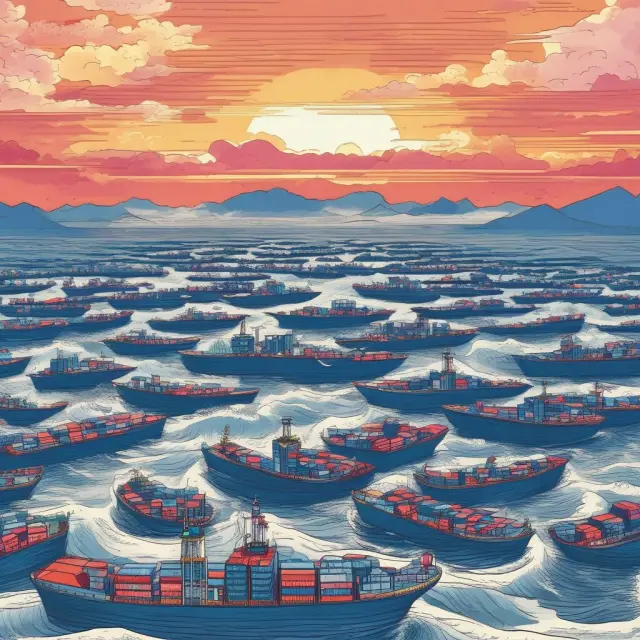
The Asia-Pacific Economic Cooperation (APEC) was formed in 1989 by 12 founding members with a principal goal to promote free trade and sustainable development across economies in the Pacific Rim. This objective translates into ensuring that goods, services, capital, and labor can move freely across borders. APEC’s primary focus is on eliminating barriers to trade, fostering favorable business environments, and harmonizing regulations and policies among its members.
The need for APEC emerged from the increasing interdependence of Asia-Pacific economies. In response, nations began forming regional economic blocs like the European Union (EU) and the North American Free Trade Agreement (NAFTA). The establishment of APEC aimed to mirror this trend while catering specifically to Pacific Rim economies.
As a crucial player in global trade, APEC’s influence extends beyond its borders. Its impact is felt through various sub-groups focusing on micro causes that contribute to economic development and policy advancement. Some of these areas include gender issues, intellectual property rights, and emergency preparedness.
APEC’s impact can be seen in numerous ways: the reduction of tariffs, improvement of customs efficiency, and bridging the gap between developing and developed economies. The organization’s success is evident as its members collectively represent approximately 60% of global Gross Domestic Product (GDP) and over half of the world’s population.
APEC’s official programs, such as the Osaka Action Agenda, have been instrumental in creating an environment conducive to business activities, liberalizing trade and investment, and promoting economic cooperation. Although some progress has stalled due to consensus-based decision-making, the organization continues to work towards its goal of achieving free trade and investment regimes by 2010 for developed economies and 2020 for developing ones.
Despite its achievements, APEC faces challenges, particularly in making decisions through a consensus process that is not legally binding on member governments. Nevertheless, the organization remains an essential catalyst in shaping the global economic landscape as it fosters closer ties among Pacific Rim economies.
The Formation of APEC
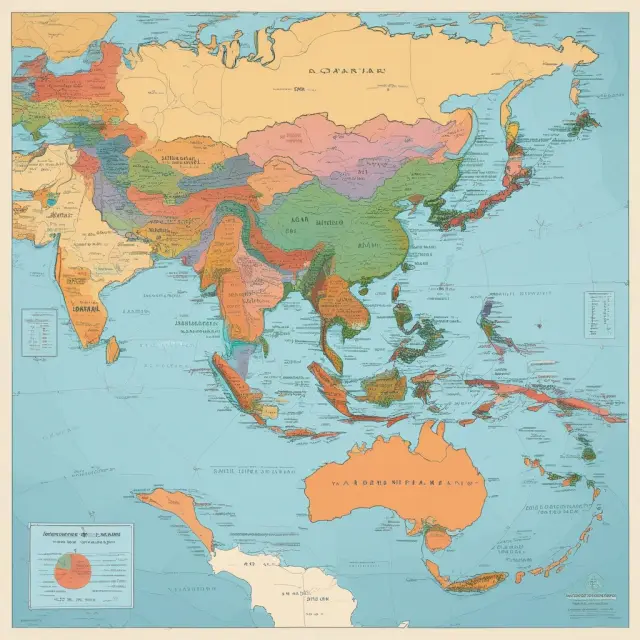
Asia-Pacific Economic Cooperation (APEC) emerged on the global stage in 1989 as a response to the growing interconnectedness and interdependence of Asia-Pacific economies. The need for a regional organization dedicated to free trade, sustainable development, and economic integration became increasingly apparent as nations recognized that their economic destinies were increasingly intertwined.
Inspired by success stories from Europe and North America, the formation of APEC signified a commitment among its founding members – Australia, Brunei, Canada, Indonesia, Japan, Korea, Malaysia, New Zealand, the Philippines, Singapore, Thailand, and the United States – to learn from these regional economic blocs while addressing unique challenges specific to their region.
APEC’s establishment came at a pivotal moment in history. The late 20th century saw an increase in regional economic blocs, such as the European Union (EU) and North American Free Trade Agreement (NAFTA). These organizations served as influential models for APEC’s mission to foster greater cooperation among economies through free trade agreements, reduced barriers, and a collaborative approach to addressing shared challenges.
APEC is unique in its commitment to engage all members as economies rather than states. This focus on economic issues differentiates it from other regional organizations dealing with complex diplomatic issues. For instance, the People’s Republic of China (PRC) and Taiwan are two notable examples. The PRC refuses to recognize Taiwan as a sovereign state due to its claim that the island is a province under its constitution. Hong Kong, on the other hand, functions as a semi-autonomous region of China. APEC addresses these complex diplomatic issues by treating all members as economies and emphasizing economic cooperation instead.
APEC has since grown to include more members: Chile, Peru, Mexico, Russia, and Vietnam. Observers such as the Association of Southeast Asian Nations (ASEAN), Pacific Economic Cooperation Council (PECC), and the Pacific Islands Forum (PIF) have also joined the organization. APEC’s membership expansion reflects the evolving economic landscape in the Asia-Pacific region and its increasing integration into the global economy.
In 1994, at a landmark summit meeting, APEC set ambitious goals for achieving free trade and investment regimes by 2010 for developed economies and 2020 for developing economies in the Asia-Pacific region. To finance these initiatives, approximately USD 15.4 million was made available annually for funding projects.
The Osaka Action Agenda – a program adopted in 1995 – aimed to facilitate business activities, liberalize trade and investment, and promote economic and technical cooperation throughout the region. However, progress on these efforts has faced challenges due to APEC’s consensus-based decision making culture, which can lead to slower implementation of policies compared to legally binding agreements. Nonetheless, the organization continues to contribute significantly to reducing tariffs, improving customs efficiency, and closing the gap between developed and developing economies in the Asia-Pacific region.
To advance its goals and address various components of economic development, APEC maintains a policy support unit that provides research and analysis. Additionally, special working groups explore issues related to intellectual property rights, gender issues, and emergency preparedness – all vital areas for creating a more resilient and prosperous Asia-Pacific region.

APEC Membership
The Asia-Pacific Economic Cooperation (APEC) is a 21-member economic forum that was established in 1989 to promote free trade and sustainable development among Pacific Rim economies. This section delves into the current members of APEC, their unique statuses within the organization, and observer countries.
The founding members of APEC included Australia, Brunei, Canada, Indonesia, Japan, Korea, Malaysia, New Zealand, the Philippines, Singapore, Thailand, and the United States. Since its inception, China, Hong Kong, Taiwan, Mexico, Papua New Guinea, Chile, Peru, Russia, and Vietnam have joined the organization’s ranks.
It is essential to recognize that APEC refers to its members as economies rather than states, reflecting their focus on trade and economic issues over diplomatic matters. Notably, China and Taiwan are both members; China refuses to recognize Taiwan under its constitution but acknowledges it as part of the larger Chinese economy. Similarly, Hong Kong, a semi-autonomous region of China, is not a sovereign state but an observer within APEC.
The People’s Republic of China (PRC) and Taiwan both maintain their economic autonomy under the “One Country, Two Systems” framework. This framework allows them to develop their economies independently while remaining politically unified under China’s constitution. In addition, Hong Kong, as a special administrative region of China, is granted greater autonomy in certain matters, but it does not have the same level of political power or control over its economic policies as full members of APEC.
APEC’s observer countries include the Association of Southeast Asian Nations (ASEAN), Pacific Economic Cooperation Council (PECC), and Pacific Islands Forum (PIF). These organizations maintain close ties to APEC, providing valuable insights and collaborating on initiatives that promote economic growth in the Asia-Pacific region.
The inclusion of these observer countries allows for a more comprehensive approach to regional economic development and highlights APEC’s commitment to fostering cooperation among economies within the Pacific Rim. By acknowledging the interconnectedness of economies and the need for collaboration, APEC has continued to position itself as a critical player in shaping the global trade landscape.

Official Programs and Goals in APEC
The Asia-Pacific Economic Cooperation (APEC) is renowned for its significant impact on international trade, with a primary focus on promoting free trade and sustainable economic development across its 21 member economies. This section will delve into the official programs and goals that drive APEC’s mission to facilitate business activities, liberalize trade and investment, and promote economic and technical cooperation within the region.
APEC’s Official Funding Initiatives
Every year, APEC allocates approximately $15.4 million for about 100 projects designed to further its objectives. This financial commitment underscores the organization’s dedication to advancing economic integration and cooperation among its members.
The Osaka Action Agenda: A Milestone in APEC’s History
One of the most significant milestones achieved by APEC is the adoption of the Osaka Action Agenda in 1995, a program that aimed to facilitate business activities, liberalize trade and investment, and promote economic and technical cooperation. This agenda, which was agreed upon at the 6th APEC Economic Leaders’ Meeting, provided a roadmap for members to work together towards achieving free and open trade in the Asia-Pacific region.
APEC’s Sub-Groups: Micro Causes and Collaborative Efforts
To further advance its goals, APEC also relies on sub-groups that focus on various micro causes and components of economic development. These working groups include the Policy Support Unit, which provides research, analysis, and data to support the organization’s objectives, as well as:
- Gender Issues: The Women and Economic Integration Working Group promotes gender equality by advancing the economic participation of women in the workforce. In 2007, this group set a target for increasing the female labor force participation rate to at least 65% by 2020.
- Intellectual Property Rights: The Intellectual Property Rights Experts’ Group (IPEG) facilitates cooperation among members on intellectual property rights protections and enforcement. This sub-group plays a vital role in implementing the World Trade Organization’s (WTO) Agreement on Trade-Related Aspects of Intellectual Property Rights (TRIPS).
- Emergency Preparedness: The Emergency Preparedness Working Group focuses on enhancing business resilience, public-private partnerships, and information sharing to build the region’s capacity for dealing with emergencies and natural disasters. This sub-group plays a crucial role in helping members mitigate risks related to geological and climatological events that pose threats to the Asia-Pacific region.
The impact of APEC’s programs and goals is evident in its efforts to reduce tariffs, streamline customs procedures, and promote economic integration among member economies. These achievements have helped to narrow the gap between developed and developing economies within the Asia-Pacific region while fostering a favorable business climate that attracts foreign investment and trade. By continuing to invest in initiatives that address specific challenges and micro causes, APEC remains an essential player in the global economic landscape.

APEC Sub-Groups and Micro Causes
The Asia-Pacific Economic Cooperation (APEC) is a 21-member economic organization that was established in 1989 to promote free trade and sustainable development in Pacific Rim economies. One significant aspect of APEC’s work is its focus on various sub-groups and micro causes, which aim to advance policy and awareness on essential issues within the region. Three such examples are gender issues, intellectual property rights, and emergency preparedness.
Gender Issues
APEC recognizes that women represent approximately 600 million labor force members in the Asia-Pacific region. To ensure their economic integration, APEC established a Policy Partnership on Women and the Economy (PPWE). This partnership’s primary objective is to provide a platform for collaboration between governments, business leaders, and civil society organizations to discuss issues surrounding women’s participation in the labor force and their representation at all levels of decision-making. PPWE also aims to create an environment where businesses can recognize the benefits of gender diversity and develop policies that foster a more inclusive workforce.
Intellectual Property Rights
The Intellectual Property Rights Experts’ Group (IPEG) is another critical APEC sub-group that addresses the importance of intellectual property rights protections in the region. IPEG facilitates cooperation among members to enforce these protections, which helps ensure a level playing field for businesses and innovation across economies. Through information sharing, studies, and workshops, the group also strives to promote the implementation of the World Trade Organization’s (WTO) Agreement on Trade-Related Aspects of Intellectual Property Rights (TRIPS).
Emergency Preparedness
Lastly, APEC’s Emergency Preparedness Working Group (EPWG) is a key sub-group that focuses on business resilience and cooperation among members in response to emergencies and natural disasters. The group promotes public-private partnerships and information sharing among nations to help build the region’s capacity to deal with crises effectively. Countries along the geologically and climatologically active Pacific Rim are subject to a range of events, including tsunamis, typhoons, earthquakes, and volcanic eruptions, which underscores the importance of robust emergency preparedness measures.
Overall, APEC’s sub-groups and micro causes play an essential role in fostering economic development, improving business environments, and enhancing the overall well-being of individuals and communities within the Asia-Pacific region. By addressing specific issues such as gender equality, intellectual property rights, and emergency preparedness, these groups contribute to APEC’s mission of increasing custom efficiency, encouraging favorable business climates, and harmonizing regulations and policies across the region.

Impact and Progress in APEC
Since its formation in 1989, the Asia-Pacific Economic Cooperation (APEC) has made significant strides towards improving the economic landscape of its member countries. The organization’s primary objective is to ensure the free flow of goods, services, capital, and labor across borders. In doing so, APEC has had a profound impact on reducing tariffs, improving customs efficiency, and closing the gap between developing and developed economies.
APEC was established in response to the growing interdependence of Asia-Pacific economies during the late 20th century, marked by the formation of other regional economic blocs like the European Union (EU) and North American Free Trade Agreement (NAFTA). As a result, APEC’s significance lies in its role as a catalyst for promoting free trade and sustainable development throughout the Pacific Rim region.
One of APEC’s most significant achievements has been reducing tariffs. According to the World Bank, average tariffs across APEC economies decreased from 18% in 2005 to 6.7% in 2019. This reduction has helped increase international trade and promote economic growth among member countries.
Customs efficiency is another area where APEC has made substantial progress. By implementing measures like the Customs Procedures Harmonization Initiative, which streamlined customs procedures across borders, APEC has significantly reduced the time it takes to clear goods through customs. For example, in 2017, more than 98% of cargo shipments crossed the Pacific Rim border in under 4 hours.
Moreover, APEC’s efforts have been instrumental in closing the gap between developing and developed economies within the organization. With approximately 56% of its members classified as developing countries (Chile, China, Indonesia, Malaysia, Mexico, Papua New Guinea, Peru, Philippines, Russia, Thailand, and Vietnam), APEC has adopted initiatives to support economic development in these nations. For instance, the Osaka Action Agenda, which was announced at the 1995 summit meeting, aimed to establish free trade and investment regimes by 2010 for developed economies and by 2020 for developing economy members.
Despite its accomplishments, APEC still faces challenges that limit its progress. One of these challenges is decision making through consensus. While some decisions are unanimous, others can result in lengthy negotiations, potentially delaying the implementation of important policies. Nevertheless, the importance of APEC’s role as a regional economic forum cannot be understated, given its impact on promoting free trade and sustainable development throughout the Asia-Pacific region.
The future of APEC remains promising as it continues to adapt to new challenges, such as digitalization and climate change, while fostering cooperation among member countries. Ultimately, APEC’s role is crucial in shaping a more interconnected world economy by addressing the needs of its diverse membership base and driving economic growth for all.

The Role of APEC in International Trade Agreements
The Asia-Pacific Economic Cooperation (APEC) plays a significant role not only in promoting free trade and economic cooperation within its 21 member states but also on the global stage, particularly when it comes to international trade agreements. The organization has been instrumental in shaping various pacts and alliances that have influenced the international business landscape significantly.
APEC’s primary goal of creating a seamless economic web across its member economies aligns with the objectives of other major regional trade organizations like the European Union (EU) and the World Trade Organization (WTO). To understand APEC’s role in international trade agreements, it is crucial to examine how these organizations complement each other.
The European Union (EU), established in 1957, was the first major regional trading bloc created with a primary focus on political and economic integration. It has grown over time from its original six founding members – Belgium, France, Germany, Italy, Luxembourg, and the Netherlands – to include 27 members as of today. The EU’s influence is significant, covering approximately 450 million people and generating around 19% of the global Gross Domestic Product (GDP).
The World Trade Organization (WTO), on the other hand, was established in 1995 and is a multilateral organization that deals with the global rules of trade between nations. Its main function is to ensure that international trade flows as smoothly, predictably, and freely as possible by providing a forum for member countries to negotiate agreements, settle disputes, and promote transparency in trade policies.
In contrast to the EU’s primary focus on political integration, APEC aims to foster economic cooperation among its members without the need for formal political union or a common market. Instead, it encourages free trade and investment through various initiatives, such as the Osaka Action Agenda and the Bogor Goals (establishing free trade and investment regimes by 2010 for developed economies and 2020 for developing economies), which help to create a favorable business climate for its members.
APEC’s role in international trade agreements can be seen most clearly through its collaborative efforts with other organizations like the EU and the WTO. For instance, APEC’s Economic Cooperation Program (ECP) is a platform that facilitates cooperation between member economies to further reduce tariffs, improve customs efficiency, and enhance regulatory compatibility. This alignment of objectives with the EU and WTO helps strengthen the overall global trade landscape by creating a more interconnected and harmonious trading system.
In conclusion, APEC plays an essential role in international trade agreements by fostering economic cooperation among its members while complementing the efforts of organizations like the EU and WTO. By focusing on reducing barriers to trade, improving customs efficiency, and promoting transparency, APEC helps create a business environment that encourages growth and development within the Asia-Pacific region and beyond.

Challenges Faced by APEC
Despite its impressive progress, the Asia-Pacific Economic Cooperation (APEC) has encountered numerous challenges in achieving its goals of free trade and economic integration. One significant hurdle is reaching a consensus among 21 members with diverse economies and interests. This challenge can be seen through APEC’s often slow decision-making process, which requires the agreement of all member countries.
The sluggish progress towards achieving its initial goal of free trade and investment regimes by 2010 and 2020 for developed and developing economies, respectively, is another major challenge faced by APEC. This goal has been hindered by a range of factors including differing levels of economic development among members, political instability, and competing national priorities.
Moreover, while some decisions are unanimously agreed upon, they are not legally binding on the member governments. This lack of enforceability can make it difficult for APEC to ensure compliance with its agreements and initiatives. Additionally, the role of observers such as ASEAN, PECC, and PIF in decision-making processes further complicates matters.
APEC’s efforts have also faced criticism from outside the organization. Some argue that APEC has failed to make a significant impact on reducing tariffs and improving customs efficiency within its membership. For instance, according to data from the World Bank, the average tariff for member economies still stood at around 6% in 2018, considerably higher than the European Union’s (EU) average tariff of 2%. Furthermore, APEC’s efforts have not been able to close the significant economic gap between developed and developing members. In 2018, for example, the gross domestic product per capita of the United States was over ten times that of Papua New Guinea.
In conclusion, APEC has experienced numerous challenges in achieving its goals of free trade and sustainable development across Pacific Rim economies. The organization faces significant hurdles such as reaching a consensus among diverse members, making progress towards free trade agreements, ensuring compliance with decisions, and bridging the gap between developed and developing member economies. In the next section, we will explore the future role and impact of APEC in the global economic landscape.

Conclusion: The Future of APEC
Asia-Pacific Economic Cooperation (APEC) has come a long way since its establishment in 1989 with the objective to boost free trade and sustainable development across economies in the Pacific Rim. With its membership growing from an initial 12 countries to the current 21 members, APEC continues to be instrumental in shaping the economic landscape of Asia and the Pacific region.
One of the most significant achievements of APEC is its success in reducing tariffs. The organization has implemented numerous measures to create a more business-friendly environment for its members. This includes increasing custom efficiency at borders, encouraging favorable business climates within member economies, and harmonizing regulations and policies across the region. As a result, APEC has closed the gap between developing and developed economies, creating an increasingly interconnected economic network that benefits all involved.
However, challenges remain for APEC. One of the most pressing issues is consensus decision making within the organization. While some decisions are unanimous, they are not legally binding on member governments. This has led to a slowing down in progress towards achieving the organization’s goals of free trade and investment regimes by 2010 for developed economies and 2020 for developing ones.
Despite these challenges, APEC remains an essential player in global economic cooperation. As the world economy continues to evolve, so will the role of APEC. With its commitment to free trade and sustainable development, APEC is poised to face new opportunities and challenges that come with a rapidly changing global landscape.
Looking ahead, APEC’s primary focus should be on fostering partnerships and collaboration among member economies to address common economic challenges, such as climate change, income inequality, and technological advancements. By building stronger relationships between its members and engaging in constructive dialogue, APEC can continue to drive growth and prosperity in the Pacific Rim and beyond.
In conclusion, understanding the Asia-Pacific Economic Cooperation (APEC) is crucial for anyone interested in global trade and economics. Its role as a pioneer of free trade and sustainable development has positioned it as a vital force in shaping the economic landscape of the Asia-Pacific region. As APEC enters a new era, it will undoubtedly face new challenges but remains optimally suited to tackle them with its commitment to collaboration and cooperation among member economies.
FAQs about APEC
What is the primary goal of APEC?
A) The primary goal of APEC is to ensure that goods, services, capital, and labor can move easily across borders within the Pacific Rim region.
How many members are there in APEC?
A) Currently, there are 21 members in APEC, including Australia, Brunei, Canada, Chile, China, Hong Kong, Indonesia, Japan, Korea, Malaysia, Mexico, New Zealand, Papua New Guinea, Peru, the Philippines, Russia, Singapore, Taiwan, Thailand, and Vietnam.
What are some of the sub-groups in APEC?
A) Some of APEC’s sub-groups include the Gender Issues Policy Partnership on Women and the Economy, Intellectual Property Rights Experts’ Group (IPEG), and Emergency Preparedness Working Group (EPWG). These groups aim to advance policy and awareness in various aspects of economic development.
FAQs about APEC
What is Asia-Pacific Economic Cooperation (APEC)?
Asia-Pacific Economic Cooperation (APEC) is a significant economic organization founded in 1989, consisting of 21 members. The primary aim of this cooperative forum is promoting free trade and sustainable development across Pacific Rim economies.
What are the objectives of APEC?
The primary goal of APEC is to ensure that goods, services, capital, and labor can move freely across borders within its member economies. This includes increasing customs efficiency at borders, encouraging favorable business climates, and harmonizing regulations and policies.
Why was APEC formed?
APEC was established in response to the growing interdependence of Asia-Pacific economies. The organization was part of a broader trend towards regional economic blocs, including the European Union (EU) and North American Free Trade Agreement (NAFTA).
Who are the founding members of APEC?
The initial members included Australia, Brunei, Canada, Indonesia, Japan, Korea, Malaysia, New Zealand, the Philippines, Singapore, Thailand, and the United States. Since then, China, Hong Kong, Taiwan, Mexico, Papua New Guinea, Chile, Peru, Russia, and Vietnam have also joined.
What is the significance of APEC’s members’ status?
Unlike other international organizations where countries are referred to as states, APEC uses the term economies to emphasize its focus on trade and economic issues instead of diplomatic ones. This is crucial given the complex regional dynamics, including China’s refusal to recognize Taiwan and Hong Kong’s semi-autonomous status.
How does APEC operate?
APEC relies on consensus decision-making, making all decisions non-legally binding for member governments. While some agreements are unanimous, others require approval from each economy before being implemented.
What programs has APEC adopted to facilitate business activities and promote economic and technical cooperation?
The Osaka Action Agenda is a program that was announced at the 1994 summit meeting to boost trade and investment liberalization, as well as encourage economic and technical cooperation in the Asia-Pacific region.
What subgroups does APEC have, and what are their objectives?
APEC maintains several subgroups focused on micro causes such as gender issues, intellectual property rights, and emergency preparedness. These groups work to advance policy and awareness within these areas, with examples including the Policy Partnership on Women and the Economy, Intellectual Property Rights Experts’ Group (IPEG), and Emergency Preparedness Working Group (EPWG).
What has been APEC’s impact on global trade?
APEC has significantly contributed to reducing tariffs, improving customs efficiency, and closing the gap between developed and developing economies. Its efforts have been instrumental in facilitating a more interconnected and dynamic economic landscape in the Asia-Pacific region.
 Next entry · No. 227Understanding Application-Specific Integrated Circuit (ASIC) Miners: A New Era in Cryptocurrency Mining
See also
-
 No. 5,829
11 Oct 2025
22 min
Understanding the World Trade Organization (WTO): History, Functions, Advantages, Disadvantages, Leadership, and Importance
International Trade
No. 5,829
11 Oct 2025
22 min
Understanding the World Trade Organization (WTO): History, Functions, Advantages, Disadvantages, Leadership, and Importance
International Trade -
 No. 2,275
24 Dec 2024
20 min
Understanding Hypermarkets: Big Box Retailers and Their Impact on the Retail Landscape
Business Strategy
No. 2,275
24 Dec 2024
20 min
Understanding Hypermarkets: Big Box Retailers and Their Impact on the Retail Landscape
Business Strategy -
 No. 5,628
24 Sep 2025
18 min
Understanding Wassily Leontief: An Economist Pioneer in Input-Output Analysis and the Leontief Paradox
Economics
No. 5,628
24 Sep 2025
18 min
Understanding Wassily Leontief: An Economist Pioneer in Input-Output Analysis and the Leontief Paradox
Economics -
 No. 4,005
14 May 2025
19 min
Understanding Political Economy: A Comprehensive Guide for Institutional Investors
Economics
No. 4,005
14 May 2025
19 min
Understanding Political Economy: A Comprehensive Guide for Institutional Investors
Economics -
 No. 3,413
26 Mar 2025
18 min
Understanding Net Foreign Factor Income (NFFI) in Finance and Investment
Economics
No. 3,413
26 Mar 2025
18 min
Understanding Net Foreign Factor Income (NFFI) in Finance and Investment
Economics -
 No. 2,163
15 Dec 2024
25 min
Understanding Hollowing Out: The Deterioration of Middle-Class Manufacturing Jobs and Its Socioeconomic Consequences
Economics
No. 2,163
15 Dec 2024
25 min
Understanding Hollowing Out: The Deterioration of Middle-Class Manufacturing Jobs and Its Socioeconomic Consequences
Economics