The Asian Development Bank: Mission, Membership, Financing and Structure
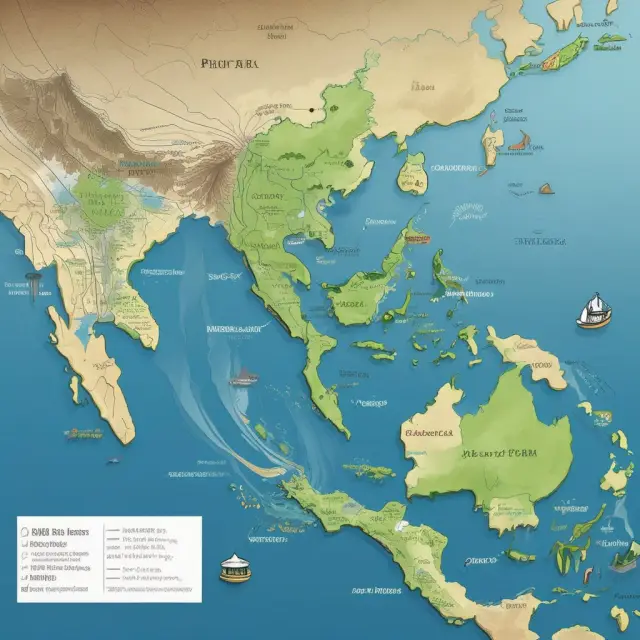
Explore the history, role, financing, structure, and impact of the Asian Development Bank (ADB) in promoting economic growth and cooperation among…
Introduction to the Asian Development Bank
Established in 1966 and headquartered in Manila, the Asian Development Bank (ADB) plays a crucial role in fostering economic growth and cooperation among its members in the Asia-Pacific region. With a primary mission to promote development by providing assistance through loans, grants, technical expertise, and equity investments, the ADB has been a vital force in shaping the economic landscape of the region for decades.
The Asian Development Bank’s history traces back to its establishment on December 19, 1966, with an initial membership of just twelve countries. Today, it boasts a diverse and expansive membership consisting of 68 members, comprising 48 regional and 19 non-regional economies. Among these, the United States and Japan are its largest shareholders, holding approximately 31% of total shares each (Lee & Cho, 2021).
This section aims to provide a thorough understanding of the Asian Development Bank’s history, mission, role, and impact on promoting economic development in the Asia-Pacific region.
History:
The ADB was formed with a vision to promote sustainable economic growth and cooperation in the Asia-Pacific region, filling a gap left by the World Bank and International Monetary Fund (IMF), which were predominantly focusing on European economies at that time. Initially, the founding members consisted of twelve countries: Australia, India, Japan, New Zealand, Pakistan, Ceylon (now Sri Lanka), Thailand, the Philippines, South Vietnam (now Vietnam), the United States, and the United Kingdom.
Mission:
The Asian Development Bank’s primary mission is to help its members and partners achieve a prosperous, inclusive, resilient, and sustainable future. It does this by providing a wide range of financial and technical assistance to promote social and economic development in the region, with a focus on reducing poverty, improving infrastructure, promoting environmentally sustainable growth, and strengthening governance and institutions (ADB, 2021).
Role:
The ADB plays an essential role in financing development projects throughout its member countries. It does this through various channels:
- Loans
- Grants
- Technical assistance
- Equity investments
These instruments enable the ADB to provide a customized approach to each country’s needs and priorities, fostering long-term partnerships and promoting sustainable development. Additionally, the ADB regularly facilitates policy dialogues, advisory services, and co-financing operations with other international financial institutions, such as the International Monetary Fund (IMF) and the World Bank.
Financing:
The Asian Development Bank’s financing includes both private and sovereign financing options. Private financing focuses on projects that will have a significant development impact while promoting private investments in the region, leading to accelerated growth. Sovereign financing provides funding for member countries, giving them flexibility in determining how they can achieve their development goals.
In 2021, the ADB committed nearly US$13.5 billion to help its developing member countries address the impacts of the COVID-19 crisis and vaccination needs, mobilizing an additional $12.9 billion in co-financing from partners (ADB, 2021). Through a $9 billion Asia Pacific Vaccine Access Facility (APVAX), announced in December 2020, the ADB provided funding for vaccine procurement, logistics, and distribution.
Structure:
The Asian Development Bank operates under its Agreement Establishing the Asian Development Bank, also known as the Charter. The Charter vests all powers of the institution in the Board of Governors, which, in turn, delegates some powers to the Board of Directors (ADB, 2017). The highest policy-making body of the ADB is its Board of Governors, comprising one representative from each member country.
Membership:
Membership in the Asian Development Bank is open to members and associate members of the United Nations Economic Commission for Asia and the Far East (ECAFE) or any of its specialized agencies. As of 2022, there are 68 members, including both regional and non-regional economies.
Conclusion:
In summary, the Asian Development Bank has been a crucial catalyst for economic growth and cooperation in the Asia-Pacific region for over five decades. Its mission to provide loans, grants, technical assistance, and equity investments enables it to address each country’s unique development needs, fostering sustainable and inclusive growth in the region while promoting long-term partnerships with its members and partners.

How the Asian Development Bank Works
The Asian Development Bank (ADB) operates through a unique approach to development financing. With a primary mission to foster economic growth and cooperation among countries in the Asia-Pacific region, the bank offers a range of financial assistance aimed at promoting sustainable development. In this section, we delve deeper into how the ADB’s financing mechanisms work, its membership criteria, and the benefits of partnering with the organization.
Assistance Provided by the Asian Development Bank
The ADB plays an integral role in supporting economic growth across Asia by providing various types of assistance:
- Grants: The bank offers grants to finance projects that directly benefit the poorest communities and promote long-term development objectives.
- Loans: The ADB provides loans to its members for infrastructure projects, private sector investments, or other initiatives that require capital. These loans come with flexible terms to suit the borrower’s needs.
- Technical Assistance: The bank offers technical expertise to help member countries improve their policies and institutions, fostering an enabling environment for sustainable development.
- Equity Investments: The ADB invests in its members’ capital markets, providing long-term equity investments that support economic growth and financial stability.
- Co-financing operations: Through co-financing, the ADB collaborates with other financing institutions to maximize resources and ensure the successful implementation of projects.
Membership Requirements for the Asian Development Bank
The membership requirements for joining the Asian Development Bank include being a member or associate member of the United Nations Economic Commission for Asia and the Far East (UN ESCAP) or another regional economic organization recognized by the ADB, as well as agreeing to be bound by the Charter of the Asian Development Bank. This ensures that only eligible countries can join this esteemed financial institution dedicated to promoting sustainable development in the region.
By understanding how the Asian Development Bank functions and its membership criteria, you’ll gain a clearer picture of the organization’s role in shaping the economic landscape of the Asia-Pacific region. Stay tuned for our next section where we discuss the ADB’s illustrious history and its current membership.

Membership in the Asian Development Bank
The Asian Development Bank (ADB) fosters economic growth and cooperation among countries in the Asia-Pacific Region by providing financial assistance to its members. Founded in 1966, this international organization is based in Manila, Philippines, and has grown into a powerful institution with over 68 members. While the majority of ADB’s members are from the Asia-Pacific region, non-regional countries like Austria, Belgium, Canada, Denmark, Finland, France, Germany, Ireland, Italy, Luxembourg, Netherlands, Norway, Portugal, Spain, Sweden, Switzerland, Türkiye, the United Kingdom, and the United States have also joined.
Membership in the ADB is open to members of the United Nations Economic Commission for Asia and the Far East and other regional countries that are members of the UN or its specialized agencies. The Asian Development Bank operates through a system of governance with the Board of Governors, which is made up of one representative from each member country, holding all the powers vested by the ADB Charter. The Board of Directors is responsible for delegated powers and decision-making on specific operational matters.
Two key members play essential roles in the Asian Development Bank: Japan and the United States. As of 2021, these two countries hold a combined ownership stake of over 30% and are instrumental in shaping the institution’s policies and priorities.
Regional Members and Their Year of Membership (Including Japan and India)
– Afghanistan (1966)
– Armenia (1999)
– Australia (1966)
– Azerbaijan (1994)
– Bangladesh (1973)
– Bhutan (1982)
– Brunei Darussalam (2006)
– Cambodia (1966)
– Cook Islands (1976)
– Federated States of Micronesia (1990)
– Fiji (1970)
– Georgia (2007)
– India (1947 – Joined ADB in 1966)
– Indonesia (1966)
– Japan (1952 – Joined ADB in 1966)
– Kazakhstan (1994)
– Kiribati (1974)
– Kyrgyz Republic (1994)
– Lao People’s Democratic Republic (1966)
– Malaysia (1966)
– Maldives (1978)
– Marshall Islands (1990)
– Mongolia (1991)
– Myanmar (1948 – Joined ADB in 1966)
– Nauru (1974)
– Nepal (1951 – Joined ADB in 1966)
– New Zealand (1907 – Joined ADB in 1966)
– Niue (1974)
– Pakistan (1947 – Joined ADB in 1966)
– Palau (2003)
– Papua New Guinea (1971)
– People’s Republic of China (1949 – Joined ADB in 1986)
– Philippines (1946 – Joined ADB in 1966)
– Republic of Korea (1945 – Joined ADB in 1966)
– Samoa (1962 – Joined ADB in 1971)
– Singapore (1963 – Joined ADB in 1966)
– Solomon Islands (1978)
– Sri Lanka (1948 – Joined ADB in 1966)
– Taipei,China (1945 – Joined ADB in 1966)
– Tajikistan (1990)
– Thailand (1932 – Joined ADB in 1966)
– Timor-Leste (2002)
– Tonga (1970)
– Turkmenistan (1991)
– Tuvalu (1979 – Joined ADB in 1993)
– Uzbekistan (1991)
– Vanuatu (1980 – Joined ADB in 1981)
– Viet Nam (1954 – Joined ADB in 1966)
Non-regional Members and Their Year of Membership
– Austria (1955 – Joined ADB in 1966)
– Belgium (1932 – Joined ADB in 1966)
– Canada (1867 – Joined ADB in 1966)
– Denmark (1849 – Joined ADB in 1966)
– Finland (1917 – Joined ADB in 1966)
– France (1793 – Joined ADB in 1966)
– Germany (1871 – Joined ADB in 1966)
– Ireland (1922 – Joined ADB in 2006)
– Italy (1861 – Joined ADB in 1966)
– Luxembourg (1848 – Joined ADB in 2003)
– Netherlands (1815 – Joined ADB in 1966)
– Norway (1814 – Joined ADB in 1966)
– Portugal (1143 – Joined ADB in 1986)
– Spain (1469 – Joined ADB in 1986)
– Sweden (1523 – Joined ADB in 1966)
– Switzerland (1291 – Joined ADB in 1967)
– Türkiye (1923 – Joined ADB in 1991)
– United Kingdom (1707 – Joined ADB in 1966)
– United States (1776 – Joined ADB in 1966)
This list demonstrates the wide range of countries that have joined the Asian Development Bank to collaborate and contribute to economic growth and development efforts in the Asia-Pacific Region. With a diverse membership, the ADB is well positioned to support its members in implementing sustainable and inclusive development projects, ultimately enhancing overall regional prosperity.
Financing Provided by the Asian Development Bank
The Asian Development Bank’s (ADB) commitment to fostering economic growth and cooperation in the Asia-Pacific region extends beyond just loans, grants, and technical assistance. The organization plays a vital role in providing both private financing and sovereign financing to its member countries, accelerating sustainable development in the process.
Private Financing for Development Impact
The ADB offers private financing for projects with significant development impact that promote private investments in the region. These initiatives lead to economic growth and long-term sustainability, making them an essential component of the ADB’s mission. The portfolio of private financing consisted of $14.2 billion at the end of 2021.
Sovereign Financing
Public sector financing, also known as sovereign financing, is another critical aspect of the ADB’s work. This form of funding allows member countries to determine their development goals while receiving flexibility and support from the organization. By the end of 2021, ADB’s portfolio stood at $104 billion, consisting of 713 loans, 392 grants, 915 technical assistance projects, one guarantee, and one equity investment.
Examples of ADB’s 2021 Commitments
The ADB’s commitment to addressing the economic challenges posed by the COVID-19 pandemic is evident in its significant financial commitments for the year 2021. The organization pledged nearly US$13.5 billion to help its developing member countries and mobilized an additional $12.9 billion from partners through co-financing operations. This combined total of more than US$26 billion was dedicated towards addressing the impacts of the crisis, including vaccine procurement, logistics, distribution, and other development initiatives.
Through its Asia Pacific Vaccine Access Facility (APVAX), which was announced in December 2020, the ADB provided funding for vaccine procurement, logistics, and distribution to help end the pandemic. The APVAX aims to support the immunization efforts of member countries as they work towards economic recovery and resilience against future health crises.
The Asian Development Bank’s Financing Approach
By providing both private financing for development projects and sovereign financing, the ADB plays a pivotal role in promoting sustainable growth in its member countries. The organization’s commitment to collaboration with other regional and international financial institutions, such as the International Monetary Fund (IMF) and the World Bank, further strengthens its impact on the Asia-Pacific region.
In conclusion, the Asian Development Bank is more than just a lending institution. It’s an essential partner for economic growth and development in the Asia-Pacific region, providing private financing, sovereign financing, technical assistance, and grants to promote sustainable and inclusive growth. Its adaptability in addressing current challenges like the COVID-19 pandemic demonstrates its unwavering commitment to its mission and the needs of its member countries.

The Structure of the Asian Development Bank
The Asian Development Bank (ADB) operates under the Agreement Establishing the Asian Development Bank, commonly referred to as the ADB Charter. This charter vests all powers in the Board of Governors, which delegates some responsibilities to the Board of Directors. The Board of Governors is the highest policy-making body of the ADB, comprising one representative from each member country.
The two largest shareholders of the Asian Development Bank are the United States and Japan, with a 15.6% stake in the organization each. However, the majority of members come from the Asia-Pacific region. The Board of Governors meets annually during ADB’s Annual Meeting to discuss policy matters and approve major decisions.
The Asian Development Bank is governed by its Charter, which outlines the institution’s role, objectives, powers, and privileges. The main purpose of the Charter is to promote economic and social development in the Asia-Pacific region through collective action, cooperation, and dialogue among its members.
The Board of Directors plays a significant role in implementing the policies established by the Board of Governors. Composed of 18 members elected by the Board of Governors, it oversees various operational aspects such as budgeting, lending, and administrative matters. The President of the ADB serves as an ex-officio member of the Board of Directors.
The President is responsible for leading the institution’s day-to-day operations, managing its resources, and ensuring that all activities are consistent with the objectives set by the Board of Governors. The President also represents the Asian Development Bank in external engagements and maintains close relationships with member countries, development partners, and other international organizations.
The ADB’s organizational structure includes several departments responsible for various functions such as lending operations, technical assistance, research, communications, human resources, finance, and administration. These departments collaborate to provide a comprehensive range of services that support economic growth, social development, and regional cooperation in the Asia-Pacific Region.
The Asian Development Bank works closely with other regional and international organizations such as the IMF, World Bank, and AIIB to coordinate efforts, share knowledge, and maximize collective impact on development projects. The collaboration between these institutions fosters a more coordinated approach to addressing common challenges and ensures that resources are allocated efficiently to areas of greatest need.

Asian Development Bank Country Relationships
The Asian Development Bank’s (ADB) membership base spans across 68 countries, comprising 48 regional and 19 non-regional members. This expansive network allows for the organization to foster cooperation and provide assistance to a diverse range of economies in the Asia-Pacific region and beyond.
The ADB’s origins can be traced back to its founding year, 1966, when it admitted its first 31 members. Since then, the institution has grown significantly over the decades, reflecting its evolving role as a key player in development financing across various economies.
Currently, the ADB’s regional members consist of:
– Afghanistan (1966)
– Armenia (1999)
– Australia (1966)
– Azerbaijan (1999)
– Bangladesh (1973)
– Bhutan (1982)
– Brunei Darussalam (2006)
– Cambodia (1966)
– Cook Islands (1976)
– Federated States of Micronesia (1990)
– Fiji (1970)
– Georgia (2007)
– Hong Kong, China (1969)
– India (1966)
– Indonesia (1966)
– Japan (1966)
– Kazakhstan (1994)
– Kiribati (1974)
– Kyrgyz Republic (1994)
– Lao People’s Democratic Republic (1966)
– Malaysia (1966)
– Maldives (1978)
– Marshall Islands (1990)
– Mongolia (1991)
– Myanmar (1973)
– Nauru (1991)
– Nepal (1966)
– New Zealand (1966)
– Niue (2019)
– Pakistan (1966)
– Palau (2003)
– Papua New Guinea (1971)
– People’s Republic of China (1986)
– Philippines (1966)
– Republic of Korea (1966)
– Samoa (1966)
– Singapore (1966)
– Solomon Islands (1973)
– Sri Lanka (1966)
– Taipei,China (1966)
– Tajikistan (1998)
– Thailand (1966)
– Timor-Leste (2002)
– Tonga (1972)
– Turkmenistan (2000)
– Tuvalu (1993)
– Uzbekistan (1995)
– Vanuatu (1981)
– Viet Nam (1966)
As of 2022, the ADB’s non-regional members include:
– Austria (1966)
– Belgium (1966)
– Canada (1966)
– Denmark (1966)
– Finland (1966)
– France (1970)
– Germany (1966)
– Ireland (2006)
– Italy (1966)
– Luxembourg (2003)
– Netherlands (1966)
– Norway (1966)
– Portugal (2002)
– Spain (1986)
– Sweden (1966)
– Switzerland (1967)
– Türkiye (1991)
– United Kingdom (1966)
– United States (1966)
Of these members, two countries hold significant influence within the organization: Japan and the United States. The largest shareholders in the ADB, with 15.6% ownership each, their substantial contributions provide the financial backing necessary for the institution to fulfill its mission.
This extensive membership base enables the ADB to cater to diverse needs across various economies while promoting sustainable development and regional cooperation.

ADB’s Role in Regional Development Banks
The Asian Development Bank plays an essential role in fostering regional cooperation and development, working alongside other major financial institutions like the International Monetary Fund (IMF) and the World Bank to address various economic challenges faced by the Asia-Pacific region. One notable player among these is the Chinese-led Asian Infrastructure Investment Bank (AIIB), which was established in 2015 as a multilateral development bank focusing on financing infrastructure projects.
Collaboration between these institutions can lead to synergistic results and a more effective approach toward regional economic growth. For instance, the ADB and the IMF have an ongoing collaboration for surveillance, lending, and capacity building in member countries. The World Bank Group is another essential partner for the ADB, with joint operations that focus on poverty reduction, human development, and sustainable growth in the region.
The Asian Infrastructure Investment Bank (AIIB) was established to address the infrastructure gaps across Asia and complement existing financial institutions like the ADB. With its first project announced in December 2015, the AIIB has since grown into a significant player within the multilateral development bank landscape. As of now, there are over 100 member countries, with approximately 60% of them being from the Asia-Pacific region.
The ADB’s collaboration with these regional and international financial institutions has proven to be vital in addressing complex development challenges. For example, during the COVID-19 pandemic, these organizations have worked together to provide support for countries through funding, technical assistance, and policy advice. With a strong emphasis on sustainable and inclusive growth, this cooperation helps create a more robust economic environment across the region.
In conclusion, the Asian Development Bank’s role as a regional development bank is crucial in promoting economic growth and cooperation among its member countries. Its partnership with other multilateral financial institutions such as the IMF, World Bank, and AIIB, along with its focus on private financing and sovereign financing, enables it to provide comprehensive assistance and have a significant impact on social and economic development within the Asia-Pacific region.

ADB’s Role in Addressing COVID-19 Crisis
The Asian Development Bank (ADB) has taken an active role in mitigating the economic and public health implications of the COVID-19 crisis across its developing member countries. The ADB announced the establishment of the $9 billion Asia Pacific Vaccine Access Facility (APVAX) in December 2020, providing funding for vaccine procurement, logistics, and distribution to help ensure equitable access to vaccines for its members and partners. APVAX’s goal is to support the immunization of at least two billion people across Asia and the Pacific by the end of 2025, with a focus on reaching vulnerable populations and those in hard-to-reach areas.
Aside from vaccine access, the ADB has also provided significant financial assistance through loans, grants, and technical assistance to help its members address the immediate health and economic impacts of COVID-19. In 2021, the ADB committed nearly US$13.5 billion for its developing member countries, mobilizing an additional $12.9 billion in co-financing from partners.
The ADB’s support towards the pandemic response is part of a broader mission to help foster economic recovery and ensure sustainable development in Asia and the Pacific. As a key player in regional and international financial institutions, the ADB collaborates with other development banks such as the IMF and the World Bank to tackle the socioeconomic challenges posed by COVID-19.
Investing in the Asian Development Bank: Is It a Wise Choice?
The Asian Development Bank’s reputation for financial stability and its diversified portfolio make it an attractive investment option for those looking to invest in emerging markets. The ADB regularly issues investment-grade bonds, which have proven to be resilient during economic downturns. Moreover, the organization’s focus on promoting sustainable development projects and social progress appeals to socially responsible investors.
As a result of its strong financial position, the Asian Development Bank has managed to maintain an AA credit rating from Standard & Poor’s and an Aa2 rating from Moody’s Investors Service. With its diverse portfolio and investment strategy, the Asian Development Bank represents a stable investment opportunity for those seeking to allocate capital in emerging markets while supporting long-term development efforts in Asia and the Pacific.

Is the Asian Development Bank a Good Investment?
The financial stability and long-term prospects of the Asian Development Bank (ADB) are a topic of interest for many investors due to its role as an international development finance organization and its investment grade bond issuance.
First, it’s essential to understand that the ADB is not a traditional bank or financial institution where individuals can open savings or checking accounts. Instead, it primarily focuses on providing loans, grants, technical assistance, and equity investments to promote economic growth and cooperation among countries in the Asia-Pacific Region.
However, investors can still benefit from investing in Asian Development Bank bonds due to their investment grade status. The ADB’s bonds are issued regularly through international bond markets, allowing investors to invest in these securities if they meet the minimum investment requirements. The interest rates on these bonds depend on market conditions and the credit rating of the issuer, which is currently AAA/Aaa from all major ratings agencies.
Furthermore, the ADB’s diversified portfolio and investment strategy are another reason why it is considered a good investment. The organization has a vast portfolio consisting of private financing (projects that help promote private investments in the region with significant development impact) and sovereign financing (loans, grants, technical assistance, and equity investments to member countries).
As of 2021, ADB’s total private financing portfolio consisted of $14.2 billion, while its sovereign financing stood at $104 billion. The organization also has a strong focus on addressing the impacts of the COVID-19 crisis through initiatives like the Asia Pacific Vaccine Access Facility (APVAX), which aims to provide funding for vaccine procurement, logistics, and distribution.
Moreover, ADB’s investment grade bond issuance is also essential for its financial stability. As of March 2022, the organization had $97 billion in total assets and a net income of $2.8 billion in 2021. The ADB’s strong financial position is evident through its ability to provide significant development aid and respond effectively to regional crises like the COVID-19 pandemic.
In conclusion, investing in Asian Development Bank bonds can be a good choice for investors seeking stable returns and the opportunity to contribute to promoting economic growth and cooperation in the Asia-Pacific region. The organization’s investment grade status, diversified portfolio, and focus on addressing regional challenges like the COVID-19 crisis make it an attractive investment option.

Future of the Asian Development Bank
The Asian Development Bank (ADB) plays an essential role in fostering economic growth and cooperation among countries in the Asia-Pacific Region. Established in 1966, it has been a significant player in shaping development projects in the region for over five decades. However, as the world evolves, new challenges and opportunities arise that may impact the ADB’s future operations. In this section, we will explore how technology shapes the future of the ADB and discuss the potential challenges and opportunities it faces as a regional development bank.
Technology: A Game Changer for the Asian Development Bank
Technological advancements have revolutionized various industries in recent years, creating new opportunities and transforming business models. For the ADB, technology offers promising solutions for addressing some of the most pressing challenges its members face while improving the organization’s operational efficiency and effectiveness.
1. Digital Transformation: Embracing digital platforms is crucial to ensure sustainable and inclusive growth in the Asia-Pacific Region. The ADB could play a key role in promoting digital transformation among its members through collaborating with governments, private sector partners, and multilateral organizations to develop and implement digital projects. These initiatives may include providing technical assistance, grants, and loans for e-governance, digital infrastructure, and digital financial services.
2. Green Finance: The ADB’s commitment to supporting environmentally sustainable projects is a crucial aspect of its mission. Technology can help the organization achieve this goal more effectively through green bonds, renewable energy projects, and carbon pricing initiatives. Additionally, leveraging technology to improve project monitoring and reporting will ensure transparency and accountability in the implementation of these projects.
3. Data Analytics: Data analytics plays a significant role in shaping development strategies for organizations like the ADB. By collecting and analyzing large amounts of data, the organization can gain valuable insights into economic trends, infrastructure needs, and project success rates to inform its investment decisions and policy recommendations. Furthermore, sharing this information with members will enable them to make more informed choices about their own development priorities.
Challenges and Opportunities for the Asian Development Bank
The Asia-Pacific Region faces various challenges that require innovative solutions from organizations like the ADB. These challenges include:
1. Climate Change: The impact of climate change on the region is a pressing concern, with countries facing issues such as extreme weather events, rising sea levels, and increased demand for energy resources. The ADB’s commitment to green finance will be crucial in addressing these challenges by supporting projects that mitigate climate change, promote renewable energy, and improve disaster risk management.
2. Digital Divide: Despite the region’s rapid economic growth, there remains a significant digital divide between developed and developing countries. Bridging this gap is essential to ensure all members can fully participate in the global economy and benefit from technological advancements. The ADB can play a vital role by providing technical assistance, financing, and expertise to help its members adopt and implement digital solutions.
3. Ageing Population: Ageing populations are becoming a major concern for many countries in the region, leading to challenges such as increased healthcare costs, labor shortages, and decreased savings rates. The ADB can support its members by providing funding and expertise for projects that address these issues through initiatives like public pension systems, healthcare infrastructure development, and labor market reforms.
In conclusion, the Asian Development Bank faces numerous challenges and opportunities as it continues to foster economic growth and cooperation in the Asia-Pacific Region. Embracing technology and adapting its strategies to meet the evolving needs of its members will be crucial for the ADB’s success in the future. By focusing on digital transformation, green finance, and data analytics, the organization can help its members overcome challenges and capitalize on opportunities in a rapidly changing world.
FAQs
What is the role of the Asian Development Bank (ADB) in promoting economic growth and cooperation among countries in the Asia-Pacific Region?
Answer: The Asian Development Bank (ADB) is an international financial institution established in 1966 to promote economic growth and cooperation among countries in the Asia-Pacific Region. It does this by providing loans, technical assistance, grants, and equity investments to its members to help finance development projects and promote public-private partnerships.
What are the challenges and opportunities for the Asian Development Bank (ADB) in a rapidly changing world?
Answer: The Asian Development Bank (ADB) faces several challenges and opportunities as it continues to foster economic growth and cooperation in the Asia-Pacific Region. These include embracing technology, focusing on green finance initiatives, addressing the digital divide, and helping members overcome demographic challenges like an ageing population.
What role does Japan play in the Asian Development Bank (ADB)?
Answer: Japan is one of the founding members of the ADB and holds a significant stake as one of its major shareholders, with 15.6% ownership. It has played a crucial role in shaping the organization’s priorities and development strategies since its inception.

FAQs on the Asian Development Bank
What is the Asian Development Bank (ADB)?
The Asian Development Bank is an international financial institution headquartered in Manila, Philippines, established in 1966 to promote economic growth and cooperation among countries in the Asia-Pacific region. It provides assistance to its developing member countries through loans, technical assistance, grants, and equity investments to help promote development. The ADB’s membership consists of both regional and non-regional countries and is controlled by a Board of Governors, representing each member country.
What types of financing does the ADB provide?
The Asian Development Bank offers various forms of financing for its developing member countries, including grants, loans, technical assistance, and equity investments. Additionally, the ADB collaborates with other regional development banks, such as the World Bank and IMF, to support economic growth in the region. The organization also invests in private sector projects that contribute significantly to the region’s development.
What are the membership requirements for joining the Asian Development Bank?
Membership in the Asian Development Bank is open to members and associate members of the United Nations Economic Commission for Asia and the Far East, as well as other regional countries or non-regional developed countries that are members of the U.N. or any of its specialized agencies. Currently, there are 68 members: 48 regional members and 19 non-regional members.
What role does Japan play in the Asian Development Bank?
Japan is one of the founding members and a significant shareholder in the Asian Development Bank, holding a 15.6% stake along with the United States. Japan plays an active role in shaping ADB policy through its representation on the Board of Governors.
What challenges does the Asian Development Bank face going forward?
The Asian Development Bank faces several challenges as it adapts to changing economic and geopolitical conditions in the Asia-Pacific region. These challenges include addressing climate change, increasing competition from other regional development banks like the AIIB, and managing potential conflicts of interest arising from its dual role as a development financier and investment institution.
How can individuals invest in the Asian Development Bank?
Asian Development Bank bonds are publicly traded and can be purchased through financial institutions or brokerages that offer access to international bond markets. The ADB is an investment-grade issuer, offering relatively low risk compared to other emerging market debt securities. The organization’s diversified portfolio and investment strategy help ensure financial stability, making it a viable investment option for both institutional and retail investors.
Who are the largest shareholders of the Asian Development Bank?
The two largest shareholders in the ADB are Japan (15.6%) and the United States (15.6%). These countries hold the majority ownership stake and play a significant role in shaping ADB policy through their representation on the Board of Governors.
 Next entry · No. 224Understanding the Asian Financial Crisis of 1997: Causes, Impact, and Lessons
See also
-
 No. 2,289
25 Dec 2024
20 min
Exploring the Inter-American Development Bank: Role, Significance, and Current Focus
Business Finance
No. 2,289
25 Dec 2024
20 min
Exploring the Inter-American Development Bank: Role, Significance, and Current Focus
Business Finance -
 No. 1,205
11 Aug 2024
20 min
Understanding Economic Collapse: Historical Examples and Response Strategies
Business Finance
No. 1,205
11 Aug 2024
20 min
Understanding Economic Collapse: Historical Examples and Response Strategies
Business Finance -
 No. 4,575
29 Jun 2025
20 min
Understanding Special Drawing Rights (SDRs): An International Reserve Currency Instrument
Global Finance
No. 4,575
29 Jun 2025
20 min
Understanding Special Drawing Rights (SDRs): An International Reserve Currency Instrument
Global Finance -
 No. 1,951
27 Nov 2024
21 min
Understanding the Role and Significance of Group of 11 (G-11) in Global Finance and Investment
Global Finance
No. 1,951
27 Nov 2024
21 min
Understanding the Role and Significance of Group of 11 (G-11) in Global Finance and Investment
Global Finance -
 No. 1,751
01 Nov 2024
23 min
Understanding the British Pound Sterling (GBP): History, Trading, and Its Role in Global Finance
Global Finance
No. 1,751
01 Nov 2024
23 min
Understanding the British Pound Sterling (GBP): History, Trading, and Its Role in Global Finance
Global Finance -
 No. 1,644
16 Oct 2024
18 min
The Fortune 100 List: Unlocking Insights into the Top Companies in America
Global Finance
No. 1,644
16 Oct 2024
18 min
The Fortune 100 List: Unlocking Insights into the Top Companies in America
Global Finance