Understanding the Balance of Trade: Definition, Calculation, Favorable vs. Unfavorable, and Special Considerations
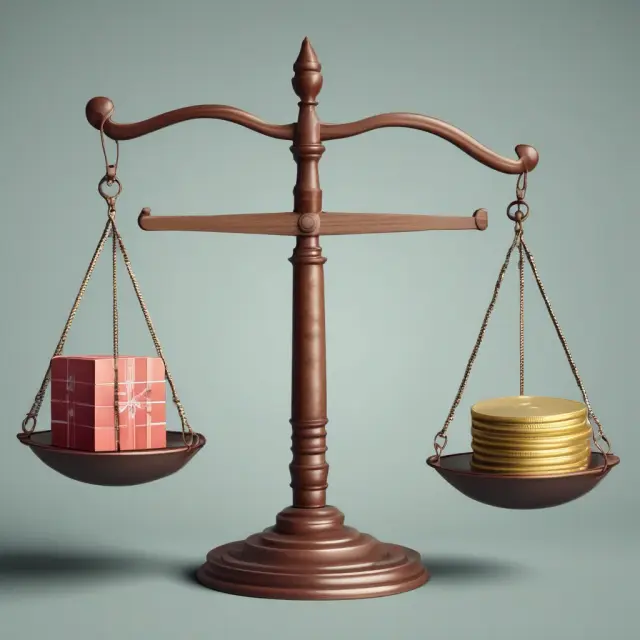
Understand the intricacies of a country's economic health through the balance of trade. Learn how to calculate it, interpret results, and examine factors…
What is the Balance of Trade?
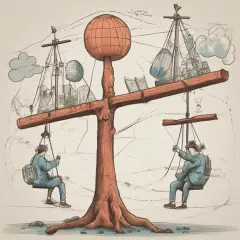
The balance of trade, also referred to as the trade balance, is a crucial economic metric that represents the difference between a country’s exports and imports of goods and services over a specified period. This financial indicator plays an essential role in understanding a country’s international economic relationships and overall economic health. In simpler terms, when a nation exports more than it imports, it records a trade surplus; conversely, when import values exceed export values, the country experiences a trade deficit.
Understanding the balance of trade is significant because it offers insight into a country’s ability to produce goods and services competitively in the global market. A favorable balance of trade indicates that a nation’s economy is strong, as it can generate enough demand for its exports beyond its domestic consumption needs. Conversely, an unfavorable balance of trade suggests that a country relies heavily on foreign imports and may face economic challenges if this trend persists over time.
To calculate the balance of trade, one must determine a country’s total export value during a given period and subtract its import value for the same period. The resulting figure represents the difference between these two critical economic indicators.
For instance, consider a country that exports $10 billion worth of goods and services over six months, while importing $8 billion in the same timeframe. In this situation, the balance of trade would be calculated as follows:
Balance of Trade = Exports – Imports
= $10 billion – $8 billion
= $2 billion
This example demonstrates a favorable balance of trade of $2 billion for the six-month period. However, it’s essential to remember that balance of trade alone does not provide a comprehensive assessment of an economy. It is vital to consider other economic indicators, such as the business cycle, when analyzing a nation’s financial health.
A country with a large trade deficit must borrow money from other nations or international organizations to finance its imports. Alternatively, countries with substantial trade surpluses lend capital to those experiencing deficits. A persistent trade imbalance can impact a country’s political and economic stability, as it may reflect the level of foreign investment in the nation.
It is essential to note that balance of trade and balance of payments are not identical concepts. Balance of trade refers specifically to trade in goods and services, whereas the balance of payments encompasses all international transactions, including financial capital and transfers. The current account represents the portion of the balance of payments dealing with trade in goods and services, making it a subset of the broader balance of payments. A positive balance of trade contributes positively to a country’s current account, while a negative balance of trade negatively impacts this account.
In conclusion, understanding the balance of trade is crucial for evaluating a nation’s economic relationships with the rest of the world and assessing its overall financial health. By examining import-export trends, economists can make informed decisions and recommendations that may bolster competitiveness, reduce deficits, or improve trade balances.
Formula for Calculating the Balance of Trade
The Balance of Trade (BOT), also known as net exports or net international investment income, is an essential measure in evaluating a country’s economy. It represents the difference between a nation’s exports and its imports over a specified period. In essence, it reflects how much more (or less) a country sells to foreign markets than it buys from them. To calculate this vital economic indicator, we must first understand its formula.
The BOT can be expressed as follows: Balance of Trade = Exports – Imports
In other words, the total value of exports is subtracted from the total value of imports. A positive result indicates a trade surplus, while a negative value signifies a trade deficit. The formula’s interpretation plays a crucial role in determining the relative strength of a country’s economy.
For example, if a country exports goods and services worth $100 million during a given period and imports $80 million worth, its BOT would amount to $20 million ($100 million – $80 million). This signifies a trade surplus for that particular period. Conversely, a trade deficit occurs when a country imports more than it exports, as shown in the following example: If a country imports goods and services valued at $120 million during a year and exports only $90 million worth, its balance of trade would be -$30 million ($120 million – $90 million). This implies that the country spent more on foreign purchases than it earned through exports.
The importance of the BOT lies in its ability to reveal essential information about a nation’s competitiveness and dependency on international markets. A positive balance of trade indicates that local producers have robust demand from foreign buyers, enabling them to cater to their domestic market as well. Conversely, a negative BOT suggests an overreliance on imports, potentially resulting in currency outflows to meet external demands.
Stay tuned for the following sections where we dive deeper into understanding favorable and unfavorable trade balances, real-life examples, special considerations, and frequently asked questions about this crucial economic indicator.
Favorable vs. Unfavorable Balance of Trade
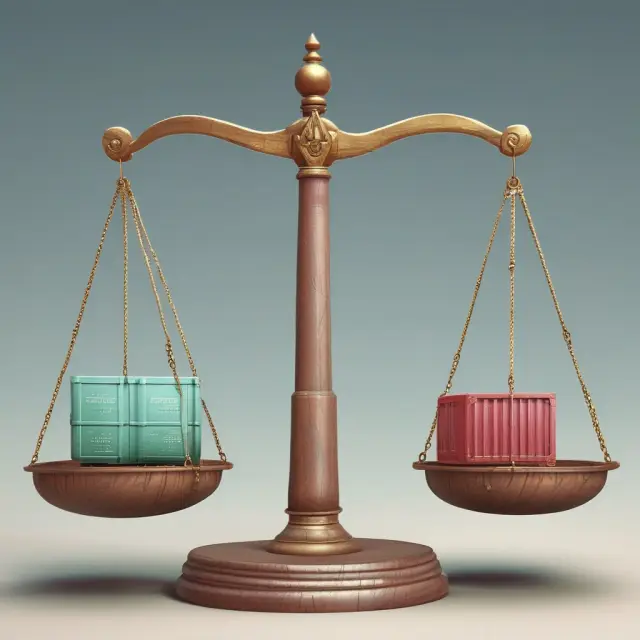
A favorable balance of trade or a trade surplus occurs when the value of exports exceeds the value of imports. It is a sign that a country’s domestic production is competitive in foreign markets and generates a net inflow of foreign currency. Conversely, an unfavorable balance of trade, or a trade deficit, implies that a country’s imports exceed its exports, resulting in a net outflow of foreign currency. Understanding the implications of favorable vs. unfavorable balance of trade is crucial as it affects economic conditions and can impact exchange rates, inflation, and national debt.
A Favorable Balance of Trade
When a country enjoys a positive balance of trade, it indicates that the domestic economy’s productivity is competitive in international markets. This allows the country to produce goods and services at lower costs compared to its trading partners or importing countries. The resulting surplus creates a net inflow of foreign currency, which can be used to pay for various expenses, including debt obligations, capital investments, and improving infrastructure. A favorable balance of trade often strengthens the domestic currency, as foreigners demand more of it to purchase goods and services from the country.
A Favorable Example: Germany’s Trade Surplus
Germany has been a leader in manufacturing industries like automobiles, machinery, and chemicals for decades. Its exports make up roughly half of its gross domestic product (GDP). Germany enjoys a consistent trade surplus due to competitive production costs and high-quality goods that attract demand from various trading partners worldwide. This positive balance of trade contributes significantly to Germany’s economic stability and overall prosperity.
An Unfavorable Balance of Trade
When a country experiences a negative balance of trade, it implies that the cost of producing domestic goods and services is higher than those of its trading partners or importing countries. This can result from several factors, including inefficient production methods, high wages, or a weak currency. An unfavorable balance of trade results in a net outflow of foreign currency as the country spends more on imports than it earns through exports.
A Negative Example: United States’ Trade Deficit
The United States has a persistent trade deficit with most countries, including China, Mexico, Japan, and Germany. This situation reflects the high cost of production in various industries, which makes US goods less competitive on the global market compared to imports from other countries. The net outflow of foreign currency due to the trade deficit weakens the US dollar relative to other currencies, making imports cheaper and exports more expensive for US consumers and businesses alike.
Implications for Businesses and Economies
A favorable balance of trade can benefit a country by attracting foreign investment, improving its economy’s stability, increasing employment opportunities, and enhancing overall economic growth. Conversely, an unfavorable balance of trade can lead to inflationary pressures due to increased demand for imports and potentially hinder a country’s ability to pay off foreign debt.
In conclusion, the balance of trade is a vital indicator in measuring a country’s economic health and competitiveness on the global stage. Understanding the implications of a favorable vs. unfavorable balance of trade can help investors, policymakers, and businesses make informed decisions and adapt to changing market conditions.
Examples of Balance of Trade: Favorable vs. Unfavorable
Understanding the balance of trade is crucial when evaluating a country’s economic health as it represents the difference between a nation’s exports and imports. A positive balance of trade indicates a trade surplus, while a negative figure represents a trade deficit. Let us explore some real-life examples to better illustrate these concepts.
A Favorable Balance of Trade: The United States (Historically)
The United States has been importing more goods and services than it exports for decades, leading to a persistent trade deficit. However, this wasn’t always the case. Prior to the 1970s, America had a favorable balance of trade, indicating that its exports exceeded imports. For instance, during the late 1800s, the United States ran a trade surplus for nearly all years except for three. This trend changed when U.S. industries began to lose their competitive edge and foreign countries started producing goods more efficiently.
A Favorable Balance of Trade: China
On the other hand, China has been consistently posting large trade surpluses over the past few decades. Their exports have significantly outpaced imports, enabling them to build up large reserves and become a dominant player in the global economy. The reasons behind this success can be attributed to their competitive labor costs, low production prices, and strategic government investments in industries that cater to the international market.
An Unfavorable Balance of Trade: The European Union (EU) vs. the United Kingdom (UK)
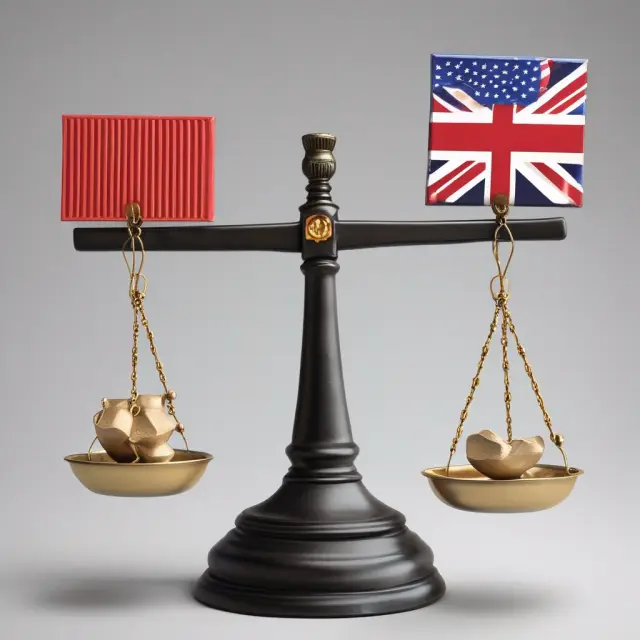
The EU and the UK present an interesting comparison when it comes to balance of trade. Both economies are interconnected, with many goods flowing between them. However, their trade balances have diverged significantly over the years. The EU has been running a trade surplus for quite some time, while the UK consistently posts a deficit. This situation became more pronounced after Brexit when the UK left the EU’s single market and customs union. As a result, trade barriers between the two economies increased, impacting the flow of goods and services across their borders.
In conclusion, examining the balance of trade can offer valuable insights into a country’s economic health. A favorable balance of trade signifies that a country is exporting more than it imports, while an unfavorable balance indicates the opposite. Studying examples like the United States, China, and the EU vs. the UK, we can learn about the factors contributing to these trends and their implications for each respective economy.

Special Considerations: Trading Partners, Economic Cycles, and Balance of Payments
The balance of trade plays an essential role in measuring a country’s economic health. However, it is just one component of the overall picture presented by a country’s international transactions – the balance of payments (BOP). In this section, we will explore how factors like trading partners and economic cycles can influence a country’s balance of trade and its relationship to balance of payments.
1. Trading Partners
When analyzing a country’s balance of trade, it is crucial to consider the role of its major trading partners. A trading partner refers to a country with which another country conducts significant business transactions. The trading relationship between two countries can influence their respective balances of trade by creating patterns in imports and exports. For example, if Country X has a significant dependence on Country Y for essential raw materials, it may result in large import values, while export values might remain relatively stable. This dependency could potentially impact the balance of trade in Country X negatively.
2. Economic Cycles
A country’s economic cycles can significantly affect its balance of trade. Economic cycles are fluctuations in economic activity that occur over time and include expansions, contractions, and recessions. During an economic expansion or boom period, a country might observe higher demand for imports as businesses expand their operations and consumers increase spending, resulting in a larger trade deficit. In contrast, during a recession, countries may focus on exporting more to generate revenue and stimulate their economies.
The balance of payments is a broader measure of a country’s international economic transactions that includes the balance of trade as well as capital transactions (capital account) and financial transfers (financial account). While a positive balance of trade indicates that exports exceed imports, a country might still have a negative overall balance of payments if its capital or financial account shows significant outflows. For example, large investments abroad or debt repayments could lead to an unfavorable balance of payments despite a favorable balance of trade.
In conclusion, understanding the factors that influence a country’s balance of trade and how it relates to the balance of payments is crucial for gaining a comprehensive perspective on its international economic position. By examining trading partners and economic cycles, we can gain insights into potential influences on a country’s exports and imports, allowing us to better analyze its economic health and position in the global economy.
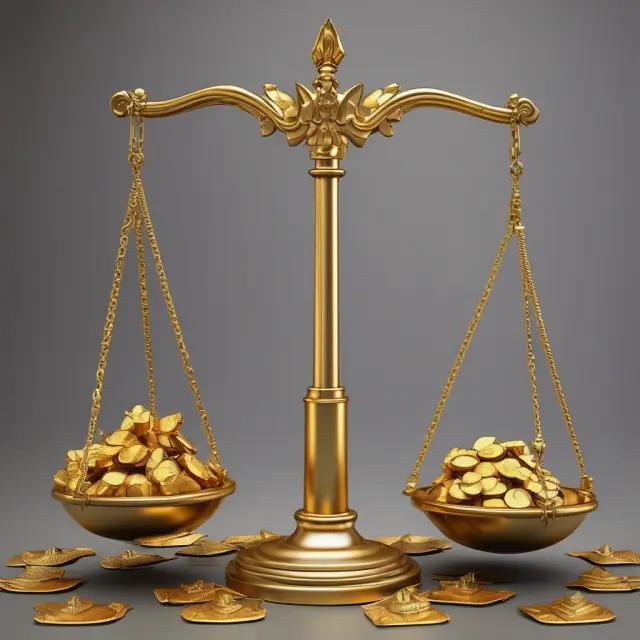
Calculating Trade Deficits and Surpluses: Examples and Impact
Understanding the significance of calculating the balance of trade involves determining a country’s net exports, which is simply its total exports subtracted from total imports. This figure is crucial for assessing the overall health of an economy and can be calculated by using the following formula: Balance of Trade = Exports – Imports
By examining the balance of trade, economists and policymakers can gain insights into a country’s competitive position in the global market, potential reliance on foreign goods, and economic stability. A country with a positive balance of trade, also known as a trade surplus, exports more than it imports. Conversely, a negative balance of trade, or trade deficit, indicates that a nation imports more than it exports.
Let us delve into some real-life examples to better understand the concept:
Example 1: United States vs. China
The United States and China are two significant economies with contrasting trade balances. In August 2022, the United States exported $213 billion worth of goods and services compared to $245 billion worth of imports, resulting in a negative balance of trade or a trade deficit of -$32 billion. China, on the other hand, boasted a positive balance of trade with exports valued at $376 billion and imports totaling $291 billion, leading to a surplus of +$85 billion. These figures illustrate the disparity between the two countries’ economies.
Example 2: Impact on the Economy
A country’s balance of trade can impact its economy in various ways. For instance, a persistent trade deficit could potentially lead to increased indebtedness and reliance on foreign borrowing. In contrast, a consistent trade surplus can generate foreign currency reserves and boost a nation’s financial strength.
It is essential to consider the balance of trade within the broader context of economic indicators and business cycles. During economic recessions, countries tend to focus on increasing exports to stimulate growth and create jobs. In contrast, during periods of economic expansion, imports are favored due to their role in fostering competition and limiting inflation.
Understanding the balance of trade and its implications is essential for businesses, investors, and policymakers alike. A comprehensive analysis of a nation’s economic position requires considering various factors, including its balance of trade, balance of payments, competitive advantage, and currency valuation.
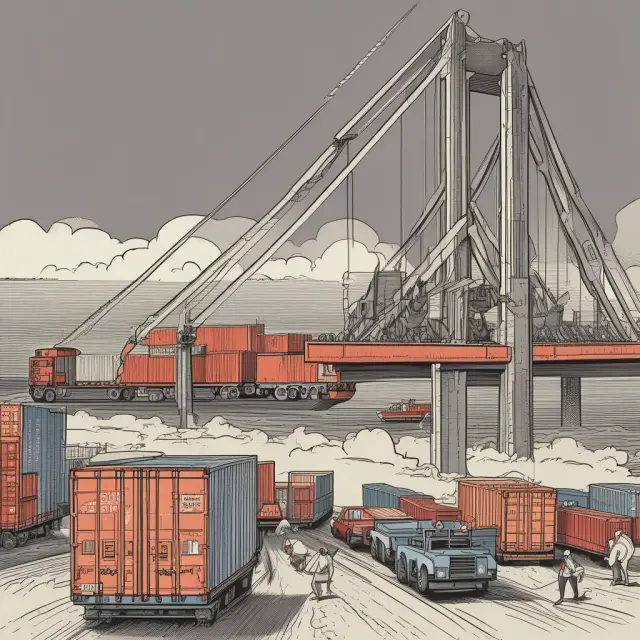
Balance of Trade and Business Cycles: Implications for Recessions and Expansions
The balance of trade plays an essential role in the economy, reflecting the difference between a country’s exports and imports. While the balance of trade alone does not provide a complete picture of a nation’s economic health, it is crucial to understand its relationship with business cycles – the recurring fluctuations in the economy during periods of expansion or recession.
Business Cycles: An Overview
Business cycles are a regular occurrence in an economy and can be characterized by periods of growth (expansions) and decline (recessions). Expansions involve rising employment, increased production levels, and overall economic growth. Conversely, recessions feature declining employment, decreased production levels, and economic contraction.
Balance of Trade in the Context of Business Cycles: Recession
During a recession, countries typically focus on increasing exports to create jobs, stimulate demand, and boost their economies. An unfavorable balance of trade can worsen an already challenging situation for several reasons:
- Higher Import Dependence: A country with a large trade deficit may rely heavily on imported goods. During a recession, the country’s limited resources might be focused on satisfying domestic demand, making it even more challenging to pay for essential imports.
- Limited Export Markets: Economic downturns in other countries can decrease the demand for exports, further exacerbating an unfavorable balance of trade.
- Currency Devaluation: To stimulate exports and reduce the cost of imports, central banks may devalue their currencies during recessions. This can lead to a temporary improvement in the balance of trade but might not address the underlying economic issues.
Balance of Trade in the Context of Business Cycles: Expansion
During an economic expansion, countries focus on increasing production levels and improving overall economic conditions. A favorable balance of trade during this period can contribute positively to a country’s economy:
- Increased Export Demand: Stronger economies create increased demand for goods and services from other countries, leading to greater exports.
- Improved Trade Competitiveness: Economic expansion allows companies to invest in new technologies, increasing their competitive edge in international markets, thereby contributing to a favorable balance of trade.
- Reduced Import Dependence: As domestic production rises during an economic expansion, countries may decrease their reliance on imported goods, improving their overall balance of trade.
Understanding the relationship between the balance of trade and business cycles is crucial for investors, policymakers, and economists alike as it can provide valuable insights into a country’s economic health, short-term and long-term trends, and potential risks.

Investments, Financial Capital, and Transfers in Balance of Trade vs. Balance of Payments
Understanding the relationship between balance of trade and balance of payments is crucial as these two concepts are closely linked but distinct from one another. While balance of trade (BOT) represents a country’s net exports or imports of goods and services, balance of payments (BOP) encompasses both visible and invisible transactions in a country’s economy. This section explores the differences between BOT and BOP and their importance in assessing a nation’s international economic standing.
The formula for calculating the balance of trade is simple: subtracting imports from exports to derive the difference. In contrast, the balance of payments requires a more extensive approach, taking into account not only visible transactions like trade but also invisible transactions involving services, financial capital, and transfers. Balance of payments includes two main categories – current account and capital account – with the former focusing on goods, services, income, and current transfers while the latter focuses on capital account items such as investments, loans, and other financial flows.
A country’s balance of trade is a significant indicator when examining its production capabilities and competitiveness in the global marketplace. For instance, a favorable trade balance signifies that the nation exports more goods or services than it imports, resulting in an economic surplus. On the contrary, an unfavorable balance indicates a deficit where import expenditures exceed export earnings.
While BOT can offer valuable insights into a country’s economic standing, it presents only a partial picture as it does not account for non-trade transactions like services, investments, and financial capital flows. It is essential to consider the balance of payments (BOP) to gain a comprehensive understanding of a country’s international economic situation.
The significance of understanding both BOT and BOP stems from their implications on a country’s economy and its impact on foreign exchange reserves and currency valuation. For instance, persistent deficits in the balance of trade can lead to reduced foreign currency reserves, potentially putting downward pressure on a currency’s value. Conversely, a consistent surplus could result in an appreciation of the currency, making exports less competitive and imports more expensive.
Moreover, BOP also provides insights into the financial position of a country by indicating its net inflows or outflows of foreign capital. For example, a large net inflow of foreign investment can lead to increased economic growth, while a significant outflow may result in economic contraction. In conclusion, while balance of trade plays a vital role in understanding a nation’s production and export capabilities, it is essential to consider the broader context provided by balance of payments to gain a more comprehensive view of its international economic situation.
For instance, let us compare the United States and China as examples: the US usually runs a significant trade deficit while China often has a large surplus. However, when we look at their balance of payments, the picture becomes more nuanced: the United States maintains a net inflow of capital through foreign investment and services while China experiences outflows due to its massive foreign investments and lending activities. This information is crucial for investors, economists, and policymakers seeking to evaluate a country’s economic health and stability based on both balance of trade and balance of payments data.
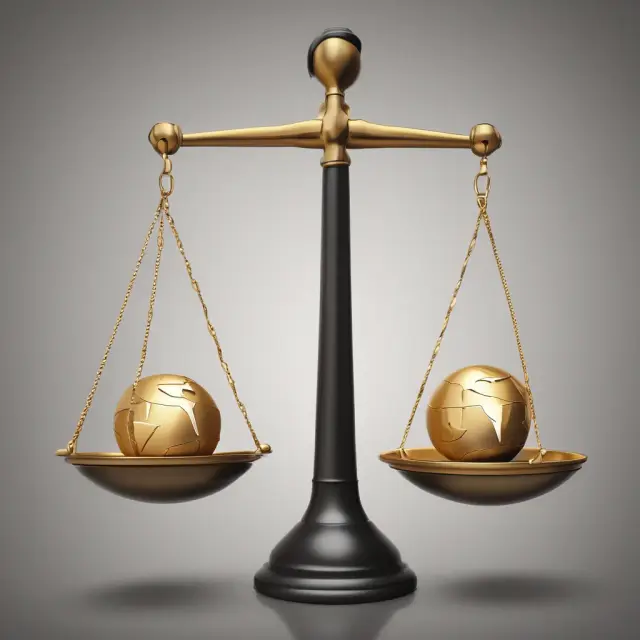
Factors Affecting a Country’s Balance of Trade: Competitive Advantage and Currency Valuation
The balance of trade is an essential economic indicator representing the difference between a country’s exports and imports. Understanding factors influencing this balance can help us analyze a nation’s international trading position, as well as its potential strengths and weaknesses. Two significant determinants of a country’s balance of trade are competitive advantage and currency valuation.
1. Competitive Advantage: A country’s ability to produce goods or services more efficiently and cheaply than others on the global market is called competitive advantage. This edge can stem from various factors, including unique natural resources, advanced technology, lower labor costs, skilled workforce, or strategic location. When a country has a competitive advantage in manufacturing a particular product, it tends to export more of that product, generating trade surpluses. Conversely, countries lacking the necessary advantages often import those goods, leading to deficits.
A classic example is oil-rich nations like Saudi Arabia and Kuwait, which have significant competitive advantages in producing crude oil. These countries usually run substantial trade surpluses due to their exports of this commodity. In contrast, many developed economies like the United States, Germany, or Japan import large quantities of raw materials and energy due to their higher production costs.
2. Currency Valuation: Another essential factor impacting a country’s balance of trade is its currency valuation. A stronger currency makes imports cheaper for domestic consumers, making it more attractive to import rather than produce locally, potentially contributing to a deficit. In contrast, a weaker currency increases the cost of imported goods and incentivizes local production, which can lead to a trade surplus.
For instance, during periods when the US dollar is strong, American imports become less expensive for the rest of the world. Consequently, countries like China, Japan, or South Korea may find it more attractive to export goods to the United States, making their currencies weaker in response. This dynamic can lead to a trade surplus for these nations and a deficit for the US
These two factors interact intricately, as changes in competitive advantage over time can affect currency valuation, creating feedback loops that influence the balance of trade significantly. For example, if a country begins to lose its competitive edge in manufacturing a particular product, its currency may depreciate due to the resulting deficit, making exports more attractive again and potentially reversing the trend.
In conclusion, understanding the factors determining a country’s balance of trade – namely, competitive advantage and currency valuation – can provide valuable insights into a nation’s economic position and potential future developments in its international trade relations.
FAQ: Frequently Asked Questions About Balance of Trade
What is the balance of trade?
The balance of trade refers to the difference between a country’s exports and imports for a given period, which helps measure its economic health and performance in international commerce. It is the most significant component of a country’s balance of payments (BOP). A positive balance of trade indicates that a country exports more than it imports, while a negative one signifies the opposite.
What does a favorable balance of trade imply?
A favorable balance of trade (also known as a trade surplus) suggests that a country’s producers have a strong foreign market for their goods and services. A positive balance implies that local demand is satisfied, and there remains an active market for exports. Conversely, a negative balance indicates a reliance on foreign goods and potential economic instability if the deficit persists.
How is the balance of trade calculated?
The formula for calculating balance of trade involves subtracting imports from exports: BOT = Exports – Imports.
What are some real-life examples of a favorable and unfavorable balance of trade?
For instance, the United States consistently runs a trade deficit, while China typically has a large trade surplus. In August 2020, the US had a trade balance of -$67.1 billion, while China generated a trade surplus of $79.4 billion that month.
Is a trade deficit always bad for an economy?
No; while a persistent trade deficit may signal potential concerns, other factors like economic growth, employment rate, and inflation rate should also be considered when evaluating the balance of trade’s implications on an economy. For example, in recessions, countries tend to export more to create jobs and demand. In expansion periods, they may import more for price competition and reduced inflation.
What is the relationship between a country’s currency and its balance of trade?
A country’s currency value can significantly impact its balance of trade. An undervalued currency makes exports cheaper for foreign buyers, while an overvalued one makes imports cheaper and exports more expensive, influencing the flow of international transactions and economic growth.
Is a positive balance of trade always desirable?
While having a favorable balance of trade is generally seen as a positive sign, it does not guarantee overall economic health or strength. A country’s economic situation should be evaluated considering various indicators like GDP growth, employment rate, and inflation rate, among others.
 Next entry · No. 491Understanding Build-Operate-Transfer (BOT) Contracts: Public-Private Partnership Models for Infrastructure Projects
See also
-
 No. 488
26 Apr 2024
21 min
Understanding the Balance of Payments: Components, Calculation, and Significance
Economics
No. 488
26 Apr 2024
21 min
Understanding the Balance of Payments: Components, Calculation, and Significance
Economics -
 No. 357
15 Apr 2024
21 min
Understanding Barriers to Entry: Obstacles Preventing New Competitors from Entering Business Sectors
Business Strategy
No. 357
15 Apr 2024
21 min
Understanding Barriers to Entry: Obstacles Preventing New Competitors from Entering Business Sectors
Business Strategy -
 No. 1,267
21 Aug 2024
22 min
Emigration: Understanding the Economic Impact on Sending and Receiving Countries
Economics
No. 1,267
21 Aug 2024
22 min
Emigration: Understanding the Economic Impact on Sending and Receiving Countries
Economics -
 No. 946
06 Jul 2024
20 min
Understanding Deficit Spending Units: An Economic Perspective on Excessive Debt
Economics
No. 946
06 Jul 2024
20 min
Understanding Deficit Spending Units: An Economic Perspective on Excessive Debt
Economics -
 No. 728
28 May 2024
21 min
Understanding Comparative Advantage: A Key Concept in Economics
Economics
No. 728
28 May 2024
21 min
Understanding Comparative Advantage: A Key Concept in Economics
Economics -
 No. 391
19 Apr 2024
19 min
Understanding Behavioral Economics: The Psychology of Irrational Economic Choices
Economics
No. 391
19 Apr 2024
19 min
Understanding Behavioral Economics: The Psychology of Irrational Economic Choices
Economics