Understanding the CBOE Options Exchange: A Comprehensive Guide for Institutional Investors

Understanding the CBOE Options Exchange: A comprehensive guide for institutional investors covering history, products, educational programs and more.
Introduction to the CBOE Options Exchange
The Chicago Board Options Exchange (CBOE), now known as CBOE Global Markets Inc., is a significant player in the world of finance and investment, particularly for options trading. Founded in 1973, this exchange has seen remarkable growth and transformation over the decades, becoming a leading global marketplace for various securities such as options, futures, stocks, Exchange-Traded Products (ETPs), foreign exchange (FX), and multi-asset volatility products. The CBOE holds a unique position in the financial industry with its innovative offerings and rich history, including the creation of the CBOE Clearing Corp., which later evolved into the Options Clearing Corporation (OCC) and the industry clearinghouse for all U.S. options trades.
The CBOE’s extensive product lineup caters to a diverse client base and investment strategies, allowing traders to engage in hedging and income generation through options trading on thousands of publicly traded stocks, indexes, and ETFs. Notable events in the exchange’s history include the introduction of The Options Institute in 1985, its educational arm designed to educate investors worldwide about options trading and other financial concepts. Today, the CBOE offers seminars, webinars, online courses, and professional learning resources through this program.
As a pioneer in volatility trading, the CBOE is synonymous with its flagship product, the CBOE Volatility Index (VIX), which is the most widely used and recognized proxy for market volatility. This index measures the S&P 500’s expected short-term volatility based on real-time prices of near-the-money options on the index, providing a valuable tool for investors to gauge the overall uncertainty in the markets.
With record-breaking trading volumes in recent years, the CBOE has solidified its position as a major exchange in the financial world, making it an essential resource for both seasoned and novice investors looking to expand their knowledge and skills in various investment strategies. Stay tuned as we delve deeper into the CBOE’s offerings, products, and history, highlighting the significance of this prominent exchange in the realm of finance and investing.

CBOE: A Leading Global Marketplace for Various Securities
The CBOE Options Exchange is a prominent financial marketplace that offers diverse securities for trading. Founded in 1973 as the Chicago Board Options Exchange (CBOE), it has since evolved into CBOE Global Markets Inc., following a rebranding initiative in 2017. The exchange’s primary asset remains the CBOE Options Exchange, a significant platform for options trading. Additionally, CBOE offers securities such as futures, stocks, and exchange-traded products (ETPs). This section explores the various financial instruments available on the CBOE.
Options
The CBOE is renowned for its extensive range of put and call options on thousands of publicly traded stocks, including ETFs and individual equities. These options serve as valuable tools for hedging and income generation through selling covered calls or cash-secured puts. The exchange also provides access to options on stock and sector indexes, such as the Standard & Poor’s 500, S&P 100, Dow Jones Industrial Average, Russell indexes, selected FTSE indexes, Nasdaq Indexes, MSCI Indexes, and sector indices. Moreover, CBOE offers social media indexes and specialty indexes for various options strategies like “put write,” butterfly, and collar.
Volatility Products
The CBOE is home to the VIX volatility index, a widely recognized proxy for market volatility. The VIX index, introduced in 1993, measures investors’ consensus view of future (30-day) expected stock market volatility. It acts as a popular “fear gauge” due to its propensity to spike during periods of high uncertainty or market instability. Along with the VIX Index, CBOE offers various other volatility indexes on broad-based stock indexes, ETFs, individual stocks, commodities, and other specialty indexes.
Futures
CBOE is a major player in futures trading as well, allowing investors to trade futures contracts on various underlying assets. These include equity index futures like the S&P 500 Index, E-mini S&P 500 Index, and Dow Jones Industrial Average. The exchange also offers futures on interest rates, precious metals, currencies, and agricultural commodities.
Stocks
As one of the largest stock exchanges in Europe, the CBOE provides trading opportunities for numerous publicly traded securities. This allows investors to participate in companies across various industries and sectors.
Exchange-Traded Products (ETPs)
The CBOE offers a wide variety of exchange-traded products (ETPs), including exchange-traded funds (ETFs) and exchange-traded notes (ETNs). These instruments allow investors to gain exposure to various asset classes, sectors, or markets without the need for complex derivatives.
In conclusion, the CBOE Options Exchange is a leading global marketplace that caters to various securities, including options, futures, stocks, and exchange-traded products (ETPs). Its extensive offerings enable investors to manage risk, generate income, and access numerous asset classes, ensuring a diverse range of investment possibilities.

Key Milestones in the History of CBOE
The Chicago Board Options Exchange (CBOE), now known as CBOE Global Markets Inc., was founded on April 26, 1973. Since then, it has transformed into a leading global marketplace for various securities including options, futures, stocks, and exchange-traded products (ETPs). Originally an all-call exchange, the CBOE revolutionized financial markets with the introduction of put options in 1977. In the following decades, it continued to expand its offerings by introducing new products like the VIX Index in 1993 and long-term anticipation securities (LEAPs) in 1990.
In April 2010, CBOE Holdings Inc., the company’s parent holding company, was formed to consolidate various business units under one roof. A year later, the exchange changed its name from the Chicago Board Options Exchange to CBOE Exchange, Inc. In 2017, the company rebranded as CBOE Global Markets Inc. and the CBOE Exchange was renamed the CBOE Options Exchange. This move aimed to better reflect the exchange’s expanding presence in global markets.
The CBOE is most notably recognized for its role in creating the CBOE Clearing Corp., which later became the Options Clearing Corporation (OCC), the industry clearinghouse for all U.S. options trades. In 1985, The Options Institute was formed as part of the CBOE’s commitment to investor education, offering a wealth of resources to help investors understand the intricacies of options trading. Today, The Options Institute continues its mission by providing seminars, webinars, and online courses on various topics related to options, futures, stocks, and ETPs.
The CBOE is home to various securities that cater to the diverse needs of traders and investors alike. From individual stocks, sector indexes, and global foreign exchange (FX), to multi-asset volatility products and social media indexes, the range of offerings makes it a go-to destination for those looking for flexible strategies.
One of its most renowned products is the CBOE Volatility Index, or VIX, which serves as the market’s primary barometer for equity market volatility. Introduced in 1993, the VIX is a real-time measure of the market’s expectation of 30-day implied volatility based on S&P 500 Index options. It is often referred to as the “fear gauge” due to its tendency to spike when investors anticipate increased market instability or bearish sentiment.
In Q1 2022, total volume across CBOE’s options exchanges reached a record-breaking 830.3 million options contracts traded. With an average daily volume (ADV) of 13.4 million contracts traded per day, the exchange continues to cement its position as the largest U.S. options exchange and a top global market for ETP trading.
In conclusion, the CBOE Options Exchange has come a long way since its inception in 1973, continually adapting to meet the evolving needs of traders and investors worldwide. Its extensive range of products and commitment to education make it an invaluable resource for those looking to navigate the dynamic world of options trading.

The CBOE’s Educational Programs
Since its inception, the Chicago Board Options Exchange (CBOE) has been synonymous with options trading, but it is more than just a marketplace for securities. The exchange places great emphasis on investor education through various offerings from The Options Institute. Established back in 1985, The Options Institute is a cornerstone of the CBOE’s commitment to empowering investors with knowledge and skills.
The institute offers a comprehensive suite of resources aimed at different skill levels and needs:
- Seminars: In-person seminars held throughout the year in various cities provide an opportunity for attendees to learn from industry experts through intensive, interactive workshops.
- Webinars: Virtual webinars offer a more flexible alternative, allowing participants to attend live sessions or view recorded versions at their own pace.
- Online Courses: Self-paced online courses cater to those who prefer learning from the comfort of their homes or offices and can be accessed 24/7.
The educational programs cater not just to individual traders but also to professionals, including financial advisors and portfolio managers, enabling them to provide better guidance to their clients. The CBOE’s commitment to education sets it apart as a leader in the financial industry.
In addition to The Options Institute, the CBOE offers a range of resources on its website, including:
- OptionStrats: This tool provides strategies and analysis from experienced traders for options trading success.
- OptionMonster: A real-time trading alert service designed to help investors navigate volatile markets and maximize profit opportunities.
- CBOE Market Pulse: Daily market insights and commentary, enabling users to stay informed on the latest developments in the financial world.
The CBOE’s dedication to education is a testament to its long-term vision and commitment to fostering a community of informed and skilled investors. By equipping traders with knowledge and resources, it creates an environment that encourages growth, innovation, and success.

Product Diversity at the CBOE: From Individual Stocks to Volatility Indexes
The Chicago Board Options Exchange (CBOE), now a part of CBOE Global Markets, is a leading global marketplace for various securities that offers investors access to numerous opportunities. Established in 1973 and originally known as the Chicago Board Options Exchange, this distinguished exchange has been at the forefront of the derivatives market for over four decades.
The CBOE’s extensive product offering covers options, futures, stocks, exchange-traded products (ETPs), global foreign exchange (FX), and multi-asset volatility products. This diverse array of securities caters to a wide range of investment strategies and risk appetites. In fact, it is the largest options exchange in the U.S., as well as the largest stock exchange in Europe by value traded. Furthermore, it ranks second in the U.S. for stock exchange operators and is a top global market for ETP trading.
One of the most notable features of the CBOE is its educational offerings, including The Options Institute, established in 1985 to educate investors around the world about options. Through seminars, webinars, online courses, and learning for professionals, the exchange aims to provide knowledge and resources that empower individuals to make informed decisions regarding options trading.
The CBOE’s vast product line includes put and call options on thousands of publicly traded stocks, as well as options on exchange-traded funds (ETFs) and exchange-traded notes (ETNs). These securities provide investors with opportunities for hedging or generating income through strategies such as selling covered calls or cash-secured puts.
Additionally, the CBOE offers options on stock and sector indexes, including the Standard & Poor’s 500, S&P 100, Dow Jones Industrial Average, Russell indexes, selected FTSE indexes, Nasdaq Indexes, MSCI Indexes, and sector indexes containing the ten sectors within the S&P 500. This diversity allows investors to access a broad range of investment opportunities tailored to their objectives and risk tolerance levels.
Furthermore, social media indexes and specialty indexes covering several options strategies like “put write,” butterfly, and collar can also be found on the CBOE. The flagship volatility index of the exchange is the CBOE Volatility Index (VIX), which is widely used as a measure of equity market volatility and often referred to as the “fear gauge.”
Investors might find interest in the following milestones related to the CBOE’s product diversity:
– In 1973, when the exchange was founded, it only listed call options. Put options were added in 1977.
– LEAPs (Long-Term Anticipation Securities) were introduced in 1990 and are long-dated options with expirations longer than one year and up to three years.
The CBOE’s impressive product offerings have contributed significantly to its standing as a prominent marketplace for various securities, providing investors with diverse opportunities to build and manage their investment portfolios.

The Significance of Put and Call Options on the CBOE
The Chicago Board Options Exchange (CBOE) is renowned for its wide range of securities offerings, with a particular emphasis on options, futures, stocks, exchange-traded products (ETPs), foreign exchange (FX), and multi-asset volatility instruments. Among the various types of options available on the CBOE, put and call options are two fundamental building blocks in options trading. In this section, we will delve deeper into these essential financial tools and discuss their significance for institutional investors.
Put Options: A Hedge against Downside Risk
A put option grants the holder the right to sell a specified asset at a predetermined price (strike price) on or before a specific expiration date. Investors typically use put options as a form of protection, hedging against potential downside risks. By acquiring this right, the investor can limit losses and potentially profit when the market moves in an unfavorable direction.
For example, imagine an investor holds a long position in 100 shares of stock XYZ. If they have concerns that the price may decline, they could purchase a put option with a strike price equal to or close to the current market value to offset potential losses. Conversely, if the price increases, the investor can either hold onto the option until expiration or sell it beforehand for a profit.
Call Options: A Bet on Upside Price Movement
Contrastingly, call options grant the holder the right to buy a specified asset at a predetermined strike price before the expiration date. These instruments are popular among investors who believe that the underlying asset’s price will appreciate. By purchasing a call option, investors can potentially profit when the market moves in their favor and the stock price exceeds the strike price at expiration.
An investor could buy call options on XYZ if they anticipate the share price will rise in value or if they wish to speculate on the asset’s potential growth. By doing this, they can potentially earn substantial returns while limiting their downside risk due to the defined strike price and expiration date.
Both put and call options are crucial for institutional investors as they provide an essential hedging and income generation tool within a portfolio. When constructing investment strategies or managing risk exposure, understanding these instruments’ intricacies can lead to successful outcomes for various market conditions. Additionally, the CBOE offers numerous educational resources to help investors deepen their knowledge of options trading through programs like The Options Institute.
The CBOE is not only a trailblazer in options trading but also provides access to diverse products such as volatility indexes, sector-specific indices, and exchange-traded funds (ETFs). By mastering put and call options, investors can effectively navigate the various instruments available on the CBOE and capitalize on market opportunities.
The versatility of put and call options makes them essential components in an institutional investor’s toolkit. With their ability to manage risk exposure, generate income, and speculate on potential price movements, these financial tools provide a solid foundation for building successful investment strategies within the rapidly evolving world of finance.
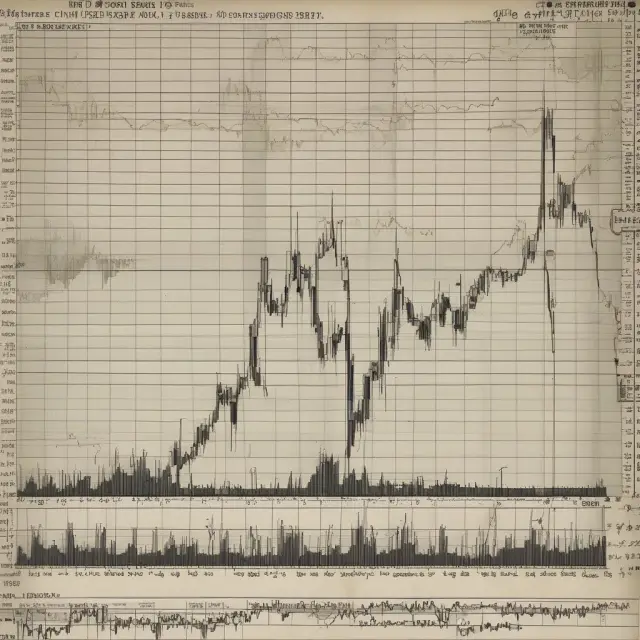
CBOE: A Pioneer in Volatility Trading with the VIX Index
The CBOE Options Exchange is synonymous with innovation within the world of options trading and financial derivatives. Among its offerings, the Chicago Board Options Exchange (CBOE) has gained significant attention for its flagship volatility index – the CBOE Volatility Index, commonly known as the VIX.
In 1993, the CBOE introduced the VIX, which is currently the most widely used and recognized proxy for market volatility. The VIX is calculated using S&P 500 index options, providing valuable insights into expected short-term fluctuations in the stock market. With its extensive history and influence on financial markets, it’s essential to understand the significance of this groundbreaking index and how it came to be.
The VIX Index was created as a response to the increasing demand for a reliable volatility benchmark. Before its introduction, measuring and predicting market volatility relied on subjective methods or unreliable indicators such as the Chicago Board of Trade (CBOT) T-bill volatility index or implied volatility from individual stocks. The VIX provided investors with a quantifiable measure that could be used to gauge the overall health and sentiment of the market, particularly during times of uncertainty.
The calculation of the VIX Index is based on the prices of S&P 500 index options, specifically the implied volatilities of the near-term call and put options with a delta of +/-25. These options are typically those expiring within one month from the current date. The index is normalized to have an average value of 100, with a lower reading indicating decreased volatility and a higher reading suggesting increased volatility.
The VIX Index serves as an essential tool for traders and portfolio managers seeking to hedge risk or capitalize on market movements. It plays a crucial role in various investment strategies such as options writing, index arbitrage, and portfolio optimization. Additionally, the VIX Index can provide insights into overall market sentiment and help investors gauge the likelihood of significant price swings in their portfolios.
The CBOE’s VIX Index has been influential in shaping financial markets and market volatility perception for nearly three decades. The index is often referred to as the “fear gauge” due to its tendency to spike during periods of heightened uncertainty or market instability, reflecting investor anxiety. A rising VIX Index can be an indication of a potential bearish trend in the stock market and might serve as a warning signal for investors to consider rebalancing their portfolios.
The influence of the CBOE Volatility Index extends beyond individual investors and portfolio managers, as it is used by various financial institutions and market participants such as insurance companies, pension funds, and hedge funds. Moreover, the VIX Index is incorporated into numerous financial products, including exchange-traded notes (ETNs) and indexes, making it an essential component in broader financial markets and investment strategies.
In conclusion, the CBOE’s Volatility Index has proven to be a valuable tool for investors and market participants seeking to measure, manage, or profit from volatility. Its introduction revolutionized the way risk is perceived and managed within financial markets, establishing itself as a cornerstone of modern finance and investment strategies. Understanding the significance of this index and its impact on the world of options trading and financial derivatives can provide valuable insights for investors seeking to navigate today’s complex financial landscape.

Trading Volume on the CBOE: A Record Breaking Performance
The Chicago Board Options Exchange (CBOE), now a part of CBOE Global Markets, has set new records with its impressive trading volumes. In Q1 2022, total volume across all CBOE options exchanges reached an unprecedented 830.3 million options contracts—a substantial increase from the previous record in Q4 2021 when a total of 756.6 million contracts were traded. This record-breaking performance can be attributed to various factors, including increased market volatility and growing interest in derivatives as investment tools.
Quarterly average daily volume (ADV) also reached an all-time high of 13.4 million contracts traded per day, marking a significant uptick from the previous record set in Q4 2021 when an average of 11.7 million contracts were traded daily. This growth in trading activity underscores the importance and popularity of options trading on the CBOE.
The surge in trading volumes can be traced back to several factors. Firstly, increased market volatility has led investors to seek out derivatives as a hedging tool against potential price swings. Additionally, the growing popularity of options strategies like covered calls and cash-secured puts among individual and institutional investors has fueled this trend.
Historically, put options were first listed on the CBOE in 1977, following the initial launch of call options in 1973. Since then, the exchange has continually evolved to meet the evolving needs of the market. In 1990, long-term anticipation securities (LEAPs)—options with expirations longer than one year and up to three or more years—were introduced. LEAPs have become increasingly popular due to their flexibility and ability to offer investors greater control over their risk exposures.
The CBOE’s robust trading volumes can be attributed not only to its extensive range of options contracts but also to its educational offerings. The Options Institute, the exchange’s educational arm established in 1985, has been instrumental in helping investors understand the intricacies of options trading through seminars, webinars, and online courses. By empowering traders with knowledge and tools, the CBOE continues to play a vital role in the financial industry.
In summary, record-breaking trading volumes on the CBOE reflect growing investor interest in options as well as increased market volatility. With an extensive range of products, innovative educational offerings, and a commitment to meeting the needs of diverse investors, the CBOE remains at the forefront of the financial sector.

The Evolution of LEAP Options on the CBOE
Long-Term Anticipation Securities, or LEAPs, are long-term options contracts that extend beyond a single expiration cycle. These unique financial instruments were introduced on the CBOE in 1990, marking an essential expansion of the exchange’s offerings. In contrast to regular options, which typically have expirations ranging from one week to nine months, LEAPs provide investors with a more extended opportunity to profit from their predictions about underlying securities.
LEAPs were created in response to investor demand for a longer-term hedging and speculation tool. These contracts allow traders to capitalize on trends that may take time to develop or persist over an extended period. They have been a valuable addition to the CBOE’s extensive product suite, attracting both institutional and retail investors alike.
LEAP options can be traded on various securities, including individual stocks and indexes. For instance, the S&P 500 LEAPs provide exposure to the overall market direction and are popular among those looking for broad market exposure. These contracts are especially beneficial during volatile markets when investors seek protection against price swings or look to profit from long-term trends.
The flexibility of LEAP options extends beyond their longer timeframe, as they can be used for various strategies, such as straddles, strangles, and butterflies. A straddle strategy involves purchasing both a call and put option at the same strike price and expiration date, allowing investors to profit from either significant price moves in either direction. In contrast, a strangle strategy combines a long call and a long put with different strike prices and the same expiration date, enabling traders to benefit from large price swings outside a predefined range. Butterflies, on the other hand, involve the simultaneous purchase or sale of three options contracts with different strike prices and expirations, aiming for limited risk and potentially higher profitability in certain market conditions.
LEAPs are typically more expensive than regular options due to their longer time horizon and inherent complexity. However, they can offer significant advantages when used correctly. One primary benefit is the potential for enhanced pricing flexibility, as LEAPs may provide wider bid-ask spreads compared to short-term options. This increased spread can lead to better entry and exit points for investors seeking to take advantage of market opportunities.
Moreover, LEAPs can serve as a valuable hedging tool for institutional investors with long-term investment horizons or those looking to manage exposure to specific securities over an extended period. For example, a pension fund may use a LEAP strategy to protect its equity portfolio from downside risk while maintaining upside potential. In this scenario, purchasing a LEAP put option would provide protection against potential market declines, while simultaneously allowing the fund to maintain its long-term exposure to the underlying equities.
Additionally, the introduction of LEAP options on the CBOE contributed to an increase in volatility trading activity. This growth was largely driven by the availability of longer-term VIX futures contracts, which provide investors with a hedging tool against volatility risk over an extended period. These contracts enable traders and portfolio managers to protect their portfolios from potential market swings and maintain a steady asset allocation during uncertain times.
As the CBOE continues to innovate and expand its product offerings, LEAP options remain a critical component of its success. The versatility and flexibility of these financial instruments have made them an essential tool for institutional investors seeking to manage risk and capitalize on long-term trends in the ever-changing financial markets.

FAQ: Answering Common Queries about CBOE
What is the CBOE Options Exchange?
The Chicago Board Options Exchange (CBOE) is a leading global marketplace for various securities, specializing in options but also offering futures, stocks, and exchange-traded products (ETPs). Founded in 1973 and rebranded as CBOE Global Markets Inc. in 2017, it is the largest options exchange in the U.S., the second-largest stock exchange operator in the country, and a top global market for ETP trading. The CBOE is most recognized for creating the CBOE Volatility Index (VIX), the premier index measuring equity market volatility.
What types of securities are traded on the CBOE?
The CBOE offers diverse financial instruments, including options, futures, and a vast array of stocks, indexes, ETPs, and multi-asset volatility products across various geographies. It is the largest exchange for trading U.S. and European equities, offering contracts on thousands of publicly traded stocks, as well as sector indexes like the Standard & Poor’s 500, S&P 100, Dow Jones Industrial Average, Russell indexes, Nasdaq Indexes, MSCI Indexes, FTSE indexes, and various other sector indexes. The CBOE also offers social media indexes and specialty indexes covering options strategies like put write, butterfly, collar, and more.
When was the CBOE Clearing Corporation (OCC) created?
The Options Clearing Corporation (OCC), which later became the industry clearinghouse for all U.S. options trades, was created as part of the CBOE in 1973.
What is The Options Institute?
Established in 1985, The Options Institute is CBOE’s educational arm aimed at educating investors globally about options through seminars, webinars, and online courses.
When was the VIX index created?
The CBOE introduced the VIX Index, a volatility index based on real-time prices of near-the-money options on the S&P 500, in 1993.
What is the significance of put and call options on the CBOE?
Investors can use call options to buy an asset at a specified price (strike price) before a certain date or expiration date. Put options, on the other hand, give investors the right, but not the obligation, to sell an underlying asset at the strike price before the expiration date. Both put and call options provide risk management tools for hedging and income generation through strategies like covered calls or cash-secured puts.
How many options contracts trade on the CBOE?
During Q1 2022, a record 830.3 million options contracts traded across CBOE’s exchanges. Quarterly average daily volume (ADV) also reached an all-time high of 13.4 million contracts per day.
When were put options first listed on the CBOE?
Put options were added to the CBOE in 1977, following the initial launch of call options in 1973.
When were LEAP options first introduced on the CBOE?
Long-Term AnticiPation Securities (LEAPs) – long-dated options with expirations longer than one year and up to three or more years – were first listed on the CBOE in 1990.
Investors should note that investing involves risk, including the possible loss of principal. This information is provided for educational purposes only and should not be considered investment advice.
 Next entry · No. 651Understanding Central Counterparty Clearing Houses (CCPs): Functions, Ratings, and Blockchain Integration
See also
-
 No. 545
29 Apr 2024
24 min
Understanding Bull Spreads: A Comprehensive Guide for Institutional Investors
Investments
No. 545
29 Apr 2024
24 min
Understanding Bull Spreads: A Comprehensive Guide for Institutional Investors
Investments -
 No. 389
19 Apr 2024
21 min
Understanding Bear Spreads: A Comprehensive Guide for Institutional Investors
Investments
No. 389
19 Apr 2024
21 min
Understanding Bear Spreads: A Comprehensive Guide for Institutional Investors
Investments -
 No. 294
09 Apr 2024
19 min
Understanding Average Daily Trading Volume (ADTV): Importance, Calculation, and Interpretation for Institutional Investors
Financial Tools
No. 294
09 Apr 2024
19 min
Understanding Average Daily Trading Volume (ADTV): Importance, Calculation, and Interpretation for Institutional Investors
Financial Tools -
 No. 156
07 Apr 2024
20 min
Understanding the NYSE American: A Comprehensive Guide for Institutional Investors
Financial Tools
No. 156
07 Apr 2024
20 min
Understanding the NYSE American: A Comprehensive Guide for Institutional Investors
Financial Tools -
 No. 5,510
15 Sep 2025
23 min
Understanding the Cboe Volatility Index (VIX): The Market’s Gauge for Investor Sentiment and Risk
Financial Data Analysis
No. 5,510
15 Sep 2025
23 min
Understanding the Cboe Volatility Index (VIX): The Market’s Gauge for Investor Sentiment and Risk
Financial Data Analysis -
 No. 2,477
09 Jan 2025
21 min
Understanding In-The-Money (ITM) Options: Maximizing Profits in Finance
Business Finance
No. 2,477
09 Jan 2025
21 min
Understanding In-The-Money (ITM) Options: Maximizing Profits in Finance
Business Finance