Understanding the Complexities and Volatility of the Iranian Rial (IRR)
Explore the complexities and volatility of Iran's currency, the IRR. Learn about its history, exchange rate stability, economic factors, and differences…
Background of the Iranian Rial
The Iranian rial (IRR) is the official currency of Iran, named after the Spanish real and introduced in 1798. It’s managed by the Central Bank of the Islamic Republic of Iran and was reintroduced in 1932 following the introduction of the toman between 1825 and 1930. While the rial is not officially pegged to another currency, its value has remained relatively stable at around 42,000 IRR per U.S. dollar for several years (KEYWORD: Iranian Rial, IRR).
Despite this, denominations of one Iranian rial are made up of 100 dinars, but these have no practical use since they’re worth so little. Banknotes are issued in various denominations: 100, 200, 500, 1,000, 2,000, 5,000, 10,000, 20,000, 50,000, and 100,000 rials. Coins circulate in denominations of 50, 100, 250, 500, 1,000, 2,000, and 5,000 rials (KEYWORD: denominations).
The Arabic symbol for the Iranian rial is ﷼. The rial’s history includes periods of instability following the Islamic Revolution in 1979, which saw a significant decrease in its value against major international currencies like the U.S. dollar. In recent decades, the Iranian economy has been oil-dependent and an influential member of OPEC, with roughly half of its budget derived from oil sales.
Understanding Exchange Rate Stability
Despite not being officially pegged to any currency, Iran’s Central Bank maintains a stable exchange rate through various methods (KEYWORD: exchange rate stability). The rial is considered semi-convertible or non-deliverable for foreign investors due to economic sanctions. To engage in trade with Iran, investors can use financial instruments like non-deliverable forwards (NDFs), which are cash-settled and structured as short-term forward currency contracts, allowing the net of cash flows to be settled in a convertible currency, such as US dollars (KEYWORD: non-deliverable forwards).
In the next sections, we will delve deeper into Iran’s economic situation, its relationship with the toman, and its international standing.

The Exchange Rate Stability
The exchange rate plays a crucial role in the economic health and stability of a country. It indicates how much foreign currency one unit of a domestic currency can purchase. The Iranian Rial (IRR) is not officially pegged to any other currency but maintains a stable value through intervention by Iran’s central bank, the Central Bank of the Islamic Republic of Iran (CBI).
Historically, exchange rates are maintained through various methods like a fixed or floating exchange rate system. In a fixed exchange rate system, a country pegs its currency to another currency, usually a major one like the U.S. dollar or the Euro. However, Iran’s central bank employs a managed floating exchange rate system without an official currency peg. This approach grants more flexibility in managing the rial’s value based on economic conditions while keeping it relatively stable for importers and exporters.
The CBI interferes in the market to stabilize the exchange rate by buying or selling rials to maintain a balance between supply and demand. The central bank sets the daily official buying and selling rates (Nominal, N) and the weekly open market selling rate (S), which is the market-clearing rate where demand equals supply. When the market price of one U.S. dollar exceeds the official buying rate, the CBI will buy rials to maintain the desired exchange rate. Conversely, if the market price falls below the official selling rate, the CBI sells rials to keep the value stable.
In 2013, Iran implemented a two-tier exchange rate system where one exchange rate applied to imports and exports, while another was used for domestic transactions. This created a significant gap between the official and parallel market exchange rates, which reached an all-time high of 75:1 in February 2018. The CBI then abandoned this policy as it resulted in increased inflation and distorted economic incentives.
While maintaining a stable exchange rate has its benefits, it also comes with challenges. For instance, exchange rate stability might discourage foreign investors from bringing capital into the economy since they cannot profit from currency movements. Additionally, it may result in the accumulation of large foreign currency reserves held by the central bank, which can lead to capital inefficiencies and inflationary pressures if not managed effectively.
Despite these challenges, Iran’s central bank has been successful in maintaining a relatively stable exchange rate for several years, with the rial hovering around 42,000 IRR per U.S. dollar since 2018. This stability is essential for import and export businesses, as well as for the overall economic development of Iran.
Economic Overview and Impact on the IRR
The economic landscape of Iran significantly influences its official currency, the Iranian Rial (IRR). As an oil-dependent country, Iran’s economy is primarily driven by petroleum refining and exports. However, numerous factors have contributed to the instability of the Iranian rial over the years: political instability, economic sanctions, oil dependency, and corruption.
Political Instability
Iran’s authoritarian regime, which has been in power since 1979, is a major contributor to the instability of its currency. The country’s unpopular government has faced numerous protests throughout its history. These political upheavals can cause uncertainty and disrupt international trade relations, negatively impacting investor confidence in Iran’s economy and ultimately leading to instability within the rial’s value.
Economic Sanctions
The United States and other countries have imposed economic sanctions on Iran due to its controversial nuclear program. These restrictions significantly hinder Iran’s participation in global finance and trade, making it difficult for businesses to interact with Iranian counterparts or make transactions using the rial. This creates a lack of demand for the currency, leading to depreciation.
Oil Dependency
Approximately half of the government’s budget relies on oil sales. When global oil prices drop, Iran’s economy experiences significant volatility, affecting investor confidence and leading to a weakened rial. Moreover, sanctions can restrict Iran from selling its oil internationally, which further impacts the country’s economic stability and the value of its currency.
Corruption
Pervasive corruption is another factor that negatively influences the rial. This problem results in a lack of investor confidence, as potential investors fear their funds will be misappropriated or lost due to corrupt practices. Corruption also discourages foreign investment and hinders economic growth, ultimately putting downward pressure on the Iranian rial.
Understanding the Toman
The Iranian Rial is not the only currency in use within Iran; there is also the Toman. While the rial is the official currency, the toman is used as a local unit of account, equal to 10 rials. The toman was once considered for implementation as the official currency due to inflation and the rial’s loss of value against the US dollar. However, as of now, the rial remains Iran’s sole legal tender.
Calculating Exchange Rates
Despite the instability of the rial, it is crucial for investors and traders to understand how to calculate exchange rates between different currencies. Utilizing a reputable currency converter tool or website can help determine the current value of the Iranian Rial in comparison to other currencies. This knowledge enables informed decisions regarding financial transactions involving the Iranian Rial, which is essential for investors engaging in trade with Iranian counterparts or companies.
Non-Deliverable Forwards (NDFs)
For offshore investors seeking to engage in trade with Iran despite its non-convertible currency, they can use a financial instrument called a Non-Deliverable Forward (NDF). NDFs are cash-settled and structured as short-term forward currency contracts. These instruments allow for the net of the cash flows to be settled in a convertible currency, enabling investors to engage in transactions without directly dealing with the Iranian Rial itself.
In conclusion, the economic instability of Iran significantly affects its official currency, the Iranian Rial (IRR). Political instability, economic sanctions, oil dependency, and corruption are major contributors to the rial’s volatility. Understanding these factors is essential for investors seeking to engage in trade or investment opportunities involving Iran, allowing them to make informed decisions when dealing with this complex currency.
The Rial vs. The Toman
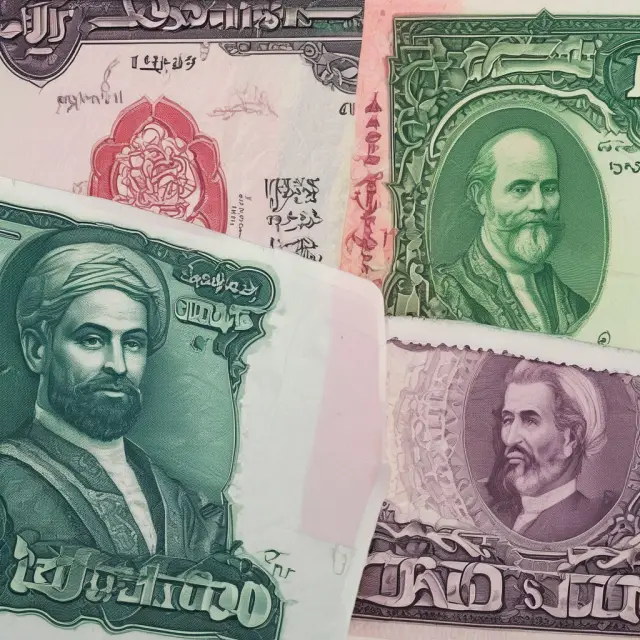
While officially known as the currency of Iran, the Iranian rial (IRR) has an unofficial rival in the local market – the tomans. The tomans are part of Iran’s colloquial lingo and represent 10 rials each. With ongoing discussions about possibly replacing the IRR with the tomans as the official currency, it’s essential to understand the differences between these two monetary units.
Historically, both currencies coexisted from the late 19th century until the 1930s when the rial replaced the toman. The toman resurfaced in the 1970s during the Iranian Revolution as an alternative name for the rial due to rampant inflation. Although Iran’s Parliament passed measures in 2020 to replace the rial with the toman as the official currency, it remains unchanged as of late 2021.
The tomans gained popularity because of their smaller denomination and ease of use when dealing with daily transactions. The IRR, however, is still used for formal transactions and financial record-keeping purposes. For example, the government collects taxes in rials while wages are often paid in tomans. This dual currency system can lead to confusion for foreigners visiting Iran and must be taken into account when calculating exchange rates.
Calculating exchange rates between the IRR and other currencies involves converting the value of one currency to tomans, then converting it back to rials. For instance, if you want to know how many rials you would get for 100 U.S. dollars, first determine the number of tomans you’d receive (approximately 2,364,500 tomans), and then convert this amount back to rials (23,645,000 rials).
This dual-currency system also complicates the economic analysis of Iran. Many economists have expressed concerns over its potential impact on economic development and inflation. Inflation can decrease the value of savings and investments in rials and may prompt people to hoard goods rather than spend money, creating an economic downturn. Moreover, maintaining two currencies adds an administrative burden for both the government and businesses, potentially discouraging foreign investment and hindering trade.
In conclusion, understanding the complex relationship between the Iranian rial and tomans is crucial when dealing with Iran’s economy or making financial transactions within the country. Despite ongoing discussions about replacing the IRR with the toman as the official currency, for now, both currencies continue to coexist in Iran, adding another layer of complexity to an already intricate monetary situation.
Countries Using the Iranian Rial
The Iranian rial (IRR) is not only used within its borders but also holds a unique position in the global financial market as an inconvertible currency. As mentioned before, the IRR is Iran’s official currency and has been in use since 1798. However, it is worth noting that no other country uses this currency, making it a unique case among currencies worldwide.
Although there have been discussions about replacing the rial with the toman as the official currency of Iran due to inflation and its instability against the U.S. dollar (USD), the rial still remains the legal tender in the country. This is because the government has not yet implemented the proposed changes, leaving the rial as the only currency used for transactions and accounting purposes within Iran’s borders.
One of the primary reasons for this is the historical significance of the rial, which has been a part of the Iranian economy for centuries. Moreover, the rial’s unique role in the global financial system provides an interesting case study for understanding the complexities and volatilities of non-convertible currencies.
To illustrate this further, let us explore the historical usage and relationship between the rial and toman, along with their conversion rates, and implications for traders and investors.
Historical Usage: The Iranian Rial and Toman
Although the Iranian rial (IRR) was introduced in 1798, another currency called the tomans existed from 1825 to 1930. One toman was worth ten rials. In 1932, the rial made a comeback, replacing the toman as Iran’s official currency. Since then, the rial has undergone numerous fluctuations in value, with its exchange rate against the U.S. dollar being a significant indicator of the economic health and stability of the country.
The term “tomans” is still used colloquially in Iran to describe larger sums of money, even though it is no longer an official currency. For instance, Iranians might refer to 10 million rials as ‘one toman.’ This usage adds another layer of complexity to understanding the relationship between the rial and toman.
Conversion Rates: One Toman = Ten Thousand Rials
One toman is equal to ten thousand rials, which is a conversion rate that many Iranians still use when discussing large sums of money. This conversion factor is essential for traders and investors dealing with transactions in Iran, as it allows them to calculate the value of deals or investments in both currencies (rials and tomans).
Moreover, understanding this conversion rate becomes crucial when analyzing historical data on the economic performance of Iran, particularly during times when there have been discussions about replacing the rial with the toman. For instance, in 2020, there were reports that the Iranian parliament had passed measures to replace the rial with the toman as the official currency of Iran. This would mean a conversion rate of one toman equaling ten million rials instead of ten thousand rials.
Implications for Traders and Investors: Understanding the Iranian Rial-Tomans Relationship
For traders and investors interested in engaging with the Iranian market, it is essential to have a solid understanding of the relationship between the rial and toman. This knowledge allows them to accurately assess the value of their investments and navigate any potential currency fluctuations or regulatory changes that might impact their position.
Furthermore, having a deep understanding of the historical context and conversion rates between these currencies can provide valuable insights into the political and economic landscape of Iran, helping investors make informed decisions and mitigate risks associated with investing in this unique market.
In conclusion, the Iranian rial’s status as the only currency used within its borders makes it an intriguing case study for understanding complexities and volatilities that come with non-convertible currencies. Its historical relationship with the toman, conversion rates, and implications for traders and investors all contribute to a richer understanding of Iran’s economic landscape and the challenges faced by those engaging in financial transactions within this unique market.
Calculating the Exchange Rate
The exchange rate between the IRR and other currencies can be determined using various methods and resources. One common way is through the use of a currency converter, such as XE.com or OANDA, which allows users to input their desired currency pair (IRR vs. USD, for example) and display the current exchange rate. Additionally, the Central Bank of Iran publishes daily exchange rates for various currencies on its website, though these figures may not always reflect the real-world market value due to government intervention and control over the IRR’s exchange rate.
To calculate the exchange rate between IRR and another currency, you need to find the currency pair that corresponds to your query. For instance, to determine the value of 100 euros (EUR) in IRR, search for the EUR/IRR exchange rate on a reliable financial website or tool. This will give you an amount in IRR equivalent to 100 euros.
It is important to keep in mind that the Iranian rial is not a freely traded currency and its value often fluctuates significantly due to various economic, political, and geopolitical factors. Moreover, exchange rates between currencies are influenced by supply and demand forces in international foreign exchange markets. Consequently, the IRR’s exchange rate may differ from official Central Bank figures or reported values on financial websites, especially when considering black market transactions or non-deliverable forwards (NDFs).
NDFs are a type of financial instrument used to facilitate trades between currencies where one currency is not freely convertible. In the context of Iran’s IRR, investors can enter into NDF contracts to speculate on future exchange rate movements or hedge against currency risks. The settlement of these contracts occurs in a convertible currency, such as the US dollar, rather than the IRR itself.
In conclusion, calculating the exchange rate between the Iranian rial (IRR) and other currencies involves using reliable sources like financial websites or tools that provide up-to-date exchange rates for your desired currency pair. Keeping an eye on political, economic, and geopolitical events affecting Iran’s economy can also help you better understand the factors influencing the IRR’s value in relation to other currencies.

The Weakness of the Iranian Rial
The Iranian rial (IRR) is considered a weak currency due to various political and economic factors. This section explores these reasons in detail, providing an understanding of why the IRR struggles to maintain its value against other currencies, particularly the US dollar.
Political Instability
Iran’s political instability is a significant contributor to the weakness of the Iranian rial. The country operates under an authoritarian regime that has been unpopular among many of its citizens for decades. This instability can lead to uncertainty and mistrust in the currency, causing investors to hesitate before putting their money in the IRR.
Economic Factors
The economy of Iran is heavily reliant on oil exports. With economic sanctions limiting their ability to sell oil globally, the country struggles to generate revenue necessary for its functioning. The oil dependency and economic instability lead to a weak rial.
Economic Sanctions
Decades-long economic sanctions against Iran have significantly impacted its economy. These sanctions have led to inflation, causing the rial to lose value against other currencies. Additionally, sanctions prevent foreign investors from trading with Iran directly, making it difficult for the country to access international markets and investments.
Oil Dependency
The oil-dependent nature of Iran’s economy makes its currency vulnerable to fluctuations in oil prices. When oil prices drop, the value of the rial is negatively affected. This volatility contributes to the uncertainty surrounding the rial, making it a risky investment for many investors.
Corruption
Pervasive corruption within Iran’s government further weakens the rial. Corruption causes a loss of confidence in the economy and discourages foreign investments, negatively impacting the value of the currency.
Global Implications
The weakness of the Iranian rial has significant global implications. As the rial continues to weaken, it could lead to increased instability within the Middle East region, potentially disrupting oil markets and international trade relations. Additionally, the country’s economic woes could create a ripple effect, impacting other neighboring countries and their currencies.
Conclusion:
Understanding the complexities and volatility of the Iranian Rial is crucial for investors and traders seeking to engage in business with Iran. By exploring its history, exchange rate stability, economic overview, relationship with the toman, and conversion methods, this article sheds light on why the IRR is a weak currency and how it impacts global finance and trade. Stay tuned for more articles discussing various aspects of the Iranian Rial and its implications in the world economy.
Non-Deliverable Forwards (NDFs)
When it comes to offshore investment or trade with countries that have non-convertible currencies, such as the Iranian rial (IRR), investors turn to non-deliverable forwards (NDFs). NDFs are a financial instrument used by investors to engage in foreign exchange transactions without physically exchanging or settling in the local currency. Instead, these contracts are cash-settled and settled in a convertible currency like the U.S. dollar, allowing traders to get around non-convertibility of domestic currencies.
NDFs help investors manage their risk by providing a way to speculate on the future exchange rate between the Iranian rial and other international currencies without actually holding the IRR physically. These contracts are traded over-the-counter (OTC) markets, allowing participants to negotiate terms directly with each other instead of through a central exchange.
Typically structured as short-term forward currency contracts, NDFs enable traders to hedge against future exchange rate risks and profit from the difference between current and predicted spot prices. The Iranian rial is particularly attractive for investors seeking exposure to Iran’s economy given its oil wealth and strategic importance in the Middle East.
Investors might also use NDFs as a means to engage in arbitrage opportunities, taking advantage of price discrepancies between the parallel market rates for the IRR and official exchange rates. However, it is important to note that Iran’s political instability, economic sanctions, and volatile currency can lead to high risks associated with such arbitrage strategies.
To calculate the NDF contract, participants agree on a notional principal amount, exchange rate, tenor (maturity), and settlement date. The difference between the forward exchange rate at the agreement’s initiation and the spot rate upon maturity determines the profit or loss for both parties. This system helps investors manage their currency risk, while providing liquidity to Iran’s economy by allowing foreign entities to engage in financial transactions without directly dealing with the Central Bank of Iran or its rials.
In conclusion, non-deliverable forwards (NDFs) play a crucial role in facilitating foreign exchange transactions and managing currency risks for investors when dealing with non-convertible currencies like the Iranian rial. These instruments help traders hedge against future exchange rate fluctuations, speculate on future rates, and take advantage of arbitrage opportunities. However, given the political instability and economic challenges surrounding Iran’s currency, engaging in NDF trading comes with inherent risks that must be carefully considered before entering into such transactions.
Understanding the Toman
Although the Iranian rial (IRR) is the official currency of Iran, the Iranian toman is a common unit used for everyday transactions within the country. The term ‘toman’ originates from the Persian language and refers to a silver coin that was used in pre-Islamic times. One toman is equivalent to 10 rials.
In the mid-20th century, Iran replaced its rial with the toman as the country’s currency. However, the official status of the toman did not last long; it was reintroduced as a subunit of the rial in 1967. Ever since then, both currencies have coexisted, with the rial being used for international transactions and the toman for local use.
The potential replacement of the Iranian rial (IRR) with the toman has been a recurring topic of discussion due to the high inflation rate that has led to the rial’s continuous depreciation against major foreign currencies like the U.S. dollar. The latest attempt to replace the rial with the toman was made in 2020 when Iranian parliament passed measures in that direction, proposing a conversion rate of 1 toman = 10,000 rials. However, as of the end of 2021, the Iranian rial remains the country’s official currency.
Calculating Exchange Rates Between Toman and Other Currencies
To calculate the exchange rate between the Iranian toman and other currencies, you need to know how many rials are equivalent to one toman. One toman equals 10,000 rials. Consequently, to convert a sum of money from another currency into Iranian toman, divide that amount by 10,000.
For example, if you want to convert €500 into Iranian toman, follow these steps:
- Determine the exchange rate between the European euro (EUR) and the Iranian rial (IRR).
- Convert €500 to IRR by dividing 500 by the exchange rate of the chosen day.
- Multiply the result by 10,000 to obtain the equivalent value in Iranian toman.
For instance, if €1 is equal to 250,000 IRR, then:
€500 / €1 = 2,000 IRR
2,000 x 10,000 = 20,000,000 IRR (or 20 million tomans)
In summary, understanding the relationship between the Iranian rial and toman is essential for anyone dealing with financial transactions in Iran. Although the rial remains the official currency of the country, the toman plays a significant role in daily life and commerce within Iran. To calculate exchange rates between the Iranian toman and other currencies, remember that one toman equals 10,000 rials.

Frequently Asked Questions (FAQ)
What is the Iranian Rial (IRR)?
The Iranian Rial (IRR), issued and managed by the Central Bank of the Islamic Republic of Iran since 1798, serves as the official currency in Iran.
How much is one U.S. dollar worth in IRR?
Approximately 42,250 rials, as of December 2021, with exchange rates subject to change.
What was the historical background of the rial?
The rial emerged in 1798, replaced the toman in 1932, and has undergone significant fluctuations following the Islamic revolution in 1979.
How is the IRR exchange rate maintained when not officially pegged?
Central bank currency controls keep the stable exchange rate despite it being a free-floating exchange rate.
What is the relationship between Iran, the IRR, and global finance/trade?
The rial’s value has been affected by economic sanctions due to Iran’s nuclear program, oil dependency, and political instability. It often results in the rial being considered a non-convertible currency.
What is the difference between the rial and toman?
One toman equals ten rials, but the rial remains Iran’s official currency while the toman is used locally.
Where is the IRR used?
Iran is the only country utilizing the Iranian Rial as its legal tender.
How do you calculate the exchange rate between the IRR and other currencies?
Utilize a reliable currency converter like XE.com to determine the current exchange rate based on your preferred currency pair.
Why is the Iranian rial experiencing weakness?
The primary factors include political instability, economic sanctions, corruption, and oil dependency, causing capital flight and inflation.
What is a Non-Deliverable Forward (NDF)?
A financial instrument used by offshore investors to engage in trades with non-convertible currencies like the IRR, settled in a convertible currency such as the U.S. dollar.
How can one calculate the exchange rate for Rial to Toman?
One toman equals ten thousand rials (10,000).
 Next entry · No. 2,541Form 4868: Understanding the U.S. Individual Income Tax Return Extension Application
See also
-
 No. 3,372
23 Mar 2025
19 min
Non-Deliverable Forwards (NDF): Understanding This Popular Derivatives Instrument for Institutional Investors
Finance Policy
No. 3,372
23 Mar 2025
19 min
Non-Deliverable Forwards (NDF): Understanding This Popular Derivatives Instrument for Institutional Investors
Finance Policy -
 No. 2,368
31 Dec 2024
17 min
Understanding Index-Linked Bonds: A Hedge Against Inflation
Business Finance
No. 2,368
31 Dec 2024
17 min
Understanding Index-Linked Bonds: A Hedge Against Inflation
Business Finance -
 No. 5,893
16 Oct 2025
21 min
Understanding Zero-Coupon Convertibles: Marrying Zero-Coupons and Convertibles
Finance Policy
No. 5,893
16 Oct 2025
21 min
Understanding Zero-Coupon Convertibles: Marrying Zero-Coupons and Convertibles
Finance Policy -
 No. 5,884
15 Oct 2025
18 min
Zero Basis Risk Swap (ZEBRA) – Understanding the Zero-Risk Interest Rate Swap for Institutional Investors
Finance Policy
No. 5,884
15 Oct 2025
18 min
Zero Basis Risk Swap (ZEBRA) – Understanding the Zero-Risk Interest Rate Swap for Institutional Investors
Finance Policy -
 No. 5,683
29 Sep 2025
22 min
Understanding the West African CFA Franc (XOF): The Shared Currency of Eight West African Nations
Finance Policy
No. 5,683
29 Sep 2025
22 min
Understanding the West African CFA Franc (XOF): The Shared Currency of Eight West African Nations
Finance Policy -
 No. 5,656
27 Sep 2025
21 min
Weather Derivatives: Hedging Against Weather-Related Risks
Finance Policy
No. 5,656
27 Sep 2025
21 min
Weather Derivatives: Hedging Against Weather-Related Risks
Finance Policy