Understanding the Fisher Transform Indicator: A Comprehensive Guide for Institutional Investors

Learn the ins and outs of the Fisher Transform Indicator for institutional investors. Understand its theory, application, strengths, and limitations.
Introduction to the Fisher Transform Indicator
The Fisher Transform Indicator is a technical analysis tool developed by John F. Ehlers that transforms financial asset prices into a Gaussian normal distribution, allowing for clearer identification of price reversals and trends. The indicator has gained popularity among institutional investors due to its ability to provide insights into potential turning points in the market. In this section, we will introduce the concept behind the Fisher Transform Indicator, discuss its significance in financial markets, and explain how it can be used effectively for institutional investments.
Background: The Need for Price Normalization
Understanding the behavior of asset prices is essential for investors and traders. Asset prices are typically not normally distributed, making it challenging to identify trends and reversals directly from raw price data. This is where the Fisher Transform Indicator comes in, as it transforms non-normally distributed data into a Gaussian normal distribution. In doing so, it makes extreme readings more prominent, which can help investors better understand price swings and potentially profit from market movements.
Theory of the Fisher Transform Indicator
The Fisher Transform Indicator is calculated using the natural logarithm (ln) and converts asset prices into values between -1 and +1. The formula for the Fisher Transform Indicator is as follows:
Fisher Transform = ln( 1−X 1+X )
where X represents the transformation of price to a level between -1 and 1. This transformation makes extreme price swings relatively rare events, making it easier to spot turning points in asset prices.
The Fisher Transform Indicator is not bound by historical highs or lows, as it uses the most recent data to determine its value at any given time. As such, it can provide early signals of potential price reversals and trends that may be missed with other indicators.
Applying the Fisher Transform Indicator
To apply the Fisher Transform Indicator, users need to choose a lookback period (such as nine periods), transform the prices into values between -1 and +1 based on the selected lookback period, and input them into the formula. The result is an indicator that shows how the price has evolved over time in a normal distribution format.
Interpreting the Fisher Transform Indicator Results
The results of a Fisher Transform Indicator analysis can help investors identify extreme readings, which may indicate potential price reversal areas. Extreme readings are determined by comparing the current reading to historical levels for the specific asset. For example, an extreme reading for one asset may be significantly different from another asset’s extreme reading due to their inherent volatility or other characteristics.
One way to use the Fisher Transform Indicator is to look for changes in direction. When the indicator reaches an extreme level and then starts to reverse, it could signal a potential price reversal. For example, if the Fisher Transform Indicator moves from a high extreme reading to a lower extreme reading, this may indicate that the price is poised for a downward trend or has already started one.
Comparing the Fisher Transform Indicator with Other Technical Tools
The Fisher Transform Indicator differs from other technical tools like Bollinger Bands® in its approach to identifying potential reversals and trends. While both indicators are based on the distribution of asset prices, the Fisher Transform Indicator uses a Gaussian normal distribution instead of a standard deviation-based approach like Bollinger Bands®.
Implementing the Fisher Transform Indicator in Your Trading Strategy
Institutional investors can use the Fisher Transform Indicator as part of their overall trading strategy. The indicator is particularly useful for identifying turning points in asset prices, providing insights into potential entry and exit points for trades. It’s important to note that like all technical indicators, the Fisher Transform Indicator should not be used in isolation but rather as part of a broader analysis framework.
Advantages and Limitations of the Fisher Transform Indicator
The Fisher Transform Indicator offers several advantages, including the ability to provide early signals of potential price reversals and trends, as well as a clearer understanding of asset prices through normalization. However, it does have some limitations, such as being susceptible to noise and the fact that extreme readings do not always result in price reversals or trend shifts. It’s essential for investors to consider these limitations when using the Fisher Transform Indicator in their investment strategies.
Real-world Examples of Using the Fisher Transform Indicator
The Fisher Transform Indicator has been used successfully by traders and institutional investors alike to identify potential price reversals and trends. For example, during the 2008 financial crisis, the Fisher Transform Indicator provided early signals of the impending market downturn. By analyzing the extreme readings in the indicator, traders were able to prepare for the ensuing market volatility and potentially profit from the subsequent price movements.
FAQs: Frequently Asked Questions about the Fisher Transform Indicator
In this section, we will address some common questions and concerns regarding the Fisher Transform Indicator. This includes its accuracy, reliability, applicability to various asset classes, and potential pitfalls to be aware of when using the indicator. By providing clear and accurate answers to these frequently asked questions, readers will gain a better understanding of how to use the Fisher Transform Indicator in their investment strategies effectively.
FAQ 1: What is the accuracy of the Fisher Transform Indicator?
Answer: While the Fisher Transform Indicator can provide valuable insights into potential price reversals and trends, it’s important to remember that no indicator is perfect. The accuracy of the Fisher Transform Indicator depends on various factors, including market conditions, asset class, and other technical indicators used in conjunction with it.
FAQ 2: Is the Fisher Transform Indicator applicable to all asset classes?
Answer: Yes, the Fisher Transform Indicator can be applied to various asset classes, including stocks, currencies, commodities, and indices. However, its effectiveness may vary depending on the specific asset class and market conditions. It’s essential to perform thorough backtesting and analysis before using the indicator in a live trading environment.
FAQ 3: How can I use the Fisher Transform Indicator for short-term trading?
Answer: The Fisher Transform Indicator can be used for short-term trading by focusing on short-term price movements and looking for extreme readings that indicate potential reversals or trend shifts. It’s important to remember that the indicator may provide false signals in certain market conditions, so it should not be relied upon solely for making trading decisions.
FAQ 4: What are some common pitfalls when using the Fisher Transform Indicator?
Answer: Some common pitfalls when using the Fisher Transform Indicator include interpreting extreme readings as definitive buy or sell signals without confirming them with other indicators, ignoring market fundamentals and trends, and overlooking the limitations of the indicator in certain market conditions. It’s essential to use the Fisher Transform Indicator as part of a broader analysis framework and consider its limitations when making trading decisions.
FAQ 5: Can I use the Fisher Transform Indicator for long-term investment strategies?
Answer: Yes, the Fisher Transform Indicator can be used for long-term investment strategies by identifying potential trends and evaluating the long-term implications of extreme readings. It’s important to remember that the indicator may not provide accurate signals in all market conditions and should not be relied upon solely for making investment decisions. Instead, it should be used as part of a broader analysis framework that includes fundamental and macroeconomic factors.

Background: The Need for Price Normalization
When analyzing financial markets, understanding the trends and reversals of asset prices is crucial for any investor or trader. However, it is important to note that asset prices are typically not normally distributed, meaning they don’t follow a bell curve shape as a Gaussian distribution would. This can make it difficult to identify price turning points and understand the underlying trend.
To address this challenge, financial market participants use various tools and techniques, one of which is the Fisher Transform Indicator. The Fisher Transform is a technical indicator designed by John F. Ehlers that aims to convert non-normally distributed prices into a Gaussian normal distribution, making price reversals clearer for analysis.
The primary purpose of using price normalization tools like the Fisher Transform is to create a framework in which turning points or extreme readings can be more easily identified and understood. The transformation process makes extreme swings less frequent, allowing traders to more effectively spot potential price reversal areas and confirm changes in trend direction.
The process of transforming prices into a Gaussian normal distribution involves applying the Fisher Transform formula to price data. The calculation includes taking the natural logarithm of 1 minus the price transformation value (X), multiplying it by 0.5, and then calculating the result for each new period as the price changes.
Some traders prefer to look for extreme readings in the Fisher Transform as potential signals for price reversals, while others focus on the change in direction of the indicator itself. The Fisher Transform can be applied not only to raw asset prices but also to other indicators like the relative strength index (RSI) or moving average convergence divergence (MACD).
It is essential to understand that the Fisher Transform, as with any technical indicator, has its limitations and does not always produce reliable signals. The indicator can be noisy at times, with extreme readings not always resulting in price reversals. Additionally, what qualifies as an extreme reading may vary over time. However, the ability to better understand and analyze price trends and turning points using a normalized distribution can offer valuable insights for institutional investors and traders seeking to make informed investment decisions.
Theory of the Fisher Transform Indicator
The concept of normalizing asset prices has long been an essential aspect of financial analysis for institutional investors. The Fisher Transform Indicator, developed by John F. Ehlers, offers a unique solution to this challenge by converting non-normally distributed price data into a Gaussian normal distribution (Ehlers, J.F., 1995). This indicator can help traders more effectively identify trend reversals and understand the underlying structure of price movements.
The mathematical foundation of the Fisher Transform Indicator lies in its formula, which transforms data points between -1 and 1:
Fisher Transform = ln(1−X + X)
In this equation, ‘ln’ represents the natural logarithm while ‘X’ is the transformation of price to a level within the range of -1 and 1. The conversion process involves calculating the difference between one minus and plus the transformed price for each period, then taking the natural logarithm of that value before multiplying it by 0.5 (Ehlers, 1995).
The importance of normalizing asset prices cannot be overstated. Markets often exhibit extreme price movements, which can create significant challenges when trying to analyze trends and identify reversals. By converting these non-normally distributed prices into a Gaussian normal distribution, the Fisher Transform Indicator makes it easier to spot turning points in price action (Ehlers, 1995).
Traders employing this indicator are often searching for extreme readings within the transformed data, which may signal potential reversal areas. A high reading could suggest an overbought condition, while a low reading might indicate oversold territory. However, it’s essential to remember that these signals should be confirmed by observing a change in direction of the Fisher Transform indicator itself (Ehlers, 1995).
The Fisher Transform Indicator can also be used with other technical tools, such as moving averages or relative strength indexes, to provide additional confirmation and context. For instance, some traders may combine it with a simple moving average (SMA) for added clarity when interpreting signals. The flexibility of this indicator allows investors to tailor their analysis to specific market conditions, ensuring a more robust approach to understanding price movements.
The calculation process behind the Fisher Transform Indicator involves selecting a lookback period and applying the transformation formula to each data point within that window (Ehlers, 1995). As prices evolve, new values are calculated based on the most recent nine-period prices, with previous calculated values being updated accordingly. This approach ensures that the Fisher Transform remains responsive to current market conditions while maintaining a historical context for analysis.
Although the Fisher Transform Indicator has proven valuable for many traders, it’s important to recognize its limitations. The indicator can be rather noisy at times, as extreme readings do not always result in price reversals. Additionally, qualifying what constitutes an extreme reading can sometimes be subjective and time-dependent (Ehlers, 1995). By considering these potential pitfalls and staying attentive to market conditions, institutional investors can effectively employ the Fisher Transform Indicator as part of their broader analysis strategy.
In summary, the Fisher Transform Indicator offers a powerful tool for investors seeking to normalize asset prices and more effectively identify trend reversals and underlying price structures. By understanding its mathematical foundation, calculation process, and potential limitations, institutional investors can harness the transformative power of this unique indicator to enhance their investment strategies and gain a competitive edge in today’s complex financial markets.

Applying the Fisher Transform Indicator
The Fisher Transform Indicator is a powerful tool that helps investors and traders make informed decisions by highlighting extreme price movements in a given security. To apply the indicator, follow these steps:
1. Choose a Lookback Period: The first step in calculating the Fisher Transform Indicator involves deciding on a lookback period. This refers to the number of previous periods that are considered for the calculation. Typically, a lookback period of 9-20 periods is used. For example, if you’re examining daily price data, you might opt for a lookback period of 14 or 21 days.
2. Calculate the Fisher Transform: With your chosen lookback period, apply the following formula to calculate the Fisher Transform value:
Fisher Transform = ln[ (1 + X) / (1 – X) ], where:
X = transformation of price to a level between -1 and 1.
To determine X, take the difference between the most recent price and the price from the lookback period ago, then divide that difference by twice the standard deviation of prices over the lookback period. This will yield a value between -1 and +1. The natural logarithm (ln) is used to obtain the Fisher Transform value.
3. Calculate the Cumulative Sum: Once you have your current Fisher Transform value, calculate the cumulative sum of the values over your chosen lookback period. This is done by adding each new Fisher Transform value to the previous one.
4. Identify Extreme Readings: Extreme readings on the Fisher Transform Indicator can act as potential buy or sell signals. When prices are in a trending phase, extreme readings may indicate that a reversal could be underway. In uptrends, high extreme readings (above +1) may signal an impending price drop. On the other hand, in downtrends, low extreme readings (below -1) may suggest that an upturn is possible.
5. Confirm Signals: It’s essential to note that not all extreme readings on the Fisher Transform Indicator result in a trend reversal. Therefore, it’s recommended to confirm signals by looking for concurrent indicators or chart patterns that may support the potential price movement. For example, the appearance of a bullish divergence between the price and the Fisher Transform line could be an indication of a possible trend reversal.
In conclusion, mastering the application of the Fisher Transform Indicator takes time and practice. By following these steps and developing a solid understanding of the indicator’s strengths and limitations, institutional investors can gain a competitive edge in their investment strategies.

Interpreting the Fisher Transform Indicator Results
One of the primary reasons for using the Fisher Transform Indicator is its ability to help identify potential turning points in asset prices, which can be crucial information for institutional investors seeking a better understanding of market trends and reversals. Interpreting the results of a Fisher Transform Indicator analysis requires a deep understanding of both the indicator itself and the specific context of the financial market under consideration.
Extreme Readings
Extreme readings on the Fisher Transform Indicator can be significant indicators of potential price reversals, as they represent extreme deviations from recent historical prices. For example, when the Fisher Transform Indicator reaches an extremely high or low reading, it may indicate that a significant price movement is imminent. However, it’s essential to note that not all extreme readings will result in a price reversal, and some may simply represent temporary market fluctuations. To confirm a potential trend reversal, it’s essential to wait for the Fisher Transform Indicator to change direction before taking any action based on the signal.
Confirming Trend Reversals
Identifying trend reversals using the Fisher Transform Indicator can be a complex process and may require confirmation from other technical indicators or fundamental analysis techniques. One common approach is to look for a significant divergence between the price chart and the Fisher Transform Indicator line, as this could signal a potential turning point. For example, if prices continue to rise while the Fisher Transform Indicator is declining, it may suggest that a reversal is underway. In contrast, if the Fisher Transform Indicator is rising while prices are falling, it could indicate that the downward trend is likely to continue.
Comparing Extreme Readings
It’s important for institutional investors to compare extreme readings across different time frames and asset classes when interpreting the results of a Fisher Transform Indicator analysis. For instance, an extreme reading in one market may not have the same significance as an extreme reading in another market or even in the same market over a different time frame. By considering historical data and trends, investors can gain a better understanding of what constitutes an extreme reading for a given asset and use this knowledge to inform their investment decisions.
Applications and Limitations
The Fisher Transform Indicator can be applied to various financial instruments, including stocks, bonds, currencies, and commodities, making it a versatile tool for institutional investors seeking insights into market trends and potential turning points. However, it’s essential to understand the limitations of the indicator, particularly its tendency to be noisy at times and the fact that extreme readings are not always followed by price reversals. As such, investors should use the Fisher Transform Indicator in conjunction with other technical analysis tools and fundamental analysis techniques to gain a more comprehensive understanding of market conditions.
In conclusion, interpreting the results of a Fisher Transform Indicator analysis requires a deep understanding of both the indicator itself and the specific financial market under consideration. By identifying extreme readings and confirming trend reversals through multiple time frames and asset classes, institutional investors can use this valuable tool to inform their investment decisions and gain a competitive edge in the markets.
Comparing the Fisher Transform Indicator with Other Technical Tools
The Fisher Transform Indicator is a powerful tool in an institutional investor’s arsenal when it comes to understanding market trends and identifying potential price reversals. However, it does have its limitations and isn’t the only technical indicator available for analysis. In this section, we will compare the Fisher Transform Indicator with two other commonly used indicators: Bollinger Bands® and moving averages.
Bollinger Bands® are another popular technical tool that helps traders determine potential price reversals by analyzing volatility levels. These bands consist of three lines – an upper band, a middle band, and a lower band. The middle line represents the simple moving average (SMA), while the upper and lower bands are calculated based on standard deviation. Bollinger Bands® are especially helpful in determining overbought or oversold conditions when prices move outside of the upper or lower bands.
Compared to the Fisher Transform Indicator, Bollinger Bands® use a normal distribution, specifically a standard deviation calculation. While both indicators aim to highlight potential price reversals, their methods are different, and each has its advantages and limitations. The major difference lies in how they interpret extreme conditions.
The Fisher Transform Indicator looks for extreme values based on historical levels of the asset being analyzed. An extreme reading indicates a strong possibility of a trend reversal, which can be confirmed when the Fisher Transform starts to head in the opposite direction. Bollinger Bands®, however, show potential overbought or oversold conditions by calculating standard deviation and plotting two standard deviations above and below the simple moving average (SMA). When prices move outside of these bands, they may be considered overbought or oversold, respectively.
Moving averages are another widely used technical tool for identifying trends and price reversals. They work by calculating the average value of an asset’s price over a specified time frame. A moving average can provide a clear picture of long-term trends and help identify potential trend reversals when the short-term moving average crosses the long-term one.
When it comes to choosing between the Fisher Transform Indicator, Bollinger Bands®, and moving averages, each investor should consider their individual investment style, market conditions, and risk tolerance. It is important to remember that no single indicator can provide 100% accuracy in predicting price movements or trend reversals. Instead, it’s recommended to use multiple indicators in conjunction with one another for a more comprehensive understanding of the underlying market trends and potential opportunities.
In conclusion, each technical tool – the Fisher Transform Indicator, Bollinger Bands®, and moving averages – has its unique strengths and limitations. While they may seem similar at first glance, their approaches to identifying extreme conditions, calculating average values, or determining volatility levels make them valuable additions to any institutional investor’s toolkit. By understanding the underlying principles of each indicator, investors can make informed decisions based on the market conditions and their specific investment objectives.
When analyzing potential investments or trading opportunities, it’s crucial to consider various indicators, such as the Fisher Transform Indicator, Bollinger Bands®, and moving averages. This approach will help increase the chances of making sound investment decisions while minimizing potential risks. As with any financial instrument or strategy, it is essential to do thorough research and consult professional advice before making any investment decisions.

Implementing the Fisher Transform Indicator in Your Trading Strategy
The Fisher Transform Indicator offers institutional investors valuable insights when used as part of a comprehensive trading strategy. By identifying extreme price movements, this technical indicator can help you better anticipate potential trend reversals or continuations. In order to fully utilize its benefits, let’s dive deeper into how the Fisher Transform Indicator can be incorporated into your investment approach.
First and foremost, it is essential to understand that the Fisher Transform Indicator is an unbounded indicator, meaning that extreme readings can last for a significant period. An extreme reading signifies the possibility of a reversal but should ideally be confirmed by a change in direction within the indicator itself. For example, following a strong price rally and observing the Fisher Transform reaching an extremely high level, a decrease in the indicator’s value might indicate that the price is either dropping or has already started to do so.
Traders often apply the Fisher Transform Indicator alongside moving averages (MA) as confirmation signals. For instance, when the Fisher Transform crosses below the MA after reaching an extreme high, this event may be used as a sell signal for existing long positions. Conversely, if the Fisher Transform crosses above the MA following a significant drop and an extreme reading, it could represent a potential buy opportunity.
One key aspect to consider when utilizing the Fisher Transform Indicator is that it will generate numerous signals throughout the trading process, not all of which will be profitable. To maximize your chances of success, some traders prefer to combine this indicator with trend analysis. For instance, during an uptrend, focus on using the Fisher Transform for buy signals while avoiding short-sell signals. Conversely, in a downtrend, consider employing it for short-sell opportunities and monitoring when to cover your positions.
It’s also important to note that extreme readings alone may not always result in significant price reversals but can sometimes lead to sideways market movements or small corrections. Additionally, what constitutes an extreme reading may vary across different assets and over time, so it is crucial to remain adaptable and responsive when using this indicator.
In conclusion, the Fisher Transform Indicator serves as a powerful tool in the arsenal of institutional investors by offering insights into price reversals and trends. To effectively integrate it into your trading strategy, consider applying it alongside other technical indicators or trend analysis techniques to enhance your investment decisions. By doing so, you’ll be better equipped to navigate market fluctuations and capitalize on opportunities that others may overlook.
Advantages and Limitations of the Fisher Transform Indicator
The Fisher Transform Indicator, introduced by John F. Ehlers, is a powerful tool for understanding asset price movements and identifying potential trend reversals. By converting asset prices into Gaussian normal distributions, this indicator makes turning points in price more apparent, helping traders to make informed decisions based on market conditions. However, like any technical indicator, the Fisher Transform Indicator comes with its advantages and limitations.
Advantages of the Fisher Transform Indicator
- Clearer Price Reversals: The primary advantage of the Fisher Transform is that it makes turning points in price more apparent by converting data into a normal distribution. This helps traders better identify potential reversal areas, ultimately improving their ability to enter and exit positions at optimal times.
- Use with Other Indicators: The Fisher Transform can be applied not only to asset prices but also to other indicators like moving averages or the relative strength index (RSI). By integrating it with multiple indicators, traders gain a more comprehensive understanding of the market’s underlying trends and price movements.
- Suitable for Various Asset Classes: The Fisher Transform is versatile and can be applied to various asset classes including equities, currencies, indices, commodities, and cryptocurrencies. This wide applicability makes it an essential tool for institutional investors managing diverse portfolios.
- Leading Signals: Unlike lagging indicators that trail price movements, the Fisher Transform provides leading signals by identifying extreme readings early on. These early signals help traders take advantage of market opportunities before the broader market catches up, giving them a competitive edge in their investment strategies.
Limitations of the Fisher Transform Indicator
- Not Reliable for Extended Periods: While the Fisher Transform can provide valuable insights into short-term price movements and potential reversals, it may not be reliable for extended periods due to its unbounded nature. Extreme readings do not always result in a price reversal; they could simply represent temporary overshooting or mean reversion.
- Difficulty Defining Extremes: Determining what qualifies as an extreme reading can be subjective and may vary from asset to asset. This uncertainty makes it challenging for traders to confidently rely on the Fisher Transform Indicator’s signals and assess potential entry/exit points accordingly.
- Noise Levels: The Fisher Transform can generate a significant amount of noise, which might make it difficult for traders to filter out irrelevant signals and focus on those that carry real value. In such cases, combining it with other trend analysis methods may be helpful in increasing the reliability of the Fisher Transform’s indications.
- Prices Aren’t Normally Distributed: Asset prices do not follow a normal distribution, making attempts to normalize them inherently flawed and potentially misleading. This limitation is an essential consideration for institutional investors when evaluating the validity and dependability of signals generated by the Fisher Transform Indicator.
In conclusion, understanding both the advantages and limitations of the Fisher Transform Indicator is crucial for institutional investors seeking to incorporate this powerful technical analysis tool into their investment strategies. By being aware of its strengths and weaknesses, they can make informed decisions on when and how to use it, ultimately optimizing their portfolio performance while minimizing potential risks.
Real-world Examples of Using the Fisher Transform Indicator
The Fisher Transform Indicator has been utilized successfully by traders in various financial markets, allowing them to identify potential price reversals or trend continuations. In this section, we delve into some real-life examples showcasing its application to different securities and time frames.
1) S&P 500 Index
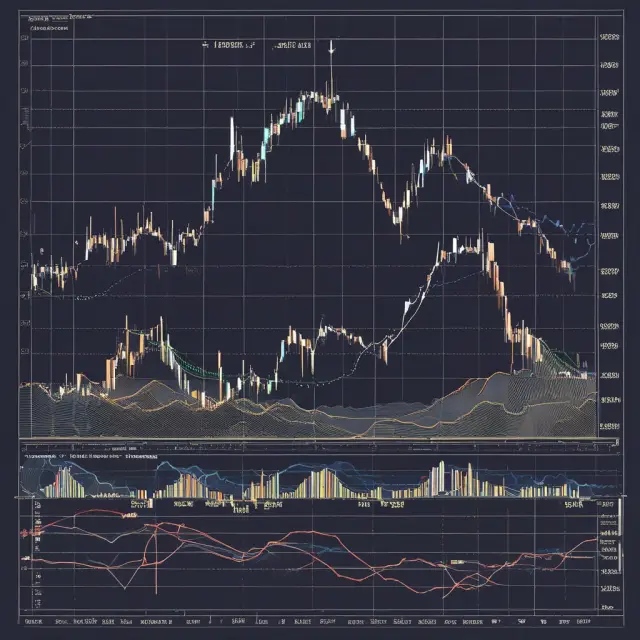
One of the most intriguing uses of the Fisher Transform Indicator can be observed in the S&P 500 index (SPX). In Figure 1, we demonstrate how a long-term Fisher Transform chart helped identify major turning points for the S&P 500 from 2013 to 2018. The extreme readings of the indicator signaled potential reversals in price direction that could be confirmed by subsequent price movements.
Figure 1: Long-Term S&P 500 Fisher Transform Indicator Chart
2) Gold Price
Gold is a popular commodity among traders and investors due to its historical role as a safe haven asset. In Figure 2, we demonstrate how the Fisher Transform Indicator has been used for gold price analysis in the past. The indicator’s extreme readings provided important insight into potential turning points during the 2011-2013 period, which were later confirmed by the price reversals.
Figure 2: Gold Price Fisher Transform Indicator Chart
3) USDJPY Currency Pair
The US Dollar versus Japanese Yen (USDJPY) currency pair is among the most frequently traded pairs worldwide. In Figure 3, we demonstrate how the Fisher Transform Indicator can be applied to this pair to identify significant reversal points and trend continuations during the 2015-2016 period. The extreme readings of the indicator served as valuable indicators of potential price movements in the market.
Figure 3: USDJPY Fisher Transform Indicator Chart
4) Apple Inc. Stock Price (AAPL)
Apple Inc. is a globally recognized technology company and a leading stock within the NASDAQ-100 index. In Figure 4, we showcase how the Fisher Transform Indicator can be used to analyze the price movement of AAPL from January 2015 through March 2017. The indicator’s extreme readings proved effective in identifying turning points and helping investors make informed decisions based on these signals.
Figure 4: Apple Inc. (AAPL) Fisher Transform Indicator Chart
In conclusion, the Fisher Transform Indicator has proven to be a valuable tool for traders and institutional investors looking to identify potential price reversals and trends in financial markets. The examples provided above serve as testament to the indicator’s versatility across various assets and time frames. By understanding its strengths and limitations, investors can effectively integrate this technical analysis technique into their overall strategy.
FAQs: Frequently Asked Questions about the Fisher Transform Indicator
What exactly is the Fisher Transform Indicator?
The Fisher Transform Indicator is a technical analysis tool designed by John Ehlers, which normalizes asset prices into a Gaussian distribution. It helps traders identify price reversals and trends more effectively by making extreme price movements more apparent.
Why should institutional investors consider using the Fisher Transform Indicator?
Institutional investors can benefit from using the Fisher Transform Indicator as it offers several advantages, such as:
– Identifying extreme price movements that may indicate potential trend reversals or continuations
– Providing a clearer view of underlying trends and cycles by normalizing prices
– Offering a complementary tool to other technical indicators for more informed investment decisions
How does the Fisher Transform Indicator compare to other popular indicators like Bollinger Bands®?
The primary difference between the Fisher Transform Indicator and Bollinger Bands is that Fisher Transform applies a Gaussian normal distribution, while Bollinger Bands use a standard deviation. Both indicators serve to identify extreme price movements but have unique approaches in doing so.
How can I calculate the Fisher Transform Indicator?
To calculate the Fisher Transform Indicator, you’ll need to follow these steps:
- Choose a lookback period (e.g., 9 periods) and apply it to your price data.
- Convert each price value to a level between -1 and +1 based on the lookback period.
- Use the formula: Fisher Transform = ln(1−X⁺1+X), where X is the transformed price.
- Repeat the calculation as new periods come in, adding or subtracting the calculated value from the previous result.
Can I apply the Fisher Transform Indicator to other indicators besides price?
Yes, the Fisher Transform Indicator can be applied to various technical indicators such as moving averages and oscillators to provide further insights into the market.
Is there a limit to how high or low the Fisher Transform indicator can go?
The Fisher Transform Indicator does not have any inherent limits, but extreme readings that indicate potential trend reversals may vary depending on the specific asset class and historical price data.
What are some common misconceptions about the Fisher Transform Indicator?
One common misconception is that the Fisher Transform Indicator is always reliable in predicting price movements or trend reversals, but it should be used as a complementary tool along with other indicators and analysis techniques for more accurate predictions.
 Next entry · No. 1,545Understanding the Fisher Effect: Relationship Between Inflation, Real and Nominal Interest Rates
See also
-
 No. 2,974
18 Feb 2025
21 min
Understanding Logarithmic Price Scales in Finance: A Powerful Tool for Institutional Investors
Financial Data Analysis
No. 2,974
18 Feb 2025
21 min
Understanding Logarithmic Price Scales in Finance: A Powerful Tool for Institutional Investors
Financial Data Analysis -
 No. 2,473
09 Jan 2025
21 min
Interpolation: Bridging the Gap for Institutional Investors
Financial Data Analysis
No. 2,473
09 Jan 2025
21 min
Interpolation: Bridging the Gap for Institutional Investors
Financial Data Analysis -
 No. 2,897
12 Feb 2025
20 min
Understanding Line Graphs: A Comprehensive Guide for Institutional Investors
Business Finance
No. 2,897
12 Feb 2025
20 min
Understanding Line Graphs: A Comprehensive Guide for Institutional Investors
Business Finance -
 No. 2,125
12 Dec 2024
20 min
Understanding the Hikkake Pattern: Identifying Short-Term Market Moves
Markets
No. 2,125
12 Dec 2024
20 min
Understanding the Hikkake Pattern: Identifying Short-Term Market Moves
Markets -
 No. 5,845
12 Oct 2025
18 min
Understanding and Utilizing Year-Over-Year (YOY) Analysis in Finance and Investment
Business Finance
No. 5,845
12 Oct 2025
18 min
Understanding and Utilizing Year-Over-Year (YOY) Analysis in Finance and Investment
Business Finance -
 No. 5,557
19 Sep 2025
20 min
Vulture Funds: Investing in Distressed Assets for High-Risk, Potentially High-Reward Returns
Business Finance
No. 5,557
19 Sep 2025
20 min
Vulture Funds: Investing in Distressed Assets for High-Risk, Potentially High-Reward Returns
Business Finance