Understanding the GDP Price Deflator: Measuring Inflation in the Economy

Explore the meaning and importance of the GDP price deflator in measuring inflation within economic context.
What is Gross Domestic Product (GDP)?
The term ‘Gross Domestic Product’ or GDP refers to the total value of all goods and services produced within a country in a given period, usually a year. GDP measures economic activity by determining the output of an economy, representing its overall production capability. This important economic indicator is crucial for understanding the health and growth of a nation’s economy.
Understanding Inflation and Deflation:
Inflation and deflation are significant factors that impact GDP. Inflation refers to an increase in the general price level of goods and services over time, which decreases purchasing power. Conversely, deflation is a decrease in prices, increasing purchasing power. A nation’s GDP can be influenced by both inflation and deflation as changes in prices impact overall economic output.
The Role of Money:
Money plays a crucial role in the economy by facilitating transactions between buyers and sellers, allowing for efficient exchange. However, changes in the supply and demand for money influence the purchasing power of currency, contributing to inflation or deflation. An increase in the money supply can lead to an expansion of economic activity (inflation), while a decrease in the money supply can cause contraction (deflation).
GDP Price Deflator:
To address the impact of price changes on GDP, economists utilize the Gross Domestic Product (GDP) price deflator. The GDP price deflator is an inflation measure that calculates the change in prices for all goods and services produced within a country’s economy over time. It provides insights into how much GDP growth results from real economic expansion compared to changes in prices.
The Importance of Understanding Price Changes:
Understanding price changes is essential to accurately assessing a nation’s economic health and growth. The nominal GDP, which measures total production value at current market prices, does not factor in the impact of inflation or deflation. To account for this shortcoming, economists employ the real GDP, calculated by adjusting nominal GDP for price changes through the use of a price index such as the GDP price deflator.
Implications and Comparison to Consumer Price Index (CPI):
The GDP price deflator is a more comprehensive inflation measure than the Consumer Price Index (CPI) because it doesn’t rely on a fixed basket of goods and services, making it better suited for capturing economic changes. While both measures offer valuable insights into the economy, they differ in their approach to measuring inflation.
The GDP price deflator and CPI provide crucial information about an economy’s inflation trends, helping investors and policymakers make informed decisions. Understanding these measures is vital for gaining a comprehensive perspective on economic conditions and market dynamics.

Understanding Deflation and the Role of Money in Economy
Deflation, a state where there’s a general decline in the overall price level of goods and services within an economy, is an essential concept when analyzing inflation measures. Contrary to popular belief, deflation does not always lead to economic downturns or recessions but can coexist with robust growth and high employment levels.
Causes of Deflation
The primary causes of deflation stem from a contraction in the overall supply of money, which reduces the purchasing power of currency over time. This decrease in purchasing power makes the same amount of money able to buy more goods and services than before. Factors that can contribute to a reduction in the money supply include:
- Central bank policy: A central bank can reduce the monetary base by selling securities from its portfolio or by raising interest rates, which discourages borrowing and reduces the amount of currency circulating within the economy.
- Fiscal policies: Large-scale budget surpluses or government spending cuts lead to a decrease in demand for goods and services, causing prices to fall as supply outpaces demand.
- Technological advancements: As technology advances, productivity increases, leading to decreased costs of production and lower prices for goods and services.
- Supply shocks: An unexpected disruption in the supply chain, such as a natural disaster or geopolitical event, can lead to a reduction in the availability of certain goods or resources, causing their prices to rise or fall depending on the magnitude and duration of the disruption.
Effects of Deflation
The impact of deflation on an economy can vary significantly. Some potential consequences include:
- Reduced consumer purchasing power: As prices fall, consumers experience a decrease in their purchasing power due to the increased value of their currency. This can lead to a decline in consumption as people feel less incentive to spend their money, preferring instead to hold onto it as savings.
- Business challenges: Deflation can pose unique challenges for businesses. Lower prices may result in reduced profits and revenue, forcing companies to lower their own prices to remain competitive or face declining sales. Additionally, the higher value of currency due to deflation makes imported goods more expensive, potentially affecting industries that rely on imports.
- Debt servicing: During periods of deflation, debt becomes relatively more burdensome as its real value increases over time. This can lead to financial instability and increased insolvency risks for borrowers.
- Inflation expectations: The fear of prolonged deflationary conditions can lead to expectations of future inflation, which can influence economic behavior and decision-making.
Implications of Deflation on GDP Price Deflator
Understanding the role of deflation in an economy is crucial when examining measures like the GDP price deflator. This inflation measure directly relates to the changes in prices for all goods and services produced within an economy, taking both inflationary and deflationary conditions into account. As a result, analyzing deflation’s impact on GDP price deflator is essential in assessing overall economic trends.
In conclusion, deflation represents a significant phenomenon with far-reaching consequences for an economy. Understanding its causes, effects, and implications is crucial when examining inflation measures like the GDP price deflator. As deflation can lead to shifts in consumer behavior, business strategies, and overall economic conditions, it plays a vital role in shaping the investment landscape and informing economic policy decisions.
In our next section, we will discuss how the GDP price deflator differs from other measures of inflation and explore its significance for investors and policymakers.

What is the Consumer Price Index (CPI)?
The Consumer Price Index (CPI) is a well-known measure that helps track changes in consumer prices, providing insight into inflation and the purchasing power of consumers. However, there’s another vital measure used to understand the overall health of an economy: the Gross Domestic Product (GDP) price deflator.
The CPI is calculated by measuring changes in the average price level of a fixed basket of goods and services over time. It is a direct measure, meaning it reflects the change in prices for a pre-determined collection of items, giving us valuable information on inflation as it pertains to consumers. While useful, the CPI has its limitations – primarily the fact that its basket of goods and services remains constant.
In contrast, the GDP price deflator is an indirect measure that considers price changes for all goods and services produced within a country’s borders. It provides a more comprehensive snapshot of overall inflation in the economy. The formula to calculate the GDP price deflator involves dividing nominal GDP by real GDP and multiplying it by 100:
GDP Price Deflator = (Nominal GDP ÷ Real GDP) × 100
By comparing nominal GDP from different time periods, the GDP price deflator helps determine how much prices have changed, offering insights into the impact of inflation on economic growth. The nominal GDP represents the total value of goods and services produced in a given economy at current market prices, whereas real GDP is calculated by adjusting nominal GDP for price changes – providing the true measure of economic output.
When comparing nominal to real GDP, it becomes apparent that understanding the impact of inflation on an economy’s growth is crucial. Consider an economy where nominal GDP rises from one year to another. While this may appear as a sign of growth at first glance, it might not be entirely accurate if prices are rising faster than the increase in output. In such cases, real GDP remains stagnant or even declines, despite nominal GDP showing growth. The GDP price deflator helps identify how much inflation has influenced this discrepancy.
By offering a more holistic view of inflation and its impact on economic activity, the GDP price deflator is an essential tool for economists and policymakers alike. It allows for a better understanding of trends in consumer prices, production costs, and overall economic growth. Additionally, it complements the CPI by providing additional context to inflationary pressures within an economy, making it an indispensable component of economic analysis.
In conclusion, both the Consumer Price Index (CPI) and GDP price deflator serve essential roles in understanding inflation within an economy. While the CPI offers a direct measure of changes in consumer prices, the GDP price deflator provides a more comprehensive snapshot by considering price changes for all goods and services produced within a country’s borders. By utilizing both measures, policymakers and economists can gain a well-rounded perspective on the economic environment, helping to make informed decisions that promote sustainable growth and stability.

Introduction to GDP Price Deflator
The GDP (Gross Domestic Product) price deflator, also known as the GDP deflator or the implicit price deflator, is a crucial economic metric that measures the changes in prices for all goods and services produced within an economy. It addresses the limitation of nominal GDP by showing the impact of inflation on economic activity over time. In this section, we will delve deeper into understanding what the GDP price deflator is, its significance, and how it differs from other inflation measures like the Consumer Price Index (CPI).
Understanding the Significance of Prices in Economy
Before diving into the GDP price deflator, let us first establish the importance of understanding prices within an economy. A country’s economy produces a myriad of goods and services. As output changes from one year to another, it is essential to analyze whether such shifts are due to production growth or mere price inflation. GDP, expressed as nominal GDP, shows the total output of a country in whole dollar terms. However, when comparing nominal GDP across different time periods, prices can sometimes create misleading results. Inflation or deflation can lead to distorted perspectives on economic growth if not properly accounted for.
What is the GDP Price Deflator?
The GDP price deflator measures the percentage change in the average price level of all goods and services produced within an economy over a given time period. By comparing current prices with base-year prices, it provides insight into how much inflation or deflation has affected real economic activity since the base year. The implicit price deflator is often used interchangeably with the term GDP price deflator, as it essentially measures the same concept: changes in the overall price level of an economy’s output.
Calculating the GDP Price Deflator
The calculation of the GDP price deflator begins by choosing a base year and expressing nominal GDP values relative to that year. The formula for calculating the GDP price deflator is:
GDP Price Deflator = (Nominal GDP ÷ Real GDP) × 100
Benefits of Using the GDP Price Deflator
The GDP price deflator provides valuable insights into an economy’s inflation trends and their impact on real economic activity. By considering both nominal and real output, it allows for a comprehensive analysis of a country’s economic health over time. It helps identify whether observed changes in nominal GDP are due to production growth or mere price changes. Moreover, by offering a more accurate measure of inflation, the GDP price deflator is an essential tool for policymakers and investors alike.
Comparison with the Consumer Price Index (CPI)
The Consumer Price Index (CPI), another popular inflation metric, measures the average change in prices for a specific basket of consumer goods and services over time. While CPI provides valuable insights into changes affecting consumers’ cost of living, it is limited to a fixed basket of items. In contrast, the GDP price deflator covers all economic activity, making it a more comprehensive measure of inflation within an economy.
In conclusion, understanding the GDP price deflator and its significance in measuring inflation in an economy provides valuable insights into real economic growth and trends over time. As we move forward in this article, we will further explore how the GDP price deflator is calculated and how it differs from other inflation measures like the Consumer Price Index (CPI).
FAQs about the GDP Price Deflator
Why use the GDP price deflator instead of the Consumer Price Index?
The GDP price deflator offers a more comprehensive measure of inflation within an economy since it covers all economic activity, while the Consumer Price Index is limited to a fixed basket of consumer goods and services.
What is the difference between nominal and real GDP?
Nominal GDP represents a country’s total output in current dollar terms, whereas real GDP adjusts for inflation and shows output in constant dollars.
How does the GDP price deflator help policymakers?
The GDP price deflator is an essential tool for policymakers as it offers accurate insights into inflation trends, helping them make informed decisions regarding monetary policy and fiscal measures.
What are some limitations of the GDP price deflator?
Despite its benefits, the GDP price deflator has certain limitations, such as difficulties in measuring the prices of new goods or services and challenges when comparing across countries due to differences in economic structures.

Impact of Prices on Nominal vs. Real GDP
Gross Domestic Product, or GDP, is an essential measure of a country’s economic activity and output. The nominal GDP represents the total dollar value of all final goods and services produced within a specific economy over a period. However, comparing nominal GDP figures from different years can be misleading without considering changes in prices or inflation rates.
Understanding Deflation and Purchasing Power
Before delving into real vs. nominal GDP, it is crucial to define deflation. Deflation refers to the general decline in prices for goods and services within an economy, often linked to a contraction in money supply and credit. When deflation occurs, the purchasing power of currency rises over time, meaning the same amount of money can buy more goods or services than before.
Real GDP vs. Nominal GDP: Accounting for Inflation
Now that we have clarified the concept of deflation, let’s examine real and nominal GDP. Nominal GDP is calculated as the total dollar value of all final goods and services produced in a given economy during a specific period, disregarding price changes. Real GDP, on the other hand, represents the output of an economy after adjusting for inflation or price changes.
Comparing nominal vs. real GDP reveals vital insights into economic growth. Nominal GDP can be deceiving when comparing it from one year to another without taking inflation into account. By converting nominal GDP to real GDP, we get a clearer understanding of whether the economy is genuinely growing or if the growth is just an illusion due to price changes.
For example, consider two consecutive years where the nominal GDP increases, but prices rise even faster in the second year, resulting in a decrease in purchasing power for consumers. In this scenario, real GDP would have declined despite the nominal increase.
Calculating Real GDP from Nominal GDP
To calculate real GDP from nominal GDP, economists apply price indices or deflators to adjust nominal figures for inflation. The most commonly used measures of inflation are the Consumer Price Index (CPI) and the Gross Domestic Product (GDP) price deflator. In our case, we will be focusing on the GDP price deflator since it is more comprehensive as it covers all goods and services produced within an economy, unlike the CPI which only considers a basket of consumer goods and services.
The GDP price deflator shows the ratio of nominal GDP to real GDP, providing essential information on the extent of inflation within an economy. The formula for calculating the GDP price deflator is as follows:
GDP Price Deflator = (Nominal GDP ÷ Real GDP) × 100
Using this ratio, economists can determine the change in real terms in the nation’s output and analyze economic trends more accurately.
Conclusion
In conclusion, understanding nominal vs. real GDP is crucial for assessing the overall health of an economy. While nominal GDP provides the total value of goods and services produced, it does not account for price changes. By converting nominal to real GDP using a deflator like the GDP price deflator, we can obtain a more accurate representation of economic growth that accounts for inflation’s impact on purchasing power.
By comparing real GDP from one period to another and analyzing its trends, economists and investors can identify changes in economic conditions and make informed decisions accordingly. Furthermore, utilizing the GDP price deflator as an inflation measure provides a more comprehensive understanding of overall price changes within an economy than focusing solely on consumer goods through the CPI.

How is the GDP Price Deflator Calculated?
The Gross Domestic Product (GDP) price deflator, also known as the GDP deflator or implicit price deflator, is a measure that provides insight into the changes in prices for all goods and services produced within an economy. This section dives deeper into the calculation process behind this essential inflation indicator.
GDP Price Deflator: Measuring Price Changes
To understand the significance of the GDP price deflator, it’s important to first differentiate between nominal and real GDP. Nominal Gross Domestic Product represents total output in current dollar terms without adjusting for inflation. On the other hand, real GDP calculates economic output after accounting for changes in prices over time.
The GDP price deflator comes into play when examining how much prices have inflated or deflated between two periods. It expresses the relationship between nominal and real GDP by tracking price changes within an economy, allowing comparisons of real economic activity over various time frames.
GDP Price Deflator Formula
To calculate the GDP price deflator, economists employ the following formula:
GDP Price Deflator = (Nominal GDP / Real GDP) × 100%
This equation is used to determine how much nominal GDP has changed in relation to real GDP. A GDP price deflator of 100 indicates no change, while a value greater than 100 signifies inflation, and a value below 100 implies deflation.
For example, if an economy’s nominal GDP is $20 million, and its real GDP (adjusted for price changes) is $18 million, the GDP price deflator would be calculated as follows:
GDP Price Deflator = ($20 million / $18 million) × 100% ≈ 111.11%
In this example, the GDP price deflator shows a slight inflationary pressure of 11.11%. This information can be crucial for policymakers and investors seeking to understand how price changes impact economic growth.
Benefits of Using the GDP Price Deflator
The GDP price deflator provides several advantages over other inflation measures, such as the Consumer Price Index (CPI). Since it is calculated using all goods and services within an economy, rather than a fixed basket of consumer goods and services like the CPI, the GDP price deflator offers a more comprehensive view of inflationary trends. This makes it an essential tool for policymakers and economists seeking to monitor overall economic conditions.
GDP Price Deflator vs. Consumer Price Index (CPI)
While both the GDP price deflator and CPI serve as measures of inflation, they differ significantly in their methods of calculation. As discussed earlier, the GDP price deflator takes into account the prices for all goods and services produced in an economy, whereas the CPI focuses solely on a fixed basket of consumer goods and services.
The primary advantage of the GDP price deflator is that it captures changes in prices across all sectors of the economy, making it more suitable for gauging overall inflationary trends. In comparison, the CPI only reflects the price movements of a specific set of consumer goods and services. While both measures can provide valuable insights, they serve different purposes and are best used in conjunction with one another to gain a well-rounded understanding of an economy’s price changes.

Benefits of Using the GDP Price Deflator
The GDP price deflator, also known as the implicit price deflator or the GDP deflator, is a crucial macroeconomic indicator measuring changes in prices for all goods and services produced within an economy. The primary purpose of the GDP price deflator is to provide a more comprehensive understanding of inflation and its impact on economic growth compared to other commonly used measures like the Consumer Price Index (CPI). Let us delve deeper into the benefits of utilizing the GDP price deflator as an essential tool for measuring inflation.
1. Comprehensive Inflation Measure: The GDP price deflator captures the inflationary effects on all goods and services produced within an economy, while the CPI is limited to a pre-defined basket of consumer items. As mentioned earlier, GDP is the total monetary or market value of all finished goods and services produced in a specific time period within a country’s borders. By comparing the nominal (current) GDP values against real (constant price) GDP using the deflator, economists can evaluate changes in real economic activity from one year to another more accurately.
2. Adapts to Changing Consumption Patterns: The GDP price deflator automatically incorporates changes in consumption patterns and new goods and services into its calculations. Since it measures inflation based on the prices of all produced goods and services, the deflator reflects the overall change in price levels for the economy, making it a more comprehensive measure compared to fixed basket indices like the CPI.
3. Measuring Economic Growth: In an ever-evolving economy, consumption patterns change constantly due to technological advancements, population growth, and other factors. The GDP price deflator captures these shifts in consumption patterns as they happen. This adaptability is crucial for accurately assessing real economic growth.
4. Comparing Economies: By analyzing the GDP price deflators of multiple economies, it is possible to compare their relative inflation rates and evaluate their economic performances against one another. This valuable information can be used by investors, policymakers, and researchers alike.
5. Use in Economic Research: The GDP price deflator plays a significant role in macroeconomic research as it is an essential input for various economic models and forecasts. It allows researchers to analyze the relationship between inflation, interest rates, and economic growth while providing insights into the overall health of an economy.
In conclusion, understanding the importance and benefits of the GDP price deflator is crucial for anyone interested in economics or investing. Its comprehensive nature makes it a more accurate measure of inflation and its impact on real economic activity compared to other commonly used measures like the CPI. Additionally, its adaptability to changing consumption patterns and constant updates enable analysts, economists, and investors to gain valuable insights into the economy.
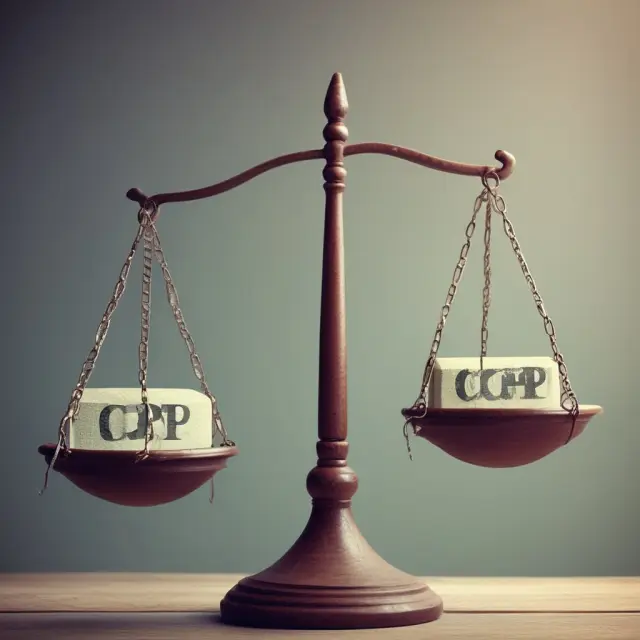
GDP Price Deflator vs. Consumer Price Index (CPI)
Two primary measures of inflation, GDP Price Deflator and Consumer Price Index (CPI), are commonly used to assess changes in the price levels of goods and services within an economy. While both measures provide valuable insights into economic conditions, they differ significantly in their approaches to determining inflation and capturing the entirety of price movements within an economy.
The Consumer Price Index (CPI) is a popular and widely-used measure of inflation that calculates changes in the prices of a fixed basket of goods and services from one time period to another. The CPI measures the average change in costs for a consumer’s basket of goods over a specific period, usually monthly or yearly.
On the other hand, GDP Price Deflator is an alternative inflation measure that calculates price changes for all the goods and services produced within an economy. It uses nominal Gross Domestic Product (GDP) and real GDP to determine the impact of inflation on economic growth.
Let’s explore how these measures differ:
1. Fixed Basket vs. Comprehensive Measurement: The CPI is based on a fixed basket of goods, which can result in missing changes in prices for new or emerging goods and services. In contrast, the GDP Price Deflator is more comprehensive as it includes all the produced goods and services within an economy’s borders.
2. Consumer vs. Economic Perspective: The CPI measures price changes from a consumer’s perspective, focusing on their purchasing power and cost of living. On the other hand, GDP Price Deflator offers a more economic viewpoint by considering the impact of inflation on overall production and economic growth.
3. Scope and Significance: The CPI is widely used to determine changes in the cost of living for an average household, while the GDP Price Deflator is more significant when analyzing broader economic conditions like productivity, investment trends, and long-term economic growth patterns.
4. Data Collection and Calculation: For the CPI, price data for the basket of goods and services are collected regularly to calculate the index. In contrast, GDP Price Deflator is calculated as a byproduct of calculating nominal and real GDP.
5. Applications and Uses: The CPI is extensively used in monetary policy decisions and inflation targeting, while the GDP Price Deflator is used for measuring productivity growth and economic analysis. Additionally, investors use both measures to evaluate investment opportunities and assess macroeconomic conditions.
Despite their differences, it’s essential to note that trends observed in each index are generally aligned, as they measure similar concepts: changes in price levels within an economy. The choice between the two measures ultimately depends on the specific goals of the analysis.
In conclusion, understanding both CPI and GDP Price Deflator is vital for gaining a comprehensive perspective of economic conditions, particularly when it comes to inflation, productivity growth, and overall economic health.

Interpreting GDP Price Deflator Data
GDP Price Deflator: A Comprehensive Inflation Measure
The GDP price deflator is a vital measure of inflation that goes beyond the Consumer Price Index (CPI) to provide a more comprehensive understanding of how prices change in an economy. By revealing the effect of inflation on total output, it offers insights into underlying economic conditions and helps investors make informed decisions.
Identifying Economic Conditions through GDP Price Deflator Trends
When analyzing trends within GDP price deflator data, economists can assess the overall state of an economy’s inflation rate, identify potential changes in monetary policy, and even forecast future trends. For example:
– A steady increase in the GDP price deflator might indicate a healthy growing economy, with rising production output and higher wages for workers.
– Rapidly increasing prices over a short period could be indicative of inflationary pressures, which may lead to central banks intervening to stabilize prices through raising interest rates.
– A steady decline in the GDP price deflator might indicate deflation or falling prices, potentially affecting consumer spending and business investment.
Understanding Data Interpretation: Real vs. Nominal GDP
When evaluating changes in GDP over time, it’s essential to consider both nominal and real Gross Domestic Product (GDP). Nominal GDP represents the total value of goods and services produced within an economy at current market prices. Real GDP, on the other hand, is the same set of data adjusted for inflation or price changes, revealing the actual change in output.
For instance, let’s assume that a country has a nominal GDP of $10 million and an inflation rate of 5%. In this case, real GDP would be calculated as:
Real GDP = Nominal GDP / (1 + Inflation Rate)²
Real GDP = $10 million / (1.05²) = $9.62 million
Comparing nominal and real GDP values provides a clearer picture of economic growth while accounting for inflation’s impact, making it easier to identify changes in the economy over time.
Benefits of Using the GDP Price Deflator
By comparing price levels across different periods, the GDP price deflator allows economists and investors to:
– Assess trends in inflation and identify potential shifts in economic conditions
– Understand how inflation impacts overall economic growth
– Make accurate comparisons between economies with varying price levels or inflation rates
In summary, interpreting GDP price deflator data offers a deeper understanding of the economy’s inflation rate and its impact on real output. By comparing nominal to real GDP values and analyzing trends in this measure over time, investors can make more informed decisions based on a comprehensive evaluation of economic conditions.

FAQs about the GDP Price Deflator
What is the GDP price deflator?
The GDP price deflator, also known as the GDP deflator or the implicit price deflator, measures changes in prices for all goods and services produced within an economy. By comparing current prices to a base year’s prices, it helps economists compare levels of real economic activity from one period to another.
Why is the GDP price deflator important?
The GDP price deflator is crucial as it allows for an accurate assessment of inflation and real economic growth by adjusting nominal GDP for price changes. It’s a more comprehensive measure than the Consumer Price Index (CPI) since it considers prices paid by businesses, governments, and consumers across all goods and services.
What’s the difference between nominal and real GDP?
Nominal GDP represents the total output of goods and services in current dollar terms, while real GDP adjusts for inflation or price changes and measures the economic output in constant dollar terms. The GDP price deflator helps to calculate real GDP by determining how much prices have changed since the base year.
How is the GDP price deflator calculated?
The formula for calculating the GDP price deflator involves dividing nominal GDP by real GDP and multiplying the result by 100. This results in an index value that can be compared across time periods, allowing economists to measure changes in the overall level of prices within the economy.
What are the benefits of using the GDP price deflator?
Using the GDP price deflator offers several advantages, such as:
- Accurately measuring inflation and real economic growth
- Comparing the levels of economic activity across different time periods
- Providing a more comprehensive measure than other inflation indexes (like CPI), as it covers all goods and services, not just a fixed basket.
When comparing the GDP price deflator to the Consumer Price Index (CPI), what are their main differences?
Both indices aim to measure inflation, but they differ in their approaches. The GDP price deflator measures changes in prices for all goods and services produced within an economy, while CPI focuses on a specific basket of consumer goods and services. Additionally, the GDP price deflator covers the prices paid by businesses, governments, and consumers, whereas CPI is limited to the prices that consumers pay. The GDP price deflator offers a more comprehensive measure of inflation as it doesn’t rely on a fixed basket of goods and captures changes in consumption patterns or new goods and services.
 Next entry · No. 1,757Understanding Global Depositary Receipts (GDRs): Accessing International Markets with Ease
See also
-
 No. 4,158
27 May 2025
19 min
Understanding Purchasing Power: Preserving Value Amid Inflation
Finance Policy
No. 4,158
27 May 2025
19 min
Understanding Purchasing Power: Preserving Value Amid Inflation
Finance Policy -
 No. 4,072
19 May 2025
20 min
Understanding Price Level: A Key Economic Indicator in Finance and Investment
Finance Policy
No. 4,072
19 May 2025
20 min
Understanding Price Level: A Key Economic Indicator in Finance and Investment
Finance Policy -
 No. 2,267
23 Dec 2024
21 min
Understanding Hyperdeflation: An Extremely Rapid Decrease in Price Levels
Economics
No. 2,267
23 Dec 2024
21 min
Understanding Hyperdeflation: An Extremely Rapid Decrease in Price Levels
Economics -
 No. 750
01 Jun 2024
20 min
Understanding the Consumer Price Index (CPI): Measuring Inflation and Deflation
Economics
No. 750
01 Jun 2024
20 min
Understanding the Consumer Price Index (CPI): Measuring Inflation and Deflation
Economics -
 No. 5,527
16 Sep 2025
25 min
Understanding Volume of Trade: A Key Metric for Institutional Investors
Finance Policy
No. 5,527
16 Sep 2025
25 min
Understanding Volume of Trade: A Key Metric for Institutional Investors
Finance Policy -
 No. 5,520
15 Sep 2025
18 min
Understanding Volatility: Measuring and Utilizing Risk in Finance and Investment
Finance Policy
No. 5,520
15 Sep 2025
18 min
Understanding Volatility: Measuring and Utilizing Risk in Finance and Investment
Finance Policy