Understanding the Gibraltar Pound (GIP): Gibraltar’s Currency and Economy
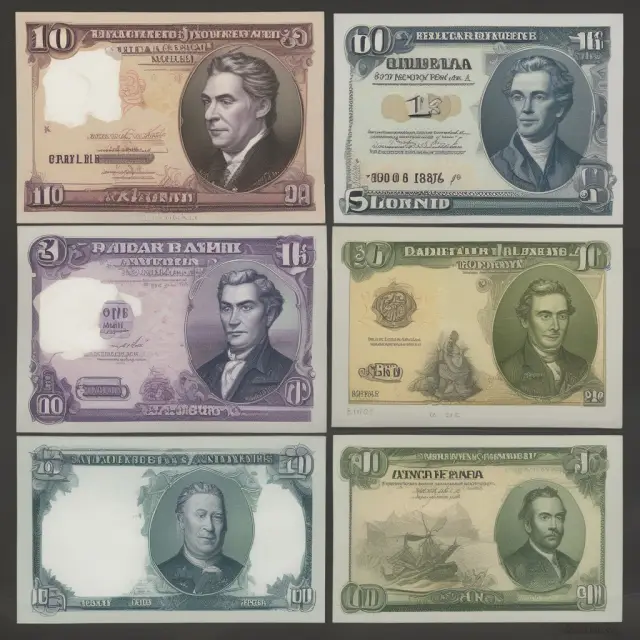
Learn about Gibraltar's currency - the Gibraltar pound (GIP), its history, designs, key industries, exchange rates, and more.
Introduction to the Gibraltar Pound
The Gibraltar pound, GIP for short, serves as the official currency of the British Overseas Territory of Gibraltar. This currency is pegged at a fixed par value with the British pound sterling, meaning that one Gibraltar pound is equivalent to one British pound. However, it’s crucial to note that Gibraltar pounds and pence coins are only legal tender within Gibraltar itself.
Gibraltar has an intriguing currency history, having previously used Spanish reals, the Spanish peseta, and the British pound sterling before issuing its own currency. This section aims to provide a detailed exploration of the Gibraltar pound, its background, designs, denominations, and economic significance.
Background: Gibraltar’s Currency History
Before diving into the specifics of the Gibraltar pound, it’s essential first to understand how this territory came to adopt its unique currency system. Initially, the Spanish real was the primary currency in Gibraltar from 1825 to 1872. The real was tied to the pound at a rate of one Spanish dollar equating to four shillings, four pence (approximately 21.67 pence today).
However, in 1872, Spain made the Spanish currency their sole legal tender, leading Gibraltar to switch to using British coins and banknotes. Gibraltar’s economy was then heavily influenced by military activities, primarily through the British military presence and the dockyard. In 1927, Gibraltar officially began issuing its banknotes, marking the birth of the Gibraltar pound.
Designs and Denominations: Coins and Banknotes
Gibraltar coins are produced in denominations of 1 penny, 2 pence, 5 pence, 10 pence, 20 pence, 50 pence, and £1. The country’s banknotes come in £5, £10, £20, £50, and £100 denominations. These notes and coins carry unique designs that set them apart from their British counterparts, but they are only accepted within Gibraltar.
The Economy of Gibraltar: Key Industries
Gibraltar’s economy is now primarily driven by financial services, online gaming, navigation, tourism, bunkering, and other sectors. While the military presence has significantly declined over the decades, these industries have thrived in its absence. Understanding how the Gibraltar pound plays a role within this diverse economy will provide further insight into its importance.
In conclusion, the Gibraltar pound is an essential aspect of Gibraltar’s unique economic and historical landscape. Its intricate past, design features, and current economic significance all contribute to its value for both residents and visitors alike. The next sections in this article will delve deeper into these topics, offering you a comprehensive understanding of the Gibraltar pound.

Background: Gibraltar’s Currency History
The Gibraltar pound, commonly known as the Gibraltar pound or GIP, is the currency that holds a special place in the financial system of Gibraltar. Its origins date back to a time when the economy of this British overseas territory was heavily influenced by Spain and England. Before the advent of the Gibraltar pound, the Spanish real, followed by the British pound sterling, served as the official currencies.
From 1825 to 1872, the currency situation in Gibraltar was complex, with a system based on the Spanish real but also encompassing British, Spanish, and Gibraltarian coins. The Spanish real was tied to the pound at the rate of one Spanish dollar to four shillings and four pence. However, during this period, the value of the Spanish currency plummeted due to the Spanish–American War. As a result, the British pound became the official coin of Gibraltar in 1872, initially in the form of British coins and banknotes.
Fast-forward to the late 20th century when Gibraltar began issuing its own currency notes in 1927—the official birth of the Gibraltar pound—and its own coins in 1988. The coins were issued in denominations of 1, 2, 5, 10, 20, and 50 pence and 1 pound coin with unique designs and the country’s name.
In 1971, Gibraltar decimalized its currency at the same time as the UK, replacing the system of 1 pound = 20 shillings = 240 pence with one of 1 pound = 100 new pence. Today, the Gibraltar pound is pegged to the British pound sterling at a fixed exchange rate.
In recent years, Gibraltar’s economy has diversified, moving away from its historical reliance on military activities. The financial services sector, online gaming industry, navigation, and tourism now contribute significantly to the territory’s economy. Despite this shift, the British pound sterling remains a crucial factor in Gibraltar’s currency system.
Stay tuned for further sections of our comprehensive article on the intriguing world of the Gibraltar pound!
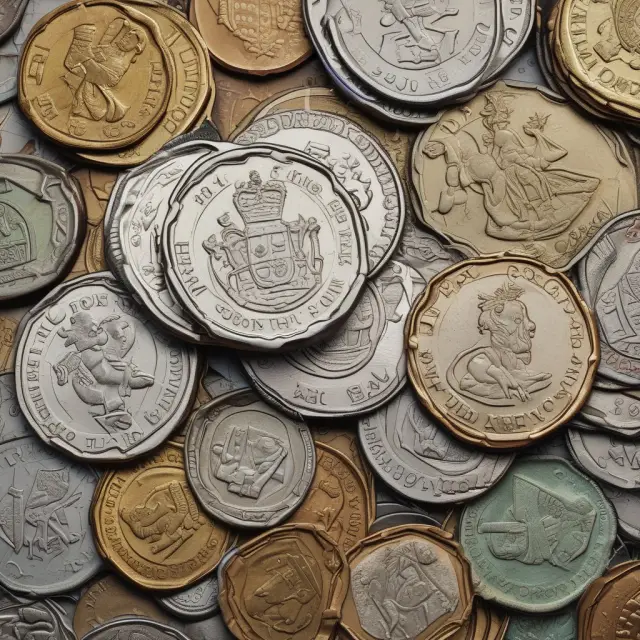
Designs and Denominations: Coins and Banknotes
The Gibraltar pound (GIP) is an intriguing piece of Gibraltar’s unique identity. Its designs, materials, and denominations set it apart from the more commonly known currencies such as the euro or the British pound sterling.
The Gibraltar pound was born in 1927 when the territory began issuing its own banknotes. In 1988, it followed up with the introduction of coins. These new notes and coins, while adhering to a par value with the British pound, featured distinct designs that celebrated Gibraltar’s heritage and history.
Gibraltar’s Coins
The Royal Gibraltar Mint produces and designs the GIP coins, which are available in denominations of £1, £2, £5, 1 penny, 2 pence, 5 pence, 10 pence, 20 pence, and 50 pence. The unique designs on these coins capture the essence of Gibraltar’s rich history. For instance, the 5 pence coin showcases St. Michael’s Cave, a popular tourist attraction. The reverse side of the £1 coin displays the iconic Gibraltar skyline and its famous Rock.
Banknotes:
Gibraltar’s banknotes, issued by the government, reflect similar designs that echo their British counterparts but are unmistakably different. They come in denominations of £5, £10, £20, £50, and £100. Each note depicts significant historical figures or landmarks specific to Gibraltar. For example, the reverse side of the £50 banknote displays the Siege Tunnels, a testament to the country’s British military past.
Evolution of Design
The designs on Gibraltar pound coins and banknotes have undergone several transformations throughout history. In 1927, when Gibraltar began issuing its own banknotes, they featured images of British monarchs such as Queen Victoria or King George V. Coins followed suit in 1988 with designs inspired by Gibraltar’s heritage and unique attractions. Since then, there have been several series of banknotes and coins released to mark important milestones, such as the tercentenary of British rule in Gibraltar (1704-2004) or the introduction of a new £100 banknote featuring Sir Joshua Hassan, the country’s first Chief Minister.
Comparing Notes and Coins
While the designs on Gibraltar pound coins and banknotes have a visual resemblance to their British counterparts due to their par value, they possess unique elements that distinguish them from other currencies. It is this combination of shared history with the British pound and distinct local identity that makes the Gibraltar pound an interesting study in monetary design and heritage.
In conclusion, understanding the Gibraltar pound’s designs, denominations, and origins adds a layer of depth to exploring the country’s rich history and economy.

The Economy of Gibraltar: Key Industries
Gibraltar, the British overseas territory situated on the southern tip of the Iberian Peninsula, boasts a diverse economy that has evolved significantly over the past few decades. Once heavily reliant on military activities, Gibraltar’s economy is now based mainly on financial services, online gaming, tourism, and navigation, making it an essential economic hub in the Mediterranean Sea.
Historically, the British military dominated Gibraltar’s economy. The naval dockyard was the center of economic activity, with the military sector contributing around 60% of the territory’s Gross Domestic Product (GDP) as recently as 1984. However, both military activities and business have declined steadily since then. Today, it is estimated that only about 7% of Gibraltar’s economy comes from the military sector.
One of the most significant sectors driving Gibraltar’s growth is financial services. With a highly skilled workforce, favorable time zone, and strategic location, the territory has become a popular destination for companies seeking to set up operations in Europe while maintaining close proximity to Africa and the Middle East. Fintech and insurance firms are among the many industries that have found success in Gibraltar’s business-friendly environment.
Another major contributor to Gibraltar’s economy is online gaming, which has seen significant growth since the late 1990s. The territory has become a global hub for this industry due to its favorable regulatory framework and location. Many companies have established offices in Gibraltar, taking advantage of its competitive tax regime and skilled workforce.
Tourism is another vital sector for Gibraltar’s economy. With its rich history, unique cultural attractions, and stunning natural beauty, the territory attracts millions of visitors each year. The Rock of Gibraltar, a popular tourist destination, draws visitors from around the world to explore its caves, wildlife, and breathtaking views of the Mediterranean Sea.
Navigation is another industry where Gibraltar excels. As an essential port in the Mediterranean Sea, Gibraltar plays a crucial role in maritime transportation, supplying fuel to ships through bunkering. This industry continues to be an important contributor to the territory’s economy.
In conclusion, Gibraltar’s economy is driven by a diverse range of industries, including financial services, online gaming, tourism, and navigation. These sectors not only contribute significantly to the territory’s GDP but also create employment opportunities for its residents. Gibraltar’s strategic location, favorable business environment, and skilled workforce have made it an attractive destination for companies seeking to establish a presence in Europe while maintaining close proximity to Africa and the Middle East.
As the British overseas territory continues to evolve, it remains committed to fostering a dynamic and thriving economy that benefits both its residents and the global community.
Exchange Rates and Acceptance of the Gibraltar Pound
The exchange rate between the Gibraltar pound (GIP) and other currencies is crucial for travelers visiting or doing business in the region. The GIP is pegged at par value to the British pound sterling, making it an easily convertible currency for tourists and investors alike. It’s important to note that while the GIP is only accepted in Gibraltar, it is officially exchangeable on a one-to-one basis with the British pound sterling.
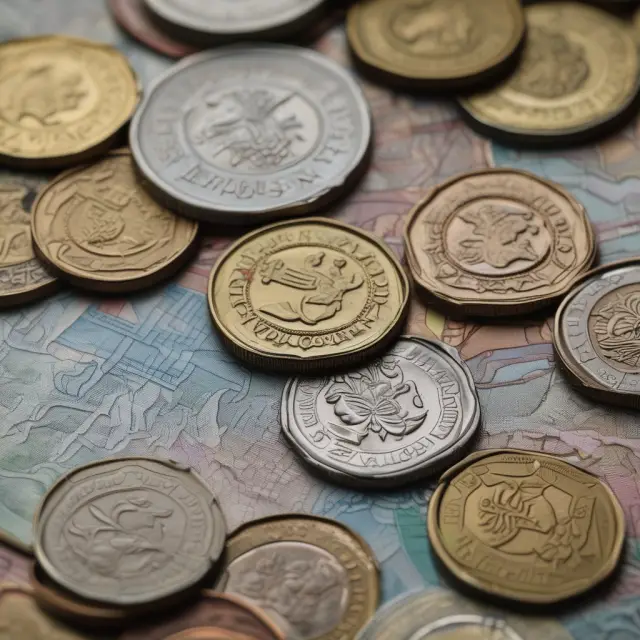
Gibraltar pounds and pence coins are legal tenders only in Gibraltar. The coins have unique designs featuring the rock of Gibraltar or the Coat of Arms of Gibraltar, which make them popular collector items for numismatics. In contrast, banknotes are produced by the government of Gibraltar and carry British names like “one pound” but distinctive designs and colors.
The British pound sterling remains a significant influence on the Gibraltar pound, as it is the currency against which its exchange rate is pegged. This close relationship can be traced back to 1934 when the Currency Note Act was passed, allowing Gibraltar to issue its own banknotes. Since then, Gibraltar has assumed responsibility for designing and printing its banknotes, with the most recent £100 banknote featuring the image of Sir Joshua Hassan, Gibraltar’s first Chief Minister and an architect of the territory’s self-rule.
While the euro is not the official currency in Gibraltar, it is widely accepted by retailers and financial institutions due to its popularity with tourists visiting from European countries. The Royal Gibraltar Post Office, however, only accepts the GIP and British pound sterling notes for postage payments.
It’s important for travelers to be aware that while British coins and banknotes are legal tender in Gibraltar, they may not always be accepted by local businesses due to the circulation of local currency. Using a mix of both currencies can help ensure a seamless transaction experience when visiting shops or restaurants.
To understand the importance and practicalities of using the Gibraltar pound further, it’s essential to dive deeper into its history and evolution. In the next section, we explore the historical background of the Gibraltar pound and how it came to be.
Gibraltar Currency Issues: Production and Design Evolution
Since the Gibraltar pound (GIP) has a fixed exchange rate to the British pound, its design elements mainly serve aesthetic purposes. However, certain editions carry historical significance or commemorative meaning for the people of Gibraltar.
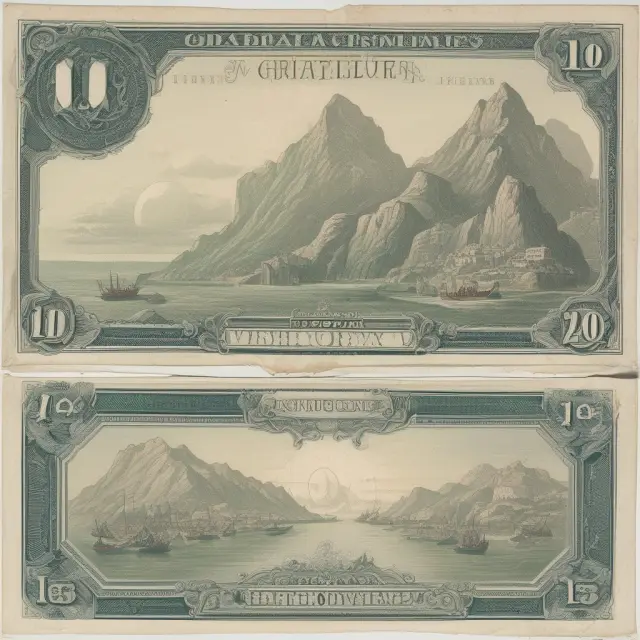
First issued in 1927, Gibraltar banknotes were initially produced by Waterlow & Sons, Ltd., a London-based firm. The Bank of England took over responsibility in the late 1940s and continued producing notes until 2011 when Gibraltar assumed sole control. The notes went through several series changes over the decades.
The first series consisted of £5, £10, £20, and £50 denominations. The initial £5 banknote bore a portrait of King George V on its obverse, while the reverse showcased St. Michael’s Cave—a natural wonder located in Gibraltar.
The second series, introduced in 1953 to honor Queen Elizabeth II’s accession, included designs of the newly crowned monarch. These notes continued with £5, £10, and £20 denominations, while the £50 denomination was discontinued. The reverse side featured a depiction of Europa Point, Gibraltar’s most southern tip.
In 1975, £10 and £20 notes were added to the series, featuring a portrait of Queen Elizabeth II on the obverse. The reverse showcased the Great Siege Tunnels—historic fortifications built during the late 18th century.
New series of notes were issued in 1995 and 2010-11. These updated designs included more advanced security features such as watermarks, holograms, and microprinting. The reverse side featured various historical landmarks, including the Gibraltar Cathedral, Casemates Square, the Governor’s House, and Winston Churchill Memorial.
Gibraltar coins have undergone multiple design updates since their introduction in 1988. They were initially produced at the Royal Mint in London, but since 2000, coins have been produced by the Royal Canadian Mint. The reverse side of these coins features various emblems and symbols representing Gibraltar’s heritage and history, such as the Trinity Lighthouse, the dolphin and anchor symbol, and St. Bernard’s Well.
To celebrate significant milestones, special edition commemorative coins have been issued. For instance, in 2004, the Government of Gibraltar minted a new edition of its coins to commemorate the tercentenary of British Gibraltar (1704-2004). A new £5 coin was issued, carrying the inscription “Elizabeth II • Queen of Gibraltar.”
In 2016, Gibraltar’s government introduced a new £100 banknote, which bears Sir Joshua Hassan’s image—the first Chief Minister and an architect of Gibraltar’s self-rule. The note is the world’s first in circulation to have a holographic foil on Safeguard polymer substrate.
These design updates reflect Gibraltar’s history and heritage while maintaining their unique status as legal tender within the territory.
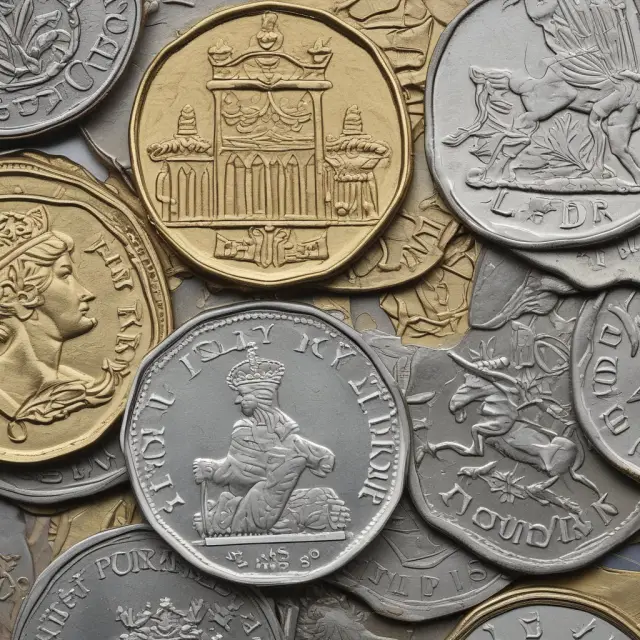
The Role of the British Pound Sterling in Gibraltar’s Currency System
Gibraltar pound (GIP) is an integral component of the financial landscape of the British Overseas Territory. However, it’s important to note that the GIP doesn’t exist independently from the British pound sterling (GBP). The two currencies have a strong connection, as the Gibraltar pound is pegged at par value with the British pound. This means that 1 GIP equals 1 GBP.
Why did Gibraltar adopt this system? Let’s delve into the historical context. Prior to the introduction of its own currency in 1927, Gibraltar used a variety of currencies, including the Spanish real and the British pound. The Spanish real was the primary currency until 1898 when the Spanish–American War caused significant devaluation. In response, Gibraltar began issuing its banknotes to stabilize its economy. However, these notes were initially backed by the British pound sterling and could be exchanged at a one-to-one ratio.
Fast forward to 1971, when Gibraltar decimalized its currency, and the British pound sterling became the only legal tender in Gibraltar. However, Gibraltar continued issuing its own banknotes and coins. Although these currencies could be exchanged at a one-to-one ratio with the British pound sterling, they were only accepted within Gibraltar. In 1980, the Government of Gibraltar took full control over the design, production, and distribution of its currency.
When it comes to exchange rates, they remain constant as both the GIP and GBP are at par value. This system has provided Gibraltar with a stable monetary framework, allowing its economy to grow while retaining local control over its currency.
One might wonder if accepting the British pound sterling instead would have been more convenient for Gibraltar. While it’s true that this option could simplify transactions and reduce the cost of minting and printing one’s own currency, there are advantages to having a locally issued currency as well. For instance, it fosters a sense of national identity and can contribute to economic development by allowing monetary policies tailored to local conditions.
Moreover, Gibraltar does not rely solely on the British pound sterling. While the parity remains constant between the currencies, Gibraltar’s economy has diverse sectors, including financial services, online gaming, navigation, and tourism. These industries provide a solid foundation for economic growth, ensuring that the territory is not excessively dependent on any one currency or external factor.
In conclusion, the role of the British pound sterling in Gibraltar’s currency system cannot be ignored. Despite being pegged at par value, the two currencies remain distinct and serve different purposes within Gibraltar. Understanding this intricate relationship between the GIP and GBP is essential for anyone interested in finance, economics, or international relations.
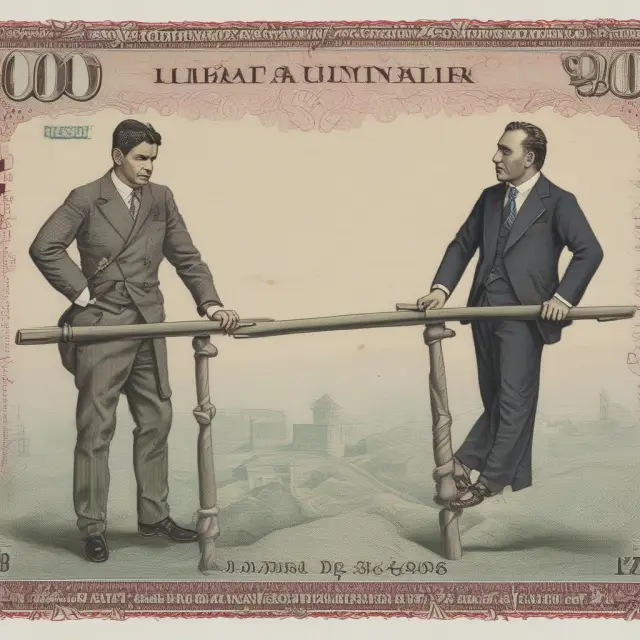
Gibraltar Currency Issues: Legal Tender and Exchange Rates
The legal tender aspect of the Gibraltar pound (GIP) is a topic of great interest for travelers and residents alike. Since the Gibraltar pound is pegged to the British pound at a fixed exchange rate, one GIP equals one British pound sterling. However, there are important differences between the two currencies in terms of acceptance and usage.
Gibraltar pound coins and pence are legal tender only within the territory of Gibraltar itself. This means that, while businesses and individuals within Gibraltar are obliged to accept the GIP for payment of debts and taxes, it does not hold the same legal status in other countries or territories, such as the United Kingdom.
In practical terms, this means that most retailers within Gibraltar unofficially accept the euro, although British pound sterling notes remain the preferred choice for transactions. The Royal Gibraltar Post Office, however, is the only institution that officially accepts both the euro and the Gibraltar pound for postage payments.
Exchange rates play a critical role in understanding how to utilize the Gibraltar pound effectively while traveling or living in the territory. As previously mentioned, one GIP equals one British pound sterling. Therefore, exchange rates between the Gibraltar pound and other currencies are directly linked to the exchange rate between the British pound and those currencies. For instance, if the British pound is valued at 1.20 euros, then one Gibraltar pound would be equivalent to 1.20 euros as well. It’s essential to note that these exchange rates can fluctuate daily depending on global market conditions.
It is also worth mentioning that Gibraltar has issued its own banknotes since 1927, which are legal tender within the territory. These banknotes bear unique designs and are not interchangeable with British pound sterling notes; however, they can be exchanged at any Gibraltar bank or the Royal Gibraltar Post Office for the equivalent value in British pound sterling.
When visiting Gibraltar, it’s essential to be aware of the availability and accessibility of different currencies. Many travelers opt to bring both cash (in euros and/or Gibraltar pounds) and credit cards, as this ensures flexibility for a variety of transactions. Additionally, most major banks in Gibraltar provide exchange services for visitors, allowing them to convert their currency upon arrival or during their stay.
As Gibraltar’s economy continues to evolve, the role of the Gibraltar pound remains crucial in facilitating commerce and transactions within the territory. By understanding its legal tender status, exchange rates, and acceptance practices, travelers can make informed decisions about managing their finances while enjoying all that Gibraltar has to offer.
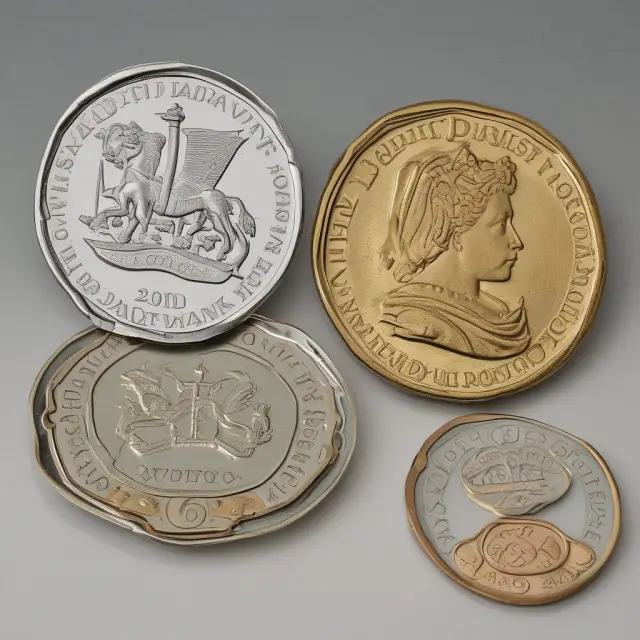
Comparing the Gibraltar Pound to Other Currencies: A Side-by-Side Comparison
One vital aspect of understanding the Gibraltar pound is how it compares to other currencies, specifically the euro and the British pound. Let us examine these comparisons closely:
1. **Gibraltar Pound vs. Euro**
The most significant difference between the two currencies is that, unlike the Gibraltar pound, the euro is a shared currency used by 19 European Union countries. While the Royal Gibraltar Post Office accepts the euro unofficially for postage purposes and certain shops in Gibraltar also accept it, the GIP remains the official currency.
2. **Gibraltar Pound vs. British Pound**
The most notable similarity between the two currencies is that they share a fixed par value. One pound sterling equals one Gibraltar pound. This arrangement, established in 1927 when Gibraltar began issuing its own banknotes, has remained stable ever since. Moreover, coins from both currencies are interchangeable within the territory: for example, a British £1 coin can be used as legal tender to purchase goods and services in Gibraltar.
However, it’s important to note that British banknotes cannot be used as legal tender in Gibraltar; they can only be exchanged at par value. This exchange occurs through banks or authorized dealers. On the other hand, Gibraltar notes are not accepted in the UK, but they can still be exchanged for British pound sterling.
Comparing their banknotes and coins, both currencies have a similar design aesthetic, featuring portraits of monarchs and various architectural or historical motifs. However, each currency maintains unique designs, ensuring ease in distinguishing them from one another.
In conclusion, the Gibraltar pound is a distinctive yet closely linked currency to other significant currencies like the euro and British pound. Its fixed parity relationship with the British pound adds complexity to its comparisons, but ultimately helps highlight the unique aspects of this currency in the realm of international finance.
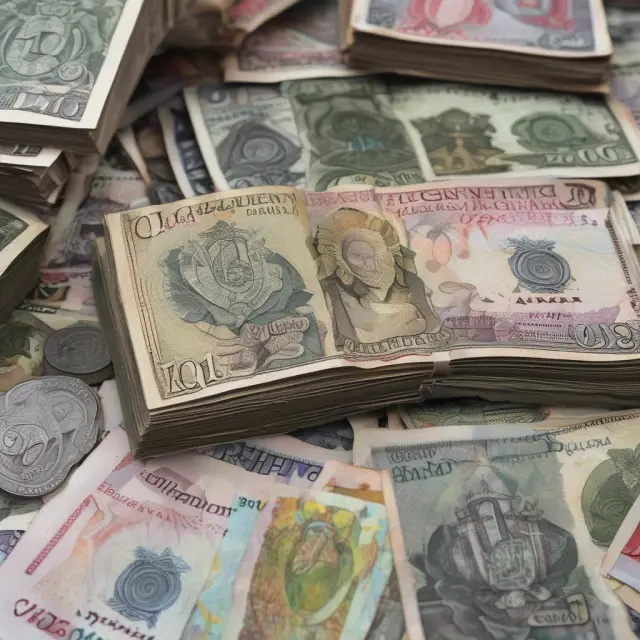
FAQ: Frequently Asked Questions about the Gibraltar Pound
What is the Gibraltar pound (GIP)?
The Gibraltar pound, abbreviated as GIP, is the official currency for Gibraltar. This currency is pegged at par value to the British pound sterling, meaning that 1 GIP equals 1 GBP.
Where is the Gibraltar pound accepted?
The Gibraltar pound is only accepted in Gibraltar itself; it is not recognized as legal tender elsewhere, including the United Kingdom. However, it can be exchanged for British pounds sterling at a one-to-one ratio.
What denominations does the Gibraltar pound come in?
Gibraltar pound banknotes are issued in £5, £10, £20, £50, and £100 denominations. Coins come in 1, 2, 5, 10, 20, 50 pence, and 1 pound denominations.
What is the history of the Gibraltar pound?
The Gibraltar pound’s origins trace back to the period when Gibraltar was under Spanish rule but used the British pound sterling as its de facto currency. It wasn’t until 1927 that Gibraltar began issuing its own banknotes, while coins followed in 1988. The design and production of Gibraltar pound notes are now overseen by the Government of Gibraltar.
What industries drive Gibraltar’s economy?
Gibraltar’s economy is primarily driven by financial services, online gaming, navigation, tourism, bunkering (supplying fuel to ships), and retail industries. The country has a significant port in the Mediterranean Sea and serves as an essential stop for many maritime routes.
How can I exchange Gibraltar pounds for other currencies?
Gibraltar pounds can be exchanged at various authorized foreign exchange dealers and banks within Gibraltar, as well as at international airports or border crossings when leaving the territory.
Is it possible to use euros in Gibraltar?
Although not an official currency, most retail stores in Gibraltar unofficially accept euros for transactions. However, this does not apply to public services, and the Royal Gibraltar Post Office only accepts British pound sterling or Gibraltar pounds as payment.
Why is the Gibraltar pound pegged to the British pound?
Gibraltar’s currency is linked to the British pound due to its status as a British overseas territory. The par exchange rate ensures price stability and consistency in economic transactions between Gibraltar and the United Kingdom. Additionally, it simplifies the use of both currencies within the region.
 Next entry · No. 1,813Understanding Global Investment Performance Standards (GIPS) in Finance and Investment
See also
-
 No. 3,343
20 Mar 2025
17 min
The Role and Importance of National Banks: From the United States to International Markets
Business Finance
No. 3,343
20 Mar 2025
17 min
The Role and Importance of National Banks: From the United States to International Markets
Business Finance -
 No. 4,250
03 Jun 2025
20 min
The Slang Term ‘Quid’: A Comprehensive Exploration of the British Pound Sterling
Finance History
No. 4,250
03 Jun 2025
20 min
The Slang Term ‘Quid’: A Comprehensive Exploration of the British Pound Sterling
Finance History -
 No. 3,603
11 Apr 2025
22 min
The Fascinating History and Strength of the New Zealand Dollar (NZD)
Finance Policy
No. 3,603
11 Apr 2025
22 min
The Fascinating History and Strength of the New Zealand Dollar (NZD)
Finance Policy -
 No. 2,600
20 Jan 2025
17 min
Understanding the Jamaican Dollar: A Comprehensive Guide for Institutional Investors
Finance Policy
No. 2,600
20 Jan 2025
17 min
Understanding the Jamaican Dollar: A Comprehensive Guide for Institutional Investors
Finance Policy -
 No. 2,374
01 Jan 2025
22 min
Understanding Indirect Quotes in the Foreign Exchange Market: Definition, Implications, and Calculating Indirect Quotes
Forex & Currency Markets
No. 2,374
01 Jan 2025
22 min
Understanding Indirect Quotes in the Foreign Exchange Market: Definition, Implications, and Calculating Indirect Quotes
Forex & Currency Markets -
 No. 5,880
15 Oct 2025
23 min
Understanding Zacks Lifecycle Indices: A Comprehensive Guide for Professional and Institutional Investors
Business Finance
No. 5,880
15 Oct 2025
23 min
Understanding Zacks Lifecycle Indices: A Comprehensive Guide for Professional and Institutional Investors
Business Finance