Understanding the Hindenburg Omen: An Indicator of an Upcoming Stock Market Crash

Learn about the Hindenburg Omen indicator of an upcoming stock market crash, its history, criteria, use in context with other tools, real-life examples, and…
Background of the Hindenburg Omen
The Hindenburg Omen is an intriguing yet controversial technical indicator in finance, which gained significant attention due to its ability to predict potential stock market crashes. Conceived by James R. Miekka and named after the infamous 1937 Hindenburg airship disaster, it was first introduced to the public in 2010. The Hindenburg Omen’s objective is to signal heightened probabilities of a bear market by identifying unusual market conditions that may lead to an imminent crash.
The basis for this indicator lies in the observation that normal stock markets usually experience a higher number of new 52-week highs than new lows as investors are typically optimistic, expecting share prices to continue rising. However, when both these figures start aligning and exceed a predetermined threshold, it may suggest a shift in investor sentiment from bullishness to bearishness.
The Hindenburg Omen comes into play when four specific conditions are met:
- The daily number of new 52-week highs and 52-week lows for an index exceeds a threshold amount (typically 2.2%).
- The 52-week highs do not surpass the 52-week lows by more than twice their value.
- The stock market index is still trending upwards, as indicated by its 10-week moving average or the 50-day rate of change.
- The McClellan Oscillator (MCO), a measure of market sentiment, turns negative.
When these conditions align, traders might consider shorting stocks or exiting their long positions based on the perceived bearish outlook. In the past, such decisions could have potentially helped investors avoid significant stock market declines, including the 1987 crash and the 2008 financial crisis. However, it is important to note that not all Hindenburg Omen signals lead to a market crash, making the indicator’s success rate approximately 25%.
To fully understand the significance of the Hindenburg Omen in the context of stock trading, let us examine its history, criteria, and usage further. In subsequent sections, we will delve deeper into these topics while exploring real-life examples, limitations, criticisms, and FAQs related to this intriguing indicator.

Criteria for a Hindenburg Omen Signal
The Hindenburg Omen, an intriguing technical indicator, was developed to forecast a stock market crash by analyzing the relationship between new 52-week highs (NHWH) and new 52-week lows (NHLW). Four conditions must be met for this ominous signal:
1. A significant divergence between NHWH and NHLW in the stock market index occurs. The percentage of daily new 52-week highs and lows needs to exceed a specific threshold value, which is approximately 2.2%.
- For instance, if the S&P 500 (SPY) has 7% NHWH and only 4.8% NHLW, it could be an early warning for potential market turmoil.
2. The number of new highs should not exceed double the number of new lows. In other words, the ratio of new highs to new lows (NHH/NHL) should ideally remain below 2.0. A shift in this ratio could indicate indecisiveness and increased anxiety among investors.
3. The stock market index must still be displaying an uptrend. This is typically determined using a moving average indicator, like the 10-week or 50-day rate of change (ROC). An ROC above zero generally signifies an uptrend.
- In the context of the Hindenburg Omen, if the SPY’s 10-week ROC drops below zero, it could be considered a bearish signal, potentially confirming the Omen’s warning.
4. The McClellan Oscillator (MCO), a sentiment indicator, should reveal negative readings during the 30 days following a Hindenburg Omen confirmation.
- Traders might consider going short or exiting long positions when the MCO turns bearish (negative).
It’s crucial to remember that the Hindenburg Omen is not an infallible indicator. The ominous signal has only been shown to predict market declines approximately 25% of the time, meaning that there will be false positives and missed opportunities. To mitigate this uncertainty, traders might look for additional confirmation signals from other technical indicators or price action before making any significant moves in their portfolios.
In conclusion, the Hindenburg Omen is a valuable tool for traders looking to protect their investments during periods of market volatility. While it isn’t foolproof and will not provide perfect results every time, its insights can help investors be more prepared for potential downturns and navigate the complex world of financial markets.

Measuring Market Sentiment: The McClellan Oscillator
The Hindenburg Omen, introduced by James R. Miekka in 2010, is a technical indicator used to predict a stock market crash by assessing the percentage of new 52-week highs and lows within an index. However, it is widely known that this single indicator doesn’t have a flawless track record; therefore, traders may incorporate additional indicators such as the McClellan Oscillator to strengthen their analysis.
Market sentiment plays a critical role in determining trends and identifying potential shifts in investor behavior. The McClellan Oscillator (MCO), developed by Marion McClellan and her husband, Sherman J. McClellan, is an essential tool that measures market sentiment to provide valuable insights into the buying and selling dynamics of a stock market.
The MCO calculates the difference between the summation index (the cumulative advance-decline line) and the trendline of the summation index (which moves along with the underlying security). In a bullish market, this value tends to remain positive while in a bearish market, it tends to be negative. By analyzing the MCO’s value alongside the Hindenburg Omen indicator, traders can make more informed decisions based on both price movements and investor sentiment.
Traders may use the MCO as a standalone tool or as a complementary indicator to the Hindenburg Omen. When the MCO is negative during an uptrend and the Hindenburg Omen conditions are met, it could be considered a more significant bearish signal. By monitoring both indicators together, traders can better assess the market’s overall health, helping them make informed decisions regarding entry and exit points for their positions.
For instance, consider an uptrend where the Hindenburg Omen conditions have been met, but the MCO remains positive. In this case, even though a potential bearish signal has been generated, it may not be appropriate to initiate any selling actions as the overall sentiment of the market is still bullish. Conversely, if the MCO turns negative during an uptrend, and the Hindenburg Omen conditions have been met, traders might consider exiting their long positions or going short to protect potential losses.
By understanding the McClellan Oscillator’s role in conjunction with the Hindenburg Omen, traders can use this combined approach to better grasp market sentiment and make more informed decisions, ultimately enhancing their investment strategies.

When to Go Short: Triggering a Sell Signal
The Hindenburg Omen is an intriguing technical indicator that alerts investors of an increased likelihood of a stock market crash. This signal is generated when certain conditions are met within the New York Stock Exchange (NYSE) or other major indices, such as the S&P 500 or Dow Jones Industrial Average. Here’s a closer look at these conditions and how to respond based on the indicator and market sentiment, specifically when it’s time to go short or exit long positions.
Criteria for Hindenburg Omen Signal
First, let us briefly recap the essential criteria needed for a Hindenburg Omen signal:
- The daily number of new 52-week highs and 52-week lows in a stock market index must exceed a threshold amount (typically 2.2%).
- The number of new 52-week highs cannot be more than two times the number of new 52-week lows.
- The stock market index is still trending upwards.
- A negative McClellan Oscillator (MCO), a measure of market sentiment, must occur.
Understanding Market Sentiment with McClellan Oscillator
The McClellan Oscillator is an important complement to the Hindenburg Omen signal since it helps gauge market sentiment, which plays a significant role in potential stock market crashes. The MCO represents the difference between two related indicators: the Summation Index and the Moving Average Convergence Divergence (MACD). A negative MCO could signify a bearish market sentiment, while a positive MCO indicates bullish sentiment.
When to Go Short or Exit Long Positions
Once these conditions are met, traders should monitor the market for potential sell signals. These signals could include confirmation through other technical indicators or chart patterns. For instance, some traders may prefer observing support levels being broken before entering a short position or exiting long positions. This approach can help ensure that the short-selling decision is based on confirmed trends and not just an indicator.
Practical Example: Hindenburg Omen in Action
Consider a real-life example from an S&P 500 SPDR (SPY) chart, where the shaded area represents when Hindenburg Omen conditions were met. If you observe the S&P 500 moving sharply lower on high volume just one month after the indicator suggested that traders should brace for a bear market, you could have successfully exited long positions or entered short positions before the market decline based on the Hindenburg Omen and negative MCO signals.
While it’s essential to note that the Hindenburg Omen doesn’t guarantee 100% accuracy, it can provide valuable information for traders when used in conjunction with other technical analysis tools and fundamental indicators. As always, proper risk management and a thorough understanding of market conditions are crucial.

The Past Performance of the Hindenburg Omen Indicator
Since its introduction, the Hindenburg Omen indicator has been subject to extensive debate and scrutiny regarding its predictive power for stock market crashes. Although it has shown some correlation with significant downturns in the past, it is not always a guaranteed indicator of an impending crash. Let’s examine the historical accuracy of the Hindenburg Omen based on documented occurrences and real-life examples.
The Hindenburg Omen was first observed in the S&P 500 Index during October 1985, with subsequent confirmations taking place before major market declines in March 1987 and August 2007. The indicator’s historical performance is summarized below:
1. October 13, 1985: The first recorded Hindenburg Omen occurred when the NYSE composite index met all four criteria, signaling a potential bear market. Although no crash followed this occurrence, it marked the beginning of a significant correction in the stock market. The Dow Jones Industrial Average (DJIA) declined by 20% from its high, while the S&P 500 experienced an even greater decline of approximately 27%.
2. April 14, 1987: This second Hindenburg Omen signal occurred just over a year later and was accompanied by bearish market sentiment. The indicator’s accuracy during this time was heightened due to the ongoing bear market. The DJIA declined by approximately 36% from its high, while the S&P 500 experienced a decline of nearly 47%.
3. August 24, 2007: A Hindenburg Omen signal appeared once again in August 2007, with market sentiment turning bearish and the stock market already exhibiting signs of stress. This occurrence came only months before the onset of the 2008 financial crisis, which resulted in significant losses for many investors.
However, it is important to note that not every Hindenburg Omen signal has been followed by a major market downturn or crash. For instance, between October 1985 and August 2007, there were at least eight recorded instances where the indicator met all four criteria without triggering a significant correction in the market. In fact, some of these signals occurred during periods of strong bull markets.
Given this information, it becomes clear that the Hindenburg Omen is not an infallible predictor of stock market crashes but rather a useful tool for investors seeking to gauge potential signs of market instability. By combining the Hindenburg Omen with other technical analysis tools and market sentiment indicators, traders can potentially increase their chances of successfully navigating bear markets and avoiding significant losses.
In conclusion, the Hindenburg Omen is an intriguing yet imperfect indicator of potential stock market crashes. Its historical performance demonstrates that it does carry some predictive power, but investors must also consider its limitations and use it in conjunction with other analytical methods for more accurate market insights.

Using Multiple Technical Analysis Tools: Hindenburg Omen in Context
The Hindenburg Omen, as mentioned earlier, is a unique technical indicator that calculates the occurrence of a significant number of new highs and lows within an index during a specific timeframe. It is based on four main criteria to signal potential market distress:
- A difference of more than 2.2% between new 52-week highs and new 52-week lows in the index.
- The number of 52-week highs should not be over two times the number of 52-week lows.
- The market index must still be in an uptrend, as indicated by a moving average or a rate of change indicator.
- A negative McClellan Oscillator reading.
However, relying solely on the Hindenburg Omen signal might not be wise for traders as the indicator has only been successful 25% of the time in predicting market crashes. To increase accuracy and improve trading decisions, it is recommended to use the Hindenburg Omen in conjunction with other technical analysis tools.
One such tool is the McClellan Oscillator (MCO). The MCO measures shifts in market sentiment by comparing the difference between advancing and declining issues within a market. A negative MCO reading signifies that the number of declining stocks is increasing, which can be an indication of a bearish trend or a potential market reversal. By combining the Hindenburg Omen with the MCO, traders can obtain more precise entry and exit points for shorting or exiting long positions to better manage risk and increase potential profitability during unfavorable market conditions.
When interpreting the MCO in conjunction with the Hindenburg Omen, it is essential to understand that a negative MCO reading only confirms an active Hindenburg Omen signal if it remains negative throughout the 30-day period following the occurrence of the Hindenburg Omen. Otherwise, traders should remain cautious and consider other factors before making any decisions based on this indicator combination.
Additionally, traders can also apply other technical indicators like moving averages, support and resistance levels, or trend lines to validate a potential bearish reversal in the market. Using multiple technical analysis tools allows traders to have a more holistic view of the market situation and reduce the chances of false signals. By combining the Hindenburg Omen with other indicators, traders can not only improve their understanding of market conditions but also make better informed decisions regarding their investment strategies.
In conclusion, while the Hindenburg Omen is a powerful technical indicator that has shown some success in predicting stock market crashes, it should never be used alone as the sole decision-making factor. By incorporating other reliable indicators like the McClellan Oscillator and applying various forms of technical analysis, traders can enhance their ability to accurately identify potential bearish trends and protect their portfolios during uncertain market conditions.
This holistic approach will help traders make smarter investment decisions based on both historical data and current market sentiment. By understanding the power of multiple tools and combining their strengths, traders can increase their chances of success while minimizing risks in the ever-volatile world of finance and investments.
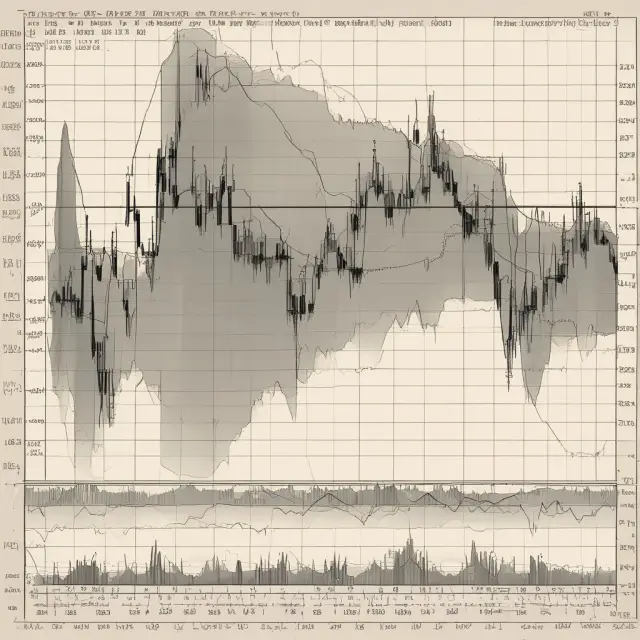
Visualizing the Hindenburg Omen on a Chart
The Hindenburg Omen, as an essential technical analysis tool, can be effectively interpreted by examining its presence in stock market charts. This section will guide you through how to identify a Hindenburg Omen signal and determine confirmation via critical support levels.
To visualize a Hindenburg Omen signal, observe the daily number of new 52-week highs (NH) and new 52-week lows (NL) in an index like the S&P 500 or Nasdaq Composite. When the difference between NH and NL falls below a reference value (typically 0.17%), while both values are above their respective thresholds, it signals a potential Hindenburg Omen condition.
For instance, if there are 63 new 52-week highs and 61 new 52-week lows within an index, the difference between NH and NL is 2, which is below the reference value. This circumstance may warrant further investigation for a potential Hindenburg Omen signal.
However, to confirm this signal, traders look for negative market sentiment as indicated by the McClellan Oscillator (MCO), which measures the shift in market sentiment through comparing advancing issues and declining issues’ net advance-decline volume. A bearish MCO trend can strengthen a Hindenburg Omen signal, making it an ideal moment for shorting or exiting long positions.
To determine if a Hindenburg Omen condition is confirmed by the MCO, examine the 30 days following the potential signal. If the MCO remains negative during this period, traders should consider going short or selling their long positions. Conversely, if the MCO turns positive within the 30 days following the potential Hindenburg Omen signal, it is rejected, and the market may continue its uptrend.
In summary, recognizing a Hindenburg Omen signal on a chart involves tracking daily new highs and lows to identify potential conditions and relying on negative market sentiment as indicated by the McClellan Oscillator to confirm a sell or exit strategy. By combining this indicator with other technical analysis tools like support levels, traders can increase their confidence in market timing decisions during periods of heightened volatility.

Real-Life Examples of the Hindenburg Omen in Practice
The Hindenburg Omen is a well-known technical indicator, first introduced to the public by James Miekka in 2010. It gained popularity as an indicator of a potential stock market crash due to its ability to signal increased volatility or even a significant market downturn. However, it’s crucial to remember that the Hindenburg Omen does not always provide accurate predictions, and it should be used as just one tool in a larger trading strategy rather than a standalone indicator.
One of the most notable instances where the Hindenburg Omen was observed is during the 1987 stock market crash. In October 1986, the indicator signaled a potential crash when new 52-week highs and lows were almost evenly distributed within the S&P 500 index (Bernstein, 2014). Just a few weeks later, on October 19, 1987, Black Monday occurred, causing a massive selloff in the U.S. stock market with a loss of approximately 23% in one day.
Another significant event where the Hindenburg Omen appeared was during the 2008 financial crisis. In November 2007, the indicator flashed a warning signal as the number of new highs and lows neared parity (Bernstein, 2014). Although it took several months for the market to turn bearish in early 2008, those who followed the Hindenburg Omen could have prepared themselves for the impending downturn.
A more recent example can be seen during the COVID-19 pandemic when the stock market experienced significant volatility in March 2020. The Hindenburg Omen signaled a potential bear market in February, as new 52-week highs and lows were once again close to an even distribution (Bernstein, 2020). This warning came just before the S&P 500 experienced its fastest correction ever, losing more than 30% of its value in under a month.
It’s important to note that these examples do not guarantee the Hindenburg Omen’s accuracy as a market crash indicator. However, they demonstrate the potential significance of the indicator and its ability to signal increased volatility or a downturn in the stock market. When used appropriately, in conjunction with other technical indicators and fundamental analysis, the Hindenburg Omen can be a helpful tool for traders looking to protect their investments during times of market uncertainty.
References:
Bernstein, P. (2014). The signal from space: Understanding the Hindenburg Omen. CFA Institute.
Bernstein, P. (2020). A new warning sign flashes as stocks hit records. CNBC.

Limitations and Criticisms of the Hindenburg Omen Indicator
The Hindenburg Omen, despite its intriguing name and potential usefulness as a warning signal for an impending stock market crash, is not without its limitations and criticisms. Some critics argue that the indicator lacks consistency in predicting market crashes and can yield false positives. Let’s examine these concerns more closely.
One of the primary issues surrounding the Hindenburg Omen lies in its accuracy. According to reports, it has correctly predicted a significant stock market decline only 25% of the time. This low success rate could lead to traders abandoning the indicator entirely or, worse, overreacting to false positives and selling unnecessarily.
Moreover, some experts argue that the indicator is not foolproof and can generate false signals. For instance, it might incorrectly indicate a bear market during normal corrections or even bull markets with high volatility. Such instances can be confusing for traders and may result in missed opportunities or unnecessary losses.
Furthermore, there are debates about the significance of the Hindenburg Omen’s criteria and the threshold percentages. Some analysts claim that these values are arbitrary and may vary depending on market conditions. This inconsistency can make it challenging for traders to apply the indicator effectively in various market environments.
Additionally, some critics argue that the indicator does not account for all relevant factors influencing stock markets. For example, it does not consider macroeconomic data or geopolitical events, which may have significant impacts on market trends and investor sentiment. Thus, it might be more prudent to use the Hindenburg Omen in conjunction with other indicators, fundamental analysis, and broader market analysis for a more comprehensive understanding of potential market shifts.
Lastly, it is essential to note that no single indicator can ever guarantee accurate predictions or foolproof results. Market conditions are dynamic and complex, and there may be numerous factors at play that could influence stock prices beyond the scope of any one technical indicator. As such, traders must employ a cautious approach when relying on any single tool for their investment decisions.
Despite these limitations and criticisms, some market experts argue that the Hindenburg Omen remains an essential part of their overall analysis framework. By combining it with other indicators, fundamental analysis, and broader macroeconomic and geopolitical insights, traders can potentially enhance their ability to anticipate significant stock market declines or shifts in investor sentiment. Ultimately, it’s up to individual investors and traders to assess the value of the Hindenburg Omen and determine whether it fits into their investment strategy or not.

FAQ about the Hindenburg Omen Indicator
What is the Hindenburg Omen, and what does it predict?
The Hindenburg Omen is a technical indicator used to signal increased probability of a stock market crash. It compares the percentage of new 52-week highs and lows in an index against specific threshold percentages to identify potential indicators of market instability.
How did the Hindenburg Omen get its name?
The indicator was named after the Hindenburg airship that crashed on May 6, 1937. It was first introduced by James R. Miekka in 2010 based on the unusual statistical conditions surrounding the event.
What are the four criteria for a Hindenburg Omen signal?
The criteria include: the daily number of new highs and lows exceeding a threshold percentage (typically 2.2%), highs not being more than twice the lows, an uptrend, and negative McClellan Oscillator readings.
What does the McClellan Oscillator measure in relation to the Hindenburg Omen?
The McClellan Oscillator is a measure of market sentiment that can confirm or reject the potential sell signal generated by the Hindenburg Omen. It’s an essential tool used alongside this indicator for increased accuracy.
How does the Hindenburg Omen work in practice?
By monitoring these conditions, traders may use the Hindenburg Omen as an early warning system to exit long positions or initiate short positions when negative McClellan Oscillator readings are detected during a 30-day window following confirmation of the indicator. The ultimate goal is to sell before significant market declines occur.
What is the success rate of the Hindenburg Omen indicator?
It’s estimated that the indicator has correctly predicted a significant stock market decline only about 25% of the time.
Can the Hindenburg Omen be used on its own, or should it be combined with other indicators?
The Hindenburg Omen may be used alone but is often more effective when combined with other forms of technical analysis to provide confirmation of a sell or take-profit signal. For example, a breakdown from key support levels could confirm the need for traders to go short or take profit on long positions following the indicator’s confirmation.
What are some real-life examples of the Hindenburg Omen in practice?
The Hindenburg Omen was reportedly successful in predicting the 1987 stock market crash and the 2008 financial crisis, but it also produced false positives during less significant market declines. Therefore, it’s important for traders to use it as a tool in conjunction with other indicators for increased accuracy.
 Next entry · No. 2,127Hindsight Bias in Finance: Understanding Its Impact on Investor Decision Making
See also
-
 No. 5,645
26 Sep 2025
18 min
Understanding Weak Longs: Opportunities and Risks
Business Finance
No. 5,645
26 Sep 2025
18 min
Understanding Weak Longs: Opportunities and Risks
Business Finance -
 No. 4,757
14 Jul 2025
19 min
Stock Market Crashes: Understanding the Causes, Effects, and Preventive Measures
Business Finance
No. 4,757
14 Jul 2025
19 min
Stock Market Crashes: Understanding the Causes, Effects, and Preventive Measures
Business Finance -
 No. 4,716
11 Jul 2025
27 min
Understanding the Significance and Limitations of the Spinning Top Candlestick Pattern in Finance and Investment
Business Finance
No. 4,716
11 Jul 2025
27 min
Understanding the Significance and Limitations of the Spinning Top Candlestick Pattern in Finance and Investment
Business Finance -
 No. 4,655
06 Jul 2025
23 min
Short Selling: Understanding the Risks and Rewards of this Controversial Trading Strategy
Business Finance
No. 4,655
06 Jul 2025
23 min
Short Selling: Understanding the Risks and Rewards of this Controversial Trading Strategy
Business Finance -
 No. 3,288
16 Mar 2025
21 min
Understanding Moving Averages in Finance: Simple vs Exponential
Business Finance
No. 3,288
16 Mar 2025
21 min
Understanding Moving Averages in Finance: Simple vs Exponential
Business Finance -
 No. 2,591
19 Jan 2025
21 min
Jesse L. Livermore: The Man Who Sold America Short and Predicted Market Bubbles
Business Finance
No. 2,591
19 Jan 2025
21 min
Jesse L. Livermore: The Man Who Sold America Short and Predicted Market Bubbles
Business Finance