Understanding the Importance of an Effective Distribution Network for Institutional Investors

Understanding the Importance of an Effective Distribution Network for Institutional Investors. Learn about hub-and-spoke vs. decentralized networks…
Introduction to Distribution Networks in a Supply Chain
In today’s global economy, an efficient and effective distribution network is crucial for businesses to maintain profitability by delivering products quickly, efficiently, and at low cost to their customers. A distribution network refers to the interconnected group of storage facilities and transportation systems that receive inventories from manufacturers and distribute them to consumers or retailers.
Understanding this critical component of a supply chain is essential since it plays a vital role in ensuring that a company can meet customer demands while also maximizing profitability. In an era where customers expect immediate gratification, having a reliable distribution network is more important than ever before.
In this section, we’ll explore the significance of distribution networks for businesses and their impact on the overall financial performance. We will also discuss various types of distribution networks and their suitability for different industries, as well as share insights from real-world examples like Walmart and Amazon.
Firstly, let us define what a distribution network is in the context of a supply chain: it’s an intricate system that receives inventories from manufacturers and delivers them to customers either directly or through retailers. By analyzing the components and best practices of a well-designed distribution network, we can help businesses make strategic decisions and optimize their operations for success.
A Faster, More Efficient Distribution Network: The Key to Business Success
Why is having an efficient distribution network so crucial in today’s business landscape? A company that can quickly and cost-effectively move its products from the manufacturer to the end consumer will gain a significant competitive advantage. Moreover, faster delivery times lead to higher customer satisfaction, increased sales, and reduced inventory costs.
A well-designed distribution network allows businesses to respond rapidly to changing market conditions and customer demands while minimizing logistics costs. Effective planning of the network can help in reducing the need for safety stock inventories, resulting in a more agile supply chain that can adapt quickly to changes in demand patterns. Additionally, it ensures that companies can deliver products when and where their customers want them, fostering long-term loyalty and repeat business.
Section Title: Understanding the Different Types of Distribution Networks
Description: Explanation of hub-and-spoke vs. decentralized networks and their suitability for different types of products.
[Continue with the rest of the sections as outlined in the article outline.]

Why Efficient Distribution Networks Are Crucial for Business Success
In today’s fast-paced business environment, having an efficient distribution network is a pivotal factor for companies seeking success. This component of the supply chain plays a significant role in ensuring that products reach consumers quickly, efficiently, and cost-effectively – all essential requirements for staying competitive in today’s instant gratification society.
A well-designed distribution network acts as a bridge between manufacturers and end customers. It is responsible for getting goods from factories to warehouses, retailers, or directly to consumers. A crucial aspect of this process is the proximity of the distribution network to its target consumer base. The closer the distribution network is to the customer, the quicker products can be delivered – a critical consideration in an age where customers demand speed and convenience.
Infrastructure quality is another essential element of an efficient distribution network. The reliability and capacity of storage facilities, handling equipment, transportation fleets, workers, information technology systems, and more all contribute to the overall success of the network. A strong infrastructure enables companies to process order flow effectively while keeping costs low.
When designing a distribution network, companies must consider various options. Hub-and-spoke networks, for instance, are ideal for handling large, bulky items or products that require temperature control. Decentralized networks, on the other hand, are more suitable for companies with geographically dispersed customers or those dealing with an extensive array of product offerings. Understanding your business needs and the unique characteristics of the products you sell will help guide your decision-making process when it comes to choosing the best distribution network model for your organization.
Effective distribution networks also necessitate careful planning and investment in key areas, such as equipment, workers, and information technology systems. Companies must allocate resources wisely to create a well-oiled machine that efficiently moves goods from one point to another while maintaining quality control and minimizing costs.
Real-world examples of successful distribution networks include those of Walmart and Amazon. Walmart, with its extensive network of 190 distribution facilities, has strategically allocated more capital to build out additional fulfillment centers, enabling the retail giant to adapt to the demands of an evolving market. Meanwhile, Amazon’s impressive distribution infrastructure includes robotically-controlled warehouses, freight trucking fleets, and even autonomous drones. The sheer scale of both companies’ networks underscores their commitment to providing customers with a seamless shopping experience that caters to the growing trend towards instant gratification and convenience.
In conclusion, an efficient distribution network is a vital component of any successful business strategy. Companies must consider factors like location, infrastructure quality, and the unique needs of their products when designing their networks. By implementing best practices and staying abreast of emerging trends in technology, companies can build robust distribution networks that meet customer demands, increase operational efficiency, and contribute to overall profitability.

Understanding the Different Types of Distribution Networks
Distribution networks play a crucial role in efficiently delivering goods to customers from manufacturers or suppliers. Two primary distribution network models are commonly used: hub-and-spoke and decentralized. Let’s take an in-depth look at these models, their components, and how they cater to different businesses.
Hub-and-Spoke Distribution Networks
A hub-and-spoke distribution network consists of a central location (hub) connected by spokes to various satellite locations or distribution centers. The hub acts as a primary facility for receiving large shipments from the manufacturer, sorting them, and distributing smaller quantities to multiple downstream customers. This model is particularly suitable for companies dealing with high volume, low-value products. The main advantages of hub-and-spoke distribution networks include:
- Centralization: Improves operational efficiency through consolidating resources, such as inventory, transportation, and labor, in one place.
- Economies of scale: Efficiently managing and optimizing the handling and storage of large inventories.
- Reduced transportation costs: Lower costs due to less frequent and shorter trips between hub and spoke locations.
- Faster response times: Streamlined shipping routes and reduced transit time for delivering goods from the hub to spokes.
Decentralized Distribution Networks
In contrast, a decentralized distribution network distributes inventory directly to multiple branch warehouses or regional distribution centers without a central hub. This model is more suitable for companies dealing with unique, high-value products or those requiring customization and personalized delivery services. Decentralizing the supply chain can result in several benefits:
- Quicker order fulfillment: Minimizes transportation time by having inventory closer to the end customer.
- Flexibility: Enables more responsiveness to market demands, product customization, and regional preferences.
- Improved customer satisfaction: Reduces lead times, which can result in higher customer loyalty and satisfaction.
- Lower transportation costs: Minimizes long-distance transportation expenses by placing inventory closer to the end customers.
In conclusion, understanding the various types of distribution networks is essential for businesses as they cater to different product types, market demands, and company objectives. Hub-and-spoke and decentralized distribution networks are two common models with unique advantages, enabling companies to optimize their supply chain operations, reduce costs, and improve overall customer satisfaction.
In this section, we delved into the different types of distribution networks—hub-and-spoke and decentralized—their components, and how they cater to various businesses. Understanding these models is crucial for companies seeking to optimize their supply chain operations, reduce costs, and enhance customer satisfaction.

Components of an Effective Distribution Network
An efficient distribution network is one of the most critical aspects of a company’s success in today’s competitive business environment. It plays a vital role in enabling organizations to meet customer demand by delivering products quickly, efficiently, and at low cost. In essence, a well-designed distribution network acts as the backbone for a supply chain, ensuring that products reach their intended destination in an optimized manner.
Location to the Customer and Infrastructure Quality: Two Key Components
The two most crucial components of an effective distribution network are its proximity to customers and infrastructure quality. By strategically positioning warehouses and distribution centers close to demand centers, companies can minimize transportation costs and reduce delivery times. Furthermore, investing in high-quality infrastructure, such as advanced storage systems, automated handling equipment, and reliable transportation fleets, enables organizations to process orders more efficiently and handle increased volumes with ease.
Equipment, Workers, Information Technology Systems, and Transportation Fleets: Essential Components
A well-equipped distribution site is essential for serving a company’s customer base effectively. To meet the specific needs of its business, organizations must consider various components to build their distribution network. These include:
- Equipment – Investing in appropriate handling and storage equipment, such as conveyor belts, pallet jacks, and automated storage systems (AS/RS), helps optimize order processing and reduce labor requirements.
- Workers – Well-trained and motivated workers are essential for maintaining efficient operations at distribution sites. Ensuring they have the necessary skills to perform their jobs effectively can help minimize errors and delays.
- Information Technology Systems – Implementing advanced technology solutions, such as warehouse management systems (WMS), transportation management systems (TMS), and real-time inventory tracking systems, enables organizations to streamline processes and make informed decisions more quickly.
- Transportation Fleets – A reliable fleet of vehicles is essential for ensuring timely product delivery to customers. By investing in a modern fleet with optimized routes, companies can reduce transportation costs while maintaining high levels of service quality.
Choosing the Right Distribution Network: Hub-and-Spoke vs Decentralized Networks
Organizations must determine whether a hub-and-spoke distribution network or a decentralized network best suits their business needs. A hub-and-spoke network consists of large, centralized warehouses that serve multiple smaller satellite locations. In contrast, a decentralized network involves having multiple smaller distribution centers spread throughout the supply chain. Factors to consider when making this decision include product characteristics, customer demand patterns, transportation costs, and inventory management requirements.
Real-World Examples: Walmart and Amazon’s Distribution Networks
Two prime examples of successful distribution networks are those of Walmart and Amazon. Walmart operates a vast distribution network, with over 190 distribution centers as of 2020, encompassing nearly 1 billion square feet. The retailer divides its distribution network into specific categories to optimize delivery for various product types. This focus on efficiency enables the company to meet customer demand while keeping costs low and maintaining a competitive edge in the marketplace.
Amazon’s distribution network is equally impressive, with over 1,200 facilities in 21 countries as of July 2020. The e-commerce giant has implemented advanced technologies, such as robotically-controlled warehouses and autonomous drones, to streamline its operations and provide a superior customer experience. Amazon’s distribution network allows it to deliver products quickly and efficiently while adapting to changing market demands and consumer preferences.

Case Study: Walmart’s Massive Distribution Network
Walmart, a retail behemoth with a presence in over 27 countries, operates an extensive distribution network to ensure the seamless delivery of goods to its customers worldwide. With 190 distribution facilities in operation as of 2020, Walmart’s distribution network encompasses 924 million square feet in total – more than the island of Manhattan.
Walmart has strategically divided its vast distribution network into specific categories to cater to various product areas. These categories include regional distribution centers, food distribution centers, fashion distribution centers, and more. By dedicating each distribution center to a particular product category, Walmart optimizes their operations for maximum efficiency, enabling the company to deliver products quickly and at the lowest possible cost.
One of the most significant aspects of Walmart’s distribution network is its size and strategic location. Positioning distribution centers close to major population centers allows Walmart to provide customers with faster delivery times, enhancing the shopping experience and bolstering customer satisfaction. Furthermore, a well-designed infrastructure, such as automated storage and retrieval systems, streamlines operations and reduces handling time for employees.
As e-commerce continues to dominate retail, companies like Walmart must adapt their distribution networks accordingly. In response, Walmart has allocated additional capital to build out more distribution centers dedicated to fulfilling online orders. This investment allows the company to meet the increasing demand for faster delivery and further solidify its position in the market.
Amazon’s Distribution Network: A Global Game Changer
Another retail giant, Amazon, has revolutionized the industry with its innovative approach to distribution networks. As of July 2020, Amazon operates over 1,215 distribution facilities across 21 countries, underscoring their commitment to efficient and speedy delivery.
Amazon’s distribution network comprises various types of facilities: prime hubs, fulfillment centers, inbounds and outbound sortation centers, and delivery stations. Prime hubs serve as centralized locations for processing online orders and preparing packages for shipment. Fulfillment centers handle storage and order picking, while sortation centers facilitate the organization and routing of items to their respective delivery destinations. Delivery stations are where packages are consolidated before being transported to customers via various shipping methods.
Amazon’s investments in robotically-controlled warehouses and autonomous drones have raised the bar for distribution networks, setting new standards for speed, accuracy, and efficiency. These innovations enable Amazon to meet customer demands for fast delivery, keeping pace with competitors like Walmart and other retail giants.
In conclusion, an effective distribution network is a crucial factor in the success of any business, particularly in today’s market where consumers expect quick and convenient access to products. Companies like Walmart and Amazon have set the bar high through their vast networks and innovative solutions, demonstrating how a well-designed distribution infrastructure can be a significant competitive advantage.
FAQ on Distribution Networks for Institutional Investors:
What is the role of an effective distribution network in a company’s success?
Answer: A company with an efficient distribution network is better positioned to deliver products to customers quickly and at low cost, leading to increased profitability and customer satisfaction.
How does location impact a distribution network?
Answer: Location plays a significant role in the success of a distribution network by affecting delivery times, transportation costs, and overall operational efficiency.
What are the different types of distribution networks, and how do they differ?
Answer: Distribution networks can be categorized as hub-and-spoke or decentralized, depending on their structure and focus on specific product areas. Hub-and-spoke networks rely on a central warehouse to distribute products to multiple satellite locations, while decentralized networks involve individual distribution centers handling their own inventory and shipping operations.
How do companies determine the optimal distribution network setup for their business?
Answer: Factors such as product type, geographic location, customer demand, and transportation costs should be considered when designing a distribution network that best suits a company’s needs.
What role can institutional investors play in shaping a company’s distribution network?
Answer: Institutional investors can influence a company’s distribution network by advocating for improvements to the existing infrastructure, supporting strategic expansions or acquisitions, and promoting operational efficiency initiatives to enhance overall profitability.

Case Study: Amazon’s Revolutionary Distribution Network
Amazon is a globally recognized e-commerce giant that has transformed the retail industry with its innovative business models and technology investments. One significant area where Amazon stands out is in its distribution network, which has been crucial to its success in delivering products quickly and efficiently to customers. Understanding the components and intricacies of this extensive network can offer valuable insights for institutional investors.
Amazon’s distribution network spans many countries and comprises a complex system of robotically-controlled warehouses, autonomous drones, and transportation fleets designed to meet the growing demands of its customers. As of July 2021, Amazon boasts an impressive network of over 1,400 distribution facilities in more than 20 countries.
Amazon’s distribution network is broken down into several categories, including prime hubs, fulfillment centers, inbounds and outbound sortation centers, and delivery stations. Each component plays a vital role in ensuring the seamless flow of products from manufacturers to customers:
- Prime Hubs: These centralized facilities serve as distribution points for Amazon’s Prime members, providing rapid shipping options like Two-Day Shipping and One-Day Delivery. They are strategically located near major cities to minimize delivery times.
- Fulfillment Centers: In charge of receiving, storing, and sorting products, these facilities ensure that orders are correctly packed and ready for shipment. Robotic technology is used extensively in Amazon’s fulfillment centers to maximize productivity and efficiency.
- Inbounds Sortation Centers: These specialized facilities receive, process, and sort incoming inventory from various suppliers. They help streamline the delivery process by ensuring that products are correctly categorized and ready for shipment to other distribution centers or directly to customers.
- Outbound Sortation Centers: Outbound sortation centers are responsible for organizing packages by delivery routes, enabling efficient routing and minimizing delivery times. They employ advanced sorting technology like automated conveyor belts to maximize efficiency.
- Delivery Stations: These facilities act as last-mile delivery hubs, where orders are sorted into smaller batches before being delivered to customers using various transportation methods, including ground transport, air transportation, and Amazon’s own delivery fleet.
Amazon’s investments in its distribution network demonstrate the importance of having a fast and efficient supply chain for maintaining profitability, especially as more consumers embrace online shopping. Institutional investors can benefit from closely examining companies’ distribution networks during their investment research process to gain insight into potential growth opportunities and risks.

Considerations for Institutional Investors
The importance of a well-designed and efficient distribution network cannot be overstated for businesses, especially those in the retail or consumer goods sectors, looking to maintain profitability, meet customer demands, and stay competitive in the market. As institutional investors, it is crucial to consider how a company’s distribution network impacts its overall financial performance and potential investment opportunities.
A well-executed distribution network enables companies to deliver products quickly and efficiently to customers while minimizing logistical costs. This can result in increased sales, improved customer satisfaction, and long-term brand loyalty. By investing in companies with strong distribution networks, institutional investors can potentially capitalize on their financial success and secure stable returns.
When evaluating a company’s distribution network as an investment opportunity, consider the following factors:
1. Distribution Network Size and Geographic Reach
The size of a company’s distribution network plays a significant role in its ability to serve its customer base effectively. Larger networks enable broader market coverage and the potential for increased sales growth. Institutional investors should assess whether a company’s distribution network is extensive enough to cater to both current and future demand, as well as expand into new markets or customer segments.
2. Efficiency and Logistics Capabilities
Efficient logistics capabilities are essential in maintaining a competitive edge and driving long-term growth for businesses. Institutional investors should evaluate a company’s distribution network for its capacity to minimize handling time, optimize delivery routes, and reduce transportation costs. Additionally, consider the implementation of modern technologies like automation, robotics, and real-time tracking systems to improve operational efficiency and adapt to the e-commerce trend.
3. Infrastructure Quality and Adaptability
High-quality infrastructure is vital for a well-functioning distribution network. Institutional investors should evaluate the condition and maintenance of a company’s facilities, transportation fleets, and information technology systems. Additionally, consider the adaptability of these systems to changing market conditions or customer demands.
4. Workforce Management and Labor Relations
A skilled and productive workforce is essential for maintaining a competitive distribution network. Institutional investors should assess a company’s approach to labor relations and its ability to attract, retain, and train employees with the necessary skills to adapt and thrive in an ever-evolving logistics landscape.
5. Strategic Partnerships and Collaborations
Forming strategic partnerships and collaborations can help companies expand their distribution networks or gain access to new markets. Institutional investors should evaluate potential opportunities for a company to collaborate with competitors, suppliers, or logistics service providers to enhance its operational capabilities and better serve its customers.
Investing in a company with a well-designed and efficient distribution network can lead to long-term financial success and stable returns. By considering the factors outlined above, institutional investors can make informed investment decisions based on a company’s ability to effectively manage its distribution infrastructure and adapt to market changes.
Emerging Trends in Distribution Networks
In today’s rapidly evolving business landscape, the importance of a company’s distribution network cannot be overstated. As technology continues to drive advancements in various industries, distribution networks are not immune to these changes. Understanding these emerging trends is crucial for institutional investors seeking to identify potential investments that can deliver solid returns.
One of the most significant transformations in distribution networks is the rise of e-commerce and the increasing popularity of online shopping among consumers. As more customers opt for convenience, companies have had to adapt their distribution strategies accordingly. In response, they have expanded their delivery reach, optimized their transportation methods, and integrated advanced technologies such as automated warehouses and robotics into their operations.
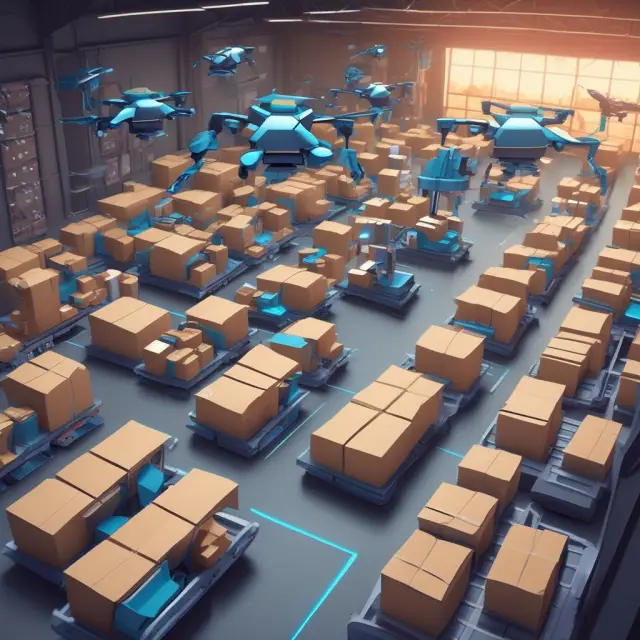
Another trend that has gained traction in recent years is the implementation of autonomous vehicles and drones for transporting goods. Companies like Amazon (AMZN) have already begun experimenting with using unmanned aerial vehicles to deliver packages, potentially reducing delivery times significantly and increasing operational efficiency. This could lead to substantial changes in distribution networks as more companies adopt similar strategies to keep up with the competition.
Robotics and automation are also making their mark on distribution networks by streamlining processes, enhancing productivity, and reducing labor costs. For instance, automated sortation systems can help organize incoming inventory more efficiently, ensuring that orders are correctly identified and allocated for quicker shipping times. Additionally, collaborative robots, or cobots, can assist human workers in various tasks, leading to improved accuracy and reduced manual effort.
Furthermore, the implementation of real-time data analytics and predictive supply chain management systems is becoming increasingly important for companies seeking to optimize their distribution networks. By analyzing historical data on customer demand patterns, inventory levels, and transportation logistics, organizations can make informed decisions about where to allocate resources, adjust their inventory levels, and fine-tune their delivery operations.
As the use of data analytics in supply chain management becomes more widespread, it is likely that we will see further advancements in areas such as demand forecasting, real-time inventory monitoring, and predictive maintenance for distribution center equipment. Institutional investors seeking to capitalize on these trends can look at companies with a strong focus on innovation within their distribution networks, such as Walmart (WMT) or Amazon, which have already embraced some of these technologies in their operations.
In conclusion, the distribution network landscape is undergoing significant shifts due to the integration of emerging technologies and evolving consumer preferences. Institutional investors can capitalize on these trends by investing in companies that are well-positioned to adapt and thrive in this new reality. As a result, it’s essential to closely monitor developments in e-commerce, robotics, automation, drones, real-time data analytics, and predictive supply chain management systems when evaluating potential investments within the distribution sector.

Conclusion: The Future of Effective Distribution Networks
The conclusion to our exploration of the importance of a well-designed and efficient distribution network is that its role has become increasingly critical for businesses in today’s market. With consumers demanding quick, convenient access to products and the rise of e-commerce platforms like Amazon, having an effective distribution network can make all the difference between a company staying competitive or falling behind.
Effective distribution networks enable companies to get their goods from manufacturers to consumers quickly and efficiently while keeping costs low. This not only benefits the consumer but also helps businesses maintain profitability. One successful example is Walmart, which operates 190 distribution facilities, covering almost a billion square feet in total, making it one of the largest distribution networks in the world. Walmart’s network focuses on specific product categories to ensure each facility is optimally designed for its assigned tasks.
Another major player, Amazon, continues to expand and innovate its extensive distribution network, with over 1,200 facilities globally, including robotically-controlled warehouses, private freight fleets, and even experimental drone delivery systems. These advancements have significantly transformed the way we buy and receive products, setting new standards for businesses to follow.
As technology continues to shape the world of logistics and distribution, companies must remain adaptable and forward-thinking. The integration of automation, robotics, and AI can lead to significant improvements in efficiency, accuracy, and cost savings. Furthermore, the rise of e-commerce has led to an increased demand for real-time inventory management, making it crucial for companies to invest in IT systems that streamline these processes.
Institutional investors can play a pivotal role in shaping the future of distribution networks by supporting companies that prioritize innovation and efficiency within their logistics operations. By investing in businesses with robust distribution networks or those taking steps to improve their existing infrastructure, investors can capitalize on long-term growth potential while helping to ensure consumers continue to receive quality products promptly.
In conclusion, the future of effective distribution networks is one that embraces technological advancements, prioritizes efficiency and innovation, and delivers value to both businesses and consumers alike. As we move forward in this new era of e-commerce and instant gratification, companies that can adapt to these changing demands will be best positioned for long-term success.
FAQ on Distribution Networks for Institutional Investors
Question 1: What role do distribution networks play in the overall success of a company?
Answer: A well-designed distribution network is essential for companies to deliver products quickly, efficiently, and at low cost. This enables businesses to maintain profitability, meet customer expectations, and remain competitive within their industries. Institutional investors can consider the quality and efficiency of a company’s distribution network as an indicator of its long-term financial performance.
Question 2: What are the two primary components of an effective distribution network?
Answer: The two essential elements of an efficient distribution network include proximity to the customer for fast delivery and high-quality infrastructure that ensures reliable handling and transportation of goods. A well-designed network considers factors such as equipment, workers, information technology systems, and transportation fleets to provide optimal order processing and fulfillment.
Question 3: How can companies determine which type of distribution network best suits their business needs?
Answer: Companies can choose between hub-and-spoke or decentralized distribution networks depending on the nature and demand for their products. Hub-and-spoke networks typically involve larger, centralized facilities that serve smaller, regional locations, while decentralized networks distribute warehouses evenly across a broader geographic area. Investors should consider a company’s target customer base, product offerings, and shipping requirements when evaluating its distribution network strategy.
Question 4: How do technological advancements impact the role of distribution networks?
Answer: The emergence of e-commerce, automation, robotics, and drones are transforming the way companies design and operate their distribution networks. Institutional investors should keep a close eye on these trends and how they impact a company’s competitive edge, efficiency, and bottom line. Companies that embrace technological innovations within their distribution networks can achieve significant advantages over competitors, such as faster delivery times, lower costs, and improved customer experience.
Question 5: What are some real-world examples of companies with effective distribution networks?
Answer: Companies like Walmart and Amazon have built large and sophisticated distribution networks that serve millions of customers worldwide. These organizations have invested in cutting-edge technology, such as robotically-controlled warehouses and autonomous drones, to streamline their logistics processes and meet increasing consumer demands for faster shipping times and improved customer experience. By studying these examples, investors can gain insights into the importance of an effective distribution network in driving long-term business success.
 Next entry · No. 1,078Distribution Waterfalls in Private Equity and Hedge Funds: Understanding the Orderly Allocation of Gains
See also
-
 No. 1,221
14 Aug 2024
19 min
Optimizing Inventory Management: Maximizing Value with Economic Order Quantity (EOQ)
Business Strategy
No. 1,221
14 Aug 2024
19 min
Optimizing Inventory Management: Maximizing Value with Economic Order Quantity (EOQ)
Business Strategy -
 No. 5,409
06 Sep 2025
28 min
Understanding the Value Chain: Maximizing Efficiency and Competitive Advantage for Institutional Investors
Business Strategy
No. 5,409
06 Sep 2025
28 min
Understanding the Value Chain: Maximizing Efficiency and Competitive Advantage for Institutional Investors
Business Strategy -
 No. 5,157
16 Aug 2025
17 min
Unbundling: A Strategic Approach to Improving Company Performance
Business Strategy
No. 5,157
16 Aug 2025
17 min
Unbundling: A Strategic Approach to Improving Company Performance
Business Strategy -
 No. 4,422
17 Jun 2025
17 min
Understanding Company Restructuring: Types, Costs, and Effects on Employees
Business Strategy
No. 4,422
17 Jun 2025
17 min
Understanding Company Restructuring: Types, Costs, and Effects on Employees
Business Strategy -
 No. 3,755
24 Apr 2025
22 min
Optimizing Trading Systems for Effectiveness and Efficiency: A Comprehensive Guide for Institutional Investors
Business Strategy
No. 3,755
24 Apr 2025
22 min
Optimizing Trading Systems for Effectiveness and Efficiency: A Comprehensive Guide for Institutional Investors
Business Strategy -
 No. 3,748
23 Apr 2025
20 min
Maximizing Profitability through Effective Operations Management in Finance and Investment
Business Strategy
No. 3,748
23 Apr 2025
20 min
Maximizing Profitability through Effective Operations Management in Finance and Investment
Business Strategy