Understanding the Interplay of Economics and the Environment: An Introduction to Environmental Economics

Learn the fundamentals of environmental economics - cost-effective use and protection of natural resources with a focus on market failure and externalities.
What is Environmental Economics?
Environmental economics is a unique field that delves into understanding the cost-effective allocation, use, and protection of natural resources, while addressing their environmental impacts. The discipline builds on traditional economic principles to ensure that human activities are environmentally sustainable. In simpler terms, environmental economics seeks answers to questions like: How can we continue growing our economy while preserving valuable natural resources? What costs should be considered when making decisions that impact the environment?
Environmental goods and services provide numerous benefits for society, from clean water and air to the survival of wildlife and the overall climate. These goods are essential not only to human life but also to ecosystems. However, their value is often challenging to quantify due to their non-rivalrous nature – one person’s use does not diminish another’s enjoyment. Moreover, environmental goods can be subject to market failure because their production and consumption decisions may not reflect the true social cost or externalities.
Environmental economists play a crucial role in helping governments determine which policies are most effective for addressing these challenges. They analyze the costs and benefits of alternative measures and design appropriate environmental policies that minimize negative impacts on both the economy and the environment. For instance, the United States requires any federal project expected to impact the environment to publish an Environmental Impact Statement (EIS), detailing potential risks and mitigation strategies.
Environmental economics is a multifaceted discipline with two primary approaches: prescriptive regulations and market-based solutions. Prescriptive regulations involve government intervention, where they impose specific measures to reduce environmental harm. This could include prohibiting high-polluting industries or mandating the use of certain emissions-controlling technologies. Market-based solutions, on the other hand, rely on economic incentives to encourage desired behaviors. Cap-and-trade regulations, for instance, do not prevent companies from polluting but place a financial burden on those who exceed their allotted emissions limits. This approach incentivizes companies to reduce their pollution levels while allowing flexibility in how they achieve their goals.
Environmental economics is an interdisciplinary field with historical roots dating back to the 1960s and 70s, when concerns about environmental issues grew increasingly prominent. As a result, many organizations and institutions have emerged to address these challenges at various levels – from national governments and international bodies to non-governmental organizations (NGOs) and think tanks.
Understanding the importance of economics in addressing environmental challenges has led to a rich body of knowledge and innovative policy solutions. In the following sections, we will delve deeper into the basic concepts, theories, strategies, and applications of this fascinating field.

Basic Concepts in Environmental Economics
Environmental economics is the interdisciplinary field that applies economic concepts, theories, and methods to the study of environmental issues and their policy implications. It is concerned with analyzing and evaluating the allocation of resources between various uses and how those choices impact the environment. To better understand environmental economics, let’s explore some fundamental concepts:
Environmental goods and amenities:
Environmental goods include natural resources and ecosystem services that contribute to human well-being, such as clean air, water, wildlife habitats, and recreational spaces. The challenge in valuing these resources lies in their non-market nature – they cannot be bought or sold directly. As a result, economists employ various methods to estimate the value of environmental goods based on market surrogates like consumer preferences, option values, and willingness to pay.
Market failure and externalities:
Market failure occurs when the price mechanism fails to allocate resources efficiently due to the presence of negative or positive externalities. In the context of environmental economics, the most common externalities are related to pollution. For instance, if a factory pollutes a river, it may not bear the full cost of its actions as the damage to other parties, like local fishermen, is often borne by society as a whole. Environmental economists analyze the impact of these externalities and suggest policy interventions aimed at correcting market distortions through various mechanisms such as taxes, subsidies, or regulations.
Transnational approach
Environmental issues frequently transcend national borders, necessitating collaboration between countries to address them effectively. International organizations like the United Nations Environment Programme (UNEP), the World Bank, and the European Union have played key roles in promoting environmental cooperation, researching solutions for shared challenges, and setting standards for sustainable development. The transnational approach is essential to ensure that global environmental goals are met while considering the potential impact on local communities and economies.
By understanding these basic concepts, we can begin to appreciate the importance of environmental economics and its role in fostering a more sustainable future for both present and future generations.

Theory Underpinning Environmental Economics
Environmental economics is a unique field that requires an understanding of how natural resources should be used efficiently while addressing potential environmental impacts. The core theory behind environmental economics revolves around recognizing the economic value of environmental goods and acknowledging the costs associated with economic growth that are not typically accounted for in traditional economics. Environmental economics aims to identify these unquantified values, enabling governments to make informed decisions regarding environmental policies.
Environmental Economics: Fundamentals and Concepts
One fundamental concept within environmental economics is the presence of externalities – costs that are not borne by the business or its consumers, but rather by society as a whole. For example, the pollution resulting from manufacturing processes can negatively impact public health, making it an externality that must be addressed through economic policies. Another significant aspect of environmental economics is the assignment of value to goods and amenities like clean air, water, wildlife, and climate.
Market failure occurs when there’s a disconnection between private incentives and social preferences, as seen in the case of environmental goods. The public good nature of these resources often makes them difficult to privatize and subject to the tragedy of the commons – overuse or destruction due to individual self-interest without regard for future consequences.
Environmental economists analyze economic policies that address such issues by considering their potential costs and benefits, utilizing theoretical tests, studies, and impact assessments. Governments must publish environmental impact statements when undertaking projects that may adversely affect the natural environment. These documents serve to evaluate any potential negative externalities of a project.
Strategies for Environmental Economic Solutions
Environmental economists propose two approaches to addressing environmental challenges: prescriptive and market-based solutions. Prescriptive regulations dictate specific measures taken by governments to minimize environmental harm, such as limiting emissions or mandating the use of certain technologies. Market-based solutions involve economic incentives that encourage desired behaviors while allowing companies more flexibility in their approach, like carbon taxes and cap-and-trade systems.
The Origin of Environmental Economics
Environmental economics emerged during a time when society began to recognize the importance of natural resources and their finite nature. The United States’ Environmental Protection Agency (EPA) was established in 1970, with the agency relying on environmental economists to conduct analyses related to policy proposals and evaluate their potential impact.
Environmental economics also deals with various challenges that arise from global concerns transcending national boundaries, such as overfishing or climate change. To tackle these issues, international cooperation is necessary, which often involves non-governmental organizations (NGOs) like the Intergovernmental Panel on Climate Change (IPCC).
Future Prospects for Environmental Economics
Despite its importance and significance, environmental economics remains a contentious area of economic thought due to its impact on various industries and the difficulty in implementing policies that address externalized environmental costs. However, environmental economists continue to play crucial roles at governmental organizations like the EPA, making their work essential for shaping economic policy.
In conclusion, environmental economics serves as a vital bridge between environmental concerns and economic growth, offering a unique perspective on how to balance the needs of both society and the natural world. By recognizing the importance of environmental goods and addressing market failures, this field enables governments to craft effective policies that promote sustainable development while minimizing negative impacts on the environment.
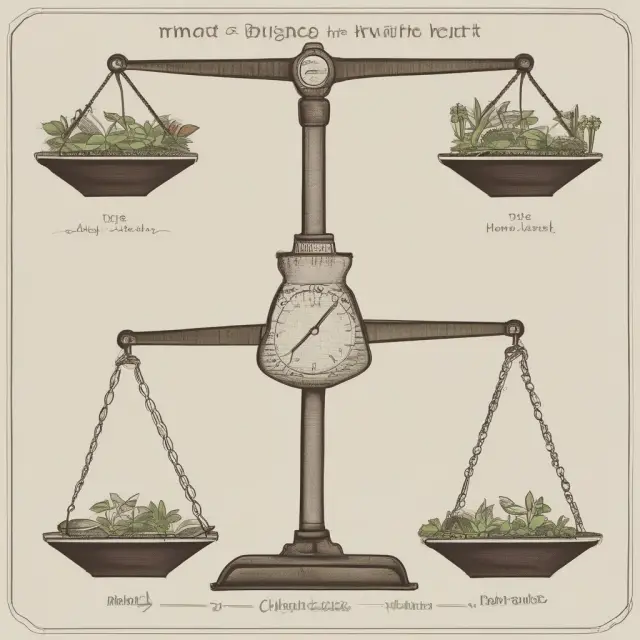
Strategies in Environmental Economics: Prescriptive and Market-Based Solutions
Environmental economics offers two main approaches to addressing environmental issues: prescriptive regulations and market-based solutions. The choice between these strategies depends on the specific problem, political considerations, and available resources.
Prescriptive Regulations
In a prescriptive approach, governments mandate specific measures designed to reduce environmental harm. This can include prohibiting particular industries or implementing emission reduction targets. Prescriptive regulations are effective in controlling direct emissions by setting a fixed limit on pollutants. For instance, the Clean Air Act of 1970 established regulations limiting the amount of sulfur dioxide, nitrogen oxides, and particulate matter that power plants could emit into the atmosphere.
Market-Based Solutions
In contrast, market-based solutions leverage economic incentives to encourage desired behaviors. Market mechanisms like carbon pricing (taxes or cap-and-trade systems) provide companies with a financial motivation to reduce their environmental impact. These approaches are more flexible and less prescriptive than regulations, enabling companies to choose the most cost-effective method for meeting emissions targets.
Carbon Pricing
The most common market-based solution is carbon pricing. It can take the form of either carbon taxes or cap-and-trade systems. Carbon pricing sets a financial burden on businesses that emit greenhouse gases, incentivizing them to invest in reducing their emissions to minimize their costs. In a cap-and-trade system, companies receive emission permits and are allowed to buy and sell these permits based on market demand. This creates an economic incentive for industries to reduce their emissions beyond regulatory requirements.
Environmental economics can also employ other market mechanisms like tradable permits for water usage or auctions for public lands leased for renewable energy development. These approaches have proven successful in reducing pollution while maintaining economic efficiency and avoiding the need for extensive government intervention.
Balancing Economic Growth and Environmental Protection
Environmental economists strive to find a balance between economic growth and environmental protection, employing various tools to minimize negative externalities. The choice between prescriptive regulations and market-based solutions largely depends on political circumstances, societal preferences, and the specific environmental issue at hand. As global awareness of the need for sustainable development grows, both strategies will continue to play an essential role in addressing environmental challenges.
In conclusion, understanding the interplay between economics and the environment is crucial to ensuring a more sustainable future. Environmental economics offers valuable insights into how we can minimize the costs of economic growth on the natural world while maximizing benefits. By exploring key concepts, strategies, and historical developments, we can gain a deeper appreciation for the role environmental economics plays in shaping our world’s environmental policies.
Environmental Economics: History and Policy Implementation
Environmental economics has its roots in the 1960s, when scientists began warning about the negative impacts humans were having on the natural world. The United States Environmental Protection Agency (EPA), which was created by President Richard Nixon in 1970, was one of the first major institutions dedicated to addressing these issues. Its creation reflected growing concerns that industries were damaging the environment with no regard for external costs.
Environmental economics focuses on the impact of environmental policies and devises solutions to problems resulting from market failures due to negative externalities. One area of study is the economic value of environmental goods, such as clean air and water, and the potential cost of losing them. Environmental economists often use a transnational approach due to the global nature of many environmental challenges.
A prominent example of the application of environmental economics is fuel economy standards. In the U.S., the EPA regulates the Corporate Average Fuel Economy (CAFE) standards, which set limits on the average miles per gallon for cars produced by automobile manufacturers. These regulations have evolved over time to address changing environmental and economic conditions.
The implementation of these policies often involves a delicate balance between economic considerations and environmental concerns. For instance, fuel economy regulations can lead to controversy and political debate as stakeholders argue about the degree of externalized environmental costs. The EPA works with environmental economists to analyze the potential consequences of proposed policy changes and evaluate the cost-effectiveness of alternative approaches.
The EPA’s National Center for Environmental Economics is a leading organization dedicated to market-based solutions in environmental economics, such as carbon taxes and cap-and-trade systems. These policies aim to encourage desired behaviors by placing economic incentives on companies to reduce their environmental impact. Market-based approaches are increasingly popular due to their potential flexibility and ability to address transnational issues like climate change.
Environmental economists play a crucial role in helping governments weigh the pros and cons of various policy options. Their expertise in analyzing market failures, valuing public goods, and assessing the economic implications of environmental regulations is essential for developing sound and effective environmental policies.

Challenges in Environmental Economics
Environmental economics is a multifaceted field that offers several solutions for addressing environmental issues through cost-effective interventions. However, it also faces numerous challenges when implementing these solutions at both the local and global levels. Understanding these challenges can help us appreciate the complexity of balancing economic growth with environmental stewardship.
1. Transboundary Environmental Issues: One of the primary challenges for environmental economists is dealing with transnational environmental problems like climate change, overfishing, deforestation, and air pollution. These issues often require international cooperation and agreements to effectively mitigate their impact on the environment and human population. For instance, reducing greenhouse gas emissions from industries in one country can significantly impact neighboring countries, making it crucial for multiple nations to collaborate on policies that address these challenges collectively.
2. Measuring Environmental Damages: Another challenge lies in accurately measuring the economic costs of environmental damages and determining an appropriate price tag for environmental goods like clean air or water. Since many environmental goods are non-marketable, valuing them can be a challenging task. Economists often use methods like contingent valuation surveys, travel cost studies, or hedonic pricing to estimate these values.
3. Balancing Economic Growth and Environmental Sustainability: Ensuring that economic growth is sustainable while minimizing harm to the environment poses another challenge for environmental economists. The task involves assessing the trade-offs between short-term economic benefits and long-term environmental costs, as well as finding solutions that minimize negative externalities and maximize positive ones.
4. Accounting for Externalities: Externalities are the hidden costs or benefits that occur when an action affects a third party outside the immediate transaction. Environmental economists deal with both positive and negative externalities. For example, if a farmer implements sustainable farming practices, they might generate positive environmental externalities like reducing greenhouse gas emissions or improving soil health for neighboring farmers. Conversely, if a company emits pollutants, it imposes negative externalities on the community by contaminating the air and water.
5. Political Challenges: Lastly, political hurdles can hinder the effective implementation of environmental policies. Stakeholders often have competing interests, making it challenging to pass legislation that addresses environmental concerns while ensuring economic growth and social stability. Additionally, there is usually a time lag between identifying an environmental issue and implementing policy solutions, which can exacerbate the challenge for environmental economists.
In conclusion, despite the challenges, environmental economics plays a crucial role in informing policymakers about the importance of cost-effective interventions to protect natural resources and minimize negative externalities. By understanding these challenges, we can appreciate the intricacies involved in balancing economic growth with environmental sustainability while ensuring that future generations inherit a world that is healthy, prosperous, and resilient.

Environmental Economics vs. Ecological Economics: Key Differences
Environmental economics and ecological economics, despite their close relationship, differ significantly in their perspectives on the role of humans in the natural world. Both fields explore the economic aspects of environmental issues, but they take slightly different approaches to understanding how humans should interact with nature.
Environmental Economics: The Market-Based Approach
Environmental economics primarily deals with the market value and allocation of resources within the context of environmental concerns. It is rooted in neoclassical economics, which focuses on supply and demand as the primary drivers of economic activity. However, environmental economics acknowledges externalities like pollution and ecosystem degradation that traditional economics tends to overlook. This perspective offers a crucial perspective when designing policies addressing natural resource management and the impact of human activities on the environment.
Key Concepts in Environmental Economics
- Externalities: When an economic activity harms or benefits a third party, externalities come into play. Pollution is a common example of negative externalities, while public goods like clean air offer positive ones.
- Market failure: If the market does not efficiently allocate resources due to externalities or other market imperfections, government intervention might be necessary.
- Sustainability: Environmental economics emphasizes finding economically feasible ways to preserve natural resources for future generations.
Ecological Economics: The Ecosystem-Based Approach
While environmental economics focuses on the monetary value of environmental goods and services in the market, ecological economics takes a more holistic approach by viewing the economy as an integral part of the ecosystem. This perspective acknowledges the limitations and complexities of markets and seeks to understand how human economic activities fit within natural systems.
Key Concepts in Ecological Economics
- Ecosystem services: The benefits that humans derive from nature, such as clean air, water filtration, and pollination.
- Sustainability: This perspective emphasizes the importance of maintaining the ecological integrity of natural systems and ensuring long-term sustainability for future generations.
- Biophysical limits: Ecological economics highlights the need to understand biophysical limitations on economic activity.
- Interconnectedness: Understanding the interdependence between human activities and ecosystems is critical in this perspective, as it helps us appreciate the complex relationships that exist between various components of nature.
A Case in Point: Balancing Economics and the Environment
Environmental economics and ecological economics offer unique yet complementary perspectives on the relationship between humans and the environment. Their integration has led to valuable insights into economic and environmental sustainability, as well as strategies for achieving a balance between the two.
For example, when considering the construction of a new airport in a pristine forest area, environmental economics can help determine the potential economic benefits from the project, while ecological economics assesses the impact on biodiversity, carbon sequestration, and other ecological services. A joint approach to this issue could lead to policies that minimize the negative environmental impact and maximize the economic benefits for all stakeholders involved.
In conclusion, understanding the distinctions between environmental economics and ecological economics is essential in addressing the complex relationship between humans and the natural world. While these fields offer differing perspectives, their integration provides a more comprehensive understanding of the challenges associated with balancing economic growth and environmental sustainability.

Neoclassical Economics vs. Environmental Economics: Balancing Theories
Understanding the nuanced relationship between neoclassical economics and environmental economics is essential for appreciating how we address pressing issues such as climate change, resource depletion, and pollution. Neoclassical economics forms a solid foundation for understanding the economic implications of environmental problems but falls short in addressing their externalities effectively.
Neoclassical Economics: A Foundation for Environmental Economics
Neoclassical economics is a branch of economics that focuses on supply and demand as driving forces of economic activity (Brechling, 2019). It assumes that the market can achieve efficient outcomes when left unchecked. However, this perspective does not account for externalities-the costs or benefits that affect parties other than those directly involved in a transaction (Cropper et al., 2015). Environmental issues often result from market externalities, such as pollution and resource depletion.
Neoclassical economics provides essential insights for understanding environmental problems by illustrating how markets might fail and why government intervention is necessary (Hanley & Spash, 2019). However, it does not offer a comprehensive solution to the challenges presented by externalities. Environmental economists build upon neoclassical foundations while emphasizing the importance of negative externalities and developing methods for internalizing them into economic analysis.
Addressing Externalities: The Role of Environmental Economics
Environmental economics takes a step beyond neoclassical economics by examining how to internalize negative externalities and make markets work more effectively (Cropper et al., 2015). It offers practical methods for addressing externalities, such as pricing mechanisms like taxes or cap-and-trade systems.
Taxing Negative Externalities: Carbon Pricing
Carbon pricing is a popular method used by environmental economists to internalize the cost of carbon emissions (Levinson et al., 2014). It involves setting a tax on greenhouse gas emissions or allowing companies to trade emission permits. This approach aims to encourage industries to reduce their carbon footprint while minimizing government intervention.
Cap-and-Trade Systems: A Market-Based Approach
Another market-based solution for addressing negative externalities is the cap-and-trade system (Levinson et al., 2014). In this approach, a regulatory body sets a total limit on emissions and issues tradable permits to emit a specific amount of pollution. Companies can either reduce their emissions or buy permits from other companies that have not used up their allocation. This system encourages companies to innovate and find cost-effective ways to decrease emissions while providing economic incentives for cooperation.
Balancing Theories: Neoclassical Economics and Environmental Economics in Practice
The relationship between neoclassical economics and environmental economics is a symbiotic one, with each branch influencing the other (Brechling, 2019). Neoclassical economics provides essential insights into how markets operate, while environmental economics builds on these foundations to address externalities and create more effective market solutions.
As economies continue to develop, it is crucial for policymakers, businesses, and citizens to understand the interplay between neoclassical economics and environmental economics. By incorporating both approaches, we can design policies that promote sustainable economic growth while minimizing negative externalities and protecting the natural environment.

Careers in Environmental Economics
A background in environmental economics opens up a diverse range of employment opportunities. Professionals in this field may find work with various organizations dedicated to addressing environmental challenges, from local government agencies and international institutions to nonprofit organizations and private corporations. Let’s explore some common roles and the types of organizations that employ environmental economists.
1. Government Agencies
Government positions are one of the most direct ways for environmental economists to have a significant impact on policy. Federal, state, and local agencies often employ professionals in this field to research, analyze data, and create economic models to help inform decisions about environmental regulations. For instance, the United States Environmental Protection Agency (EPA) employs hundreds of economists to develop and implement regulatory policies aimed at protecting human health and the environment.
2. International Organizations
International organizations like the World Bank, Intergovernmental Panel on Climate Change (IPCC), and United Nations Environment Programme (UNEP) play essential roles in addressing transnational environmental issues. Environmental economists can work for these institutions to study the economic impacts of climate change and other global environmental challenges and develop policies to mitigate negative externalities and promote sustainable solutions.
3. Nonprofit Organizations
Nonprofits are another significant employer for environmental economists. These organizations may focus on a wide range of issues, including wildlife preservation, pollution reduction, and energy efficiency. In this role, professionals can work to influence public policy and raise awareness about the economic implications of various environmental concerns. For instance, The Nature Conservancy hires economists to help assess the costs and benefits of various conservation projects and communicate their importance to stakeholders.
4. Academia
Academic positions offer a unique opportunity for environmental economists to further their research, publish papers, and educate future generations of professionals in this field. Universities and research institutions often employ economists to explore the intersection between economics and environmental issues, including climate change, energy markets, and sustainable development.
5. Corporations
As more companies recognize the importance of sustainability, environmental economists can find employment opportunities within the private sector. In-house experts help corporations make informed decisions about reducing their carbon footprint, minimizing waste, and implementing cost-effective solutions to meet environmental regulations. For example, Google employs a team of environmental economists to analyze energy usage in its data centers and optimize the company’s overall energy consumption.
Environmental economists often work in teams, collaborating with professionals from various disciplines such as biologists, engineers, sociologists, and policy analysts, among others. This interdisciplinary approach ensures a comprehensive understanding of the complex environmental issues facing both the public and private sectors. With their analytical skills, knowledge of economic theory, and commitment to sustainability, environmental economists are well-equipped to make a difference in addressing critical environmental challenges while ensuring that economic growth remains sustainable.

FAQs about Environmental Economics
Environmental economics is a multidisciplinary field that examines how human economies interact with the natural world, focusing on the allocation, use, and protection of natural resources while minimizing environmental degradation. Here are some frequently asked questions to help you better understand the fundamentals of this essential subject:
Q: What is Environmental Economics?
A: Environmental economics is an interdisciplinary field that integrates principles from economics, ecology, and other sciences to analyze how economic activities impact the natural world and develop cost-effective solutions to environmental problems. It seeks to balance economic development with environmental sustainability by addressing market failures, valuing natural resources, and implementing regulations and incentive systems.
Q: What are some key concepts in Environmental Economics?
A: Three core concepts in environmental economics include: (1) externalities, such as pollution or resource depletion that affect third parties and are not reflected in prices; (2) public goods like clean air, which are non-rivalrous and non-excludable; and (3) the tragedy of the commons, where individuals act against the long-term interest of a shared resource.
Q: How is the relationship between Environmental Economics and Neoclassical Economics?
A: Neoclassical economics forms the foundation for environmental economics as it focuses on efficiency in resource allocation and market failures. However, environmental economics expands neoclassical theory by acknowledging negative externalities, particularly those related to the environment.
Q: What are some challenges faced by Environmental Economics?
A: Some of the significant challenges include: (1) dealing with global issues that require international cooperation, like climate change; (2) balancing economic growth and environmental protection; (3) determining the true value of environmental goods and services; and (4) implementing cost-effective policies to mitigate externalities.
Q: What is a Transnational Approach in Environmental Economics?
A: A transnational approach in environmental economics refers to the need for international cooperation when addressing global environmental challenges since many issues, such as climate change and resource depletion, transcend national borders. This requires collaboration between governments, international organizations, and NGOs.
Q: What are some examples of Environmental Economics in practice?
A: Some practical applications include carbon pricing policies like carbon taxes or cap-and-trade systems, regulations that place economic value on natural resources (like fisheries), and analyzing the costs and benefits of environmental policies to ensure efficiency.
In conclusion, understanding the concepts and principles of environmental economics is essential for creating sustainable, economically viable solutions to various environmental challenges. By asking informed questions about this field, you can contribute to the ongoing dialogue on how best to balance economic growth with environmental preservation.
 Next entry · No. 1,299ESG Investing: Understanding Environmental, Social, and Governance Factors in Modern Finance
See also
-
 No. 3,979
12 May 2025
22 min
Understanding Pigovian Taxes: Correcting Negative Externalities in Finance and Investment
Economics
No. 3,979
12 May 2025
22 min
Understanding Pigovian Taxes: Correcting Negative Externalities in Finance and Investment
Economics -
 No. 3,406
26 Mar 2025
20 min
Neoclassical Economics: Theory and Implications
Economics
No. 3,406
26 Mar 2025
20 min
Neoclassical Economics: Theory and Implications
Economics -
 No. 3,133
03 Mar 2025
20 min
Marxian Economics: Understanding Karl Marx’s Theory of Capitalism and Labor Exploitation
Economics
No. 3,133
03 Mar 2025
20 min
Marxian Economics: Understanding Karl Marx’s Theory of Capitalism and Labor Exploitation
Economics -
 No. 2,698
27 Jan 2025
20 min
Understanding Keynesian Economics: Origins and Key Concepts
Economics
No. 2,698
27 Jan 2025
20 min
Understanding Keynesian Economics: Origins and Key Concepts
Economics -
 No. 2,611
21 Jan 2025
18 min
John Stuart Mill: His Economic Beliefs, Personal Life, Notable Accomplishments and Most Important Works
Economics
No. 2,611
21 Jan 2025
18 min
John Stuart Mill: His Economic Beliefs, Personal Life, Notable Accomplishments and Most Important Works
Economics -
 No. 2,188
17 Dec 2024
31 min
Understanding Homo Economicus: The Rational Actor in Neoclassical Economics
Economics
No. 2,188
17 Dec 2024
31 min
Understanding Homo Economicus: The Rational Actor in Neoclassical Economics
Economics