Understanding the Intraday Momentum Index (IMI): A Technical Indicator for Short-Term Traders

Understand the Intraday Momentum Index (IMI), a powerful tool for short-term traders. Learn its calculation, interpretation & advantages.
What is the Intraday Momentum Index (IMI)
The Intraday Momentum Index (IMI), developed by market technician Tushar Chande, is an essential technical indicator used in short-term trading strategies and portfolio management. This unique tool combines aspects of both relative strength indexes (RSI) and candlestick charting to generate overbought or oversold signals.
Understanding Technical Indicators in Finance
Technical indicators play a crucial role in the financial markets, enabling investors to identify potential buying or selling opportunities based on a security’s price movements rather than its fundamentals. Unlike fundamental analysis, which assesses the underlying factors driving a security’s value, technical analysis focuses on interpreting patterns and trends from historical market data. The Intraday Momentum Index (IMI) is one of several such indicators designed specifically for short-term trading strategies.
Components of the Intraday Momentum Index (IMI)
The IMI draws inspiration from both RSI and candlestick charting techniques to create a powerful, yet versatile indicator. Its primary function is to examine the relationship between a security’s open and close price over the course of a single trading day. Candlestick charts for a given day consist of a real body (open and close) and upper and lower shadows. The IMI uses the number of up days, down days, gains, and losses to determine if a security is overbought or oversold.
Calculating the Intraday Momentum Index (IMI)
The calculation for the IMI involves summing up the gains on up days and the losses on down days and then dividing the sum of gains by the sum of gains plus losses. The result is multiplied by 100 to yield a percentage value. Generally, if the percentage value exceeds 70, the security is considered overbought, while a value below 30 indicates that it’s oversold (Chart 1).
IMI Calculation Formula: IMI = [(∑d=1n Gains) + (∑d=1n Losses)]×100/[(∑d=1n Gains) + (∑d=1n Losses)]
Where:
– n: represents the number of days (typically 14)
– d: denotes a single day
– Gains = CP – OP, for up days (i.e., Close > Open)
– Losses = OP – CP, for down days (i.e., Open < Close)
Chart 1: Intraday Momentum Index (IMI) calculation example using SPY.
Interpreting IMI Signals
Investors and traders can use the Intraday Momentum Index to identify potential buying or selling opportunities by monitoring the percentage value of a security over time. A rising IMI value indicates an uptrend, while a declining one suggests a downtrend. Traders often look for divergences between price movements and IMI values to generate buy or sell signals (Chart 2).
Advantages and Disadvantages of the Intraday Momentum Index (IMI)
The advantages of using the Intraday Momentum Index include its ability to help traders make more informed decisions, identify potential entry/exit points, and capitalize on short-term trends. However, its limitations include being dependent on historical data, prone to false signals in volatile markets, and requiring a significant amount of time for analysis.
Stay tuned for the next section, where we compare the IMI with other popular technical indicators, such as RSI, to provide you with a better understanding of their differences and potential applications in various trading scenarios.
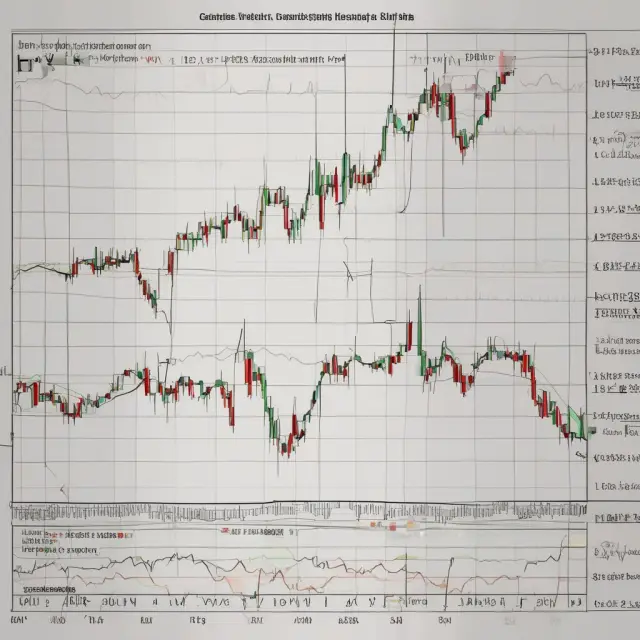
Technical Indicators in Finance: An Overview
Understanding Technical Indicators
Investors employ technical indicators to make informed trading decisions, specifically regarding buying and selling securities like stocks. Technical analysis, which uses these indicators, focuses on the relationship between a security’s price and volume over various time frames. Unlike fundamental analysis, which examines a company’s financial health, technical analysis disregards the underlying fundamentals of the asset. Instead, it relies on historical market data to identify trends, patterns, and signals. Technical indicators, such as the relative strength index (RSI) and Bollinger bands, generate buy and sell signals without requiring a profound understanding of the security’s financial health.
The Role of the Intraday Momentum Index (IMI) in Technical Analysis
Among various technical indicators is the Intraday Momentum Index (IMI), a powerful tool for short-term traders. Developed by market technician Tushar Chande, the IMI combines elements of candlestick analysis and the RSI to create overbought or oversold signals. The IMI evaluates a security’s price action intraday, focusing on the relationship between its open and close prices instead of daily price variations.
The Intraday Momentum Index (IMI) vs Other Indicators: A Comparison
While both the RSI and the Intraday Momentum Index (IMI) aim to generate buy and sell signals, they differ significantly in their approaches. The RSI, introduced by J. Welles Wilder Jr., measures the magnitude of recent price changes to evaluate overbought or oversold conditions. Conversely, the IMI examines daily price action through candlestick charting while integrating RSI concepts.
Understanding the Intraday Momentum Index (IMI) in Depth
The Intraday Momentum Index (IMI) is calculated using the following formula:
IMI = [(∑d=1nGains)+(∑d=1nLosses)]×100 / ∑d=1n Gains
where:
– d represents a day
– n indicates the number of days (usually 14)
– Gains is calculated as CP – OP, where OP is the opening price and CP is the closing price on up days.
– Losses is calculated as OP – CP, where OP is the opening price and CP is the closing price on down days.
The resulting number from this formula is then multiplied by 100 to yield a percentage. If the IMI value is above 70, the security is considered overbought, while a reading below 30 signifies that it is oversold. Investors usually examine the IMI on a daily basis for optimal results, although shorter time frames may be employed depending on trading strategies.
Advantages and Disadvantages of the Intraday Momentum Index (IMI)
The Intraday Momentum Index (IMI) provides numerous benefits to traders, including:
- Accurately identifying overbought or oversold conditions.
- Combining candlestick analysis and RSI concepts for improved accuracy.
- Enhancing short-term trading strategies by focusing on intraday price movements.
However, it is essential to acknowledge the IMI’s limitations:
- Overreliance on historical data can lead to inaccurate signals due to changing market conditions.
- Lack of consideration for fundamental factors could result in missed opportunities or increased risk.
- The need for daily price updates to maintain an accurate reading may be impractical for some traders.
Incorporating the Intraday Momentum Index (IMI) into Trading Strategies
When implementing the Intraday Momentum Index (IMI) in trading, it is crucial to combine it with other technical analysis tools. For instance, an oversold condition and a breakout from a chart pattern might suggest a profitable long position for traders. By employing multiple indicators and strategies, investors can optimize their chances of success in the financial markets.

Components of the Intraday Momentum Index (IMI)
The Intraday Momentum Index (IMI) is a technical analysis tool developed by market technician Tushar Chande that helps traders identify overbought or oversold conditions within a single trading day. It’s essential to understand how the IMI differs from other popular indicators like the Relative Strength Index (RSI). In this section, we dive deeper into the components of the IMI and its connection to both the RSI and candlestick charting.
Technical indicators are crucial tools used by traders and investors to anticipate a security’s price behavior based on historical data rather than analyzing fundamental factors. The Intraday Momentum Index (IMI) is an example of such a tool, focusing on the relationship between a security’s open and close prices during the day as opposed to comparing the open and close prices from one day to another.
The IMI shares some similarities with the RSI, particularly regarding the concept of overbought or oversold conditions. However, it differs in that it uses candlestick charting for identifying these conditions rather than relying solely on numerical readings like the RSI. Let’s explore how the IMI is calculated and its relation to both the RSI and candlestick analysis.
Calculating the Intraday Momentum Index (IMI)
The Intraday Momentum Index (IMI) is calculated using a straightforward but powerful formula that combines aspects of both the RSI and candlestick charting. The IMI looks at daily price data to determine how much a security has gained or lost over a certain period.
To calculate the IMI, first, we need to define some terms:
– Gains: The difference between the closing price (CP) and the opening price (OP), specifically on up days when the close is greater than the open.
– Losses: The difference between the opening price (OP) and the closing price (CP), specifically on down days when the open is less than the close.
Now, we can calculate the IMI using the following formula:
IMI = [ ∑ (Gains from Up Days) + ∑ (Losses from Down Days) ] × 100 / [∑ (Gains from Up Days) + ∑ (Losses from Down Days)]
This calculation provides a percentage value, which is then used to determine overbought or oversold conditions. A reading above 70 indicates an overbought condition, while a reading below 30 signals an oversold condition. Traders often look at the IMI for multiple days (for instance, 14 days) to get a clearer picture of the security’s price trend.
Comparing IMI and RSI: Similarities and Differences
The Intraday Momentum Index (IMI) and the Relative Strength Index (RSI) share some similarities, such as their focus on identifying overbought and oversold conditions using historical price data. However, there are notable differences between these two technical indicators. The primary distinctions include:
- Time frame: While both IMI and RSI can be applied to various time frames, the IMI is designed specifically for intraday trading. In contrast, the RSI is typically used with daily, weekly, or monthly data.
- Candlestick charting: The IMI integrates candlestick analysis in its methodology, whereas the RSI relies solely on numerical readings. This approach can provide additional insights for traders who prefer to use both quantitative and qualitative information when making trading decisions.
- Calculation: As previously mentioned, the Intraday Momentum Index (IMI) uses a more complex calculation compared to the RSI. Its formula takes into account both gains and losses over multiple days in addition to the current day’s price action.
In conclusion, understanding the intricacies of the Intraday Momentum Index (IMI) and its relation to other technical indicators like the Relative Strength Index (RSI) is crucial for traders seeking a comprehensive approach to intraday trading. By combining the insights gained from both candlestick charting and the IMI’s unique calculation, traders can potentially improve their ability to anticipate market conditions and make more informed decisions in the fast-paced world of intraday trading.
Interpreting IMI Signals
The Intraday Momentum Index (IMI) offers investors unique insights to determine the buying or selling opportunities of securities by examining their open and close prices throughout the day in comparison to their previous day’s closing price. This intraday indicator, derived from a combination of candlestick charting and the relative strength index (RSI), generates overbought or oversold signals to help traders make informed decisions.
Technical indicators such as the Intraday Momentum Index are essential tools for investors looking to capitalize on short-term price movements without relying solely on a security’s fundamental data. The IMI provides valuable information by examining the relationship between a security’s open and close prices, making it particularly suitable for intraday traders and short-term investors.
Candlestick charting plays a crucial role in the functioning of the Intraday Momentum Index. A candlestick chart represents the opening and closing prices for each day along with highs and lows as shadows above or below the real body. By using candlestick patterns, traders can easily recognize trends and identify potential price reversals.
The IMI formula calculates the ratio of gains to losses over a specific time frame. It is calculated as follows:
IMI = [Σ (Gains on Up Days) + Σ (Gains on Down Days)] / [Σ (Gains on Up Days) + Σ (Gains on Down Days) + Σ (Losses on Down Days)] × 100
Here, Gains = CP – OP and Losses = OP – CP. The calculation is based on the number of days in the chosen time frame, with 14 being the most common.
The Intraday Momentum Index generates trading signals when a security reaches overbought or oversold levels. An overbought condition occurs when the IMI reading exceeds 70%, while an oversold condition is indicated by an IMI reading below 30%. Traders can use these signals to enter long positions during oversold conditions and exit or short sell during overbought conditions.
A clear understanding of how to interpret IMI signals is crucial for traders seeking to maximize their profits in the dynamic world of finance. The following are some insights into recognizing and responding to various IMI signal scenarios:
1. Bullish signals: During periods when a security’s IMI is below 30%, it indicates an oversold condition, suggesting potential buying opportunities. A bullish trader may consider entering into a long position, anticipating the security’s price to recover. Conversely, a bearish investor might wait for a confirmation of a potential reversal before entering a short position.
2. Bearish signals: When a security’s IMI reading surpasses 70%, it indicates an overbought condition. Traders may then consider selling their holdings or shorting the security, expecting a decline in its price. Likewise, a bullish investor might wait for a confirmation of the reversal before re-entering a long position.
3. Reversal signals: A significant change in the IMI reading from overbought to oversold or vice versa can signal a potential trend reversal. For example, if a security moves from an overbought condition to an oversold one, it might be indicative of a bearish trend reversal, and traders might look for opportunities to enter short positions.
4. Consolidation signals: A prolonged period of IMI readings in the overbought or oversold zone can indicate a sideways trading range, with little directional price movement. Traders might consider taking a neutral stance during these periods, focusing on other indicators or market conditions to guide their decisions.
5. Continuation signals: A strong trend can be confirmed by an IMI reading that remains consistently overbought or oversold for extended periods. In such cases, traders may choose to maintain their positions and wait for a potential correction before considering any adjustments.
In conclusion, the Intraday Momentum Index (IMI) is a powerful technical indicator that offers valuable insights into buying and selling opportunities by detecting overbought or oversold conditions in securities. By understanding how to interpret IMI signals, traders can make informed decisions and enhance their chances of maximizing profits.

Calculating the Intraday Momentum Index (IMI)
The Intraday Momentum Index (IMI), designed by market technician Tushar Chande, is a technical tool combining aspects of candlestick analysis and the relative strength index (RSI). Unlike RSI, which analyzes the price difference between open and close values over several days, IMI evaluates the intraday relationship between these two variables. To grasp how this powerful indicator functions, let’s delve into its calculations, interpretation, and time frame.
Formula for Calculating IMI
The Intraday Momentum Index is calculated using the following formula:
IMI = [Σgains + Σlosses] ×100 / (Σgains + Σlosses)
Where,
– Gains = Current period’s CP – OP (Closing price minus Opening price on up days)
– Losses = OP – CP (Opening price minus Closing price on down days)
– CP: Closing price
– OP: Opening price
– Σgains, Σlosses: Sum of all gains and losses respectively over a specified period (e.g., 14 days)
– IMI is expressed as a percentage
This index is derived by summing up the gains on up days (when close > open) and losses on down days (open < close), then dividing that total by the sum of all gains and losses. The result is multiplied by 100 to obtain a final IMI value, expressed as a percentage. Interpreting IMI Signals: Technical analysts employ the Intraday Momentum Index (IMI) to recognize overbought or oversold conditions in securities, similar to the RSI. The primary difference lies in its intraday focus and use of candlestick charting. - Overbought: When IMI is above 70% - Oversold: When IMI is below 30% As a trader or investor, you would analyze the IMI over a specific time frame, typically 14 days, to make informed decisions and optimize your trading strategies. Comparing IMI to Other Indicators (RSI vs. IMI): The Intraday Momentum Index shares similarities with the RSI, as both indicators examine overbought or oversold conditions. However, their time frames differ significantly: RSI examines daily price data, whereas IMI analyzes intraday price movements. This makes IMI more suited for short-term traders and day trading strategies. Advantages of Using the Intraday Momentum Index (IMI): 1. Suitable for Short-Term Trading: Since the IMI calculates data intraday, it's an excellent tool for short-term traders and those looking for quick profit opportunities. 2. Visualizing Market Conditions: The index provides a clear picture of market momentum, allowing traders to visualize overbought or oversold conditions more effectively. 3. Faster Signals: Since IMI focuses on intraday price movements, it can generate signals faster than indicators like RSI and other popular tools. Disadvantages of Using the Intraday Momentum Index (IMI): 1. Complexity: The index might be more complex to calculate and interpret compared to simpler technical indicators. 2. Shorter-Term Focus: Since IMI is an intraday indicator, it may not be suitable for long-term investment strategies. 3. Limited Context: As with all indicators, the Intraday Momentum Index should be used in conjunction with other analytical tools to gain a comprehensive understanding of market conditions.

Comparing IMI to Other Indicators: RSI vs IMI
The Intraday Momentum Index (IMI) is an innovative technical indicator that combines elements of relative strength index (RSI) and candlestick charting, designed specifically for short-term traders. This section discusses how the IMI differs from the popular RSI and its advantages and disadvantages as a standalone tool in your trading arsenal.
Technical indicators provide valuable insights for traders seeking to make informed decisions about buying or selling securities without relying solely on fundamental analysis. Both the Intraday Momentum Index (IMI) and Relative Strength Index (RSI) are examples of these indicators, with key differences in their methodology and applications.
Technical analysts use indicators to evaluate a security’s price action over various time intervals. Both IMI and RSI focus on generating buy/sell signals based on trends and oscillations, but the methods they employ differ significantly.
Relative Strength Index (RSI)
The RSI is a momentum oscillator that measures the magnitude of recent price changes to determine overbought or oversold conditions within a security. It ranges from 0 to 100, with levels above 70 being considered overbought and levels below 30 indicating an oversold condition. The primary RSI calculation is based on comparing the average gain in price over a specific time frame (usually 14 days) to the average loss during the same period.
Intraday Momentum Index (IMI)
The Intraday Momentum Index (IMI), developed by market technician Tushar Chande, generates trading signals based on relative strength and candlestick charting. The IMI compares a security’s open and close price over the course of a day to identify potential overbought or oversold conditions. It calculates the ratio between gains (open to close) on up days and the sum of gains and losses during the same time period. This ratio is then multiplied by 100 and plotted against the security’s price chart.
Comparing IMI vs RSI
The primary difference between the Intraday Momentum Index (IMI) and Relative Strength Index (RSI) lies in their calculation methods. While RSI compares gains to losses over a specific time interval, the IMI focuses on the relationship between a security’s open and close price on any given day. Both indicators aim to provide insight into buying or selling opportunities; however, they do so by analyzing different aspects of price action.
Furthermore, the Intraday Momentum Index (IMI) is typically more responsive than RSI due to its focus on intraday price movements. Traders using IMI might find it provides more timely buy/sell signals compared to RSI, especially when seeking to capitalize on short-term trends or swings.
Advantages of Using the Intraday Momentum Index (IMI)
The Intraday Momentum Index (IMI) offers several advantages over other technical indicators like RSI, particularly for traders who focus on intraday price movements. Some advantages include:
- Combines RSI and candlestick charting: The IMI incorporates elements of both the RSI and candlestick analysis to provide a more comprehensive trading signal.
- Responsiveness to short-term trends: As its name suggests, the Intraday Momentum Index (IMI) is designed for intraday traders who wish to capitalize on short-term price movements.
- Timely buy/sell signals: IMI provides more immediate buy/sell signals than RSI due to its focus on the current day’s open and close prices.
- Can be used alongside other indicators: Many traders use the Intraday Momentum Index (IMI) in conjunction with other technical analysis tools for a more comprehensive view of security price movements.
Disadvantages of Using the Intraday Momentum Index (IMI)
While the Intraday Momentum Index (IMI) offers several advantages over other indicators, it’s important to note that no indicator is without limitations. Some potential disadvantages include:
- Limited time frame: The IMI is designed for intraday trading and does not provide insight into long-term trends or price movements.
- Requires constant attention: Due to its focus on short-term price movements, the Intraday Momentum Index (IMI) demands continuous monitoring from traders seeking to profit from its signals.
- Prone to false signals: The IMI is susceptible to generating false buy/sell signals, especially when used in isolation without confirmation from other indicators or chart patterns.
- Complex calculation: The calculation of the Intraday Momentum Index (IMI) may be more complex than that of simpler indicators like the moving average or RSI, making it less accessible to novice traders.
In conclusion, the Intraday Momentum Index (IMI) and Relative Strength Index (RSI) are essential technical indicators for short-term traders who seek insights into buying or selling opportunities based on price trends and momentum. While both indicators provide valuable information, they differ significantly in their calculation methods and applications. The Intraday Momentum Index (IMI) offers the advantage of being more responsive to intraday price movements and combining elements of RSI and candlestick analysis; however, it requires constant attention and may be prone to generating false signals. By understanding both indicators and their unique characteristics, traders can effectively employ them as part of a well-rounded technical analysis strategy.
Advantages of Using the Intraday Momentum Index (IMI)
The Intraday Momentum Index (IMI), developed by market technician Tushar Chande, offers several advantages for short-term traders looking to make informed decisions. This technical indicator combines aspects of candlestick analysis with the relative strength index (RSI). By examining a security’s open and close price within a single trading day rather than between days, it provides valuable insights into potential overbought or oversold conditions.
Understanding the Role of Indicators
Investors use technical indicators to estimate buying or selling opportunities based on a security’s price movements without relying solely on its fundamental data. The Intraday Momentum Index (IMI) is especially beneficial for short-term traders due to its ability to quickly recognize these conditions using relative strength and candlestick charting techniques.
Comparing IMI to RSI
Like the RSI, the Intraday Momentum Index (IMI) seeks to generate overbought or oversold signals without examining a security’s underlying fundamentals. However, while the RSI compares the gains and losses of consecutive days, the IMI focuses on the relationship between a security’s open and close price within a single day. This unique approach makes the IMI more suitable for short-term traders looking to capitalize on intraday trends.
Calculating the Intraday Momentum Index (IMI)
The formula for calculating the IMI involves finding the sum of gains and losses over a specific number of days, then dividing the sum of gains by the total sum of gains and losses. The resulting number is multiplied by 100 to yield a percentage value. Traders can interpret this percentage as follows: readings above 70 indicate overbought conditions, while readings below 30 suggest oversold conditions.
Real-Life Applications
In practice, the IMI allows traders to anticipate when a security is overbought or oversold by observing its behavior throughout the day. For instance, an investor might look for confirmation from other technical indicators such as chart patterns before entering into a trade based on the IMI’s signals. This strategy can increase the chances of successful trades and ultimately contribute to more profitable portfolio management.
In summary, the Intraday Momentum Index (IMI) offers short-term traders an advantageous tool for recognizing overbought or oversold conditions within a single trading day using both candlestick charting and RSI components. By combining this information with other technical indicators and chart patterns, investors can maximize their chances of successful trades while effectively managing their portfolios in the dynamic world of finance.

Disadvantages of Using the Intraday Momentum Index (IMI)
While the Intraday Momentum Index (IMI) offers various advantages, it also presents some limitations that traders and investors must consider before integrating it into their strategies. Let’s delve deeper into the potential disadvantages of using this intraday technical indicator.
1. Limited to Short-Term Trading: The Intraday Momentum Index (IMI) is primarily designed for short-term traders and intraday strategies due to its focus on day-to-day price movements. This may not be suitable for long-term investors as it does not provide insights into the underlying fundamentals or trends of a security over extended periods.
2. Volatility: The IMI can sometimes generate false signals, especially during periods of high volatility. Since it focuses on short-term price movements, the indicator might generate an excessive number of buy/sell signals in volatile markets, increasing the chances of whipsaw trades and potential losses for traders.
3. Overreliance: Relying solely on the Intraday Momentum Index (IMI) to make trading decisions can lead to missed opportunities or potential losses. The IMI should not be the sole indicator used when making trading decisions, as it does not provide a complete view of the market conditions and security’s performance.
4. Not Suitable for All Markets: The Intraday Momentum Index (IMI) might not perform consistently across all financial instruments or markets. For example, it may be more effective in certain asset classes like equities compared to others such as futures, currencies, or fixed-income securities.
5. Complexity: The IMI involves calculating the relative strength index (RSI) and applying it to a daily timeframe while considering candlestick charting. While the indicator offers valuable insights, its complexity can make it difficult for novice traders to fully understand and apply effectively. Additionally, manual calculations or frequent recalculations can be time-consuming and resource-intensive.
To mitigate these disadvantages, investors might consider combining the Intraday Momentum Index (IMI) with other technical indicators or fundamental analysis methods to gain a more comprehensive view of their trading instruments. It is crucial to remember that no single indicator can guarantee consistent profits or infallible market predictions. Always conducting thorough research and staying informed about market conditions, as well as remaining mindful of risk management strategies, will help traders maximize the potential benefits of using the IMI while minimizing its drawbacks.

Applying the Intraday Momentum Index (IMI) in Real Trading
The Intraday Momentum Index (IMI), as mentioned, is a powerful technical indicator that can be effectively applied by traders to recognize overbought or oversold conditions in securities throughout the trading day. By utilizing this index alongside other tools and indicators, short-term traders can enhance their decision-making process and maximize potential profits.
Considering the IMI’s unique combination of aspects from RSI and candlestick charting, it can generate trading signals that cater to those who favor a more intraday approach in their investment strategies. Here’s a closer look at how this might work in practice:
1. Identifying Overbought or Oversold Conditions: The IMI helps traders determine whether the security is overbought or oversold based on its relationship between open and closing prices, as opposed to daily price movements. This intraday focus provides valuable insights for short-term traders who are looking for quick opportunities in the market.
2. Utilizing Multiple Time Frames: While the IMI can be calculated using various time frames (such as 14 or even 7 days), a common approach is to use multiple timeframes simultaneously. For instance, a trader might observe the IMI on a minute-by-minute basis along with hourly or daily charts for more comprehensive analysis.
3. Combining IMI with Other Indicators and Chart Patterns: Technical analysts can augment their trading signals by using the IMI in conjunction with other indicators, such as moving averages or Fibonacci retracements. Additionally, the identification of chart patterns, like head-and-shoulders or triangles, can provide further confirmation when considering entry and exit points.
4. Example: Consider a situation where an investor notices that a specific stock has formed an oversold condition in accordance with the IMI (reading below 30). Additionally, this stock is displaying a bullish reversal candlestick pattern like a hammer or inverted hammer. In this scenario, combining these signals might provide sufficient confidence for the trader to initiate a long position, hoping to capitalize on potential price recovery.
Overall, the Intraday Momentum Index (IMI) can prove to be a valuable tool for short-term traders seeking to make informed decisions based on intraday market conditions. As always, it is essential to remember that no single indicator guarantees success and that proper risk management strategies should be in place when entering the markets.
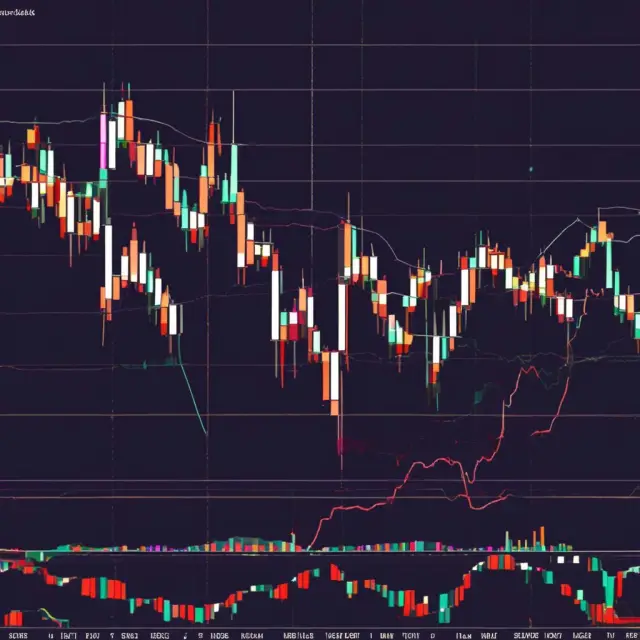
FAQ: Commonly Asked Questions about the Intraday Momentum Index (IMI)
**What is the Intraday Momentum Index (IMI)?**
The Intraday Momentum Index (IMI) is a technical indicator that combines aspects of candlestick analysis with the relative strength index (RSI) to generate overbought or oversold signals. Developed by market technician Tushar Chande, this intraday indicator is particularly popular among short-term traders seeking to make informed decisions based on price and volume movements within a single trading day.
**How does the Intraday Momentum Index (IMI) differ from other technical indicators?**
Compared to other technical indicators, like moving averages or Bollinger bands, the IMI provides additional insights by analyzing the relationship between a security’s open and close price over the course of a day. The indicator uses elements of RSI, such as up closes and down closes, alongside candlestick charting for enhanced accuracy in identifying overbought or oversold conditions.
**How does one calculate the Intraday Momentum Index (IMI)?**
Calculating the IMI involves summing up gains on up days (when close > open) and losses on down days (when open < close), then dividing the total of gains by the sum of gains and losses. The result is multiplied by 100 to express it as a percentage. Traders typically analyze the IMI over a period of 14 days, with the 70 level indicating an overbought condition and the 30 level indicating oversold conditions.
**What are some advantages of using the Intraday Momentum Index (IMI) for trading?**
The IMI is beneficial for short-term traders as it provides a more precise understanding of price momentum within a day. By combining RSI and candlestick charting, the IMI can offer enhanced insight into overbought and oversold conditions compared to using either one independently. Additionally, it may help in identifying potential breakout opportunities from chart patterns and other technical formations.
**What are some limitations of the Intraday Momentum Index (IMI)?**
It's essential to remember that the IMI is not infallible and its signals should be used as part of a broader analysis, rather than relying on it solely for decision-making. Since the indicator focuses only on price movements within a single day, it may not account for larger trends or fundamental factors affecting the security.
**Can the Intraday Momentum Index (IMI) be used for long-term investing?**
The IMI is generally more suitable for short-term trading strategies due to its focus on intraday price movements and the frequent generation of signals. Long-term investors may find other technical indicators, such as moving averages or trend lines, more effective in their investment approach.
 Next entry · No. 2,479Understanding Intraday Trading: Strategies and Advantages for Day Traders
See also
-
 No. 1,128
01 Aug 2024
19 min
Understanding Downtrends in Finance: Characteristics, Identification, and Impact
Business Finance
No. 1,128
01 Aug 2024
19 min
Understanding Downtrends in Finance: Characteristics, Identification, and Impact
Business Finance -
 No. 1,733
29 Oct 2024
20 min
Understanding Gamma Neutral Strategies: Achieving Delta and Volatility Hedging in Options Trading
Business Strategy
No. 1,733
29 Oct 2024
20 min
Understanding Gamma Neutral Strategies: Achieving Delta and Volatility Hedging in Options Trading
Business Strategy -
 No. 1,110
29 Jul 2024
19 min
Understanding Donchian Channels: Identifying Trends and Extremes in Finance
Financial Education
No. 1,110
29 Jul 2024
19 min
Understanding Donchian Channels: Identifying Trends and Extremes in Finance
Financial Education -
 No. 785
08 Jun 2024
21 min
The Comprehensive Guide to Understanding and Utilizing Correlation Coefficients in Finance and Investing
Financial Tools
No. 785
08 Jun 2024
21 min
The Comprehensive Guide to Understanding and Utilizing Correlation Coefficients in Finance and Investing
Financial Tools -
 No. 4,916
27 Jul 2025
22 min
Understanding Technical Indicators: A Comprehensive Guide for Institutional Investors
Business Finance
No. 4,916
27 Jul 2025
22 min
Understanding Technical Indicators: A Comprehensive Guide for Institutional Investors
Business Finance -
 No. 4,897
26 Jul 2025
18 min
Understanding Tax-Sheltered Annuities: How They Work and Their Differences from 401(k)s
Business Finance
No. 4,897
26 Jul 2025
18 min
Understanding Tax-Sheltered Annuities: How They Work and Their Differences from 401(k)s
Business Finance