Understanding the K-Ratio: Measuring Consistency of Equity Returns

Understanding the K-Ratio: A valuation metric measuring equity returns' consistency over time. Learn how to calculate, interpret and apply this essential…
Introduction to the K-Ratio
The K-ratio is a vital tool for investors seeking to assess the consistency of returns generated by equities over an extended period. Developed in 2003 by derivatives trader and statistician Lars Kestner, this valuation metric provides valuable insights into a security’s performance trend, offering a more comprehensive perspective than traditional point-in-time metrics (Kestner, 2003). By measuring risk versus return, the K-ratio is designed to address the investor’s primary concerns – returns and consistency.
The K-Ratio: A Solution for Return Analysis Gap
Understanding the historical context, Kestner recognized a gap in how returns had been analyzed up until that point. Traditional measures like the Sharpe ratio focused on calculating risk-adjusted performance based on volatility but did not consider the order or sequence of returns (Kestner, 2003). In response, Kestner designed his K-ratio to measure an equity’s stability and reliability by examining its return trend over time.
Calculating the K-Ratio: Methodology and Components
The K-ratio calculation process begins with the Value-Added Monthly Index (VAMI) method, which tracks the progress of a $1,000 initial investment in the security under evaluation using linear regression. The resulting regression analysis provides essential data to calculate the K-ratio’s components – the slope and standard error.
Slope and Standard Error Interpretation
The slope represents the security’s return, while the standard error indicates its risk level. A high positive slope implies a strong trend of consistent returns, whereas a large standard error signifies increased risk (Kestner, 2003). Understanding these components offers investors a more nuanced view of an equity’s risk and potential rewards.
Comparing K-Ratios Across Equities, Portfolios, and Managers
By analyzing the K-ratios of various equities, portfolios, or managers, investors can assess their consistency in generating returns over time and make more informed decisions based on these trends. This comparison can also reveal differences across asset classes, styles, and historical periods.
In Practice: Using the K-Ratio for Informed Decisions
The K-ratio is an essential addition to the investor’s toolkit, providing a more holistic perspective on returns and risk. By utilizing this metric alongside other performance measures like the Sharpe ratio, investors can make well-informed decisions based on both point-in-time snapshots and extended trend analysis.
References:
Kestner, L. (2003). The K-Ratio: A Measure of Consistency in Return. Journal of Portfolio Management, 29(4), 75-81.

The Concept behind the K-Ratio
In today’s ever-evolving financial markets, investors are always seeking new ways to assess the performance of their investments and gauge potential risks. Enter the K-ratio, a powerful valuation metric that offers an intriguing perspective on equity returns by focusing on their consistency over time. Developed by derivatives trader and statistician Lars Kestner in 2001, the K-ratio is designed to provide a more nuanced understanding of risk versus return for investors.
To appreciate the significance of the K-ratio, it’s essential to recognize that traditional performance measures, such as the Sharpe ratio, focus solely on the difference between returns and risk. However, they do not consider the order or sequence in which those returns occur. This shortcoming led Kestner to develop a new approach: The K-Ratio.
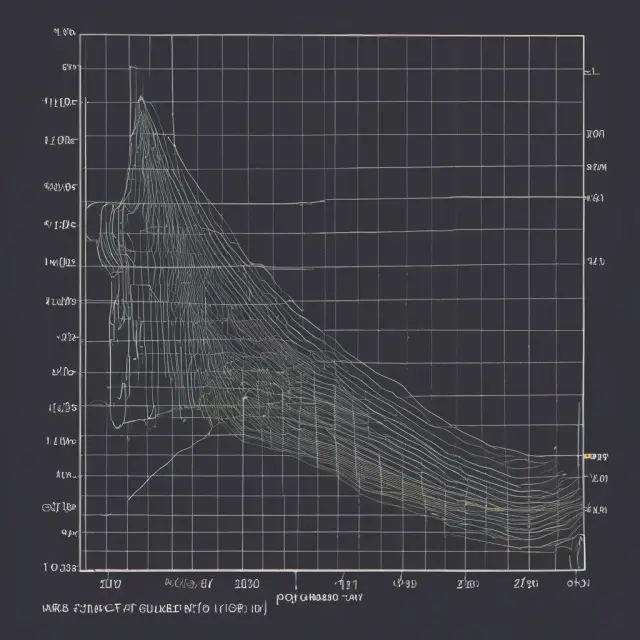
The K-ratio is calculated using a Value-Added Monthly Index (VAMI), which tracks the progress of a $1,000 initial investment over time. By applying linear regression to the logarithmic cumulative return of this VAMI curve, we can uncover valuable insights about an equity’s consistency of returns.
The K-ratio consists of two primary components: The slope and standard error. The slope signifies the return on investment, which should ideally be positive, while the standard error represents the risk associated with those returns. A high positive slope implies a strong trend in the security’s returns, suggesting lower downside volatility and potentially reduced overall risk for investors. Conversely, a low or negative slope suggests a volatile security that may require additional consideration before investment.
It’s important to note that the K-ratio is not meant to replace other performance measures but rather complement them. By understanding both the return trend and its volatility, investors can make more informed decisions based on their risk tolerance and investment objectives.
In the next section, we will dive deeper into how to calculate the K-ratio using linear regression and the VAMI curve. Stay tuned!
Calculating the K-Ratio
The K-ratio is a valuable valuation metric that explores the consistency of an equity’s return over its entire history, providing investors with insights into potential risk-return profiles. Developed by derivatives trader and statistician Lars Kestner, this ratio can be calculated using linear regression and Value-Added Monthly Index (VAMI) data (Kestner, 2003).
The calculation process begins by analyzing a security’s historical monthly returns using the VAMI curve. The value-added monthly index represents the excess return of an investment over its risk-free rate or benchmark index. To calculate the K-ratio, investors first perform linear regression on the logarithmic cumulative return of the VAMI curve. This analysis helps determine the return and risk components associated with the equity.
The primary components of the K-ratio include:
- The slope – This represents the return component of the ratio, which ideally should be positive as it indicates the overall direction of returns for the equity.
- The standard error – This value signifies the level of risk associated with the equity’s historical returns. A smaller standard error implies more consistent or lower-risk returns, while a larger one suggests greater volatility or uncertainty.
To calculate the K-ratio itself, investors use the following formula: K-Ratio = (Slope) / Standard Error
By taking the ratio of the return to risk components, the K-ratio provides a single metric that enables comparisons between different equities, portfolios, or managers based on their consistency of returns over time. This can be particularly useful when evaluating investment strategies and making informed decisions about potential investments.
For instance, a higher K-ratio indicates greater consistency in an equity’s historical performance relative to its risk level. Conversely, a lower K-ratio may suggest that the security has provided inconsistent returns or higher volatility compared to other options.
It is important to note that the K-ratio is just one of many performance measures and should be considered in conjunction with others, such as the Sharpe ratio, when making investment decisions. By understanding the strengths and limitations of each measure, investors can make more informed choices and potentially achieve their financial goals more effectively.
In conclusion, calculating the K-ratio offers investors a valuable tool for analyzing equity performance by considering both the return component and its corresponding risk, as well as the order in which returns occur. This information allows for a more comprehensive evaluation of potential investments and can contribute to more informed decision-making processes.
Components of the K-Ratio
The K-ratio, developed by derivatives trader and statistician Lars Kestner, is a valuation metric that provides insights into an equity’s consistency of returns over its entire history. This ratio can be crucial for investors to assess risk versus return, as understanding the order and trend of returns plays a pivotal role in making informed investment decisions.
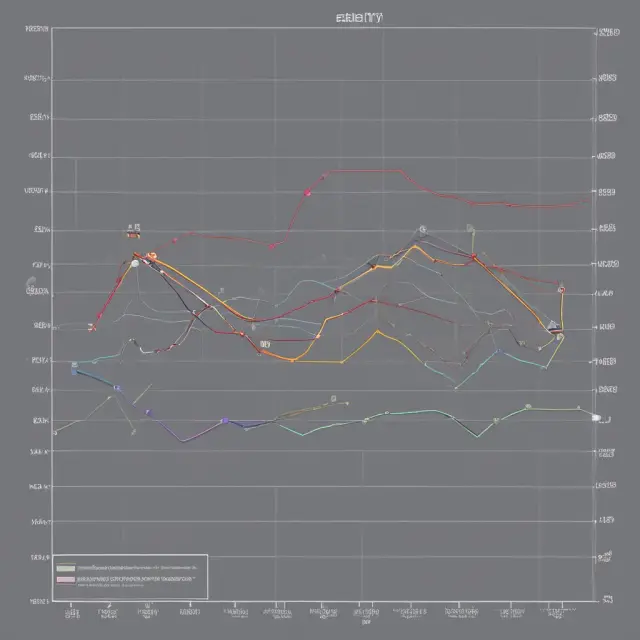
To calculate the K-ratio, first, we need to comprehend its components – the slope and standard error. The calculation is based on the Value-Added Monthly Index (VAMI), which uses linear regression to analyze the progress of a $1,000 initial investment in a security being assessed.
The K-ratio formula can be represented as:
K-ratio = Slope / Standard Error
For n return periods in the monthly return data, this ratio’s calculation involves determining the linear regression line of the VAMI curve’s logarithmic cumulative returns.
The slope signifies the equity’s returns, which should ideally be positive, as it indicates an increase over time. On the other hand, the standard error of the slope represents the risk involved with the security’s return – a measure of volatility or dispersion from the expected regression line. The larger the standard error, the greater the risk associated with that equity.
Kestner introduced modifications to the original K-ratio formula in 2003 and 2013, changing the denominator to include the number of return data points and adding a square root calculation to the numerator, respectively.
This ratio is particularly valuable for investors, as it considers both the returns themselves and their order to measure risk. The K-ratio can be compared across different equities, portfolios, or managers to evaluate performance trends over time. It offers more extensive insights than widely used measures like the Sharpe Ratio by considering the sequence of returns.
When using this ratio in practice, remember it is essential to analyze the K-ratios of multiple securities together to fully understand their risk and return characteristics. In addition to individual stock assessments, K-ratios can also be calculated for various asset classes, such as domestic stocks, bonds, or emerging market equities, providing a comprehensive comparison between them.
In conclusion, understanding the slope and standard error components of the K-ratio is essential for investors to make well-informed decisions about investment risks and returns over time. The ratio’s ability to assess both returns and their sequence sets it apart from other commonly used performance measures, allowing for a more comprehensive evaluation of potential investment opportunities.

Comparing K-Ratios
The K-ratio is an essential tool to understand the consistency of equity returns over time, but it is also important to know how to compare K-ratios across different securities, portfolios, or managers for meaningful insights. In this section, we’ll discuss how to interpret and compare K-ratios to better understand their significance in a comparative context.
First, it’s essential to remember that the K-ratio is calculated using a logarithmic cumulative return curve. This means that higher slopes represent more consistent returns over time, while lower slopes suggest a more volatile and less predictable trend. The standard error of the slope in the calculation represents the risk associated with the return stream. Comparing K-ratios of different securities can provide valuable insights into their respective risks and rewards.
When comparing K-ratios, keep in mind that it’s not just about looking at absolute numbers; context is crucial. For instance, a security with a higher K-ratio might appear more attractive than one with a lower K-ratio at first glance, but it could be part of a high-risk sector where volatility is expected. In contrast, a lower-rated security in a stable sector may have a lower K-ratio due to its predictable returns.
Comparing the K-ratios of different time periods or investment horizons can also provide valuable insights. For example, analyzing a company’s historical K-ratio trends could help investors understand whether the recent performance is typical for that security, or if it represents an anomaly. It’s essential to consider factors such as economic conditions and sector trends when comparing K-ratios over extended periods.
Moreover, the K-ratio can be a useful tool when analyzing multiple securities within a portfolio context. By calculating the K-ratios for various securities held in a portfolio and comparing them, investors can assess the overall risk and return profile of their portfolio. This information is particularly valuable when rebalancing or making new investments, as it allows for better informed decisions based on consistent and long-term performance trends.
Additionally, K-ratios are not only limited to individual securities but can be calculated for entire asset classes or investment strategies. Comparing the K-ratios of different asset classes such as stocks versus bonds can provide insights into their respective levels of risk and reward, as well as the overall diversification benefits offered by a multi-asset class portfolio.
Lastly, it’s important to remember that the K-ratio should not be considered in isolation when making investment decisions. Instead, it should be used as one of several tools to assess performance and manage risk in an informed manner. The K-ratio offers valuable insights into the consistency of returns over time and can help investors make more informed decisions when comparing securities or asset classes.

Using the K-Ratio in Practice
The K-ratio has proven to be an essential tool for investors when evaluating equity returns’ consistency over time. By combining the returns themselves with their order, K-ratios offer a more comprehensive analysis of risk versus return compared to traditional performance measures, such as Sharpe Ratios (1). In practice, this ratio is valuable in various applications:
1. Comparing cumulative returns for different equities or managers: By comparing K-ratios between securities, investors can gain insights into how consistently each equity has produced its returns over time. A higher K-ratio indicates greater consistency and potentially lower risk. In a competitive market where choosing the best investment opportunity is crucial, this information could make all the difference in a portfolio’s performance.
2. Analyzing different styles or asset classes: The K-ratio can be calculated across various equity style categories, such as small cap versus large cap, value versus growth, and growth at a reasonable price (GARP) versus momentum. By examining these ratios side by side, investors can understand which investment approach has been more consistent historically. Moreover, the K-ratio’s application is not limited to equities; it can also be calculated for bonds, revealing trends in fixed income returns.
3. Assessing individual fund managers: The K-ratio offers a valuable perspective when evaluating the performance of professional money managers. Investors may use this ratio as part of their due diligence process to determine if a particular fund manager has consistently added value to the portfolio over time, leading to superior risk-adjusted returns.
When interpreting K-ratios, it’s important to remember that higher values represent more consistent performance with lower volatility and risk. However, as with any investment tool or metric, limitations exist:
1. Short-term inconsistencies: Since the K-ratio evaluates an asset’s performance over an extended period, it might not capture short-term market inefficiencies or anomalies that could affect a security’s price in the moment. It is crucial to supplement this metric with other analysis and indicators.
2. Data availability: To calculate the K-ratio, investors need access to historical data for a given equity or portfolio. If such data is limited or incomplete, it may be challenging to obtain an accurate and reliable K-ratio. In these situations, it’s essential to consider alternative methods or performance measures to draw informed conclusions about the investment opportunity being evaluated.
In conclusion, the K-ratio’s ability to analyze risk versus return by considering both returns and their order offers investors valuable insights when evaluating equity performance over time. This metric can be employed in various applications, from comparing stocks and managers to assessing different asset classes or investment styles. By combining the K-ratio with other performance measures and analysis techniques, investors can make more informed decisions and potentially enhance portfolio returns while minimizing risk.
References: (1) Kestner, L., & Fung, W. Y. (2003). A new ratio of performance measurement for mutual funds: The k-ratio. Financial Analysts Journal, 59(3), 88-101.

Comparing K-Ratios to Other Performance Measures
The K-ratio, as a valuation metric, offers a unique perspective on assessing equity returns over time. However, it is not the only performance measure available for investors in the market. Another popular metric that has been used extensively for risk-adjusted return analysis is the Sharpe Ratio (SR). Both metrics provide valuable insights, but they have distinct differences in how they calculate and interpret risk-adjusted returns.
The Sharpe ratio measures the excess return per unit of volatility for an investment or a portfolio. It calculates the difference between the return on an asset and the risk-free rate divided by the standard deviation of returns. The SR formula is as follows:
Sharpe Ratio = (Return – Risk Free Rate) / Standard Deviation
Comparing K-Ratios to Sharpe Ratios
The primary difference between these two metrics lies in their approach to risk measurement and how they treat return sequences. The K-ratio examines the consistency of an equity’s returns over time by analyzing the entire sequence of returns, whereas the Sharpe ratio focuses on a single point in time (the most recent period).
The K-ratio considers both the magnitude and order of returns in measuring risk. This approach makes it more comprehensive when evaluating long-term investment performance. In contrast, the Sharpe ratio only takes into account the volatility or standard deviation of returns. While it effectively measures the reward for taking on a given level of risk, it does not provide information on the stability or consistency of those returns over time.
Example: Consider two hypothetical stocks, Stock A and Stock B. Both have the same average annual return of 10%, but their respective standard deviations are different: Stock A has a standard deviation of 5% while Stock B’s standard deviation is 12%. According to the Sharpe ratio, Stock A would appear more desirable since it has lower volatility than Stock B. However, the K-ratio would offer a different perspective by examining the consistency and trend of their returns over an extended period.
In summary, neither the K-ratio nor the Sharpe ratio is inherently better or worse; they each provide unique insights into investment performance. Investors can benefit from using both metrics to obtain a more complete picture of equity risk-adjusted returns when making informed investment decisions.

K-Ratios Across Asset Classes
The consistency of returns is essential for investors when assessing the risks and rewards of various investments, but it’s crucial to understand that different asset classes exhibit varying degrees of return volatility. In this section, we delve into how K-ratios differ across asset classes such as stocks, bonds, and emerging market stocks.
Stocks:
The K-ratio is commonly used in assessing stock returns due to the inherent volatility that comes with equity investments. Stocks exhibit a more considerable range of returns compared to other investment vehicles like bonds, presenting both opportunities for significant gains and potential losses. When examining individual equities or comparing different stocks, the consistency of their returns over time, as captured by their K-ratios, provides valuable insights into risk-adjusted performance.
Bonds:
For fixed income securities like bonds, the K-ratio can still be applied to evaluate the consistency of returns; however, it is important to keep in mind that bonds typically have lower volatility compared to equities. In practice, this means that bond K-ratios may indicate less variation, as their return trends are generally more stable. When comparing K-ratios for stocks and bonds, investors should remember that the former’s larger swings in returns will often result in higher K-ratios.
Emerging Market Stocks
The application of the K-ratio extends beyond developed markets to emerging market equities as well. Emerging markets can be highly volatile due to economic instability, political unrest, or other external factors. The use of K-ratios in assessing emerging markets’ consistency of returns can help investors navigate this riskier investment terrain by providing a more complete picture of potential rewards and risks.
Comparing K-Ratios across asset classes offers valuable insights into the risk-reward tradeoffs involved in constructing a well-diversified portfolio. By understanding the differences in return consistency between various assets, investors can optimize their investments to align with their investment objectives and tolerance for risk.

History and Evolution of the K-Ratio
The K-ratio, introduced in 2001 by derivatives trader and statistician Lars Kestner, is a valuation metric specifically designed to measure an equity’s consistency of returns over time. This ratio gained prominence as a response to the perceived gap in how return analysis had traditionally been approached. With investors focusing on both returns and consistency, Kestner developed his K-ratio as a unique tool to assess risk versus return by examining the steadiness of an equity’s returns through the lens of its historical data.
Kestner’s initial K-ratio formula involved calculating the ratio using a Value-Added Monthly Index (VAMI). The VAMI employs linear regression on the logarithmic cumulative return of the index or security being analyzed, generating a slope representing the return and a standard error for the risk.
In 2003, Kestner introduced modifications to the K-ratio formula. He added the number of return data points in the denominator, resulting in a more straightforward calculation for users. In 2013, he further refined the ratio by introducing a square root calculation in the numerator, enhancing its accuracy and comparability across asset classes (1).
The K-ratio is an essential tool to assess equity performance because it goes beyond point-in-time snapshots, focusing on return trends over time. This feature sets it apart from other performance measures like Sharpe ratio, which primarily concentrate on the distribution of returns around a mean but disregard their order (2). The K-ratio allows for meaningful comparisons of cumulative returns between different equities, styles, or fund managers, making it an invaluable resource for investors looking to gauge performance consistency.
In practice, K-ratios can be calculated and analyzed across various asset classes such as domestic stocks, bonds, and emerging market stocks, as well as within specific style categories (large-cap versus small-cap) and time periods. These ratios provide investors with a comprehensive view of investment options, enabling informed decisions based on both historical returns and their consistency over time.
The evolution of the K-ratio underscores its versatility and adaptability to changing market conditions, underscoring its importance as a valuable tool for today’s investors seeking to measure and maximize risk-adjusted returns in an ever-changing economic landscape.
References: 1. Kestner, L. (2003). An alternative measure of performance: The K-ratio. Technical Analysis of Stocks & Commodities, 25(9), 46-53.
2. Kestner, L. (2013). Risk and return in stocks: A new approach. Journal of Performance Measurement, 16(4), 15-21.

FAQs about the K-Ratio
What exactly is the K-ratio, and what does it measure in finance and investment?
The K-ratio is a valuable valuation metric that assesses an equity’s consistency of returns over an extended period. It was developed by Lars Kestner as a means to address a perceived gap in traditional return analysis for investors, who are primarily interested in both returns and risk. The K-ratio is calculated using the value-added monthly index (VAMI), a methodology that employs linear regression to track the progress of a hypothetical $1,000 investment in a specific security.
How does the K-ratio calculation process work?
The formula for calculating the K-ratio involves determining the slope and standard error from the linear regression of the logarithmic cumulative return data for a VAMI curve. The positive slope represents the return, while the standard error, which is the risk measurement, indicates how much the returns deviate from the expected line.
What sets the K-ratio apart from other performance measures like Sharpe Ratio?
Unlike the Sharpe Ratio, which focuses on the excess return of an investment over a risk-free rate, the K-ratio considers both the returns and their order in determining the risk. The K-ratio is more suitable for evaluating the long-term consistency of returns from an equity or portfolio, whereas the Sharpe Ratio provides a snapshot of risk-adjusted performance at a specific point in time.
Is it possible to use the K-ratio when analyzing bonds instead of equities?
Yes, the K-ratio can indeed be used for bond analysis as well. However, the interpretation and expectations will differ from those of equity analysis, given the inherent differences between stocks and bonds.
What factors affect the K-ratio for various asset classes?
The K-ratios across different asset classes (stocks versus bonds versus emerging market stocks) can vary significantly, influenced by factors like volatility, return patterns, and risk expectations. A deeper understanding of these variations is crucial to effectively apply the K-ratio in investment decision making.
Can the K-ratio be used to compare cumulative returns for different funds or equity managers?
Absolutely! The K-ratio enables investors to compare the consistency of cumulative returns for various equities, funds, and even managers over extended periods, providing valuable insights into their performance and risk profiles.
What modifications have been made to the original K-ratio formula since its introduction?
Since its initial development in 2003, Lars Kestner has introduced two further modifications to the K-ratio calculation: a version that includes the number of return data points in the denominator, and another that adds a square root calculation to the numerator. These enhancements have expanded the usefulness of the K-ratio in different contexts.
 Next entry · No. 2,737Krugerrands: A Comprehensive Guide for Institutional and Professional Investors
See also
-
 No. 3,843
01 May 2025
20 min
Understanding the Overall Liquidity Ratio: Calculation, Significance, and Comparison with Quick and Current Ratios
Finance Policy
No. 3,843
01 May 2025
20 min
Understanding the Overall Liquidity Ratio: Calculation, Significance, and Comparison with Quick and Current Ratios
Finance Policy -
 No. 4,946
30 Jul 2025
17 min
Total Enterprise Value (TEV) – A Comprehensive Guide to Understanding This Valuation Metric
Business Finance
No. 4,946
30 Jul 2025
17 min
Total Enterprise Value (TEV) – A Comprehensive Guide to Understanding This Valuation Metric
Business Finance -
 No. 4,657
06 Jul 2025
18 min
Understanding Short-Term Debt: Types, Importance, and Liquidity Ratios
Business Finance
No. 4,657
06 Jul 2025
18 min
Understanding Short-Term Debt: Types, Importance, and Liquidity Ratios
Business Finance -
 No. 4,249
03 Jun 2025
21 min
Quick Ratio: Understanding this Important Liquidity Measurement for Institutional Investors
Business Finance
No. 4,249
03 Jun 2025
21 min
Quick Ratio: Understanding this Important Liquidity Measurement for Institutional Investors
Business Finance -
 No. 4,069
19 May 2025
22 min
Price to Free Cash Flow Ratio: A Valuable Metric for Institutional Investors
Business Finance
No. 4,069
19 May 2025
22 min
Price to Free Cash Flow Ratio: A Valuable Metric for Institutional Investors
Business Finance -
 No. 2,922
14 Feb 2025
19 min
Understanding Liquidity Ratios: Assessing a Company’s Ability to Pay Short-Term Debts
Business Finance
No. 2,922
14 Feb 2025
19 min
Understanding Liquidity Ratios: Assessing a Company’s Ability to Pay Short-Term Debts
Business Finance