Understanding the Marginal Rate of Technical Substitution in Finance and Investment

Learn about Marginal Rate of Technical Substitution in finance, understand its significance through visual isoquants and formulas. Explore impact on firm…
Introduction to the Marginal Rate of Technical Substitution (MRTS)
The concept of Marginal Rate of Technical Substitution (MRTS) in finance and investment represents a critical aspect of understanding how factors like labor and capital can be optimally utilized within a firm while maintaining a consistent level of production output. MRTS demonstrates the rate at which one factor, typically a change in labor (L), can be replaced by another factor, often capital (K), to preserve the same production outcome.
MRTS is significant because it reflects the intricate interplay between various inputs and helps firms make informed decisions regarding their resource allocation strategies. It differs from Marginal Rate of Substitution (MRS) in that MRTS focuses on producer equilibrium, whereas MRS concentrates on consumer equilibrium.
This section aims to provide a comprehensive understanding of the marginal rate of technical substitution, its visual representation through isoquants, and how it informs firms about optimizing their factor usage for achieving constant output levels.
Understanding Isoquants: A Visual Representation of MRTS
Isoquants are graphical representations of the various combinations of capital and labor that yield an identical level of production output. The relationship between these inputs is essential in determining the marginal rate of technical substitution. By calculating the slope of an isoquant at any given point, we can uncover the MRTS for that specific scenario.
The formula for MRTS: MP L and MP K
Marginal product concepts play a vital role in understanding how to calculate MRTS by determining the slope of an isoquant. The marginal products (MP) represent the change in total output as a single unit of labor or capital input changes. Thus, the formula for calculating MRTS is:
MRTS(L, K)=− ΔL ΔK = MP K MP L
Where:
– K refers to capital
– L refers to labor
– MP is the marginal product for each input
– ΔL represents the change in labor (typically by one unit)
– ΔK indicates the amount of capital that can be reduced when labor is increased
In the next sections, we will delve deeper into the interpretation and implications of the MRTS in various contexts.

Isoquants: Visualizing MRTS
The concept of Marginal Rate of Technical Substitution (MRTS) is best understood through the visualization of the production possibilities in a production function, using isoquants. Isoquants represent various combinations of inputs that yield the same level of output. This section will explain how to calculate the slope of an isoquant and interpret it as the MRTS, which reveals the rate at which labor and capital can be substituted for each other while maintaining a constant output level.
Understanding Isoquants
Isoquants are graphical representations that showcase all the possible combinations of inputs (capital, K, and labor, L) that can produce a fixed quantity of outputs. The shape of an isoquant is generally downward sloping, signifying that as one factor input is increased, the other must be decreased for the same level of output to be maintained. Figure 1 below illustrates this concept with two inputs: labor and capital.
Figure 1: Isoquants and MRTS
Calculating the Slope of an Isoquant
The slope of an isoquant represents the marginal rate of technical substitution (MRTS) at a particular point on the curve. The formula for calculating MRTS is:
MRTS(L, K)=− ΔL ΔK = MP K MP L
where:
– K: Capital
– L: Labor
– MP: Marginal products of each input
– ΔL: Amount of labor that can be reduced when capital is increased by one unit
– ΔK: Amount of capital that can be reduced when labor is increased by one unit
To calculate the slope (MRTS) at any given point, follow these steps:
- Determine the marginal products of both inputs, i.e., MP_L and MP_K.
- Find the change in capital, ΔK, that results from a one-unit increase in labor, ΔL.
- Subtract ΔL from the original level of labor, L, to obtain the new level of labor, L’.
- Calculate the marginal product of the new level of labor, MP_L’.
- Divide the change in capital by the change in labor (MP_K/MP_L or -ΔL/ΔK)
- Multiply the result with -1 to obtain the MRTS value in terms of labor’s rate of substitution per unit of capital.
The interpretation of a negative MRTS value means that if one unit of labor is replaced by one unit less of capital, the output will remain constant while requiring a smaller amount of capital to maintain production.
Furthermore, as we move along an isoquant from point A to B (Figure 1), we observe that the MRTS declines, which is called the diminishing marginal rate of substitution. This implies that as we substitute labor for capital or vice versa, a smaller and smaller amount of capital needs to be given up for each additional unit of labor. This relationship highlights the importance of understanding MRTS in production optimization and cost analysis within a firm.
In conclusion, the concept of Marginal Rate of Technical Substitution (MRTS) is crucial to grasp when it comes to optimizing production and managing costs in finance and investment. The use of isoquants to visualize MRTS provides an effective way of understanding how factors like labor and capital can be substituted for each other while keeping the same output level constant.
Formula for MRTS: MP L and MP K
Understanding the marginal rate of technical substitution (MRTS) relies on grasping the concept of marginal products (MP). The MP of each factor refers to the additional output produced by employing an additional unit of that factor. In essence, the marginal product shows how the contribution of a single unit changes as more inputs are added, which is crucial in determining MRTS.
Marginal products are vital for calculating the slope of the isoquant, allowing us to find the MRTS at any given point. An isoquant graphically represents all the different combinations of capital (K) and labor (L) that can produce a constant output. The slope of the isoquant at any point shows the amount of capital that must be reduced when labor is increased by one unit while maintaining the same level of output. This value is known as the marginal rate of technical substitution, MRTS.
The formula for MRTS can be derived using the MP of both labor and capital:
MRTS(L, K) = -ΔL / ΔK = MP K / MP L
In this equation, ΔL represents the change in labor input, while ΔK signifies the change in capital input. The negative sign before the ratio is used to ensure that the MRTS value remains positive since it is a rate of substitution rather than a rate of addition.
For instance, if an isoquant shows that one additional unit of labor necessitates a reduction of 4 units of capital to maintain constant output at a particular point, then the MRTS would be 4. This means that for every extra labor unit employed, the firm can reduce its use of capital by 4 units without altering the desired level of output.
By calculating and understanding the MRTS, firms can evaluate their production process’s efficiency and adapt to changing market conditions more effectively, ensuring long-term profitability.

Interpretation of MRTS
The marginal rate of technical substitution (MRTS) provides valuable insight into how firms can efficiently produce a constant level of output while managing the balance between labor and capital inputs. MRTS shows the rate at which labor can be replaced by capital, or vice versa, without changing the production level. To understand this concept better, it is crucial first to examine isoquants and their relationship with MRTS.
Isoquants: A Visual Guide to MRTS
An isoquant is a graphical representation of all possible combinations of labor (L) and capital (K) that yield the same level of output. Isoquants are essential for understanding MRTS because the slope of an isoquant represents the rate at which one input can be replaced by another, maintaining constant output. The MRTS shows how efficiently factors can be substituted to produce a given output level.
Determining MRTS with Marginal Products
Calculating MRTS involves finding the marginal product of each factor (labor and capital) and using their relationship to determine the rate at which they can be interchanged to keep output consistent. The formula for MRTS is given as:
MRTS(L, K)=− ΔL ΔK = MP K MP L
In this equation, MP refers to marginal product of labor and capital. By taking the change in one input (ΔL or ΔK) and dividing it by the change in the other (ΔK or ΔL), we obtain the MRTS at a specific point on the isoquant.
Examples of MRTS Application
Let’s consider a scenario where a factory produces widgets using labor (L) and capital (K). Initially, the firm employs 100 workers and 50 units of machinery to produce 1,000 widgets. As they expand production, they need to determine how much capital they would require to maintain the same level of output if they hire an additional labor unit.
Suppose that hiring an additional worker increases productivity by producing 8 new widgets, while increasing capital usage by 3 units results in the production of 4 more widgets. Using the MRTS formula:
MP_L=ΔL/ΔQ = 1 → ΔL = 1
MP_K=ΔK/ΔQ = 3 → ΔK = 3
MRTS(L, K)=− ΔL ΔK = MP_K MP_L
= 3 (units of capital) / 1 (labor unit)
= 3
So the MRTS reveals that three units of capital must be given up to replace one labor unit while maintaining a constant level of output.
Another example can be illustrated by calculating how much labor is required when an additional capital unit is employed, yielding one more widget:
MP_L=ΔL/ΔQ = 2 → ΔL = 2
MP_K=ΔK/ΔQ = 1 → ΔK = 1
MRTS(L, K)=− ΔL ΔK = MP_L MP_K
= 2 (labor units) / 1 (capital unit)
= 2
This calculation demonstrates that two labor units must be given up to replace one capital unit with a constant level of output. The MRTS, therefore, indicates the optimal rate at which inputs can be substituted while keeping production levels unchanged.
The Diminishing Marginal Rate of Substitution (DMRS)
As a firm moves along its isoquant from one point to another, it will notice that the marginal rate of technical substitution changes—a phenomenon known as the diminishing marginal rate of substitution (DMRS). This means that the rate at which labor and capital can be swapped to maintain constant output decreases as more factors are exchanged. The concept of DMRS is important because it illustrates how firms must adjust their production inputs to maximize efficiency and minimize costs as they expand.
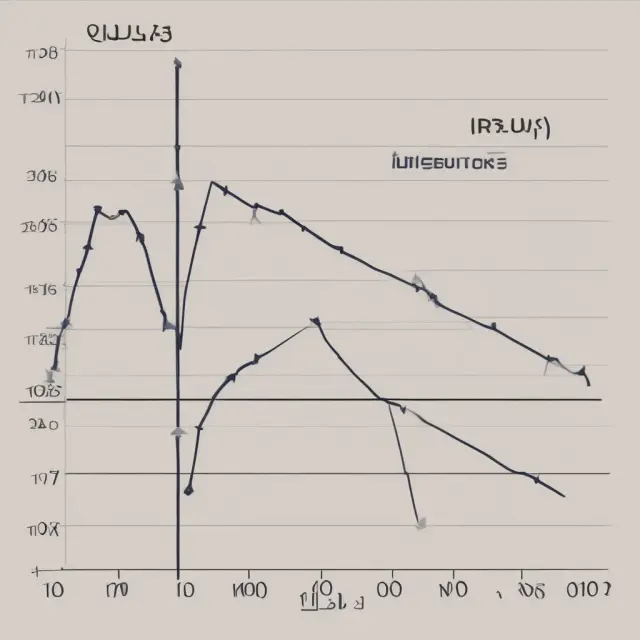
The Diminishing Marginal Rate of Substitution
The marginal rate of technical substitution (MRTS) shows us the rate at which one factor can be substituted for another while maintaining a constant level of output. This concept is significant as it illustrates the flexibility, or degree to which inputs can replace each other without altering the final yield. It is important to note that MRTS differs from marginal rate of substitution (MRS), a concept related to consumer preferences and choice between two goods.
When examining the marginal rate of technical substitution in detail, it becomes evident that as we move along an isoquant (a graphical representation of combinations of inputs producing equal output levels), the MRTS changes. This phenomenon is referred to as the diminishing marginal rate of substitution. As the firm shifts from one combination of factors to another, the MRTS decreases, which means that a larger amount of one factor must be given up in order to maintain constant output when an additional unit of the other factor is added.
Considering the formula for MRTS: MRTS(L, K)=− ΔL ΔK = MP K MP L where capital (K) and labor (L) are represented as inputs, and marginal products (MP) signify the additional output derived from a single unit of each input.
The concept of isoquants provides a visual understanding of MRTS. An isoquant shows various combinations of labor and capital that result in the same amount of output. The slope of an isoquant represents the MRTS at any point; it indicates how much capital can be reduced (typically by one unit) when labor is increased to remain on the same isoquant.
To further illustrate this concept, imagine we have a firm operating along an isoquant where capital and labor are denoted as K (Y-axis) and L (X-axis), respectively. As the firm moves from point a to b, it can substitute 4 units of capital for each additional unit of labor while maintaining constant output. At point b, the MRTS is 4. However, if the firm adds another unit of labor and shifts from point b to c, the required decrease in capital for maintaining the same yield decreases to 3 units. Consequently, the MRTS now becomes 3.
In summary, the diminishing marginal rate of substitution refers to the reduction in MRTS as we move down an isoquant and replace one factor with another while keeping output constant. Understanding this concept contributes significantly to our comprehension of production possibilities and economic efficiency.
Impact of Technological Advancement on MRTS
Technological advancements can significantly influence an economy’s Marginal Rate of Technical Substitution (MRTS). This occurs as new technologies affect the way factors such as labor and capital are used in production. Understanding how these advancements impact MRTS is vital for firms seeking to optimize their resource allocation and adapt to changing economic conditions.
First, consider a situation where there is a technological improvement that allows a firm to produce more output with a given amount of labor or reduce the need for labor while maintaining the same level of production using capital. This leads to a rightward shift in the isoquant, resulting in a lower MRTS since the same output can now be achieved with fewer inputs.
For example, imagine that a factory initially requires 10 workers and 5 machines to produce a given quantity of widgets, resulting in an MRTS of -1/2 (meaning that for every worker removed, 2 machines would need to be added). However, after the introduction of a new labor-saving technology, only 8 workers are needed to maintain the same production level. Consequently, the new MRTS is lower at -3/4, indicating that fewer machines are required for each worker removal. This demonstrates an improvement in the firm’s ability to substitute capital for labor.
On the other hand, a situation where technological advancements result in an inability to maintain constant output with a given combination of inputs may lead to a leftward shift in the isoquant and an increase in the MRTS. In this case, fewer input combinations will generate the target level of output, making it more difficult and costlier for firms to substitute factors.
For instance, suppose that a textile mill initially can produce 100 pounds of cotton fabric with 50 laborers and 20 machines. The MRTS is -0.5, meaning that each additional worker requires the removal of 0.5 machines. However, due to a decline in technology or an increase in input prices, only 48 laborers can now produce 100 pounds of cotton fabric while still maintaining the same efficiency. Now, for every worker removed, 1 machine must be added, resulting in a higher MRTS of -2/3.
These examples illustrate how technological advancements impact the marginal rate of technical substitution and, consequently, influence firms’ input decisions. By understanding this concept, firms can optimize resource allocation and respond more effectively to changes in technology, ensuring they remain competitive within their industries.

MRTS and Firm Profit Maximization
One crucial application of the marginal rate of technical substitution (MRTS) lies in helping firms maximize profitability through efficient resource allocation. By understanding the MRTS, firms can determine the optimal combination of labor and capital that allows them to maintain a constant level of production while minimizing costs. This not only leads to higher profits but also benefits consumers by ensuring they receive goods and services at competitive prices.
When a firm adjusts its input mix in response to changing economic conditions or market dynamics, it can use the MRTS to guide decision-making. For instance, if labor becomes cheaper than capital due to an unexpected price decrease, a firm will consider substituting labor for capital as long as the cost savings from using more labor exceeds any potential loss in productivity. In this scenario, the MRTS provides insight into the rate at which labor and capital can be substituted without compromising output.
The concept of profit maximization relies on firms achieving a production function’s optimal combination of inputs where marginal costs equal marginal revenues. By using the MRTS to find the input level that minimizes costs, a firm can ensure its production process is efficient and in line with market conditions. This optimal point is illustrated by the intersection of the MRS (marginal rate of substitution) and MRTS curves for a consumer or an isoquant and the marginal cost curve for a producer.
It’s essential to note that, unlike MRS, which focuses on consumer utility, the MRTS focuses on the production function’s efficiency. The relationship between labor and capital in a firm’s production process is a significant consideration when trying to maximize profits. By understanding how MRTS influences profitability, firms can adjust their input mix as needed while remaining responsive to market conditions and competitive pressures.
In conclusion, the marginal rate of technical substitution plays a pivotal role in firm profit maximization by providing insight into the optimal combination of labor and capital inputs for maintaining constant output levels. It allows firms to make informed decisions about resource allocation, adjusting input mixes based on price changes or other economic conditions while ensuring production remains efficient and cost-effective.

MRTS, Input Prices, and Output
The marginal rate of technical substitution (MRTS) is a crucial concept in finance and investment that reveals how factors like labor and capital interact to maintain constant output levels. The MRTS shows the rate at which you can replace one input with another while preserving the desired production outcome. This relationship is demonstrated through the slope of an isoquant – a graphical representation of all combinations of inputs yielding equal output.
Investigating the interplay between input prices, output levels, and MRTS provides insights into production efficiency and costs for firms. Let us dive deeper into how these factors influence each other.
When one factor’s price changes, another factor’s quantity must adjust to ensure constant output. For instance, a decrease in labor wages would result in the firm hiring more capital-intensive labor-saving technology to maintain output levels, as shown by an outward shift of the isoquant (ISO1) to a new isoquant (ISO2). The slope of ISO2 represents the new MRTS.
The change in the MRTS between the two points reveals the cost savings due to the price decrease in labor. By comparing the slopes of both isoquants, it becomes clear that more capital is required to replace a unit of labor when labor’s price decreases. This relationship underscores how input prices impact production efficiency and costs.
As technology advances, MRTS changes as well. New technologies may lead to a decrease in the MRTS as less capital is needed to maintain the same level of output after the introduction of labor-saving technologies. Conversely, if labor becomes relatively scarce, the MRTS would increase, requiring more capital to replace a unit of labor and maintain production levels.
Understanding how input prices influence MRTS helps firms make informed decisions on optimal production strategies. Firms can adjust their factor inputs, like labor or capital, based on price changes to minimize costs while maintaining the desired level of output. This knowledge is essential for maximizing profitability in a dynamic economic environment.

The Role of MRTS in Economic Growth
Understanding the concept of marginal rate of technical substitution (MRTS) is crucial for understanding economic growth and development, particularly when comparing labor-intensive industries to capital-intensive ones. MRTS illustrates the relationship between factors of production like capital and labor, revealing the rate at which one can be replaced by another without altering the output level.
Consider the isoquant in a production process. Isoquants represent distinct combinations of labor (L) and capital (K) yielding identical output levels. Slope of an isoquant indicates MRTS, demonstrating how much capital is needed to replace a single unit of labor at any specific point along the curve while maintaining constant output.
To understand this further, let’s analyze two scenarios: a labor-intensive industry and a capital-intensive one. In a labor-intensive industry, such as agriculture, workers contribute more to production since they are more directly involved in the process. Consequently, MRTS will be relatively high for labor in these industries.
In contrast, capital-intensive industries rely heavily on machinery and technology. As machines become more efficient, they require fewer labor inputs. The marginal rate of technical substitution for labor would decrease as more capital is introduced to replace labor. In essence, MRTS helps determine which industries can benefit from economic growth through labor or capital-saving technological advancements.
MRTS’s relationship with input prices and output levels is significant in understanding economic growth. As technology advances, the cost of producing goods decreases, making industries more competitive globally. If an industry experiences a decline in MRTS due to technological improvements that increase labor productivity or reduce capital requirements, it becomes more economically viable and attractive for further investment, contributing significantly to overall economic growth.
In conclusion, marginal rate of technical substitution plays a pivotal role in economic growth by providing insights into the production process and determining the optimal combination of labor and capital inputs. As industries evolve, understanding MRTS’s changing relationship with input prices, output levels, and technological advancements becomes vital for informed investment decisions and strategic planning.

FAQ: Common Questions about MRTS
The marginal rate of technical substitution (MRTS) is a crucial concept in production theory that explains the rate at which one factor, such as labor, can be replaced by another factor, like capital, without changing the level of output. This section answers frequently asked questions regarding MRTS to provide you with a deeper understanding of this essential economic principle.
What is the significance of the marginal rate of technical substitution (MRTS)?
The marginal rate of technical substitution reflects the relationship between labor and capital, demonstrating the rate at which one factor can be replaced by another without altering output. It is a crucial concept for firms seeking to maximize profitability as they determine the optimal combination of inputs for their production process.
How does MRTS differ from marginal rate of substitution (MRS)?
While both terms share ‘substitution’ in their names, they are used to describe different aspects of the economy. The marginal rate of substitution is focused on consumer behavior and represents the rate at which a consumer can substitute one good for another without altering their overall satisfaction or utility level. MRTS, however, is concerned with production and describes how much capital or labor must be substituted to maintain constant output levels in a firm’s production process.
What are isoquants and how do they relate to the marginal rate of technical substitution?
An isoquant is a graphical representation of various combinations of inputs, such as labor and capital, that result in a constant level of output. The slope of an isoquant represents the MRTS for any given combination of labor and capital, indicating the rate at which labor can be replaced by capital or vice versa to maintain a constant level of output.
What is the formula for calculating the marginal rate of technical substitution?
The marginal rate of technical substitution (MRTS) formula involves finding the ratio between the marginal product of capital and labor. The formula is expressed as: MRTS(L, K)=− ΔL ΔK = MP K MP L where MP represents the marginal product of each input. This calculation provides the rate at which labor can be substituted by an equivalent amount of capital while keeping output constant.
What does a declining MRTS represent along an isoquant?
The diminishing marginal rate of substitution occurs when the MRTS decreases as a firm moves down its isoquant. This signifies that it takes increasingly larger amounts of capital to replace labor at each successive level, indicating that the factors are becoming less complementary.
By addressing these common questions about the marginal rate of technical substitution, we aim to provide you with a clearer understanding of this essential economic concept and its implications for firms, investors, and the economy as a whole.
 Next entry · No. 3,071Maximizing Business Profits with Marginal Revenue Product (MRP)
See also
-
 No. 2,562
16 Jan 2025
20 min
Maximizing Production: A Comprehensive Guide to Understanding Isoquant Curves
Economics
No. 2,562
16 Jan 2025
20 min
Maximizing Production: A Comprehensive Guide to Understanding Isoquant Curves
Economics -
 No. 4,478
22 Jun 2025
25 min
Right-to-Work Laws: Understanding Their Impact on Labor Unions and Employment
Business Strategy
No. 4,478
22 Jun 2025
25 min
Right-to-Work Laws: Understanding Their Impact on Labor Unions and Employment
Business Strategy -
 No. 3,748
23 Apr 2025
20 min
Maximizing Profitability through Effective Operations Management in Finance and Investment
Business Strategy
No. 3,748
23 Apr 2025
20 min
Maximizing Profitability through Effective Operations Management in Finance and Investment
Business Strategy -
 No. 3,617
13 Apr 2025
22 min
Understanding Occupational Labor Mobility: Unlocking the Potential for Economic Growth
Business Strategy
No. 3,617
13 Apr 2025
22 min
Understanding Occupational Labor Mobility: Unlocking the Potential for Economic Growth
Business Strategy -
 No. 3,078
27 Feb 2025
19 min
Understanding the Marginal Rate of Substitution (MRS): A Key Concept in Consumer Behavior
Business Strategy
No. 3,078
27 Feb 2025
19 min
Understanding the Marginal Rate of Substitution (MRS): A Key Concept in Consumer Behavior
Business Strategy -
 No. 2,354
30 Dec 2024
17 min
Incremental Cost Analysis: Maximizing Production Efficiency and Profitability
Business Strategy
No. 2,354
30 Dec 2024
17 min
Incremental Cost Analysis: Maximizing Production Efficiency and Profitability
Business Strategy