Understanding the Negative Directional Indicator (DI): Definition, Calculation, Interpretation

Learn about the Negative Directional Indicator (DI), its calculation, interpretation, role in financial markets, and use cases.
Introduction to Negative Directional Indicator (DI)
The Negative Directional Indicator (-DI), also known as the -DI line, is a component of the Average Directional Index (ADX), which was developed by J. Welles Wilder Jr. for determining market trends and their strength. This powerful trend-following tool plays an essential role in evaluating price direction and identifying potential trend reversals.
The Negative Directional Indicator is particularly valuable because it not only indicates the presence of a downtrend but also reveals the intensity of that downward price movement relative to any uptrends. In this section, we will discuss the background of DI, its calculation, interpretation, and how it compares to other technical indicators in the context of financial markets and investments.
Background and Origin of Negative Directional Indicator (DI)
Widely regarded as a pioneering figure in technical analysis, Welles Wilder Jr., designed the Average Directional Index in 1978 with the intention to provide traders and investors with a comprehensive understanding of market trends. The DI system includes two components: Positive Directional Indicator (+DI) and Negative Directional Indicator (-DI). Both indicators help gauge the strength and direction of price movements, thus enabling traders to make informed decisions based on these insights.
The -DI line is specifically used for determining the presence and intensity of a downtrend or bearish phase in a security’s price action. By analyzing historical price data, this indicator provides valuable information about potential trend reversals, as well as confirming signals from other technical indicators.
How to Calculate Negative Directional Indicator (DI)
The calculation of the Negative Directional Indicator involves identifying the directional movements (-DM), which are calculated by comparing the current low with the previous low. The -DM value is determined as follows:
-DM = Prior Low – Current Low
If the difference between these two values is greater than the difference between the prior high and the current low, then a +DM (positive directional movement) occurs. However, if the opposite is true, we have a -DM. The calculation of the smoothed TR and subsequent -DI value can be derived as follows:
- Calculate the sum of first 14 -DM readings.
- Obtain the next -DM value by subtracting the average of the prior 14 -DM values from the current -DM value.
- Divide the smoothed -DM value by the smoothed True Range (TR) value to get -DI. Multiply this value by 100 for easier interpretation.
Interpreting Negative Directional Indicator (DI) Lines
The relationship between +DI and -DI lines is crucial for understanding price trends. When the -DI line is above the +DI line, the trend is downward or bearish. On the other hand, when the +DI line is higher than the -DI line, the trend is upward or bullish. Additionally, crossovers between these two lines can serve as trade signals: a buy signal occurs when the +DI crosses above the -DI while a sell signal arises when the -DI crosses above the +DI.
The Role of ADX in DI Analysis
An integral part of the DI system is the Average Directional Index (ADX). This line, which is a smoothed average of the difference between the +DI and -DI, helps traders assess trend strength by providing a numerical value ranging from 0 to 100. A trend is considered strong when the ADX reading exceeds 25, and it may be particularly powerful if the ADX value is above 30 or 40.
Understanding Whipsaws in DI
False signals generated by frequent crossovers between +DI and -DI lines can result in whipsaws, where the lines cross back and forth without any significant price movement. Savvy investors often employ other technical and fundamental analysis techniques to minimize the impact of these false signals on their trading decisions.
Comparing Negative Directional Indicator (DI) to Other Technical Indicators
While DI is a powerful tool for trend identification, it’s essential to understand its differences compared to moving averages or other technical indicators. For example, the -DI line does not calculate an average price but instead focuses on prior lows relative to current lows. As such, it provides complementary information rather than directly tracking asset prices.
Real-life Use Cases for Negative Directional Indicator (DI)
Professional traders and investors employ the DI system in various ways to make informed decisions about market trends. For instance, some may use crossovers between -DI and +DI lines as a basis for entering or exiting positions, while others may rely on ADX readings to gauge trend strength.
Pros and Cons of Using Negative Directional Indicator (DI)
The Negative Directional Indicator offers several advantages such as identifying potential trend reversals and providing insights into the strength of trend direction. However, it’s essential to recognize its limitations: false signals generated by whipsaws can result in losses if not confirmed by other technical or fundamental analysis tools.

Background and Origin of DI
The Negative Directional Indicator (DI) is an essential component of the more comprehensive Average Directional Index (ADX), a trend-following momentum indicator. Developed by Welles Wilder Jr., this powerful tool was specifically designed for use in commodities markets but has since gained widespread popularity among traders and investors across various financial instruments and timeframes.
DI’s primary function is to measure the presence and strength of a downtrend by revealing whether the negative price movement is stronger than the positive one. By providing insights into the direction and momentum of price movements, DI plays an essential role in trend analysis and can serve as a valuable tool for making informed trading decisions.
The DI indicator consists of two lines: Positive Directional Indicator (+DI) and Negative Directional Indicator (-DI). The -DI line is calculated by comparing the most recent low price to the previous low price, while the +DI line is determined by comparing the most recent high price to the previous high price. Both lines are smoothed using a 14-period exponential moving average (EMA) to filter out short-term volatility and noise.
When interpreting DI, it’s essential to understand that the indicator does not indicate the direction of the primary trend but rather provides insights into the trend’s momentum. The relationship between +DI and -DI lines is crucial for understanding the current market conditions and anticipating potential price movements. When the -DI line is above the +DI line, it signifies a downtrend or that downward price movement is stronger than upward price movement. Conversely, when the +DI line is above the -DI line, an uptrend prevails, and upward price movement is more powerful than downward price movement.
Crossover points between the +DI and -DI lines are often used as trade signals. When the -DI line crosses above the +DI line, it indicates a potential downturn or a sell/short signal, while a buy/long trade may be signaled when the +DI line crosses above the -DI line. The ADX component of the indicator, which measures trend strength, can further enhance the effectiveness of DI signals by providing traders with additional confirmation and context.
In summary, the Negative Directional Indicator is a vital tool for analyzing market trends, measuring momentum, and generating trade signals in conjunction with its counterpart, the Positive Directional Indicator, within the more extensive Average Directional Index system. Its origins stem from the work of Welles Wilder Jr., and its widespread use attests to its significant value in financial markets and various trading scenarios.

How to Calculate Negative Directional Indicator (DI)
The Negative Directional Indicator (DI) is a component of the Average Directional Index (ADX), designed by Welles Wilder for measuring downtrends in financial markets. To calculate this indicator, traders follow a simple step-by-step process outlined below:
1. Determine the Negative Directional Movement (-DM)
The calculation of -DM involves finding the difference between the current low and the previous low. If the difference is greater than the difference between the current high and the previous low, then this period will be counted as a negative directional movement. Use +DM when the situation is reversed, that is, if the difference between the current high and the previous high is larger than the difference between the previous low and the current low.
2. Smooth 14-Period -DM and True Range (TR)
Calculate the sum of the first 14 -DM readings to obtain the first 14-period -DM value. Next, subtract the prior 14-day average of -DM from the current -DM value and add the current -DM reading to determine the next 14-period -DM value.
3. Calculate the Smoothed True Range (STR) or ATR (Average True Range)
Calculate the smoothed TR, which is an average of true ranges over a specific period (commonly 14 periods). The formula for calculating the STR and ATR differs slightly, with the following formulas demonstrating one possible version:
STR = [Sum of first 14 TR values] – [(Prior 14 TR/14)] + Current TR
OR
ATR = Average [|Current High – Current Low|, |Current High – Previous Close|, or |Current Low – Previous Close|], over a specified period.
4. Calculate the Negative Directional Indicator (-DI)
Divide the smoothed -DM value by the smoothed TR or ATR value and multiply it by 100 to obtain the final -DI reading. The resulting figure indicates whether the downtrend is strengthening (when the value is increasing) or weakening (when the value is decreasing).
The Negative Directional Indicator (DI) is used in conjunction with the Positive Directional Indicator (DI+), as well as the Average Directional Index (ADX), to evaluate market trends. A strong trend exists when the ADX reading surpasses 20, especially when it goes above 25.
Traders can use the DI lines and the ADX to make informed decisions by identifying trend direction and confirming their findings through other forms of technical or fundamental analysis. It is important to note that whipsaws may occur due to frequent line crossings, which can lead to losses if not confirmed with additional research.

Interpreting Negative Directional Indicator (DI) Lines
The Negative Directional Indicator (-DI), as part of the Average Directional Index (ADX), plays a crucial role in determining market trends. By examining the relationship between +DI and -DI lines, investors can effectively evaluate downtrends and uptrends. Let’s delve deeper into understanding this critical aspect of the DI indicator.
First and foremost, it is essential to remember that the -DI line signifies the presence of a downtrend, while the Positive Directional Indicator (+DI) indicates an uptrend. When the price downtrend intensifies, the -DI line moves upward, revealing the strengthening bearish trend. Conversely, if the -DI line is declining and lies below +DI, it implies a growing bullish trend.
Moreover, crossover events between +DI and -DI can act as significant turning points for traders. For instance, when -DI crosses above the +DI, it may indicate a new downtrend emerging, potentially serving as a sell signal. In contrast, a bullish reversal might be at hand when the +DI surpasses the -DI, making it an ideal time to consider buying or going long on an asset.
The ADX line is often employed alongside the DI lines for comprehensive trend analysis. By assessing the strength of the current trend, traders can make informed decisions based on the market conditions. Typically, a reading above 20 on the ADX indicates a strong trend in place, while readings above 25 signify an extremely strong trend.
However, it is important to recognize that the DI lines may exhibit frequent crossovers, leading to potential whipsaws. Whipsaws are misleading price signals that can result in losses for traders if not handled correctly. To minimize this risk and enhance overall trading performance, combining the DI lines with other technical and fundamental analysis tools is a wise approach.
In conclusion, understanding the relationship between the -DI and +DI lines provides valuable insights into market trends and potential buy or sell opportunities. By employing these indicators effectively, investors can make informed decisions and capitalize on emerging trends to enhance their investment strategies.

The Role of ADX in DI Analysis
The Average Directional Index (ADX) is a significant component of the popular Directional Indicator (DI), which includes both Positive Directional Indicator (+DI) and Negative Directional Indicator (-DI). The primary function of these indicators is to determine trend direction and strength. While +DI measures the presence of an uptrend, -DI indicates a downtrend. However, understanding how the Average Directional Index (ADX) plays its part in the DI system is essential for maximizing its effectiveness.
The ADX line itself is a smoothed average of the difference between +DI and -DI lines. The calculation involves taking the 14-period moving average of the absolute value of the difference between these two indicators. By analyzing this value, traders can identify whether a trend is strong or weak, enabling them to make informed decisions based on the current market situation.
The ADX line’s primary role in DI analysis lies in its ability to gauge trend strength. When the ADX line is above 20 and rising, it suggests a strong trend, while a value below 20 may indicate a weak trend or no discernible trend direction. Additionally, when +DI crosses above -DI, the ADX line will also rise, providing confirmation of the emerging uptrend.
Analyzing the relationship between DI and ADX can offer valuable insights for traders. For example, if the -DI is above the +DI but the ADX line remains below 20, this indicates a weak downtrend, and it might not be worth taking a short position in this market. Conversely, if both the -DI and ADX lines are trending upward, a strong downtrend may be in progress, making it an excellent opportunity to consider selling or shorting the security.
It’s crucial to note that a high ADX line doesn’t necessarily guarantee a profitable trade. The relationship between DI and ADX should always be examined together with other indicators or fundamental analysis to confirm the validity of the trend and minimize potential whipsaws.
Whipsaws, as previously mentioned, occur when the -DI and +DI lines cross back and forth, triggering trades but failing to follow through with a substantial price movement. While these false signals can lead to losses, experienced traders use various techniques to minimize their impact, such as incorporating additional analysis methods like Moving Averages or Bollinger Bands to validate the trend direction.
In summary, understanding the role of the Average Directional Index (ADX) in DI analysis is essential for making informed trading decisions based on the current market situation and trend strength. By examining the relationship between these indicators, traders can determine whether an emerging trend is worth pursuing or if it’s best to wait for further confirmation from other technical or fundamental indicators.

Understanding Whipsaws in DI
The Negative Directional Indicator (-DI) is an integral part of the Average Directional Index (ADX), which helps traders evaluate trends by revealing their direction and strength. One important aspect of interpreting DI lines is understanding whipsaws, as these can lead to false signals and potential losses if not properly addressed.
A whipsaw occurs when -DI lines cross back and forth frequently without a clear trend direction or strong price movement following through. This phenomenon can be attributed to the inherent nature of technical indicators, which are based on historical data and not guaranteed to precisely reflect real-time market conditions.
To minimize exposure to whipsaws and maintain profitability in DI-based trading strategies, it’s crucial for traders to consider the following guidelines:
1. Define clear entry and exit criteria: By establishing specific rules for entering and exiting trades based on the behavior of the -DI lines, traders can reduce the likelihood of being caught in a whipsaw situation. For instance, one might decide to enter a short position only when -DI is above +DI by a significant margin, ensuring a strong downtrend.
2. Combine DI with other indicators: Adding supplementary indicators, like moving averages or oscillators, can help confirm the validity of a trend and provide additional confirmation before making entry decisions based on DI lines. This multi-faceted approach can reduce the chances of being influenced by false signals.
3. Consider market conditions: Market volatility and liquidity can impact the effectiveness of the Negative Directional Indicator, particularly when it comes to whipsaws. Traders should be aware of prevailing market conditions and adapt their trading strategies accordingly to mitigate risks related to whipsaws.
4. Be patient and disciplined: Waiting for a clear trend direction or strong signal before making trades can help traders avoid the pitfalls associated with whipsaws. By remaining patient and sticking to established entry and exit criteria, traders can increase their chances of capitalizing on genuine trends rather than being swayed by false signals.
5. Stay informed: Keeping up-to-date with the latest market news, economic data, and price action can help traders make more informed decisions when interpreting DI lines and dealing with whipsaws. By staying abreast of relevant information, traders can improve their understanding of market conditions and adjust their strategies accordingly.
6. Utilize stop losses: Implementing a stop loss order is an essential risk management strategy that can help minimize potential losses due to whipsaws or other adverse price movements. Setting a stop loss at an appropriate level, based on the trader’s analysis, can provide additional peace of mind and protect capital during volatile market conditions.
7. Employ proper position sizing: Proper position sizing is another crucial aspect of managing risks related to whipsaws. By allocating an appropriate portion of trading capital to each trade or investment, traders can limit their potential losses and reduce the impact of false signals on their overall portfolio.
In conclusion, understanding whipsaws in the context of the Negative Directional Indicator is essential for traders seeking success in trend-based strategies. By following the guidelines outlined above, traders can minimize the risks associated with these false signals and enhance their overall profitability. Remember that no indicator or strategy is foolproof, but by being informed, disciplined, and patient, traders can increase their chances of navigating the markets effectively and successfully implementing DI lines in their investment strategies.
Comparing Negative Directional Indicator (DI) to Other Technical Indicators
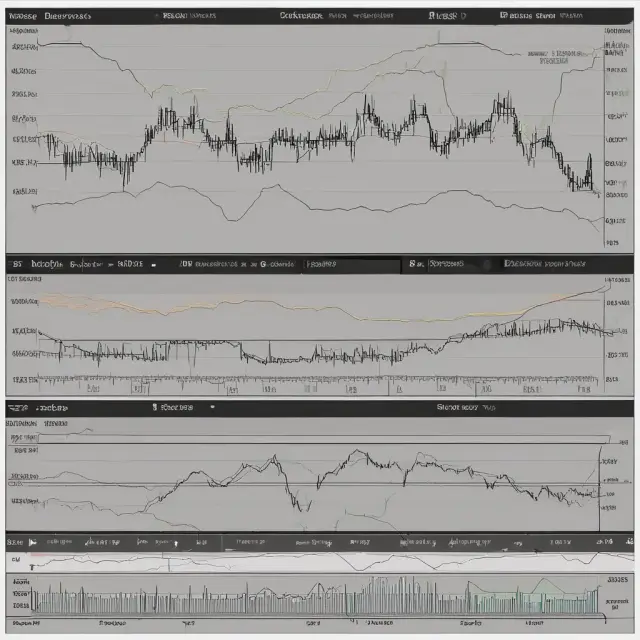
The Negative Directional Indicator (DI), also known as -DI, is a popular trend-following momentum indicator in technical analysis. This technical tool is crucial for understanding market trends and identifying potential reversals. But how does it compare with other widely used indicators? Let’s delve into the differences between DI and some well-known competitors.
Moving Averages vs. Negative Directional Indicator (DI)
Unlike moving averages, which represent an average of a security’s price over a specified time frame, the DI focuses on directional movement within a trend. While moving averages can be beneficial for identifying trend directions, they may lack the ability to pinpoint the strength and potential reversals as effectively as the DI.
RSI (Relative Strength Index) vs. Negative Directional Indicator (DI)
The RSI is another momentum indicator that measures price changes over a set time frame. It calculates the magnitude of recent gains and losses to determine overbought or oversold conditions in a security. In comparison, DI offers more information on trend direction and strength rather than just identifying potential reversals.
Stochastic Oscillator vs. Negative Directional Indicator (DI)
The Stochastic Oscillator is another momentum indicator that compares the closing price of an asset to its price range over a specific time period. It aims to detect when an asset has been overbought or oversold and can generate buy and sell signals based on these conditions. DI provides a clearer understanding of trend direction and strength, making it an ideal complement to indicators like Stochastic Oscillator for comprehensive technical analysis.
Bollinger Bands vs. Negative Directional Indicator (DI)
Bollinger Bands are volatility bands that consist of a moving average and two standard deviations plotted above and below it. They help traders assess potential price movements based on historical volatility. DI, however, focuses specifically on determining trend direction and strength, making the two indicators complementary rather than direct competitors.
Understanding the strengths and weaknesses of various technical indicators can lead to more informed trading decisions. By combining different indicators like DI with other tools, traders can create a robust and well-rounded approach to market analysis.

Real-life Use Cases for Negative Directional Indicator (DI)
The Negative Directional Indicator (-DI), in conjunction with the Positive Directional Indicator (+DI), is an essential component of the Average Directional Indexing (ADX) system. Professionals often employ this dynamic duo to identify trends and predict potential price movements in various markets, offering valuable insights for informed investment decisions. Let’s explore some real-life use cases where traders successfully utilized the DI indicator to navigate financial markets.
1. Trading Stocks
In the stock market, traders look for strong downtrends to short sell stocks or hedge their long positions. The DI indicator can help them spot these trends by providing a clear signal when -DI is moving above +DI. For instance, during the technology bubble burst in 2000, many traders used DI signals to short sell technology stocks as they noticed the downtrend strengthening.
2. Forex Trading
In forex trading, the DI indicator can be an essential tool for spotting currency pair trends. For example, when trading EUR/USD, a trader might use the DI indicator to confirm a potential bearish trend if -DI crosses above +DI. This signal indicates that the downward price movement is gaining momentum and may offer an opportunity to sell the pair or open a short position.
3. Commodity Trading
Similar to forex trading, traders in commodities markets can benefit from using the DI indicator for trend analysis. For example, when trading crude oil, a trader might use the DI indicator to confirm a potential downtrend if -DI crosses above +DI. This signal would suggest that the price of crude oil is likely to continue decreasing and may offer an opportunity to sell or open a short position.
4. Cryptocurrency Trading
With the increasing popularity of cryptocurrencies, many traders are employing technical indicators like the DI to make informed decisions in this market as well. For instance, when trading Bitcoin, a trader might use the DI indicator to confirm a potential downtrend if -DI crosses above +DI, indicating that the downward trend is strengthening and may provide an opportunity for short selling or opening a short position.
In conclusion, the Negative Directional Indicator (-DI) offers valuable insights into market trends when used in conjunction with the Positive Directional Indicator (+DI). By analyzing the relationship between these two lines, traders can make informed decisions on buying and selling assets based on the strength of upward or downward price movements. Real-life use cases show that professionals in various markets, such as stocks, forex, commodities, and cryptocurrencies, have successfully employed the DI indicator for trend analysis and prediction, ultimately helping them secure profitable trades.

Pros and Cons of Using Negative Directional Indicator (DI)
The Negative Directional Indicator (-DI) is a valuable tool in the financial markets for detecting potential downtrends and identifying trend direction. This indicator, which is part of the Average Directional Index (ADX), was designed by J. Welles Wilder Jr., providing traders with insights into market trends that can be otherwise difficult to discern. However, like any technical analysis tool, it comes with its advantages and disadvantages that must be considered before utilizing it in your investment strategy.
Advantages of Using Negative Directional Indicator (DI)
- Detects Downtrends: One of the primary benefits of using the DI indicator is its ability to detect potential downtrends. When -DI is trending upward, it indicates that downward price movement is outpacing upward price movement and a downtrend may be present. This information can be crucial for investors seeking to minimize losses or exit positions before significant declines occur.
- Complements Positive Directional Indicator (DI): The DI indicator works in conjunction with the Positive Directional Indicator (DI) to provide traders with a more comprehensive understanding of market trends. The two indicators, when used together, help investors assess whether upward or downward price movement is stronger and identify trend direction.
- Assists in Short Selling: For those looking to profit from downtrends through short selling, the DI indicator can be an invaluable tool. When the -DI line crosses above the +DI line, it may signal a potential downtrend and provide traders with an opportunity to enter into a short position.
- Works on Various Timeframes: The Negative Directional Indicator is versatile and can be applied to various timeframes, allowing investors to adapt their strategies to different market conditions.
Disadvantages of Using Negative Directional Indicator (DI)
- False Signals: While the DI indicator can provide valuable insights into market trends, it is not infallible and may generate false signals or whipsaws. This occurs when the lines cross back and forth, potentially leading to lost opportunities or unnecessary transactions. To mitigate this risk, it’s essential to use other forms of technical and fundamental analysis in conjunction with the DI indicator.
- Overreliance on Technical Analysis: The Negative Directional Indicator is a quantitative tool that focuses solely on price action. This can lead some traders to overemphasize the importance of technical indicators while neglecting other critical factors, such as fundamental analysis and market sentiment. To make well-informed investment decisions, it’s essential to use multiple sources of information and maintain a balanced perspective.
- Limited Information: The DI indicator provides valuable insights into trend direction but offers limited information on the underlying reasons for market movements. Traders must use other indicators or fundamental analysis tools to supplement their understanding of market conditions and make well-informed investment decisions.
In conclusion, the Negative Directional Indicator (DI) is a powerful tool in the world of finance and investment that can help traders detect downtrends, identify trend direction, and assist in short selling opportunities. However, like any technical analysis tool, it comes with advantages and disadvantages that must be considered before incorporating it into your investment strategy. By understanding both the pros and cons of using this indicator, investors can make more informed decisions and maximize their potential for success.

FAQ about Negative Directional Indicator (DI)
1. **What does the Negative Directional Indicator (-DI) represent?** The Negative Directional Indicator (-DI) is a part of the Average Directional Index (ADX), used to identify and measure the strength of price trends in financial markets. It specifically helps determine whether downward price movements are stronger than upward ones.
2. **How is the Negative Directional Indicator calculated?** The calculation of -DI involves determining the negative directional movement (-DM) and smoothing it over 14 periods using a moving average (TR or ATR). -DM represents the difference between the prior low and the current low if the prior low is lower than the current high. Smoothed -DM values are used to calculate -DI, which is then multiplied by 100 for percentage representation.
3. **What information does the Negative Directional Indicator provide?** The Negative Directional Indicator, in conjunction with the Positive Directional Indicator (+DI), assists traders in understanding trend direction and assessing strength through crossovers or divergence between the two lines.
4. **How can I interpret the relationship between -DI and +DI?** A downward trend is suggested when the Negative Directional Indicator (DI) line is above the Positive DI line, indicating that downward price movement is stronger than upward movement. Conversely, an uptrend is signaled if the Positive DI line is above the Negative DI line.
5. **How does the Average Directional Index (ADX) complement the Negative and Positive DI lines?** The Average Directional Index (ADX) is a measure of trend strength that helps confirm or invalidate potential trends indicated by -DI and +DI crossovers. An ADX value above 20 may indicate a strong trend, while an ADX below 25 typically indicates a weak trend.
6. **What limitations should be considered when using the Negative Directional Indicator?** The Negative Directional Indicator can generate false signals due to whipsaws, as it doesn’t account for the overall market context or trends outside of its specific timeframe. To mitigate this risk, it is essential to combine -DI with other technical and fundamental analysis tools.
7. **How does the Negative Directional Indicator differ from a moving average?** While a moving average calculates the average price over a set period, the Negative Directional Indicator (DI) focuses on determining downward price movement’s strength compared to upward movements, which is essential for understanding trend direction and identifying potential buying or selling opportunities.
 Next entry · No. 3,394Understanding Negative Equity: The Financial Implications for Homeowners and the Economy
See also
-
 No. 4,911
27 Jul 2025
20 min
A Comprehensive Guide to Technical Analysis: Understanding Chart Patterns, Indicators, and Strategies
Finance Policy
No. 4,911
27 Jul 2025
20 min
A Comprehensive Guide to Technical Analysis: Understanding Chart Patterns, Indicators, and Strategies
Finance Policy -
 No. 4,565
29 Jun 2025
21 min
Scalping: A High-Risk Trading Strategy for Profiting from Minor Price Changes
Finance Policy
No. 4,565
29 Jun 2025
21 min
Scalping: A High-Risk Trading Strategy for Profiting from Minor Price Changes
Finance Policy -
 No. 5,731
03 Oct 2025
19 min
Mastering Wilder’s DMI (ADX) Indicator: A Powerful Tool for Trend Analysis in Finance and Investment
Business Finance
No. 5,731
03 Oct 2025
19 min
Mastering Wilder’s DMI (ADX) Indicator: A Powerful Tool for Trend Analysis in Finance and Investment
Business Finance -
 No. 4,912
27 Jul 2025
20 min
Understanding Technical Analysts: Tools, Certification, and Key Responsibilities
Financial Education
No. 4,912
27 Jul 2025
20 min
Understanding Technical Analysts: Tools, Certification, and Key Responsibilities
Financial Education -
 No. 4,753
14 Jul 2025
18 min
Understanding the Stochastic RSI Indicator: A Powerful Tool for Technical Analysis
Financial Tools
No. 4,753
14 Jul 2025
18 min
Understanding the Stochastic RSI Indicator: A Powerful Tool for Technical Analysis
Financial Tools -
 No. 4,531
26 Jun 2025
20 min
Understanding the Relative Strength Index (RSI): An Essential Momentum Indicator for Technical Analysis
Financial Tools
No. 4,531
26 Jun 2025
20 min
Understanding the Relative Strength Index (RSI): An Essential Momentum Indicator for Technical Analysis
Financial Tools