Understanding the Production Possibility Frontier (PPF): Maximizing Efficiency in Resource Allocation

The production possibility frontier (PPF) is a curve showing the maximum combinations of two goods an economy can produce with its resources and technology. Points on it use resources fully, points inside mean resources are underused, points outside are unattainable, and moving along it shows the opportunity cost of making more of one good.
Introduction to the Production Possibility Frontier (PPF)
The Production Possibility Frontier (PPF), also known as the production possibility curve, represents the maximum combination of two or more products that can be produced with available resources under given conditions. It is an essential concept in economics that illustrates the efficiency and optimal use of limited resources. The PPF demonstrates that every economic decision entails a trade-off between producing more of one commodity versus the other, as resources are finite.
Understanding the Assumptions and Graphical Representation of the Production Possibility Frontier (PPF)
Assumptions:
- A single economy produces only two goods (X and Y).
- The economy has a fixed amount of resources.
- Technology is constant.
- All resources are fully utilized, with no wastage.
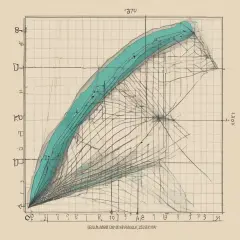
Graphically, the Production Possibility Frontier (PPF) can be illustrated as a curve on a graph, with one axis representing good X and the other representing good Y. The PPF illustrates the maximum combination of goods that can be produced from the available resources when technology remains constant and all resources are fully utilized.
The Production Possibility Frontier: Maximizing Efficiency in Resource Allocation (Continued)
Section Title: Calculating Points on the PPF Curve
When examining how to calculate points on the Production Possibility Frontier (PPF), consider a hypothetical example of producing two goods, X and Y. To determine the optimal combination of resources for each product, we can start by setting up a table:
| Quantity X | Quantity Y |
|—|—|
| 10 | 5 |
| 9 | 6 |
| 8 | 7 |
| 7 | 8 |
| 6 | 9 |
| 5 | 10 |
By plotting these points on a graph, we can observe that the total amount of resources is finite. Thus, if we wish to produce more of one good, resources must be taken from another. By connecting the points representing maximum production levels, we form the Production Possibility Frontier (PPF) curve.
Section Title: Using the PPF to Determine Efficient Production
To illustrate how the Production Possibility Frontier (PPF) helps determine efficient production, consider a hypothetical scenario where a country can only produce either textbooks or computers. The table below shows various combinations of textbooks and computers that could be produced from limited resources:
| Textbooks | Computers |
|—|—|
| 10 | 5 |
| 9 | 6 |
| 8 | 7 |
| 7 | 8 |
| 6 | 9 |
| 5 | 10 |
Using the information from this table, we can create a graph. The points on the curve represent maximum production levels of textbooks and computers, while the area below the curve represents combinations that are not possible given available resources.
To find the efficient combination of goods, we look for the optimal point where the country is producing at its highest capacity but not exceeding resource limitations. In this example, the optimum production level would be a combination of 7 textbooks and 8 computers (point D on the graph). At this point, no resources are being wasted, and both goods are being efficiently produced.
Section Title: Impact of Markets on PPF and Allocation of Resources
Markets play a crucial role in determining the shape and movement of the Production Possibility Frontier (PPF) by indicating the most efficient allocation of resources between two products based on consumer demand and supply conditions. When resources are allocated efficiently, markets help countries reach their maximum potential production levels while minimizing wastage.
Section Title: Changes in Technology and Production Possibility Frontier (PPF)
A shift in technology can significantly impact the PPF by expanding or contracting the curve, as new methods of producing goods often lead to increased efficiency and resource productivity. An outward shift indicates an improvement in technology that enables the production of more goods with the same amount of resources, while an inward shift signifies a decrease in technological efficiency.
Section Title: Economic Implications of the PPF
Understanding the Production Possibility Frontier (PPF) offers valuable insights into economic implications for individual businesses and entire economies. By optimally allocating resources based on consumer demands, countries can ensure maximum production levels while minimizing wastage, fostering long-term economic growth and competitiveness.
Section Title: Comparing the PPF with the Concept of Pareto Efficiency
The Production Possibility Frontier (PPF) is closely related to another influential concept in economics, the Pareto Efficiency. While both deal with efficient resource allocation, the main difference lies in their focus: the PPF illustrates the maximum combination of goods that can be produced from available resources under constant technology, while the Pareto Efficiency determines which commodity allocation is efficient given a society’s preferences and constraints.
Section Title: Limitations and Criticisms of the Production Possibility Frontier (PPF)
The Production Possibility Frontier (PPF) provides essential insights into efficient resource allocation, but it also faces criticisms regarding its assumptions, limitations, and applicability to real-world situations. Some argue that it oversimplifies complex economic systems, while others point out that it fails to account for externalities and non-material goods. Nevertheless, the PPF remains a valuable tool in understanding the basics of resource allocation and maximizing efficiency.

Assumptions in Producing Two Products with Limited Resources
The production possibility frontier (PPF) is a crucial concept that illustrates the maximum combination of two products that can be produced using finite resources. The curve represents the boundary between what’s feasible and impossible based on given assumptions. In this section, we will discuss these underlying assumptions for understanding the significance of the PPF.
Assumptions:
- A company/economy wants to produce two products.
- There are limited resources.
- Technology and techniques remain constant.
- All resources are fully and efficiently used.
In a business context, when producing goods, opportunity cost is the price paid for producing one good by giving up another. The production possibility frontier (PPF) demonstrates this concept graphically, showing the maximum amounts of each product that can be produced with resource reallocation. Let’s explore how these assumptions apply in more detail:
1) A company/economy wants to produce two products: The PPF is applicable when dealing with a limited range of goods and services (two or more). For example, a non-profit organization producing textbooks and computers, or an economy producing wine and cotton.
2) There are limited resources: This assumption reflects the scarcity of finite resources required to create goods and services. No matter how much we would like to produce, resources do have their limits.
3) Technology and techniques remain constant: The PPF assumes that technology and techniques used in production do not change during the analyzed period. If there is no advancement in methods or resources, the possibilities for producing various combinations of goods and services will remain consistent.
4) All resources are fully and efficiently used: This assumption indicates that all resources are employed at their maximum potential in the production process without any wastage. By utilizing all resources to their fullest extent, a company/economy can maximize its output within the constraints of limited resources.

Calculating Points on the PPF Curve
The Production Possibility Frontier (PPF) represents the maximum level of production that can be achieved with a given set of resources. To calculate points on this curve, we need to consider how resource allocation affects the production levels for two products.
Assumptions:
– A company or economy produces only two products (X and Y).
– Resources are finite and fully utilized.
– Technology and techniques remain constant.
To plot points on the PPF curve, we analyze different combinations of resources allocated to each product. Let’s assume that if resources from Product X are taken away to create more of Product Y, a new point can be plotted on the curve. This process demonstrates how maximum production levels for both products change based on resource allocation.
For instance, let us consider the example of an organization deciding between producing textbooks and computers. Suppose the organization currently provides 18 textbooks and 11 computers (point A). If resources are allocated differently to produce more textbooks at the expense of computers, a new point representing fewer computers can be plotted on the curve (points B, C, D, or E).
Textbooks Computers
18 11
24 9
30 8
36 7
42 6
48 5
54 4
60 3
66 2
72 1
84 0
The curve generated from these points (the line itself) is called the opportunity cost curve, with the area below the curve representing textbooks and computers not being used. This non-use of resources is sometimes referred to as the production possibility frontier (PPF).
For a business, the PPF demonstrates that the production of one commodity may increase only if another commodity decreases. A plot below the curve represents inefficiency or underutilization of available resources. Conversely, points on or above the PPF curve represent efficient resource allocation and optimal levels of production for both products.
For an economy, the same principles apply. The PPF can demonstrate a nation’s most efficient use of resources to produce as many goods as possible. By identifying the set of points at which resources are being used efficiently, an economy can maximize production capacity and avoid underutilizing resources. Additionally, market forces help determine the shape of the PPF curve by indicating what combination of goods and services will be produced most efficiently based on consumer demand and resource availability.
As technology advances or new resources become available, the PPF curve shifts, allowing for an increase in overall production capacity. This expansion can result from improvements to farming techniques, labor efficiency, or the discovery of new resources. When this occurs, the economy is said to be growing, as it can now produce more goods and services with the same amount of resources.
In conclusion, understanding how to calculate points on the Production Possibility Frontier (PPF) curve provides valuable insight into how efficiently resources are being used in both businesses and economies. By analyzing resource allocation for different combinations of products, it becomes clear that there are inherent trade-offs when making production decisions, and the PPF serves as an essential decision-making tool for maximizing efficiency while minimizing waste.
Using the PPF to Determine Efficient Production
The Production Possibility Frontier (PPF) is a graphical representation of the maximum combination of two products that can be produced given the finite resources available. It demonstrates the trade-offs between various goods and services in terms of opportunity cost and resource allocation. This section explores how to identify efficient production levels based on the PPF curve.
The first step is determining the optimal point on the PPF where the economy or business is most efficiently allocating its resources. When producing a certain commodity, opportunity cost represents what must be given up to produce an additional unit of another product. By plotting points on the graph based on the resource allocation for various quantities, we can generate a curve representing the maximum amount of each good that can be produced as resources are reallocated.
For example, imagine an NGO that focuses on providing either textbooks or computers to students in need. The curve may indicate that it could provide 48 textbooks and six computers, or 72 textbooks and two computers while maintaining full efficiency. However, the organization must decide which item is more urgently needed. In this scenario, the opportunity cost of an additional textbook equals giving up five computers. Therefore, the NGO would only be able to provide one computer with 78 textbooks but cannot produce both amounts simultaneously given their resource constraints.
In a national economy context, producing wine and cotton is a common example used to illustrate the concept of PPF. If an economy is producing inefficiently, as represented by point X in Figure 1, it means that resources are not being fully utilized. However, point Y represents an unattainable output level.
The only way for the curve to move outward, toward point Y, is through an improvement in technology or resource availability—any point within the PPF is considered inefficient as it does not represent the total capacity of the economy’s resources.
For instance, if a country is producing 10 textbooks and 10 computers, it could be more efficient by moving closer to point Y, which could result in either more textbooks or more computers while maintaining the same resource allocation. This improvement could be achieved through technology enhancements or resource redistribution. The PPF curve demonstrates that there are trade-offs between various goods and services, and economies must decide how best to allocate resources for maximum output.
In conclusion, understanding the Production Possibility Frontier (PPF) is essential for individuals, businesses, and governments as it offers insight into resource allocation and opportunity cost. By identifying the optimal point along the PPF curve, decision-makers can make informed choices about which combinations of goods and services to produce given their available resources.

Impact of Markets on PPF and Allocation of Resources
The Production Possibility Frontier (PPF) is a crucial economic concept that demonstrates the maximum production output an economy can achieve when producing two different products with finite resources. However, it’s essential to understand how markets play a significant role in determining the shape and movement of the PPF curve. Markets influence the allocation of resources efficiently by creating incentives for producers to adapt to consumer demands.
Let’s begin by discussing how markets push the PPF outwards when resources are reallocated. When technology advances, new methods can lead to an increase in productivity and output. For instance, imagine a country producing two goods: wine and cotton. If there is a technological breakthrough that enables them to harvest twice as much grapes or cotton per unit of land, the economy’s production capacity changes, allowing them to produce more of both goods. As a result, the PPF curve shifts outwards, enabling the economy to reach a higher level of production (point Y in our graph).
On the other hand, the PPF curve can shift inwards when resources are misallocated or depleted. For example, if a country decides to invest heavily in an industry that does not generate sufficient returns, resources will be diverted away from more productive sectors, leading to a decrease in overall production capacity. As a result, the PPF curve shifts inwards, indicating that the economy can no longer produce as much as before (point X).
The intersection of the market forces and the PPF curve represents an efficient allocation of resources. Market demand signals what combination of goods and services is most valuable to consumers. Producers follow these signals by adjusting their production levels accordingly, ensuring that resources are allocated efficiently. This process results in a competitive market equilibrium where supply meets demand at the point on the PPF curve with the highest total output—the optimal combination of goods and services.
Moreover, markets help economies to adapt quickly to changes in consumer preferences or resource availability. For example, if the price of cotton increases due to high demand, producers will shift their resources from wine production to cotton farming. As a result, the economy’s PPF curve adjusts accordingly, allowing it to efficiently allocate resources and respond to market signals. This adaptability is crucial in maintaining overall economic growth and stability.
In conclusion, markets significantly impact the PPF by influencing its shape and movement, leading to more efficient resource allocation. The dynamic interplay between consumer preferences, technology, and resource availability results in a market equilibrium that lies on the PPF curve, maximizing the total output of an economy.
Changes in Technology and Production Possibility Frontier (PPF)
The production possibility frontier (PPF) represents the maximum combination of two products that can be produced with a given amount of resources. However, the availability and advancement of technology significantly impact the PPF and the economy’s overall production capacity. Let us explore how technological changes influence the shape and position of the production possibility frontier.
Assumptions for Technology in the PPF
- There is an improvement in production techniques and technologies for both products.
- The new technology can be adopted cost-effectively and efficiently.
- No change in the availability or allocation of resources (land, labor, capital).
Technological Progress Resulting in Outward Shift
An outward shift of the PPF occurs when a technological improvement enhances the production process for either or both products, increasing the overall potential output. This is depicted as a new, expanded PPF curve that allows for more production possibilities within the same set of resources. The economic benefits of such a change include an increase in efficiency and productivity.
Technological Progress Resulting in Inward Shift
In contrast, if technological progress negatively impacts one or both products, it could lead to an inward shift of the PPF curve. This change can be attributed to the reduction of resources available for production due to factors such as resource depletion or environmental degradation. As a result, the economy may need to adjust its production mix and potentially reduce its overall output to maintain optimal efficiency.
Moreover, it is important to note that technological advancements do not always have uniform effects on all industries or sectors of an economy. Thus, changes in technology can lead to structural shifts within the PPF curve, necessitating adaptations in resource allocation, production techniques, and economic policies.
For instance, consider a country that primarily relied on agriculture for its economic growth but then experienced significant advancements in manufacturing technologies. In this scenario, the economy might witness an outward shift in the manufacturing sector’s PPF while experiencing an inward shift in the agricultural sector’s PPF due to limited arable land or water resources. As a result, the overall production mix of the economy would change as it adapts to the new technological conditions.
In conclusion, understanding the effects of technology on the production possibility frontier is essential for economists and policymakers alike, providing insights into potential opportunities for growth and efficiency improvements within an economy. By keeping abreast of technological advancements in various industries, governments can proactively develop strategies to foster innovation, maintain optimal resource allocation, and create a more sustainable economic future.
Economic Implications of the PPF
The concept of the Production Possibility Frontier (PPF) serves as a crucial tool for understanding how economies can reach their most efficient production levels. The PPF illustrates the maximum combination of two goods that can be produced with available resources, assuming constant technology and full efficiency. Economies are challenged to decide how best to allocate limited resources to maximize production and reach the highest point on this curve.
The PPF is instrumental in various aspects:
- Resource allocation: It determines the most efficient combination of goods and services based on resource availability, showing what cannot be produced with the given resources (the area above the curve).
- Decision making: By identifying the opportunity cost associated with producing one product over another, businesses and governments can make informed decisions on production levels.
- Economic growth: As a country increases its technological capabilities or resource base, its PPF shifts outward, enabling it to produce more goods overall. This expansion is referred to as “economic growth.”
- Comparative advantage: Countries with different factor endowments can benefit from trade based on their relative advantage in producing particular goods and services.
- Market influence: Markets help determine the shape of the PPF by indicating what resources should be allocated where, driving economies towards more efficient production levels.
The significance of the Production Possibility Frontier goes beyond just theoretical understanding. It is a practical tool used to analyze the actual production potential and resource allocation in various economic systems, including businesses, countries, and even global economies. The PPF provides valuable insights into optimal resource use, illustrating how economies can reach their highest levels of productivity and efficiency.
One example of using the PPF to examine real-world scenarios is the trade between two countries. Consider a hypothetical relationship between a developed country (Country A) and a developing country (Country B). By analyzing each nation’s production possibility frontier, we can determine their relative strengths in producing specific goods based on their resource endowments.
Country A may have an advantage in producing technologically advanced machinery and electronics due to its skilled labor force and abundant capital resources. Conversely, Country B might possess a comparative advantage in producing labor-intensive agricultural products like sugar or textiles due to its ample land and labor supply.
By specializing in their respective areas of strength, both economies can improve overall global production efficiency and benefit from international trade. Country A exports machinery and electronics to Country B, while Country B exports sugar and textiles to Country A. In this way, the world economy can maximize its total output by focusing on what each country does best.
This exchange not only increases the overall supply of goods available but also allows each country to achieve a higher standard of living by focusing on their comparative advantage. As international trade continues, both economies’ production possibility frontiers may shift outward due to increased productivity and access to new markets. This growth can lead to more efficient resource allocation and improved economic conditions for all involved parties.
In conclusion, the Production Possibility Frontier is a vital concept in finance and investment that provides valuable insights into efficient resource use and optimal production levels within economies. By understanding how the PPF shapes the way resources are allocated, economies can make informed decisions on production strategies to maximize efficiency, achieve economic growth, and ultimately improve overall global wellbeing.

Comparing the PPF with the Concept of Pareto Efficiency
The Production Possibility Frontier (PPF) and Pareto Efficiency are two important concepts in economics that complement each other. The PPF illustrates the maximum level of production of two goods that can be achieved given limited resources, while Pareto Efficiency focuses on optimally allocating those resources. In this section, we will discuss their relationship and how they contribute to efficient economic decision-making.
The Production Possibility Frontier (PPF): An Overview
Before delving into Pareto Efficiency, let us first recap the Production Possibility Frontier (PPF). The PPF represents the maximum attainable combination of two goods that can be produced from a given set of resources. It is based on several assumptions: a limited amount of resources, constant technology, and full resource utilization. When producing one good, opportunity cost arises when resources are taken away to produce another. The PPF graphically illustrates this concept, with points above the curve representing infeasible combinations and those below it representing possible production levels (Figure 1).
Figure 1: Production Possibility Frontier
Pareto Efficiency: An Introduction
Vilfredo Pareto was an Italian economist who observed that around 80% of the wealth in Italy was held by only 20% of the population. The term “Pareto Efficiency” stems from his principle that a small segment of the population accounted for a significant portion of the economy’s total resources or benefits. In the context of economics, Pareto Efficiency is used to determine if an economy has optimally allocated its resources to produce goods and services.
Figure 2: Pareto Optimal Points
Pareto Efficiency and the Production Possibility Frontier
In the context of the Production Possibility Frontier, a point on the curve is considered Pareto efficient if no other allocation of resources can result in an improvement for one good without making another worse off. In other words, at a Pareto optimal point, there are no further gains from trade between goods (Figure 2).
The relationship between the Production Possibility Frontier and Pareto Efficiency lies in the fact that all points along the PPF curve represent Pareto efficient allocations of resources. Since the curve illustrates the most efficient production levels given the available resources, it is an optimal allocation. This means that moving from any point below the curve to a point on the curve leads to an improvement for at least one good without making another worse off.
However, it’s important to note that not all Pareto-efficient allocations lie on the Production Possibility Frontier. Points outside the curve represent infeasible combinations of goods, so they cannot be considered PPF-efficient.
Furthermore, Pareto Efficiency doesn’t only apply to two goods but can extend to any number of goods or services. The concept is based on the idea that if an economy could improve one good without worsening another, it should do so until no such improvements can be made. This results in a Pareto-efficient allocation for all goods.
In conclusion, the Production Possibility Frontier and Pareto Efficiency are interrelated concepts in economics. The PPF illustrates the maximum attainable production levels given limited resources, while Pareto Efficiency focuses on optimally allocating those resources to produce goods and services. All points on the PPF curve represent Pareto-efficient allocations, making them an important tool for decision-makers when considering resource allocation in an economy.

Limitations and Criticisms of the Production Possibility Frontier (PPF)
Despite its usefulness, the PPF model has several limitations and criticisms. These are essential to understand when applying the concept to real-world economic situations.
1. The Model Ignores Externalities
The PPF assumes that externalities, like pollution or public goods, do not exist. However, in reality, many economic activities come with significant externalities. For example, a factory producing paper might produce a large amount of smoke and air pollution, negatively affecting the health of its neighbors. The PPF does not account for this, as it only focuses on the production of two goods using given resources without considering externalities.
2. It Ignores Time
The PPF assumes that all inputs are available instantaneously and do not require any time to be allocated. In real-world economies, however, resources often take time to be allocated and produced. Moreover, the availability of resources changes over time due to technological progress or other factors. The PPF does not capture this reality.
3. Non-material Goods and Services Are Excluded
The PPF focuses on physical goods and ignores non-material goods like education, health services, and social welfare programs that are essential for a well-rounded economy. It also overlooks services, which play a significant role in modern economies, such as finance, education, and healthcare.
4. The Model Assumes Perfect Competition and Consumer Sovereignty
The PPF assumes that there is perfect competition among firms and consumer sovereignty in markets. This is rarely the case in real-world situations. Monopolies, oligopolies, monopsonies, and other market structures can significantly impact the economy’s production possibilities. Furthermore, not all consumers have equal purchasing power, and their preferences may not be fully reflected in the market prices.
5. The Model Does Not Consider Changes in Tastes and Preferences
The PPF does not consider changes in consumer preferences or tastes over time. Consumer demand for goods can fluctuate based on various factors like income levels, population growth, technological advancements, and cultural shifts. These changes are crucial to understand for businesses and policymakers to make informed decisions.
In conclusion, the Production Possibility Frontier (PPF) is a valuable concept that helps illustrate the efficient allocation of resources in economic production. However, it has several limitations, including ignoring externalities, time, non-material goods, perfect competition, and changes in tastes and preferences. A well-rounded understanding of economics requires considering these limitations to create accurate assessments of real-world economies.
FAQs on the Production Possibility Frontier
What is the Production Possibility Frontier (PPF), and what does it represent?
The Production Possibility Frontier (PPF) is a curve that illustrates the possible combinations of two products (or more) that can be produced if all resources remain constant. It represents the maximum production capacity given available resources.
How does opportunity cost factor into PPF calculations?
Opportunity cost is the concept that when producing one commodity, resources are being diverted from another. The PPF demonstrates this relationship, showing that as more of a product is produced, less of the other can be made, increasing its opportunity cost.
What are the assumptions underlying the Production Possibility Frontier?
- A finite number of resources
- Constant technology and techniques
- Full utilization of resources
How does the PPF show the impact of resource allocation on production?
The PPF illustrates that as resources are taken from one product to produce more of another, a new point representing the total production is plotted along the curve. The PPF shows the maximum amount of each product that can be produced with existing resources.
Can an economy ever surpass the Production Possibility Frontier?
No, since the PPF represents the highest level of production achievable given available resources and the assumptions, it cannot be surpassed.
What role does technology play in shaping the PPF?
Technological advancements can shift the PPF outward, allowing for an economy to produce more goods and services with the same amount of resources or less, thus increasing efficiency.
How is the PPF connected to the concept of Pareto Efficiency?
The Pareto Efficiency theory determines efficient commodity allocations within a society based on the principle that no individual can be made better off without making another individual worse off. The PPF illustrates the combination of goods and services that represent the maximum production capacity, while the Pareto Efficiency shows how resources should be allocated to meet consumer preferences efficiently along the PPF.
What is an example of a real-world application of the Production Possibility Frontier?
An economy can decide which combination of products or services to produce based on the PPF and available resources, ensuring maximum efficiency while catering to consumer demand. For example, if a country can either produce wine or cotton, it must determine how many units of each product will maximize its resource utilization and meet its population’s needs given the limited resources.
 Next entry · No. 4,106Maximizing Production Efficiency: Measuring Optimal Output and Capacity in Economics
See also
-
 No. 3,900
05 May 2025
20 min
Understanding Pareto Efficiency and Its Relevance to Institutional Investors
Economics
No. 3,900
05 May 2025
20 min
Understanding Pareto Efficiency and Its Relevance to Institutional Investors
Economics -
 No. 2,562
16 Jan 2025
20 min
Maximizing Production: A Comprehensive Guide to Understanding Isoquant Curves
Economics
No. 2,562
16 Jan 2025
20 min
Maximizing Production: A Comprehensive Guide to Understanding Isoquant Curves
Economics -
 No. 135
07 Apr 2024
19 min
Allocational Efficiency: The Optimal Distribution of Financial Capital and Goods
Economics
No. 135
07 Apr 2024
19 min
Allocational Efficiency: The Optimal Distribution of Financial Capital and Goods
Economics -
 No. 3,901
06 May 2025
23 min
The Pareto Principle: Understanding and Applying the 80/20 Rule in Finance and Investment
Business Strategy
No. 3,901
06 May 2025
23 min
The Pareto Principle: Understanding and Applying the 80/20 Rule in Finance and Investment
Business Strategy -
 No. 3,899
05 May 2025
20 min
Understanding Pareto Analysis: A Powerful Technique for Prioritizing Business Needs in Finance and Investment
Business Strategy
No. 3,899
05 May 2025
20 min
Understanding Pareto Analysis: A Powerful Technique for Prioritizing Business Needs in Finance and Investment
Business Strategy -
 No. 3,079
27 Feb 2025
18 min
Understanding the Marginal Rate of Transformation in Finance and Investment: Opportunity Cost Analysis
Business Finance
No. 3,079
27 Feb 2025
18 min
Understanding the Marginal Rate of Transformation in Finance and Investment: Opportunity Cost Analysis
Business Finance