Understanding the Role and Impact of International Organization for Standardization (ISO) on Finance and Investment

Explore the role, significance, and benefits of International Organization for Standardization (ISO) on finance and investment industries.
Introduction to ISO
The International Organization for Standardization (ISO) is a globally recognized, independent, non-governmental organization dedicated to the development of voluntary international standards that ensure quality, safety, and efficiency in various industries across the world. Founded in 1947 with a mission to unite the world’s industrial and commercial activities through standardization, ISO now encompasses over 160 national members from all continents, representing more than 95% of the global economy. The organization is headquartered in Geneva, Switzerland.
ISO’s Mandate and Membership Structure:
The International Organization for Standardization operates under a directive mandate, meaning that it sets the agenda and direction for standard development based on market needs and technological trends. ISO’s members are national standards bodies, appointed by their respective governments to represent the interests of their domestic industries, businesses, and consumers. The organization is not open to individual or corporate memberships. Instead, interested parties can engage with ISO through collaborative projects, consultations, and other working groups.
ISO’s Role in Developing Standards: An Overview
ISO standards cover a broad spectrum of industries and applications, from healthcare and information technology to agriculture, engineering, and manufacturing. They aim to provide guidelines for best practices, ensure uniformity across international boundaries, enhance productivity, reduce risks, and promote innovation. ISO has produced over 24,000 international standards in its history. These standards are developed through consensus-building processes that involve experts from industry sectors, academia, and regulatory bodies. The organization’s collaborative approach ensures that the resulting standards reflect real-world requirements and are widely accepted by the global community.
ISO’s Influence on Finance and Investment:
In the context of finance and investment, ISO standards play a crucial role in maintaining trust, transparency, and reliability within various markets. Financial institutions, asset management firms, and regulatory bodies increasingly recognize the importance of adhering to international standards as a means to demonstrate their commitment to risk management, operational efficiency, and investor protection. In this section, we will explore two key ISO standards—ISO 9001 and ISO 14001—and discuss their significance for finance and investment professionals.
Stay tuned for the next sections, where we dive deeper into the importance of ISO standards in various aspects of the finance and investment sectors!
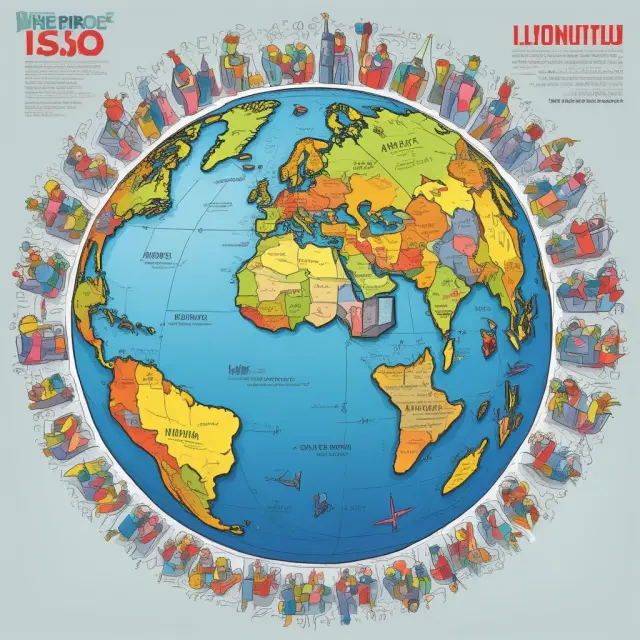
Founding of ISO and Its Membership Structure
The International Organization for Standardization (ISO) was founded with a noble mission to ensure the world’s industrial, commercial, and technological development is achieved through the establishment and implementation of unified international standards. Established in 1947 and headquartered in Geneva, Switzerland, ISO has its roots dating back to the International Federation of the National Standardizing Associations (ISA), founded in the 1920s. With a vision to facilitate global trade and promote international collaboration, the United Nations Standards Coordinating Committee (UNSCC) proposed the formation of the International Organization for Standardization as an alternative to the ISA after its suspension during World War II.
ISO’s membership consists of national standards bodies (NSBs), representing each country. These NSBs are appointed by their respective governments and act as ISO’s primary point of contact within their countries. While individuals and companies cannot become direct members, they can collaborate with the ISO by participating in various committees or working groups.
ISO maintains a strategic direction through its General Assembly, consisting of all member organizations, which meets annually to discuss organizational objectives and establish policies. The governing body responsible for managing day-to-day operations is the 20-person ISO Council, which is comprised of representatives from various sectors and industries.
The organization’s extensive portfolio currently includes over 24,362 standards, categorized into numerous domains. ISO standards address a diverse range of industries, including healthcare technology, railway engineering, jewelry, clothing, metallurgy, weapons, paint, civil engineering, agriculture, aircraft, and more. By providing a uniform foundation for global industries, ISO promotes safety, reliability, and quality in products, processes, and services.
In summary, the International Organization for Standardization was founded to provide a unified system of standards that would facilitate international trade and collaboration. Its membership consists of national standards bodies, and it offers opportunities for individuals and companies to contribute through various committees and working groups. With its extensive portfolio of over 24,000 standards, ISO plays an integral role in shaping the industrial, commercial, and technological landscape worldwide.

ISO’s Role in Developing Standards: An Overview
The International Organization for Standardization (ISO) is renowned for its role in developing, publishing, and implementing a wide range of international standards that provide guidelines for ensuring safety, reliability, and good quality in various industries. By establishing common technical specifications among countries, ISO plays an essential part in enabling seamless trade and collaboration between organizations worldwide.
ISO’s extensive catalog currently contains over 24,362 standards across numerous sectors, including healthcare technology, railway engineering, jewelry, clothing, metallurgy, weapons, paint, civil engineering, agriculture, and aircraft. The organization also publishes technical reports, specifications, publicly available specifications, technical corrigenda, and guides to further support the application of these standards.
The development of ISO standards is overseen by a diverse group of international experts in their respective fields. These individuals include manufacturers, sellers, buyers, customers, trade associations, users, or regulators who work together to ensure that international standards are both practical and effective for their industries. By creating consensus-based documents, ISO fosters cooperation between countries and sectors, contributing to a more interconnected global economy.
Two of the most widely recognized ISO standards are ISO 9001 and ISO 14001. ISO 9001 sets the criteria for quality management systems, helping organizations ensure that their operations meet the requirements for customer satisfaction and regulatory compliance. ISO 14001, on the other hand, provides guidelines for environmental management systems to minimize the impact of business activities on the environment while maintaining efficiency and productivity.
Examples of ISO standards can be found throughout our daily lives, from calibrating thermometers to establishing food safety regulations. In addition, ISO standards extend to manufacturing processes, such as the production of wine glasses or shoes, ensuring consistency in size, shape, and quality. Standards related to security management and environmental management provide essential guidelines for organizations striving to protect their assets and minimize their ecological footprint.
By establishing these common technical specifications, ISO plays a crucial role in facilitating global trade, as companies can trust that the products they receive from international partners will meet certain minimum standards. This shared understanding of best practices enables businesses to collaborate effectively and build lasting relationships with their counterparts around the world, ultimately benefiting economies and consumers alike.

Key ISO Standards Relevant to Finance and Investment
Two popular standards published by the International Organization for Standardization (ISO) that hold significant relevance for the finance and investment sectors are ISO 9001 and ISO 14001. While both standards offer general guidelines, they target specific areas of organizational management – quality management systems (QMS) in case of ISO 9001, and environmental management systems (EMS) with ISO 14001. In the following sections, we will discuss these standards in detail, shedding light on their implications for the finance and investment industries.
ISO 9001: Quality Management Systems
ISO 9001 is a widely adopted standard that focuses on establishing and maintaining quality management systems within organizations. The standard’s primary goal is to ensure that all processes, procedures, and practices meet customer expectations, improve overall performance, and increase efficiency. This can be particularly valuable for financial institutions as they strive for operational excellence and enhanced client satisfaction. ISO 9001 sets out a systematic approach to managing quality through various aspects of an organization:
- Leadership: The top management commits to the development, implementation, maintenance, and improvement of its QMS.
- Involvement of people: All employees are responsible for understanding their roles in the system and actively contributing to its success.
- Process approach: A systematic process-oriented approach is implemented to manage all activities related to the organization’s objectives.
- Documented information: Records and documentation serve as a basis for continual improvement, providing evidence of compliance with requirements.
- Continuous improvement: Regular review of processes, practices, and performance metrics leads to ongoing enhancements in the QMS.
- Factual approach: Decision-making is based on accurate data and objective evidence, rather than speculation or guesswork.
- Mutually beneficial supplier relationships: Effective collaboration with suppliers and partners contributes to maintaining a high level of quality throughout the entire supply chain.
- Customer focus: The primary goal of ISO 9001 is to enhance customer satisfaction by consistently delivering quality products and services, as well as addressing their evolving needs.
ISO 14001: Environmental Management Systems
ISO 14001 provides criteria for establishing EMS within an organization. Its objective is to minimize the negative impact on the environment while improving resource efficiency and reducing costs. In the context of finance and investment, this can be vital for financial institutions looking to limit their environmental footprint and manage potential risks associated with climate change and sustainability concerns. ISO 14001 comprises several elements:
- Context of the organization: Understanding the organization’s significant environmental aspects, goals, and stakeholders.
- Leadership: Top management commitment to establishing, implementing, maintaining, and continually improving the EMS.
- Engagement of people: Involvement and motivation of all employees in setting up, following, and promoting the system.
- Process approach: Systematic approach to managing environmental risks and opportunities through various processes.
- Documented information: Development, implementation, and maintenance of a documented EMS.
- Continuous improvement: Regular review of the organization’s environmental performance and setting new objectives for improvements.
- Compliance with applicable laws and regulations: Ensuring compliance with all relevant environmental legislation and other requirements.
- Internal communication: Effective communication channels regarding environmental issues and objectives within the organization.
- External communication: Informing stakeholders about environmental performance, initiatives, and progress.
- Performance evaluation: Establishing performance indicators and metrics to assess the effectiveness of the EMS.
By incorporating ISO 9001 and ISO 14001 standards into their operations, financial institutions can reap numerous benefits including improved operational efficiency, enhanced customer satisfaction, risk mitigation, and a stronger commitment to corporate sustainability. In turn, these advantages contribute to increased investor confidence in the institution’s long-term success and resilience.

ISO in Practice: Real-World Examples
International Organization for Standardization (ISO) has a significant impact on various industries through the development and implementation of standards. ISO 9001 and ISO 14001 are two widely recognized and utilized standards that demonstrate this influence. Let’s take a closer look at how these standards have been applied in real-world situations, focusing on food safety, manufacturing, and quality management systems.
Food Safety
ISO 22000, an application of the ISO 9001 standard, is designed specifically for organizations involved in food production, processing, packaging, or distribution. The primary goal is to ensure that food products are safe at each stage from raw materials to finished goods. Implementing this standard results in a risk-based approach to food safety management, which includes the identification and assessment of hazards, implementation of control measures, and continuous improvement processes.
Manufacturing:
ISO 9001 plays a crucial role in manufacturing industries by providing a framework for organizations to manage their quality systems effectively. The standard helps ensure that customers’ requirements are met while continuously improving product quality. This results in reduced costs due to decreased waste, increased efficiency, and improved customer satisfaction.
Quality Management Systems
ISO 9001 is not limited to manufacturing industries; it can also be applied to service providers such as hospitals, schools, and banks. A bank implementing ISO 9001 would focus on improving customer service through processes like complaint handling, staff training, and performance measurement. The standard’s continuous improvement aspect ensures that the organization remains responsive to customers’ evolving needs and expectations.
ISO 14001: Environmental Management Systems
ISO 14001 is another widely used ISO standard, focusing on environmental management systems. It requires organizations to identify and control their environmental impacts while continuously improving their environmental performance. By implementing this standard, organizations can reduce waste, improve resource efficiency, enhance reputation, and comply with legal requirements. A real-world example includes Toyota Motor Corporation, which implemented ISO 14001 across all its manufacturing sites worldwide. This led to improved sustainability practices, reduced energy usage, and enhanced public trust in the automaker’s commitment to environmental responsibility.
In conclusion, International Organization for Standardization (ISO) plays a pivotal role in various industries by providing a consistent framework for managing processes, ensuring quality, and promoting continuous improvement. ISO standards such as ISO 9001 and ISO 14001 are widely adopted in food safety, manufacturing, and environmental management systems to improve operational efficiency, reduce waste, enhance customer satisfaction, and increase sustainability.

The Economic Impact of ISO Standards on Companies
ISO standards can have a significant positive impact on companies that implement them. These standards provide numerous financial benefits by improving operational efficiency, reducing costs, increasing productivity, and enhancing overall business performance. In fact, studies suggest that implementing ISO certifications like ISO 9001 (for quality management systems) or ISO 14001 (for environmental management systems) can lead to a reduction in costs, an improvement in product quality, and better customer satisfaction.
ISO Standards: An Investment in Business Improvement
Implementing ISO standards is not just about compliance; it’s also an investment in the long-term growth and success of a company. By adhering to international standards set by organizations like the International Organization for Standardization (ISO), businesses can demonstrate their commitment to quality, safety, and continuous improvement to customers, investors, and regulatory bodies. Furthermore, ISO certifications provide a competitive edge in industries where quality and environmental performance are essential factors.
Reducing Operational Costs
One of the primary benefits of ISO standards is the reduction in operational costs. Implementing these standards allows companies to streamline their processes, eliminate waste, and minimize errors. For example, the implementation of ISO 9001 can lead to a more efficient production process, resulting in cost savings through increased productivity and a reduction in scrap or rework.
Improving Product Quality and Customer Satisfaction
ISO standards also have a significant impact on product quality and customer satisfaction. By implementing best practices outlined in ISO standards like ISO 9001 and ISO 14001, companies can improve the consistency of their products and services. This commitment to quality helps foster customer loyalty and trust, leading to repeat business and positive word-of-mouth marketing.
ISO Standards: A Catalyst for Continuous Improvement
ISO standards encourage a culture of continuous improvement within organizations. By adopting these standards, businesses invest in their long-term growth by focusing on enhancing their processes and staying up-to-date with industry best practices. This approach helps companies remain competitive and adapt to changing market conditions more effectively, ensuring they can meet the evolving demands of their customers.
ISO 9001: The Standard for Quality Management Systems
ISO 9001 is a widely adopted international standard that focuses on quality management systems. By implementing this standard, organizations demonstrate their dedication to providing products and services that consistently meet customer requirements. The implementation process involves conducting an internal analysis of the company’s strengths, weaknesses, opportunities, and threats (SWOT analysis) and establishing corrective and preventative actions to address any identified issues. ISO 9001 also emphasizes the importance of top management commitment, employee engagement, and continuous improvement in business processes.
ISO 14001: The Standard for Environmental Management Systems
ISO 14001 is another widely adopted international standard that focuses on environmental management systems. By implementing this standard, organizations can demonstrate their dedication to minimizing their environmental impact while maintaining regulatory compliance and continuous improvement. This approach not only benefits the environment but also improves the bottom line through cost savings associated with improved resource efficiency, waste reduction, and increased customer satisfaction due to a company’s commitment to sustainability.
In conclusion, implementing ISO standards offers numerous financial benefits for companies, including cost savings, improved product quality, increased productivity, and enhanced overall business performance. By committing to these internationally recognized best practices, businesses can demonstrate their dedication to quality and continuous improvement to customers, investors, and regulatory bodies, giving them a competitive edge in their industries.

ISO and Investor Confidence: A Connection
The International Organization for Standardization (ISO) plays a critical role in shaping the global business landscape by establishing and maintaining international standards. One significant impact ISO has on various industries is strengthening investor confidence through its comprehensive, uniform, and widely adopted set of benchmarks. In this section, we delve into the crucial link between adherence to ISO standards and increased investor trust, showcasing their importance for finance and investment professionals.
ISO’s Reach: Broadening the Trust Horizon
The International Organization for Standardization is a renowned global body with a presence in 167 countries, encompassing a diverse range of industries and sectors. The organization’s membership structure consists of national standards bodies, ensuring that it remains an essential touchpoint for companies worldwide. ISO standards cover various aspects of business operations, such as quality management (ISO 9001), environmental management (ISO 14001), food safety (ISO 22000), and information security (ISO 27001).
The Importance of International Standards for Investor Confidence: A Perspective from the Finance Industry
The adoption of ISO standards by companies can have a profound impact on their overall financial performance as it increases investor confidence. This effect is especially evident in the finance industry, which heavily relies on trust and transparency to attract capital and foster long-term business relationships. By implementing ISO standards, organizations demonstrate a commitment to upholding consistent quality, adhering to international best practices, and maintaining a strong focus on continuous improvement.
Two Prominent ISO Standards: 9001 and 14001 – A Double Dose of Confidence Boosters
ISO 9001 and ISO 14001 are two of the most popular international standards within the finance industry and beyond. These widely adopted benchmarks focus on quality management systems (ISO 9001) and environmental management systems (ISO 14001). By obtaining these certifications, companies not only showcase their commitment to maintaining high levels of quality and sustainability but also provide investors with a reliable indicator of the organization’s long-term potential.
For instance, ISO 9001 certification is essential for businesses seeking to win contracts from governments or major corporations that demand proof of a robust quality management system. By implementing this standard, organizations can ensure their processes are efficient and effective while also providing consistent customer satisfaction.
ISO 14001 certification, on the other hand, highlights a company’s dedication to minimizing its environmental impact and continuously improving its sustainability practices. As investors increasingly focus on Environmental, Social, and Governance (ESG) factors when making investment decisions, companies with this certification are considered better positioned to weather regulatory changes, avoid potential risks, and meet the evolving demands of their stakeholders.
ISO’s Role in Enhancing Global Trade: Unifying Standards for a Connected World
ISO standards serve as a universal language that fosters seamless trade among nations by providing a common foundation for businesses to build upon. The organization’s focus on uniformity and consistency ensures that companies can expand their operations internationally, knowing that they will encounter familiar standards that will enable them to streamline processes, reduce costs, and gain a competitive edge in the global marketplace.
A Real-World Example: ISO 9001 and ISO 14001 – Driving Business Success
Consider the story of XYZ Corporation, an international manufacturer with production facilities in several countries. By implementing both ISO 9001 and ISO 14001 standards across its entire organization, XYZ Corporation was able to enhance its reputation for delivering high-quality products while minimizing its environmental footprint. This commitment to continuous improvement not only increased investor confidence but also opened doors to new business opportunities, solidifying the company’s position as a trusted partner in various industries.
In conclusion, ISO standards have become an integral part of the global business landscape by providing a universal framework for companies to build upon and fostering trust among stakeholders. For finance and investment professionals, understanding the role and significance of ISO certifications can be a game-changer when it comes to evaluating potential investments, managing risk, and identifying long-term growth opportunities.

ISO’s Role in Global Trade: Standardizing Processes Across Borders
One of the most significant impacts of the International Organization for Standardization (ISO) on finance and investment lies within the realm of global trade. ISO standards provide a common language, ensuring consistency across industries and borders. This uniformity plays an essential role in enabling seamless trade between countries, as it allows businesses to operate efficiently in international markets while meeting regulatory requirements.
The International Organization for Standardization began with a mission to develop and publish a wide range of proprietary, industrial, and commercial standards. Today, ISO has over 24,362 standards that cover all fields, including healthcare, technology, manufacturing, security, and the environment. By creating standardized guidelines, ISO empowers industries worldwide to improve their processes and increase efficiency, ultimately leading to cost savings for businesses and better products or services for consumers.
ISO standards are internationally agreed upon by experts in various industries. These individuals collaborate with the organization to develop criteria that meet the specific needs of their sectors. Two popular ISO standards, ISO 9001 and ISO 14001, demonstrate the impact of the organization on businesses across industries. ISO 9001 focuses on quality management systems while 14001 covers environmental management systems.
An example of an ISO standard’s importance can be seen in the manufacturing industry, where consistency is vital for companies to maintain their competitive edge in international markets. ISO standards for manufacturing processes ensure that production methods meet specific requirements, enabling companies to provide reliable and uniform products to customers around the world. This global adoption of consistent standards not only benefits businesses but also increases investor confidence by providing a measure of quality control across various industries and geographies.
The World Trade Organization (WTO) recognizes the importance of international standards in promoting economic growth and reducing trade barriers. The organization has adopted several agreements that emphasize the role of international technical regulations, including the Agreement on Technical Barriers to Trade (TBT). This agreement calls for countries to base their regulatory measures on internationally recognized standards such as those developed by ISO, rather than creating their unique standards. By doing so, the WTO aims to simplify trade negotiations and create a more harmonious global trading environment.
In conclusion, the International Organization for Standardization plays an indispensable role in facilitating world trade by providing common standards among different countries. This uniformity enables businesses to operate efficiently in international markets while meeting regulatory requirements. The importance of ISO standards is further underscored by their impact on industries like manufacturing and finance, which rely on consistent processes to maintain their competitive edge and provide value to clients. As globalization continues to evolve, the relevance of international standards will only grow stronger.

ISO and Regulations
The International Organization for Standardization (ISO) plays a significant role in the development of regulations that impact various industries, particularly finance and investment. The organization creates international standards to address specific challenges and requirements, ensuring uniformity, reliability, and efficiency. In collaboration with governments, regulators, and other organizations, ISO works towards setting common benchmarks for global trade that promote fair practices and maintain a level playing field.
ISO standards influence regulations in several ways. One important role is by providing a framework of best practices that can be incorporated into regulatory requirements. By using globally recognized standards as a foundation, governments can create regulations that build upon established principles and ensure that they are compatible with international norms. This can simplify the process of complying with multiple regulatory bodies and reduce the administrative burden for businesses.
Moreover, ISO standards contribute to enhancing transparency and consistency in regulations across borders. They establish a common language and understanding among regulators, industry experts, and other stakeholders. By adhering to these internationally accepted standards, organizations demonstrate their commitment to maintaining high levels of quality, safety, and sustainability—key aspects that are often the focus of regulatory initiatives.
Financial institutions, in particular, benefit significantly from ISO standards. Compliance with these standards can help financial organizations mitigate risk, improve operational efficiency, and ultimately create a more favorable environment for growth. For example, implementing ISO 27001—an international standard for information security management systems (ISMS)—can help financial institutions protect their valuable data against cyber threats. This compliance not only strengthens their internal controls but also gives investors and clients increased confidence in the organization’s ability to safeguard their assets.
ISO 31000, an international risk management standard, can be integrated into regulatory frameworks for the financial sector to address potential risks effectively. By using ISO 31000 as a guideline, regulators can create more comprehensive and effective regulations that help mitigate risks while promoting stability within the financial market.
In conclusion, ISO plays a critical role in shaping and influencing regulations in various industries, including finance and investment. By providing globally accepted standards, ISO ensures that businesses and organizations have a consistent framework to follow while enhancing transparency, reducing administrative burdens, and promoting best practices. As regulations continue to evolve, the importance of ISO’s role in creating international benchmarks will only grow stronger.
Investors and financial professionals who understand the impact of ISO standards on regulatory frameworks can better position themselves for success by staying informed and incorporating these standards into their investment strategies. By focusing on organizations that adopt best practices and demonstrate a commitment to quality, investors can make more informed decisions and enhance their long-term performance.

Conclusion: The Long-Term Value of ISO Standards for Finance and Investment Professionals
The International Organization for Standardization (ISO) has been a crucial player in ensuring the reliability, safety, and quality of products and services across various industries since its founding in 1947. With over 24,362 international standards covering diverse sectors, including healthcare technology, railway engineering, jewelry, clothing, metallurgy, weapons, paint, civil engineering, agriculture, aircraft, and more, ISO has been instrumental in enabling global trade by providing common ground among different countries.
However, the significance of ISO extends beyond its role as a standard-setting organization. For finance and investment professionals, understanding and implementing ISO standards is essential for maintaining a competitive edge and delivering value to clients. In this section, we will explore two popular ISO standards—ISO 9001 and ISO 14001—and discuss their importance in the financial and investment sectors.
ISO 9001: An Essential Quality Management Standard for Finance and Investment Firms
ISO 9001 is a renowned quality management system standard that provides criteria for managing and maintaining consistent processes to ensure services or products meet customer expectations. By adhering to ISO 9001, financial and investment organizations can demonstrate their commitment to providing high-quality services, enhancing client trust, and building long-lasting relationships.
ISO 14001: A Must-Have Environmental Management Standard for the Financial Sector
ISO 14001 is an environmental management system standard that specifies requirements for organizations to establish and implement a systematic approach to managing their environmental responsibilities. In today’s world, where sustainability is a growing concern for investors, financial institutions can benefit significantly from obtaining ISO 14001 certification as it demonstrates their commitment to reducing their carbon footprint and minimizing the potential risks associated with non-compliance.
Real-world examples of companies successfully implementing these standards underscore their importance in fostering confidence among clients, stakeholders, and investors. For instance, a study by the International Labor Organization (ILO) revealed that 84% of respondents from companies using ISO 9001 were more likely to report increased business performance. Moreover, research conducted by the University of Manchester Institute of Science and Technology (UMIST) concluded that there was an average increase of 25% in profitability for firms adhering to both ISO 9001 and 14001 standards.
As the financial industry continues to evolve with new challenges, such as increasing regulations and changing market demands, embracing international standards like ISO 9001 and ISO 14001 will be crucial for organizations striving to remain competitive and meet their clients’ expectations.
FAQs:
Question: What is the International Organization for Standardization (ISO)?
Answer: The International Organization for Standardization (ISO) is an international nongovernmental organization made up of national standards bodies that develops and publishes a wide range of proprietary, industrial, and commercial standards. It was founded in 1947 with the goal of ensuring that products and services are safe, reliable, and of good quality, thereby facilitating global trade.
Question: How can finance and investment professionals benefit from ISO standards?
Answer: Finance and investment professionals can benefit from ISO standards by implementing them to maintain a competitive edge in their industries, demonstrate commitment to high-quality services, and build trust with clients. Popular ISO standards for finance and investment include ISO 9001 (Quality Management Systems) and ISO 14001 (Environmental Management Systems).
Question: What are some real-world examples of companies that have successfully implemented ISO standards?
Answer: Numerous companies have benefited from implementing ISO standards. For instance, a study by the International Labor Organization revealed that 84% of respondents reported increased business performance after adopting ISO 9001. Additionally, research conducted by the University of Manchester Institute of Science and Technology concluded that there was an average increase of 25% in profitability for firms adhering to both ISO 9001 and 14001 standards.
In conclusion, the International Organization for Standardization plays a pivotal role in setting standards that ensure the reliability, safety, and quality of products and services across various industries. For finance and investment professionals, understanding and implementing ISO standards can help them maintain a competitive edge, build trust with clients, and meet regulatory requirements. By staying informed about relevant ISO standards and their implications, these professionals will be better equipped to navigate the evolving financial landscape and provide value to their clients.

FAQs About ISO and Its Impact on Finance and Investment
What is the International Organization for Standardization (ISO)?
The ISO is an independent, non-governmental international organization made up of national standards bodies from various countries. It develops and publishes a wide range of proprietary, industrial, and commercial standards covering all fields to ensure safety, reliability, and good quality in industries worldwide.
Who can become a member of the ISO?
ISO is composed of representatives from national standards organizations, not individuals or companies. There’s only one member per country. However, industry experts can collaborate with the organization through various means.
What are some common types of publications produced by the ISO?
ISO produces standards, technical reports, technical specifications, publicly available specifications, technical corrigenda, and guides to facilitate international cooperation on standardization.
How does the ISO impact finance and investment?
ISO standards contribute significantly to investor confidence by ensuring that businesses adhere to internationally recognized guidelines for quality and sustainability, leading to increased market competitiveness and better risk management practices.
What are some popular ISO standards relevant to finance and investment?
Two widely used ISO standards in the finance and investment sectors are ISO 9001 (quality management systems) and ISO 14001 (environmental management systems). These standards can help organizations improve their operational efficiency, reduce risks, and enhance their reputation.
What is ISO 9001?
ISO 9001 is a standard that focuses on quality management and quality assurance, designed for various industries to develop and maintain their quality systems. The standard addresses areas such as relationship management, customer focus, and leadership.
What is an example of an ISO standard in finance and investment?
One example of an ISO standard relevant to finance and investment is ISO 31000:2018, Risk Management – Guidelines for Integrated Risk Management. This standard provides principles and general guidelines on establishing, implementing, operating, monitoring, reviewing, maintaining, and improving a risk management system.
What role does the ISO play in facilitating global trade?
ISO standards provide common ground among countries, ensuring that products and services meet international requirements for safety, reliability, and good quality. This enables seamless transactions across borders while fostering trust and reducing risks for all parties involved.
 Next entry · No. 2,468Understanding International Bonds: Types, Advantages, and Risks
See also
-
 No. 1,425
13 Sep 2024
21 min
Export Trading Companies: An Invaluable Resource for International Businesses
International Trade
No. 1,425
13 Sep 2024
21 min
Export Trading Companies: An Invaluable Resource for International Businesses
International Trade -
 No. 5,356
01 Sep 2025
20 min
Understanding the Role and Workings of the U.S. House Financial Services Committee
Business Finance
No. 5,356
01 Sep 2025
20 min
Understanding the Role and Workings of the U.S. House Financial Services Committee
Business Finance -
 No. 5,321
30 Aug 2025
17 min
Understanding Unusual Items: Separating One-Time Gains and Losses for Transparent Financial Reporting
Business Finance
No. 5,321
30 Aug 2025
17 min
Understanding Unusual Items: Separating One-Time Gains and Losses for Transparent Financial Reporting
Business Finance -
 No. 5,068
09 Aug 2025
17 min
Understanding the Treasury Stock Method for Professional Investors: Calculating Diluted Earnings Per Share (EPS)
Business Finance
No. 5,068
09 Aug 2025
17 min
Understanding the Treasury Stock Method for Professional Investors: Calculating Diluted Earnings Per Share (EPS)
Business Finance -
 No. 4,740
13 Jul 2025
18 min
Standardization in Finance and Investment: Ensuring Consistency and Comparability
Business Finance
No. 4,740
13 Jul 2025
18 min
Standardization in Finance and Investment: Ensuring Consistency and Comparability
Business Finance -
 No. 4,706
10 Jul 2025
18 min
Understanding Standard & Poor’s (S&P) – The Global Leader in Credit Ratings and Financial Market Indices
Business Finance
No. 4,706
10 Jul 2025
18 min
Understanding Standard & Poor’s (S&P) – The Global Leader in Credit Ratings and Financial Market Indices
Business Finance