Understanding The Wall Street Journal Prime Rate: A Comprehensive Guide for Institutional Investors

A comprehensive guide on understanding the Wall Street Journal Prime Rate and its implications for institutional investors.
What Is the Wall Street Journal Prime Rate?
The Wall Street Journal Prime Rate (WSJ Prime) is a significant benchmark in the financial sector that represents the average prime lending rate charged by the ten largest banks in the United States to their most creditworthy clients. This rate, which is regularly published by The Wall Street Journal, provides investors and financial professionals with a clear indication of the prevailing borrowing conditions for high-quality customers.
The WSJ Prime Rate: Historical Background
The WSJ Prime Rate has an extensive history that spans over half a century. Since its inception, it has exhibited considerable fluctuations in response to various economic conditions. For instance, it touched an all-time low of 3.25% in December 2008 and reached a record high of 21.50% in December 1980. As of August 2021, it stands at the same level as its December 2008 low. The rate is generally dictated by changes from the Federal Reserve’s Federal Open Market Committee (FOMC), which meets every six weeks and sets the federal funds rate.
Components of WSJ Prime Rate: A Market Survey of 10 Major US Banks
The Wall Street Journal determines the prime rate by conducting a market survey among the ten largest banks in the United States. When seven or more of these banks adjust their prime lending rates, The Wall Street Journal publishes a new prime rate. This practice has been ongoing since 1986 and has become an essential reference point for determining the prevailing borrowing conditions for high-quality customers.
Usage and Impact of WSJ Prime Rate on Various Lending Products
The Wall Street Journal Prime Rate is widely used in various lending products, including mortgages, home equity loans, car loans, and other credit facilities. It serves as an indexed rate that influences the pricing of these financial instruments for both fixed-rate and variable-rate options. Changes in the prime rate can significantly impact borrowers’ monthly payments and overall debt servicing obligations.
Understanding Variable Rate Products and the Impact of Prime Rate Changes on Borrowers
Variable rate products, such as adjustable-rate mortgages (ARMs), adjust periodically based on changes in underlying indexed rates like the prime rate. For instance, if a borrower’s mortgage has an adjustment frequency of once per year and an initial interest rate that is 2% below the prime rate, any change in the prime rate will directly impact their monthly payments. Borrowers with variable-rate products should closely monitor the prime rate to anticipate changes in their debt servicing obligations and plan accordingly.
Comparative Analysis: Prime Rate vs. Other Indexed Rates (LIBOR and U.S. Treasury)
The Wall Street Journal Prime Rate is often compared to other indexed rates such as LIBOR and the U.S. Treasury rate when discussing borrowing conditions in various financial markets. While these rates share some similarities, they serve different purposes and provide distinct perspectives on the overall economic landscape. A thorough understanding of each rate and their relationship with one another can help investors make more informed decisions.
The Role of the WSJ Prime Rate in Institutional Investing
For institutional investors, the Wall Street Journal Prime Rate is a vital metric that offers valuable insights into the borrowing environment for large financial institutions. It provides a benchmark to compare lending conditions across various banks and informs investment decisions related to credit spreads, yield curves, and other financial instruments.
Recent Trends and Future Outlook for the Wall Street Journal Prime Rate
The recent trends in the prime rate reflect the evolving economic landscape and the Federal Reserve’s monetary policies. Understanding these trends can help investors anticipate future changes and position their portfolios accordingly. In this section, we will discuss recent prime rate fluctuations, the implications for borrowers and lenders, and the potential impact on various financial instruments.
FAQs about The Wall Street Journal Prime Rate for Institutional Investors
In conclusion, the Wall Street Journal Prime Rate is a crucial benchmark in the financial sector that offers valuable insights into borrowing conditions for high-quality customers. Understanding its historical background, components, usage, and impact on various lending products can help institutional investors make more informed decisions. In this section, we will address some frequently asked questions about the WSJ Prime Rate and provide additional context to further enhance your understanding of this essential financial metric.
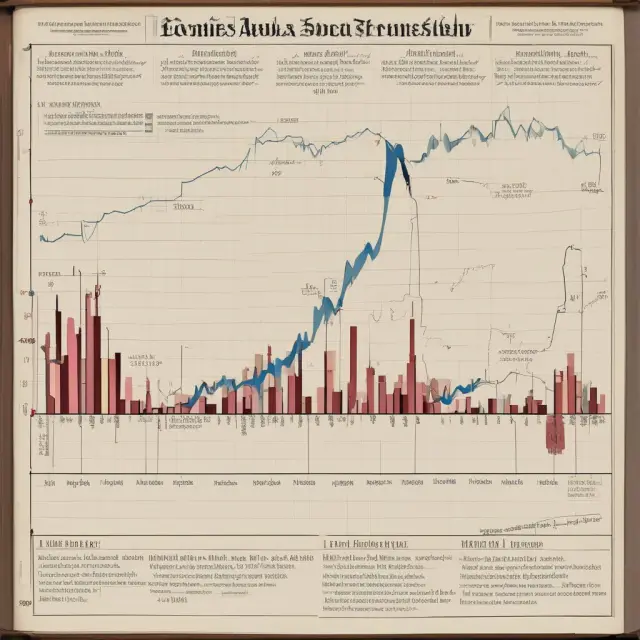
Historical Background of the WSJ Prime Rate
The Wall Street Journal Prime Rate is an essential financial benchmark, serving as a reflection of the prevailing borrowing costs for top-tier consumers and businesses in the United States. This average prime rate is calculated by aggregating the individual prime rates of the 10 largest banks in the country. Published regularly by The Wall Street Journal (WSJ), this composite prime rate is a valuable indicator of market conditions, lending practices, and monetary policy changes.
First introduced in 1938, the WSJ prime rate has experienced substantial fluctuations throughout history. In the early 2000s, the rate stood at an elevated level of 9.5%, while it reached a record low of 3.25% during the global financial crisis in December 2008. Another milestone was recorded in Dec. 1980 when the prime rate peaked at an astounding 21.5%. As of Aug. 2021, the WSJ prime rate is currently holding steady at 3.25% once again.
The Wall Street Journal compiles this data through a market survey of the 10 largest banks in the United States and publishes updates whenever seven or more of these financial institutions adjust their prime rates. This practice ensures that the WSJ prime rate remains an accurate, up-to-date measure of the prevailing prime borrowing costs for top-tier consumers and businesses.
The Federal Reserve’s Federal Open Market Committee (FOMC) is a primary determinant of the Wall Street Journal Prime Rate’s direction. The FOMC meets every six weeks to report on the level of the federal funds rate, which heavily influences the WSJ prime rate due to its historical relationship being approximately 3% higher. As such, changes in monetary policy decisions by the Federal Reserve can significantly impact the composite prime rate.
Furthermore, the WSJ prime rate provides valuable insights into various lending products, including mortgages, home equity loans and lines of credit, and car loans. These financial instruments often utilize the prime rate as an indexed rate for their interest rates. When the WSJ prime rate rises or falls, it can significantly influence borrowing costs for individuals and businesses holding variable-rate loans and credit products tied to this benchmark.
In conclusion, the historical background of the Wall Street Journal Prime Rate reveals its critical role in the financial landscape as a leading indicator of market conditions, lending practices, and monetary policy changes. By understanding this rate’s history, investors can gain valuable insights into the broader economic environment and position themselves accordingly.

The Role of Federal Reserve in Determining the Prime Rate
When it comes to understanding the Wall Street Journal Prime Rate, it’s essential to acknowledge the significant influence of the Federal Reserve on this crucial figure. The Fed, through its monetary policies and interest rates, plays a substantial role in shaping the prime rate.
The federal funds rate, which is set by the Federal Open Market Committee (FOMC) of the Federal Reserve, serves as the foundation for determining commercial banks’ prime rates. In essence, the prime rate functions as a benchmark for borrowing and lending among financial institutions, with prime serving as the starting point for most other interest rates.
The WSJ prime rate, calculated by averaging the prime rates of the 10 largest U.S. banks, reflects this relationship closely. The FOMC meets every six weeks to assess economic conditions and reports on the level of the federal funds rate. Subsequently, when seven or more of the 10 banks polled by The Wall Street Journal change their prime rates, a new WSJ prime rate is published.
Historically, the prime rate has undergone considerable fluctuations in response to changes in monetary policy and economic conditions. During times of economic growth or expansion, the Federal Reserve may lower interest rates, leading to a decrease in the prime rate. Conversely, during periods of recession or financial instability, the Fed raises interest rates, causing an increase in the prime rate.
The WSJ prime rate has historically been approximately 3% higher than the federal funds rate. This relationship highlights the substantial influence the Federal Reserve’s monetary policies have on the prime rate. As a result, understanding the Federal Reserve’s actions and intentions is vital for institutional investors seeking to make informed decisions in their investment strategies.
As of August 2021, the WSJ prime rate stands at 3.25%, which is currently the same as the federal funds rate set by the Federal Reserve. This alignment signifies a period of low interest rates, providing potential opportunities for certain types of investments. However, investors must remain vigilant and stay informed about any changes in the economic landscape and the Fed’s monetary policies to adapt their investment strategies accordingly.

Components of WSJ Prime Rate: A Market Survey of 10 Major US Banks
The Wall Street Journal Prime Rate is a widely recognized benchmark in the financial industry, representing the average prime lending rates charged by ten major US banks to their most creditworthy customers. This rate, which is published regularly by The Wall Street Journal (WSJ), offers valuable insights into the overall health and direction of the banking sector.
The determination of the WSJ Prime Rate occurs through a market survey conducted by The Wall Street Journal, polling the ten largest American banks to discover their respective prime rates. When at least seven of the ten banks modify their prime rate, the WSJ publishes an updated prime rate on its Market Page.
The prime rate serves as the foundation for numerous financial products and lending instruments. For instance, it is commonly used as a reference point in variable-rate mortgages, home equity loans, lines of credit, and auto loans. Moreover, it provides a starting point for other interest rates within the financial market.
The Federal Reserve’s Federal Open Market Committee (FOMC) plays a significant role in shaping the WSJ Prime Rate as its monetary policies influence this benchmark rate. When FOMC adjusts the federal funds rate, which acts as the basis for the prime rate, the prime rate typically follows suit with a lag.
In a fluctuating economy, understanding how the WSJ Prime Rate changes can provide crucial information for institutional investors and borrowers alike. For instance, if a majority of banks surveyed by WSJ raise their prime rates, it is generally a strong indicator that variable rates are on the rise for borrowers with credit cards or adjustable-rate mortgages.
The historical record shows that the WSJ Prime Rate has experienced significant fluctuations over time, reflecting changes in economic conditions and the Federal Reserve’s monetary policies. The prime rate peaked at 21.50% in December 1980 before reaching a low of 3.25% in December 2008. As of August 2021, the WSJ Prime Rate remains at 3.25%.
In conclusion, the Wall Street Journal Prime Rate is an essential benchmark for assessing interest rates and gauging the direction of the financial sector. By understanding this rate’s historical context and its role as a reference point for various lending products, institutional investors can make informed decisions and stay ahead of market trends.

Usage and Impact of WSJ Prime Rate on Various Lending Products
The Wall Street Journal (WSJ) Prime Rate acts as a significant benchmark for lenders, serving as the foundation for various lending products including mortgages, home equity loans, and car loans. This section aims to shed light on how this widely recognized rate influences these types of loans.
A primary function of the prime rate is to serve as the lowest interest rate charged by banks to their most creditworthy customers. Beyond offering short-term loans to these select clients, it also functions as an indexed rate for variable credit products. The most common lending products that employ this rate include:
1. Mortgages: Prime rates are often used in adjustable-rate mortgages (ARMs), allowing borrowers to secure a lower initial interest rate compared to fixed-rate alternatives. However, these rates can vary over the loan’s lifespan, which is typically influenced by changes in the prime rate.
2. Home Equity Loans and Lines of Credit: Prime rates play an important role in home equity loans and lines of credit. These types of loans allow borrowers to access the equity they have accumulated in their homes by offering a line of credit that can be drawn upon as needed. Similar to mortgages, prime rates are used as indexed rates for these products, which fluctuate based on changes in the prime rate.
3. Car Loans: Prime rates can also influence car loans, particularly those with variable interest rates. When a borrower secures a car loan with a variable rate, they agree to pay an interest rate that is tied to a benchmark index like the prime rate. This means that changes in the prime rate will directly impact their monthly payments.
In summary, the WSJ Prime Rate serves as a critical foundation for various lending products, providing an essential reference point for lenders and borrowers alike. By understanding the impact of this influential benchmark, investors can make more informed decisions when navigating the financial landscape.
It is important to note that borrowers with variable rate loans or credit cards typically have their interest rates based on the underlying indexed rate (prime rate) and a margin determined by their credit profile. As such, borrowers should closely follow changes in the prime rate to anticipate shifts in their own interest payments.
Next, we delve deeper into the historical background of the Wall Street Journal Prime Rate and its role in monetary policy.

Understanding Variable Rate Products and the Impact of Prime Rate Changes on Borrowers
Variable rate products are a popular financing option for many consumers, particularly those seeking mortgages, home equity loans, car loans, and credit cards. The primary determinant for these rates is the Wall Street Journal Prime Rate, which serves as the benchmark reference index for various short-term interest rates. In this section, we will explore how variable rate products are influenced by prime rate fluctuations and the subsequent impact on borrowers with varying credit profiles.
Variable rate products are often tied to the prime rate through an adjustable margin or spread. This relationship ensures that any changes in the prime rate result in corresponding adjustments to the borrower’s interest rate. For instance, a borrower with a variable rate mortgage, car loan, or credit card would experience a change in their monthly payment as the underlying indexed rate fluctuates.
The impact of prime rate changes on borrowers is not uniform across credit profiles. A borrower’s creditworthiness significantly influences how the prime rate adjustments translate to changes in their variable rates. Generally, borrowers with higher credit scores enjoy lower margins and vice versa. Consequently, those with superior credit ratings face less severe interest rate hikes compared to their counterparts with weaker credit profiles.
To illustrate, let us consider a credit card borrower with a balance subjected to a variable annual percentage rate (APR). This rate is typically composed of the bank’s prime rate plus a margin or spread determined by the borrower’s creditworthiness. For instance, if the prime rate is 3.25%, and the borrower has a credit score-based margin of 15.99%, their interest rate would be 19.24%. If the prime rate increases to 4.25%, their interest rate would subsequently rise to 20.24%. This increase in the borrower’s interest rate can lead to an increased monthly payment and a higher overall cost of credit.
Moreover, variable rate products may be subjected to periodic adjustments based on the frequency defined in their respective contracts. For example, a credit card borrower may experience monthly or quarterly changes in their interest rate based on their credit agreement terms. In contrast, a mortgage borrower’s variable rate could adjust annually. It is essential for borrowers to stay informed about prime rate fluctuations and subsequent changes to their variable rates to effectively manage their debt obligations.
In conclusion, the Wall Street Journal Prime Rate plays an integral role in determining variable interest rates for various financial products such as mortgages, home equity loans, car loans, and credit cards. The impact of prime rate adjustments on borrowers varies depending on their credit profiles, making it crucial to monitor these changes closely and understand their potential implications.

Comparative Analysis: Prime Rate vs. Other Indexed Rates (LIBOR and U.S. Treasury)
The Wall Street Journal Prime Rate isn’t the only index used in lending products; it competes with other well-known rates such as LIBOR and the U.S. Treasury yield. Understanding these differences is crucial for institutional investors.
LIBOR, or London Interbank Offered Rate, represents the average interest rate at which banks offer unsecured loans to one another in the London interbank market. LIBOR serves as a benchmark for short-term borrowing costs in major global currencies and has been widely used since the late 1980s. Although LIBOR is influential, it differs significantly from the Wall Street Journal Prime Rate. While prime rate is an aggregate of the ten largest banks’ rates for their most creditworthy clients, LIBOR reflects interbank lending between large financial institutions.
Another major indexed rate frequently used in finance is the U.S. Treasury yield, specifically the 3-month Treasury Bill yield. This index represents the return on investment when an investor purchases a short-term government debt security with a maturity of three months. In contrast to both LIBOR and the prime rate, the U.S. Treasury yield acts as a risk-free rate since it is backed by the full faith and credit of the U.S. government.
The Federal Reserve’s monetary policies significantly impact all three rates: Wall Street Journal Prime Rate, LIBOR, and the U.S. Treasury yield. The prime rate typically moves in tandem with changes to the federal funds rate, while LIBOR often follows adjustments to the overnight index swap (OIS) rate. Conversely, the U.S. Treasury yield is affected by supply and demand factors, market expectations, and the Federal Reserve’s actions.
In terms of lending products, prime rates are commonly used as an index for variable-rate loans and credit cards, while LIBOR plays a role in various derivative instruments and structured products, including interest rate swaps, futures contracts, and options on futures. The U.S. Treasury yield is often utilized as a benchmark for fixed income securities like bonds and as a reference point for pricing other financial instruments such as mortgage-backed securities.
Institutional investors must consider the advantages and disadvantages of each index when constructing their investment strategies. Understanding the relationship between these rates and how they are influenced by monetary policies, global market trends, and economic conditions is essential to make informed decisions.

The Role of the WSJ Prime Rate in Institutional Investing
Understanding the importance and influence of The Wall Street Journal (WSJ) Prime Rate extends far beyond individual borrowers seeking favorable credit terms. Institutional investors, including hedge funds, mutual funds, pension funds, and other financial institutions, closely monitor this crucial benchmark as part of their investment strategies to assess market trends, gauge the overall health of the economy, and make informed decisions regarding their investment allocations.
Institutional Investors and WSJ Prime Rate: A Closer Look
Institutional investors play a pivotal role in shaping financial markets by managing large pools of assets for various clients and organizations. As a result, they require accurate and timely information to optimize their investment strategies and capitalize on market opportunities. The prime rate, published daily by the WSJ, serves as an essential gauge that informs these decisions, particularly in the context of interest rates.
The Wall Street Journal Prime Rate: A Comprehensive Index for Institutional Investors
Institutional investors use the WSJ prime rate to assess trends within various sectors and asset classes, analyze the performance of other investment vehicles, and evaluate the impact of monetary policy on their portfolios. For instance, changes in the prime rate may lead to shifts in bond yields or alter the relative attractiveness of various securities, influencing investor decisions accordingly.
Monitoring the Prime Rate: A Strategic Advantage for Institutional Investors
By keeping a close eye on the WSJ prime rate, institutional investors can potentially gain a competitive edge in their respective markets. They can use this benchmark as a starting point to evaluate and compare pricing structures, identify potential market trends, and assess the overall economic climate. Additionally, understanding how various lending products are priced against the prime rate enables investors to make more informed decisions on which investments or strategies to pursue.
Investment Strategies Impacted by WSJ Prime Rate
A few specific investment areas where the WSJ prime rate plays a significant role include:
1. Fixed Income Securities: The movement of the prime rate can impact various fixed income securities, including treasury bonds and mortgage-backed securities (MBS). When interest rates rise or fall, bond yields typically follow suit, leading investors to adjust their bond holdings accordingly.
2. Variable Rate Debt Securities: Institutional investors that hold variable rate debt securities will experience changes in the value of their investments based on fluctuations in the prime rate. These securities may include floating-rate notes and other types of floating or adjustable-rate bonds.
3. Structured Products: The WSJ prime rate is also relevant to structured products such as derivatives, swaps, and options, which can be sensitive to changes in interest rates. Institutional investors use the prime rate as a reference point when assessing risk and pricing for these complex financial instruments.
4. Currency Markets: The WSJ prime rate influences currency markets by affecting the relative attractiveness of various currencies. In turn, this can impact the performance of foreign investments held by institutional investors.
In summary, understanding the Wall Street Journal Prime Rate is crucial for institutional investors seeking to optimize their investment strategies and stay informed about market trends. As a widely recognized benchmark in the financial industry, its influence on various lending products, interest rates, and asset classes makes it an essential tool for making strategic decisions and maintaining a competitive edge.
Stay tuned for the next section of our article: Recent Trends and Future Outlook for the Wall Street Journal Prime Rate, where we will discuss the historical context and economic factors that have shaped the prime rate over the years, as well as its future implications for investors and the broader financial markets.

Recent Trends and Future Outlook for the Wall Street Journal Prime Rate
The Wall Street Journal (WSJ) Prime Rate, an essential indicator of the country’s economic health and borrowing landscape, has undergone notable fluctuations throughout history. With a rich background spanning nearly a century, this rate remains crucial in determining various lending products and setting benchmarks for creditworthiness.
The prime rate reached an all-time high during Dec. 1980 when it stood at 21.50%, while a historic low of 3.25% was recorded in Dec. 2008 (CNN Money, 2021). Since then, the prime rate has experienced significant changes, moving alongside economic trends and Federal Reserve monetary policy shifts.
The prime rate’s movements can be largely attributed to the Federal Open Market Committee’s (FOMC) decisions on the federal funds overnight rate, which influences the prime rate due to its close relationship with this key benchmark index. The WSJ prime rate has historically been approximately 3% above the federal funds rate, making it a critical gauge in understanding the direction of interest rates.
The most recent fluctuations have seen the prime rate drop back down to its current level of 3.25%, reflecting a continuation of the post-financial crisis era trend. This development is closely tied to the FOMC’s accommodative monetary policies aimed at stimulating economic growth and stabilizing financial markets.
Looking ahead, experts predict that future prime rate trends will depend on the course of the U.S. economy and inflation expectations. An improving macroeconomic climate could potentially lead to further increases in interest rates, while economic downturns may result in decreases or rate holds. Institutional investors would do well to closely monitor the prime rate for insights into market sentiment, borrowing costs, and potential implications on their investment strategies.
In conclusion, the Wall Street Journal Prime Rate remains a vital tool in assessing lending trends and borrowing rates across industries. As a key indicator of the U.S. economy, it will continue to provide valuable insight for institutional investors looking to navigate market conditions with confidence.

FAQs about The Wall Street Journal Prime Rate for Institutional Investors
Investors often have several questions when it comes to understanding the Wall Street Journal (WSJ) prime rate and its impact on various financial products. In this section, we will address some of the most common inquiries concerning the WSJ prime rate.
What is The Wall Street Journal Prime Rate?
The Wall Street Journal Prime Rate is an aggregate average of the prime rates that 10 of the largest banks in the United States charge to their highest credit quality customers for loans with relatively short-term maturities. This combined rate, which is published regularly by The Wall Street Journal, serves as a benchmark for interest rates across various financial products and industries.
What determines the WSJ Prime Rate?
The Wall Street Journal Prime Rate is calculated based on a market survey of 10 major US banks. When seven or more of these banks change their prime rate, The Wall Street Journal publishes a new prime rate. The Federal Reserve’s Federal Open Market Committee and its monetary policies also heavily influence the WSJ prime rate.
How does the Fed’s interest rate impact the WSJ Prime Rate?
The Federal Reserve’s interest rate, specifically the federal funds rate, is a primary factor that influences the Wall Street Journal Prime Rate. The WSJ prime rate is typically approximately 3% higher than the federal funds rate.
What types of financial products use the prime rate as an indexed rate?
The prime rate serves as an indexed rate for various lending products, including mortgages, home equity loans, car loans, and credit cards. These variable rate products have their interest rates determined by the prime rate, with borrowers’ credit profiles dictating any additional margin applied.
How does a change in the WSJ Prime Rate impact borrowers?
Changes to the Wall Street Journal Prime Rate can significantly influence borrowing costs for consumers. For instance, if the prime rate rises, variable rate loans and credit cards will see an increase in their interest rates as well. This can result in higher monthly payments for borrowers and potentially affect their overall financial situation.
Is there a difference between LIBOR and WSJ Prime Rate?
Both LIBOR (London Interbank Offered Rate) and the WSJ prime rate are commonly used indexed rates, but they differ in their calculation methods and sources. The WSJ prime rate is based on a survey of 10 major US banks, while LIBOR reflects the interest rates at which banks in London lend to one another.
What role does the WSJ Prime Rate play in institutional investing?
Institutional investors may use the Wall Street Journal Prime Rate as a benchmark for setting interest rates on variable rate securities and other financial products. Additionally, understanding changes to the prime rate can provide valuable insights into broader economic conditions and trends.
 Next entry · No. 5,590Wallflowers in Finance: Understanding Unpopular Stocks That Lie in Wait
See also
-
 No. 5,642
26 Sep 2025
20 min
Understanding the Weak Dollar: Consequences, Monetary Policy, and Trade
Business Finance
No. 5,642
26 Sep 2025
20 min
Understanding the Weak Dollar: Consequences, Monetary Policy, and Trade
Business Finance -
 No. 5,062
08 Aug 2025
20 min
Understanding Treasury Yields: Influence on Investors, Consumers, and the Economy
Business Finance
No. 5,062
08 Aug 2025
20 min
Understanding Treasury Yields: Influence on Investors, Consumers, and the Economy
Business Finance -
 No. 4,225
01 Jun 2025
22 min
Understanding Quantitative Easing 2: The Federal Reserve’s $600 Billion Economic Stimulus
Business Finance
No. 4,225
01 Jun 2025
22 min
Understanding Quantitative Easing 2: The Federal Reserve’s $600 Billion Economic Stimulus
Business Finance -
 No. 4,906
26 Jul 2025
22 min
Understanding the Taylor Rule: An Essential Guide for Institutional Investors
Finance Policy
No. 4,906
26 Jul 2025
22 min
Understanding the Taylor Rule: An Essential Guide for Institutional Investors
Finance Policy -
 No. 3,254
13 Mar 2025
22 min
Understanding Money Supply: Definition, Importance, and Determinants
Finance Policy
No. 3,254
13 Mar 2025
22 min
Understanding Money Supply: Definition, Importance, and Determinants
Finance Policy -
 No. 3,238
12 Mar 2025
17 min
Understanding Monetary Policy: Tools, Types, Goals, and Impact
Finance Policy
No. 3,238
12 Mar 2025
17 min
Understanding Monetary Policy: Tools, Types, Goals, and Impact
Finance Policy