Understanding Time In Force Orders: A Comprehensive Guide for Institutional Investors

Understanding the ins and outs of Time in Force Orders for Institutional Investors: Definition, types, advantages, disadvantages, best practices, and common…
Introduction to Time in Force Orders
Understanding time in force orders is vital for institutional investors and active traders seeking greater control over their trades. These instructions specify how long an order will remain valid with a broker before expiring, providing crucial flexibility. By utilizing various time in force options, traders can manage their open positions more efficiently, reduce risks, and ensure timely executions.
Time in Force Orders: Definition and Importance
A time in force (TIF) order is a vital instruction used when placing trades to indicate the duration of its validity before expiration. As investors gain access to increasingly sophisticated tools and features, understanding the nuances of TIF orders becomes essential for optimizing trading strategies and minimizing unnecessary risks.
The Importance of Setting Time Parameters
- Preventing unintended trade executions: By setting time parameters, traders can avoid accidental trades during volatile market conditions when prices are rapidly changing. Unintended trade executions can be costly, particularly in uncertain markets.
- Managing open positions: Proper use of TIF orders enables investors to keep track of their active orders and maintain an overview of their overall trading activities. This information helps make more informed decisions about market entry or exit points based on real-time data.
- Enhancing control over trade execution: TIF orders provide greater flexibility by allowing traders to specify the desired duration for each order, ensuring that their trades are executed according to their specifications.
- Minimizing unnecessary costs: By setting expiration dates, traders can save on unnecessary trading fees and commissions, as well as prevent duplicate transactions.
Understanding the Basics of Time In Force Orders
When placing a trade with a broker, it’s essential to consider the time in force option you prefer based on your investment strategy, market conditions, or other factors. The following section explores the various types of TIF orders and their applications for different trading scenarios.
Continued in the next post due to word limit.

Basics of Time In Force Orders
Understanding time in force orders is crucial for managing open trades effectively and avoiding unintended consequences. These instructions, used when placing an order, indicate the duration for which it remains active before expiring with your broker. With various order types available to cater to diverse trading strategies, let’s explore the importance of setting time parameters for limit orders.
First and foremost, time in force orders help traders keep a grip on their positions by preventing unintended trade executions. When market conditions are volatile, prices can change rapidly, potentially leading to costly mistakes if an order is executed unintentionally. By specifying the duration of an order, traders maintain control over their trades without constantly monitoring open positions.
Limit Orders and Time in Force: Limit orders are a popular choice for investors seeking to buy or sell securities at a specific price, known as the limit price. When placing a limit order, you set both the desired price and time frame for its execution. By determining the time in force, traders ensure that their order does not expire before reaching the specified target price.
Common Time In Force Options: While day orders are the most commonly used time in force option, other types cater to various trading strategies and market conditions. Below is a brief overview of several time in force options:
- Day Orders (DO): Canceled at the end of the current trading day if not executed.
- Good-Til-Canceled Orders (GTC): Effective until the trade is executed or canceled by the trader.
- Fill-or-Kill Orders (FOK): Canceled if not entirely filled at once.
- Market-on-Open Orders (MOO): Executed as soon as the market opens for trading.
- Limit-on-Open Orders (LOO): Executed when the market price reaches or goes beyond the specified limit price upon opening.
- Immediate-or-Cancel Orders (IOC): Filled immediately or canceled if not filled entirely.
- Day-til-Canceled Orders (DTC): Canceled at the end of the trading day, making it easier to resubmit the order the following day.
Understanding these time in force options and their implications will allow traders to make informed decisions that align with their investment objectives, risk tolerance, and market conditions. In our next section, we’ll dive deeper into real-life examples illustrating the usage and impact of various time in force orders.
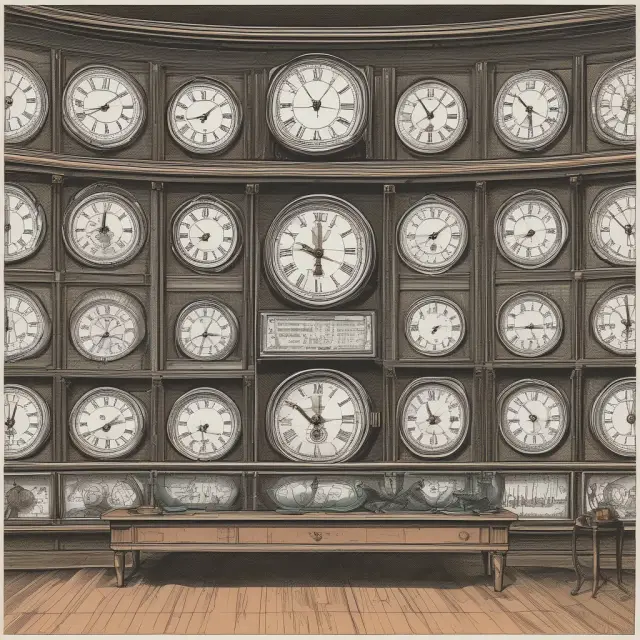
Types of Time In Force Orders
Time in force orders provide traders with an essential tool to manage open trades by defining how long they intend for their order to remain active. These orders are particularly crucial for active investors, who frequently deal with large volumes and volatile markets. Understanding various time in force options is vital to making informed decisions about your investment strategy. In this section, we will delve deeper into the different types of time in force orders:
- Day Orders (DO): A day order is a standard time in force instruction that specifies the trade must be executed before the market closes on the same day it was placed. These orders are often considered the default for brokerages and can save you from accidentally executing trades during volatile markets when prices change rapidly.
- Good-Til-Canceled Orders (GTC): GTC orders give traders more flexibility by keeping their instruction active until it’s executed, canceled, or expired due to circumstances beyond the trader’s control like stock splits, distributions, account inactivity, modified orders, and quarterly sweeps. These orders are particularly useful for long-term investors who aim to buy a stock at a specific price point and do not mind waiting for extended periods of time.
- Fill-or-Kill Orders (FOK): FOK orders are designed to avoid purchasing shares in multiple blocks at different prices or securing partial fills. In a fast-moving market, this type of order ensures that an entire order is executed as soon as it becomes available at the desired price, and any remaining shares are canceled if not filled immediately. This order is popular for day traders seeking to take advantage of market volatility and execute trades swiftly.
- Market-on-Open (MOO) Orders: MOO orders specify that an order will be executed as soon as the market opens, giving the trader a competitive edge by ensuring that their trade is filled at the most favorable price possible in volatile markets.
- Limit-on-Open Orders (LOO): Similar to a limit order, LOO orders specify a desired price for an asset but are only filled once the market opens and reaches the predefined price or better. This order type allows traders to place their trades before the market opens and take advantage of favorable conditions when the market becomes active.
- Immediate-or-Cancel Orders (IOC): IOC orders require that a trade is executed in its entirety as soon as possible, and if not completely filled, the order is automatically canceled. This type of order is useful for traders who want to avoid having their orders sit in the queue for extended periods while prices fluctuate.
- Day-til-Canceled Orders (DTC): DTC orders remain active until the end of the trading day when they are deactivated instead of canceled. This feature allows traders to easily resubmit an order if necessary before the markets open the next day.
Understanding these time in force order types can help you optimize your trading strategy and navigate volatile markets with confidence. By carefully selecting which order type suits your investment style and risk tolerance, you’ll be well on your way to executing successful trades that meet your objectives.

Examples of Time In Force Orders
Understanding the concept of time in force orders goes a long way in managing trades effectively and mitigating potential losses from unintended trade executions. Let us explore some real-life examples to help illustrate how different types of time in force orders can be employed to achieve specific investment goals.
Imagine an active trader, Mark, who aims to buy 500 shares of a volatile stock with the ticker symbol XYZ. He believes that the stock price will dip below its current market value of $38 per share before increasing significantly in the coming days. Mark decides to place a limit order with a time in force setting to secure a favorable entry price while minimizing potential losses if the price does not reach his target level.
Mark sets up an order for 500 shares of XYZ stock at a limit price of $34 per share, using a Day Order (DO). This means that the order will be valid until the trading day ends. If the stock price falls to $34 or below before the end of the trading day, Mark’s order will be filled automatically. However, if the stock price does not reach his target price by the close of the trading day, the order will be cancelled, and he would need to place a new one.
In another scenario, let us consider Sarah, an investor who has closely followed a particular company, DEF, for months and believes that the stock is undervalued at its current price of $20 per share. She intends to hold her investment for the long term but wants to ensure that she gets the best possible price while avoiding frequent checks on her account. In this case, Sarah would use a Good-Til-Canceled (GTC) order. By setting a limit price of $18 per share with a GTC order, Sarah can lock in her desired entry point without worrying about monitoring the order constantly or remembering to cancel it when her target price is met or market conditions change significantly.
On the other hand, John, an experienced trader looking for quick profits during highly volatile markets, might choose to employ Fill-or-Kill (FOK) orders to execute trades as soon as possible at a favorable price without having them split into multiple orders at different prices. For instance, if he believes that stock ABC will experience significant volatility and anticipates a rapid price change, John can place an FOK order for 100 shares of ABC with a limit price of $35 per share. If the market conditions do not meet his criteria, or if only a portion of the order is filled at the desired price, the entire order will be cancelled to prevent unwanted trade executions and potential losses.
Understanding the advantages and disadvantages of various time in force orders can help traders make informed decisions about their investment strategies and optimize their risk management efforts. Stay tuned for more information on best practices and common mistakes to avoid when implementing these powerful tools.

Advantages and Disadvantages of Different Types of Time In Force Orders
Understanding the various time in force options available can provide traders with essential control over their trades, allowing them to effectively manage risk while executing their investment strategies. In this section, we delve deeper into the advantages and disadvantages of each type of time in force order – Day, Good-Til-Canceled (GTC), Fill-or-Kill (FOK), Market-on-Open (MOO), Limit-on-Open (LOO), Immediate-or-Cancel (IOC), and Day-til-Canceled (DTC).
Day Orders
A day order is an instruction to buy or sell a security within the same trading session. This type of order is usually the default option for most brokerage accounts. One major advantage of a day order is that it guarantees execution during a single trading session, ensuring no open positions overnight. However, its downside is the risk of missing out on favorable price movements if the trade does not execute within the trading day.
Good-Til-Canceled Orders (GTC)
These orders remain active until they are executed or canceled by the trader. GTC orders are popular with long-term investors seeking to buy and hold stocks for extended periods while waiting for their desired price targets. The primary advantage of a GTC order is that it allows the trade to remain open indefinitely, increasing its potential for successful execution. However, there are some risks associated with this order type, such as potential slippage if market conditions change significantly over an extended period.
Fill-or-Kill Orders (FOK)
FOK orders require that all or none of the order is filled at once. The primary advantage of FOK orders is to ensure execution at a specific price point without having to worry about the order being split between multiple trades, thus reducing transaction costs. However, this order type may result in missed opportunities if the market conditions do not provide the required fill size at the specified price.
Market-on-Open Orders (MOO)
A MOO order is a conditional order that becomes active as soon as the market opens for trading. This order type can be useful when attempting to capture intraday volatility or profit from anticipated price swings early in the trading day. A key advantage of MOOs is their ability to execute immediately upon market open, ensuring potential entry at desired prices. However, traders need to keep in mind that the price may not always move in their favor, making proper risk management essential.
Limit-on-Open Orders (LOO)
A LOO order specifies a limit price to be executed only when the stock reaches or goes above its opening price during intraday trading. The advantage of this order type is that it offers potential entry at a specific, favorable price point while allowing for price appreciation beyond that point. However, there is always a risk that the limit price may not be reached throughout the trading session.
Immediate-or-Cancel Orders (IOC)
An IOC order instructs the brokerage to execute the entire trade immediately or cancel the entire order if it cannot be filled in its entirety at the current market price. The primary advantage of an IOC order is that it guarantees execution at the prevailing market price, ensuring no slippage. However, this order type may result in missed opportunities if the market does not provide sufficient liquidity to fill the entire order size.
Day-til-Canceled Orders (DTC)
A DTC order, also known as a Good ‘Til the End of the Day order, is executed before the end of the trading day or canceled at the trader’s discretion. The primary advantage of DTC orders is their flexibility – they allow traders to maintain open positions until the market closes without worrying about rollover fees or other charges associated with extended holdings. However, this order type does not provide any price protection and may result in unwanted execution at unfavorable prices if the trader is not actively monitoring the position.
Each time in force order provides distinct advantages and disadvantages tailored to different investment strategies. Understanding these nuances can help traders make informed decisions when placing orders, enabling them to effectively manage risk and optimize their trades while navigating the complexities of the financial markets.

Maximizing Efficiency with Time In Force Orders
Time in force orders are a powerful tool for traders and investors looking to optimize their trade execution strategies while minimizing potential risks. By setting specific time parameters, traders can control when an order is executed or cancelled. In this section, we’ll discuss strategies for maximizing efficiency with various types of time in force orders and explore how they can be combined to enhance your overall trading performance.
Strategies for Optimizing Time In Force Orders
- Understanding the pros and cons of each order type: The choice of an appropriate time in force order depends on your investment goals, market conditions, and personal preferences. Be well-versed in the advantages and disadvantages of day orders (DO), immediate-or-cancel (IOC) orders, fill-or-kill (FOK) orders, good-till-canceled (GTC) orders, market-on-open (MOO) orders, limit-on-open (LOO) orders, and day-til-canceled (DTC) orders.
- Combining order types: Consider using a combination of order types to improve your overall execution efficiency. For instance, you can use a limit order with an IOC or FOK order as a backup strategy to ensure the entire position is filled at the desired price in volatile market conditions.
- Monitoring market trends: Regularly review market trends and adjust your time in force orders accordingly. For example, if you suspect that a stock’s price will experience significant volatility, using GTC orders can be beneficial for taking advantage of favorable opportunities, while keeping your risk exposure minimal.
- Setting realistic targets: When setting time frames for your orders, consider the underlying market conditions and historical price data. Avoid unrealistic expectations and aim for achievable goals to maximize your chances of successful trade execution.
- Accounting for market holidays and other events: Be aware of upcoming market holidays or other significant events that might impact your trades. Adjusting your time in force orders to account for these factors can help minimize potential losses or missed opportunities.
In the following sections, we’ll delve deeper into each type of time in force order, providing real-life examples and discussing their key benefits and limitations. Stay tuned to become a more effective trader and investor by mastering the art of utilizing time in force orders to your advantage.

Practical Uses and Considerations
Understanding time in force orders is crucial for institutional investors looking to efficiently manage their trades while mitigating risks. This section covers real-world examples of when and how to effectively implement various types of time in force orders, along with factors influencing the choice of a specific order type.
Day Orders (DO)
Day orders are ideal for investors looking to execute trades during regular market hours or while closely monitoring market conditions. These orders cancel once trading ends for the day and do not roll over into the next session. Day orders can be useful when attempting to take advantage of intraday price movements or limiting potential losses in volatile markets.
Example: An investor may use a day order to sell a stock during a sudden downturn, hoping to minimize loss without leaving an open position overnight.
Good-Til-Canceled (GTC) Orders
GTC orders are suitable for long-term strategies and investors willing to wait for favorable market conditions before executing trades. These orders remain active until the trade is executed or canceled manually by the investor, making them ideal for those with a longer investment horizon. GTC orders can be particularly useful in volatile markets, where price movements may warrant patience in order to maximize profits.
Example: A trader might place a GTC order to purchase a specific stock once it reaches a certain target price, even if that price is months or years away.
Fill-or-Kill (FOK) Orders
Fill-or-kill orders are used when investors want to ensure their entire order is executed at a single price point. These orders are canceled if the trade cannot be filled in full as soon as it becomes available, preventing unwanted price slippage and minimizing potential losses.
Example: In highly volatile markets, a large institutional investor may opt for FOK orders when purchasing or selling a significant number of shares to minimize price impact on the market.
Market-on-Open (MOO) Orders
Market-on-open orders are executed as soon as the market opens for trading. These orders can be useful for investors looking to capitalize on price movements at the start of a trading session, taking advantage of liquidity and stability that may not be present later in the day.
Example: An investor may place an MOO order to sell a stock they believe will experience significant declines once the market opens, aiming to secure a good exit price.
Limit-on-Open (LOO) Orders
Limit-on-open orders are similar to market-on-open orders but with a specified limit price. These orders are placed at a set price before the market opens and will be executed only when that price is reached, providing investors with more control over their entry price.
Example: An investor may place an LOO order for a stock they believe will experience significant price increases once the market opens but wants to ensure they enter at a specific, profitable price point.
Factors Influencing the Choice of a Specific Order Type
Several factors should be considered when choosing the appropriate time in force order type:
- Market volatility and liquidity: Depending on current market conditions, certain order types may be more advantageous than others. For instance, volatile markets with high liquidity might favor GTC or FOK orders, while less volatile markets could benefit from DO or MOO orders.
- Investment horizon: Longer-term strategies may call for GTC orders, while short-term traders may prefer day orders or IOC to capitalize on intraday price movements and minimize risks.
- Market conditions: Understanding the current market environment can help determine the best order type for a specific situation, such as high volatility, low liquidity, or fast-moving markets.
- Trading goals and objectives: Ultimately, an investor’s trading goals and objectives should influence their decision to use one time in force order over another. For instance, an aggressive trader may prefer FOK orders to minimize price slippage, while a more conservative investor might opt for GTC orders to ensure they capture favorable market conditions.
In conclusion, effectively implementing time in force orders is vital for institutional investors seeking to manage their trades efficiently and mitigate risks. Understanding the various order types, along with factors influencing their usage, can help optimize trade execution and improve overall investment outcomes.

Time In Force Orders: Best Practices for Institutional Investors
Understanding time in force orders is crucial for institutional investors looking to effectively manage their trades and minimize risks associated with unintended executions. By setting specific time parameters on orders, traders can maintain better control over open positions and avoid the negative consequences of price volatility or market conditions beyond their expectations. Here are some best practices and guidelines for implementing time in force orders:
1. Set appropriate time limits: Each trade requires a well-defined time frame. Consider factors like the expected duration of market movements, the desired price level, and market volatility when setting time limits on your orders. This can help you manage risk, optimize trade execution efficiency, and minimize unintended consequences.
2. Understand various order types: Institutional investors should be familiar with different time in force order types such as Day (DO), Good-Til-Canceled (GTC), Fill-or-Kill (FOK), Market-on-Open (MOO), Limit-on-Open (LOO), Immediate-or-Cancel (IOC), and Day-til-Canceled (DTC) orders. Understanding their differences, advantages, and disadvantages can help investors make informed decisions regarding which order type to use in specific situations.
3. Optimize order execution: Combining order types strategically can lead to more efficient trade executions. For instance, placing a limit order with an IOC component guarantees that the entire order is filled immediately or not at all. This approach reduces the risk of having the order split into multiple transactions and ensures price certainty.
4. Consider market conditions: Adjust your time in force orders based on prevailing market conditions. In volatile markets, setting short-term time limits may be beneficial to reduce potential unintended consequences. In quieter markets, longer timeframes can help secure favorable prices.
5. Monitor open positions: Regularly reviewing open positions and their respective order types is essential for effective trade management. This practice ensures that you’re aware of any pending or unexecuted orders, allowing timely modifications or cancellations as required.
6. Risk management: Implementing time in force orders plays a critical role in managing risk by controlling the duration of open trades and minimizing exposure to unintended price fluctuations. Make sure your brokerage platform offers robust risk management features that enable customization and flexibility regarding order types and time limits.

Common Mistakes to Avoid with Time In Force Orders
Time in force orders are essential tools for managing open trades and can help traders avoid unintended consequences, but they also come with their own set of potential pitfalls. Here’s a list of common mistakes to watch out for when using time in force orders:
1. Failing to adjust time parameters: As market conditions change, it is essential to adjust the time in force settings accordingly. For instance, a day order may need to be changed into a GTC or IOC order depending on volatility and market movements. Ignoring this can lead to missed opportunities or unintended trade executions.
2. Overlooking the impact of market events: Some market events can significantly affect how time in force orders are executed, such as stock splits, distributions, or quarterly sweeps. Failing to account for these events can lead to unwanted outcomes, like premature cancellations or delayed trade execution.
3. Not setting appropriate order size and price: Careful consideration of the order size and price is crucial when placing a time in force order. Setting an unrealistic order size or price may result in missed opportunities or longer wait times for execution.
4. Forgetting to review open orders: Regularly monitoring open orders is essential, as market conditions can change quickly. Overlooking the status of active orders increases the risk of missing important market movements and potential profits.
5. Lack of familiarity with different order types: Understanding the various time in force order types and their advantages and disadvantages is crucial for effectively managing trades. Misusing or misunderstanding the purpose of a specific order type can lead to missed opportunities, unnecessary risk, or wasted resources.
To avoid these common mistakes and maximize the benefits of time in force orders, it is essential to stay informed about market conditions, monitor open orders regularly, and familiarize yourself with the various order types. By doing so, you’ll be able to effectively manage your trades and capitalize on market opportunities while minimizing risks.

FAQs about Time In Force Orders
Frequently asked questions regarding time in force orders can help clarify any confusion surrounding their use and purpose for institutional investors. Below are answers to some of the most common queries on this topic.
What is a time in force order, and why is it crucial for active traders?
A time in force order is an instruction given when placing a trade that indicates how long it will remain valid with your broker before expiring. These orders are essential for active traders to prevent unintended executions during volatile market conditions, ensuring better control over their trades.
What types of time in force orders are available?
Several types of time in force orders include day orders (valid until the close of the trading day), good-’til-canceled (GTC; effective until the trade is executed or canceled), fill-or-kill (FOK; canceled if the entire order does not execute at once), market-on-open (MOO; executes as soon as the market opens), limit-on-open (LOO; placed before the market opens, then executed at the market open price), immediate-or-cancel (IOC; must be filled immediately or canceled), and day-til-canceled (DTC; deactivated at the end of the trading day).
Can I set a time in force for limit orders?
Yes, it’s highly recommended to set a time parameter for limit orders since these orders allow traders to control the price they pay per share. Setting a time in force option ensures that old trades are canceled automatically if not executed within the specified period.
Why should I use different types of time in force orders?
Each order type serves unique purposes based on trading objectives and market conditions. For instance, day traders may prefer fill-or-kill (FOK) orders to secure a single execution price for their entire trade, while long-term investors might opt for good-’til-canceled (GTC) orders to patiently wait for the desired stock price before executing their trades.
What can be some real-world examples of time in force order usage?
For instance, a trader expecting the market to move against them soon might use an immediate-or-cancel (IOC) order, instructing their broker to execute the trade immediately or cancel it if the market doesn’t provide a favorable price. Alternatively, a trader following a value investing strategy could place a good-’til-canceled (GTC) order to buy stocks at the target price and hold them for the long term.
By understanding these FAQs about time in force orders, institutional investors can make more informed decisions when managing open trades and optimize their overall investment strategies effectively.
 Next entry · No. 4,982Valuing Businesses Using the Times-Revenue Method: An Overview
See also
-
 No. 5,447
09 Sep 2025
22 min
Understanding Variable Universal Life (VUL) Insurance: A Comprehensive Guide for Institutional Investors
Finance Policy
No. 5,447
09 Sep 2025
22 min
Understanding Variable Universal Life (VUL) Insurance: A Comprehensive Guide for Institutional Investors
Finance Policy -
 No. 4,818
19 Jul 2025
23 min
Understanding Swaps: Types, Purposes, Structures, Regulation and Popular Variants
Finance Policy
No. 4,818
19 Jul 2025
23 min
Understanding Swaps: Types, Purposes, Structures, Regulation and Popular Variants
Finance Policy -
 No. 4,974
01 Aug 2025
22 min
Understanding Tier 2 Capital in Banking: Definition, Components, and Importance
Finance Policy
No. 4,974
01 Aug 2025
22 min
Understanding Tier 2 Capital in Banking: Definition, Components, and Importance
Finance Policy -
 No. 4,004
14 May 2025
21 min
Understanding Political Action Committees (PACs): A Comprehensive Guide for Institutional Investors
Finance Policy
No. 4,004
14 May 2025
21 min
Understanding Political Action Committees (PACs): A Comprehensive Guide for Institutional Investors
Finance Policy -
 No. 3,997
13 May 2025
21 min
The Plunge Protection Team: Myths and Facts About This Secretive Financial Group
Finance Policy
No. 3,997
13 May 2025
21 min
The Plunge Protection Team: Myths and Facts About This Secretive Financial Group
Finance Policy -
 No. 3,137
04 Mar 2025
23 min
Understanding Master-Feeder Structures: Advantages, Disadvantages, and Real-World Examples for Institutional Investors
Finance Policy
No. 3,137
04 Mar 2025
23 min
Understanding Master-Feeder Structures: Advantages, Disadvantages, and Real-World Examples for Institutional Investors
Finance Policy