Understanding Variable Costs in Finance and Investment: Definition, Importance, and Types

Explore the importance of variable costs in finance, their differences from fixed costs, calculation methods, and real-life business examples.
What Are Variable Costs?
Variable costs represent an essential component in the world of finance and investment. These business expenses fluctuate directly with changes in production or sales volume. As a company increases its output or revenue, variable costs rise accordingly. Conversely, when a company decreases its production or sales, its variable costs decline proportionally.
Understanding the distinction between variable costs and fixed costs is crucial for financial analysis and decision-making. Fixed costs remain constant regardless of changes in production levels or sales volume. Variable costs, on the other hand, are directly related to production output or sales. Examples of variable costs include raw materials, labor, utilities, commissions, and shipping expenses.
Raw materials, like leather or synthetic mesh for a manufacturer, are purchased specifically for production purposes. The cost incurred for these materials will increase if production volume increases. Similarly, commission costs for salespeople rise as sales grow, while utility expenses vary with production levels. In contrast, salaries paid to employees and insurance premiums are considered fixed costs as they remain constant regardless of changes in production or sales.
Variable costs play a significant role in determining a product’s contribution margin—the metric used to determine a company’s break-even point and target profitability level. A solid understanding of variable costs is vital for effective pricing strategies, budgeting, and performance measurement. In the following sections, we will discuss the importance of variable cost analysis and explore its applications in real-world scenarios.
Section Title: The Significance of Understanding Variable Costs in Finance and Investment
Understanding variable costs is crucial for both businesses and investors due to their impact on financial performance and decision-making. Properly analyzing variable costs helps organizations make informed choices about pricing, budgeting, and strategic planning. For instance, understanding the relationship between production volume and variable costs can help companies optimize operations by identifying the most efficient production levels and minimizing overall expenses.
Investors also benefit from knowledge of variable costs when assessing a company’s financial health and potential for future growth. By examining trends in a company’s variable cost structure, investors can gain insight into its pricing strategy, profitability, and competitive position in the market.
Section Title: Variable Costing vs. Fixed Costing: Key Differences
Variable costing and fixed costing are two accounting methods used to allocate costs for financial reporting purposes. While variable costs fluctuate with production output or sales volume, fixed costs remain constant. Understanding these differences is essential for accurate financial analysis and decision-making. In the following sections, we will delve deeper into the concepts of variable costing and fixed costing.
Section Title: Determining Variable Costs: Formula and Calculation
Calculating variable costs per unit can provide valuable insights for businesses and investors alike. By determining the exact cost associated with each unit of output, organizations can optimize their production processes and make informed pricing decisions. The formula for calculating total variable costs is straightforward; however, proper allocation of these costs across multiple products may require additional steps. In the following section, we will discuss this calculation in detail along with real-world examples.
Section Title: Types of Variable Costs: Raw Materials, Direct Labor, Commissions, Utilities, and Shipping
Variable costs can be categorized into various types depending on their nature and relationship to production or sales. The five primary categories are raw materials, direct labor, commissions, utilities, and shipping. Each of these cost types plays a distinct role in the manufacturing or distribution process. In this section, we will explore each category in detail, providing real-world examples to illustrate their significance.
Section Title: Variable Cost Analysis: Why It Matters for Pricing, Budgeting, Break-Even Point, and Profitability
Variable cost analysis is an essential tool for businesses and investors seeking to understand financial performance and make informed decisions. By analyzing variable costs, organizations can optimize pricing strategies, allocate resources efficiently, and assess the impact of production or sales changes on profitability. In this section, we will discuss the significance of variable cost analysis and its application in various aspects of business operations.
Section Title: Variable vs. Average Variable Costs: What’s the Difference?
Variable costs per unit and average variable costs are closely related concepts that often create confusion. While variable costs represent the cost associated with producing a single unit, average variable costs analyze production over time. In this section, we will explain the differences between these two concepts and explore their respective applications in financial analysis.
Section Title: Real-World Scenarios: Effective Management of Variable Costs in Practice
Understanding the importance of variable costs is essential for businesses seeking to optimize operations and increase profitability. In this section, we will explore real-world scenarios where effective management of variable costs has led to successful outcomes for various organizations. By examining these examples, readers can gain valuable insights into the practical applications of variable cost analysis in different industries and contexts.
Section Title: Challenges and Limitations: Accounting for Variable Costs in Complex Businesses
Though essential, accurately assessing variable costs can be a challenging task for organizations with complex business structures. This section will address the difficulties of accounting for variable costs in such businesses and explore potential solutions to ensure accurate financial reporting and analysis. By acknowledging these challenges, readers can develop a more comprehensive understanding of variable cost management and its applications in modern business environments.
Section Title: FAQ: Common Questions About Variable Costs and Their Impact on Finance and Investment
This section will answer frequently asked questions about variable costs and their implications for finance and investment. By addressing common queries, readers can deepen their understanding of this crucial concept and apply it to their own financial analysis and decision-making processes.

The Significance of Understanding Variable Costs in Finance and Investment
Variable costs play a vital role in financial analysis and decision-making for businesses and investors alike. By understanding the implications of variable costs, we can make informed choices that impact profitability, pricing strategies, and resource allocation. Let’s dive deeper into why this knowledge is essential.
Firstly, variable costs are crucial when setting product prices. A company aims to competitively price its goods to recover production costs. Variable cost analysis helps us grasp the inputs for our products, enabling us to determine the revenue per unit required to make a profit.
Variable costs significantly impact budgeting and planning. Let’s say a company plans to double its output next year. To achieve this goal, it must be aware that variable costs will also proportionally increase. Understanding these costs is essential for strategic expansion or contraction plans.
Moreover, variable costs help determine the break-even point. The break-even point marks where a company covers all its expenses and starts generating a profit. To calculate the break-even point, we need to know the total fixed costs, contribution margin, and total sales needed to cover those fixed costs. Variable cost analysis allows us to identify this critical point accurately.
Variable costs also determine margins and net income. Gross margin (revenue – cost of goods sold), profit margin (net sales – operating expenses), and net income calculations depend on both fixed and variable costs. By performing variable cost analysis, we can evaluate the impact of scaling or decreasing output on profit calculations.
Lastly, understanding variable costs aids in making informed decisions regarding expense structure. For instance, a company must choose between paying a fixed rent fee versus a variable cost per unit manufactured. This decision significantly affects leverage and earning potential.
To illustrate the importance of variable costs, let’s consider an example involving an e-commerce business specializing in selling handmade jewelry. As they scale up their production, their primary variable costs include raw materials such as beads and threads, labor for assembly, and packaging materials. By understanding these variable costs, the company can price its products competitively, create accurate budgets, identify its break-even point, and optimize profitability based on the volume of sales.
In conclusion, grasping the concept of variable costs is essential for financial analysis and decision making in finance and investment. Understanding these costs allows us to make informed pricing strategies, create effective budgets, determine profitability, and evaluate expense structures. By considering the impact of variable costs on a company’s operations, we can maximize efficiency and ultimately increase overall profitability.
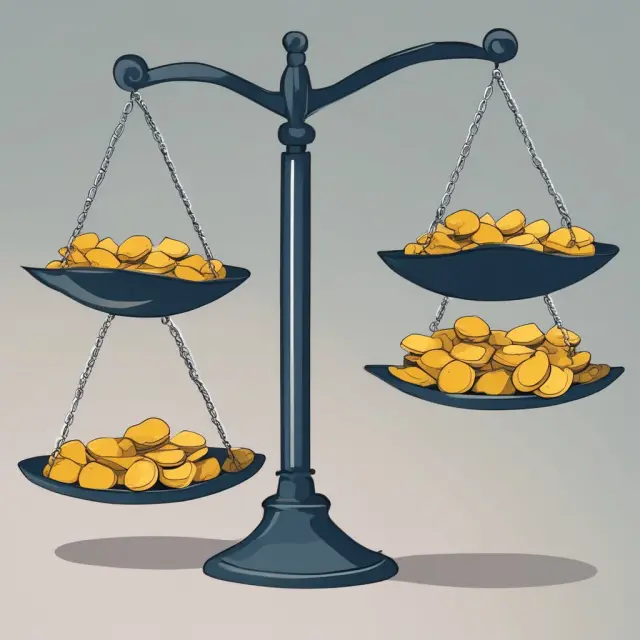
Variable Costing vs. Fixed Costing: Key Differences
When examining a company’s financial statements, it is essential to distinguish between variable and fixed costs. These two cost categories significantly affect the profitability of a business and the way we analyze its performance. Understanding their fundamental differences can provide valuable insights for investors and financial analysts.
Variable Costs: What Goes Up When Production or Sales Increase?
Variable costs are expenses that change in proportion to production output or sales volume. In other words, they increase when production or sales increase and decrease when production or sales decrease. Variable costs can be contrasted with fixed costs, which do not vary depending on the production level. Examples of variable costs include raw materials, direct labor, utilities, commissions, and shipping expenses.
Variable Costs’ Impact on Financial Analysis
Understanding variable costs plays a crucial role in various financial analyses. The following are some of the key areas where variable costs are essential:
- Determining Product Pricing: Variable costs help companies price their goods competitively to recover the cost of production. By analyzing these costs, firms can identify what they need to charge per unit to make a profit.
- Budgeting and Planning: Variable costs are vital for strategic planning as they increase or decrease proportionally with the changes in output. Companies need to consider variable costs when planning production and setting targets to ensure they have enough resources to meet their goals.
- Break-Even Point Analysis: Variable costs contribute to determining a company’s break-even point, which is an essential measure for businesses seeking to understand how many units they must sell to cover their fixed expenses and generate profit.
- Profitability Measurement: Gross margin, profit margin, and net income calculations involve variable costs, making them crucial components of financial statements.
- Expense Structure: Variable costs impact a company’s expense structure and profitability by providing insight into the relationship between revenue and production costs.
The Differences Between Variable and Average Variable Costs
Although similar in name, variable cost and average variable cost serve distinct purposes:
Variable Cost: A specific product’s total cost of raw materials, labor, utilities, and other inputs required for producing a single unit or batch. This cost varies with each production run or sales transaction.
Average Variable Cost: The average amount spent on variable costs over a given period, calculated by dividing the total variable costs by the total quantity produced during that time frame. Average variable cost can help businesses analyze their long-term efficiency and identify the optimal production levels to minimize costs.
The primary difference between the two is the time frame: variable cost focuses on individual units or transactions, while average variable cost considers production over a longer period. Understanding these differences allows for more comprehensive financial analysis, enabling businesses to make data-driven decisions on pricing, budgeting, and production planning.
In conclusion, recognizing variable costs’ significance and understanding the key differences between variable and fixed costs is crucial for any investor or financial analyst. By mastering these concepts, you will be well-equipped to interpret financial statements, evaluate a company’s profitability, and make informed investment decisions.

Determining Variable Costs: Formula and Calculation
Variable costs are expenses that change in proportion to the level of production or sales volume. They increase when production or sales increase and decrease when production or sales decrease. To understand how variable costs are calculated, let’s delve into the formula and some real-life examples.
Formula: The calculation for determining variable costs is simple. Total variable cost equals the total quantity of output multiplied by the variable cost per unit of output:
Total Variable Cost = Total Quantity of Output × Variable Cost Per Unit of Output
Let’s assume a company produces 1,000 units of a product and each unit has a variable cost of $2. The total variable cost for producing 1,000 units would be:
Total Variable Cost = 1,000 units × $2/unit = $2,000
To determine the variable cost per unit, simply divide the total variable cost by the number of units produced:
Variable Cost Per Unit = Total Variable Cost / Total Quantity of Output
Variable Cost Per Unit = $2,000 / 1,000 units = $2/unit
Types of Variable Costs
There are several common types of variable costs that businesses incur during production and sales processes. By understanding these categories, investors can better grasp the financial implications of a company’s operations. Some common examples include raw materials, direct labor, commissions, utilities, and shipping/freight costs.
1) Raw Materials: These are the essential components that companies buy to create their products. For instance, when an athletic apparel producer does not make shoes, it doesn’t incur the cost of leather, synthetic mesh, canvas, or other raw materials. Generally speaking, the company should spend roughly the same amount on raw materials for every unit produced.
2) Direct Labor: Some labor costs vary with production volume. For example, employees who are paid by the hour will earn more when working longer hours to produce more output. Commissions are another variable labor cost category that is a percentage of sales revenue. No commissions are earned when no sales occur.
3) Utilities: Electricity and other energy sources used in manufacturing processes vary with production. The more units produced, the higher the utility consumption and costs.
4) Shipping/Freight: These costs only materialize when goods are packaged and shipped. Therefore, shipping/freight costs vary depending on the quantity of units shipped.
Variable cost analysis is crucial for several reasons: it helps determine pricing, budgeting, break-even points, and profitability. Understanding these concepts enables investors to make informed decisions regarding a company’s financial performance. In the following sections, we will explore the significance of variable costs in finance and investment, as well as its differences from fixed costs, in more detail.

Types of Variable Costs: Raw Materials, Direct Labor, Commissions, Utilities, and Shipping
Variable costs make up a significant portion of the expenses incurred by businesses. These costs increase or decrease depending on production volume or sales levels. Understanding variable costs is essential for financial analysis and strategic decision-making in finance and investment. In this section, we will delve deeper into five common types of variable costs: raw materials, direct labor, commissions, utilities, and shipping.
1. Raw Materials:
Raw materials are the primary inputs required to produce a finished product. For example, if a manufacturing company does not produce shoes, it won’t incur the cost of leather, synthetic mesh, canvas, or other raw materials. Generally, a company will spend roughly the same amount on raw materials for every unit produced, assuming no significant differences exist between producing one unit and another.
2. Direct Labor:
Direct labor refers to wages paid to employees directly involved in production processes. Their compensation may vary depending on the hours worked or units produced. For instance, an hourly wage worker’s earnings increase as more units are manufactured, whereas a salaried employee’s compensation remains constant regardless of output levels.
3. Commissions:
Commissions represent a percentage of sales proceeds awarded to employees as additional compensation. Commissions can only be incurred when sales transactions take place. As the commission structure is usually tied to specific performance targets, commissions vary with different activity levels.
4. Utilities:
Utilities, such as electricity and natural gas, are essential for manufacturing processes and production activities. When a company increases its output or ramps up production, it’s likely that additional power or energy will be required. In this example, utilities usually vary with production volume, making them a variable cost category.
5. Shipping:
Shipping costs occur when transporting finished goods from the manufacturer to the customer or distributor. These expenses are only incurred when units are shipped, so they fluctuate depending on the quantity of goods sent. Although some fixed components may be present (like an internal mail distribution network), most ancillary shipping costs are considered variable costs.
Understanding these variable cost categories is crucial for financial analysis, pricing strategies, budgeting, and break-even point determination. In the next section, we will explore how variable cost analysis plays a pivotal role in these areas.

Variable Cost Analysis: Why It Matters for Pricing, Budgeting, Break-Even Point, and Profitability
Understanding variable costs is vital to businesses as they provide valuable insights into pricing, budgeting, break-even points, and profitability. Variable cost analysis delves deeper into the relationship between a company’s expenses and output. In this section, we discuss how variable cost analysis helps businesses make informed decisions on pricing strategies, budget plans, determining the break-even point, and understanding net income.
Firstly, variable cost analysis plays a crucial role in pricing strategies for companies. By closely examining variable costs, businesses can set competitive prices to cover their manufacturing costs. The ability to accurately calculate variable costs helps companies effectively price products to ensure profitability. For instance, if a company manufactures 10,000 units of a product at an average variable cost of $5 per unit and sets the selling price at $12, it would make a profit of $1 per unit after accounting for these costs (assuming no fixed costs).
Moreover, budgeting and planning are critical aspects of managing a business, and understanding variable costs is integral to this process. When businesses plan for growth or expansion, they must consider the associated increase in variable costs. For example, if a company aims to double its production output, it should anticipate an increase in raw materials, labor, utilities, shipping expenses, and other variable costs.
Variable cost analysis also plays a significant role in determining the break-even point for businesses. The break-even point is calculated by dividing fixed costs by the contribution margin per unit, which is determined by subtracting variable costs per unit from revenue. Understanding how variable costs impact the break-even point allows companies to evaluate their sales targets and adjust pricing strategies accordingly.
Lastly, analyzing variable costs contributes to understanding net income and profitability. Variable cost analysis provides businesses with valuable data on how scaling or decreasing output affects their profit calculations. For example, if a company decides to reduce production levels by 50%, it can anticipate a decrease in its variable costs, leading to increased net income.
In conclusion, understanding variable costs is essential for any business aiming to make informed decisions regarding pricing strategies, budget plans, break-even points, and profitability. By analyzing these costs, businesses gain a clearer perspective on their expenses and the financial implications of production and sales volume changes. In the following section, we’ll dive deeper into the calculation of variable costs and provide real-world examples of effective management in practice.

Variable vs. Average Variable Costs: What’s the Difference?
When discussing variable costs in finance and investment, it is important to clarify that variable costs are expenses that change depending on production volume or sales levels. In contrast, fixed costs remain constant regardless of changes in output. However, it is also crucial to understand the distinction between variable costs and average variable costs. This knowledge can help businesses make more informed decisions regarding pricing, budgeting, and profitability.
Variable Cost vs. Average Variable Costs: An Overview
To begin with, let’s define what variable costs are in the context of finance and investment. These costs are directly related to the production or sale of goods or services. They increase when output increases and decrease when output decreases. Examples include raw materials used in manufacturing, labor hours worked on a product, commissions paid to salespeople, and shipping expenses.
Now, let’s consider average variable costs. Average variable cost is the total variable costs divided by the total quantity of units produced. It provides insight into the cost per unit at an average level of output. The distinction between variable and average variable costs can be significant for various reasons.
Variable Costs Over Time: Understanding Average Variable Costs
When discussing variable costs, it’s important to consider how they change over time. For instance, let’s look at a company that manufactures bicycles. The cost of raw materials (steel, rubber, and other components) required to produce one unit of a bicycle remains consistent. However, if the company decides to increase its production volume, it will incur more total variable costs due to the additional units produced.
To understand how this translates into average variable costs, let’s assume the company increases production from 100 units per month to 500 units per month. The total variable cost for producing those 400 additional bicycles is $X. Dividing that amount by the increase in units (400), we find the average variable cost per unit at this new production level.
Average variable costs play an essential role in determining the most efficient production points for a business. They help companies understand when it makes sense to continue or discontinue certain operations based on their average variable cost structure. In some cases, producing fewer units may result in higher average variable costs, making it more economical for the company to shut down that line and focus on areas with lower average variable costs.
In conclusion, understanding the relationship between variable and average variable costs is crucial for making informed financial decisions in manufacturing, sales, and investment contexts. By examining the difference between these two types of costs, businesses can better understand their cost structures, optimize production levels, and ultimately improve profitability.

Real-World Scenarios: Effective Management of Variable Costs in Practice
Variable costs play a pivotal role in the financial decision making of businesses across industries. Understanding how to manage these costs can lead to significant savings and competitive advantages for companies. In this section, we will examine some real-world examples that illustrate best practices for managing variable costs effectively.
1. Automotive Industry: In automobile manufacturing, raw material costs such as steel and rubber make up a substantial portion of the variable expenses. Toyota, renowned for its lean production methods, implements Just-In-Time (JIT) inventory management. This system allows them to minimize waste, reduce holding costs, and optimize their supply chain. By closely monitoring demand, Toyota maintains minimal inventories, reducing their exposure to price fluctuations in raw materials.
2. E-commerce Retail: Online retailers face a myriad of variable costs, including shipping charges and credit card processing fees. Amazon, the market leader, has built a reputation for offering free two-day shipping on millions of items. To manage these costs, they have negotiated favorable shipping rates with carriers like UPS and FedEx. Additionally, they’ve invested in their own logistics network to control more aspects of the delivery process and mitigate the impact of fluctuating shipping costs.
3. Telecommunications Industry: Companies such as AT&T and Verizon face significant variable expenses related to network infrastructure and maintenance. To manage these costs, they utilize advanced cost modeling techniques and economies of scale to maximize efficiency. For instance, they invest in high-capacity fiber optic cables, allowing them to serve more customers with minimal additional investment. Moreover, they employ dynamic pricing strategies that adjust charges based on customer usage patterns and market conditions.
4. Agriculture Industry: In agriculture, variable costs are primarily associated with raw materials (seeds, fertilizers, water) and labor. Farmers have learned to leverage technology to manage these costs more effectively. Precision farming techniques employ satellite imagery, GPS, and sensors to optimize irrigation, minimize waste, and increase yields. Additionally, farmers collaborate with local cooperatives to collectively negotiate favorable prices for seeds and fertilizers.
5. Aerospace Industry: Boeing, the world’s largest aircraft manufacturer, faces immense variable costs due to the materials and labor involved in constructing its planes. To manage these costs, they have implemented lean manufacturing practices that minimize waste and improve efficiency. Moreover, they invest heavily in research and development to create more fuel-efficient aircraft, thereby reducing the long-term burden of fluctuating fuel prices.
These examples showcase how businesses can effectively manage their variable costs by implementing strategic planning, cost modeling techniques, and advanced technologies. By understanding these costs and optimizing operations accordingly, companies can maintain a competitive edge in their industries and ensure long-term financial success.

Challenges and Limitations: Accounting for Variable Costs in Complex Businesses
Variable cost accounting plays a vital role in determining the profitability of products or services, as they fluctuate directly with changes in sales volume or production output. However, assessing variable costs accurately can present challenges, particularly in complex businesses with multiple layers of operations and transactions. In this section, we explore some of these difficulties and propose solutions to help you manage and overcome them.
One significant challenge arises when dealing with indirect costs, which are not easily attributable to specific products or services. Indirect variable costs, such as overhead expenses related to the production process, may vary depending on the level of activity, but it can be challenging to allocate them accurately amongst different outputs. One solution is implementing an activity-based costing (ABC) system that assigns indirect costs based on actual cause-and-effect relationships between activities and products or services.
Another challenge arises when dealing with interdependent processes where variable costs vary in a nonlinear fashion. For instance, consider the relationship between raw materials and labor in the manufacturing process—when production volume increases, both raw materials consumption and labor requirements may not increase proportionally due to economies of scale or other factors. In this case, accurate variable cost estimation requires deep understanding of the underlying operational relationships within your business processes.
Moreover, as businesses grow and evolve, they often face changes in market conditions, customer demands, and competitive dynamics, which impact their variable costs. For example, fluctuating commodity prices or changing distribution channels could significantly impact a company’s material costs. To stay ahead of these challenges, it’s crucial to maintain a flexible costing system that can adapt to market shifts and accommodate new information as it arises.
Lastly, accurate variable cost analysis requires timely and reliable data collection, processing, and integration with other financial systems within the organization. In large and complex businesses, this can pose significant challenges, particularly when dealing with data from various sources or with inconsistent formats. Implementing robust IT infrastructure for data management, such as enterprise resource planning (ERP) systems or cloud-based solutions, can help streamline the process and minimize errors.
In conclusion, while variable costs are essential for understanding profitability and guiding strategic decision making in finance and investment, their accurate assessment can present significant challenges, particularly in complex businesses with multiple layers of operations and transactions. By implementing solutions such as activity-based costing, flexible costing systems, and robust data management tools, businesses can effectively manage variable costs and overcome these challenges to achieve operational efficiency and financial success.

FAQ: Common Questions About Variable Costs and Their Impact on Finance and Investment
Variable costs, an essential aspect of financial analysis and investment, often raise many questions for investors and financial analysts. This section addresses some frequently asked queries about variable costs and their impact on finance and investment.
What Is the Definition of Variable Costs?
A variable cost is a corporate expense that fluctuates directly with production volume or sales. It increases when the quantity produced or sold rises and decreases when production or sales decline. Examples include raw materials, direct labor costs, commissions, utilities, and shipping expenses.
What’s the Difference Between Variable Costs and Fixed Costs?
Variable costs vary with production volume or sales, while fixed costs remain constant regardless of the level of output. For instance, a company may have to pay rent each month, making it a fixed cost, whereas the cost of raw materials required for manufacturing is a variable cost.
How Do Variable Costs Impact Break-Even Point Analysis?
Variable costs are subtracted from revenues to determine contribution margin and help companies determine their break-even point—the sales volume at which revenue equals total costs. By understanding variable costs, businesses can price their products competitively while also covering all production expenses.
Are Variable Costs Short-Term or Long-Term Expenses?
Variable costs are generally short-term, as they tend to change with the business cycle or sales volume. For example, a manufacturer may increase raw material purchases when demand is high and decrease them during slow periods.
Can Variable Cost Analysis Help in Making Strategic Decisions?
Absolutely! Variable cost analysis enables businesses to make informed decisions on pricing, budgeting, product planning, and production capacity. It offers valuable insights into the relationship between costs and sales volume, allowing companies to optimize operations and maximize profits.
How Do You Calculate Variable Costs?
To calculate variable costs, multiply the number of units produced by the cost per unit: Total Variable Cost = (Number of Units) X (Variable Cost Per Unit).
What Are Some Examples of Variable Costs in Manufacturing?
Examples of variable costs in manufacturing include raw materials, direct labor, utilities, commissions, and shipping expenses. These costs change as production volume increases or decreases.
How Do Variable Costs Affect Gross Margin?
Gross margin is calculated by subtracting cost of goods sold (COGS) from revenue. COGS comprises both fixed and variable costs associated with manufacturing a product. Understanding variable costs helps businesses determine the contribution margin, which is the difference between revenue and variable costs, and gross margin.
Are Variable Costs an Important Metric for Investors?
Yes, variable costs are essential for investors as they offer insights into a company’s operational efficiency, pricing strategy, and profitability. Understanding variable costs can help investors evaluate a company’s financial health and potential for growth.
 Next entry · No. 5,442Understanding Variable Coupon Renewable Notes (VCR): Weekly Maturity and Automatic Reinvestment
See also
-
 No. 5,830
11 Oct 2025
19 min
X-Efficiency: Understanding the Concept and Its Significance for Institutional Investors
Business Finance
No. 5,830
11 Oct 2025
19 min
X-Efficiency: Understanding the Concept and Its Significance for Institutional Investors
Business Finance -
 No. 5,797
08 Oct 2025
19 min
Understanding the Role and Impact of the World Bank Group: A Comprehensive Guide for Institutional Investors
Business Finance
No. 5,797
08 Oct 2025
19 min
Understanding the Role and Impact of the World Bank Group: A Comprehensive Guide for Institutional Investors
Business Finance -
 No. 5,791
08 Oct 2025
16 min
Understanding Working Capital Turnover Ratio: Measuring a Company’s Efficiency and Profitability
Business Finance
No. 5,791
08 Oct 2025
16 min
Understanding Working Capital Turnover Ratio: Measuring a Company’s Efficiency and Profitability
Business Finance -
 No. 5,435
08 Sep 2025
19 min
Understanding Variable Overhead Spending Variance: Differences Between Budgeted and Actual Costs
Business Finance
No. 5,435
08 Sep 2025
19 min
Understanding Variable Overhead Spending Variance: Differences Between Budgeted and Actual Costs
Business Finance -
 No. 5,431
08 Sep 2025
37 min
Understanding Variable Cost-Plus Pricing in Finance and Investment: Advantages, Disadvantages, and Applications
Business Finance
No. 5,431
08 Sep 2025
37 min
Understanding Variable Cost-Plus Pricing in Finance and Investment: Advantages, Disadvantages, and Applications
Business Finance -
 No. 5,234
22 Aug 2025
19 min
Understanding Unfavorable Variance: What It Is and How to Identify Causes
Business Finance
No. 5,234
22 Aug 2025
19 min
Understanding Unfavorable Variance: What It Is and How to Identify Causes
Business Finance