Understanding Weekly Charts: Long-Term Analysis for Institutional Investors

Understand the significance of weekly charts for institutional investors through this comprehensive guide. Learn characteristics, interpretation…
Introduction to Weekly Charts
Weekly charts offer institutional investors valuable insights into the financial market by providing a long-term perspective on security price trends. These charts summarize the key trading data from an entire week into a single, easy-to-understand graphical representation. In contrast to daily charts that focus on individual trading sessions within a week, weekly charts condense the vital information and reveal patterns that can help institutional investors make informed investment decisions.
Key Characteristics of Weekly Charts
Weekly charts serve as a bridge between intraday or daily charts and monthly charts. They display a comprehensive overview of price action for an entire week, which is particularly useful for understanding long-term market trends. Each weekly chart candle represents the high, low, open, and close prices for that specific trading week. By focusing on this time frame, investors can quickly identify significant price movements, trends, or patterns that may not be evident in shorter time frames.
Weekly candlestick charts are among the most popular types of weekly charts used by traders and analysts alike due to their ability to display a wealth of information within a single chart. These charts clearly illustrate the relationship between the opening and closing prices, as well as the range of prices that occurred during each week. The long-term perspective provided by weekly charts offers several advantages for institutional investors, including:
- Confirmation of short-term price trends
- Long-term opportunity identification
- Gauging market sentiment over a prolonged period
Understanding Weekly Candlestick Charts
Weekly candlestick charts represent the weekly time frame for security price data. They are constructed using four essential elements: open, high, low, and close. Each weekly chart candle summarizes the price action of all five individual daily candles within a given week. For instance, the weekly candle at the end of the week doesn’t resemble any of the daily candles but instead represents the net trading action for that week.
Advantages of Weekly Charts for Institutional Investors
Weekly charts are an indispensable tool for institutional investors seeking a long-term perspective on security price trends. They offer several advantages over other chart types, such as daily and monthly charts:
- Long-term trend forecasting
- Confirmation of daily chart price trends
- Identification of potential long-term investment opportunities
- Comparison between different time frames (weekly vs. daily)
- Integration with moving averages for additional analysis
Comparing Weekly Charts with Daily and Monthly Charts
Weekly charts are often compared to daily and monthly charts due to their role in providing a unique perspective on the financial market. While weekly charts offer a longer-term view than daily charts, they can be combined to provide a more comprehensive analysis. By using multiple time frames, investors can gain valuable insights into market trends and identify potential entry and exit points for trades.
Additionally, moving averages play an essential role in chart analysis across all time frames. Institutional investors can use various moving averages, such as the Simple Moving Average (SMA) or Exponential Moving Average (EMA), to confirm trends and identify potential opportunities within weekly charts.
In conclusion, weekly charts are a powerful tool for institutional investors seeking a long-term perspective on security price trends. By understanding their unique characteristics and advantages, investors can make informed decisions, confirm short-term trends, and identify potential investment opportunities that may not be apparent using other chart types alone.

Key Characteristics of Weekly Charts
Weekly charts serve as an essential tool for institutional investors by summarizing daily trading sessions into a single week, allowing them to observe long-term trends with ease. Each candle or bar on a weekly chart represents the price summary for the entire week, rather than the day-by-day trading movements. With this time frame, weekly charts cater to the longer-term perspective and analysis typically preferred by institutional investors.
Weekly charts present distinct advantages over daily charts as they provide a clear overview of significant highs, lows, opens, and closes throughout an extended period. A single weekly chart can accommodate one to two years’ worth of data on the screen at a time, allowing analysts to evaluate trends and patterns that span months or even years.
Investors seeking long-term opportunities benefit significantly from weekly charts as they offer a comprehensive view of security price movements over an extended period. By comparing weekly charts with daily charts, traders can confirm price trends and potential buy/sell signals. Additionally, weekly charts enable the identification of prominent bullish or bearish trends through the formation of long-term price channels.
When working with weekly charts, some investors may also opt to follow monthly charts for a more extended view of security prices. Monthly charts display pricing data on a monthly basis and can be beneficial in providing an even broader perspective on the asset’s performance over time. To further support their analysis, it is common practice for institutional investors to overlay weekly or monthly charts with moving averages to identify trends and potential shifts in the market.
Overall, weekly charts play a crucial role in long-term investment strategies by offering an informative and versatile perspective on security price movements. By understanding the unique characteristics of weekly charts, traders can make more informed decisions based on historical data and recognize significant trends that may not be immediately apparent through other chart types.

Understanding Weekly Candlestick Charts
Weekly candlestick charts are a popular tool utilized by technical analysts to evaluate long-term trends and identify significant price movements within financial securities. Weekly candles summarize the trading activity of a given security throughout an entire week, providing valuable insights for investors seeking to make informed decisions over extended periods.
The weekly candlestick chart’s appearance differs substantially from that of daily or intraday charts due to its longer time frame. Each weekly candle represents the price summary of every trading day within a seven-day period. The body of a weekly candlestick is formed by the opening and closing prices for that week, while the upper and lower wicks depict the highest and lowest points achieved during the week.
Investors employing weekly charts often seek to gain a better understanding of price trends and patterns over an extended duration. The data displayed in weekly charts can help identify significant support and resistance levels as well as long-term trend direction. Additionally, weekly charts provide context for daily chart analysis, offering a broader perspective on short-term price movements.
The interpretation of weekly candlestick charts involves examining the shape, size, and location of candles within their respective time frames. These visual representations can reveal crucial information about bullish or bearish trends, consolidation phases, and potential reversal patterns. The analysis of weekly candlesticks also enables investors to make informed decisions regarding entry and exit points for their investment strategies.
Some key benefits of utilizing weekly charts include the ability to observe long-term price trends more clearly and the confirmation of short-term price movements through comparison with daily charts. Long-term investors can use weekly charts to identify significant support and resistance levels, as well as to assess potential entry or exit points for their positions. Furthermore, weekly charts provide a clearer picture of trend direction, allowing traders and investors to make more informed decisions about their investments.
In conclusion, weekly candlestick charts serve as an essential tool for investors seeking a better understanding of long-term price trends in financial securities. Their unique appearance and extended time frame offer valuable insights into significant price movements, support and resistance levels, and trend direction. By combining the analysis of weekly charts with that of daily charts, traders and investors can develop a more comprehensive view of the securities they follow and make informed decisions based on accurate and reliable data.

Advantages of Weekly Charts for Institutional Investors
Institutional investors, unlike retail traders, require a long-term perspective on security price trends. To cater to this requirement, they frequently rely on weekly charts as an essential tool in their investment strategies. Weekly charts display the entirety of weekly price action, making it easier for institutional investors to gauge long-term trends and patterns in securities.
Long-Term Perspective
Weekly charts enable investors to see the larger picture beyond short-term fluctuations, offering a more comprehensive understanding of the overall trend and potential opportunities. The time frame for this type of chart is typically associated with longer-term forecasting and analysis, allowing institutional investors to plan their strategies based on long-term trends rather than day-to-day price movements.
Confirmation of Daily Chart Price Trends
Weekly charts can act as a confirmation tool for daily chart price trends. By comparing the weekly and daily charts, investors can gain insight into whether short-term trends align with longer-term ones or if there are any discrepancies that might require further investigation. This comparison can help in making more informed decisions based on the overall trend direction.
Identifying Long-Term Opportunities
Weekly charts provide valuable information for institutional investors looking to capitalize on long-term opportunities. The extended time frame allows them to spot trends or patterns not easily identifiable through daily or short-term analysis. By focusing on weekly charts, investors can position their portfolios accordingly and reap the benefits of long-term growth potential.
Longer-Term Focus of Institutional Analysts
Institutional analysts often look for opportunities with a longer time horizon than retail traders, making weekly charts an indispensable tool in their investment process. By examining the historical data presented in weekly charts, they can make more informed decisions on buying or selling securities based on long-term trends rather than short-term fluctuations.
Comparing Weekly Charts with Daily and Monthly Charts
Although weekly charts provide significant advantages for institutional investors, it’s important to note that they should not be the sole source of information in investment strategies. Comparing weekly charts with daily and monthly charts can offer a more comprehensive understanding of securities’ price movements and trends. Each time frame provides unique insights and can complement one another, allowing for a well-rounded analysis.
Incorporating Indicators on Weekly Charts
Just like their daily counterparts, weekly charts can be enhanced by the use of indicators such as moving averages, relative strength index (RSI), Bollinger bands, and others. These technical tools help institutional investors make more informed decisions based on historical trends and price data.
By understanding and utilizing the advantages of weekly charts in investment strategies, institutional investors can gain a competitive edge, enabling them to make well-informed decisions that align with their longer-term objectives.
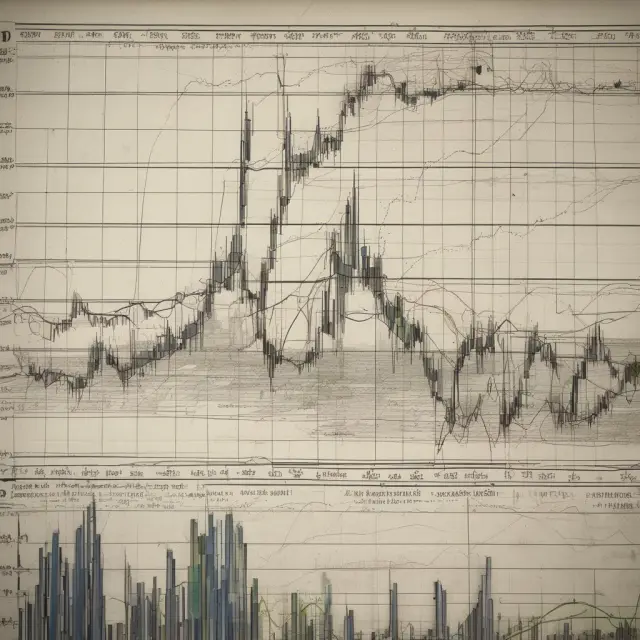
Comparing Weekly Charts with Daily and Monthly Charts
When it comes to analyzing financial markets, charting tools play a vital role in identifying trends, patterns, and making informed decisions for investors. Among the various time frames available, weekly charts stand apart due to their long-term perspective. In this section, we will discuss how weekly charts differ from daily and monthly charts and explore the significance of using moving averages on weekly charts.
Weekly charts offer a unique blend of data visualization compared to their daily and monthly counterparts. Unlike daily charts, which provide intraday price information, weekly charts summarize the entire week’s trading sessions into one candlestick or bar, making it an ideal choice for longer-term investors. On the other hand, monthly charts offer a broader view by displaying data over an entire month.
Weekly charts have several advantages for institutional investors:
- Long-term perspective: Weekly charts provide a clear perspective on security price trends over an extended period. They enable analysts to see the bigger picture and identify long-term opportunities that may not be apparent in daily or shorter-term charts.
- Confirmation of daily chart trends: Weekly charts can help confirm the trends observed in daily charts, providing a more robust basis for investment decisions.
- Identification of long-term opportunities: By analyzing historical data and price movements over an extended period, investors can identify potential investment opportunities that may not be apparent through short-term analysis.
When it comes to moving averages on weekly charts, they play a crucial role in identifying trends and providing a clearer understanding of the security’s price action. As with daily charts, various types of moving averages, such as simple moving averages (SMA), exponential moving averages (EMA), or Bollinger Bands can be applied to weekly charts for trend analysis and signal generation.
The primary difference between moving averages on weekly charts vs daily charts lies in their application and interpretation. Due to the extended time frame, moving averages on weekly charts are less responsive to short-term price fluctuations, which is a desirable feature for long-term investors. In contrast, daily chart moving averages may provide more frequent signals, but they can be noisier and require more attention due to their sensitivity to intraday price movements.
Using moving averages on weekly charts also simplifies the analysis process, allowing investors to focus on significant trends and long-term opportunities. For example, a crossover between two moving averages, such as a 50-week moving average crossing above or below a 200-week moving average, can serve as a powerful long-term trend indicator.
In conclusion, weekly charts are an essential tool for institutional investors seeking to gain a broader perspective on security price trends and capitalize on long-term investment opportunities. By comparing weekly charts with daily and monthly charts and understanding the role of moving averages in chart analysis, investors can make more informed decisions based on accurate, data-driven insights.
In the following sections, we will delve deeper into interpreting weekly chart patterns and trends, as well as using indicators to enhance your analysis. Stay tuned for more insights into the world of finance and investments!

Interpreting Weekly Chart Patterns and Trends
Weekly charts are an essential tool for understanding long-term trends and identifying potential opportunities in the financial markets. In this section, we’ll discuss how to read and interpret patterns and trends on weekly charts.
Understanding Candlestick Patterns: Weekly candlesticks display important price action for a week’s trading session. Each bar consists of an open price, high price, low price, and close price. Interpreting the relationship between these values can help determine potential trends or reversals. For example, a large bullish weekly candlestick with a long upper shadow and a small lower shadow may represent a significant buying opportunity. Conversely, a bearish weekly candlestick with a long lower shadow and a small upper shadow could indicate a selling opportunity.
Identifying Weekly Chart Patterns: Several chart patterns can be used to interpret weekly charts. Some popular examples include head and shoulders, triangles, flags, and wedges. These patterns help technical analysts anticipate potential price movements by recognizing historical trends and their implications for future direction.
Analyzing Trends on Weekly Charts: One of the primary advantages of weekly charts is their ability to provide a clear picture of long-term trends. By looking at a chart’s upward or downward trend, investors can identify if a security is in a bullish or bearish market. Additionally, moving averages can be used to confirm these trends and filter out noise from shorter time frames.
Comparing Weekly Charts with Daily Charts: While weekly charts provide a more significant perspective than daily charts, they are still useful when combined with daily charts. By comparing the two chart types, traders can gain valuable insights into short-term price movements while maintaining an awareness of long-term trends.
Interpreting Indicators on Weekly Charts: Several technical indicators can help in analyzing weekly chart data. Some commonly used indicators include moving averages, MACD (Moving Average Convergence Divergence), RSI (Relative Strength Index), and Bollinger Bands. These indicators provide valuable information about trends, momentum, and potential buy/sell signals.
In conclusion, weekly charts offer institutional investors a long-term perspective on security price trends. By analyzing weekly chart patterns and trends, investors can make informed decisions about their portfolio allocation and investment strategies. Additionally, combining weekly charts with daily charts can provide valuable insights into both short-term and long-term market movements.

Using Indicators on Weekly Charts
Indicators are essential tools used in technical analysis, assisting traders and investors in gaining insights into trends and market sentiment. They can be applied to various time frames, including weekly charts, which provide a longer-term perspective. In this section, we’ll discuss popular indicators used on weekly charts and their significance in understanding long-term price movements.
First and foremost, it is important to note that not all daily indicator settings will translate seamlessly onto weekly charts. For instance, moving averages need to be adjusted accordingly for weekly data. The most common setting for moving averages used in weekly chart analysis is 20 weeks, or approximately six months. This longer time frame can help filter out short-term noise and highlight the more significant long-term trends.
One popular indicator widely utilized on weekly charts is the Moving Average Convergence Divergence (MACD) indicator. The MACD consists of two moving averages: the 12-week Exponential Moving Average (EMA) and the 26-week EMA, which is then plotted along with a Signal Line based on a 9-week EMA. Weekly charts displaying this indicator can be used to identify potential trend reversals or confirm current trends.
Another commonly employed indicator on weekly charts is the Relative Strength Index (RSI). While it can provide insights into overbought and oversold conditions within shorter time frames, the RSI can also offer valuable information for long-term traders when adjusted to a weekly setting. By observing the weekly chart’s RSI values, investors may gain an understanding of whether a security is overbought or oversold in terms of the longer trend.
The Average True Range (ATR) indicator is another powerful tool that can be applied on a weekly basis. This indicator measures the average volatility of a security, which can help traders identify potential risks and adjust their position size accordingly. By analyzing historical weekly ATR values, investors can also gauge how volatile a security’s price action may be in comparison to its past behavior.
Understanding the meanings behind these indicators on a weekly chart requires a solid grasp of the overall trend and the context of the security being analyzed. The application of these tools can help traders and investors make informed decisions when assessing longer-term opportunities, confirming trends, and identifying potential reversals.

Special Considerations for Using Weekly Charts
Institutional investors often rely on more than one time frame while analyzing securities, and weekly charts play a significant role in this process. In contrast to daily charts, which capture the price movements within a day, weekly charts provide a broader perspective, displaying a week’s worth of data at a glance. Weekly charts can be compared with other chart types like monthly charts, and using moving averages can offer valuable insights.
Understanding Monthly Charts
Monthly charts represent the price movement for an entire month, providing even more context than weekly charts. While weekly charts display the highest and lowest prices of each week, monthly charts illustrate the security’s performance throughout the entire month. By comparing weekly and monthly charts, investors can gain a deeper understanding of the long-term trend of the asset.
Role of Moving Averages in Weekly Charts
Moving averages are a popular tool for analyzing trends in financial markets. In the context of weekly charts, moving averages provide valuable insights by illustrating the direction and momentum of price movements over an extended period. Two common types of moving averages include Simple Moving Average (SMA) and Exponential Moving Average (EMA).
Applying a Multi-Timeframe Approach
A multi-timeframe approach allows investors to analyze various time frames to gain a more comprehensive understanding of the asset’s price trend. By analyzing multiple chart types, including weekly, daily, and even intraday charts, investors can better anticipate potential price movements and adjust their investment strategy accordingly. This method provides a holistic view of the security’s performance and helps investors make informed decisions based on accurate data.
In conclusion, understanding weekly charts is essential for institutional investors seeking to gain a long-term perspective on a security’s price trend. By comparing weekly charts with daily or monthly charts and utilizing moving averages, investors can effectively assess trends, identify entry points, and manage risk in their investment portfolios.

Conclusion: Weekly Charts as a Valuable Tool for Institutional Investors
In the world of finance, there are various tools and techniques used by traders and investors for analyzing trends and making informed decisions regarding investments. One such essential tool is the weekly chart, which provides valuable insights into long-term price trends and patterns. In this section, we will delve deeper into why weekly charts are a crucial resource for institutional investors and discuss how they can effectively integrate them into their investment strategies.
Weekly charts summarize key data points from daily trading sessions during the week into one consolidated chart. By doing so, they offer an extended view of security price movements over a more extended period, allowing analysts to identify long-term trends or patterns that would otherwise be challenging to detect in shorter time frames like hourly or daily charts. For institutional investors who focus on long-term opportunities, weekly charts become an indispensable tool for monitoring market trends and making informed decisions based on these insights.
Comparing Weekly Charts with Daily and Monthly Charts
Weekly charts are often compared to their counterparts, the daily and monthly charts. While daily charts offer a more granular view of short-term price movements, weekly charts provide a balanced perspective between shorter-term fluctuations and longer-term trends. By combining the insights from both weekly and daily charts, investors can gain a comprehensive understanding of the security’s behavior and make informed decisions accordingly.
Identifying Long-Term Trends and Patterns
Institutional investors often rely on weekly charts to identify long-term trends and patterns that may not be apparent in shorter time frames. Weekly charts offer a clearer picture of uptrends, downtrends, or consolidation phases, which can be crucial for making strategic investment decisions. For example, if an institutional investor is looking to buy a particular stock, studying its weekly chart can help them gauge the overall trend and identify potential entry points based on specific technical indicators or patterns.
Confirming Short-Term Price Trends and Signals
Weekly charts can also be used in conjunction with daily charts to confirm price trends and buy/sell signals. By comparing both charts, investors can gain a better understanding of the security’s short-term movements while maintaining a long-term perspective. For example, if there is a strong uptrend in the weekly chart but the daily chart displays a bearish signal, an investor may want to exercise caution and consider waiting for confirmation from the weekly chart before making a move.
Integrating Weekly Charts into Investment Strategies
Institutional investors often build their investment strategies around the insights derived from weekly charts. By monitoring long-term trends and patterns in a security’s price movements, they can make informed decisions regarding entry or exit points, portfolio allocation, and risk management. Moreover, integrating weekly charts into their overall analysis allows institutional investors to maintain a well-balanced perspective between short-term fluctuations and longer-term trends.
Role of Weekly Charts in Portfolio Management
Weekly charts play a crucial role in portfolio management by providing an overview of the long-term performance of various securities within a portfolio. By regularly reviewing weekly charts for each security, institutional investors can identify any significant shifts or trends in their portfolio and make necessary adjustments to maintain optimal diversification and risk management.
In conclusion, understanding and utilizing weekly charts is essential for institutional investors seeking a long-term perspective on market trends and patterns. By integrating them into investment strategies and portfolio management processes, investors can make informed decisions that lead to increased profitability and reduced risk.
FAQs about Weekly Charts
What is the difference between weekly, daily, and monthly charts?
Answer: Weekly charts display data for a security’s price movements during an entire week. Daily charts provide data for each day within a week, while monthly charts summarize data for an entire month. Institutional investors often use weekly charts to gain long-term insights into market trends and patterns.
How do I read and interpret weekly chart patterns?
Answer: Weekly chart patterns can be identified using various technical indicators, such as trendlines, support and resistance levels, chart formations, or moving averages. By studying these patterns over extended periods, you can make informed investment decisions based on the insights gained from the chart analysis.
Why should I use weekly charts in combination with daily charts?
Answer: Combining weekly and daily charts enables you to maintain a long-term perspective while monitoring short-term price movements and trends. By comparing both charts, you can make informed investment decisions that take advantage of both timeframes and minimize potential risks.

FAQs about Weekly Charts
What sets weekly charts apart from daily charts? Weekly charts offer institutional investors a broader, long-term perspective on security price trends as opposed to the day-to-day fluctuations seen in daily charts. A single weekly chart candle encapsulates all trading activity of a specific week and is useful for analyzing trends that may last a month or more.
How can I interpret weekly chart patterns? Weekly charts utilize candlestick charts, line charts, or bar charts to display weekly open, high, low, and close data. The interpretation of weekly chart patterns depends on the specific charting method used. For example, in a weekly candlestick chart, long bodies may indicate bullish trends while short bodies suggest bearish ones.
Can weekly charts confirm daily chart price trends? Yes, weekly charts can act as a confirmation tool for daily chart price trends. By observing the convergence or divergence between daily and weekly chart trends, investors can make informed decisions regarding potential buy/sell signals.
Why should institutional investors use both weekly and daily charts? Both weekly and daily charts offer distinct advantages for different investment strategies. Daily charts provide minute-by-minute price action details suitable for short-term traders, while weekly charts cater to the long-term perspective preferred by institutional investors. By using both chart types in conjunction, investors can make informed decisions based on the various time frames.
What other charting tools or indicators are useful on weekly charts? Institutional investors commonly use moving averages and trend lines on weekly charts for longer-term trend analysis. These tools offer valuable insights into long-term price movements and can help confirm signals generated from daily chart analysis.
In summary, understanding the role of weekly charts in investment strategies is crucial for institutional investors seeking to make informed decisions based on a long-term perspective. By using weekly charts alongside daily charts, investors can uncover critical trends, potential opportunities, and better manage their portfolios.
 Next entry · No. 5,666Understanding Weis: The Smallest Unit of Ether on Ethereum Blockchain
See also
-
 No. 5,260
24 Aug 2025
20 min
Understanding the Rare yet Significant Three River Candlestick Pattern: A Bullish Reversal Indicator for Professional Traders
Markets
No. 5,260
24 Aug 2025
20 min
Understanding the Rare yet Significant Three River Candlestick Pattern: A Bullish Reversal Indicator for Professional Traders
Markets -
 No. 5,112
12 Aug 2025
18 min
Understanding Tweezer Patterns in Technical Analysis
Markets
No. 5,112
12 Aug 2025
18 min
Understanding Tweezer Patterns in Technical Analysis
Markets -
 No. 5,074
09 Aug 2025
26 min
Understanding and Implementing Effective Trend Trading Strategies in Finance and Investment
Business Finance
No. 5,074
09 Aug 2025
26 min
Understanding and Implementing Effective Trend Trading Strategies in Finance and Investment
Business Finance -
 No. 5,661
27 Sep 2025
17 min
Understanding the Power of Wedge Patterns in Technical Analysis
Finance Policy
No. 5,661
27 Sep 2025
17 min
Understanding the Power of Wedge Patterns in Technical Analysis
Finance Policy -
 No. 5,348
01 Sep 2025
19 min
Understanding Uptick Volume: A Technical Analysis Tool for Institutional Investors
Finance Policy
No. 5,348
01 Sep 2025
19 min
Understanding Uptick Volume: A Technical Analysis Tool for Institutional Investors
Finance Policy -
 No. 5,132
14 Aug 2025
18 min
Understanding and Utilizing the Ulcer Index in Finance and Investment
Finance Policy
No. 5,132
14 Aug 2025
18 min
Understanding and Utilizing the Ulcer Index in Finance and Investment
Finance Policy