Understanding Wisdom of Crowds: The Collective Intelligence of Diverse Groups
Explore the power of collective intelligence in groups through the Wisdom of Crowds concept. Discover its history, advantages, criticisms, and real-life…
Introduction to Wisdom of Crowds
Wisdom of crowds is a fascinating concept that suggests large groups make wiser decisions than individual experts in various situations. This idea was first popularized by New Yorker writer James Surowiecki in his 2004 book, “The Wisdom of Crowds: Why the Many Are Smarter Than the Few and How Collective Wisdom Shapes Business, Economies, Societies and Nations.” Although it can be traced back to Aristotle’s theory of collective judgment, the wisdom of crowds theory has gained significant attention due to its potential applications in finance, economics, politics, and other fields. In this article, we will delve into the origins, characteristics, advantages, and examples of wisdom of crowds, as well as discuss its relevance in modern times.
Understanding the Wisdom of Crowds: An Overview
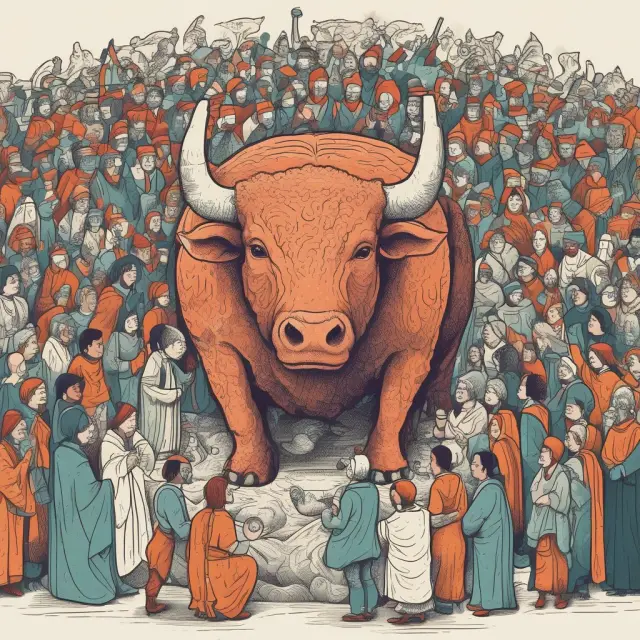
The wisdom of crowds theory posits that large groups of individuals, collectively, can make better decisions than any single expert. This phenomenon has been observed in various contexts, from estimating the weight of an ox to predicting financial market trends. The concept is not always perfect; however, it offers valuable insights into how diverse groups can surpass individual abilities.
Origins of Wisdom of Crowds: From Aristotle to James Surowiecki
Although the wisdom of crowds theory has gained widespread recognition through Surowiecki’s book, its origins date back to ancient Greece. Philosophers like Aristotle explored the idea of collective judgment in their works, particularly when discussing decision-making within a group. For example, he used a potluck dinner as an example, arguing that a large group might create a more satisfying meal for everyone than one individual could provide alone.
Fast forward to modern times and the work of James Surowiecki, who took this concept further by exploring its implications in various areas, such as financial markets and innovation. Surowiecki’s book, “The Wisdom of Crowds,” delves deeper into how groups make collectively smarter decisions than individuals.
Characteristics of a Wise Crowd: Diversity, Independence, and Aggregation
For a crowd to be considered wise, certain conditions must be met. Firstly, the group members should possess diverse viewpoints, ensuring that no one idea or opinion dominates. Second, individuals in the crowd must form their opinions independently without influence from others, enabling truly independent thought. Lastly, the crowd’s collective judgment needs to be aggregated effectively, allowing the best ideas to rise to the surface and inform the group decision.
Wisdom of Crowds in Financial Markets: Efficient Markets and Herd Mentality
The wisdom of crowds theory has significant implications for financial markets. Surowiecki’s work explores how groups can make wiser decisions than individual experts, which is crucial to understanding market behavior, such as efficient markets and herd mentality. For a crowd in the financial market to be wise, participants must remain diverse and independent to ensure the market operates efficiently.
Advantages and Disadvantages of Wisdom of Crowds: Diversity, Information Integration, and Conformity
While wisdom of crowds has many benefits, including diversity, information integration, and a large knowledge pool, it is not without its limitations. One major disadvantage is human conformity, which can lead to ‘groupthink’ and poor decision-making. Understanding the advantages and disadvantages of the wisdom of crowds theory is essential for making informed decisions in various situations.
Examples of Wisdom of Crowds: The Weight of an Ox and Predicting World Series Winners
Real-life examples illustrate how the wisdom of crowds theory works. For instance, if a large group of individuals is asked to estimate the weight of an ox, their collective judgment can be more accurate than that of any individual expert. Similarly, in predicting the outcome of a World Series game, fans might be biased towards their preferred teams; however, a diverse group with non-fans and individuals who dislike both teams could make a more accurate prediction.
Stay tuned for further articles where we discuss how wisdom of crowds has influenced various industries and aspects of our lives, including business, politics, and technology. In the meantime, we welcome your thoughts and insights on this fascinating concept.

History and Origins of Wisdom of Crowds
The wisdom of crowds is a fascinating concept in finance and social sciences that has been gaining popularity since it was first introduced in James Surowiecki’s 2004 book, The Wisdom of Crowds. This idea proposes that large groups of diverse individuals collectively make smarter decisions than individual experts when it comes to problem-solving, decision-making, and prediction. While the concept may seem counterintuitive at first, it has its roots in ancient Greek philosophy.
Aristotle’s Theory of Collective Judgment: The origins of wisdom of crowds can be traced back to Aristotle’s theory of collective judgment, as presented in his work Politics. He used an example of a potluck dinner to illustrate the idea that a group of individuals coming together could create a more satisfying feast for the group than what one individual might provide. This concept laid the foundation for understanding how large groups can aggregate individual opinions into better decisions.
From Aristotle’s Time to Surowiecki’s Book: Although the concept was initially introduced by Aristotle, it wasn’t until James Surowiecki wrote The Wisdom of Crowds that the idea gained significant attention and popularized the term “wisdom of crowds.” In his book, Surowiecki examines how wisdom of crowds has been applied in various fields such as pop culture, psychology, biology, behavioral economics, and more.
Wisdom of Crowds in Financial Markets: The concept of wisdom of crowds is particularly relevant to finance and investment. It helps explain the efficiency and herd-like behavior observed among investors in financial markets. Market participants must be diverse and have an incentive for markets to function efficiently. Understanding this collective intelligence can provide valuable insights into market dynamics, and help investors make informed decisions.
In the next section, we will delve deeper into the characteristics of a wise crowd, its advantages and disadvantages, and real-life examples where wisdom of crowds produced better results than individuals or experts. Stay tuned!

Understanding Crowds as Collective Intelligence
The power of collective intelligence is a fascinating concept that has been explored for centuries. Its modern popularity can be traced back to James Surowiecki’s influential book, The Wisdom of Crowds (2004). The idea behind this theory revolves around the belief that a group of individuals, when diverse and independent, collectively possess superior problem-solving abilities than any single expert. In essence, crowds can be smarter than an individual, leading to better decisions, innovations, and predictions. Let’s delve deeper into understanding what makes crowds collective intelligence.
Collective Intelligence in Action: A Historical Perspective
The roots of this concept can be traced back to Aristotle’s theory of collective judgment as outlined in his work “Politics.” He argued that a group of individuals may come together to create a more satisfying feast than what one individual could provide. However, it wasn’t until Surowiecki’s book that the wisdom of crowds gained significant recognition in modern society.
Crowds and Superior Decision Making
So why are crowds wiser than individuals? The answer lies in their inherent diversity. Each member of a crowd brings unique knowledge, experiences, and perspectives to the table, making the collective decision-making process more robust. Moreover, this diverse group can eliminate individual biases, as the noise from various opinions is averaged out, resulting in a clearer and coherent final decision (Surowiecki, 2004).
Crowds and Financial Markets: A Case Study
One fascinating application of the wisdom of crowds concept lies within financial markets. The idea that markets operate efficiently due to the collective intelligence of investors has been debated for decades. While the efficiency of markets is not an absolute truth, it can be explained through the principles of crowd theory (Surowiecki, 2004). For instance, markets require a diverse group of participants with varying opinions and independent thinking to function efficiently. Additionally, the constant interaction between these market participants leads to the aggregation of information, allowing for more informed decision making.
Criticisms and Limitations
However, it is essential to remember that not all crowds are wise. There have been numerous instances where crowds, driven by herd mentality or mass hysteria, have led to adverse outcomes. For example, the infamous dotcom bubble of the late 1990s demonstrates how a crowd with little knowledge and a herd mentality can cause significant market disruptions (Surowiecki, 2004).
In conclusion, understanding crowds as collective intelligence provides valuable insights into why large groups are often smarter than individuals. By recognizing the inherent diversity within these groups and harnessing their collective knowledge, we can make better decisions, innovate more effectively, and predict outcomes with greater accuracy. As Surowiecki (2004) argues, “The collective wisdom of crowds is, in essence, an emergent property of large but loosely connected groups” (p. 19). This understanding has profound implications for various fields, including finance, business, and society as a whole. By embracing the power of collective intelligence, we can unlock new possibilities and create a more informed, intelligent world.

Characteristics of a Wise Crowd
The concept of wisdom of crowds has been gaining traction since it was popularized in James Surowiecki’s book, The Wisdom of Crowds. In essence, this theory asserts that large groups, or crowds, collectively possess more intelligence and insight than individual experts when it comes to problem-solving, decision-making, and prediction. However, for a crowd to be considered wise, specific conditions must be met. In this section, we delve deeper into the essential qualities that define a wise crowd.
1. Diversity: The foundation of a wise crowd lies in its diversity. Members must bring distinct viewpoints, experiences, and knowledge to the table. A homogeneous group may result in groupthink, which can lead to poor decision-making as individuals conform to each other’s opinions instead of critically examining their own perspectives.
2. Independence: Each person’s opinion should be free from external influence or pressure. In a wise crowd, individual judgments are not swayed by others’ viewpoints, ensuring that everyone contributes their unique perspective to the collective decision-making process. This independence prevents the formation of echo chambers and maintains a balanced, unbiased discourse within the group.
3. Information Access: For a crowd to make wise decisions, it must have access to accurate and sufficient information. Each member should be aware of the facts and context surrounding an issue so that they can form well-informed opinions. In some instances, the wisdom of crowds may be compromised if members are misinformed or lack crucial data.
4. Anonymity: In a wise crowd, individuals do not know each other’s identities, preventing personal biases and favoritism from influencing their opinions. This anonymity ensures that decisions are based on merit alone, rather than individual relationships or affiliations.
5. Decentralization: The wisdom of crowds thrives in a decentralized environment where no single entity controls the decision-making process. In such a structure, each member has equal influence over the outcome, allowing for a democratic and fair decision-making process.
In conclusion, a wise crowd is characterized by its diversity, independence, access to information, anonymity, and decentralization. These essential qualities enable the collective intelligence of the group to surpass that of individual experts. In the following sections, we will explore how these characteristics have manifested in various contexts and applications, from historical examples to modern-day financial markets.
Understanding Wisdom of Crowds: The Collective Intelligence of Diverse Groups
In this comprehensive article, we delve into the concept of wisdom of crowds and its significance in various aspects of society, focusing on its origins, principles, implications, and applications. We will explore how groups make smarter decisions than individuals by discussing historical examples, the role of financial markets, advantages, disadvantages, and real-life scenarios where collective intelligence produced better results than individuals or experts.
Section 1: Introduction to Wisdom of Crowds
Description: An overview of the wisdom of crowds concept, its origins, and key takeaways.
Section 2: History and Origins of Wisdom of Crowds
Description: Tracing the roots of wisdom of crowds to Aristotle and James Surowiecki’s book
[To be continued]
In the next section, we will further investigate the history and origins of wisdom of crowds by discussing how this concept can be traced back to ancient philosophers like Aristotle and how it was popularized by James Surowiecki’s book. We will also discuss the relevance of these ideas in today’s world, including their applications in business and technology. Stay tuned for more insights!

Wisdom of Crowds in Financial Markets
The wisdom of crowds concept gained considerable attention when it was popularized by James Surowiecki in his 2004 book. This idea that large groups of people could collectively make better decisions than individual experts has interesting implications for financial markets, where the behavior and interactions between market participants can significantly impact stock prices and market efficiency.
The wisdom of crowds theory applies to financial markets through the notion that, when diverse individuals come together to trade stocks or other securities, their collective judgment can lead to a more accurate reflection of a security’s underlying value than the opinions of individual experts. In this context, ‘diversity’ refers to having a wide range of perspectives and knowledge sources represented in the crowd. This is essential because diverse groups are better at making more informed decisions, as they bring different experiences and viewpoints that can help offset potential biases or errors.
Moreover, for wisdom of crowds to effectively operate in financial markets, it’s crucial that individuals make their investment decisions independently and free from external influence. This is important because the accuracy and reliability of collective judgment are undermined if members of the crowd base their opinions on each other instead of relying on their own information or analysis.
In the context of financial markets, wisdom of crowds can help explain why markets sometimes operate more efficiently than others. When market participants are diverse and make independent decisions based on accurate information, they can effectively balance supply and demand, leading to stock prices that closely reflect a security’s underlying value. This is evident when looking at highly efficient markets like the NASDAQ and NYSE, where the collective intelligence of large groups of investors leads to quickly reacting prices and minimal price disparities.
However, it’s essential to note that the wisdom of crowds does not guarantee market efficiency in all situations. There are instances where crowds can be influenced by external factors like emotions or market fads, leading to inefficiencies and incorrect pricing. For instance, during a stock market bubble, a large number of investors might collectively overestimate the value of an asset class, driving up prices beyond their fundamental values. Conversely, during a bear market, panic selling can cause prices to fall below their intrinsic worth.
In summary, the wisdom of crowds theory offers valuable insights into the collective behavior and decision-making processes in financial markets. It highlights how diverse groups of investors, when making independent decisions based on accurate information, can effectively reflect the underlying value of securities and contribute to market efficiency. However, it’s important to remember that this phenomenon isn’t a guarantee for efficient markets and doesn’t account for external factors like emotions or market manipulation.
FAQ:
What are some examples of wisdom of crowds in financial markets?
Answer: Some well-known examples include the prediction market, where participants buy and sell contracts representing their beliefs about future events, and the NASDAQ and NYSE stock exchanges, which have demonstrated effective price discovery through the collective intelligence of large numbers of traders.
Is wisdom of crowds always accurate in financial markets?
Answer: No, it’s essential to remember that wisdom of crowds is not a guarantee for market efficiency, and there are instances where external factors like emotions or market manipulation can impact the accuracy of group decision-making.
How does diversity play a role in financial markets according to the wisdom of crowds theory?
Answer: Diversity is crucial because it brings different perspectives and knowledge sources into the collective decision-making process, helping to offset potential biases or errors that can impact market efficiency. This is why having a wide range of participants from various backgrounds and expertise levels is important for markets to function effectively.

Advantages and Disadvantages of Wisdom of Crowds
The wisdom of crowds is a powerful concept that posits that groups often outperform individuals in problem-solving, decision-making, and prediction. While it can lead to more accurate outcomes than relying on the judgment of experts alone, there are advantages and disadvantages to this collective intelligence.
Advantages:
- Diversity: The wisdom of crowds thrives on diverse opinions, which helps to eliminate biases and produce clearer results. Bringing together people with unique perspectives can lead to more creative solutions and innovative ideas.
- Information Integration: By aggregating individual knowledge, the crowd creates a larger knowledge pool, enabling more comprehensive problem-solving. This collective intelligence can often make better decisions than any single person could on their own.
- Adaptability: Crowds are more adaptable to new information and changing circumstances than individuals. With a greater number of minds working together, groups are quicker to adapt to new challenges, making them more agile in the face of uncertainty.
Disadvantages:
- Conformity: The downside of collective intelligence is that people may conform to groupthink and follow the crowd, which can lead to poor decision-making and a loss of creativity. This can be especially detrimental when dealing with complex problems that require original thought and unconventional solutions.
- Inefficiency: The wisdom of crowds can also be inefficient as individuals may spend valuable time discussing their ideas within the group, leading to delays in decision-making and execution. Additionally, not all groups are equally effective at problem-solving, meaning that some crowds may be less wise than others.
- Limitations: While the wisdom of crowds is a compelling concept, it has its limitations. For example, it assumes that individuals within the group have equal influence on decision-making and that their opinions are independent, which may not always be the case in real life. Additionally, this theory does not account for external factors that can impact crowd behavior, such as incentives, biases, and motivations.
Despite these challenges, understanding the advantages and disadvantages of wisdom of crowds is essential for anyone looking to harness the power of collective intelligence to solve complex problems or make informed decisions in a dynamic world.

Examples of Wisdom of Crowds in Action
The wisdom of crowds theory has been widely applied to various domains, demonstrating its power in producing better results than individual experts. Let us examine a few compelling examples where the collective intelligence of crowds outperformed individual predictions.
1. The Market’s Collective Intelligence: One remarkable example is the stock market and how it often exhibits the wisdom of crowds. Consider the case of an initial public offering (IPO) where investors collectively assess the worth of a company based on its potential future value. Although individual analysts may have their opinions, the final price that the stock market determines through bidding reflects the collective wisdom of all the participants. This was demonstrated in the groundbreaking study “An Analysis of Market Efficiency,” published in 1965 by Burton Malkiel and John Quiggin, which found that stock prices generally reflect all available information about a company’s fundamentals.
2. The World’s Greatest Puzzle Solver: Another example comes from the world of puzzles, specifically the Monty Hall problem. This classic brain teaser involves three doors, one with the prize behind it and two with goats. Initially, contestants choose a door randomly. After one goat is revealed behind one of the other doors, they are then given an opportunity to switch their choice. Intuitively, most people believe that switching does not make any difference as there is a 1 in 3 chance of guessing correctly either way. However, the wisdom of crowds prevails here: mathematically, the probability of winning by switching is actually 2/3 (67%), compared to just 1/3 (33%) when sticking with the initial choice. This seemingly counterintuitive result was proven by statistician Marilynvon-Ball in 1975.
3. Predicting the Unknown: A more recent example of wisdom of crowds can be found in prediction markets, such as Intrade, a platform that allows users to buy and sell contracts on various outcomes. For instance, users may place bets on political elections, sports events, or even scientific discoveries. By aggregating these individual predictions into a collective market price, prediction markets can often produce more accurate forecasts than traditional polling methods. This was demonstrated in a 2008 study by researchers at the University of Iowa and Harvard Business School. They found that Intrade’s prediction for the winner of the U.S. presidential election was correct in all but one case, compared to only 76% accuracy for the pollsters.
4. The Power of Diverse Opinions: Lastly, consider the wisdom of crowds in the context of innovation and problem-solving. When diverse groups collaborate, they bring unique perspectives, knowledge, and experiences that can lead to breakthroughs. One famous example is Xerox PARC’s research lab, which invented several groundbreaking technologies, including the first graphical user interface (GUI) and laser printer. However, it was Apple that successfully commercialized these innovations by combining them into a consumer product – the Macintosh computer. This case study underscores the importance of diverse groups in generating innovative ideas that can change the world.
In conclusion, wisdom of crowds has been demonstrated to produce results superior to individual experts across various domains, including financial markets, puzzles, predictions, and innovation. The collective intelligence of a group can eliminate bias, integrate knowledge, and overcome conformity, making it an essential concept in understanding human behavior and decision-making.

Criticisms and Challenges to the Wisdom of Crowds Theory
Despite its widespread appeal, wisdom of crowds has faced several criticisms, limitations, and challenges. The main concerns revolve around the potential biases and pitfalls of relying solely on collective intelligence for decision-making and problem-solving. Let’s examine some of these criticisms:
1. Lack of Diversity and Depth: Critics argue that the wisdom of crowds concept can only work efficiently if the crowd is diverse, both in terms of demographics and knowledge. If the crowd consists of individuals with similar backgrounds or limited expertise, the collective intelligence might not yield optimal results. Additionally, a crowd lacking depth in understanding a specific issue may lead to incorrect or incomplete conclusions.
2. Groupthink and Conformity: The wisdom of crowds theory can be undermined by groupthink and conformity, which limit the free exchange of ideas and opinions within the crowd. In such situations, individuals might not voice their unique perspectives for fear of being ostracized or ridiculed, resulting in a less wise crowd.
3. Misinformation and Manipulation: Malicious actors can spread false information or manipulate crowds to influence their decisions. For example, rumors or misleading data can sway the collective opinion, causing the crowd to make incorrect choices based on flawed information. In financial markets, market manipulation attempts like pump-and-dump schemes can deceive crowds and lead to significant losses for investors.
4. Irrationality and Herd Mentality: Human behavior is often irrational, and this can impact the wisdom of crowds. Irrational decisions can stem from various factors, such as emotions, biases, or herd mentality. For instance, markets may exhibit extreme volatility during economic downturns due to investors’ fear or greed. Such irrationality can disrupt the efficiency of collective decision-making and result in suboptimal outcomes.
5. Limited Applicability: The wisdom of crowds theory has limitations when it comes to addressing complex issues that require deep expertise or nuanced understanding. In such cases, individual experts might be better equipped to tackle these challenges due to their specialized knowledge and experience. Additionally, some situations may call for a more deliberate decision-making process where careful consideration is needed.
6. Ethical Concerns: Collective intelligence raises ethical concerns related to privacy, informed consent, and fairness. For example, how can we ensure that the collective opinion is representative of the entire population or free from biases? Moreover, individuals may not always be aware that their opinions are being used in the crowd, leading to potential privacy issues.
7. Alternatives to Wisdom of Crowds: Some argue that alternative methods for decision-making and problem-solving, such as expert elicitation or artificial intelligence, might offer more accurate and efficient solutions than relying on crowds alone. These methods can mitigate the limitations and risks associated with wisdom of crowds.
Despite these challenges, the wisdom of crowds theory continues to fascinate researchers and practitioners in various fields, including finance, economics, psychology, and computer science. By understanding both its strengths and weaknesses, we can apply it more effectively and make the most of this powerful concept.

Comparing Wisdom of Crowds with Crowdsourcing and Crowd within
The wisdom of crowds concept is often compared to other related concepts like crowdsourcing and the crowd within. While similar in nature, these three ideas have distinct differences that are worth exploring.
Wisdom of Crowds (WOC) is a theory that suggests large groups of people can make more intelligent decisions than individual experts, particularly when the group’s members hold diverse opinions and remain independent from one another. The term “wisdom” refers to the collective knowledge and insights generated when numerous individuals with different perspectives contribute to a problem or decision-making process. James Surowiecki popularized this concept in his book, ‘The Wisdom of Crowds: Why the Many Are Smarter Than the Few and How Collective Wisdom Shapes Business, Economies, Societies, and Our Lives.’
Crowdsourcing is a problem-solving approach that leverages the collective intelligence of a large group to generate solutions. The term was coined by Jeff Howe in his 2006 Wired magazine article ‘The Rise of Crowdsourcing.’ In crowdsourcing, an organization or individual poses a challenge or task to a community and encourages them to submit their ideas, insights, or creative contributions. This approach allows the organization to tap into the diverse knowledge base of the crowd to solve complex problems or generate new ideas.
The Crowd within refers to a relatively recent study that updates the wisdom of crowds theory by suggesting that individuals can be wiser than they are given credit for, particularly when working in pairs or small groups. The term ‘crowd within’ was introduced in a 2018 study published in the journal ‘Science,’ where researchers found that responses from small groups were more accurate than individual responses to certain questions. According to the study, the average of two estimates made by one individual is more accurate than a single estimate from that same person. This finding challenges the assumption that collective intelligence can only be harnessed from large crowds and emphasizes the importance of interpersonal interactions in generating wise outcomes.
While all three concepts share some similarities – they involve large groups contributing their knowledge, insights, or problem-solving abilities – they differ in how they apply this collective wisdom to decision-making and problem-solving processes. Understanding these differences can help organizations and individuals harness the power of crowds to make better decisions and drive innovation.
For instance, WOC focuses on the inherent intelligence and decision-making abilities of large groups when faced with specific problems or decisions. Crowdsourcing, on the other hand, actively seeks to engage a large group in solving problems, generating ideas, or contributing their knowledge to a particular challenge. The crowd within explores how individuals working in pairs or small groups can generate more accurate results than when working alone.
In summary, wisdom of crowds, crowdsourcing, and crowd within are related concepts that highlight the collective intelligence and problem-solving abilities of large groups. While they share some similarities, each concept has its unique applications and nuances that organizations and individuals should consider when harnessing the power of the crowd for decision-making, innovation, or problem-solving processes.

Conclusion: Applying Wisdom of Crowds in Modern Times
The wisdom of crowds theory has come a long way since its inception. Originating from Aristotle’s concept of collective judgment and gaining prominence through James Surowiecki’s book, The Wisdom of Crowds, this idea has been applied to various fields and industries, particularly in finance and business. By understanding the wisdom of crowds and its applications, we can gain a new perspective on decision-making and problem-solving in today’s world.
In today’s fast-paced society, applying the wisdom of crowds concept is more important than ever before. With advancements in technology, such as social media platforms and online marketplaces, it has become easier for diverse groups to connect and collaborate on a global scale. This has led to various benefits, including the ability to pool together knowledge from different sources, increasing the efficiency of problem-solving, and improving innovation and decision-making.
One notable example of crowdsourcing wisdom in modern times is the use of prediction markets for forecasting future events. Prediction markets are platforms where individuals can buy and sell contracts based on their beliefs about the outcome of a particular event. By allowing a large, diverse group to weigh in on their opinions and aggregate them into a collective judgment, more accurate predictions can be made than relying solely on expert opinions or individual biases.
Moreover, companies like Google, Amazon, and Microsoft have embraced the wisdom of crowds by using collaborative platforms for problem-solving and decision-making. For instance, Google’s product development process involves releasing early versions of their software to millions of users worldwide, allowing them to provide feedback and suggestions that can significantly improve the final product.
In addition, crowdfunding platforms like Kickstarter and Indiegogo have provided a unique way for entrepreneurs and creators to tap into the collective wisdom of their audience to fund innovative projects. By presenting their ideas to a large, diverse crowd, they are able to receive valuable feedback, critique, and ultimately, financial support that might not be available through traditional channels.
The application of the wisdom of crowds theory extends beyond business and technology. In fields such as healthcare, education, and environmental science, collective intelligence can help solve complex problems that require a multidisciplinary approach. For example, platforms like Zooniverse have enabled researchers to gather data from thousands of volunteers around the world, leading to breakthrough discoveries in various scientific domains.
However, it is essential to acknowledge that not all crowds are wise or capable of producing accurate information. The quality of the crowd plays a significant role in ensuring the wisdom of crowds theory’s success. This means that fostering diversity and independence among individuals within the group is crucial for the best possible outcome.
In conclusion, understanding the wisdom of crowds theory and its applications can help us navigate today’s complex world more effectively. By recognizing the power of collective intelligence, we can make smarter decisions, innovate more efficiently, and solve problems that might be difficult or impossible for individuals to tackle alone. As society continues to evolve, harnessing the wisdom of crowds will become an increasingly important tool for driving progress and growth in various industries and domains.
FAQ about Wisdom of Crowds
What is wisdom of crowds?
Wisdom of crowds is a theory that suggests large groups of people are collectively smarter than individual experts when making decisions, solving problems, or predicting outcomes.
Who first coined the term ‘wisdom of crowds’?
The term was popularized by New Yorker writer James Surowiecki in his 2004 book, The Wisdom of Crowds: Why the Many Are Smarter Than the Few and How Collective Wisdom Shapes Business, Economies, Societies, and Our Lives.
What are some examples of wisdom of crowds in action?
Examples include collective guessing games, prediction markets, and problem-solving platforms like Kickstarter and Zooniverse.
How does the quality of the crowd matter in wisdom of crowds theory?
The quality of the crowd is crucial for the accuracy and effectiveness of the wisdom of crowds concept. A diverse and independent group can lead to better decision-making, while a homogeneous or influenced crowd may lead to poorer results.
What are some criticisms of the wisdom of crowds theory?
Some criticisms include the potential for conformity and groupthink, as well as the importance of individual expertise in certain domains. Additionally, the wisdom of crowds theory is not foolproof and may not always produce accurate or optimal results.

FAQ about Wisdom of Crowds
What is the wisdom of crowds?
The wisdom of crowds refers to the idea that large groups of people collectively make smarter decisions than individual experts on various subjects like problem-solving, decision-making, innovating, and predicting. It was first popularized by New Yorker writer James Surowiecki in his 2004 book, “The Wisdom of Crowds.”
Origins of the Wisdom of Crowds
The concept can be traced back to Aristotle’s theory of collective judgment from Politics. However, it gained significant attention through James Surowiecki’s book and his discussions on its application in various fields such as pop culture, psychology, biology, behavioral economics, and more.
Characteristics of a wise crowd:
For the wisdom of crowds to be effective, groups must have diversity in opinions, independence, and a large enough pool of participants. Each individual’s opinion should not influence others, enabling collective decision-making based on individual knowledge aggregation.
Financial markets and the wisdom of crowds:
Markets can exhibit both efficiency and inefficiency depending on market participants’ diversity, incentives, and independence. In the absence of these factors, markets may be influenced by herd mentality or groupthink, leading to inefficient decisions.
Examples of wisdom of crowds in action:
Wisdom of crowds has been observed when large groups outperform individual experts in guessing weights, predicting outcomes (like World Series games), and making collective judgments. In these cases, the crowd’s diversity compensates for biases that could affect an individual expert’s judgment.
Advantages and disadvantages:
The wisdom of crowds allows for diverse thinking, information integration, and a larger knowledge pool. However, it can lead to conformity or disagreements and in-fighting when individuals aim for consensus. It is essential to consider the quality and size of the crowd to ensure accurate results.
Comparing wisdom of crowds with related concepts:
Wisdom of crowds should not be confused with crowdsourcing, which is gathering information from a large group, or crowd within theory, where an individual’s average of two estimates is more accurate than a single estimate. Each concept serves unique purposes and applications in problem-solving, decision-making, and innovation.
Criticisms of the wisdom of crowds:
One major criticism is that if the crowd itself is not sufficiently educated or diverse, it may produce results as poor or even worse than an individual expert. The quality and size of the crowd are crucial factors to consider when applying the wisdom of crowds theory in various situations.
 Next entry · No. 5,758The Witching Hour in Finance: Understanding Triple and Double Witching Days
See also
-
 No. 529
28 Apr 2024
23 min
Brownfield Investments: Opportunities and Challenges in Revitalizing Existing Production Facilities
Investments
No. 529
28 Apr 2024
23 min
Brownfield Investments: Opportunities and Challenges in Revitalizing Existing Production Facilities
Investments -
 No. 5,402
05 Sep 2025
20 min
Understanding Value Networks: A Comprehensive Guide for Institutional Investors
Business Strategy
No. 5,402
05 Sep 2025
20 min
Understanding Value Networks: A Comprehensive Guide for Institutional Investors
Business Strategy -
 No. 5,333
31 Aug 2025
20 min
Understanding the Upper Class: Definition, Composition, Power, and Influence
Business Strategy
No. 5,333
31 Aug 2025
20 min
Understanding the Upper Class: Definition, Composition, Power, and Influence
Business Strategy -
 No. 4,697
09 Jul 2025
25 min
Understanding Software as a Service (SaaS) – Advantages, Disadvantages, History and Characteristics
Business Strategy
No. 4,697
09 Jul 2025
25 min
Understanding Software as a Service (SaaS) – Advantages, Disadvantages, History and Characteristics
Business Strategy -
 No. 4,674
08 Jul 2025
21 min
Understanding the Role and Impact of the U.S. Small Business Administration
Business Strategy
No. 4,674
08 Jul 2025
21 min
Understanding the Role and Impact of the U.S. Small Business Administration
Business Strategy -
 No. 4,429
18 Jun 2025
19 min
Retention Bonuses: An Incentive for Employee Retention during Disruptive Periods
Business Strategy
No. 4,429
18 Jun 2025
19 min
Retention Bonuses: An Incentive for Employee Retention during Disruptive Periods
Business Strategy