Unlocking the Power of Level 2: A Comprehensive Guide for Institutional Investors

A comprehensive guide for institutional investors on unlocking the power of Level 2 quotes, revealing market depth, liquidity, price movements and more.
Introduction to Level 2 Quotes on Nasdaq
Level 2, a real-time subscription service offered by Nasdaq, is an essential tool for institutional investors and active traders alike. It provides invaluable insights into market depth and momentum statistics that are crucial for informed decision-making. By offering access to the NASDAQ order book, Level 2 delivers detailed price quotes from market makers and electronic communication networks (ECNs) for all Nasdaq-listed securities.
Understanding the Difference between Level 1 and Level 2 Quotes:
While Level 1 offers the inside or best bid and ask prices, Level 2 goes beyond that by displaying the entire supply and demand landscape of a given security. This extra layer of information allows traders to visualize the market depth at each price level, facilitating strategic trading decisions. However, it is important to note that Level 2 quotes don’t necessarily reflect actual trades but instead represent available prices and liquidity.
Market Depth and Liquidity with Level 2 Quotes:
Level 2 provides a comprehensive view of the available market depth by displaying bid sizes and ask sizes at multiple price levels beyond the national best bid offer (NBBO) price. This feature is particularly beneficial for active traders who require a more detailed understanding of the order flow, enabling them to gauge entry and exit points with confidence.
Price Movement and Momentum on Level 2:
Market momentum plays a significant role in Level 2 quotes, influencing both bid and ask prices. The rapid adjustments of these prices can be attributed to high-frequency trading programs’ efforts to create artificial market movements, aiming to shake out onlookers and generate profits.
Level 2 Quotes and Reserve or Hidden Orders:
Market makers and electronic communication networks (ECNs) offer reserve and hidden orders, which can influence the bid and ask prices displayed on Level 2. These orders are not necessarily executed trades but rather represent potential liquidity available at certain price levels. Understanding their presence and implications is essential for successful trading strategies.
The Benefits of Trading with Level 2 Quotes:
Leveraging Level 2 quotes offers numerous advantages, particularly in the realm of informed decision-making. With access to detailed market depth information, traders can identify trends, gauge liquidity volumes, and determine entry and exit points. The insight provided by Level 2 quotes can be game-changing for both large institutional investors and individual active traders.
Example of a Level 2 Quote and Its Interpretation:
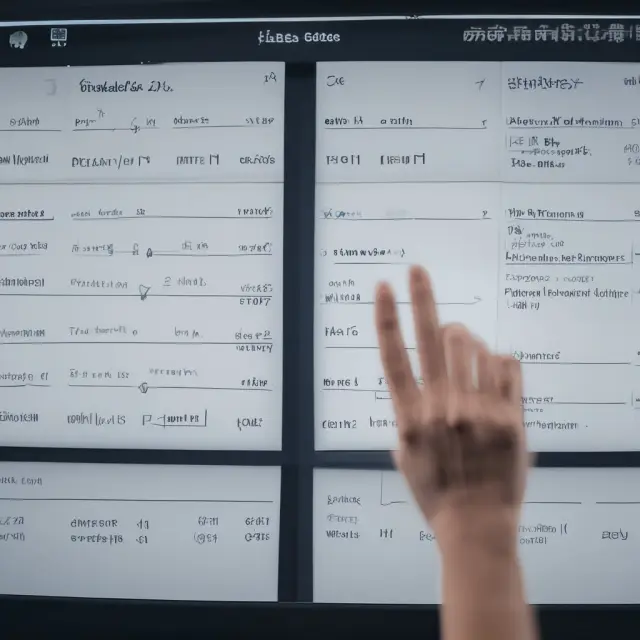
In examining a Level 2 quote for a given stock, users should familiarize themselves with the six main columns: MMID (market maker identification), bid price, bid size, ask price, and ask size. By analyzing these columns, traders can gain crucial information regarding market makers’ positions, pricing pressure, and potential trading opportunities.
Level 1 vs. Level 2: Understanding the Difference
When it comes to real-time financial information, Level 1 and Level 2 quotes are two essential tools in a trader’s arsenal. While both offer valuable market data, their features and functionalities differ significantly.
Level 1 Quotes
The most common type of quote displayed on financial platforms is Level 1, which shows the best available bid price (the highest price a buyer is willing to pay) and the best available ask price (the lowest price a seller is willing to accept). This information is often sufficient for casual investors or those following a buy-and-hold strategy. However, active traders and institutional investors require more comprehensive market insight, which brings us to Level 2 quotes.
Level 2 Quotes: Market Depth and Momentum Statistics
Introduced in 1983, Level 2 is a Nasdaq subscription service that goes beyond the basic information provided by Level 1. It displays the entire order book with all available bid and ask prices, providing users with valuable market depth and momentum statistics. In this section, we will delve deeper into understanding how Level 2 quotes differ from Level 1, exploring their features, benefits, and practical applications for traders.
Level 1 vs. Level 2: The Difference in Information Display
The primary difference between the two is the scope of information provided. Level 1 offers only the best available bid and ask prices, whereas Level 2 displays all available price quotes from market makers and electronic communication networks (ECNs). This additional detail gives traders a comprehensive view of the market and its order flow, enabling them to make informed decisions based on real-time data.
In the following sections, we will examine how market depth and liquidity are presented in Level 2 quotes and discuss the importance of price movement and momentum statistics within this context.
Section: Market Depth and Liquidity with Level 2 Quotes
Section: Price Movement and Momentum on Level 2
Section: Reserve Orders and Hidden Orders on Level 2
In the next section, we will discuss the benefits of trading with Level 2 quotes for institutional investors, as well as provide examples to help illustrate the concepts discussed so far.

Market Depth and Liquidity with Level 2 Quotes
When traders and institutional investors seek real-time market information, they often turn to Level 2 quotes offered by Nasdaq. This comprehensive subscription-based service provides access to the NASDAQ order book, revealing market depth and momentum statistics. With Level 2 quotes, users can witness the supply and demand dynamics beyond the national best bid and ask (NBBO) price. Understanding this additional information contributes significantly to informed trading strategies and investment decisions.
Level 1 vs. Level 2: A Comparison
First, it’s essential to understand the distinction between Level 1 and Level 2 quotes. Level 1 provides the inside or best bid and ask prices for a particular security, while Level 2 offers a more detailed view of market depth and liquidity by displaying all available prices posted by market makers and electronic communication networks (ECNs). This depth information enables traders to assess entry and exit points based on the displayed liquidity at each price level.
Price Movement and Momentum
The price movement shown in Level 2 quotes does not necessarily represent actual trades. Instead, it reflects the available prices and corresponding liquidity for a security. This crucial distinction is significant because high-frequency trading programs often adjust Level 2 bid and ask prices to provoke reactions from traders, even if no actual trades occur. These volatile price fluctuations are common in momentum stocks, highlighting the importance of examining the underlying market dynamics when interpreting Level 2 quotes.
Reserve Orders and Hidden Orders
ECNs that match buy-and-sell orders for securities offer reserve orders and hidden orders as additional options. While ECNs display the best available bid and ask quotes, they also provide users with the choice of posting these special types of orders to remain discreet about their true intentions. Reserve orders consist of a price and a displayed size, while the actual size remains concealed. Hidden orders are invisible on Level 2 altogether, but their presence can be inferred by monitoring time-and-sales data for trades at the indicated prices.
Market Impact and Trading Strategies
Level 2 quotes offer valuable insights into market dynamics, enabling traders to employ various strategies based on the information provided. For instance, examining liquidity volumes and order sizes can help determine potential institutional investor interest in a given security. By placing identical orders to identified hidden or reserve orders, traders can potentially capitalize on price movements caused by large institutional trades. This strategy can be particularly effective when used in conjunction with support and resistance levels.
Understanding the Power of Level 2 Quotes
Level 2 quotes offer an edge to traders and institutional investors looking to make informed decisions based on real-time market information. By providing access to detailed price information, Level 2 quotes facilitate a more comprehensive understanding of supply and demand dynamics. This knowledge can be utilized to implement effective trading strategies and optimize investment portfolios.
In the next section, we will explore the various columns in a Level 2 quote and their significance for users seeking to gain valuable insights from this powerful tool.

Price Movement and Momentum on Level 2
Nasdaq’s Level 2 service offers a wealth of real-time market depth and momentum statistics, which is a significant advantage for institutional investors looking to make informed decisions in the stock market. While similar to Level 1 quotes, which provide the national best bid and offer (NBBO) prices, Level 2 delves deeper by displaying available price levels and their associated liquidity beyond the NBBO. This section explores the key differences between actual trades and displayed prices on Level 2, highlighting its importance in understanding momentum stocks.
Understanding Level 2 Quotes’ Displayed Prices
Level 2 quotes may not directly reflect actual traded prices; instead, they show the available bids, asks, and associated liquidity at various price levels. This crucial distinction is essential for traders and institutional investors, as the information displayed in Level 2 doesn’t necessarily represent executed trades. Instead, it represents potential opportunities to enter or exit a trade based on the market depth and liquidity.
Market Makers and Institutional Investors: A Look into Price Manipulation
In fast-moving markets, such as momentum stocks, high-frequency trading programs can manipulate Level 2 quotes to create panic and induce volatility by adjusting bid and ask prices violently despite a lack of actual trades. This behavior is common among market makers and institutional investors trying to capitalize on the resulting price swings.
Distinguishing Hidden Orders and Market Depth
Level 2 quotes display both reserve orders and hidden orders, allowing traders to analyze market depth while maintaining discretion. While ECNs automatically match and execute orders based on the best available bid and ask quotes, Level 2 quotes reveal valuable information about the size of orders that are not yet executed. This data can be used to gauge institutional investors’ interest in a particular stock, helping traders make informed decisions.
Leveraging Level 2 Quotes for Institutional Investing Strategies
Level 2 quotes provide institutional investors with a wealth of market depth and momentum information. By analyzing the available bid and ask prices, liquidity levels, and hidden orders, they can implement effective trading strategies that optimize their investments in various stocks. These strategies include identifying large institutional investor interest, gauging support and resistance levels, and reacting to market volatility.
An Illustrative Level 2 Quote Analysis
To understand the significance of Level 2 quotes, let us analyze a hypothetical quote for XYZ Corporation stock:
| Column | Content |
|——–|——————–|
| MMID | ABCM |
| Bid | $53.10 |
| Size | 2,000 |
| Ask | $53.16 |
| Size | 1,500 |
| … | |
In the provided example, the MMID column identifies the market maker ABCM. The Bid column displays the price that ABCM is willing to pay for XYZ Corporation stock at $53.10. The Size column shows a total of 2,000 shares available at this bid price. Meanwhile, the Ask column reveals that ABCM will sell XYZ stock at $53.16, while 1,500 shares are available at this ask price. By examining Level 2 quotes for multiple market participants and analyzing the differences between the bid and ask prices and their associated sizes, traders can make informed decisions about potential entry or exit points based on the displayed liquidity levels.
Conclusion: The Power of Level 2 Quotes in Institutional Investing
Level 2 quotes offer institutional investors an unparalleled edge in the stock market by providing real-time access to market depth and momentum statistics. While the information presented may not necessarily reflect actual trades, it can be used to identify potential opportunities, gauge market sentiment, and optimize investment strategies based on the displayed liquidity levels. By understanding the nuances of Level 2 quotes and the role of market makers in manipulating price levels, institutional investors can navigate the complex world of stock trading with greater confidence and precision.

Reserve Orders and Hidden Orders on Level 2
In Nasdaq’s Level 2 subscription service, reserve orders and hidden orders play significant roles in shaping the market landscape. Understanding these order types can provide institutional investors with valuable insights when using this real-time data source for their trading strategies.
ECNs (Electronic Communication Networks) support both reserve orders and hidden orders. These orders differ from the displayed bid and ask quotes available on Level 1, providing market participants with more discretion in managing large orders and influencing the market. Let us explore how they work.
Reserve Orders
A reserve order is an order that is not yet active but is visible to other market participants on Level 2 as a specific display size. It consists of a price, bid or ask, and a hidden size, which is the actual size of the order being held in the ECN. Market makers and institutional investors may utilize reserve orders when they want to enter or exit larger positions without impacting the market significantly. Since only the display size is visible on Level 2, other market participants may not be aware of the true order size, preserving potential price advantages for the initiator.
Hidden Orders
A hidden order is an order that is completely invisible to all market participants on Nasdaq. This includes both Level 1 and Level 2 users. Market participants can use this order type when they want to maintain discretion over their trading activities, particularly in large orders where revealing the order size could potentially influence the market price negatively. Hidden orders are executed against other hidden or displayed orders available on the ECN. Once executed, the resulting trade becomes visible in the time and sales window for all users.
Distinguishing Between Reserve and Hidden Orders
To determine if an order is a reserve or hidden order, traders can look at the time and sales window for trades occurring at the indicated prices on Level 2. If a trade occurs without any visible display size on Level 1 or Level 2 beforehand, it is likely to be a hidden order execution. However, if there is a displayed size in Level 2 prior to the trade, it could represent a reserve order being executed against other orders.
Understanding the Role of Market Makers and Institutional Investors
Market makers and institutional investors significantly influence the way reserve and hidden orders are used on Level 2. Market makers typically display bid and ask sizes on Level 1 to attract potential trades from both retail and professional traders. In contrast, they may use hidden or reserve orders for their larger trades to minimize price slippage and improve overall liquidity in the market. Institutional investors often employ these order types when trading large blocks of securities, allowing them to execute their desired trades while minimizing disruption to the market.
Benefits of Trading Using Level 2 Quotes
By analyzing reserve and hidden orders on Level 2 quotes, institutional traders can gain valuable insights into market depth, liquidity, and institutional investor behavior. This information can be used to inform trading decisions, optimize positions, and potentially identify profitable opportunities within their investment portfolios. By staying informed about the various order types displayed in real-time, traders can adapt their strategies accordingly and remain competitive in a fast-paced market environment.
In conclusion, Level 2 quotes provide valuable insights into market depth, momentum, and institutional investor behavior for institutional investors. Understanding the role of reserve and hidden orders is crucial when using this data source to make informed trading decisions and optimize investment strategies. By staying updated on these order types and their implications, traders can improve overall portfolio performance and gain a competitive edge in the financial markets.

Benefits of Trading with Level 2 Quotes for Institutional Investors
One of the most significant advantages of utilizing Level 2 quotes in institutional investing is accessing a vast array of information that goes beyond basic market data, enabling traders and investors to make more informed decisions. Level 2 quotes provide an unparalleled view into market depth and price momentum. This knowledge can be crucial for optimizing investments and implementing effective trading strategies. Let us explore some key benefits of using Level 2 quotes in institutional investing:
Understanding Market Depth
Market depth is a critical factor in evaluating the liquidity of stocks, especially for active traders or investors managing large positions. Level 2 quotes offer an extensive view of market depth by displaying all available bid and ask prices from both market makers and electronic communication networks (ECNs). This information allows users to identify price ranges and associated liquidity at each level, enabling them to determine optimal entry and exit points based on the depth and size of orders.
Determining Price Momentum
Level 2 quotes not only reveal the current prices but also provide valuable insights into the market’s direction by highlighting price momentum. By examining bid-ask spreads and order flow data, institutional investors can identify trends and make informed decisions on potential entry or exit points to maximize profits.
Identifying Institutional Interest
Institutional orders, particularly large ones, can significantly impact the stock market. Level 2 quotes can offer valuable insights into these orders by revealing their size and price levels at which they are placed as reserve or hidden orders. By observing this information, institutional investors can adjust their trading strategies accordingly and potentially capitalize on favorable market conditions created by large institutional trades.
Implementing Trading Strategies
Level 2 quotes provide a wealth of data that can be used to develop and execute various trading strategies. For example, traders can use the difference between the bid and ask prices to determine pricing pressure and identify potential arbitrage opportunities. Moreover, Level 2 quotes enable investors to monitor their positions closely and react swiftly to changes in market conditions.
A Clear Example of Level 2 Quotes in Action
Let us consider a Level 2 quote for Apple Inc. (AAPL) as an example:
| MMID | Bid Price | Size | Ask Price | Size |
|—|—|—|—|—|
| A1 | 146.75 | 200 | 146.85 | 300 |
| A2 | 146.80 | 100 | 146.90 | 500 |
| BX | 146.85 | 250 | 146.92 | 750 |
| C1 | 146.90 | 300 | 146.95 | 1,000 |
| D1 | 146.95 | 1,500 | 147.00 | 2,000 |
In this example, the Level 2 quote for AAPL shows multiple market makers (MMID: A1, A2, BX, C1, and D1) offering different prices and sizes for both bids and asks. By examining this information, traders and institutional investors can identify liquidity levels, assess potential entry or exit points, and monitor the impact of their trades on the market.
In conclusion, Level 2 quotes provide institutional investors with valuable insights into market depth and momentum that go beyond basic price data. By understanding these benefits and utilizing the information provided in Level 2 quotes effectively, traders and investors can make informed decisions and optimize their investment strategies for improved returns.

Example of a Level 2 Quote and Its Interpretation
Level 2 quotes offer institutional investors a unique insight into the complexities of the stock market by providing real-time access to market depth and momentum statistics. This invaluable information allows traders to make informed decisions when implementing trading strategies. In this section, we will discuss what a Level 2 quote looks like and interpret its various columns for a better understanding of the NASDAQ order book.
First, it’s essential to recognize that Level 1 provides the basic bid and ask prices (inside market), while Level 2 offers more comprehensive details by displaying all available prices beyond the NBBO (national best bid offer) price. This expanded view is crucial for active traders who require a bird’s eye perspective on market action.
Let’s take an example of a Level 2 quote for a specific stock to better illustrate this concept. In our example, we will use the four-letter identification “MMID” to represent a market maker (i.e., Goldman Sachs, GS). The Level 2 quote display consists of six essential columns: MMID, Bid, Size, Ask, Size, and Time.
1. MMID: This column indicates the unique four-letter identifier for each market maker participating in a given security. In our example, Goldman Sachs (GS) is shown with an MMID of “GS.”
2. Bid: The bid price represents the maximum price that the market maker is willing to pay for the stock at a given moment. For instance, GS might be willing to purchase shares at $50 in our example.
3. Size (Bid): The size column denotes the number of shares the market maker wishes to buy at their quoted bid price. In this case, GS is advertising that they would like to acquire 1,000 shares at $50 each.
4. Ask: This column displays the price at which the market maker is prepared to sell a security. For example, if the ask price is $52, it indicates that the market maker is willing to part with their shares at this price point.
5. Size (Ask): The size column on the ask side represents the number of shares the market maker wants to sell at their quoted ask price. In our instance, GS is offering 500 shares for sale at $52 each.
6. Time: The time column signifies the time and date stamp that accompanies each bid or ask price. This feature is critical in understanding the flow of orders and the market’s dynamic behavior.
By examining the Level 2 quote displayed above, traders can make informed decisions on their trades based on real-time information regarding available liquidity, price movements, and order sizes. Moreover, they can also leverage this data to identify trends and gauge institutional investor interest, providing a distinct edge in today’s competitive market.

Market Makers and Institutional Investors: Their Role on Level 2
Understanding Market Makers’ Impact on Level 2 Quotes
Market makers are significant contributors to the data provided in Level 2 quotes. As registered dealers, market makers provide continuous pricing information for their securities. They offer both bid and ask prices based on their inventory, risk management, and desire to make a profit. Market makers act as liquidity providers and maintain an orderly market by offering prices that create a spread between the buy and sell price. This spread is essential for traders and institutional investors because it represents potential profit opportunities. Market makers may adjust their bid-ask spreads according to various factors, including supply and demand imbalances, news events, and competing bids from other market participants. As Level 2 quotes display the market maker’s bid and ask prices, they serve as critical indicators of underlying liquidity and momentum for a particular security.
Understanding Institutional Investors’ Role on Level 2 Quotes
Institutional investors play a significant role in the financial markets and have substantial influence over the securities listed on Level 2 quotes. These entities include pension funds, mutual funds, hedge funds, endowments, and insurance companies. Institutional investors typically trade larger volumes than individual retail investors. Their involvement can affect market liquidity and impact price movements. They often utilize Level 2 quotes to monitor the size of their positions in real-time, analyze market depth, and identify opportunities to enter or exit their trades based on market conditions and information.
Institutional investors may post large orders anonymously through limit orders, hidden orders, or reserve orders on various electronic communication networks (ECN). These order types allow them to hide their true intentions from the public and minimize their impact on the market. Level 2 quotes are essential for institutional traders who wish to monitor these large orders’ movements in real-time, assessing potential price action and liquidity levels. This information is critical when making informed investment decisions and adjusting trading strategies accordingly.
In conclusion, understanding the roles of market makers and institutional investors on Level 2 quotes is essential for successful trading and investing. Market makers provide continuous pricing data, while institutional investors use Level 2 quotes to manage their positions, analyze market depth, and monitor large orders. By staying informed about these factors, traders and investors can make more informed decisions that optimize their portfolios and capitalize on market opportunities.

Implementing Trading Strategies with Level 2 Quotes
Level 2 quotes provide traders with valuable insights into market depth, liquidity, price movement, and momentum, enabling them to devise effective trading strategies. In this section, we’ll discuss how Level 2 data can be employed for various purposes, including identifying trends, gauging institutional investor interest, and optimizing entry and exit points.
One of the primary advantages of Level 2 quotes is their ability to display a comprehensive view of market liquidity for a given stock. This information can be harnessed to identify trends and anticipate potential price movements. For example, if you notice a significant increase in the size or number of orders at specific bid or ask prices, this could indicate a shift in sentiment or institutional buying/selling activity.
Market makers play an essential role in maintaining market liquidity, and Level 2 quotes offer valuable insights into their actions. By observing the quotes posted by different market makers, traders can determine which ones are setting the bid/ask spread and adjusting their strategies accordingly. For instance, if a particular market maker consistently sets the best bid or ask price for a stock, it may be an indication of strong institutional investor interest or a potential catalyst event.
Identifying hidden or reserve orders in Level 2 quotes can also provide valuable opportunities for traders. These orders are often placed by institutional investors to minimize market impact and maintain discretion while trading large volumes. By recognizing the presence of such orders, traders can capitalize on potential price movements and adjust their positions accordingly. For example, if a trader identifies a large hidden buy order in Level 2 quotes, they may choose to enter a long position at the current market price to benefit from the anticipated price increase.
Another effective strategy for utilizing Level 2 quotes is monitoring the spread between the best bid and ask prices. Widening spreads can indicate increased volatility or decreased liquidity in the stock, potentially necessitating adjustments to open positions or delaying new trades until market conditions stabilize. Conversely, narrow spreads may suggest strong demand for a stock or a lack of selling pressure, providing opportunities for aggressive trading strategies.
In conclusion, Level 2 quotes offer a wealth of information and insights that can be utilized to optimize trading strategies and capitalize on various market conditions. By employing techniques such as analyzing bid/ask sizes, monitoring institutional investor activity, and assessing spread changes, traders can enhance their decision-making capabilities and gain a competitive edge in the financial markets.

FAQs about Level 2 Quotes
Level 2 quotes are a crucial tool for institutional investors seeking comprehensive information on market depth, liquidity, and price momentum in real-time. In this section, we address some frequently asked questions about Level 2 quotes and common misconceptions.
What is the difference between Level 1 and Level 2 quotes?
Level 1 provides basic information such as inside bid and ask prices, while Level 2 offers more detailed market depth by displaying all available bids and asks from multiple market participants.
Does price movement on Level 2 reflect actual trades?
No. Level 2 is a real-time display of available liquidity and associated prices, not an exact representation of executed trades. Market makers frequently update their quotes to reflect changing supply and demand dynamics.
What are reserve orders in Level 2 quotes?
Reserve orders represent the maximum price a trader is willing to pay or sell but do not result in an actual trade until the price reaches or crosses that level. They are visible on Level 1 as limit orders but remain hidden on Level 2 unless they get executed.
How can traders use Level 2 quotes to optimize trading strategies?
Level 2 quotes offer valuable insights into market dynamics and order sizes, enabling traders to make informed decisions regarding entry and exit points. They can also help determine liquidity levels, identify trends, and monitor institutional investor activity.
What are hidden orders in Level 2 quotes?
Hidden orders are large trades not shown on the public Level 2 window to prevent market impact. This strategy is employed by institutional investors to minimize market disruption and protect their positions while still gaining access to real-time market data.
How do market makers influence price momentum in Level 2 quotes?
Market makers, as liquidity providers, can significantly impact the price momentum displayed on Level 2 quotes by adjusting their bids and asks based on market conditions and order flow. Their actions can lead to rapid price changes, especially for momentum stocks.
How do Level 2 quotes benefit institutional investors?
Institutional investors use Level 2 quotes for various purposes such as determining the optimal entry and exit points, monitoring liquidity levels, tracking large orders and order sizes, and gaining insights into market sentiment and investor behavior. By having access to more comprehensive market data, they can make informed investment decisions that cater to their unique needs and objectives.
 Next entry · No. 2,836Understanding Level 2 Assets: Valuing Difficult-to-Price Financial Instruments
See also
-
 No. 2,833
07 Feb 2025
21 min
Understanding Level 1 Quotes: What They Are and How They Differ from Level 2 and Level 3 Quotes
Business Finance
No. 2,833
07 Feb 2025
21 min
Understanding Level 1 Quotes: What They Are and How They Differ from Level 2 and Level 3 Quotes
Business Finance -
 No. 1,012
15 Jul 2024
21 min
Understanding Derivatives: Types, Uses, and Examples for Institutional Investors
Finance Policy
No. 1,012
15 Jul 2024
21 min
Understanding Derivatives: Types, Uses, and Examples for Institutional Investors
Finance Policy -
 No. 5,526
16 Sep 2025
16 min
Understanding Volume in Finance and Investment: Significance, Technical Analysis, and Market Liquidity
Financial Data Analysis
No. 5,526
16 Sep 2025
16 min
Understanding Volume in Finance and Investment: Significance, Technical Analysis, and Market Liquidity
Financial Data Analysis -
 No. 3,776
26 Apr 2025
21 min
Understanding Order Books: A Comprehensive Guide for Professional Investors
Financial Data Analysis
No. 3,776
26 Apr 2025
21 min
Understanding Order Books: A Comprehensive Guide for Professional Investors
Financial Data Analysis -
 No. 3,104
01 Mar 2025
23 min
Understanding Market Depth and its Importance in Finance
Financial Data Analysis
No. 3,104
01 Mar 2025
23 min
Understanding Market Depth and its Importance in Finance
Financial Data Analysis -
 No. 5,797
08 Oct 2025
19 min
Understanding the Role and Impact of the World Bank Group: A Comprehensive Guide for Institutional Investors
Business Finance
No. 5,797
08 Oct 2025
19 min
Understanding the Role and Impact of the World Bank Group: A Comprehensive Guide for Institutional Investors
Business Finance