A Comprehensive Guide to Understanding and Utilizing Worden Stochastics in Finance and Investment

Learn the ins and outs of Worden Stochastics, including calculation, interpretation, strategies, advantages, and limitations.
Introduction to Worden Stochastics
The Worden Stochastic indicator is a technical analysis tool used in finance and investment to measure the momentum of an asset or security’s price. Developed by Peter Worden in 1977, this indicator ranks a security’s closing prices based on their position within a specified time frame to determine whether it is overbought or oversold. It calculates the stochastic oscillator using the equation: (100/n – 1) x Rank. This method ranks the most recent closing price compared to all other closing prices in that time frame, providing valuable insights into the trading range and potential buy/sell opportunities.
Worden Stochastics differ from traditional stochastic indicators, which calculate the relative position of the closing price in terms of the high/low range for a given period, by ranking the closes based on their values rather than high/low prices. This difference allows Worden Stochastics to recognize new trading ranges more quickly and potentially provide more accurate overbought and oversold signals.
Understanding Worden Stochastic Indicator Signals
Worden Stochastics indicator readings are presented on a scale from 0 to 100, with levels above 80 considered overbought and levels below 20 considered oversold. These levels do not automatically signal buy or sell opportunities but rather provide valuable context for further analysis when used in conjunction with other technical indicators and chart patterns.
Trading Strategies with Worden Stochastics
One popular trading strategy involving the Worden Stochastic indicator is buying dips when the indicator moves back above its signal line (20 or 50-day moving average) after falling into oversold territory, indicating a potential reversal in price direction. Conversely, selling signals may be generated when the stochastic falls below its signal line after rising into overbought territory.
Additionally, traders can look for bullish or bearish divergences between the security’s price and Worden Stochastic trends. When the price is making higher peaks while the stochastic is making lower peaks, a bearish divergence could indicate a potential downside reversal in price. On the other hand, when the stochastic is making higher lows while the stock is making lower lows, a bullish divergence may suggest an upcoming upturn in price. Divergence should not be relied upon as a definitive timing signal but rather as a confirmatory tool to supplement other analysis and trade signals.
Comparing Worden Stochastics with Other Stochastic Indicators
Although the Worden Stochastic indicator shares some similarities with other stochastic indicators, its unique calculation methodology sets it apart from other oscillators such as the fast or slow stochastic indicators. Worden Stochastics rank closing prices rather than comparing the most recent close to high/low values within a given period. This approach allows for quicker recognition of new trading ranges and potentially more accurate signals.
Limitations and Pitfalls of Worden Stochastics
Despite its advantages, the Worden Stochastic indicator can present some limitations and pitfalls when used in trading strategies. The indicator is prone to generating numerous false signals, particularly in strong uptrends or downtrends where overbought and oversold levels may persist for extended periods. Additionally, there are multiple signal line crossovers that do not result in significant price moves and a potential misinterpretation of bullish or bearish divergences as reliable timing signals.
Real-World Example: Utilizing Worden Stochastics for Trading Opportunities
Let’s consider an example using the stock of Disney (DIS) to demonstrate how to interpret overbought/oversold readings and potential trade signals from the Worden Stochastic indicator.
In this case, Disney’s stock experiences a downtrend in which it consistently remains below its 50-day moving average, while the Worden Stochastic indicator oscillates within the oversold territory for an extended period. Eventually, the stochastic crosses above the signal line, indicating a potential bullish reversal and presenting a buying opportunity.
As Disney’s stock begins to recover, the Worden Stochastic indicator shows signs of overbought conditions, triggering a potential sell signal. The price eventually pulls back from the highs, providing an opportunity for traders to enter new long positions as the stochastic falls back into oversold territory and crosses above its signal line once more.
In conclusion, the Worden Stochastic indicator offers valuable insights into the momentum of a security’s price by ranking closing prices and determining if it is overbought or oversold. Its unique calculation methodology sets it apart from other stochastic indicators, providing traders with potential advantages in recognizing new trading ranges and generating buy/sell signals. However, traders should be aware of its limitations and pitfalls to make informed decisions in their investment strategies.
Calculation of the Worden Stochastic
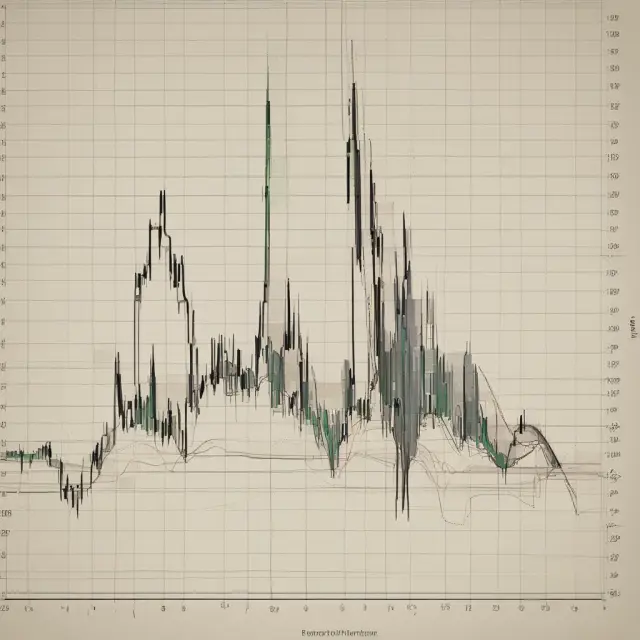
Worden Stochastics are a type of momentum indicator that measures the percentage of the closing price in relation to its price range over a specified period. The calculation process for this indicator is based on ranking closing prices, which sets it apart from other stochastic indicators (Fast and Slow Stochastics).
The equation for calculating Worden Stochastics involves determining the rank of the most recent closing price in comparison to all closing values over a defined lookback period. The formula is as follows: (100/n – 1) x Rank, where ‘n’ refers to the number of closing values in the range and “Rank” represents the position of the closing price within this sorted list.
For instance, consider a security with the following closing prices over the course of five days: Day 1: $50, Day 2: $60, Day 3: $48, Day 4: $55, and Day 5: $58. In this scenario, Day 5 would have a rank of 3 since it is the third highest closing price in this five-day range.
To calculate the Worden Stochastic value for this day, we’d use the formula (100/5 x 3) = 60%. This indicates that the most recent closing price ($58) makes up 60% of the highest closing prices in the given five-day period.
This ranking approach helps Worden Stochastics recognize new trading ranges more quickly and avoid overweighting outlier periods compared to traditional stochastic indicators.
Using percentages, traders can easily identify if a security is potentially overbought or oversold based on the specified lookback period. Overbought conditions are usually considered when the reading exceeds 80%, while oversold readings fall below 20%. However, it’s essential to remember that these levels aren’t definitive buy/sell signals but rather indicators of a price position within its recent closing range.
In summary, Worden Stochastics represent the percentage of the most recent closing price compared to all closing values in a specified lookback period, calculated by ranking closing prices and determining their position within this list using the equation: (100/n – 1) x Rank. By recognizing new trading ranges more effectively and providing overbought/oversold readings, the Worden Stochastic is an essential tool for investors seeking insights into their securities’ momentum trends.
Interpreting Worden Stochastic Readings
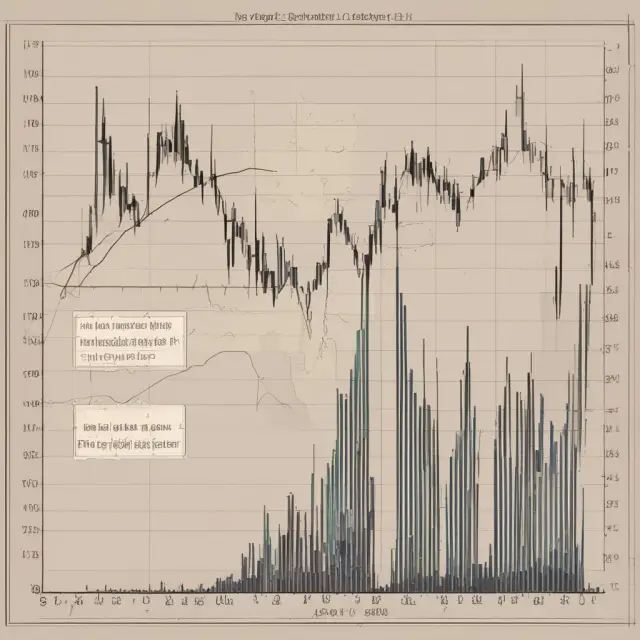
The Worden Stochastic indicator provides valuable insights into a security’s trading dynamics by examining its closing prices relative to their past performance. This section will delve deeper into understanding overbought and oversold levels, potential trade signals using signal line crossovers, and price divergence with the indicator.
Overbought and Oversold Levels
Traders often use the Worden Stochastic to determine whether a security is potentially trading at overbought or oversold levels. Overbought conditions indicate that the asset’s recent closing prices have reached or surpassed the upper portion of their recent range, while oversold conditions imply the opposite – that the recent closing prices are in the lower part of their recent range.
Overbought and oversold levels are commonly identified by readings above 80 for overbought, and below 20 for oversold. It’s essential to note that these levels do not necessarily dictate buy or sell decisions but merely help traders identify potential opportunities for further analysis. In a strong uptrend, the Worden Stochastic readings may frequently reach above 80, whereas in a downtrend, they will often remain below 20 (Worden, n.d.).
Signal Line Crossovers
In addition to identifying overbought and oversold levels, traders can also use signal line crossovers with the Worden Stochastic for potential trading opportunities. A bullish signal occurs when the stochastic crosses above the signal line, whereas a bearish signal is signaled by a crossover below the signal line. These crossovers can serve as entry and exit points for trades, particularly when used in conjunction with other technical indicators or chart patterns.
Price Divergence
Another important aspect of analyzing Worden Stochastic readings is observing divergences between a security’s price and the indicator’s trend. Bullish divergence occurs when the security’s price is making higher peaks while the stochastic oscillator is making lower peaks, indicating potential reversal or continuation of an uptrend. Conversely, bearish divergence is indicated by the opposite – declining highs in price with higher lows on the Worden Stochastic, pointing to a potential reversal or continuation of a downtrend (Worden, n.d.).
Traders should be aware that divergence does not necessarily signal a definitive price reversal but instead provides an opportunity for further analysis and confirmation using other technical indicators or chart patterns. Additionally, it’s crucial to consider the overall trend and market conditions when interpreting divergences with Worden Stochastic readings (Worden, n.d.).
References:
Worden, P. (n.d.). The All New Technical Analysis & Trading Handbook, 2nd ed. Wiley.
Trading Strategies with Worden Stochastics
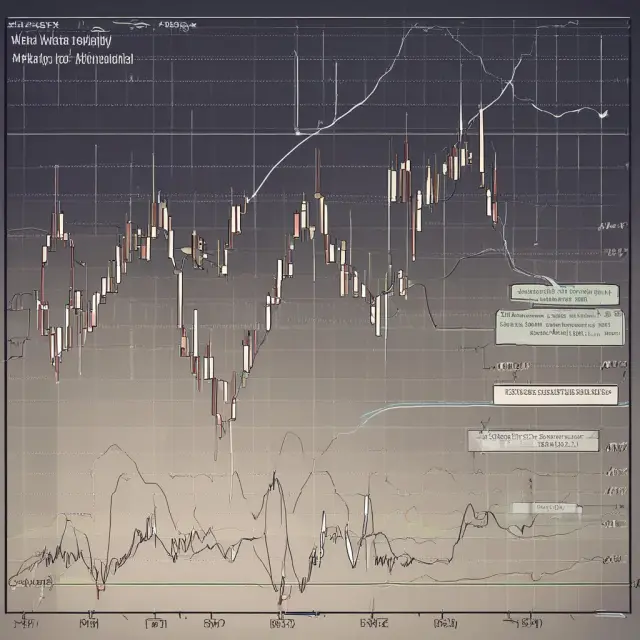
The Worden Stochastic indicator provides valuable insights for traders by revealing the current position of the closing price within its range over a specified period. In this section, we will discuss several strategies to help you capitalize on the information the Worden Stochastic offers.
Overbought and Oversold Levels
Worden Stochastics identify overbought and oversold conditions based on where the recent closing price falls within its historical range, making it an essential tool for determining potential buying or selling opportunities. A reading above 80 indicates that the security is in the upper portion of its recent closing price range, signaling potential weakness or a bearish outlook. Conversely, a reading below 20 suggests the security is trading in the lower portion of its range and could be oversold or primed for a bullish trend reversal.
Trading Signals Using Crossovers
The signal line serves as an essential component of Worden Stochastic strategies. When the stochastic crosses above the signal line, some traders consider it a buy signal, while crossing below may indicate a sell opportunity. As with other indicators, these crossover signals should be used cautiously and in conjunction with other technical tools for confirming trends and potential entry points.
Bullish vs. Bearish Divergence
Divergence between the security’s price action and the Worden Stochastic can provide significant insights into potential trend reversals. Bullish divergence occurs when the price makes higher highs while the stochastic creates lower peaks or lags behind, indicating a weakening downtrend that may be turning bullish. Conversely, bearish divergence is identified by a security making lower lows while the stochastic posts higher bottoms, which can signal a potential trend reversal from an uptrend to a downtrend. Remember that divergence is not a foolproof indicator and should be used with caution in conjunction with other signals for maximum accuracy.
Combining Worden Stochastics with Other Indicators or Chart Patterns
Incorporating the Worden Stochastic indicator into your analysis arsenal can significantly enhance your overall trading performance. It is essential to remember that no single indicator can accurately predict market movements. By combining the Worden Stochastic with other technical tools, such as moving averages or chart patterns like head and shoulders or triangles, you will create a more robust trading strategy. This multi-faceted approach will provide you with a comprehensive understanding of the underlying trends and potential entry opportunities.
In conclusion, the Worden Stochastic indicator offers valuable insights for traders looking to make informed decisions in their investment strategies. By employing strategies such as identifying overbought/oversold levels and trading on crossover signals or divergence, you can capitalize on the information provided by this versatile tool. As always, remember that no indicator is foolproof, and it’s essential to use a combination of technical tools and fundamental analysis for maximum accuracy and success in the markets.
Worden Stochastics vs. Other Stochastic Indicators
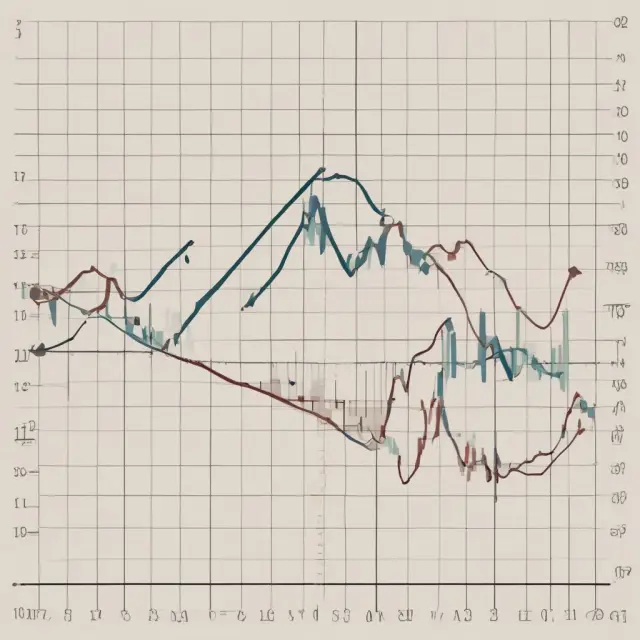
The Worden Stochastic indicator stands out among its stochastic counterparts, particularly in how it calculates and interprets closing price rankings to provide a more nuanced understanding of overbought and oversold conditions.
While other popular stochastic indicators like the fast and slow stochastic oscillator mainly use highs and lows, the Worden Stochastic indicator relies on ranking closing prices instead. The unique calculation methodology in the Worden Stochastic can result in potential advantages and differences in the interpretation of buy and sell signals for traders.
Calculation:
The Worden Stochastic is based on the equation (100/n – 1) x Rank, where “N” represents the number of closing values and “Rank” signifies the position of the closing price within the sorted list. The calculation ranks each closing value in ascending order to determine the percentage of closing prices that are lower than it over a specified time frame.
Interpretation:
This ranking methodology provides traders with information on where the current close stands within its historical context compared to past closes. A reading above 80 signifies the recent close ranks in the top 20% of all closing prices for the given period. Conversely, a reading below 20 implies that the most recent close ranks among the lowest 20% of all closing values.
Strategies:
The Worden Stochastic strategy remains consistent with traditional stochastics. When a security’s Stochastic crosses above the signal line (usually a moving average), it can serve as a potential buy signal for traders. A sell signal, conversely, can occur when the Stochastic crosses below the signal line. However, to maximize profitability and minimize risk, investors must consider integrating the Worden Stochastic indicator with other technical analysis tools or chart patterns.
Differences from Other Stochastics
Fast and slow stochastics primarily focus on the difference between the three-day percentage price change and a three-day moving average of that percentage change. In contrast, the Worden Stochastic indicator’s ranking methodology provides traders with a clearer picture of where the current close stands in relation to other historical closes. This information can be invaluable for experienced investors and traders looking to confirm trends or spot potential divergences.
When comparing stochastics, it’s essential to understand that each indicator has its unique strengths and weaknesses. While no one indicator can serve as a definitive predictor of price movements, the Worden Stochastic provides traders with valuable insights into market conditions and trends. Combining the Worden Stochastic with other technical indicators or chart patterns can result in more robust trading decisions that account for multiple perspectives and factors influencing the security’s performance.

Limitations of Worden Stochastics
The Worden Stochastic indicator has its own set of limitations that should be considered when applying it to your trading strategy. While this powerful tool can offer valuable insights into a security’s price movements, traders must be aware of potential pitfalls and false signals. Let’s take a closer look at some of the inherent weaknesses in using Worden Stochastics for technical analysis.
1. Numerous Faulty Signals: Although the Worden Stochastic indicator provides valuable insights into overbought and oversold conditions, it can produce a significant number of false signals that could mislead traders into making ill-advised trades. These false readings are often triggered by ranging or consolidation periods within a security’s price trend. For instance, prolonged sideways price movements may result in numerous crossovers, which can create confusion and potentially lead to missed opportunities or erroneous trades.
2. Overstaying Oversold/Overbought Conditions: In strong uptrends, the Worden Stochastic indicator will often remain within overbought territory for extended periods of time. Similarly, in bearish downtrends, the indicator may linger in oversold territory for an extended period. These lengthy stays in specific regions could result in traders missing potential buying or selling opportunities, especially when trying to identify reversal patterns or trend changes.
3. Relying on Divergence as a Timing Signal: While price divergence between a security’s price and the Worden Stochastic indicator can offer valuable insight into potential reversals, it should not be relied upon as the sole basis for entering or exiting trades. Divergence is an essential tool to complement other technical analysis techniques and confirm market trends, rather than a timing signal on its own.
In conclusion, understanding the limitations of the Worden Stochastic indicator is crucial when developing your trading strategy. By being aware of potential shortcomings and applying this powerful tool in conjunction with other technical indicators and chart patterns, traders can maximize the potential benefits while minimizing any drawbacks.
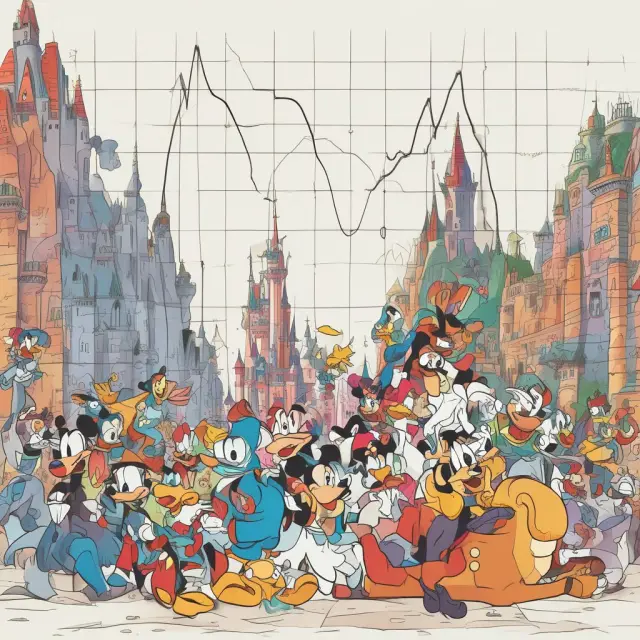
Real-World Example of Using Worden Stochastics
The Worden Stochastic indicator is a powerful tool for understanding the dynamics of a particular stock or security’s price action. In this section, we will provide a real-world example using Disney (DIS) as our case study to help illustrate how investors can use the Worden Stochastic indicator to identify potential buying and selling opportunities based on overbought/oversold readings and trading strategies.
Firstly, let’s take a brief look at Disney’s historical chart with the Worden Stochastic indicator overlaid:

In the chart above, we can observe the price trend of DIS from October 2019 to February 2020. The blue line represents the signal line in our Worden Stochastic indicator, while the red lines indicate when the stock crossed the oversold (below 20) and overbought (above 80) levels.
Investors and traders can use several strategies when interpreting the Worden Stochastic readings:
1. Buying in oversold conditions: When the stock’s Worden Stochastic reading falls below 20, it is considered oversold. This condition could signify that the stock has been underperforming and may be due for a rebound. One potential strategy for investors would be to buy Disney shares when the indicator moves back above its signal line after hitting oversold territory.

Here, we can see an example of Disney’s Worden Stochastic indicator crossing above its signal line in late December 2019. This could be a potential buy signal based on the overbought/oversold strategy mentioned above. After the crossover, Disney went on to rally for almost three weeks, potentially providing a profit opportunity for investors who acted upon this signal.
However, it’s important to note that not every oversold signal will result in an immediate rebound or profitable trade. In fact, some stocks may remain oversold for extended periods before starting a significant trend reversal. Moreover, other factors such as market conditions and fundamental analysis should be considered before making any investment decisions.
2. Selling in overbought conditions: Conversely, when the Worden Stochastic reading rises above 80, it is considered overbought. This condition may indicate that the stock has been performing exceptionally well and could potentially be due for a pullback or correction. One potential strategy for traders would be to sell Disney shares when the indicator moves back below its signal line after hitting overbought territory.

In the chart above, we can observe an example of Disney’s Worden Stochastic indicator crossing below its signal line in late January 2020 when the stock was overbought. This could be a potential sell signal based on the overbought/oversold strategy. After the crossover, DIS experienced a brief correction before continuing its upward trend. While some traders may have captured a profit by selling during this period, other investors might have chosen to hold their shares and ride out the temporary pullback.
As previously mentioned, not every overbought signal will result in an immediate correction or profitable trade. It’s essential for investors to consider various factors before making any investment decisions based on the Worden Stochastic indicator alone.
3. Using divergence: Another strategy for using the Worden Stochastic involves looking for potential price reversals by observing divergences between the stock’s price trend and the indicator’s trend. If the stock is making higher peaks while the stochastic is making lower peaks, this could be a bearish divergence indicating a potential downside reversal in the stock price. Conversely, if the stochastic is making higher lows while the stock is making lower lows, that’s bullish divergence and may indicate a potential turnaround in the stock price.

In this example, we can observe an instance of bullish divergence between Disney’s Worden Stochastic indicator and its stock prices in late December 2019. The price was making lower lows while the stochastic was making higher lows, suggesting a potential reversal in the downward trend. This could have been a potential buy signal for investors based on this divergence strategy.
Again, it’s essential to note that divergences are not foolproof timing signals and should be used alongside other technical analysis tools or fundamental factors before making any investment decisions.
In conclusion, the Worden Stochastic indicator can be a valuable tool for investors and traders looking to understand the dynamics of a particular security’s price action. By analyzing overbought/oversold conditions, trading strategies, and divergence, investors can potentially identify buying or selling opportunities and make informed decisions based on this information. However, it’s crucial to remember that no indicator is foolproof, and other factors should always be taken into account before making any investment decisions.

Applying Worden Stochastics in Your Portfolio
When it comes to implementing Worden Stochastics in your investment strategy, it’s crucial to remember that this technical indicator should not be used alone. Instead, it works best when combined with other indicators or chart patterns for a more comprehensive analysis. Let’s explore various ways you can use this tool as part of a larger portfolio strategy.
First and foremost, consider the timeframes and settings. Different markets may require different lookback periods to accurately detect trends or reversals. For example, intraday traders might choose a shorter period (such as 3 or 5 days), while longer-term investors could opt for a more extended period (e.g., 14 or 20 days).
When looking at a chart, pay close attention to the interaction between price and stochastic readings. Overbought (above 80) or oversold (below 20) levels indicate potential opportunities but are not definitive signals for buy/sell decisions. Instead, these readings should be considered alongside other technical indicators like moving averages, support/resistance levels, or trendlines.
One popular strategy involves looking for divergences between the security’s price and the stochastic trends. Bullish divergence occurs when the price is making higher lows while the stochastic oscillator is making lower lows, signaling a potential reversal or continuation of an uptrend. Conversely, bearish divergence (higher highs with lower highs) may signal a possible trend reversal or weakness in the security’s price action.
Additionally, you can use Worden Stochastics as part of a multi-indicator strategy. By combining it with other technical tools like Bollinger Bands, RSI (Relative Strength Index), MACD (Moving Average Convergence Divergence), or Fibonacci retracement levels, you gain a more nuanced understanding of the security’s price action and potential entry/exit points.
For example, if you suspect an uptrend may be approaching its end but are unsure when to sell, consider using a combination of overbought readings on Worden Stochastics and resistance levels identified by Fibonacci retracement analysis. Once the security reaches an overbought condition and encounters resistance at a critical level, you might decide it’s time to lock in profits or even short the position if you believe the trend will reverse.
Furthermore, Worden Stochastics can be used to enhance your understanding of other chart patterns, such as triangles, flags, wedges, or head and shoulders. By assessing the relationship between these formations and stochastic readings, you may uncover valuable entry/exit opportunities that could improve your overall trading performance.
In summary, Worden Stochastics can be a powerful addition to any investor’s toolkit when used correctly. By combining it with other technical indicators, chart patterns, or timeframes, you can create a more robust and effective investment strategy tailored to your unique needs and goals. Remember that no single indicator is foolproof, and it’s always essential to conduct thorough research before making any financial decisions based on technical analysis alone.

FAQs About Worden Stochastics
What is the Worden Stochastic indicator and how does it differ from other stochastic indicators?
The Worden Stochastic indicator, designed by Peter Worden, is a technical analysis tool that measures the percentile rank of the most recent closing price in relation to all closing prices within a specified lookback period. It calculates this ranking using the equation: (100/n – 1) x Rank, where “n” represents the number of closing values and “Rank” represents the position of the closing price on a list sorted in ascending order by value. The primary difference from other stochastic indicators lies in its calculation methodology that avoids over-weighting outliers by ranking closing prices rather than using high, low, or closing values directly.
What is the purpose of using Worden Stochastics in trading?
Traders use the indicator to determine potential overbought or oversold conditions, trade signals from crossovers with a signal line, and spot divergences between the security’s price and stochastic trends. Traders should confirm these indications by combining them with other technical tools and chart patterns.
What is considered an overbought level for Worden Stochastics?
A reading above 80 is generally considered overbought, but it doesn’t necessarily mean sell. Instead, traders may wait for further confirmation from other indicators or chart patterns before making a decision.
What is the significance of oversold levels in Worden Stochastics?
An oversold level for Worden Stochastics is generally below 20. Similar to overbought, it doesn’t guarantee a buy signal but may indicate an opportunity for further analysis with other tools and chart patterns.
What are the potential pitfalls or limitations of using Worden Stochastics?
The indicator can provide numerous false signals due to extended stays in oversold/overbought conditions, multiple crossovers with the signal line that don’t result in significant price moves, and potential unreliability of divergence as a timing signal.
How do traders use Worden Stochastics for trading strategies?
Traders may look for buy or sell opportunities when the stochastic crosses above or below the signal line and/or confirm indications with other technical tools, chart patterns, or price action. Bullish divergence can also be used to identify potential turnarounds in a security’s price trend.

Conclusion
The Worden Stochastic indicator offers a unique approach to identifying overbought and oversold levels within a security’s trading range compared to other stochastics. By ranking closing prices instead of calculating based on high, low, or closing values, the Worden Stochastic provides potentially more accurate readings and timely signals for professional and institutional investors in finance and investment.
Calculated using the equation (100/n – 1) x Rank, where ‘n’ represents the number of closing values in the range and ‘Rank’ represents the position of the closing price on a list sorted in ascending order by value, the Worden Stochastic indicator is particularly valuable for recognizing new trading ranges. It can provide traders with valuable insights into potential buying or selling opportunities based on overbought/oversold readings and signal line crossovers.
Interpreting Worden Stochastic readings involves understanding the implications of overbought (above 80) and oversold (below 20) conditions, as well as the importance of confirming these signals with other technical indicators or chart patterns. With strategies such as waiting for a stock to drop into the oversold territory below 30 or 20, then purchasing when it crosses back above the signal line, traders can potentially capitalize on market movements and identify potential reversals in price trends.
Despite its strengths, the Worden Stochastic is not without its limitations. It may provide numerous faulty signals, overstaying oversold/overbought conditions and generating multiple crossovers with the signal line that don’t result in significant price moves. Additionally, price divergence with the indicator is not a reliable timing signal and should only be used in conjunction with other analyses and trade signals.
In conclusion, by understanding the unique calculation methodology, interpretation strategies, and potential limitations of the Worden Stochastic indicator, professional and institutional investors can effectively utilize this tool to enhance their financial decision-making processes and gain a competitive edge in various markets.
 Next entry · No. 5,775WordPress for Institutional Investors: A Powerful, Customizable Content Management System for Professional Websites
See also
-
 No. 5,074
09 Aug 2025
26 min
Understanding and Implementing Effective Trend Trading Strategies in Finance and Investment
Business Finance
No. 5,074
09 Aug 2025
26 min
Understanding and Implementing Effective Trend Trading Strategies in Finance and Investment
Business Finance -
 No. 5,738
03 Oct 2025
18 min
Understanding Williams %R – A Powerful Momentum Indicator for Technical Analysis
Markets
No. 5,738
03 Oct 2025
18 min
Understanding Williams %R – A Powerful Momentum Indicator for Technical Analysis
Markets -
 No. 5,475
12 Sep 2025
20 min
Understanding Vertical Line Charting: An Essential Tool for Technical Traders
Financial Data Analysis
No. 5,475
12 Sep 2025
20 min
Understanding Vertical Line Charting: An Essential Tool for Technical Traders
Financial Data Analysis -
 No. 5,086
10 Aug 2025
21 min
Understanding and Trading the Triple Bottom Chart Pattern: A Bullish Reversal Indicator for Institutional Investors
Financial Tools
No. 5,086
10 Aug 2025
21 min
Understanding and Trading the Triple Bottom Chart Pattern: A Bullish Reversal Indicator for Institutional Investors
Financial Tools -
 No. 5,731
03 Oct 2025
19 min
Mastering Wilder’s DMI (ADX) Indicator: A Powerful Tool for Trend Analysis in Finance and Investment
Business Finance
No. 5,731
03 Oct 2025
19 min
Mastering Wilder’s DMI (ADX) Indicator: A Powerful Tool for Trend Analysis in Finance and Investment
Business Finance -
 No. 5,329
30 Aug 2025
21 min
Understanding Up/Down Gap Side-by-Side White Lines in Finance: A Comprehensive Guide
Business Finance
No. 5,329
30 Aug 2025
21 min
Understanding Up/Down Gap Side-by-Side White Lines in Finance: A Comprehensive Guide
Business Finance