Understanding the Stochastic Oscillator: A Momentum Indicator for Overbought and Oversold Conditions

Learn the ins and outs of the Stochastic Oscillator, a momentum indicator that helps identify overbought and oversold conditions in trading.
What Is a Stochastic Oscillator?
The Stochastic Oscillator is a popular momentum indicator in trading that compares a security’s closing price with its price range over a specified time period. It is used to identify potential overbought and oversold conditions, which can assist investors and traders in entering or exiting trades based on market trends. Developed by George Lane in the late 1950s, this versatile technical indicator has been widely adopted due to its ability to provide insights into momentum shifts that could indicate impending reversals.
The Stochastic Oscillator is a range-bound oscillator, which means it always falls between 0 and 100. Traditionally, values above 80 are considered overbought, while readings below 20 denote oversold conditions. However, these thresholds may not necessarily indicate an imminent reversal – they simply provide context for understanding the overall price momentum.
The Stochastic Oscillator is calculated using two primary values: %K and %D. %K, or the “fast” stochastic oscillator, represents the current closing price in relation to the price range over a specified period (typically 14 days). This value is calculated by first determining the percentage difference between the highest high and lowest low within this time frame. The resulting number is then multiplied by 100 to obtain a value between 0 and 100.
%D, or the “slow” stochastic oscillator, represents the moving average of %K over a specific time interval (often 3 days). This line acts as a filter for identifying trend direction. When %K crosses above %D, it indicates a bullish signal, while a bearish signal is generated when %K falls below %D.
This section serves as an introduction to the Stochastic Oscillator and its primary components, providing readers with essential knowledge to better understand this influential momentum indicator. In the following sections, we will delve deeper into the history of the Stochastic Oscillator, how it is used in trading, and its comparison with another popular momentum indicator, the Relative Strength Index (RSI).

Components of the Stochastic Oscillator
The stochastic oscillator comprises two main lines: %K and %D. %K, also called the fast stochastic oscillator, reflects the current price of an asset relative to its price range over a specified time period. The second line, referred to as %D or slow stochastic oscillator, is a three-day moving average of %K. Let’s delve deeper into both components and their significance in interpreting this popular momentum indicator.
%K (Fast Stochastic Oscillator)
The calculation for %K involves identifying the highest high (H14), lowest low (L14) and the current closing price (C) over a 14-day period, then finding the range between H14 and L14. The formula to calculate %K is:
%K = [(C – L14) / (H14 – L14)] × 100
%K measures the proximity of the recent closing price to its extreme values, generating buy and sell signals based on overbought and oversold conditions. A reading above 80 suggests an overbought condition, while a reading below 20 indicates oversold conditions. However, strong trends can maintain these conditions for extended periods before reversing, making it essential to observe changes in the oscillator’s values rather than fixed thresholds.
%D (Slow Stochastic Oscillator)
The %D line is a three-day moving average of %K, acting as an additional filter to smooth out price swings and generate more reliable signals. The formula for %D involves calculating the simple moving average of the previous 3 days’ %K readings:
%D = 3-period moving average of %K
The %D line tends to lag the %K line, providing a confirmation signal when they cross. A bullish crossover occurs when %K rises above %D, suggesting that the asset is potentially oversold and an uptrend may ensue. Conversely, a bearish crossover, where %K falls below %D, signals potential overbought conditions and a downtrend could be on the horizon.
Together, the %K and %D lines offer valuable insights into an asset’s momentum trends by identifying overbought and oversold conditions, ultimately helping traders make informed decisions based on market conditions and price movements.
Formula for Calculating the Stochastic Oscillator
The Stochastic Oscillator, developed by George Lane in the late 1950s, is a momentum indicator that compares a security’s closing price to its price range over a specified time period. This indicator generates buy and sell signals based on overbought and oversold conditions using readings between 0 and 100. The Stochastic Oscillator consists of two main components: %K and %D.
%K, also known as the fast stochastic oscillator or simply the Stochastic, is calculated by subtracting the lowest price (L) for a specific time period from the current closing price (C), then dividing that difference by the entire price range (H-L), and finally multiplying the result by 100. The formula for %K can be expressed as:
%K = [(C – L) / (H – L)] * 100
Where C represents the most recent closing price, H is the highest price within the time period, and L is the lowest price within that same period. This calculation measures the location of the current price in relation to its recent highs and lows within the specified time frame.
%D, or the slow Stochastic oscillator, serves as a three-day moving average of %K, which offers a smoothed representation of the overall trend. The formula for %D can be represented as:
%D = 3-day moving average of %K
While the Stochastic Oscillator has proved effective in identifying overbought and oversold conditions, it does have its limitations. One potential issue is the possibility of false signals. In volatile markets, the indicator may generate incorrect trade signals, which can lead to losses for traders. To minimize these risks, it’s important to consider market trends when interpreting Stochastic Oscillator readings and only taking trades that align with the prevailing trend.
In summary, the Stochastic Oscillator is a valuable technical analysis tool for identifying overbought and oversold conditions by comparing a security’s closing price to its historical range of prices within a specified time frame. By calculating both the %K and %D components, traders can gain insights into potential trend reversals, momentum shifts, and significant price movements.

History of the Stochastic Oscillator
The stochastic oscillator was first introduced by George Lane in the late 1950s as a momentum indicator designed to detect overbought and oversold conditions within securities, with a range-bound value from 0 to 100. As a precursor to other momentum indicators such as the relative strength index (RSI), the stochastic oscillator’s unique selling point is its ability to forecast reversals through divergence analysis, rather than simply relying on overbought or oversold conditions.
The concept behind the stochastic oscillator is rooted in Lane’s observation of price momentum preceding price direction changes. This theory allowed traders to anticipate trend shifts and generate buy/sell signals based on the oscillator’s behavior. To calculate the stochastic oscillator, an asset’s closing prices are compared to its highest and lowest values during a specific time period. The result is then represented as a percentage ranging from 0 to 100, with readings above 80 indicating overbought conditions and those below 20 indicating oversold conditions.
The stochastic oscillator’s development was marked by various refinements and adjustments to make it more responsive and accurate in capturing trend reversals. One such improvement was the introduction of a three-day simple moving average (%D) line, which smoothed out short-term fluctuations and provided clearer signals for traders. The %D line is calculated by taking a moving average of the %K line over a set number of periods, typically 3 or 7.
As Lane continued to refine the oscillator’s formulas and methodologies, it gained popularity among traders seeking an alternative to popular indicators like the moving average convergence divergence (MACD) and RSI. The versatility of the stochastic oscillator in various market conditions, along with its ability to generate both short-term and long-term signals, added to its appeal for both experienced and novice traders.
Fast forward to today, the stochastic oscillator is widely available through charting tools and platforms, making it a go-to indicator for traders across various asset classes. Its unique approach to momentum analysis, coupled with its ability to anticipate trend reversals, remains unparalleled among other popular indicators.
By understanding the history of the stochastic oscillator, traders can gain valuable insights into its origins, purpose, and applications. This knowledge enables them to employ the oscillator effectively in their trading strategies, maximizing potential profits while minimizing risks in a rapidly changing financial landscape.
How to Use the Stochastic Oscillator in Trading
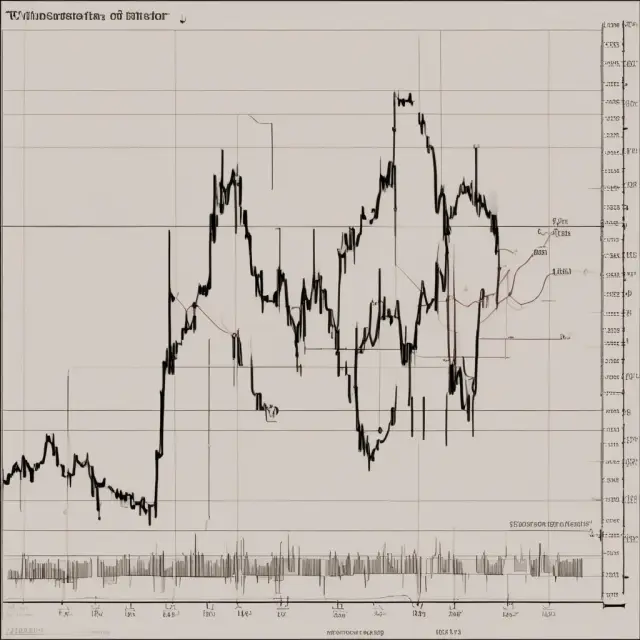
The Stochastic Oscillator is a valuable momentum indicator for detecting overbought and oversold conditions, which can provide traders with potential trading signals. It’s essential to understand how to use this oscillator effectively to make informed decisions about entering or exiting trades.
Interpreting Signals
Stochastic Oscillator signals occur when the %K line crosses above or below the %D line, which serves as a moving average of %K. A bullish crossover occurs when %K rises above %D, while a bearish crossover happens when %K falls below %D. Traders generally consider a bullish signal to indicate that an asset is undervalued and could be due for a price increase, while a bearish signal suggests the opposite.
Setting Parameters
The Stochastic Oscillator’s sensitivity can be adjusted by changing its parameters. The default setting is 14 periods, but you can use different timeframes depending on your trading style and market conditions. A shorter period will produce more signals but may result in false alarms, while a longer period will generate fewer signals but could potentially improve accuracy.
Combining with Other Indicators
Stochastic Oscillator signals are best used in conjunction with other indicators or confirmation from price action to increase the reliability of trading decisions. For instance, an entry signal can be confirmed by a moving average crossover or a breakout above resistance.
Applying Stochastic Oscillator to Trading
The Stochastic Oscillator can be utilized in various ways when trading. Here are some common methods:
- Entering long positions when %K crosses above %D (bullish signal).
- Entering short positions when %K crosses below %D (bearish signal).
- Setting stop-loss orders based on the support or resistance levels identified by the Stochastic Oscillator.
- Combining Stochastic Oscillator signals with other indicators and chart patterns for increased confirmation and reliability.
Understanding Divergence
Stochastic Oscillator divergence can provide valuable insights into potential price reversals. If the asset’s price reaches a new high but %K fails to reach a new high, it indicates a bearish divergence, which could signal a potential downward trend. Conversely, if the asset’s price reaches a new low but %K does not follow suit, it may indicate a bullish divergence, suggesting an upcoming uptrend.
The Stochastic Oscillator is a versatile and powerful tool for traders looking to identify overbought and oversold conditions in their investments. By understanding how to use this oscillator effectively and combining it with other indicators, traders can make informed decisions that can help them maximize profits and minimize losses.
Differences between Stochastic Oscillator and Relative Strength Index (RSI)
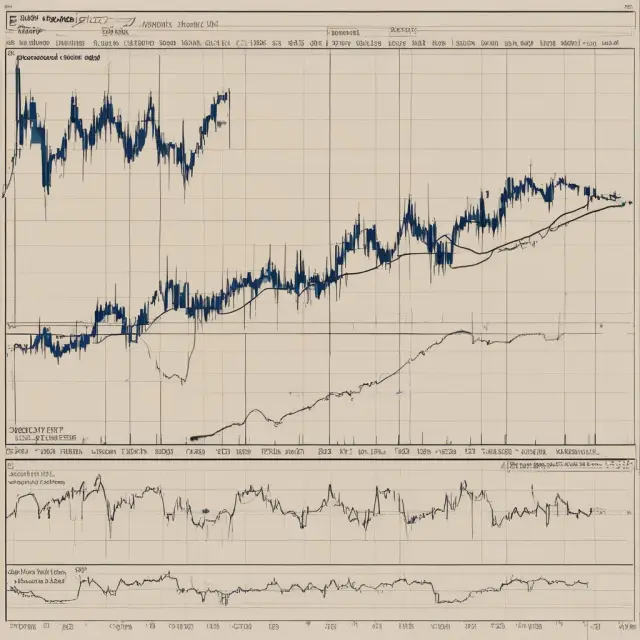
In the realm of technical analysis, two popular momentum indicators frequently come under discussion – the stochastic oscillator and the relative strength index (RSI). Though they share common ground in measuring trends and predicting reversals, their methodologies and strengths/weaknesses set them apart.
First, let us introduce the RSI, developed by J. Welles Wilder Jr. in the late 1970s as a momentum indicator ranging between 0 to 100. The RSI measures velocity or speed of price movements, specifically the magnitude and direction of recent price changes in comparison to previous changes. Essentially, it computes the average gain/loss over a specific time period and provides an insight into whether a security is overbought (above 70) or oversold (below 30).
On the other hand, the stochastic oscillator was initially introduced by George Lane in the late 1950s as a range-bound indicator for determining overbought and oversold conditions. The stochastic oscillator’s value always remains between 0 and 100, and it compares the current closing price of an asset to its price range over a particular time period (usually 14 days). While the RSI focuses on velocity, the Stochastic Oscillator’s primary objective is to measure price momentum in relation to historical price levels.
Both indicators have their merits and demerits. For instance, the stochastic oscillator is more responsive and can generate more trading signals when compared to the RSI. However, it also tends to produce false signals due to its sensitivity. The RSI, on the other hand, is generally less responsive but provides smoother price swings as it filters out noise produced by volatile markets.
To best utilize both indicators, traders should consider combining them to benefit from their respective strengths while minimizing weaknesses. As a rule of thumb, when prices are ranging, the Stochastic Oscillator often excels, and during trending markets, the RSI typically performs better. Ultimately, understanding each indicator’s unique characteristics and how they can be applied together will enable traders to make more informed investment decisions.

Limitations of the Stochastic Oscillator
The stochastic oscillator, as powerful as it is, does not come without its limitations. One major limitation is the potential inaccuracy in generating signals due to false crossovers or divergences. False signals can result from several factors, including high volatility and sideways markets. The oscillator’s sensitivity to market movements may cause frequent buy and sell signals during choppy conditions, which can negatively impact trading results if acted upon impulsively.
Moreover, the stochastic oscillator may not perform optimally in all market situations. For instance, it tends to be less effective in range-bound markets where prices repeatedly bounce between support and resistance levels without a clear trend. In these cases, traders might need to employ alternative indicators or incorporate other technical tools like Fibonacci retracement levels or trend lines to enhance their analysis.
Another limitation of the stochastic oscillator is that it does not account for volume data. This means it can generate false signals when volume indicators suggest a potential reversal may be occurring but the oscillator has yet to confirm the trend change. In such instances, combining multiple indicators, like moving averages and momentum indicators, can help improve the overall accuracy of the analysis.
It’s also crucial for traders to remember that no indicator, including the stochastic oscillator, is foolproof. They should always validate signals with other indicators or confirming price patterns before entering trades based on oscillator readings. Incorporating additional filters like trend direction and risk management strategies can further enhance the reliability of trading decisions.
Despite its limitations, the stochastic oscillator remains a valuable tool for identifying potential overbought and oversold conditions in financial markets. Its adaptability to various timeframes and customizable settings make it an essential component of many traders’ technical analysis toolboxes. By understanding the strengths and weaknesses of this indicator and applying it alongside other tools, traders can improve their overall analysis and make more informed decisions.
How to Read the Stochastic Oscillator Chart
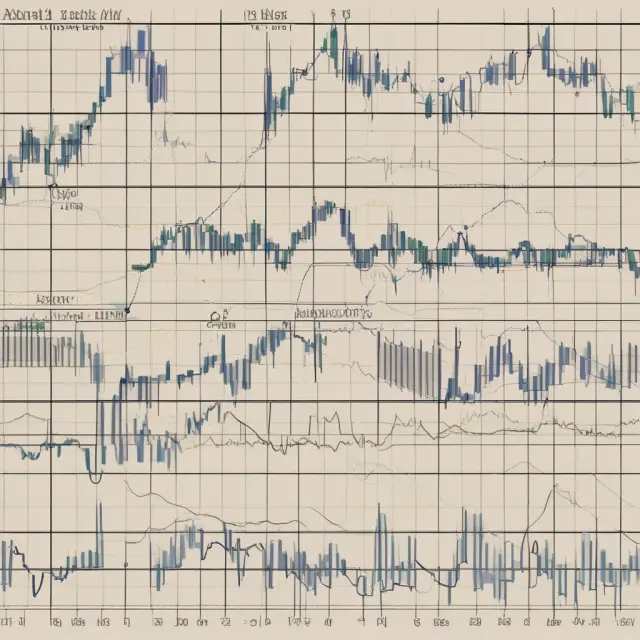
The Stochastic Oscillator chart displays two main lines: %K (the fast line) and %D (the slow line). The %K line, also known as the Fast Stochastic Oscillator, shows the percentage of the price range the closing price occupies over a specific time frame. It oscillates between 0 and 100, with values above 80 indicating an overbought condition and values below 20 signifying an oversold state. The %D line, or Slow Stochastic Oscillator, functions as a moving average of the %K line.
When analyzing the chart, investors should pay attention to these signals:
- Crossovers: When the %K and %D lines cross, they can generate buy or sell signals. For instance, a bullish cross occurs when the %K line crosses above the %D line, potentially signaling a buying opportunity. Conversely, a bearish cross happens when the %K line falls below the %D line, possibly indicating a selling opportunity.
- Divergence: When there’s a discrepancy between price direction and the Stochastic Oscillator’s trend, it can indicate potential reversals. For example, if an asset makes a new high but the Stochastic Oscillator does not confirm with a higher high, this could be a bearish divergence, indicating that a downturn might follow.
- Overbought and oversold levels: The Stochastic Oscillator provides valuable insight into overbought and oversold conditions. Generally, values above 80 are considered overbought, while levels below 20 indicate oversold conditions. However, it’s important to note that these readings do not automatically guarantee a reversal.
- Trendlines: Trendlines can be drawn on the Stochastic Oscillator chart to help identify potential support and resistance levels or to confirm existing trends in the underlying asset.
- Multiple timeframes: Utilizing multiple timeframes can offer additional perspective when analyzing the Stochastic Oscillator chart, helping investors assess potential entries, exits, and overall trend directions.
To interpret the chart effectively, it’s essential to combine these signals with other technical analysis tools or fundamental research. Remember, no single indicator is perfect—it’s always a good idea to use multiple indicators in conjunction with each other for more accurate results.
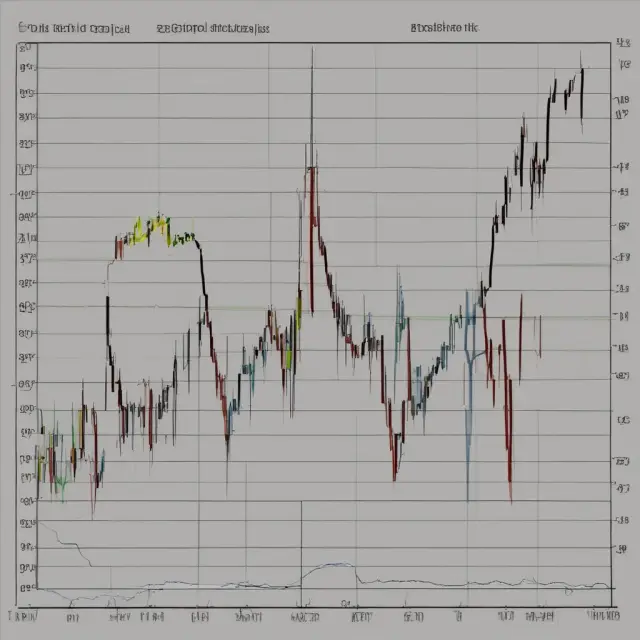
Examples of the Stochastic Oscillator in Action
The stochastic oscillator’s predictive power lies in its ability to identify potential reversals by identifying overbought or oversold conditions. Let’s consider two examples to illustrate how traders use the oscillator to generate trading signals.
Example 1: Buying an Overbought Asset
Suppose a trader observes a stock experiencing a steady uptrend, with its stochastic oscillator reading consistently above 80 for weeks on end (Figure 1). Although the price is steadily rising, the trader senses that the stock may be overbought and ripe for a pullback. To confirm this theory, they look to the oscillator’s signal line, %D, which has started to roll over from its high levels (Figure 2), suggesting that momentum is beginning to shift.
Based on this information, the trader decides to go long, expecting a potential reversal once the stock experiences a pullback. They buy the stock when it begins to decline, with the %K line crossing below the %D line, which confirms their entry point (Figure 3).
Example 2: Selling an Oversold Asset
Conversely, consider a scenario where a trader sees a downward trending stock that has been trading below 20 for several weeks (Figure 4). The oscillator’s reading suggests that the asset is heavily oversold. To capitalize on this, the trader looks for signs of reversal by observing the %D line (Figure 5), which has started to rise above the %K line.
In this situation, the trader decides to sell short when the %K line crosses above the %D line, indicating a potential shift in momentum and a possible reversal in the trend (Figure 6).
In both examples, the trader successfully identified potentially profitable trading opportunities using the stochastic oscillator’s ability to indicate overbought or oversold conditions, as well as its predictive power through divergence signals. However, it is important to remember that no indicator is foolproof, and traders should always consider additional factors like market news and fundamental analysis before making a final trading decision.

FAQs about the Stochastic Oscillator
The stochastic oscillator (STO) is an essential momentum indicator that helps traders identify overbought and oversold conditions in financial markets. In this section, we answer some frequently asked questions about the stochastic oscillator and clarify common misconceptions regarding its usage.
What does the Stochastic Oscillator measure?
The Stochastic Oscillator measures the momentum of a security’s price by comparing it to the range of its prices over a specific time period, typically 14 days. By doing so, it provides valuable insights into potential trend reversals and market conditions.
How is the Stochastic Oscillator calculated?
The Stochastic Oscillator formula includes %K and %D. %K is calculated by comparing the closing price to the highest high (H14) and lowest low (L14) of the 14-day period, while %D represents a moving average of %K over three periods.
What are buy and sell signals in the Stochastic Oscillator?
Buy signals occur when %K crosses above %D, suggesting that the security is potentially oversold and due for an upward trend reversal. Sell signals are generated when %K crosses below %D, signaling an overbought asset primed for a potential downtrend.
What should I do if the Stochastic Oscillator generates false signals?
False signals in the Stochastic Oscillator can be minimized by combining it with other technical indicators or using price trend as a filter, accepting only signals that align with the existing trend direction.
Is the Stochastic Oscillator suitable for all types of securities and markets?
The Stochastic Oscillator is widely used in various markets and security types, including stocks, indices, commodities, and currencies. However, it may not be effective during extremely volatile or erratic market conditions.
How often should I use the Stochastic Oscillator for analysis?
Traders can use the Stochastic Oscillator at any time frame to analyze short-term, intermediate, or long-term trends. The choice of timeframe depends on your trading strategy and the specific security being analyzed.
How do I read the Stochastic Oscillator chart?
The Stochastic Oscillator chart typically consists of two lines: %K and %D. When %K crosses above %D, it indicates a potential buy signal, while a cross below %D implies a sell signal. Overbought conditions are signaled by readings above 80, while oversold conditions can be identified by values below 20.
By understanding the basics of the Stochastic Oscillator and addressing common questions, you’ll be well on your way to harnessing this powerful momentum indicator for profitable trades.
 Next entry · No. 4,753Understanding the Stochastic RSI Indicator: A Powerful Tool for Technical Analysis
See also
-
 No. 3,805
28 Apr 2025
20 min
Understanding Oscillators: Technical Analysis Tools for Overbought and Oversold Conditions
Financial Tools
No. 3,805
28 Apr 2025
20 min
Understanding Oscillators: Technical Analysis Tools for Overbought and Oversold Conditions
Financial Tools -
 No. 4,911
27 Jul 2025
20 min
A Comprehensive Guide to Technical Analysis: Understanding Chart Patterns, Indicators, and Strategies
Finance Policy
No. 4,911
27 Jul 2025
20 min
A Comprehensive Guide to Technical Analysis: Understanding Chart Patterns, Indicators, and Strategies
Finance Policy -
 No. 4,565
29 Jun 2025
21 min
Scalping: A High-Risk Trading Strategy for Profiting from Minor Price Changes
Finance Policy
No. 4,565
29 Jun 2025
21 min
Scalping: A High-Risk Trading Strategy for Profiting from Minor Price Changes
Finance Policy -
 No. 4,412
16 Jun 2025
21 min
Understanding Resistance Levels in Technical Analysis: Identifying, Trading and Breaking Through
Markets
No. 4,412
16 Jun 2025
21 min
Understanding Resistance Levels in Technical Analysis: Identifying, Trading and Breaking Through
Markets -
 No. 4,188
29 May 2025
20 min
Understanding the QStick Indicator: A Technical Analysis Tool for Trend Identification
Market Trends
No. 4,188
29 May 2025
20 min
Understanding the QStick Indicator: A Technical Analysis Tool for Trend Identification
Market Trends -
 No. 3,288
16 Mar 2025
21 min
Understanding Moving Averages in Finance: Simple vs Exponential
Business Finance
No. 3,288
16 Mar 2025
21 min
Understanding Moving Averages in Finance: Simple vs Exponential
Business Finance